
Strawberry Basil Pitcher Drink
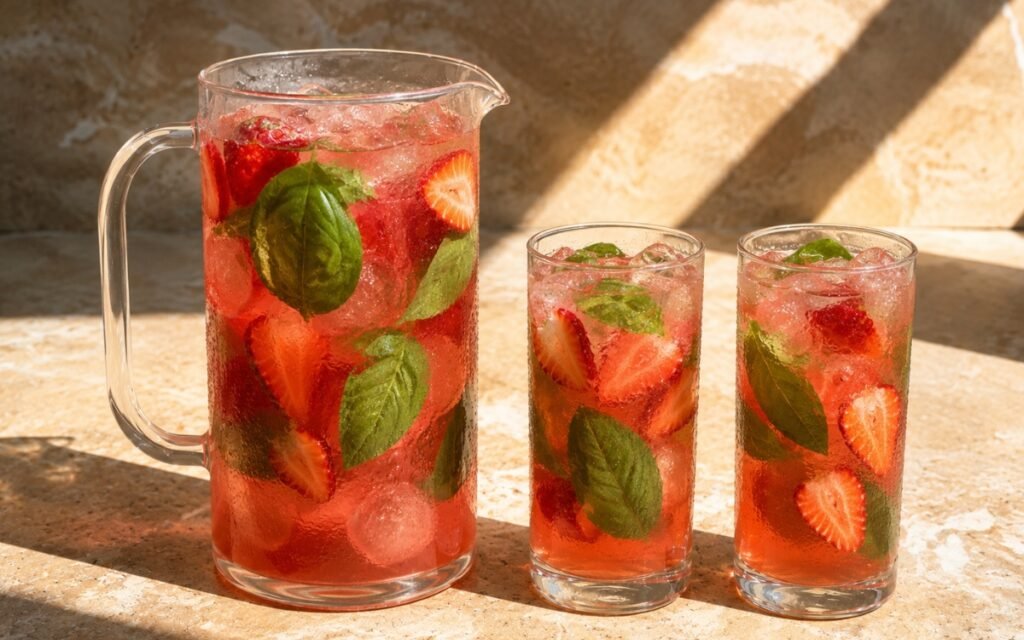
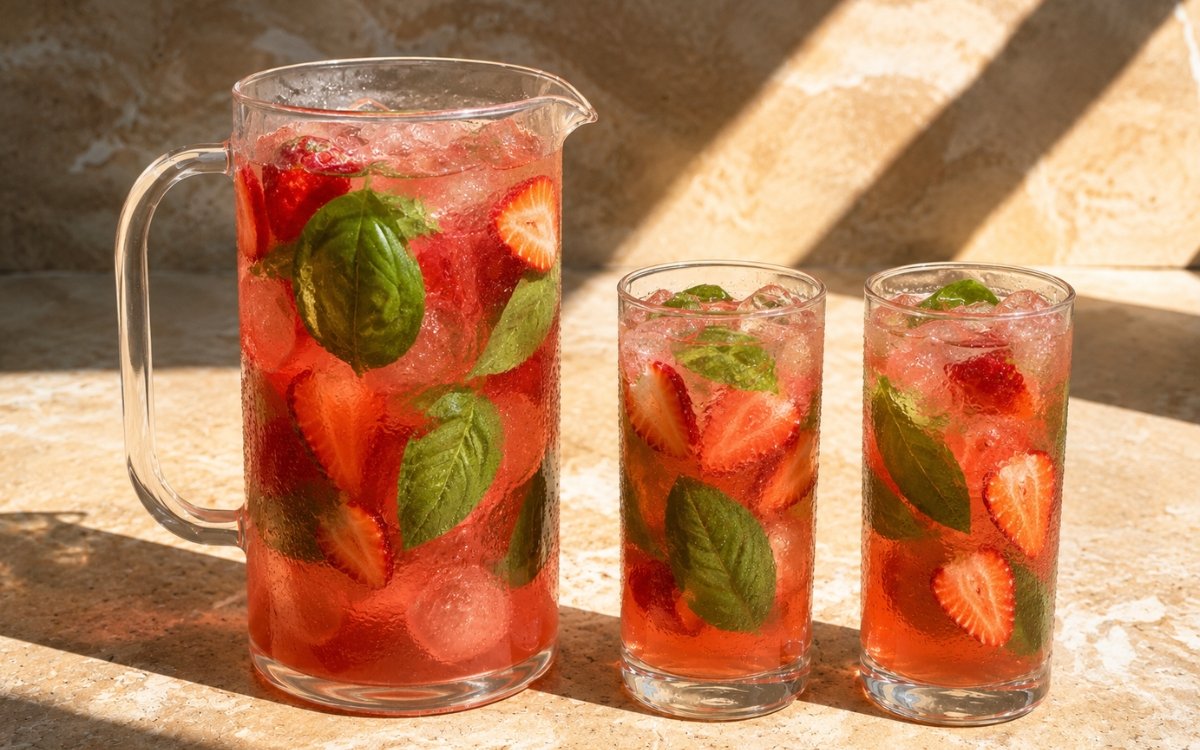
A fresh pink-red pitcher drink made by cold-macerating ripe strawberries with sugar, a pinch of salt, and lightly bruised basil, then straining the fruit base and finishing it with cold water, fresh lemon juice, sliced strawberries, and a second gentle basil infusion. Mashing the basil only gently, for a genuinely brief 20 to 30 seconds, is the technique this whole drink depends on for staying fresh and aromatic rather than dull and grassy — basil turns bitter and flat under too much force or too long a mash, the same brief-gentle-extraction principle used elsewhere in this collection whenever a delicate herb needs its aroma released without damage. Splitting the strawberries into a macerated portion for the base and a separately sliced portion for a second infusion is what gives this drink real, layered fruit character rather than a single flat extraction. A pinch of salt worked into the initial maceration is what sharpens the strawberry flavour throughout without making the drink taste salty. The payoff is a pitcher drink that’s genuinely fresh, pink-red, and layered — bright strawberry meeting basil’s gentle herbal lift.
Prep Time : 25 min
Infusion Time : 1-2 hr
Servings : 16
25 min
1-2 hr
16
Ingredients
For the Strawberry Basil Base
• 1.2kg ripe strawberries, hulled, divided
• 180 to 240g granulated sugar, to taste — this one on Amazon
• 1 small pinch fine sea salt
• 20g fresh basil leaves, divided
• 180ml fresh lemon juice
• 3.2 to 3.4 liters cold filtered water, as needed to reach about 4 liters total
For the Second Infusion
• 300g of the strawberries from above, thinly sliced
• 8 to 10g fresh basil leaves
• 500 to 700g ice cubes, plus more for serving
This post may contain affiliate links. As an Amazon Associate I earn from qualifying purchases, at no additional cost to you.
Directions
- Macerate the Strawberries
Set aside 300g strawberries for the second infusion. Slice them thinly and refrigerate. Roughly chop the remaining 900g strawberries and place them in a large bowl. Add the sugar and the pinch of salt. Mash gently but thoroughly until the strawberries release a lot of juice. Let sit for 20 to 30 minutes. The strawberries should look glossy, juicy, and syrupy before straining. If they still look dry, give them more time. Sugar and salt together draw moisture out of the strawberries’ own cell structure through osmosis, and watching for that specific glossy, syrupy visual cue is the most reliable way to confirm the maceration has actually released enough juice before moving forward. - Add the First Basil Extraction
Take about 10 to 12g basil leaves and tear them lightly by hand. Add them to the strawberry pulp. Mash very gently for 20 to 30 seconds — just enough to release the basil aroma into the strawberry juice. Do not grind the basil into a paste. Basil becomes dull and grassy if it is crushed too hard or left in the pulp too long. Keep this extraction short and gentle. That specific, brief window — 20 to 30 seconds, no longer — is calibrated precisely to release basil’s aromatic oils into the surrounding strawberry juice without pushing past that point into the territory where the herb’s own cell structure breaks down enough to introduce bitterness. - Strain the Base
Set a fine-mesh sieve over a large pitcher or bowl. Pour in the strawberry-basil pulp and press gently with a spoon to extract the juice. Do not force every bit of pulp through. You want a clean, drinkable base, not a thick smoothie texture. Discard the solids. Pressing only gently here, rather than firmly, keeps the finished base genuinely drinkable rather than thick with strawberry pulp — a distinction that matters specifically because this base still carries the recently mashed basil, whose own bitter compounds would be more likely to release under firmer pressure than a plain strawberry mash alone. - Build the Pitcher
Add the fresh lemon juice to the strained strawberry-basil base. Stir well. Add 3.2 liters cold filtered water and taste. Add more cold water if needed, aiming for about 4 liters total. The drink should taste bright, strawberry-forward, lightly herbal, and refreshing. This tasting checkpoint matters directly given how much strawberry ripeness and sweetness can vary — building in that adjustment stage accounts for that natural variability rather than assuming a fixed recipe always lands at the same balance. - Second Infusion
Add the reserved sliced strawberries to the pitcher. Take the remaining 8 to 10g basil leaves, lightly rub or clap them between your fingers, then add them to the drink. Stir gently. Refrigerate for 1 to 2 hours so the sliced strawberries and basil lightly infuse the pitcher. The basil should smell fresh and aromatic, not dominant. If the basil flavor is strong enough before 2 hours, remove the leaves. This second, separate basil addition — handled even more gently than the first, with only a light rub rather than any mashing — layers in a fresh, distinct herbal note on top of the base’s own already-established basil character. - Serve
Add ice to the pitcher just before serving, or fill individual glasses with ice. Pour the strawberry basil drink over the ice, making sure each glass gets a few strawberry slices and basil leaves. Adding the ice only at this final stage, rather than earlier, protects the drink from being diluted before the second infusion has had its full window to actually develop.
*Notes :
- Keeping the basil’s initial extraction genuinely brief — 20 to 30 seconds, mashed only gently — deserves recognition as the single detail most responsible for whether this drink’s herbal note reads as fresh and aromatic or dull and grassy. Basil’s own cell structure damages easily under sustained pressure or extended contact, and that narrow window specified here is calibrated precisely to release the leaf’s aromatic oils into the surrounding juice without crossing into the territory where bitterness starts developing.
- Splitting the strawberries into a fully macerated portion for the base and a separately reserved, sliced portion for later infusion deserves attention as a genuine structural choice rather than unnecessary complexity. The macerated portion builds the drink’s actual concentrated flavour foundation; the reserved, sliced portion contributes fresh, distinct strawberry character and visual appeal once the base is already built, giving the finished pitcher real layered depth.
- The small pinch of salt worked into the initial strawberry maceration deserves genuine respect as a real flavour-sharpening technique rather than a negligible addition. That salt heightens the perception of the strawberries’ own natural sweetness and flavour without making the finished drink taste salty in any noticeable way — a subtle but genuine enhancement running throughout the whole pitcher.
- The recipe’s own explicit guidance about removing the basil leaves if their flavour develops strongly before the full 2-hour window deserves real attention. Basil’s aromatic presence can build steadily the longer it sits in liquid, and that built-in flexibility exists specifically to let the herb be pulled at exactly the point where it’s fresh and supportive, before it develops into something considerably more dominant than intended.
Why This Recipe Works
This recipe works because the basil is handled with real gentleness at both stages — a brief, light mash in the base, and only a gentle rub for the second infusion — protecting its aroma from the bitterness rougher or longer handling would cause.
Splitting the strawberries into a macerated base portion and a reserved, sliced second-infusion portion gives the drink genuine layered fruit depth. A small pinch of salt sharpens the strawberry flavour throughout without adding perceptible saltiness.
A final tasting checkpoint accounts for real variability in strawberry ripeness, and the recipe’s own guidance on basil removal protects the drink from developing too dominant an herbal note during extended chilling.
Ingredient Breakdown
Macerated, Salted Strawberries
The concentrated flavour foundation — sugar and salt together draw real juice from the fruit through osmosis.
Brief, Gentle First Basil Extraction (20–30 Seconds)
The critical technique — releases basil’s aroma into the strawberry juice without crossing into bitterness.
Reserved, Sliced Second-Infusion Strawberries
The layering technique — added later for fresh, distinct fruit character beyond the base.
Gently Rubbed Second-Stage Basil
The finishing herbal note — handled even more gently than the first, layering fresh basil aroma on top of the base.
Fresh Lemon Juice
The brightening agent — keeps the whole drink from tasting flat, balancing the strawberry’s own sweetness.
Flavor Structure Explained
This strawberry basil pitcher drink follows a layered balance model:
- Concentrated fruity foundation (macerated, salted, strained strawberries)
- Herbal lift, first layer (brief, gentle basil extraction in the base)
- Bright citrus edge (fresh lemon juice)
- Fresh second layer (reserved sliced strawberries, gently rubbed basil)
- Cool refreshing structure (cold water, ice)
The macerated, salted, strained strawberry base provides this drink’s concentrated, genuinely fruity foundation. A brief, gentle basil extraction layers real herbal lift directly into that base. Fresh lemon juice brightens the whole drink and prevents it from tasting flat. Reserved sliced strawberries and gently handled basil, added as a second infusion, contribute fresh, distinct fruit and herbal character beyond the initial extraction. Cold water and ice tie every layer together into one fresh, pink-red, genuinely balanced pitcher drink.
Common Mistakes to Avoid
- Mashing the Basil Too Hard or Too Long – This turns the flavour dull and grassy. Always keep the first extraction to 20 to 30 seconds, gentle only.
- Skipping the Reserved Strawberries for the Second Infusion – This loses the drink’s genuine layered fruit depth. Always set aside a portion before macerating the rest.
- Pressing the Strainer Too Firmly – This risks releasing bitterness from the mashed basil alongside the strawberry pulp. Always press only gently.
- Skipping the Pinch of Salt – This misses a real, subtle sharpening of the strawberry flavour. Always include it in the maceration.
- Leaving the Second-Stage Basil in Too Long – This can push the herbal note past fresh and into dominant. Always taste and remove it early if needed.
Variations
Extra-Herbal Version
Increase the second-stage basil slightly for a more pronounced herbal note, watching the infusion closely.
Sparkling Version
Top each glass with a splash of chilled soda water just before serving for light effervescence.
Underripe Berry Adjustment
Use the higher end of the sugar range if the strawberries are underripe, per the recipe’s own guidance.
Extra-Bright Version
Add a splash more lemon juice at the tasting stage for a sharper, more citrus-forward finished drink.
Storage & Make-Ahead
Best served the same day, but it keeps refrigerated for up to 24 hours.
Remove basil leaves after 2 hours if storing longer.
Add ice only shortly before serving so the pitcher does not dilute too early.
Frequently Asked Questions
Why does the basil need such a brief, gentle mash rather than a more thorough one?
Basil’s own cell structure damages easily under sustained pressure or extended contact, and that narrow, brief window is calibrated to release the leaf’s aromatic oils without crossing into the territory where bitterness develops.
Why are the strawberries split into a macerated portion and a separately reserved, sliced portion?
The macerated portion builds the drink’s actual concentrated flavour foundation, while the reserved, sliced portion contributes fresh, distinct strawberry character once the base is already built, giving the finished drink real layered depth.
Why is a pinch of salt included in the strawberry maceration?
That salt heightens the perception of the strawberries’ own natural sweetness and flavour without making the finished drink taste noticeably salty, sharpening the overall fruit character throughout the pitcher.
Why should the basil leaves be removed early if their flavour develops strongly before the full infusion time?
Basil’s aromatic presence can build steadily the longer it sits in liquid. Removing it at the right point keeps the herb fresh and supportive rather than letting it develop into something more dominant than intended.
Are there other strawberry, basil, or bright herbal-fruit drinks worth trying?
Strawberry Basil Smash Mocktail and Basil Strawberry White Iced Tea both offer other strawberry-basil directions worth exploring. Strawberry Lemonade is also worth trying for a purely strawberry-forward drink, and Cucumber Basil Lemonade offers another basil-forward direction worth exploring.
Nutrition Facts
( per serving )
Calories
~65 kcal
Protein
0 g
Fat
0 g
Carbs
16 g
Calories
~65 kcal
Protein
0 g
Fat
0 g
Carbs
16 g
Related Recipes
Related Recipes

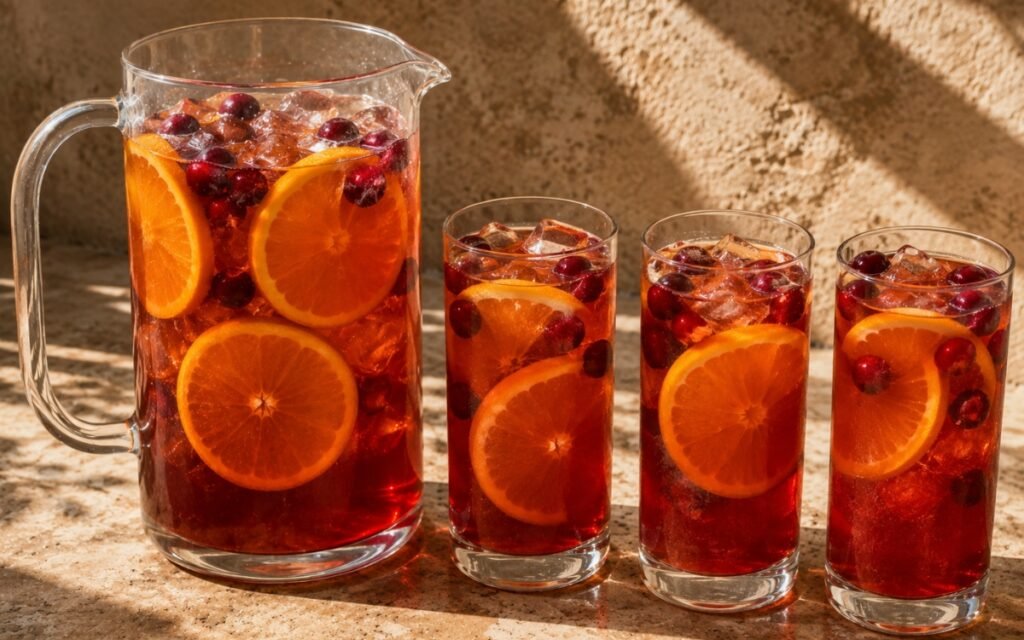
Cranberry Orange Iced Tea Pitcher
Strong black tea combined with lightly crushed, cold-macerated cranberries, orange zest and juice, and a second infusion of orange slices and split whole cranberries.
Peach Lemonade Pitcher Drink
900g skin-on ripe peaches in honey syrup with lemon zest off heat — combined with 300–360ml lemon juice, salt, cold water, chilled. Warm, floral, and crowd-ready.
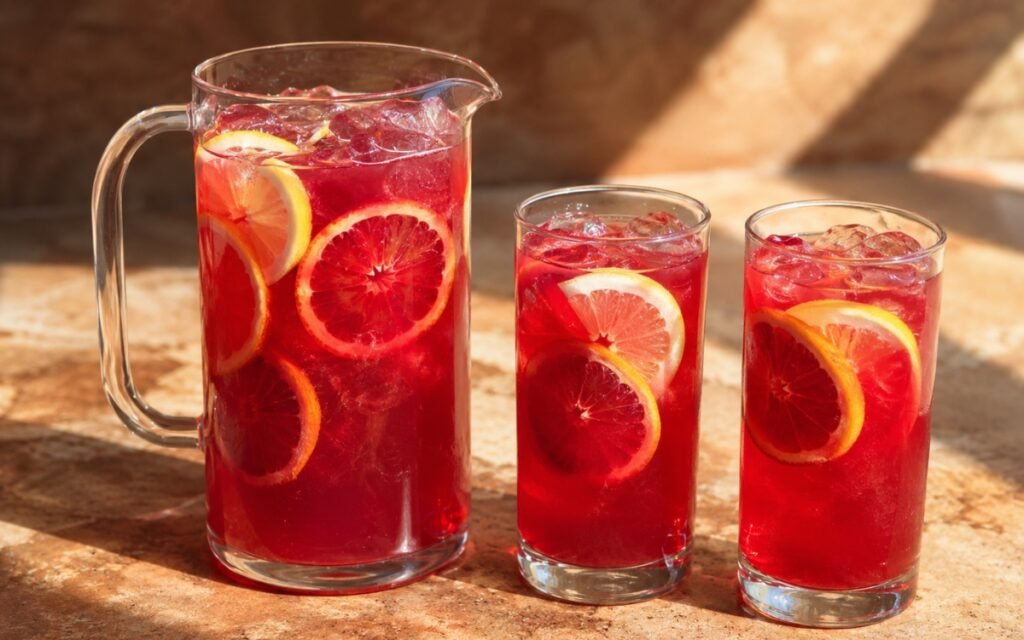
Blood Orange Citrus Pitcher
Brown sugar syrup with blood orange and lemon zest off heat — combined with 750ml blood orange juice, 240ml lemon for structure, cold water, chilled. Vivid and crowd-ready.

You might also like
You might also like
Maple Cinnamon Iced Latte
Pure maple syrup gently infused with cinnamon, cold milk, and ice topped with freshly brewed espresso, finished with thin foam and a light drizzle.
Chamomile Honey White Iced Tea
White tea at 75–80°C for 3–4 minutes, chamomile infused 5–7 minutes and tasted early — lemon peel, mild honey, chilled. Soft, floral, soothing.
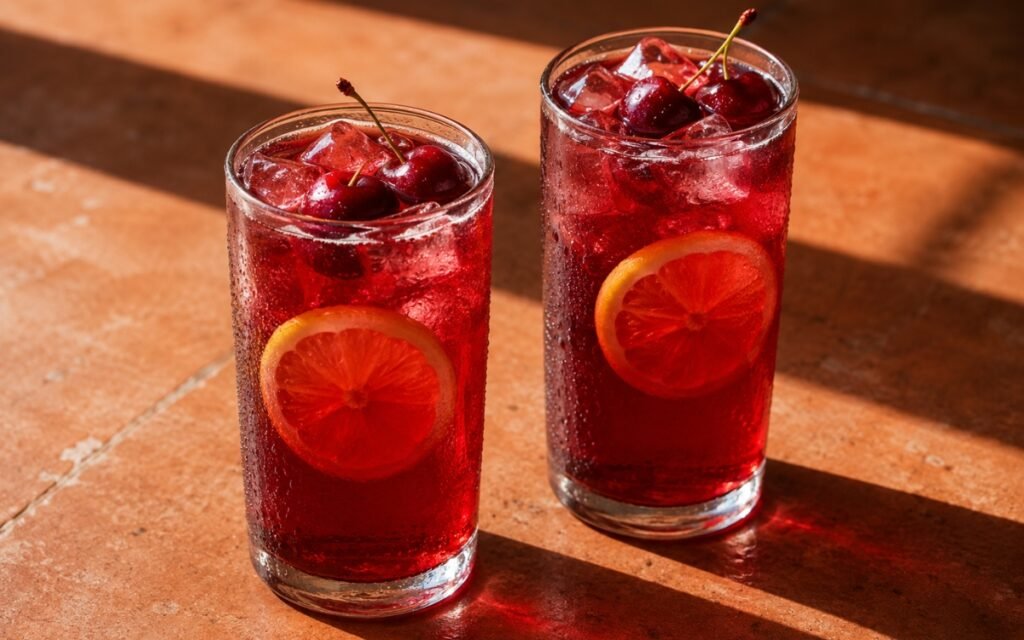
Cherry Lemonade
Cherries simmered with honey for extraction, lemon zest 10 minutes off heat — combined with fresh lemon juice, salt, cold water, chilled. Rich, ruby, and citrus-forward.


Strawberry Basil Pitcher Drink
Ingredients
Method
- Set aside 300g strawberries for the second infusion. Slice them thinly and refrigerate. Roughly chop the remaining 900g strawberries and place them in a large bowl. Add the sugar and the pinch of salt. Mash gently but thoroughly until the strawberries release a lot of juice. Let sit for 20 to 30 minutes. The strawberries should look glossy, juicy, and syrupy before straining. If they still look dry, give them more time. Sugar and salt together draw moisture out of the strawberries’ own cell structure through osmosis, and watching for that specific glossy, syrupy visual cue is the most reliable way to confirm the maceration has actually released enough juice before moving forward.
- Take about 10 to 12g basil leaves and tear them lightly by hand. Add them to the strawberry pulp. Mash very gently for 20 to 30 seconds — just enough to release the basil aroma into the strawberry juice. Do not grind the basil into a paste. Basil becomes dull and grassy if it is crushed too hard or left in the pulp too long. Keep this extraction short and gentle. That specific, brief window — 20 to 30 seconds, no longer — is calibrated precisely to release basil’s aromatic oils into the surrounding strawberry juice without pushing past that point into the territory where the herb’s own cell structure breaks down enough to introduce bitterness.
- Set a fine-mesh sieve over a large pitcher or bowl. Pour in the strawberry-basil pulp and press gently with a spoon to extract the juice. Do not force every bit of pulp through. You want a clean, drinkable base, not a thick smoothie texture. Discard the solids. Pressing only gently here, rather than firmly, keeps the finished base genuinely drinkable rather than thick with strawberry pulp — a distinction that matters specifically because this base still carries the recently mashed basil, whose own bitter compounds would be more likely to release under firmer pressure than a plain strawberry mash alone.
- Add the fresh lemon juice to the strained strawberry-basil base. Stir well. Add 3.2 liters cold filtered water and taste. Add more cold water if needed, aiming for about 4 liters total. The drink should taste bright, strawberry-forward, lightly herbal, and refreshing. This tasting checkpoint matters directly given how much strawberry ripeness and sweetness can vary — building in that adjustment stage accounts for that natural variability rather than assuming a fixed recipe always lands at the same balance.
- Add the reserved sliced strawberries to the pitcher. Take the remaining 8 to 10g basil leaves, lightly rub or clap them between your fingers, then add them to the drink. Stir gently. Refrigerate for 1 to 2 hours so the sliced strawberries and basil lightly infuse the pitcher. The basil should smell fresh and aromatic, not dominant. If the basil flavor is strong enough before 2 hours, remove the leaves. This second, separate basil addition — handled even more gently than the first, with only a light rub rather than any mashing — layers in a fresh, distinct herbal note on top of the base’s own already-established basil character.
- Add ice to the pitcher just before serving, or fill individual glasses with ice. Pour the strawberry basil drink over the ice, making sure each glass gets a few strawberry slices and basil leaves. Adding the ice only at this final stage, rather than earlier, protects the drink from being diluted before the second infusion has had its full window to actually develop.