
Spaghetti alle Vongole
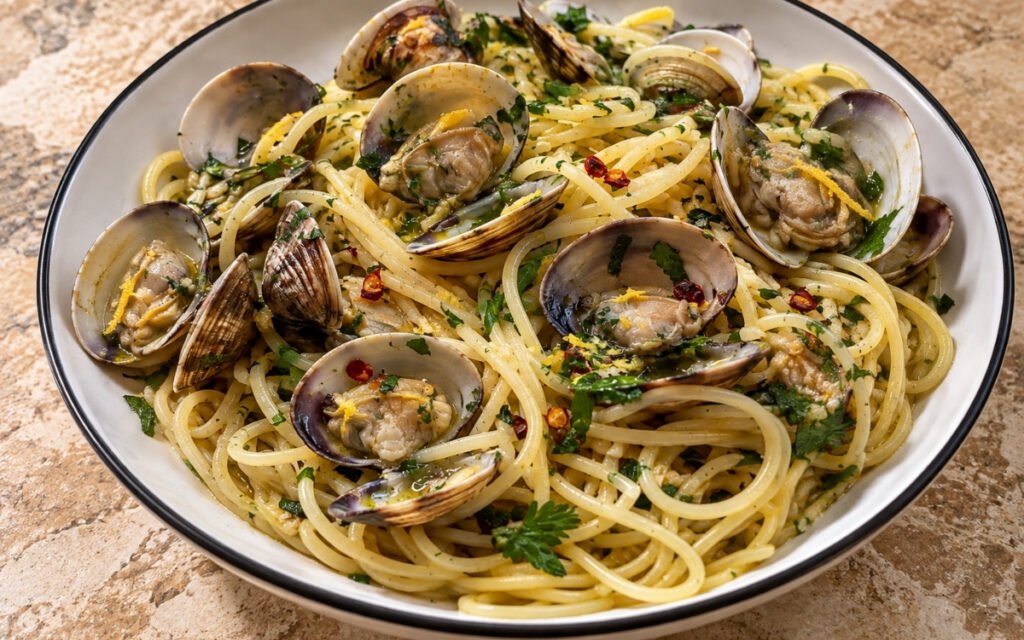
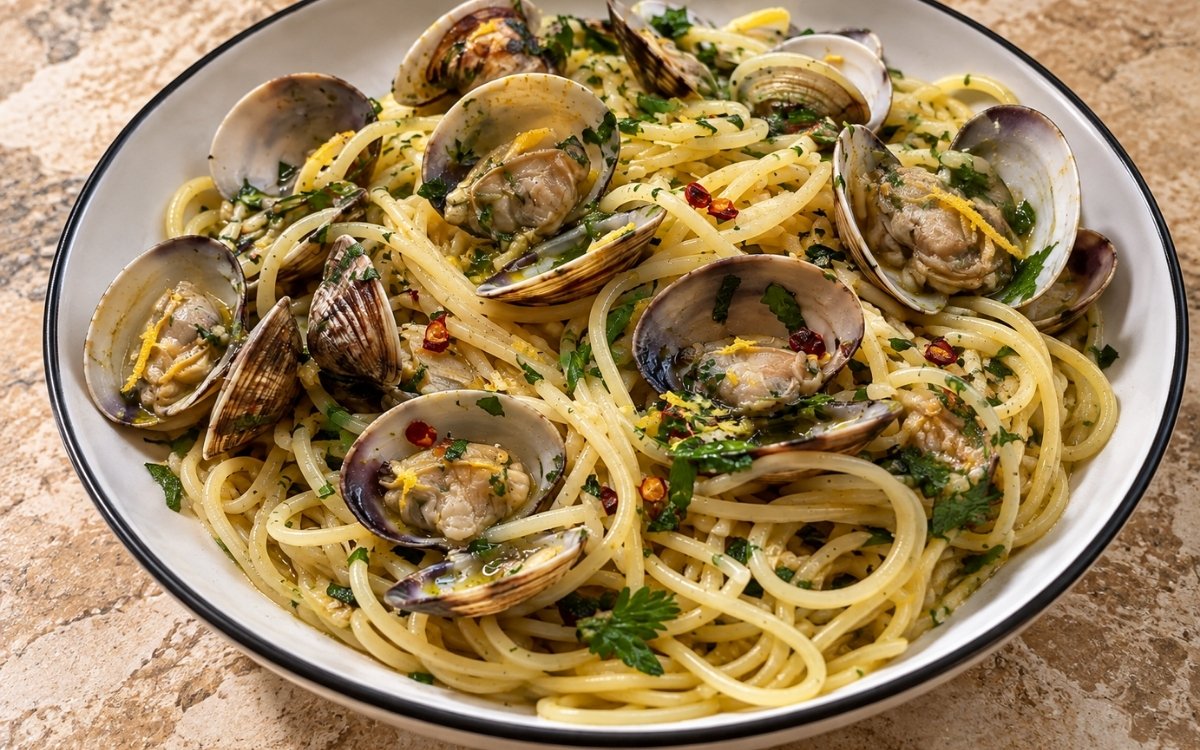
A classic white spaghetti alle vongole made with fresh clams, olive oil, garlic, dry white wine, parsley, chili flakes, and a light touch of lemon zest, finished in the pan until the sauce lightly emulsifies and clings to the pasta. Straining the clam liquor through a fine mesh before it ever meets the sauce is the technique this whole dish depends on for a genuinely clean result — even well-cleaned clams often release some grit during cooking, the same strain-before-using principle used elsewhere in this collection whenever a flavourful cooking liquid needs one final safeguard against any residual sand or sediment. Pulling each clam from the pan the instant it opens, rather than leaving the whole batch to cook uniformly, is what protects the meat from turning shrunken and rubbery. Finishing the spaghetti directly in the pan with the strained liquor, olive oil, and starchy pasta water is what builds a real, light emulsion rather than a watery or oily sauce. The payoff is a dish with real, classic Italian restraint — glossy, lightly clinging spaghetti studded with tender clams, brightened by garlic, chili, parsley, and a whisper of lemon.
Prep Time : 20 min
Cook Time : 20 min
Servings : 4
20 min
20 min
4
Ingredients
For the Clams and Pasta
• 1.4–1.6kg fresh small clams in shells (littleneck, Manila, or similar)
• 400g spaghetti — this one on Amazon
• Water, for boiling
• Salt, for the pasta water — salt more lightly than usual because the clams and their liquor are naturally salty
For the Sauce
• 60ml extra-virgin olive oil — this one on Amazon
• 5 garlic cloves, thinly sliced
• ½ tsp chili flakes, or to taste
• 120ml dry white wine
• 20g flat-leaf parsley, finely chopped
• Finely grated zest of 1 lemon
• 120–180ml reserved pasta water, as needed
• Fine sea salt, only if needed after tasting
• Freshly ground black pepper, optional and light
This post may contain affiliate links. As an Amazon Associate I earn from qualifying purchases, at no additional cost to you.
Directions
- Clean and Purge the Clams
Rinse the clams under cold running water and scrub the shells well. Discard any clams with cracked shells. If any are open, tap them firmly on the counter: if they do not close, discard them. If the clams are sandy, place them in a bowl of cold salted water for 30–60 minutes to help them purge grit, then lift them out, rinse again, and keep them cold. The entire dish depends on clean clams. Sandy clams will ruin the sauce no matter how well the pasta is cooked. That upfront cleaning and purging stage is the genuine foundation the entire dish rests on — no amount of careful pasta cooking or sauce building later can rescue a dish undermined by grit at its very source. - Start the Pasta Water
Bring a large pot of water to a boil. Salt it, but slightly less heavily than for a normal pasta dish because the clam liquor will season the sauce later. Do not cook the spaghetti yet — first open the clams and build the sauce base. That deliberately lighter salting accounts for real, additional seasoning still to come from the clams’ own naturally salty liquor, protecting the finished dish from turning oversalted once everything comes together. - Open the Clams
In a wide deep skillet or sauté pan large enough to later hold the pasta, heat the olive oil over medium heat. Add the sliced garlic and chili flakes and cook gently for 30–60 seconds, just until fragrant. Do not let the garlic brown deeply or it will turn bitter. Add the clams and pour in the white wine. Immediately cover with a lid and cook for 2–5 minutes, shaking the pan once or twice, until the clams begin to open. As the clams open, transfer them with tongs to a bowl. Continue cooking only until nearly all are open. Discard any clams that remain shut after cooking. Do not overcook the clams. As soon as they open, remove them. Overcooked clams turn shrunken and rubbery. Pulling each clam the moment it opens, rather than waiting for the entire batch to finish together, protects the earliest-opening pieces from sitting over continued heat considerably longer than they actually need. - Strain the Clam Liquor
Pour the cooking liquid left in the pan through a fine-mesh sieve lined with a paper towel, cheesecloth, or coffee filter into a bowl or jug to catch any sand. Wipe out the pan if needed. Never skip straining the clam liquor. Even well-cleaned clams often release some grit. That straining step is a genuine, final safeguard against exactly the kind of residual sediment even a thorough purge doesn’t always fully eliminate, protecting the finished sauce from any unwelcome grit. - ook the Spaghetti
Drop the spaghetti into the boiling water and cook until very al dente, usually 2–3 minutes less than fully done according to the package. Before draining, reserve at least 250ml pasta water. Pulling the spaghetti genuinely short of al dente leaves real room for it to finish cooking directly in the pan, absorbing the clam liquor and building the sauce’s own emulsion as it does. - Build the Sauce Base
Return the cleaned pan to medium heat. Pour in the strained clam liquor. Let it simmer briefly for 30–60 seconds to concentrate slightly, but do not reduce it aggressively. Add a small splash of reserved pasta water if needed to balance the salinity and create enough liquid to finish the pasta. Taste the liquid before adding any salt. Often it needs none. That deliberately brief simmer concentrates the liquor’s own flavour just slightly without pushing its natural salinity any further than it already carries on its own. - Finish the Pasta
Transfer the very al dente spaghetti directly into the pan with the clam liquor. Toss and stir continuously over medium heat, adding reserved pasta water a little at a time until the sauce becomes glossy and lightly emulsified. When the spaghetti is nearly done and the sauce is clinging to the strands rather than pooling thinly in the pan, add the chopped parsley and lemon zest. Return the clams to the pan and toss gently just long enough to warm them through, about 30–45 seconds. The sauce should be light, glossy, and fluid — not watery, not oily, and not thick like a cream sauce. The emulsion comes from the clam liquor, olive oil, and starchy pasta water. Returning the clams only at this final stage, for the briefest possible warming, protects them from any further cooking that would push their already-tender texture toward rubbery. - Serve Immediately
Twirl the spaghetti into warm bowls and distribute the clams evenly. Spoon over any remaining pan juices. Finish with a last drizzle of good olive oil if desired. Serve immediately. This dish’s whole appeal depends on that fluid, glossy emulsion staying intact — it continues tightening and changing the longer it sits, which is exactly why serving without delay matters here.
*Notes :
- The initial cleaning and purging of the clams deserves genuine recognition as the real foundation this entire dish is built on. The recipe’s own explicit statement that “the entire dish depends on clean clams” reflects a hard truth — no amount of careful technique in the pasta cooking or sauce building that follows can rescue a dish undermined by grit introduced right at the very start.
- Pulling each clam from the pan the instant it opens, rather than waiting for the whole batch to finish uniformly, deserves the same attention this technique receives throughout this collection’s other shellfish preparations. Clams open at genuinely different rates even within the same batch, and leaving the earliest ones in the pan while later ones catch up would expose them to considerably more heat than their already-tender meat can handle without turning rubbery.
- Straining the clam liquor through a fine mesh deserves genuine respect as a real, necessary safeguard rather than an optional precaution. The recipe’s own direct warning that this step should never be skipped, “even well-cleaned clams often release some grit,” reflects a real, common failure point this one step exists specifically to prevent.
- Finishing the spaghetti directly in the pan with the strained liquor, olive oil, and starchy reserved pasta water deserves attention as the technique responsible for this dish’s whole defining texture. That combination is specifically what builds a real, light emulsion — the recipe’s own careful distinction between “not watery, not oily, and not thick like a cream sauce” reflects exactly how narrow and deliberate that target consistency actually is.
Why This Recipe Works
This recipe works because the clams are cleaned and purged thoroughly before anything else happens, protecting the whole dish from grit at its very source. Each clam is pulled the moment it opens, protecting its tender texture from overcooking.
he clam liquor is strained as a genuine final safeguard, and the spaghetti is pulled short of al dente, leaving room to finish directly in the pan.
Building the sauce as a real emulsion of clam liquor, olive oil, and starchy pasta water delivers the dish’s characteristic light, glossy texture, and returning the clams only briefly at the end protects them from any further overcooking.
Ingredient Breakdown
Thoroughly Cleaned, Purged Clams
The critical foundation — protects the entire dish from grit that no later technique could otherwise correct.
Individually Pulled Clams (As Each Opens)
The critical technique — protects the earliest-opening pieces from overcooking while later ones catch up.
Strained Clam Liquor
The critical safeguard — removes residual grit even well-cleaned clams commonly still release.
Underdone Spaghetti (2–3 Minutes Shy)
The critical technique — leaves real room to finish cooking directly in the pan, building the sauce’s own emulsion.
Emulsified Sauce (Liquor, Oil, Pasta Water)
The critical technique — the specific, narrow combination that produces this dish’s light, glossy, non-watery texture.
Late-Returned Clams
The finishing technique — warmed through only briefly, protecting their tender texture from any further overcooking.
Flavor Structure Explained
This spaghetti alle vongole follows a layered balance model:
- Glossy, emulsified foundation (clam liquor, olive oil, starchy pasta water)
- Sweet, briny centre (fresh, individually pulled clams)
- Warm aromatic depth (garlic, chili flakes)
- Bright finishing lift (parsley, lemon zest)
A glossy, genuine emulsion of clam liquor, olive oil, and starchy pasta water provides this dish’s foundational texture and clean, briny flavour. Fresh, individually pulled clams contribute a sweet, tender centre throughout. Garlic and chili flakes add warm, classic aromatic depth without overwhelming the clams’ own delicate flavour. Fresh parsley and a light touch of lemon zest finish the dish with bright, restrained lift, tying every element of this classic white pasta together.
Common Mistakes to Avoid
- Skipping the Clam Cleaning and Purging Step – This risks grit ruining the entire finished sauce. Always clean thoroughly and purge if the clams seem sandy.
- Leaving All the Clams in the Pan Until the Whole Batch Opens – This overcooks the earliest-opening pieces, turning them rubbery. Always pull each one individually as it opens.
- Skipping the Straining Step – This risks residual grit even well-cleaned clams still release. Always strain the liquor through a fine mesh.
- Boiling the Spaghetti to Full Al Dente – This leaves no room for it to finish in the pan and absorb the sauce properly. Always pull it 2 to 3 minutes short.
- Returning the Clams Too Early or Cooking Them Too Long at the End – This risks turning already-tender clams rubbery. Always add them back only for the final 30 to 45 seconds.
Variations
Shelled Version
Remove half the clam meat from the shells after steaming and return it to the sauce, leaving the rest in shell, per the recipe’s own suggestion, for a version that’s easier to eat while still keeping some classic presentation.
Extra-Spicy Version
Increase the chili flakes for a more assertive, lingering heat throughout the finished dish, adjusting the amount to taste before the sauce is fully built.
Brighter Lemon Version
Add a few careful drops of fresh lemon juice alongside the zest, per the recipe’s own guidance, keeping the acidity genuinely restrained so it doesn’t dominate the clams’ own delicate flavour.
Extra-Wine-Forward Version
Increase the white wine slightly during the clam-opening stage for a more pronounced wine character running through the finished sauce, provided a genuinely dry variety is used throughout.
Storage & Make-Ahead
Do not use cream in this dish, since a classic vongole depends entirely on a light olive-oil-and-clam-liquor emulsion, and do not add tomato sauce either, since this particular version is specifically the classic white style rather than a red one.
Do not add Parmesan or Pecorino at any point, since cheese would genuinely overwhelm the clams’ own delicate flavour, a restraint that’s central to what makes this dish read as authentically classic rather than heavier and more assertive.
Use a dry white wine that you would genuinely enjoy drinking on its own, avoiding anything sweet, since that wine’s own character carries directly into the finished sauce and a sweeter bottle would throw off the dish’s intended balance.
If the sauce tastes too salty before the pasta goes in, dilute it with a little more pasta water rather than reaching for additional wine, and if the pan looks dry while finishing the pasta, add more pasta water in small additions rather than all at once.
This dish is genuinely best served immediately, since it is not one that improves by sitting, and both the glossy emulsion and the clams’ own tender texture begin changing noticeably the longer the finished pasta waits before reaching the table.
Frequently Asked Questions
Why does the whole dish depend so heavily on how the clams are cleaned?
Sandy or improperly cleaned clams introduce grit that no later technique in the recipe can correct. That initial cleaning and purging stage is the genuine foundation everything else in this dish is built on.
Why are the clams pulled individually as each one opens, rather than all at once?
Clams open at genuinely different rates even within the same batch. Leaving the earliest ones in the pan while later ones catch up exposes them to considerably more heat than their tender meat can handle without turning rubbery.
Why is the clam liquor strained even when the clams have already been cleaned well?
Even well-cleaned clams often release some residual grit during cooking. Straining is a genuine, necessary final safeguard against that sediment ending up in the finished sauce.
Why does the spaghetti need to be pulled short of al dente before it’s finished in the pan?
That underdone pasta leaves real room to finish cooking directly in the clam liquor, olive oil, and starchy pasta water, which is exactly what builds the dish’s characteristic light, glossy emulsion.
Are there other classic Italian seafood, shellfish, or light olive-oil pasta dishes worth trying?
Italian Puttanesca Pasta offers another classic Italian pasta direction worth exploring. Lemon Garlic Shrimp Pasta and Shrimp Scampi Pasta are also worth trying for other classic seafood pastas, and Aglio e Olio Pasta and Sicilian Orange & Fennel Salad offer other light, classic Italian dishes worth exploring alongside this one.
Nutrition Facts
( per serving )
Calories
~580 kcal
Protein
32 g
Fat
18 g
Carbs
72 g
Calories
~580 kcal
Protein
32 g
Fat
18 g
Carbs
72 g
Related Recipes
Related Recipes

Spicy Italian ‘Nduja Pasta
Calabrian ‘nduja melted into olive oil until it becomes the sauce — mascarpone finish, 30 minutes.
Mushroom Risotto
Creamy Arborio or Carnaroli rice with browned meaty mushrooms, white wine, shallot, and Parmesan, finished loose and silky.
Fresh Lemon Chicken Orzo
Seared chicken thighs simmered in lemony stock with feta, spinach, and dill — one pan, 40 minutes.
You might also like
You might also like
Shrimp Po’Boy Tacos
Crispy fried shrimp in warm homemade corn tortillas with cold shredded lettuce, tomato, pickles, and creamy remoulade.
Tiramisu
Espresso-soaked savoiardi layered with a light, airy mascarpone cream, finished generously with unsweetened cocoa powder.
Deep Fried Calamari
Tender squid rings and tentacles lightly coated in flour and cornstarch, fried briefly until pale golden and crisp, served with marinara.
Spaghetti alle Vongole
Ingredients
Method
- Rinse the clams under cold running water and scrub the shells well. Discard any clams with cracked shells. If any are open, tap them firmly on the counter: if they do not close, discard them. If the clams are sandy, place them in a bowl of cold salted water for 30–60 minutes to help them purge grit, then lift them out, rinse again, and keep them cold. The entire dish depends on clean clams. Sandy clams will ruin the sauce no matter how well the pasta is cooked. That upfront cleaning and purging stage is the genuine foundation the entire dish rests on — no amount of careful pasta cooking or sauce building later can rescue a dish undermined by grit at its very source.
- Bring a large pot of water to a boil. Salt it, but slightly less heavily than for a normal pasta dish because the clam liquor will season the sauce later. Do not cook the spaghetti yet — first open the clams and build the sauce base. That deliberately lighter salting accounts for real, additional seasoning still to come from the clams’ own naturally salty liquor, protecting the finished dish from turning oversalted once everything comes together.
- In a wide deep skillet or sauté pan large enough to later hold the pasta, heat the olive oil over medium heat. Add the sliced garlic and chili flakes and cook gently for 30–60 seconds, just until fragrant. Do not let the garlic brown deeply or it will turn bitter. Add the clams and pour in the white wine. Immediately cover with a lid and cook for 2–5 minutes, shaking the pan once or twice, until the clams begin to open. As the clams open, transfer them with tongs to a bowl. Continue cooking only until nearly all are open. Discard any clams that remain shut after cooking. Do not overcook the clams. As soon as they open, remove them. Overcooked clams turn shrunken and rubbery. Pulling each clam the moment it opens, rather than waiting for the entire batch to finish together, protects the earliest-opening pieces from sitting over continued heat considerably longer than they actually need.
- Pour the cooking liquid left in the pan through a fine-mesh sieve lined with a paper towel, cheesecloth, or coffee filter into a bowl or jug to catch any sand. Wipe out the pan if needed. Never skip straining the clam liquor. Even well-cleaned clams often release some grit. That straining step is a genuine, final safeguard against exactly the kind of residual sediment even a thorough purge doesn’t always fully eliminate, protecting the finished sauce from any unwelcome grit.
- Drop the spaghetti into the boiling water and cook until very al dente, usually 2–3 minutes less than fully done according to the package. Before draining, reserve at least 250ml pasta water. Pulling the spaghetti genuinely short of al dente leaves real room for it to finish cooking directly in the pan, absorbing the clam liquor and building the sauce’s own emulsion as it does.
- Return the cleaned pan to medium heat. Pour in the strained clam liquor. Let it simmer briefly for 30–60 seconds to concentrate slightly, but do not reduce it aggressively. Add a small splash of reserved pasta water if needed to balance the salinity and create enough liquid to finish the pasta. Taste the liquid before adding any salt. Often it needs none. That deliberately brief simmer concentrates the liquor’s own flavour just slightly without pushing its natural salinity any further than it already carries on its own.
- Transfer the very al dente spaghetti directly into the pan with the clam liquor. Toss and stir continuously over medium heat, adding reserved pasta water a little at a time until the sauce becomes glossy and lightly emulsified. When the spaghetti is nearly done and the sauce is clinging to the strands rather than pooling thinly in the pan, add the chopped parsley and lemon zest. Return the clams to the pan and toss gently just long enough to warm them through, about 30–45 seconds. The sauce should be light, glossy, and fluid — not watery, not oily, and not thick like a cream sauce. The emulsion comes from the clam liquor, olive oil, and starchy pasta water. Returning the clams only at this final stage, for the briefest possible warming, protects them from any further cooking that would push their already-tender texture toward rubbery.
- Twirl the spaghetti into warm bowls and distribute the clams evenly. Spoon over any remaining pan juices. Finish with a last drizzle of good olive oil if desired. Serve immediately. This dish’s whole appeal depends on that fluid, glossy emulsion staying intact — it continues tightening and changing the longer it sits, which is exactly why serving without delay matters here.