
Shrimp Po’Boy Tacos
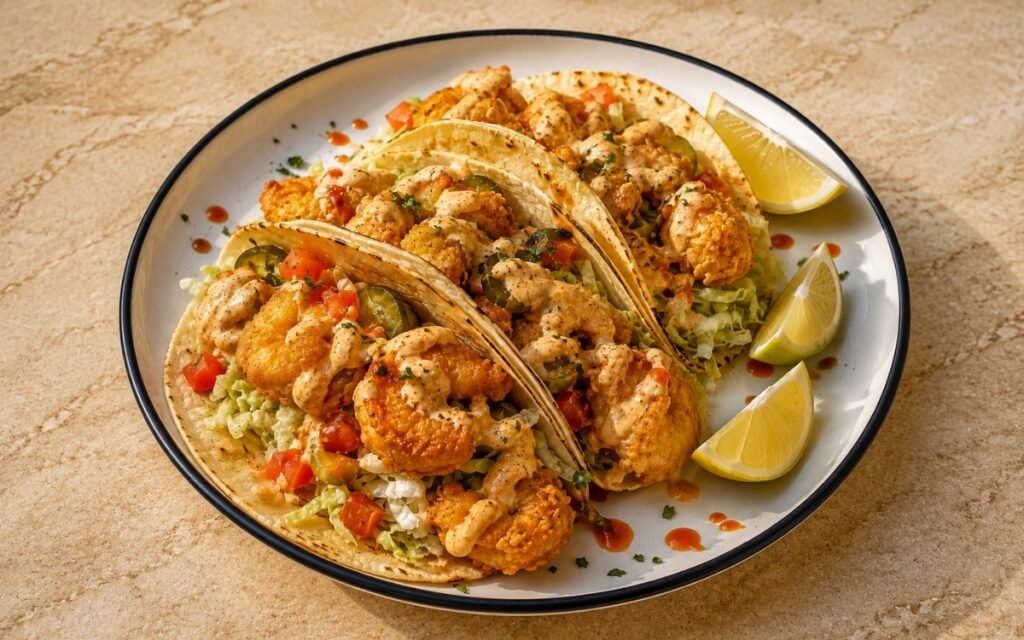
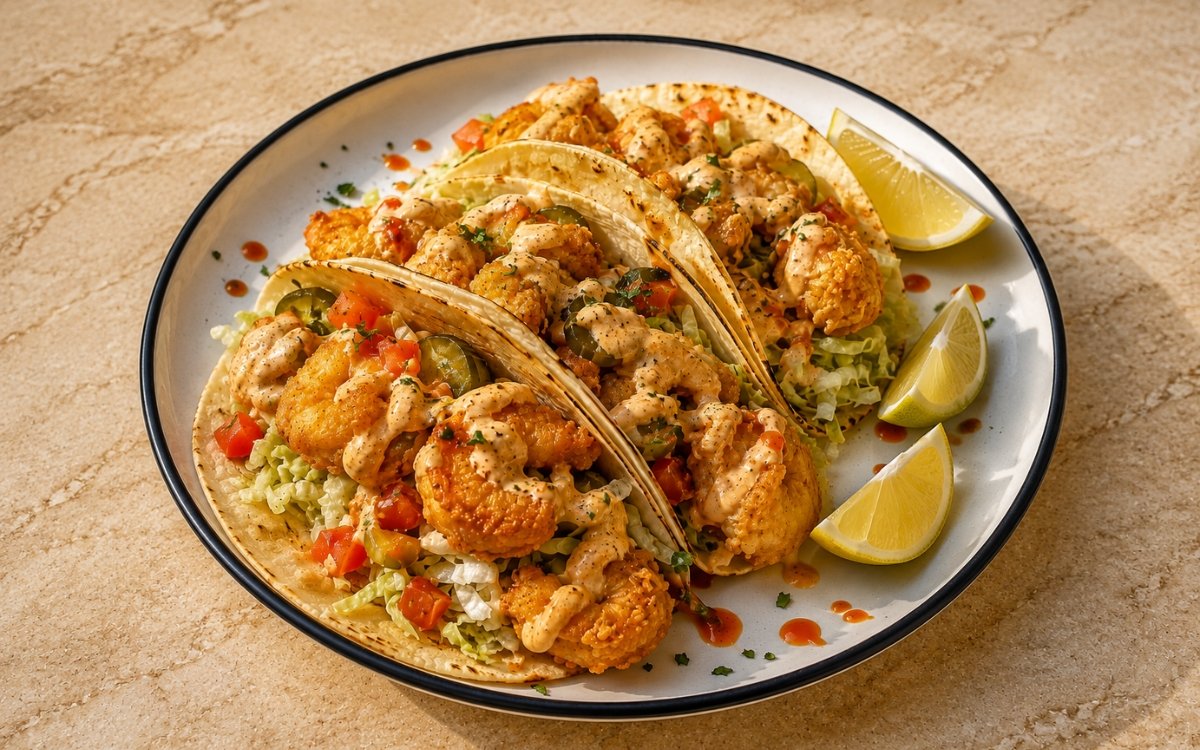
Crispy fried shrimp piled into warm homemade corn tortillas with shredded lettuce, diced tomato, pickles, and creamy remoulade. This keeps the soul of a New Orleans shrimp po’boy — crunchy shrimp, cold fresh toppings, sharp pickles, rich sauce — but turns it into a generous taco format. Resting the breaded shrimp briefly before frying is the technique this whole dish depends on for a coating that actually clings — that short window lets the dredge properly hydrate and adhere, the same rest-before-frying principle used elsewhere in this collection whenever a breaded protein needs its coating to survive contact with hot oil rather than sliding off. Frying in small, uncrowded batches at a maintained temperature is what keeps the shrimp genuinely crisp rather than greasy or rubbery. Keeping the fresh toppings cold and assembling only at the very last moment is what delivers this dish’s whole point — hot, crackling shrimp meeting cold, crunchy lettuce and sharp pickle in the same bite. The payoff is a taco with real contrast — deeply crisp fried shrimp against cool, fresh crunch and a rich, tangy remoulade.
Prep Time : 35 min
Cook Time : 25 min
Servings : 4
35 min
25 min
4
Ingredients
For the Homemade Corn Tortillas — ⅔ Batch (Full recipe — see Homemade Corn Tortillas)
• 160g masa harina — this one on Amazon
• 2g fine sea salt
• 200g warm water, approximately 40°C
For the Shrimp
• 700g raw shrimp, peeled and deveined, tails removed
• 5g fine sea salt
• 2g freshly ground black pepper
• 3g garlic powder — this one on Amazon
• 3g onion powder — this one on Amazon
• 2g smoked paprika or sweet paprika — this one on Amazon
• 120ml buttermilk
• 1 large egg
• 150g all-purpose flour — this one on Amazon
• 70g fine cornmeal — this one on Amazon
• 20g cornstarch
• 5g baking powder
• Neutral frying oil, as needed
For the Remoulade
• 120g mayonnaise
• 10g Dijon mustard — this one on Amazon
• 10g whole grain mustard or Creole mustard if available
• 10ml lemon juice
• 5ml hot sauce
• 1 small garlic clove, very finely grated or minced
• 10g finely diced cornichons or pickles
• 5g capers, finely chopped (optional but classic in character)
• 1 tbsp finely chopped parsley
• 1 tsp paprika — this one on Amazon
• Fine sea salt, to taste
• Freshly ground black pepper, to taste
For the Taco Filling
• 250g finely shredded iceberg lettuce or romaine
• 2 medium tomatoes, diced
• 120g sliced pickles or diced pickles
• Fresh parsley or cilantro, optional
• Hot sauce, for serving
• Lemon wedges, for serving
This post may contain affiliate links. As an Amazon Associate I earn from qualifying purchases, at no additional cost to you.
Directions
- Prepare the Small Corn Tortillas
Prepare the Homemade Corn Tortilla dough according to its separate recipe, using 160g masa harina, 2g fine sea salt, and 200g warm water at about 40°C. Mix until a soft masa dough forms, then rest it covered. Divide the rested dough into 16 equal balls of about 22g each. Keep the dough balls covered at all times so the masa does not dry out. Press each tortilla to about 11.4cm / 4.5 inches in diameter. Cook on a dry hot skillet or griddle until lightly charred, flexible, and just cooked through. Stack immediately under a towel so the tortillas steam and stay pliable. The tortillas need to stay warm and flexible. Dry tortillas crack once filled with shrimp and sauce. That trapped steam under the towel is exactly what keeps them soft enough to fold around a generous, crunchy filling without splitting. - Make the Remoulade
In a bowl, mix the mayonnaise, Dijon mustard, whole grain or Creole mustard, lemon juice, hot sauce, garlic, diced pickles, capers if using, parsley, and paprika. Season with salt and black pepper to taste. Refrigerate until needed. The remoulade should be thick enough to sit on the shrimp, but loose enough to drizzle. If it feels too stiff, add a few drops of lemon juice or water. Building the sauce with two distinct mustards, plus diced pickle and capers worked directly in, gives it real, layered tang and texture beyond what a single mustard or plain mayonnaise base alone would provide. - Season and Marinate the Shrimp
Pat the shrimp dry. Place them in a bowl and season with the salt, black pepper, garlic powder, onion powder, and paprika. Add the buttermilk and egg, then mix until the shrimp are evenly coated. Let them sit for 15 minutes. The shrimp should be coated but not swimming in excess liquid. This short marinade is enough for shrimp. Longer is not better here because shrimp are delicate and cook fast. Buttermilk’s mild acidity works on the shrimp’s protein much the way any acid does, and that brief window is calibrated to season and tenderize slightly without extending long enough to compromise the shrimp’s own delicate texture. - Prepare the Dredge
In a shallow dish or tray, combine the flour, cornmeal, cornstarch, and baking powder. Mix very well until uniform. The flour gives body, the cornmeal gives a classic southern-style crunch, the cornstarch keeps the crust light, and the baking powder helps the coating fry craggy instead of flat. Each dry ingredient here is doing distinct, specific work — no single component alone would produce the same layered texture this particular blend achieves together. - Bread the Shrimp
Lift the shrimp from the buttermilk mixture, letting excess drip off. Toss the shrimp in the dredge until fully coated. Press the dredge lightly onto each shrimp so the coating adheres. Place the breaded shrimp on a tray or rack and rest for 5 to 10 minutes. This short rest helps the coating hydrate and cling. If you fry immediately, more of the crust can fall off in the oil. That brief pause lets the buttermilk residue clinging to the shrimp begin actually binding with the dry coating, giving the crust real adhesion before it ever meets the shock of hot oil. - Fry the Shrimp
Heat neutral oil in a deep pot, Dutch oven, or fryer to 175–180°C. Fry the shrimp in batches for 2 to 3 minutes, depending on size, until deeply golden, crisp, curled, and just cooked through. Transfer to a wire rack or paper towel-lined tray. Season lightly with a little extra salt while hot. Do not overcrowd the oil. A crowded pot drops the temperature, extends the fry time, and makes shrimp rubbery before the crust gets crisp. Frying in properly small batches is what protects the oil’s own temperature from dropping too far when cold, breaded shrimp are added — a real drop lets the coating absorb excess oil rather than frying crisp. - Prepare the Fresh Fillings
Keep the lettuce cold and finely shredded. Dice the tomatoes. Slice or dice the pickles. Have the remoulade, hot sauce, lemon wedges, and warm tortillas ready before frying the final batch of shrimp. These tacos work because the hot crispy shrimp meets cold crunchy toppings. Do not assemble too early. Keeping every fresh component genuinely cold and ready before the last batch of shrimp is even out of the oil is what makes the immediate hot-cold contrast this dish depends on actually possible. - Assemble the Tacos
Place shredded lettuce into each warm tortilla. Add a generous pile of crispy fried shrimp. Top with diced tomato and pickles. Drizzle with remoulade. Add a few drops of hot sauce if desired. Finish with parsley or cilantro and serve with lemon wedges. Layering the cold lettuce directly against the tortilla, with the hot shrimp on top, keeps that crucial temperature contrast intact right up until the first bite.
*Notes :
- Resting the breaded shrimp for those 5 to 10 minutes before frying deserves genuine respect as the detail most responsible for whether the coating actually survives the oil or sheds off into it. That pause gives the buttermilk residue and dry dredge real time to begin binding together, something that simply doesn’t happen if the shrimp go straight from breading into hot oil — skipping this step is one of the more common reasons a fried coating fails to hold.
- The dredge’s specific four-ingredient combination — flour, cornmeal, cornstarch, and baking powder — deserves recognition as a deliberately engineered texture, not an arbitrary blend. Each component contributes something distinct: body, classic crunch, lightness, and craggy lift respectively. Removing any one would noticeably change the finished crust’s character, since none of the others fully compensates for what it provides.
- Frying in properly small, uncrowded batches, maintaining that specific 175–180°C range throughout, protects the shrimp from a real and specific failure mode. A significant oil temperature drop, caused by overcrowding, extends the shrimp’s actual time in the oil well past what’s needed to cook them through — that extra time is exactly what pushes them from tender toward the tight, rubbery texture overcooked shrimp are known for, even while the crust is still working to catch up.
- The recipe’s own explicit emphasis on keeping the fresh toppings cold and assembling only at the last possible moment deserves to be understood as this dish’s actual organizing principle. The entire appeal of a properly made po’boy-style taco rests on that direct contrast between hot, crackling shrimp and cold, crisp lettuce and pickle — assembling too early, letting either component drift toward room temperature, would blur exactly the distinction this dish is built around.
Why This Recipe Works
This recipe works because the shrimp are briefly marinated in buttermilk and egg, seasoned without overexposing their delicate texture to acid. The dredge combines four distinct ingredients, each contributing specific texture to the finished crust.
Resting the breaded shrimp before frying lets the coating properly hydrate and adhere, and frying in small, temperature-controlled batches keeps them genuinely crisp rather than greasy or rubbery.
Keeping the fresh toppings cold and ready, then assembling only at the very last moment, delivers the essential hot-cold, crisp-fresh contrast this dish depends on.
Ingredient Breakdown
Briefly Marinated Shrimp (Buttermilk and Egg)
The protein foundation — seasoned and lightly tenderized without extended acid exposure compromising texture.
Four-Component Dredge (Flour, Cornmeal, Cornstarch, Baking Powder)
The critical coating — each ingredient contributes distinct body, crunch, lightness, or lift.
Rested Breaded Shrimp (5–10 Minutes)
The critical technique — lets the coating hydrate and properly adhere before frying.
Properly Batched, Temperature-Controlled Frying
The critical technique — protects the shrimp from turning rubbery while the crust develops real crispness.
Cold, Last-Minute-Assembled Toppings
The organizing principle — delivers the essential contrast between hot, crisp shrimp and cold, fresh crunch.
Flavor Structure Explained
This shrimp po’boy taco follows a layered balance model:
- Crisp fried foundation (breaded, well-fried shrimp)
- Cool crunchy body (shredded lettuce, diced tomato, pickles)
- Rich tangy finish (remoulade)
- Soft warm base (homemade corn tortillas)
- Optional sharp heat (hot sauce, lemon wedges)
Crisp, well-fried shrimp provide this taco’s genuinely crunchy, savoury foundation. Cold shredded lettuce, diced tomato, and pickles contribute real crunch and freshness in direct contrast to the hot shrimp. Rich, tangy remoulade finishes the dish with creamy, sharp complexity. Soft, warm corn tortillas tie every component together, and optional hot sauce and lemon wedges add a final layer of heat and brightness at the table.
Common Mistakes to Avoid
- Marinating the Shrimp Too Long – This risks compromising their delicate texture with prolonged acid exposure. Always keep the buttermilk marinade brief.
- Frying the Shrimp Without Resting the Breading First – This risks the coating shedding off in the oil. Always rest for 5 to 10 minutes before frying.
- Overcrowding the Frying Oil – This drops the temperature and makes the shrimp rubbery. Always fry in small, properly spaced batches.
- Assembling the Tacos Too Early – This lets the hot-cold contrast blur as components reach the same temperature. Always keep toppings cold and assemble only at the last moment.
- Using Warm or Room-Temperature Lettuce – This loses the essential contrast against the hot shrimp. Always keep it genuinely cold until assembly.
Variations
Extra-Spicy Version
Add extra hot sauce to the remoulade itself, or increase the hot sauce drizzle at serving.
Classic Sandwich Version
Serve the same crispy shrimp, remoulade, and toppings on a soft French roll for a traditional po’boy instead of tacos.
Extra-Crunchy Version
Add a light scatter of extra diced pickle or a few thin slices of red onion for additional crunch.
Store-Bought Tortilla Version
Substitute good-quality store-bought small corn tortillas if homemade isn’t practical, warming them the same way.
Storage & Make-Ahead
Assemble right before serving so the tortillas stay soft and the shrimp stay crunchy.
The remoulade can be made a day ahead and refrigerated in a sealed container.
Fried shrimp are best eaten fresh and do not hold or reheat well while staying crisp.
Frequently Asked Questions
Why does the breaded shrimp need to rest before frying rather than going straight into the oil?
That rest gives the buttermilk residue and dry dredge real time to begin binding together. Frying immediately after breading is one of the more common reasons a coating sheds off rather than staying properly adhered.
Why does the dredge combine four different dry ingredients instead of just flour?
Each ingredient contributes something distinct — flour for body, cornmeal for classic crunch, cornstarch for lightness, and baking powder for a craggy, lifted texture. Removing any one would noticeably change the finished crust.
Why can’t the shrimp be marinated in buttermilk for longer than 15 minutes?
Shrimp are genuinely delicate, and buttermilk’s mild acidity works on their protein structure the way any acid would. A longer marinade risks compromising their texture rather than improving it.
Why is it so important to assemble these tacos only at the very last moment?
This dish’s whole appeal rests on the direct contrast between hot, crackling shrimp and cold, crisp lettuce and pickle. Assembling too early lets that temperature and texture contrast blur together.
Are there other po’boy, fried seafood, or crispy taco dishes worth trying?
Po’Boy Sandwich offers the classic sandwich version of this same flavour combination. Crispy Fish Tacos with Slaw and Shrimp Tacos with Lime Crema are also worth trying for other crispy seafood taco directions, and Deep-Fried Calamari offers another classic crispy seafood dish worth exploring.
Nutrition Facts
( per serving )
Calories
~640 kcal
Protein
36 g
Fat
30 g
Carbs
58 g
Calories
~640 kcal
Protein
36 g
Fat
30 g
Carbs
58 g
Related Recipes
Related Recipes

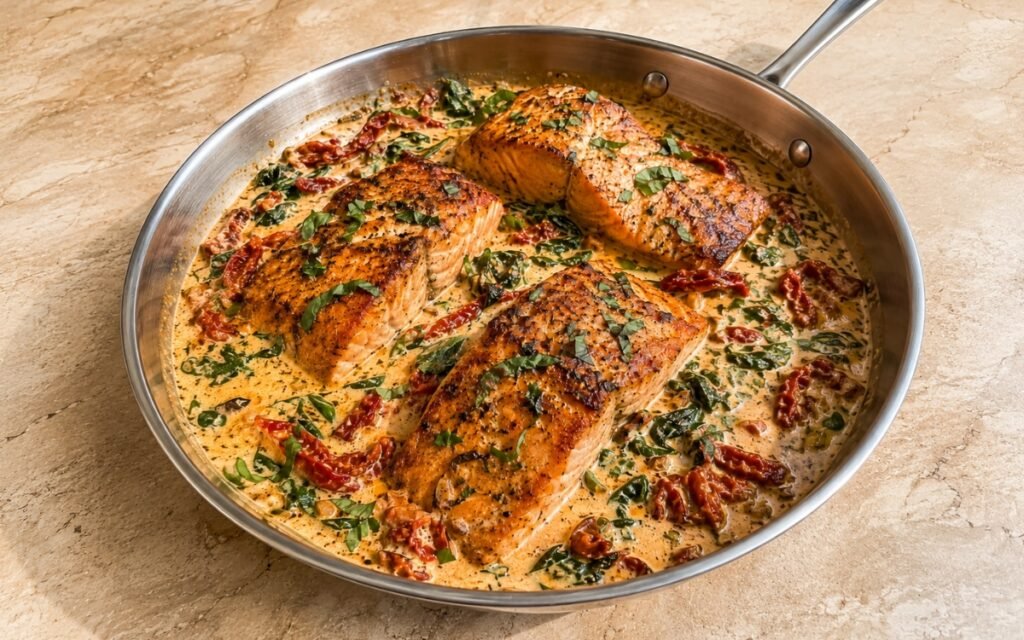
Creamy Tuscan Salmon
Deeply seared salmon finished gently in a rich garlic Parmesan cream sauce with sun-dried tomatoes, spinach, parsley, and basil.
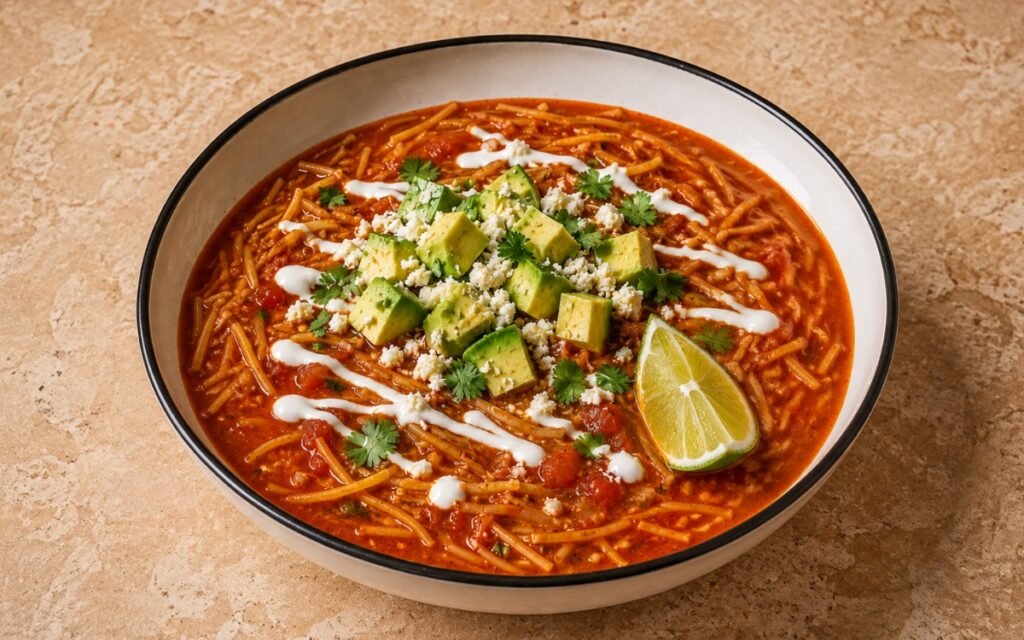
Sopa de Fideo
Toasted fideo noodles simmered in a rich, deeply cooked tomato broth, finished with avocado, crema, queso fresco, and lime.
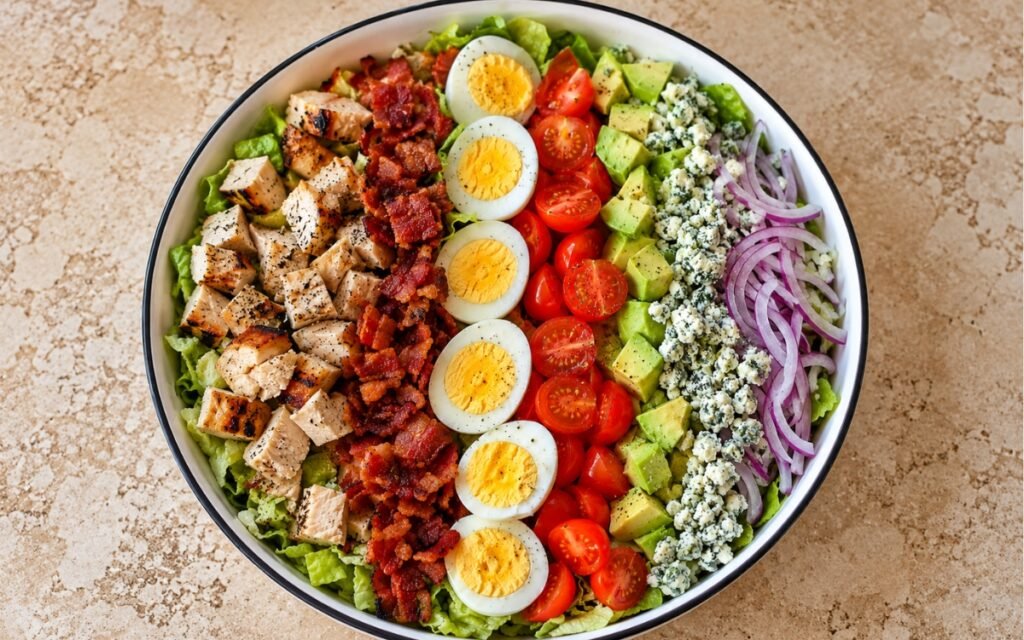
Classic Cobb Salad
Neat rows of seared chicken, crispy bacon, hard-boiled eggs, cherry tomatoes, avocado, blue cheese, and red onion over chopped lettuce with red wine vinaigrette.
You might also like
You might also like
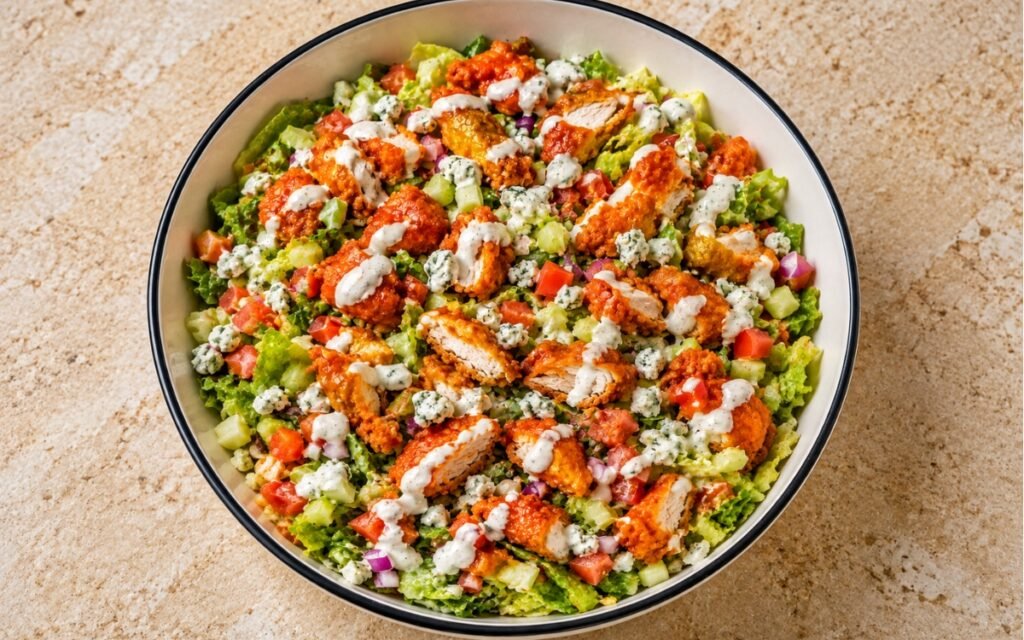
Buffalo Chicken Chopped Salad
Crispy Buffalo chicken pieces over chopped lettuce with celery, tomato, red onion, blue cheese crumbles, and creamy homemade ranch dressing.
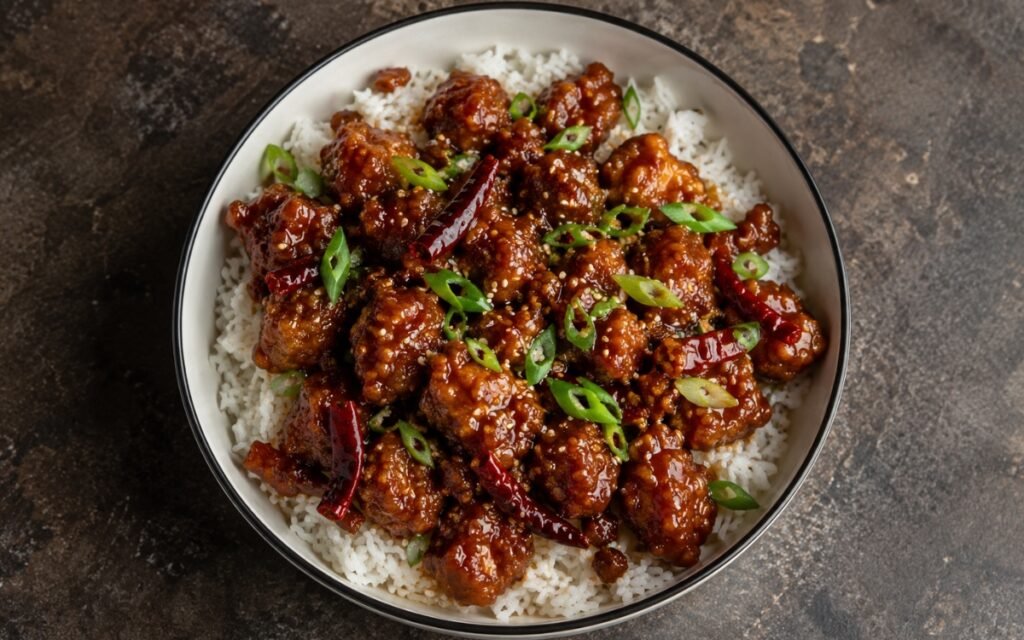
General Tso’s Chicken Rice Bowl
Golden fried chicken coated in sticky sweet-spicy General Tso’s sauce, served over jasmine rice with scallions and sesame.
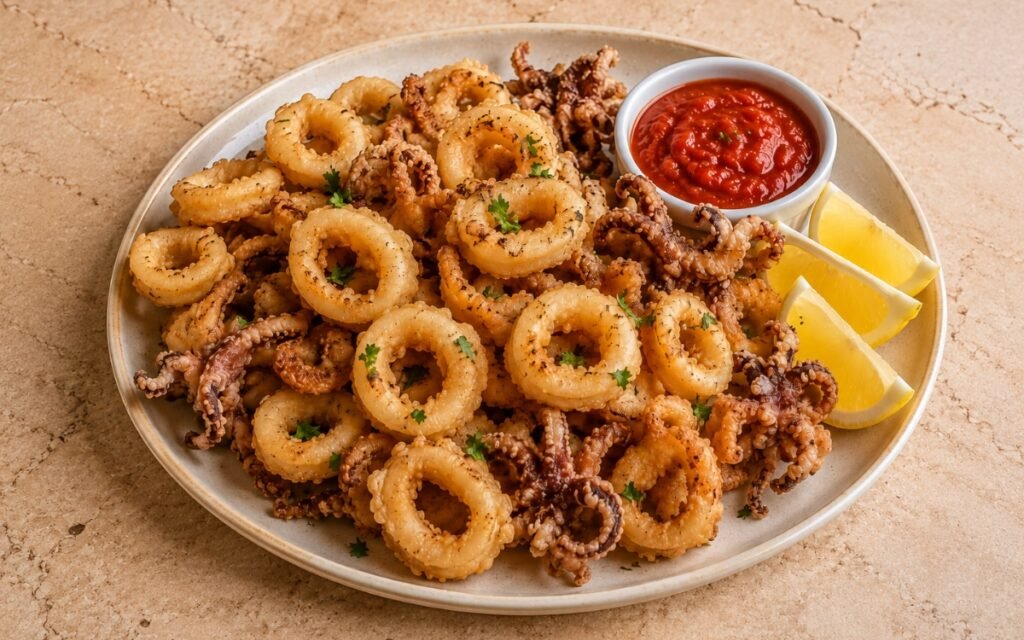
Deep Fried Calamari
Tender squid rings and tentacles lightly coated in flour and cornstarch, fried briefly until pale golden and crisp, served with marinara.
Shrimp Po’Boy Tacos
Ingredients
Method
- Prepare the Homemade Corn Tortilla dough according to its separate recipe, using 160g masa harina, 2g fine sea salt, and 200g warm water at about 40°C. Mix until a soft masa dough forms, then rest it covered. Divide the rested dough into 16 equal balls of about 22g each. Keep the dough balls covered at all times so the masa does not dry out. Press each tortilla to about 11.4cm / 4.5 inches in diameter. Cook on a dry hot skillet or griddle until lightly charred, flexible, and just cooked through. Stack immediately under a towel so the tortillas steam and stay pliable. The tortillas need to stay warm and flexible. Dry tortillas crack once filled with shrimp and sauce. That trapped steam under the towel is exactly what keeps them soft enough to fold around a generous, crunchy filling without splitting.
- In a bowl, mix the mayonnaise, Dijon mustard, whole grain or Creole mustard, lemon juice, hot sauce, garlic, diced pickles, capers if using, parsley, and paprika. Season with salt and black pepper to taste. Refrigerate until needed. The remoulade should be thick enough to sit on the shrimp, but loose enough to drizzle. If it feels too stiff, add a few drops of lemon juice or water. Building the sauce with two distinct mustards, plus diced pickle and capers worked directly in, gives it real, layered tang and texture beyond what a single mustard or plain mayonnaise base alone would provide.
- Pat the shrimp dry. Place them in a bowl and season with the salt, black pepper, garlic powder, onion powder, and paprika. Add the buttermilk and egg, then mix until the shrimp are evenly coated. Let them sit for 15 minutes. The shrimp should be coated but not swimming in excess liquid. This short marinade is enough for shrimp. Longer is not better here because shrimp are delicate and cook fast. Buttermilk’s mild acidity works on the shrimp’s protein much the way any acid does, and that brief window is calibrated to season and tenderize slightly without extending long enough to compromise the shrimp’s own delicate texture.
- In a shallow dish or tray, combine the flour, cornmeal, cornstarch, and baking powder. Mix very well until uniform. The flour gives body, the cornmeal gives a classic southern-style crunch, the cornstarch keeps the crust light, and the baking powder helps the coating fry craggy instead of flat. Each dry ingredient here is doing distinct, specific work — no single component alone would produce the same layered texture this particular blend achieves together.
- Lift the shrimp from the buttermilk mixture, letting excess drip off. Toss the shrimp in the dredge until fully coated. Press the dredge lightly onto each shrimp so the coating adheres. Place the breaded shrimp on a tray or rack and rest for 5 to 10 minutes. This short rest helps the coating hydrate and cling. If you fry immediately, more of the crust can fall off in the oil. That brief pause lets the buttermilk residue clinging to the shrimp begin actually binding with the dry coating, giving the crust real adhesion before it ever meets the shock of hot oil.
- Heat neutral oil in a deep pot, Dutch oven, or fryer to 175–180°C. Fry the shrimp in batches for 2 to 3 minutes, depending on size, until deeply golden, crisp, curled, and just cooked through. Transfer to a wire rack or paper towel-lined tray. Season lightly with a little extra salt while hot. Do not overcrowd the oil. A crowded pot drops the temperature, extends the fry time, and makes shrimp rubbery before the crust gets crisp. Frying in properly small batches is what protects the oil’s own temperature from dropping too far when cold, breaded shrimp are added — a real drop lets the coating absorb excess oil rather than frying crisp.
- Keep the lettuce cold and finely shredded. Dice the tomatoes. Slice or dice the pickles. Have the remoulade, hot sauce, lemon wedges, and warm tortillas ready before frying the final batch of shrimp. These tacos work because the hot crispy shrimp meets cold crunchy toppings. Do not assemble too early. Keeping every fresh component genuinely cold and ready before the last batch of shrimp is even out of the oil is what makes the immediate hot-cold contrast this dish depends on actually possible.
- Place shredded lettuce into each warm tortilla. Add a generous pile of crispy fried shrimp. Top with diced tomato and pickles. Drizzle with remoulade. Add a few drops of hot sauce if desired. Finish with parsley or cilantro and serve with lemon wedges. Layering the cold lettuce directly against the tortilla, with the hot shrimp on top, keeps that crucial temperature contrast intact right up until the first bite.