Ingredients
Method
Prepare the Small Corn Tortillas
- Prepare the Homemade Corn Tortilla dough according to its separate recipe, using 160g masa harina, 2g fine sea salt, and 200g warm water at about 40°C. Mix until a soft masa dough forms, then rest it covered. Divide the rested dough into 16 equal balls of about 22g each. Keep the dough balls covered at all times so the masa does not dry out. Press each tortilla to about 11.4cm / 4.5 inches in diameter. Cook on a dry hot skillet or griddle until lightly charred, flexible, and just cooked through. Stack immediately under a towel so the tortillas steam and stay pliable. The tortillas need to stay warm and flexible. Dry tortillas crack once filled with shrimp and sauce. That trapped steam under the towel is exactly what keeps them soft enough to fold around a generous, crunchy filling without splitting.
Make the Remoulade
- In a bowl, mix the mayonnaise, Dijon mustard, whole grain or Creole mustard, lemon juice, hot sauce, garlic, diced pickles, capers if using, parsley, and paprika. Season with salt and black pepper to taste. Refrigerate until needed. The remoulade should be thick enough to sit on the shrimp, but loose enough to drizzle. If it feels too stiff, add a few drops of lemon juice or water. Building the sauce with two distinct mustards, plus diced pickle and capers worked directly in, gives it real, layered tang and texture beyond what a single mustard or plain mayonnaise base alone would provide.
Season and Marinate the Shrimp
- Pat the shrimp dry. Place them in a bowl and season with the salt, black pepper, garlic powder, onion powder, and paprika. Add the buttermilk and egg, then mix until the shrimp are evenly coated. Let them sit for 15 minutes. The shrimp should be coated but not swimming in excess liquid. This short marinade is enough for shrimp. Longer is not better here because shrimp are delicate and cook fast. Buttermilk's mild acidity works on the shrimp's protein much the way any acid does, and that brief window is calibrated to season and tenderize slightly without extending long enough to compromise the shrimp's own delicate texture.
Prepare the Dredge
- In a shallow dish or tray, combine the flour, cornmeal, cornstarch, and baking powder. Mix very well until uniform. The flour gives body, the cornmeal gives a classic southern-style crunch, the cornstarch keeps the crust light, and the baking powder helps the coating fry craggy instead of flat. Each dry ingredient here is doing distinct, specific work — no single component alone would produce the same layered texture this particular blend achieves together.
Bread the Shrimp
- Lift the shrimp from the buttermilk mixture, letting excess drip off. Toss the shrimp in the dredge until fully coated. Press the dredge lightly onto each shrimp so the coating adheres. Place the breaded shrimp on a tray or rack and rest for 5 to 10 minutes. This short rest helps the coating hydrate and cling. If you fry immediately, more of the crust can fall off in the oil. That brief pause lets the buttermilk residue clinging to the shrimp begin actually binding with the dry coating, giving the crust real adhesion before it ever meets the shock of hot oil.
Fry the Shrimp
- Heat neutral oil in a deep pot, Dutch oven, or fryer to 175–180°C. Fry the shrimp in batches for 2 to 3 minutes, depending on size, until deeply golden, crisp, curled, and just cooked through. Transfer to a wire rack or paper towel-lined tray. Season lightly with a little extra salt while hot. Do not overcrowd the oil. A crowded pot drops the temperature, extends the fry time, and makes shrimp rubbery before the crust gets crisp. Frying in properly small batches is what protects the oil's own temperature from dropping too far when cold, breaded shrimp are added — a real drop lets the coating absorb excess oil rather than frying crisp.
Prepare the Fresh Fillings
- Keep the lettuce cold and finely shredded. Dice the tomatoes. Slice or dice the pickles. Have the remoulade, hot sauce, lemon wedges, and warm tortillas ready before frying the final batch of shrimp. These tacos work because the hot crispy shrimp meets cold crunchy toppings. Do not assemble too early. Keeping every fresh component genuinely cold and ready before the last batch of shrimp is even out of the oil is what makes the immediate hot-cold contrast this dish depends on actually possible.
Assemble the Tacos
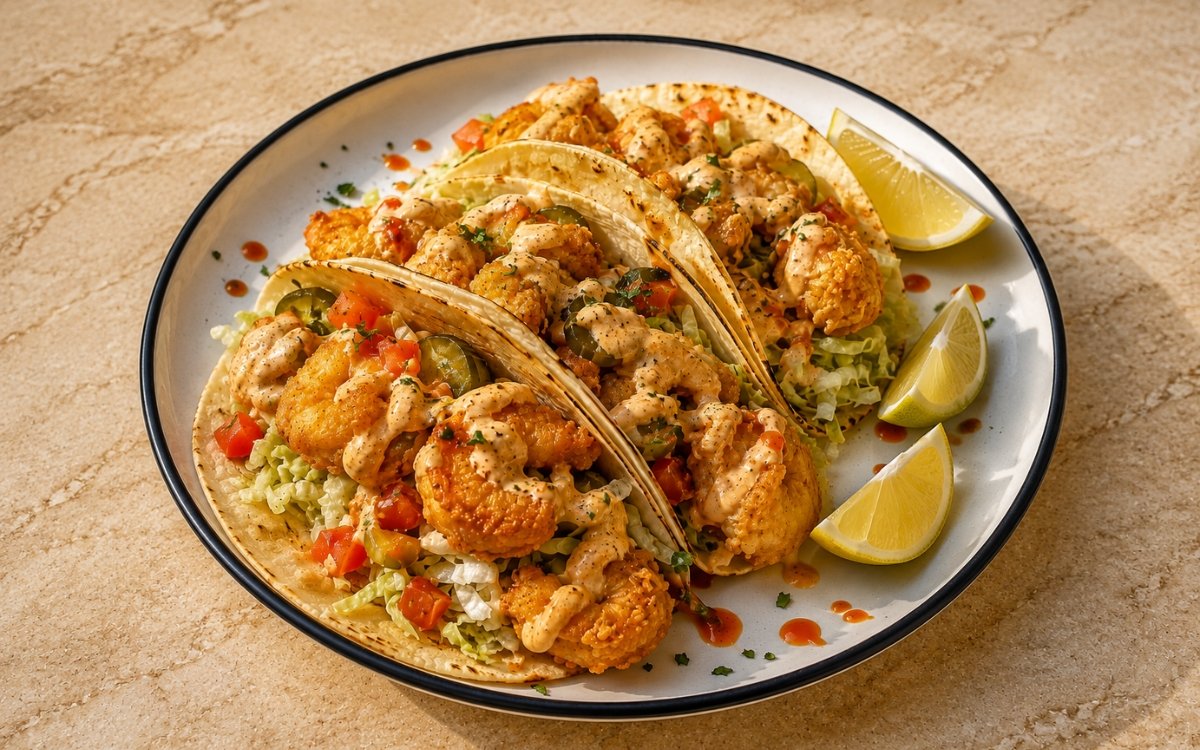
- Place shredded lettuce into each warm tortilla. Add a generous pile of crispy fried shrimp. Top with diced tomato and pickles. Drizzle with remoulade. Add a few drops of hot sauce if desired. Finish with parsley or cilantro and serve with lemon wedges. Layering the cold lettuce directly against the tortilla, with the hot shrimp on top, keeps that crucial temperature contrast intact right up until the first bite.
Notes
Resting the breaded shrimp for those 5 to 10 minutes before frying deserves genuine respect as the detail most responsible for whether the coating actually survives the oil or sheds off into it. That pause gives the buttermilk residue and dry dredge real time to begin binding together, something that simply doesn't happen if the shrimp go straight from breading into hot oil — skipping this step is one of the more common reasons a fried coating fails to hold.
The dredge's specific four-ingredient combination — flour, cornmeal, cornstarch, and baking powder — deserves recognition as a deliberately engineered texture, not an arbitrary blend. Each component contributes something distinct: body, classic crunch, lightness, and craggy lift respectively. Removing any one would noticeably change the finished crust's character, since none of the others fully compensates for what it provides.
Frying in properly small, uncrowded batches, maintaining that specific 175–180°C range throughout, protects the shrimp from a real and specific failure mode. A significant oil temperature drop, caused by overcrowding, extends the shrimp's actual time in the oil well past what's needed to cook them through — that extra time is exactly what pushes them from tender toward the tight, rubbery texture overcooked shrimp are known for, even while the crust is still working to catch up.
The recipe's own explicit emphasis on keeping the fresh toppings cold and assembling only at the last possible moment deserves to be understood as this dish's actual organizing principle. The entire appeal of a properly made po'boy-style taco rests on that direct contrast between hot, crackling shrimp and cold, crisp lettuce and pickle — assembling too early, letting either component drift toward room temperature, would blur exactly the distinction this dish is built around.