
Shanghai Scallion Oil Noodles
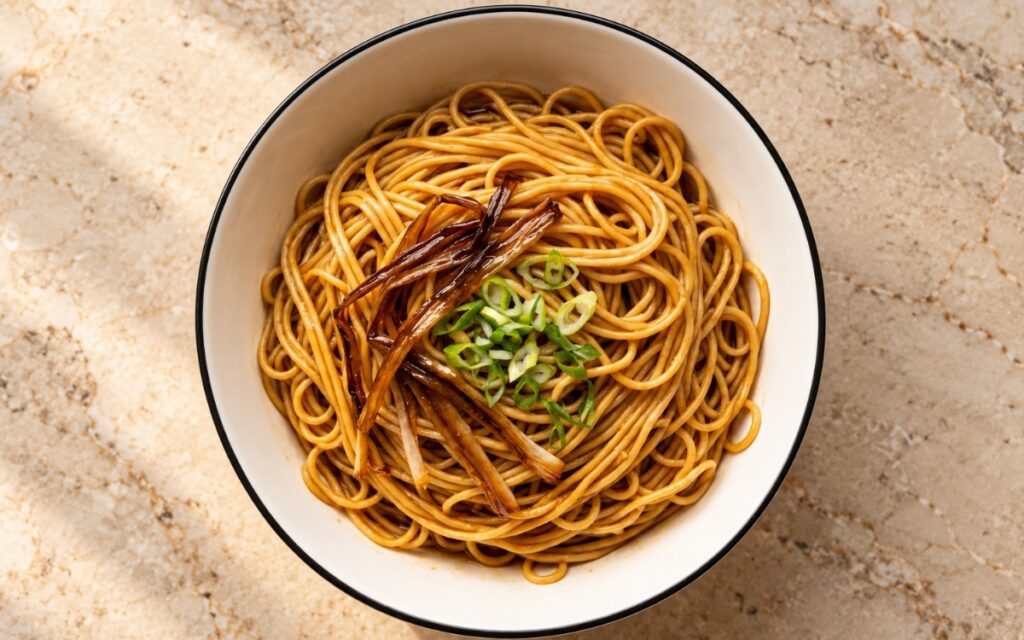
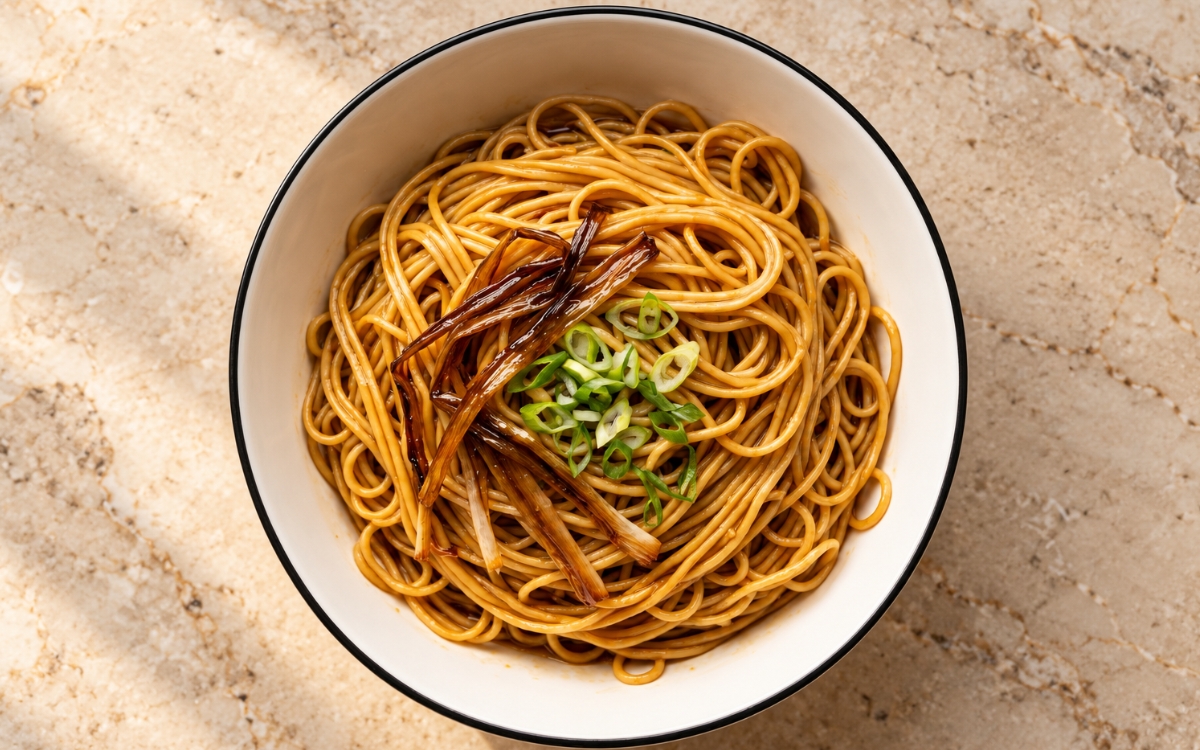
A classic minimalist Shanghai noodle dish of thin wheat noodles tossed in fragrant scallion-infused oil and a glossy soy-sugar sauce, then topped with deeply caramelised scallion strands and a small pinch of fresh green onion, the key being intense scallion fragrance against clean, springy noodles. Frying the scallion batons slowly in cold, just-warming oil, rather than dropping them into hot oil, is the technique this whole noodle dish depends on for its flavour — hot oil browns the outside before the moisture inside has gone, leaving scorched, bitter edges and an oil that never develops real depth, the same slow-dehydrate-and-caramelise principle used elsewhere in this collection whenever an aromatic must be turned into a flavouring. Pulling the scallions out just before they look too dark is what keeps the oil sweet and nutty, since the strands keep darkening in the residual heat after they leave the pan. Tossing the noodles with the sauce while they are still hot is what lets every strand absorb the flavour and come out glossy rather than wet. The payoff is a bowl of noodles with real, restrained depth — slippery, lightly chewy strands in a glossy amber coating, with sweet-savoury scallion fragrance and crisp, dark golden strands on top.
Prep Time : 15 min
Total Time : 40 min
Servings : 4
15 min
40 min
4
Ingredients
For the Noodles
• 600g fresh thin wheat noodles, or 400g dried thin wheat noodles
• 2–3 tbsp hot noodle cooking water, reserved from the pot, as needed
For the Scallions and Scallion Oil
• 200–220g scallions, about 3 large bunches, trimmed
• 180ml neutral oil
For the Soy-Scallion Sauce
• 4 tbsp light soy sauce
• 2 tbsp dark soy sauce
• 2½ tbsp sugar
• 1 tbsp oyster sauce, optional, for a slightly rounder restaurant-style finish
For the Garnish
• A small handful of fresh scallion green tops, thinly sliced, taken from the scallions above
• The fried scallion strands from the scallion oil
Directions
- Prep the Scallions
Trim the roots and any limp tips from the 200–220g of scallions, then cut the white and pale green parts into 5–6cm / 2–2½ in lengths. Cut the remaining greener sections into similar longer batons for frying, and thinly slice a small handful of the freshest green tops for garnish. Pat everything very dry with a clean towel, paying attention to the cut ends where water collects. That thorough drying is what keeps the oil calm and lets the batons dehydrate and caramelise instead of steaming and splattering. - Fry the Scallions Slowly
Pour the 180ml of neutral oil into a wok or saucepan and add the scallion batons while the oil is still cold or only just warming. Set the pan over medium to medium-low heat and cook slowly, stirring occasionally, for about 12–18 minutes depending on your burner, until the scallions turn deep golden to dark golden brown, softened, and lightly crisp at the edges. If the oil begins to bubble hard, lower the heat. Lift the scallions out with a strainer or slotted spoon just before they seem too dark, and spread them on a plate. That slow dehydration is what builds the flavour of the entire dish. - Make the Soy-Scallion Sauce
Leave the scallion oil in the pan, take the pan off the heat for a moment, and let the oil settle. Return it to low heat, then add the 4 tbsp light soy sauce, 2 tbsp dark soy sauce, 2½ tbsp sugar, and the 1 tbsp oyster sauce if using, standing back slightly because the liquid sputters on contact with the hot oil. Simmer gently for 1–2 minutes, just until the sugar dissolves and the sauce turns glossy and unified, then turn off the heat. That short, gentle simmer is what dissolves the sugar without tightening the sauce, so it stays fluid enough to coat every strand. - Cook the Noodles
Bring a large pot of water to a rolling boil and cook the noodles until just tender, which takes about 1–3 minutes for the 600g of fresh noodles, or 4–6 minutes for the 400g of dried noodles, following the package directions. Before draining, scoop out a few tablespoons of the hot cooking water and set it aside. Drain the noodles very well, shaking the colander so no water clings. The strands should stay springy and silky, never soft. That thorough draining is what keeps the sauce from being diluted. - Toss the Noodles
While the noodles are still hot, tip them into a large bowl or back into the warm pot and pour over most of the scallion oil sauce. Toss thoroughly with chopsticks or tongs until every strand is evenly coated. Add 2–3 tbsp of the reserved noodle water only if needed to loosen the noodles and help the sauce spread, then taste and add a little more sauce if you want more depth. The finished noodles should look glossy and evenly amber, not wet or soupy. That toss while hot is what lets the warm, starchy strands absorb the flavour instead of just wearing it. - Finish and Serve
Divide the noodles among 4 bowls, mounding each into a generous tangle. Top every bowl with a share of the fried scallion strands, then place a small pinch of the finely sliced fresh green onion in the centre. Serve immediately, while the noodles are hot and glossy and the scallion strands are still crisp at the edges. Skip any extra vegetables, protein, or sauce on the side. That restraint is what keeps the scallion oil as the single, unmistakable flavour in the bowl.
*Notes :
- Slow frying the scallions in cold-start oil deserves genuine recognition as the technique most directly responsible for whether this dish tastes deeply aromatic or merely oily. Starting gently lets the moisture leave the batons before the sugars brown, whereas hot oil colours the surface first and leaves a bitter, scorched edge — and since the whole sauce is built on that oil, a rushed start cannot be fixed later.
- Judging the colour of the scallions deserves the same attention this technique receives throughout this collection’s other slow-fried and caramelised dishes. Taking the strands out when they are dark golden, just before they seem too dark, leaves room for the residual heat to finish the job, while waiting for a deep brown in the pan means they will turn black and bitter on the plate.
- Tossing the noodles with the sauce while they are still hot deserves genuine respect as the detail most directly responsible for the glossy, evenly amber finish. Hot, freshly drained strands are porous and slightly sticky with surface starch, so they drink in the soy and sugar, whereas cooled noodles stiffen, take up less sauce, and leave it pooling in the bottom of the bowl.
- Keeping the noodles just tender and well drained deserves attention as a genuine, checkable readiness cue rather than a loose approximation of the package time. Springy, silky strands hold the sauce in a light coating, while overcooked or wet noodles go soft and dilute it into a watery pool — which is why a little starchy water is added only if the noodles need loosening.
Why This Recipe Works
This recipe works because the scallions are fried slowly in cold-start oil, which dehydrates them into dark golden strands and fills the oil with sweet, nutty aroma. Light soy, dark soy, and sugar are simmered briefly into that oil, building a savoury, glossy sauce that stays fluid enough to coat. Thin wheat noodles are cooked just until tender and drained thoroughly, so they stay springy and do not dilute the sauce. Tossing them while hot lets each strand absorb the flavour, and a splash of starchy cooking water spreads the sauce evenly. Crisp scallion strands and a pinch of fresh green onion finish the bowl.
Ingredient Breakdown
Slowly Fried Scallion Batons (Cold-Start Oil)
The critical technique — gentle heat dehydrates the scallions into sweet, dark golden strands while perfuming the oil that carries the whole dish.
Dark Golden Colour (Not Black)
The critical timing technique — pulling the scallions just before they seem too dark leaves residual heat to finish them without any bitterness.
Light and Dark Soy Sauce
The flavour foundation — light soy supplies savoury salt, while dark soy adds the deep amber-brown colour and mild sweetness.
Sugar (Dissolved Gently)
The flavour balance — 2½ tbsp rounds the saltiness of the soy and gives the sauce its glossy, lightly sticky body.
Thin Wheat Noodles (Fresh or Dried)
The structural foundation — thin, springy strands carry the oil and sauce in a light coat without competing with the scallion flavour.
Hot Noodle Cooking Water (Optional Splash)
The finishing technique — a spoonful of starchy water loosens the sauce so it spreads evenly and clings without turning soupy.
Oyster Sauce (Optional)
The finishing touch — a single tablespoon adds a slightly rounder, restaurant-style depth, and can be omitted for a stripped-down classic.
Flavor Structure Explained
This Shanghai scallion oil noodle dish follows a layered balance model:
- Springy, neutral base (thin wheat noodles, hot cooking water)
- Aromatic, nutty foundation (slow-fried scallion oil, caramelised scallions)
- Savoury, deep-amber body (light soy sauce, dark soy sauce)
- Gentle sweet balance (sugar, optional oyster sauce)
- Fresh, crisp finish (fried scallion strands, sliced green onion)
Thin wheat noodles give the dish a springy, silky base that carries everything else. Slow-fried scallion oil supplies the aromatic, nutty foundation, with a sweet depth that no other ingredient replaces. Light and dark soy build the savoury, deep amber body, and sugar rounds the salt so the sauce tastes balanced rather than sharp. Crisp dark golden scallion strands and a pinch of raw green onion finish the bowl with contrast that ties the whole dish together.
Common Mistakes to Avoid
- Starting With Hot Oil – This browns the outside before the moisture escapes, leaving bitter strands and a flat-tasting oil. Always start the batons in cold or just-warming oil over medium to medium-low heat.
- Letting the Scallions Go Black – This turns both the oil and the strands acrid and bitter. Always lift them out when dark golden, just before they seem too dark.
- Frying Damp Scallions – This makes the oil splutter violently and steams the batons instead of crisping them. Always pat the cut scallions completely dry before they go into the pan.
- Overcooking the Noodles – This leaves them soft and limp, so the sauce cannot cling in a glossy coat. Always cook them only until just tender and drain thoroughly.
- Letting the Noodles Cool Before Tossing – This stops the strands absorbing the sauce, leaving it pooled in the bowl. Always toss the noodles with the sauce while they are still hot.
Variations
Stripped-Down Classic Version
Leave out the optional oyster sauce for a more traditional, purely soy-and-scallion sauce, accepting a slightly less rounded finish in exchange for a cleaner, more minimalist bowl.
Extra-Scallion Version
Let the fried scallions steep in the oil for a few extra minutes before straining, per the recipe’s own note, for a stronger scallion flavour, removing them before they burn.
Fried Egg Version
Top each bowl with a lacy-edged fried egg, adding richness and a runny yolk that loosens the sauce, though it moves the dish away from its purest minimalist form.
Chili Crisp Version
Spoon a little chili crisp over each finished bowl for gentle heat and crunch, accepting that it overshadows the pure scallion fragrance the classic version is built around.
Storage & Make-Ahead
The finished soy-scallion oil sauce can be made up to 1 day ahead, cooled, and refrigerated in an airtight container, while the fried scallion strands are best kept separately so they stay as crisp as possible.
Rewarm the chilled sauce in a small pan over low heat for a minute until fluid and glossy again before tossing it with freshly cooked noodles, so the hot strands absorb it properly.
Cook the noodles only when you are ready to eat, since they firm up, clump, and lose their silky bounce within minutes of draining if left to wait, so boil them last, once everything else is ready.
Leftover dressed noodles keep in a sealed container in the refrigerator for up to 2 days, though the topping strands soften and are best re-crisped for a minute in a dry pan before serving.
To refresh noodles that have tightened up after sitting, toss them in a hot pan or bowl with a spoonful of hot water and a little extra sauce until loosened, glossy, and steaming hot.
Frequently Asked Questions
Why are the scallions started in cold or just-warming oil instead of hot oil?
Gentle heat dehydrates the scallions slowly, drawing out moisture before the sugars brown, so they caramelise into sweet, dark golden strands. Hot oil colours the outside too quickly and leaves a bitter, scorched edge with a flat-tasting oil.
Why do the scallions need to be patted completely dry before frying?
Water clinging to the cut scallions flashes to steam in the oil, making it splutter violently and steaming the batons rather than letting them dehydrate evenly. Dry batons stay calm in the pan and fry into lightly crisp, golden strands.
Why are the scallions lifted out just before they look too dark?
Scallion strands keep darkening in the residual heat after leaving the pan, so removing them at deep golden brown lets them finish at the right shade. Waiting for a darker colour in the pan means they end up black and bitter.
Why is the reserved noodle water added only if needed?
The starchy water loosens the sauce so it spreads evenly over every strand, but too much dilutes the savoury-sweet flavour and leaves the noodles wet and soupy. Adding it a tablespoon at a time keeps the coating glossy and amber.
Are there other classic Chinese noodle, scallion, or stir-fry dishes worth trying?
Dan Dan Noodles offers another classic Chinese noodle direction worth exploring, and Spicy Chili Garlic Oil Noodles is also worth trying for another oil-based noodle dish. Chinese Scallion Pancakes and Ginger Scallion Chicken over Rice are also worth trying for other scallion-forward directions, and Chinese Tomato Egg Stir-Fry offers another stir-fry direction worth exploring.
Nutrition Facts
( Per Serving — 1 noodle bowl )
Calories
~760 kcal
Protein
15 g
Fat
36 g
Carbs
90 g
Calories
~760 kcal
Protein
15 g
Fat
36 g
Carbs
90 g
Related Recipes
Related Recipes
-

Garlic Butter Shrimp Skillet
Hard-seared shrimp finished gently in a glossy garlic butter sauce with lemon, parsley, and chili flakes.
-
Double Smash Burger
Two thin smashed beef patties with melted American cheese, tangy burger sauce and dill pickle planks on a butter-toasted bun.
-
Karaage — Japanese Fried Chicken
Bite-sized double-fried chicken thigh pieces marinated in soy sauce, sake, ginger and garlic, coated in potato starch for a deeply golden, craggy crust.
You might also like
You might also like
-
Onigiri Rice Balls
Warm short-grain rice triangles filled with flaky salmon and wrapped with a crisp, toasty nori strip.
-
Mexican Rajas con Crema
Fire-roasted poblano strips, sweet onions, and corn in a silky Mexican crema sauce with soft melted Oaxaca cheese and fresh cilantro.
-
Chili Lime Noodles with Shrimp
Tender noodles coated in glossy chili-lime sauce, with bright citrus acidity, warming chili heat, and a savory finish.


Shanghai Scallion Oil Noodles
Ingredients
Method
- Trim the roots and any limp tips from the 200–220g of scallions, then cut the white and pale green parts into 5–6cm / 2–2½ in lengths. Cut the remaining greener sections into similar longer batons for frying, and thinly slice a small handful of the freshest green tops for garnish. Pat everything very dry with a clean towel, paying attention to the cut ends where water collects. That thorough drying is what keeps the oil calm and lets the batons dehydrate and caramelise instead of steaming and splattering.
- Pour the 180ml of neutral oil into a wok or saucepan and add the scallion batons while the oil is still cold or only just warming. Set the pan over medium to medium-low heat and cook slowly, stirring occasionally, for about 12–18 minutes depending on your burner, until the scallions turn deep golden to dark golden brown, softened, and lightly crisp at the edges. If the oil begins to bubble hard, lower the heat. Lift the scallions out with a strainer or slotted spoon just before they seem too dark, and spread them on a plate. That slow dehydration is what builds the flavour of the entire dish.
- Leave the scallion oil in the pan, take the pan off the heat for a moment, and let the oil settle. Return it to low heat, then add the 4 tbsp light soy sauce, 2 tbsp dark soy sauce, 2½ tbsp sugar, and the 1 tbsp oyster sauce if using, standing back slightly because the liquid sputters on contact with the hot oil. Simmer gently for 1–2 minutes, just until the sugar dissolves and the sauce turns glossy and unified, then turn off the heat. That short, gentle simmer is what dissolves the sugar without tightening the sauce, so it stays fluid enough to coat every strand.
- Bring a large pot of water to a rolling boil and cook the noodles until just tender, which takes about 1–3 minutes for the 600g of fresh noodles, or 4–6 minutes for the 400g of dried noodles, following the package directions. Before draining, scoop out a few tablespoons of the hot cooking water and set it aside. Drain the noodles very well, shaking the colander so no water clings. The strands should stay springy and silky, never soft. That thorough draining is what keeps the sauce from being diluted.
- While the noodles are still hot, tip them into a large bowl or back into the warm pot and pour over most of the scallion oil sauce. Toss thoroughly with chopsticks or tongs until every strand is evenly coated. Add 2–3 tbsp of the reserved noodle water only if needed to loosen the noodles and help the sauce spread, then taste and add a little more sauce if you want more depth. The finished noodles should look glossy and evenly amber, not wet or soupy. That toss while hot is what lets the warm, starchy strands absorb the flavour instead of just wearing it.
- Divide the noodles among 4 bowls, mounding each into a generous tangle. Top every bowl with a share of the fried scallion strands, then place a small pinch of the finely sliced fresh green onion in the centre. Serve immediately, while the noodles are hot and glossy and the scallion strands are still crisp at the edges. Skip any extra vegetables, protein, or sauce on the side. That restraint is what keeps the scallion oil as the single, unmistakable flavour in the bowl.