Ingredients
Method
Prep the Scallions
- Trim the roots and any limp tips from the 200–220g of scallions, then cut the white and pale green parts into 5–6cm / 2–2½ in lengths. Cut the remaining greener sections into similar longer batons for frying, and thinly slice a small handful of the freshest green tops for garnish. Pat everything very dry with a clean towel, paying attention to the cut ends where water collects. That thorough drying is what keeps the oil calm and lets the batons dehydrate and caramelise instead of steaming and splattering.
Fry the Scallions Slowly
- Pour the 180ml of neutral oil into a wok or saucepan and add the scallion batons while the oil is still cold or only just warming. Set the pan over medium to medium-low heat and cook slowly, stirring occasionally, for about 12–18 minutes depending on your burner, until the scallions turn deep golden to dark golden brown, softened, and lightly crisp at the edges. If the oil begins to bubble hard, lower the heat. Lift the scallions out with a strainer or slotted spoon just before they seem too dark, and spread them on a plate. That slow dehydration is what builds the flavour of the entire dish.
Make the Soy-Scallion Sauce
- Leave the scallion oil in the pan, take the pan off the heat for a moment, and let the oil settle. Return it to low heat, then add the 4 tbsp light soy sauce, 2 tbsp dark soy sauce, 2½ tbsp sugar, and the 1 tbsp oyster sauce if using, standing back slightly because the liquid sputters on contact with the hot oil. Simmer gently for 1–2 minutes, just until the sugar dissolves and the sauce turns glossy and unified, then turn off the heat. That short, gentle simmer is what dissolves the sugar without tightening the sauce, so it stays fluid enough to coat every strand.
Cook the Noodles
- Bring a large pot of water to a rolling boil and cook the noodles until just tender, which takes about 1–3 minutes for the 600g of fresh noodles, or 4–6 minutes for the 400g of dried noodles, following the package directions. Before draining, scoop out a few tablespoons of the hot cooking water and set it aside. Drain the noodles very well, shaking the colander so no water clings. The strands should stay springy and silky, never soft. That thorough draining is what keeps the sauce from being diluted.
Toss the Noodles
- While the noodles are still hot, tip them into a large bowl or back into the warm pot and pour over most of the scallion oil sauce. Toss thoroughly with chopsticks or tongs until every strand is evenly coated. Add 2–3 tbsp of the reserved noodle water only if needed to loosen the noodles and help the sauce spread, then taste and add a little more sauce if you want more depth. The finished noodles should look glossy and evenly amber, not wet or soupy. That toss while hot is what lets the warm, starchy strands absorb the flavour instead of just wearing it.
Finish and Serve
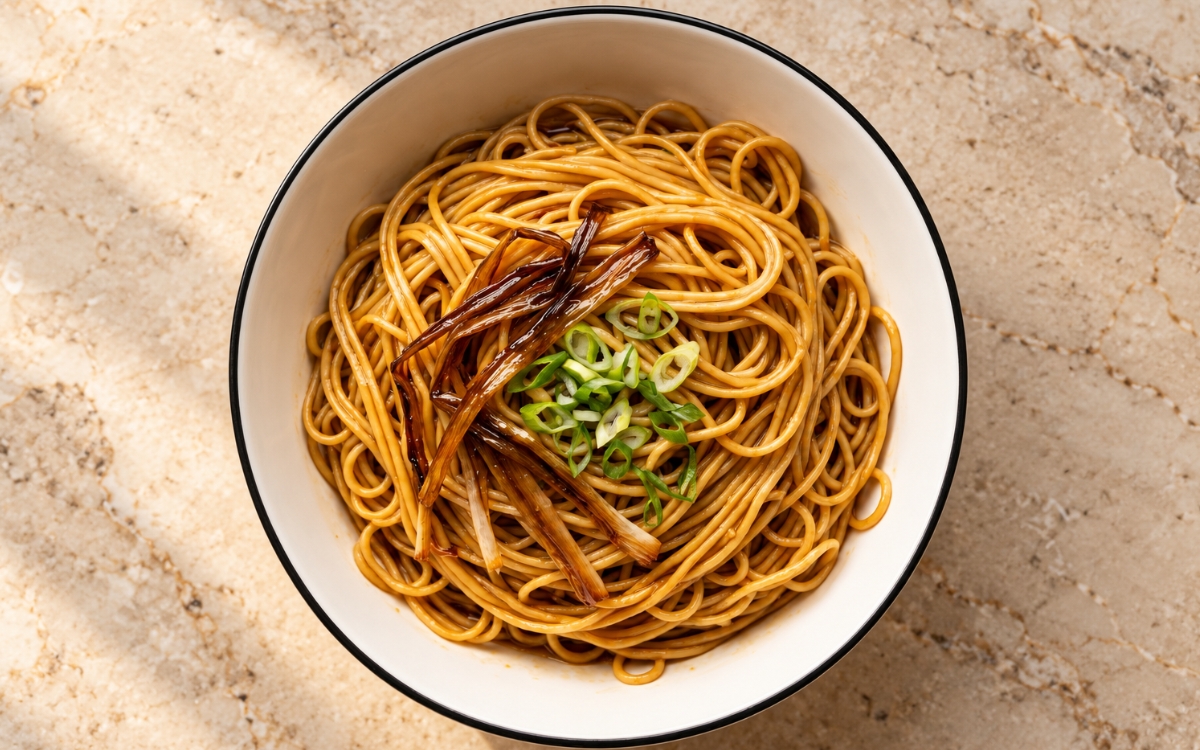
- Divide the noodles among 4 bowls, mounding each into a generous tangle. Top every bowl with a share of the fried scallion strands, then place a small pinch of the finely sliced fresh green onion in the centre. Serve immediately, while the noodles are hot and glossy and the scallion strands are still crisp at the edges. Skip any extra vegetables, protein, or sauce on the side. That restraint is what keeps the scallion oil as the single, unmistakable flavour in the bowl.
Notes
Slow frying the scallions in cold-start oil deserves genuine recognition as the technique most directly responsible for whether this dish tastes deeply aromatic or merely oily. Starting gently lets the moisture leave the batons before the sugars brown, whereas hot oil colours the surface first and leaves a bitter, scorched edge — and since the whole sauce is built on that oil, a rushed start cannot be fixed later.
Judging the colour of the scallions deserves the same attention this technique receives throughout this collection’s other slow-fried and caramelised dishes. Taking the strands out when they are dark golden, just before they seem too dark, leaves room for the residual heat to finish the job, while waiting for a deep brown in the pan means they will turn black and bitter on the plate.
Tossing the noodles with the sauce while they are still hot deserves genuine respect as the detail most directly responsible for the glossy, evenly amber finish. Hot, freshly drained strands are porous and slightly sticky with surface starch, so they drink in the soy and sugar, whereas cooled noodles stiffen, take up less sauce, and leave it pooling in the bottom of the bowl.
Keeping the noodles just tender and well drained deserves attention as a genuine, checkable readiness cue rather than a loose approximation of the package time. Springy, silky strands hold the sauce in a light coating, while overcooked or wet noodles go soft and dilute it into a watery pool — which is why a little starchy water is added only if the noodles need loosening.