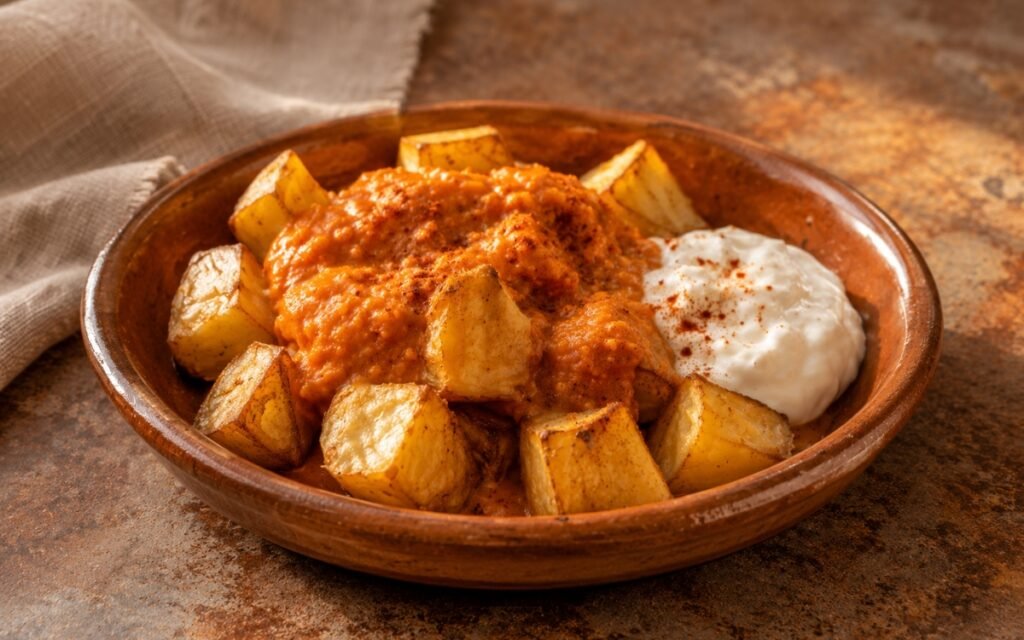
Romesco Sauce
Traditional Catalan romesco sauce is a rich, rustic sauce made with roasted red peppers, tomatoes, toasted almonds, garlic, olive oil, and sherry vinegar, thick, slightly coarse, and naturally creamy, with sweet roasted vegetables, nutty depth, gentle smokiness, and bright acidity in every spoonful. Roasting the peppers, tomato, and garlic until blistered and soft, rather than using them raw or from a jar, is the technique this whole sauce depends on for its concentrated sweetness, because dry oven heat drives off water and caramelises the sugars, the same roast-first principle used elsewhere in this collection whenever a vegetable sauce needs depth. Toasting the almonds and the bread until golden is what gives the sauce its nutty body and natural thickness without any starch. Pulsing coarsely and then streaming in the olive oil slowly is what keeps the texture granular, creamy, and cohesive instead of oily, separated, or completely smooth. The payoff is a brick-red, savoury, mildly smoky sauce with real, layered depth and a slightly granular bite — ideal with grilled seafood, roasted vegetables, chicken, potatoes, rustic bread, and traditional calçots.

- Prep Time : 15 min
- Total Time : 1 hr 10 min
- Servings : 12
Ingredients
For the Roasted Vegetables
- 1 large red bell pepper, about 150g roasted, peeled flesh
- 1 medium ripe tomato, about 100g roasted flesh
- 2 garlic cloves, unpeeled
- 1 dried ñora pepper, seeds removed, optional for traditional Catalan flavour
For the Almond and Bread Base
- 45g whole almonds, toasted
- 15g rustic white bread, preferably day-old
For the Seasoning and Oil
- 80ml extra-virgin olive oil, divided
- 15ml sherry vinegar
- ½ tsp sweet smoked Spanish paprika
- ½ tsp fine sea salt, or to taste
- ¼ tsp freshly ground black pepper
For Finishing
- A few chopped toasted almonds, reserved from the measured quantity
- 1 small strip roasted red pepper, reserved
- A little reserved extra-virgin olive oil
Directions
- Roast the Vegetables
Preheat the oven to 220°C. Place the whole red pepper, the halved tomato, and the unpeeled garlic cloves on a baking tray and coat them lightly with a little of the measured olive oil. Roast for 20–30 minutes, taking the garlic out once tender, until the pepper skin is blistered and the tomato has softened. Cover the pepper in a bowl for 10 minutes, then peel it and remove the stem and seeds. Peel the garlic and tomato, and discard excess tomato liquid. That steaming is what loosens the skin, so the pepper peels cleanly. - Prepare the Nuts, Bread, and Ñora
If you are using the ñora, soak it in hot water for 15–20 minutes, then scrape the softened flesh away from the skin. Toast the almonds in a dry skillet over medium-low heat for 3–5 minutes if they are not already toasted. Toast the bread until golden and crisp, then break it into pieces. Set aside a few chopped almonds and a small strip of roasted pepper for finishing. The almonds should smell fragrant and look golden. That thorough toasting is what gives the nutty depth the sauce depends on. - Blend the Romesco Base
Add the roasted pepper, tomato, garlic, ñora flesh, toasted almonds, and bread to a food processor, then add the smoked paprika, salt, black pepper, and sherry vinegar. Pulse until a thick, coarse paste forms, scraping down the sides as needed, with tiny recognisable pieces of almond and roasted pepper still visible. Do not blend it completely smooth. That granular texture is what makes romesco authentic, because a smooth purée tastes flatter and loses the rustic, nut-enriched bite. - Incorporate the Olive Oil
With the processor running on low speed, drizzle in the remaining olive oil gradually. Blend briefly until the sauce is thick, cohesive, and lightly glossy, then taste and adjust the salt or vinegar. If it is too stiff, add 1–2 tsp of water at a time until it is spoonable. The sauce should hold soft ridges from a spoon yet stay creamy enough to spread, with a rich brick-red to terracotta-orange colour. Add the oil slowly. That gradual pour is what keeps the sauce emulsified instead of separated and oily. - Rest and Serve
Move the romesco to a bowl and let it rest for 15 minutes so the flavours can develop. Spoon it into a serving bowl and draw a broad, rustic swirl across the top. Garnish with the reserved chopped almonds, the strip of roasted pepper, and a delicate drizzle of olive oil. Serve it at room temperature or lightly chilled. The sauce should look thick and glossy with small pools of golden oil. That short rest is what lets the garlic, vinegar, and paprika blend into the roasted flavour.
*Notes :
- Roasting the vegetables until blistered and soft deserves genuine recognition as the technique most directly responsible for how sweet and deep this romesco tastes. Dry oven heat evaporates the water in the pepper and tomato while caramelising their natural sugars, and the charred edges add a gentle smokiness, so the same vegetables taste thin and bland if they are simply cooked in liquid.
- Toasting the almonds and bread deserves the same attention this collection gives to every nut-thickened sauce. Heat develops the oils and aroma in the almonds, and dry golden bread soaks up the olive oil and binds the sauce naturally, so the finished romesco is thick and creamy without any flour, cornstarch, or other thickener.
- Keeping the texture coarse deserves genuine respect as the detail most directly responsible for an authentic result. Pulsing in short bursts leaves tiny pieces of almond and pepper in the sauce, which gives it real body and a pleasantly granular bite, whereas blending it completely smooth makes it taste closer to a plain roasted pepper purée.
- Choosing sherry vinegar and the optional ñora pepper deserves attention as a genuine, tasteable link to Catalan tradition rather than a decoration. Sherry vinegar provides balanced acidity that lifts the oil and nuts, and the dried ñora adds a sweet, earthy depth that roasted red pepper alone does not give, although red wine vinegar is a fair substitute when sherry vinegar is unavailable.
Why This Recipe Works
This recipe works because every component is cooked or toasted before it reaches the processor. Roasting concentrates the sweetness of the pepper, tomato, and garlic, while toasted almonds and bread add nutty flavour and natural body. Pulsing coarsely keeps the granular texture, and streaming in the oil slowly keeps the sauce cohesive and glossy. A short rest then lets the sherry vinegar, garlic, and smoked paprika settle into the roasted base, so no single flavour stands out. The result is a thick, brick-red, mildly smoky sauce with sweet, nutty, savoury depth and a lightly tangy finish.
Ingredient Breakdown
Roasted Red Pepper
The sweet body — roasting concentrates its sugars and adds gentle smokiness, giving the sauce its colour and bulk.
Toasted Almonds
The nutty depth — thoroughly toasted almonds provide flavour and natural creaminess, with a few reserved for crunch.
Day-Old Bread
The natural thickener — dry toasted bread binds the oil and nuts without any starch, so the sauce stays rustic.
Sherry Vinegar and Paprika
The bright, smoky accents — vinegar lifts the richness, while sweet smoked paprika adds gentle smokiness and warmth.
Roasting
The critical technique — dry heat concentrates and caramelises the vegetables, which is what gives romesco its depth.
Slow Olive Oil Stream
The finishing control — adding the oil gradually keeps the sauce thick, cohesive, and glossy rather than greasy.
Flavor Structure Explained
This romesco sauce follows a layered balance model:
- Sweet roasted vegetable base (red pepper, tomato, garlic)
- Nutty, toasted depth (toasted almonds, toasted bread)
- Gentle smokiness (sweet smoked paprika, charred edges)
- Bright acidity (sherry vinegar)
- Rich, fruity finish (extra-virgin olive oil)
Roasted red pepper, tomato, and garlic provide the sweet base that leads, and toasted almonds and bread add nutty depth and natural body beneath it. Smoked paprika and the charred roasting edges contribute a gentle smokiness, while sherry vinegar adds a bright acidity that keeps the sauce from feeling heavy. Fruity olive oil carries everything together, so the sauce tastes roasted, nutty, and savoury, and ties this classic Catalan sauce together.
Common Mistakes to Avoid
- Blending It Completely Smooth – This removes the rustic, granular texture and flattens the flavour. Always pulse in short bursts so tiny pieces of almond and roasted pepper remain.
- Under-Toasting the Almonds – This leaves the sauce raw-tasting and weaker in nutty depth. Always toast them until golden and fragrant before they go into the processor.
- Pouring the Oil in Too Quickly – This can make the sauce greasy and separated. Always drizzle the oil in gradually with the processor running on low speed.
- Leaving the Pepper Skin On – This adds bitter, tough flecks to the sauce. Always steam the roasted pepper in a covered bowl and peel it before blending.
- Making It Too Thin – This turns a thick sauce into a watery one. Always add water only a teaspoon at a time, and only if the sauce is too stiff.
Variations
Hazelnut Version
Replace 15g of the almonds with toasted hazelnuts for another traditional Catalan variation that gives the sauce a slightly sweeter, rounder nutty character and the same rustic texture.
Red Wine Vinegar Version
Use red wine vinegar in place of sherry vinegar for a simple, widely available substitute that keeps the sauce bright and tangy, with a slightly sharper, fruitier edge.
Without Ñora Version
Skip the dried ñora and rely on the roasted red bell pepper alone for a simpler romesco with abundant red pepper body and a slightly less earthy, sweet-dried-pepper depth.
Calçot Dipping Version
Serve the finished sauce in a wide bowl with grilled spring onions or leeks, peeling and dipping them into the sauce in the traditional Catalan style.
Storage & Make-Ahead
Refrigerate the romesco in an airtight container at 4°C or below for up to 3–4 days, because this homemade sauce is not shelf-stable and needs steady cold to stay fresh, safe, and full of flavour.
Freeze the sauce in airtight portions for up to 2 months, then thaw it in the refrigerator and stir thoroughly before serving, because freezing keeps the flavour while stirring restores the smooth, cohesive body.
Make the sauce a day ahead if you can, because a night in the refrigerator lets the roasted vegetables, garlic, vinegar, and smoked paprika settle together into a rounder, deeper flavour.
Bring the chilled sauce to room temperature before serving, because cold olive oil makes it stiff and dull, and a short wait restores the gloss, aroma, and easy spoonable texture.
Cover the surface with a thin layer of olive oil before storing, because the oil protects the sauce from drying and darkening, and you simply stir it back in before serving.
Frequently Asked Questions
Why are the vegetables roasted instead of simply cooked?
Dry oven heat evaporates water and caramelises the sugars in the pepper, tomato, and garlic, giving concentrated sweetness and a little smokiness, whereas boiling or steaming leaves the sauce thin and bland.
Why is the romesco not blended completely smooth?
Pulsing keeps tiny pieces of almond and roasted pepper in the sauce, giving the granular, nut-enriched texture authentic romesco is known for, whereas a smooth purée tastes flatter and more like roasted pepper sauce.
Why does romesco contain bread?
Toasted day-old bread soaks up the olive oil and binds the nuts and vegetables, thickening the sauce naturally without any starch, so the finished romesco is thick and creamy while keeping its rustic, slightly coarse body.
Why is the olive oil added gradually?
Streaming the oil in slowly with the processor on low lets it blend into the nut and vegetable paste, giving a cohesive, glossy sauce, whereas adding it all at once can make it greasy and separated.
Are there other classic Spanish, roasted pepper, or grilled seafood dishes worth trying?
Spanish Escalivada with Burrata & Capers is a classic roasted vegetable dish that shares the sweet, smoky flavour of romesco, and Muhammara offers another roasted pepper and nut sauce worth exploring. Spanish Alioli is also worth trying as another Spanish sauce, while Garlic Shrimp Skewers and Pan-Seared Cod are simple seafood dishes that welcome a spoonful of romesco.
Nutrition Facts
( Per Serving — 30ml )
- Calories
- ~85 kcal
- Protein
- 2 g
- Fat
- 8 g
- Carbs
- 3 g
-

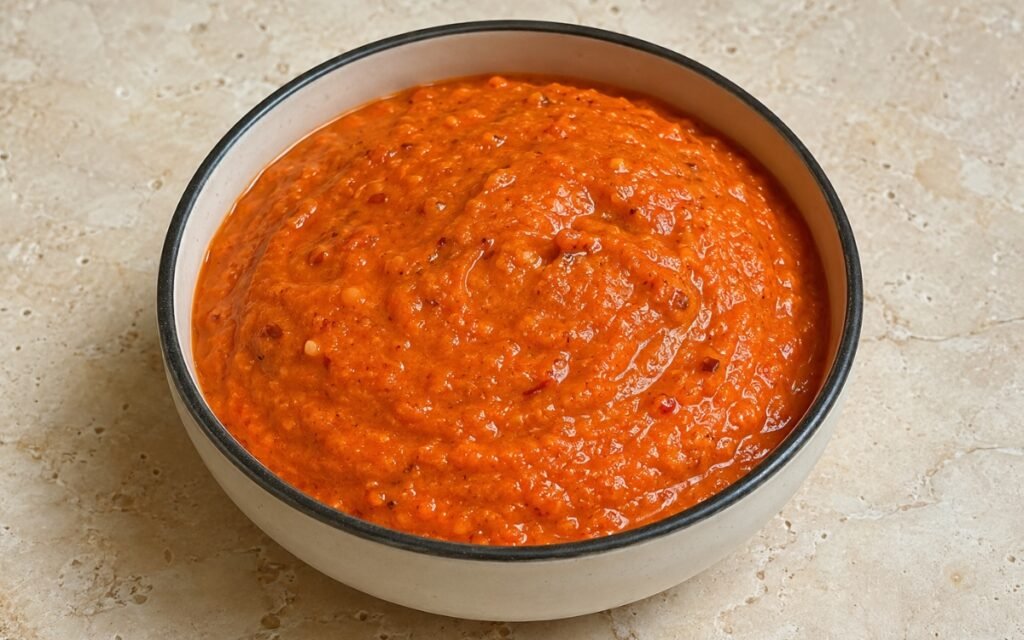
Roasted Red Pepper Sauce
Silky roasted red pepper sauce with garlic and almonds. No-cook versatile condiment in 10 minutes.
-
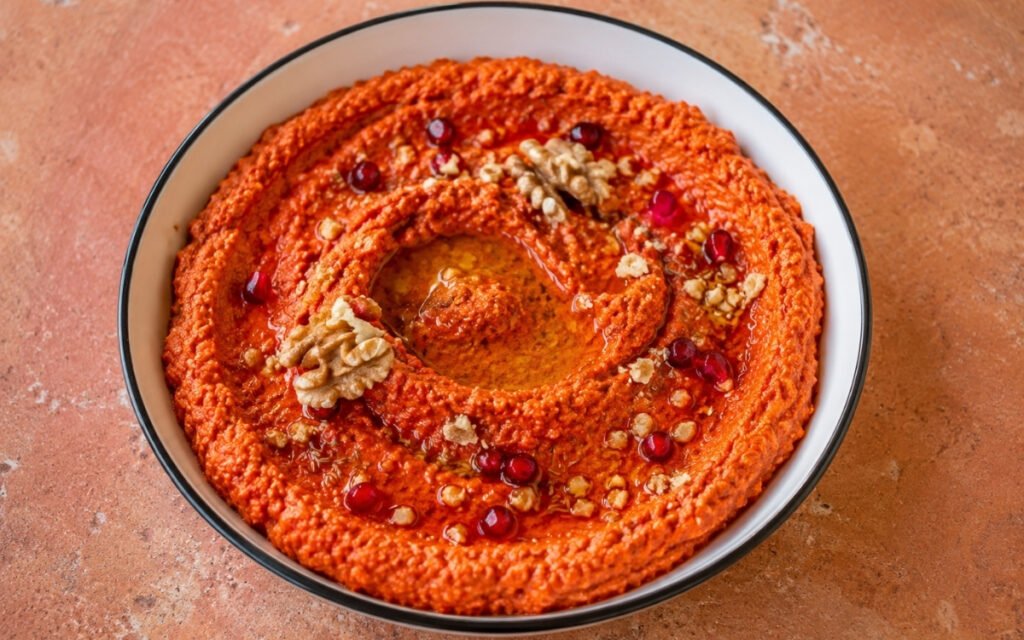
Muhammara
Charred red peppers, toasted walnuts, pomegranate molasses, and Aleppo pepper pulsed into a thick, deeply flavoured Syrian dip — smoky, sweet, sour, nutty, and warmly spiced in 35 minutes.
-
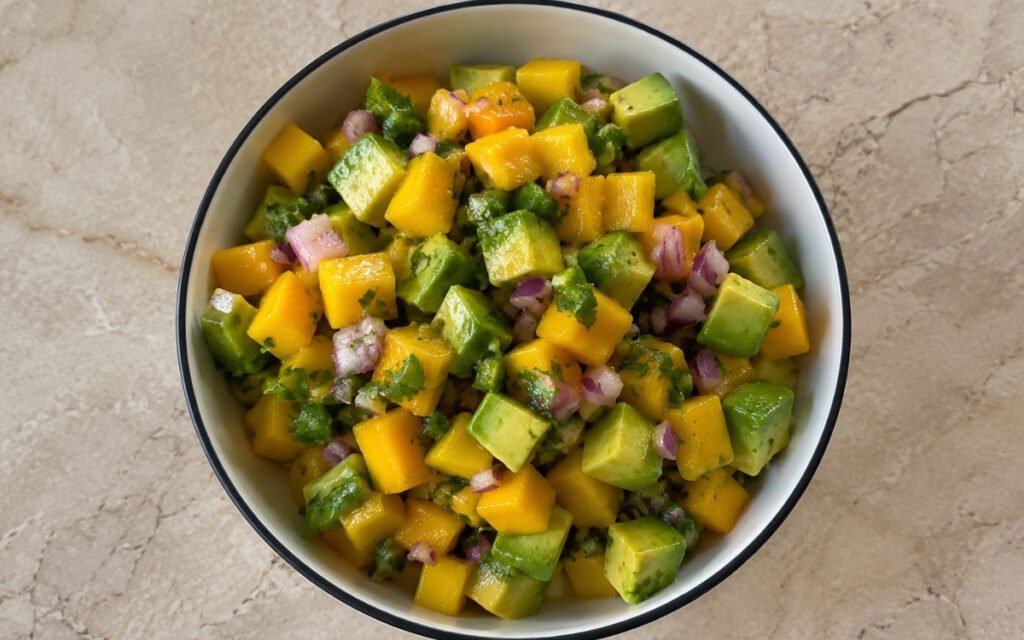
Avocado & Mango Salsa
Sweet mango, creamy avocado, sharp red onion, and jalapeño in a lime-herb dressing — the condiment that makes every Mexican and South American dish taste complete.
-
Blueberry Almond Butter Smoothie
A thick, creamy blueberry smoothie with a deep purple color, rich body, and a nutty almond butter finish, finished with almond butter swirls and fresh fruit.
-
Blueberry Almond Butter Smoothie Bowl
A thick, glossy blueberry smoothie bowl with Greek yogurt and almond butter, topped with fresh fruit, almond butter drizzle, almonds, and granola.
-
Patatas Bravas with Mayonnaise-Style Aioli
Potatoes parboiled, shaken rough, roasted on a preheated tray — smoky bravas sauce with sherry vinegar, creamy garlic aioli.