Paneer Butter Masala
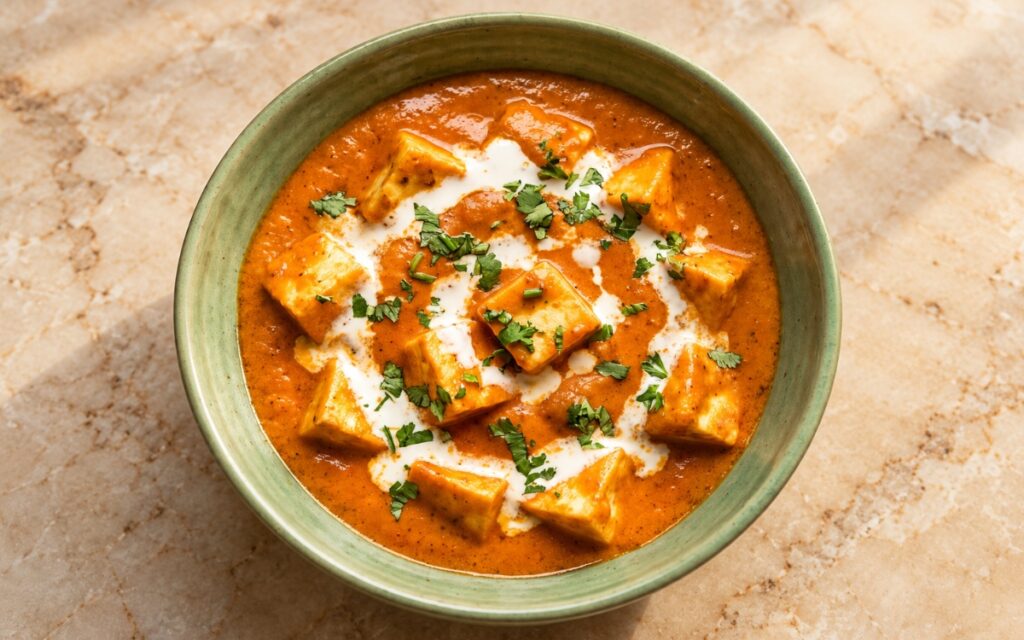
A classic restaurant-style paneer curry with soft paneer cubes in a smooth, glossy orange-red butter sauce enriched with cashews, cream, and butter. The sauce is silky, mildly spiced, slightly sweet-balanced, and rich, with the paneer staying soft and clearly distinct in the gravy.
- Prep Time : 20 min
- Total Time : 55 min
- Servings : 4
Ingredients
For the Paneer
- 500–600 g paneer, cut into medium-large cubes
- Hot water, for soaking paneer
- 1 small pinch salt (for the soaking water)
- 1 tsp oil or ghee, optional, only if lightly searing the paneer
For the Masala Base
- 2 tbsp butter
- 1 tbsp neutral oil
- 1 bay leaf
- 3 green cardamom pods
- 3 cloves
- 1 small cinnamon piece
- 700 g ripe tomatoes, roughly chopped (or good-quality canned tomatoes)
- 15 g ginger, roughly sliced
- 5 garlic cloves
- 20–25 g cashews
- 2 dried Kashmiri chilies, optional, for color and mild warmth
- 1½ tsp Kashmiri chili powder
- ½ tsp ground coriander
- ¼ tsp turmeric
- 1 tsp salt, to start
- 120–180 ml water, as needed for cooking and blending
For Finishing the Gravy
- 1½ tbsp butter
- 100 ml heavy cream
- ½ to 1 tsp sugar or honey, to balance, as needed
- ¾ tsp garam masala
- 1 tsp kasuri methi, crushed between your fingers
- Salt, if needed
- Extra hot water, as needed to adjust consistency
For Garnish
- A small cream swirl
- 1–2 tbsp chopped cilantro
Directions
- Prep the Paneer
Cut the paneer into medium-large cubes. If it’s store-bought or slightly firm, place it in hot, lightly salted water for 10–15 minutes, which keeps it soft and helps it stay tender once it joins the sauce. Drain just before using. For a slightly more defined restaurant-style look, lightly sear the cubes in 1 teaspoon oil or ghee for 30–45 seconds per side, without browning heavily or crisping them — this dish depends on soft paneer rather than chewy paneer. - Cook the Masala Base
Heat the 2 tablespoons butter and 1 tablespoon oil in a saucepan or sauté pan over medium heat. Add the bay leaf, cardamom, cloves, and cinnamon, cooking for 20–30 seconds until fragrant. Add the chopped tomatoes, ginger, garlic, cashews, dried Kashmiri chilies if using, Kashmiri chili powder, coriander, turmeric, and 1 teaspoon salt, stirring well, then add 120 ml water. Cook over medium heat for 15–20 minutes, partially covered, stirring occasionally, until the tomatoes fully break down, the cashews soften, the raw tomato smell is gone, and the mixture looks thick and pulpy. Add a small splash of water if it dries out too much while cooking. - Blend the Sauce
Remove the bay leaf, cinnamon, and as many cardamom pods and cloves as convenient, then blend the cooked tomato mixture until completely smooth. For the smoothest, most classical texture, strain the blended sauce through a fine sieve into a bowl or directly back into the pan, pushing it through well — this straining step is what gives the sauce its polished, restaurant-style finish. - Finish the Makhani Gravy
Return the smooth sauce to the pan and add the 1½ tablespoons butter along with a splash of water if needed. Simmer on low for 5–7 minutes, stirring often, until the sauce thickens slightly and looks glossy. Add the cream, sugar or honey, garam masala, and crushed kasuri methi, stirring and simmering another 2–3 minutes. Adjust the consistency with a little hot water if needed — the final gravy should be smooth, pourable but not thin, rich and velvety, and glossy with no graininess. If it tastes too tangy, add a little more sugar or cream; if it’s too thick, add hot water; if it needs more depth, a touch more butter or kasuri methi; and add any extra salt only in small amounts. - Add the Paneer
Add the drained paneer cubes to the finished gravy and simmer very gently on low for just 2–4 minutes, only until heated through. Keep this stage brief — overcooking the paneer here makes it firm and rubbery instead of soft. - Finish and Serve
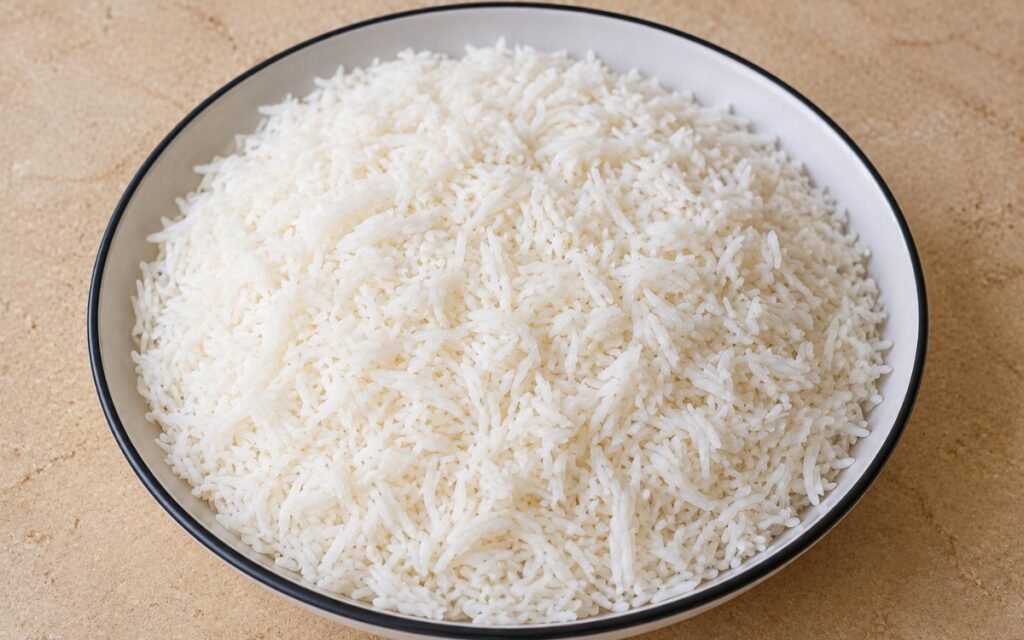
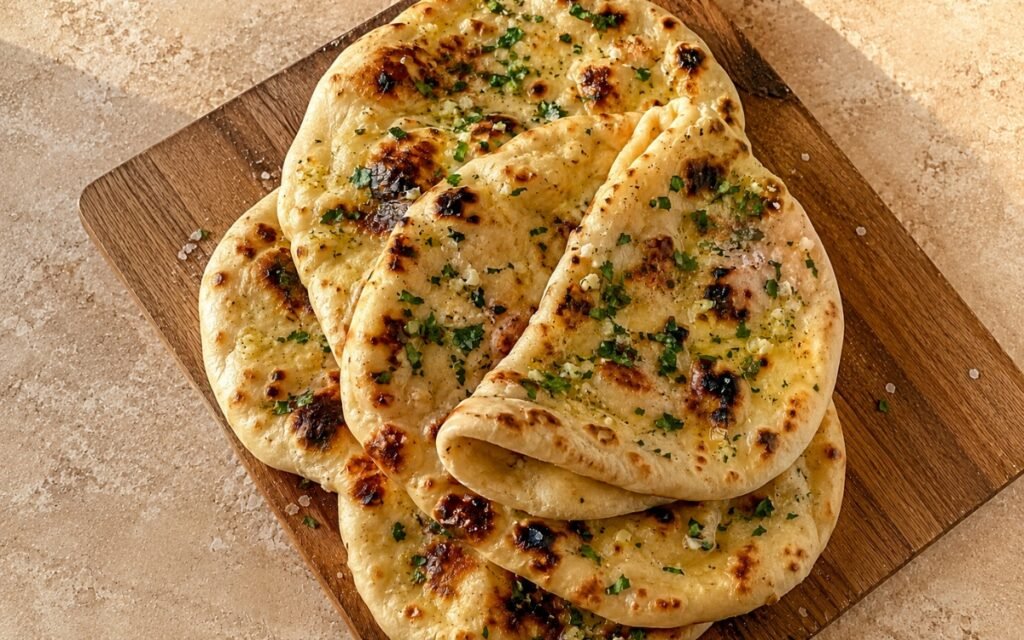
Turn off the heat and let the curry rest for 2–3 minutes before serving, which lets the fat settle slightly and the flavors round out. Serve hot with a small cream swirl and chopped cilantro, alongside naan, roti, jeera rice, or plain basmati rice.
*Notes :
- This dish depends heavily on the tomato base, so using ripe tomatoes matters more here than in curries with more competing flavors; very sour tomatoes may need a touch more sugar and cream to bring the balance back.
- Cashews blended into the sauce contribute body and a mellow richness without the floury or heavy quality a thickener like cornstarch would add, which is part of why they’re worth including rather than skipping.
- Straining the blended sauce is an extra step, but it’s the one most responsible for the smooth, polished texture that separates a classical butter masala from a chunkier, more rustic tomato curry.
- Soaking the paneer in hot, lightly salted water before it goes anywhere near the sauce is one of the simplest ways to keep it soft through the final simmer, and skipping that step leaves firmer paneer more likely to turn tough.
Why This Recipe Works
Cooking the tomatoes, cashews, and whole spices together before blending builds a base with more depth than blending raw ingredients would produce. Straining that blended base removes any remaining texture from the tomato skins or cashew pieces, which is what gives the finished sauce its signature silkiness. Finishing with butter and cream only after the base has already thickened keeps those richer ingredients from diluting the concentrated tomato flavor built up earlier. Adding the paneer last, for only a few minutes, protects its soft texture from the kind of prolonged heat that would otherwise toughen it.
Ingredient Breakdown
Ripe tomatoes
The foundation of the sauce’s flavor and color, with riper tomatoes needing less sugar to balance their acidity than underripe ones.
Cashews
Blended into the sauce for body and a mellow richness, avoiding the floury texture a starch-based thickener would leave behind.
Strained tomato-cashew base
The step responsible for the sauce’s signature silky texture, removing any remaining graininess before the gravy is finished.
Heavy cream and finishing butter
Added only once the base has thickened, rounding out the sauce’s richness without diluting its concentrated tomato flavor.
Soft paneer, soaked in hot water
Stays tender through the final brief simmer, in contrast to firmer paneer that hasn’t been soaked first.
Flavor Structure Explained
This dish follows a layered balance model:
- Tangy, concentrated centerpiece (strained tomato-cashew base)
- Deep color and mild warmth (Kashmiri chili powder and dried Kashmiri chilies)
- Rounded richness (butter and cream)
- Soft, mild protein (paneer, soaked and simmered briefly)
- Final aromatic and sweet balance (garam masala, kasuri methi, and a touch of sugar)
The strained tomato-cashew base serves as this dish’s tangy, concentrated centerpiece, built through extended cooking and blending before anything else is added. Kashmiri chili powder and the optional dried Kashmiri chilies contribute the deep orange-red color and mild warmth that define the dish’s look without much heat. Butter and cream, stirred in once the base has thickened, add a rounded richness over that concentrated tomato flavor. Soft paneer, kept tender through soaking and only a brief final simmer, provides a mild protein that stays distinct in the gravy rather than dissolving into it. A final aromatic and sweet balance from garam masala, kasuri methi, and a touch of sugar rounds out the dish right at the end.
Common Mistakes to Avoid
- Skipping the straining step – This leaves the sauce with some graininess instead of the smooth, polished texture that defines this dish; always strain if a classical finish is the goal.
- Over-searing the paneer – This makes it tough instead of soft; always keep any searing brief, 30–45 seconds per side at most.
- Simmering the paneer too long in the gravy – This turns it rubbery instead of staying tender; always keep this stage to 2–4 minutes.
- Using underripe, overly sour tomatoes without adjusting – This leaves the sauce too tangy; always taste and add a little more sugar or cream if needed.
Variations
Dhaba-Style Version
Skip the straining step for a slightly chunkier, more rustic texture closer to a roadside-style version of this curry.
Lighter Version
Reduce the butter and cream slightly and replace part of the cream with additional blended cashews for a lighter but still rich sauce.
Extra-Spicy Version
Add an additional dried Kashmiri chili or a pinch of hot chili powder for more heat without losing the dish’s signature color.
Mixed Vegetable Version
Add lightly steamed cauliflower or green peas alongside the paneer during the final simmer for a heartier, vegetable-forward variation.
Storage & Make-Ahead
Make the sauce base up to a day ahead and store it in the refrigerator before straining, reheating it gently and adding the cream and paneer shortly before serving.
Store the finished curry in an airtight container in the refrigerator for up to 3 days, keeping in mind the paneer firms up slightly on cooling.
Reheat gently on the stovetop over low heat, stirring often and loosening with a splash of hot water or cream if the sauce has thickened in the fridge.
Freeze the sauce without the paneer for up to 2 months, adding freshly soaked paneer after thawing and reheating gently.
Frequently Asked Questions
Can I skip straining the sauce?
Yes, though the texture will be slightly chunkier rather than perfectly smooth. The flavor stays the same either way, so straining is really about texture preference.
Why is my paneer tough instead of soft?
This usually means it was seared too long, simmered too long in the gravy, or wasn’t soaked in hot water first. All three steps are there specifically to keep the paneer soft.
Can I double this recipe?
Yes, though blend the sauce in batches if doubling, since a blender that’s too full won’t get the mixture completely smooth.
Why does my sauce taste too tangy?
This usually comes down to using less ripe or more acidic tomatoes. Adding a bit more sugar or cream at the finishing stage brings the balance back.
What else pairs well with this paneer butter masala?
Butter Chicken and Malai Kofta share a similar rich, butter-and-cream approach if you want to build out an Indian-style dinner spread, and Saag Paneer offers a different, greens-forward paneer dish for contrast. For bread, Homemade Garlic Butter Naan is perfect for scooping up the sauce, and Paneer Tikka Skewers make a good starter before this curry.
Nutrition Facts
( Per Serving )
- Calories
- ~640 kcal
- Protein
- 26 g
- Fat
- 54 g
- Carbs
- 10 g
-

Chicken Tikka Masala
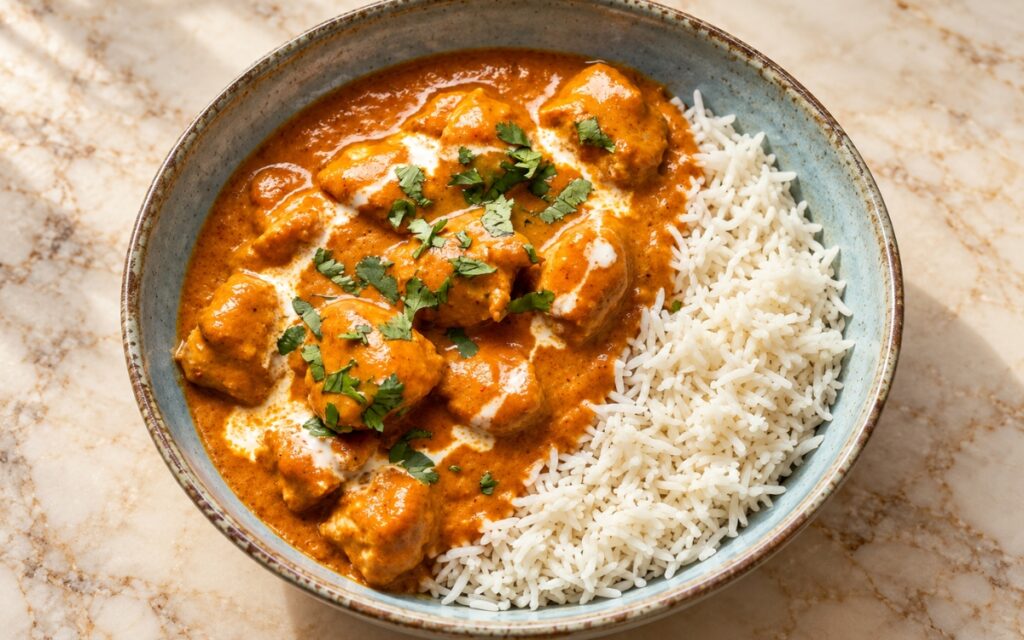
Classic chicken tikka masala with charred marinated chicken in a rich tomato-cream sauce, served with jasmine rice for a complete meal.
-
Butter Chicken
Classic butter chicken with charred marinated chicken in a smooth, velvety tomato-cream sauce, served with basmati rice for a complete meal.
-
Lamb Keema Curry
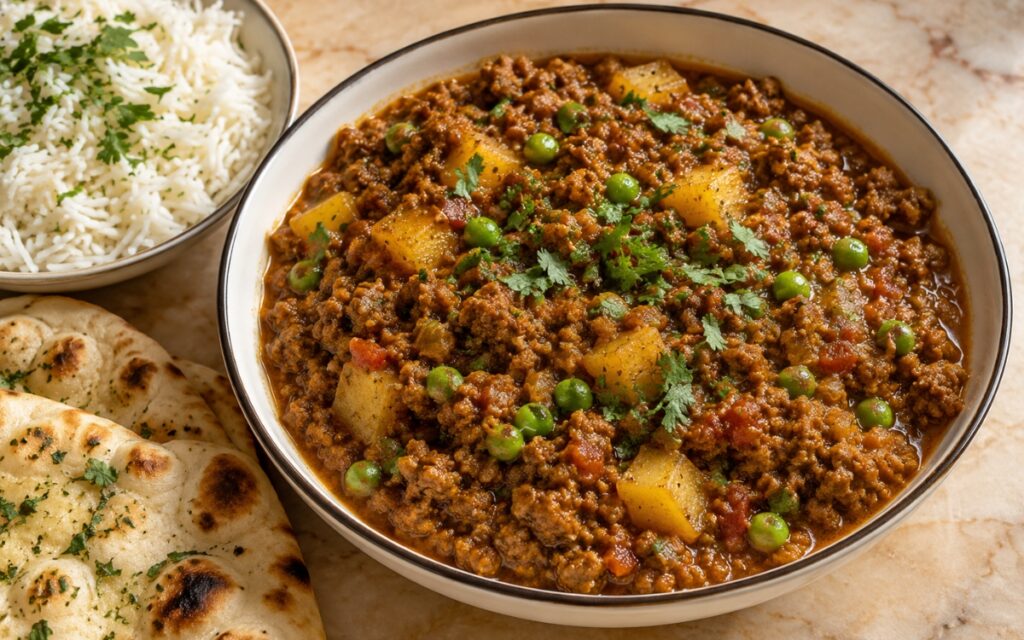
Classical lamb keema curry with finely crumbled lamb in a deeply flavored tomato-onion masala with peas and potatoes, served with rice and naan.

-
Plain Steamed Basmati Rice
Basmati rinsed thoroughly, boiled uncovered then simmered covered undisturbed for 15 minutes, rested and fluffed. Long, separate grains every time.
-
Homemade Garlic Butter Naan
Soft homemade naan cooked in a hot skillet until puffed, blistered, and lightly charred, then brushed with glossy garlic butter.
-
Keema Naan
Soft, blistered naan stuffed with a dry, deeply seasoned keema filling, served with a simple yogurt chutney.