Lamb Keema Curry
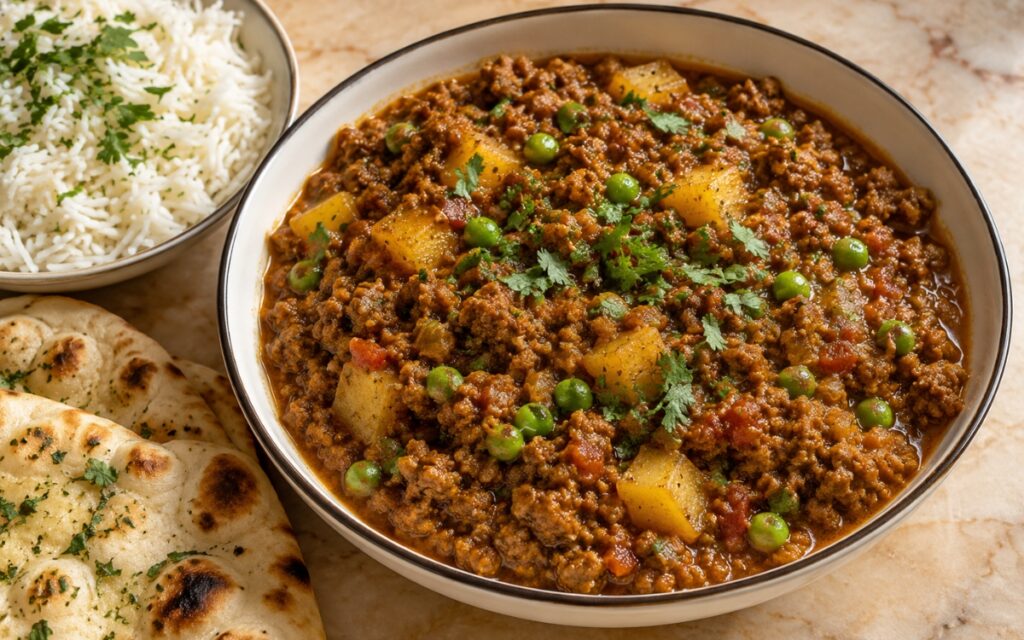
A classical lamb keema curry made with finely crumbled lamb cooked in a deeply flavored tomato-onion masala with peas and tender potato pieces. The keema stays moist, distinct, and richly seasoned rather than pasty, served with fluffy rice and warm naan for a full, hearty plate.
- Prep Time : 20 min
- Total Time : 1 hr 5 min
- Servings : 4
Ingredients
For the Lamb Keema Curry
- 800 g ground lamb
- 2 tbsp neutral oil or ghee
- 1 bay leaf
- 1 tsp cumin seeds
- 1 small cinnamon stick
- 2 medium onions, finely chopped
- 2 tbsp ginger-garlic paste
- 2 green chilies, finely chopped or slit
- 3 medium tomatoes, finely chopped, or 250 g crushed tomatoes
- 300 g potatoes, peeled and cut into small 1.5 cm cubes
- 120 g green peas, fresh or frozen
- 1½ tsp fine salt, plus more if needed
- ½ tsp turmeric
- 1½ tsp Kashmiri chili powder
- 2 tsp ground coriander
- 1 tsp ground cumin
- ½ tsp black pepper
- 1 tsp garam masala
- 300 to 400 ml water, as needed
- 2 tbsp chopped cilantro, plus more for garnish
For the Rice
- 200 g basmati rice
- 300 ml water
- ½ tsp salt
- 1 tsp ghee or butter, optional
For Serving
- 4 good-quality naans, store-bought or homemade
- Extra chopped cilantro, for garnish
Directions
- Cook the Rice
Rinse the basmati rice well until the water runs mostly clear, then soak for 15–20 minutes and drain. Combine the rice, 300 ml water, salt, and optional ghee or butter in a small pot. Bring to a gentle boil, stir once, cover, and reduce to low heat. Cook for 12 minutes, then turn off the heat and rest, still covered, for 10 minutes before fluffing gently with a fork. Keep the lid on through the whole process — the trapped steam is what finishes the grains evenly, leaving the rice fluffy and separate rather than wet. - Start the Keema Base
Heat the oil or ghee in a wide sauté pan, deep skillet, or pot over medium heat. Add the bay leaf, cumin seeds, and cinnamon stick, cooking for 20–30 seconds until fragrant. Add the chopped onions and cook for 8–10 minutes, stirring regularly, until well softened and medium golden. This stage needs its full time — a properly cooked onion base gives the curry body and sweetness, while onions left pale leave the finished dish flatter and thinner. - Add Aromatics and Brown the Lamb
Add the ginger-garlic paste and green chilies, cooking for 1 minute until the raw smell fades. Add the ground lamb, increase the heat slightly to medium-high, and cook for 6–8 minutes, breaking it up well with a spoon or spatula so the meat stays finely crumbled, until it loses its raw color and most of the visible moisture evaporates. Keep breaking the lamb up constantly early on — true keema texture means small, loose crumbles rather than large clumps, and letting the lamb fry briefly in its own fat once the moisture cooks off deepens the flavor further. - Build the Masala
Add the tomatoes, salt, turmeric, Kashmiri chili powder, coriander, ground cumin, and black pepper. Cook over medium heat for 8–10 minutes, stirring regularly, until the tomatoes break down and the masala thickens, continuing until the oil or fat begins to reappear around the edges and the mixture looks darker, thicker, and slightly glossy. This bhuno stage is essential — a tomato-onion masala that’s still raw and watery leaves the finished keema tasting sharp and unfinished. - Simmer with the Potatoes
Add the diced potatoes, stirring to coat them well in the masala. Pour in 300 ml water to start, bring to a simmer, then reduce to medium-low. Cover partially and cook for 15–18 minutes, stirring occasionally, until the potatoes are nearly tender, adding a splash more water only if needed. The curry should stay moist and spoonable rather than soupy — the potatoes are meant to cook in the masala itself, not boil in a lot of liquid, since too much water dilutes the curry and softens the keema’s texture. - Finish with Peas and Garam Masala
Add the peas and cook for 3–5 minutes, until hot and the potatoes are fully tender. Stir in the garam masala and chopped cilantro, taste, and adjust the salt if needed. Cook uncovered for another 1–2 minutes if the curry needs tightening. The final texture should be rich, visibly crumbled, and moist, with a little sheen from the lamb fat and masala — avoid reducing it until dry, since keema needs to stay thick and hearty while still juicy enough to spoon easily with rice or scoop with naan. - Warm the Naan and Serve
Warm the naan just before serving. Serve the lamb keema curry with a portion of rice and one naan per serving, garnishing the keema with extra chopped cilantro.
*Notes :
- Lamb with some fat, around 15–20%, gives a noticeably more flavorful and moist keema than very lean lamb, which tends to turn dry and flatter in taste over the same cooking time.
- Breaking the mince up constantly as it browns is what keeps the texture distinctly crumbled rather than clumped, and that distinction matters more in keema than in most other ground-meat dishes, since the texture itself is part of what defines the dish.
- The bhuno stage — cooking the tomato-onion masala until it thickens and the oil reappears at the edges — needs its full time, since an undercooked masala leaves a raw, sharp taste running through the whole curry no matter how long it simmers afterward.
- Cutting the potatoes to a small, consistent size matters for timing: pieces cut too large won’t finish cooking in the same window as the rest of the dish, while pieces cut too small risk falling apart before the curry is done.
Why This Recipe Works
Cooking the onions until medium golden builds a sweetness and body that pale onions can’t replicate in the same timeframe. Browning the lamb while breaking it up constantly keeps the meat in small, distinct crumbles rather than large clumps, which is the texture that defines keema specifically. The bhuno stage that follows concentrates the tomato and spice flavors into the meat before any water is added, so the curry’s depth comes from that concentrated base rather than from a longer simmer alone. Adding the potatoes to cook directly in the masala, rather than in a larger volume of water, keeps the dish’s texture thick and clinging instead of diluted, and adding the peas only at the very end protects their color and bite from the longer cooking everything else needs.
Ingredient Breakdown
Ground lamb with some fat
Stays moist and flavorful through browning and the longer simmer that follows, in contrast to very lean lamb, which dries out more easily.
Deeply browned onions
Build the curry’s underlying sweetness and body, requiring the full 8–10 minutes to develop properly.
Bhuno-cooked tomato masala
Concentrated until thick and glossy before the potatoes go in, this stage carries much of the dish’s depth.
Small-cubed potatoes
Cook directly in the masala rather than in excess liquid, picking up flavor as they soften alongside the lamb.
Peas, added at the very end
Stay bright and intact by joining the pan only in the last few minutes of cooking.
Flavor Structure Explained
This dish follows a layered balance model:
- Savory, crumbled centerpiece (browned ground lamb)
- Sweet, deep undertone (onions cooked to medium golden)
- Tangy warmth (bhuno-cooked tomato masala)
- Hearty, starchy body (potatoes cooked directly in the masala)
- Fresh, bright finish (peas and cilantro added at the end)
Browned ground lamb serves as this dish’s savory, crumbled centerpiece, its texture built through constant breaking up as it cooks. Onions cooked to medium golden provide a sweet, deep undertone that anchors the whole curry. The bhuno-cooked tomato masala contributes a tangy warmth, concentrated through extended cooking before the potatoes are added. Potatoes, simmered directly in that masala rather than in excess liquid, add a hearty, starchy body to the dish. A final fresh, bright finish from the peas and cilantro, added only at the end, keeps the curry from tasting one-note despite its long cooking time.
Common Mistakes to Avoid
- Rushing the onion stage – This leaves the curry tasting flat and thin; always cook until medium golden, about 8–10 minutes.
- Not breaking up the lamb enough – This leaves large clumps instead of true keema texture; always break it up constantly while browning.
- Rushing the bhuno stage – This leaves a raw, sharp taste in the finished curry; always cook until the masala thickens and the oil reappears at the edges.
- Adding too much water with the potatoes – This dilutes the curry and softens the keema’s texture; always keep it moist and spoonable rather than soupy.
Variations
Beef Keema Version
Substitute ground beef for the lamb for a similar but slightly different flavor profile, using the same technique throughout.
Extra-Spicy Version
Increase the Kashmiri chili powder or add a pinch of hot chili powder for a noticeably hotter finished curry.
No-Potato Version
Omit the potatoes for a simpler, meat-and-pea keema, reducing the simmer time slightly since there’s no starch component to cook through.
Egg-Topped Version
Top each serving with a fried egg for a heartier, breakfast-style take on the same curry.
Storage & Make-Ahead
Make the keema curry up to 2 days ahead and store it in an airtight container in the refrigerator, reheating gently before serving.
Store leftovers in an airtight container in the refrigerator for up to 4 days, keeping the rice and naan separate for the best texture.
Reheat gently on the stovetop over low heat, adding a splash of hot water if the curry has thickened too much in the fridge.
Freeze the keema curry without the rice or naan for up to 3 months, thawing in the refrigerator overnight before reheating gently.
Frequently Asked Questions
Can I use a different ground meat?
Yes, ground beef works well as a substitute for lamb, following the same technique and timing throughout.
Why is my keema pasty instead of crumbled?
This usually means the lamb wasn’t broken up enough while browning. Breaking it up constantly, especially early in the cooking process, keeps it in small, distinct pieces.
Why does my curry taste flat?
This often comes back to the onions or the bhuno stage being rushed. Both need their full cooking time to build the curry’s underlying depth.
Can I make this curry less rich?
Using leaner lamb reduces the richness somewhat, though it also makes the keema drier; a middle-ground fat content, around 15%, balances flavor and texture well.
What else pairs well with this lamb keema curry?
Keema Naan takes the same flavors in a stuffed-bread direction if you want a different way to serve similar ingredients, and Rogan Josh Lamb Curry or Kofta Ka Salan both work well as an additional lamb dish for a larger spread. For bread, Homemade Garlic Butter Naan is a simple pairing if you’d rather make your own naan, and Cucumber Raita adds a cooling contrast to the curry’s spice.
Nutrition Facts
( Per Serving — keema, rice, and 1 naan )
- Calories
- ~1150 kcal
- Protein
- 50 g
- Fat
- 53 g
- Carbs
- 110 g
-

Rogan Josh Lamb Curry
Classical-style lamb rogan josh with tender slow-braised lamb in a deep red, richly spiced yogurt curry sauce, served with jasmine rice.
-
Malai Kofta
Soft potato-paneer koftas in a smooth, cashew-cream tomato gravy with warm spices.
-
Vietnamese Chicken Curry / Cà Ri Gà
Chicken thighs, potatoes and carrots simmered in a golden lemongrass coconut curry broth, served with jasmine rice, cilantro and cracked black pepper.


-
Dominican Pollo Guisado
A classic Dominican braise of browned bone-in chicken in a glossy reddish-orange tomato sauce with onions and peppers, served over fluffy white rice.
-
Red Lentil Dal Tadka
Classical red lentil dal simmered until creamy, finished with a sizzling hot ghee tadka of cumin, garlic, and dried red chilies.
-
Ropa Vieja Cubana
Slow-braised, shredded beef simmered in a rich tomato sauce with peppers, onion, and green olives, served with white rice, black beans, and fried plantains.