Chinese Scallion Pancakes
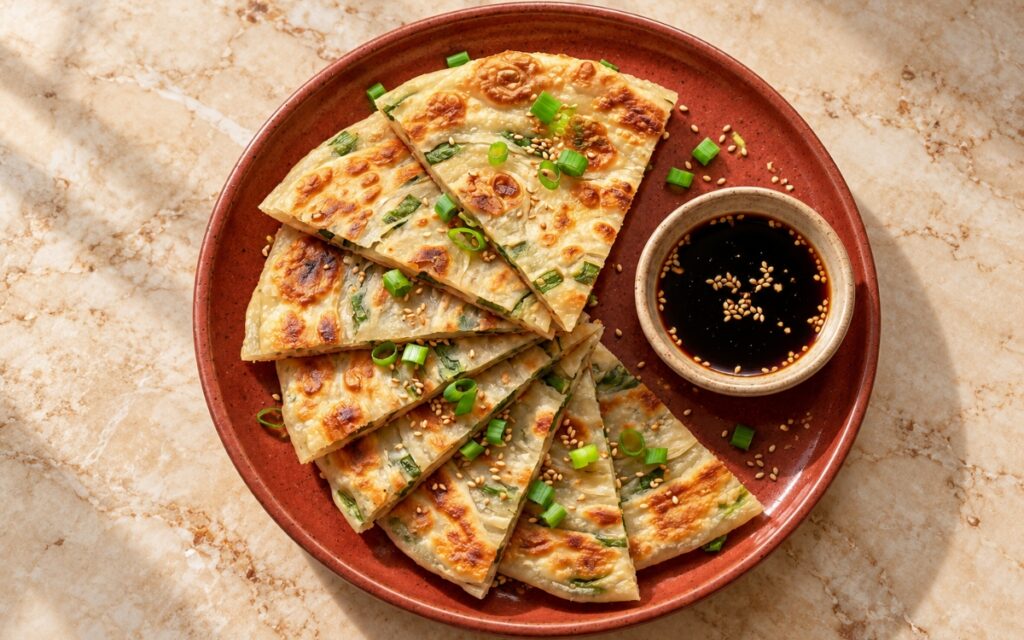
Classic Chinese scallion pancakes made from a soft hot-water dough rolled thin, spread with a seasoned oil paste, scattered with scallions, coiled into spirals and pan-fried until crisp, blistered and golden, the key being a flaky, layered interior under a crackling crust. Laminating the dough with a thin oil-and-flour paste and then rolling it into a rope and coiling it into a snail, rather than simply folding scallions into a single sheet, is the technique this whole dough depends on for its many separate layers — each turn of the spiral traps a film of fat between thin sheets of dough, so they stay apart and puff as steam escapes in the pan, the same laminate-and-coil principle used elsewhere in this collection whenever a flatbread needs flaky, pull-apart layers. Mixing the flour with water at 80–90°C is what keeps the dough soft, pliable and easy to roll thin without tearing or springing back. Frying each pancake over medium to medium-high heat is what lets the surface blister and crisp while the inner layers cook through without turning greasy. The payoff is a pancake with real, flaky structure — crisp golden-brown blisters, tender pull-apart layers, sweet green scallion in every bite and a salty-tangy soy-vinegar dip.
- Prep Time : 35 min
- Total Time : 1 hr 45 min
- Servings : 4
Ingredients
For the Dough
- 360g all-purpose flour
- 1 tsp fine salt
- 210ml hot water, about 80–90°C, not boiling violently
- 20–30ml room-temperature water, only if needed
- 1 tbsp neutral oil, for coating the dough during resting
For the Scallion Filling
- 6 tbsp neutral oil or melted lard
- 1 tsp fine salt
- ½ tsp white pepper
- 1 tbsp all-purpose flour, for the oil paste, optional but recommended for clearer layering
- 8–10 scallions, finely sliced
For Rolling and Frying
- All-purpose flour, a small amount for dusting
- 6–8 tbsp neutral oil, for pan-frying as needed
For the Soy-Vinegar Dipping Sauce
- 4 tbsp light soy sauce
- 2 tbsp Chinese black vinegar or rice vinegar
- 1 tsp sesame oil
- ½ tsp sugar
- 1 tsp finely sliced scallion or a small pinch of toasted sesame seeds, optional
For the Garnish
- 1 scallion, thinly sliced
- 1–2 tsp toasted sesame seeds
Directions
- Make the Hot-Water Dough
Combine the 360g all-purpose flour and 1 tsp fine salt in a mixing bowl. Pour in the 210ml hot water, at about 80–90°C rather than at a violent boil, and stir with chopsticks or a fork until shaggy clumps form. Once it is cool enough to handle, knead for 4–6 minutes into a soft, mostly smooth dough. If it feels dry and will not come together, add the room-temperature water 1 tsp at a time, using no more than 20–30ml in total. The dough should be soft, pliable and slightly tacky, never stiff. Coat it lightly with the 1 tbsp neutral oil, cover the bowl and rest it for 30 minutes. That hot water partially gelatinises the starch, which is what gives a genuinely softer dough that rolls thin without fighting back. - Prepare the Scallion Filling
While the dough rests, stir the 6 tbsp neutral oil or melted lard with the 1 tsp fine salt and ½ tsp white pepper in a small bowl. Stir in the 1 tbsp all-purpose flour to make a loose, spreadable paste, then set it aside. Finely slice the 8–10 scallions, patting them completely dry with paper towels first if they were washed, and keep them separate from the paste until rolling. The sliced scallions should look dry and loose, not clumped together or glistening with water. That small amount of flour in the oil is what keeps the layers slightly separated as they roll and cook, so they open into distinct, flaky sheets. - Mix the Dipping Sauce
Still during the rest, stir the 4 tbsp light soy sauce, 2 tbsp Chinese black vinegar or rice vinegar, 1 tsp sesame oil and ½ tsp sugar together in a small dish for about 1 minute, until the sugar has completely dissolved and no grains remain at the bottom. Add the optional 1 tsp finely sliced scallion or a small pinch of toasted sesame seeds if using. Taste it: the sauce should be balanced salty and tangy, not harshly vinegary, with black vinegar giving the deeper, maltier classic flavour and rice vinegar a lighter, sharper one. Thinly slice the 1 scallion for the garnish and keep it covered. That early mixing is what gives the sugar time to dissolve fully and the flavours time to round out before the pancakes come off the heat. - Divide the Dough
Turn the rested dough onto a surface dusted with only a small amount of flour and knead it 2–3 times, just to bring it back together. Divide it into 4 equal pieces, about 145g each, weighing them if possible so the pancakes finish at the same size. Shape each into a smooth ball and keep the pieces covered with a cloth or an upturned bowl while you work, because exposed dough forms a dry skin that tears during rolling. The dough should now feel genuinely relaxed and stretch easily without snapping back. That even division is what lets the four pancakes roll out to the same size and cook evenly in the same time. - Roll, Fill and Coil
Work with one piece at a time. Roll it into a thin rectangle or oval about 2–3mm thick, roughly 30 × 18cm. Spread a quarter of the oil paste thinly over the surface, leaving a clean 1cm border along one long edge, then scatter a quarter of the sliced scallions evenly on top without piling them up. Starting from the opposite long edge, roll the dough up tightly into a long rope, pinching the clean edge to seal it at the end. Coil the rope into a snail shape, tuck the end underneath and flatten it gently with your palm. Repeat with the remaining pieces, then cover the coils and rest them for 10–15 minutes. That thin sheet and tight roll are what build the many separate layers inside each spiral. - Roll Out the Pancakes
Take the first rested coil and roll it gently from the centre outward into a round about 18–20cm across, turning and flipping it as you go. It is fine if a few scallions show through the surface, but press lightly so the spiral layers stay intact rather than being squashed together. If the dough resists and springs back, cover it and let it rest another 5 minutes before continuing. Brush off any excess dusting flour, which would scorch in the pan. Repeat with the remaining coils, keeping the finished rounds lightly covered so they do not dry out. That gentle pressure is what flattens the coil while keeping its layers genuinely separate. - Pan-Fry the Pancakes
Heat a 24–26cm skillet over medium to medium-high heat and add about 1½ tbsp of the frying oil, enough to coat the base lightly. When the oil shimmers, lay in one pancake. Fry for 2–4 minutes, pressing lightly with a spatula for even contact, until the underside is golden with blistered brown spots. Flip and fry the second side for 2–4 minutes more, until crisp, deeply golden and cooked through, adding a little more oil around the edges if the pan looks dry. If it browns in under 2 minutes, lower the heat; if it is still pale after 4, raise it. Transfer to a rack and, while still hot, clap it gently between your hands or press and loosen it with two spatulas to open the flaky layers. Repeat with the remaining pancakes, using the 6–8 tbsp oil across all four. That steady heat is what crisps the surface before the dough can soak up oil and turn greasy. - Slice and Serve
Cut each pancake into 6–8 wedges with a sharp knife or kitchen scissors, slicing firmly in one motion so the layers are not compressed. Stack or overlap the wedges slightly on a warm plate. Scatter over the sliced scallion and the 1–2 tsp toasted sesame seeds. Serve immediately with the soy-vinegar dipping sauce on the side, while the exterior is still crisp and the inner layers are tender and steaming. That quick serving matters because steam trapped between stacked wedges softens the crisp crust within minutes.
*Notes :
- Laminating with oil paste and coiling into a spiral deserves genuine recognition as the technique most directly responsible for whether the pancakes turn flaky or bready. Every turn of the snail stacks a film of fat between thin sheets of dough — the recipe’s own note that the flour in the oil “helps keep the layers slightly separated during rolling and cooking” explains why they open in the pan instead of fusing into one dense round.
- Resting the dough twice deserves the same attention this technique receives throughout this collection’s other rolled doughs, because relaxed gluten is what lets the sheets go thin. The recipe’s own warning that resting is essential “so the gluten relaxes; otherwise the dough will shrink back when rolled” applies to both the 30-minute rest after kneading and the 10–15 minute rest after coiling, which keeps the spiral from springing back during the final roll.
- Using hot water at 80–90°C deserves genuine respect as the detail most directly responsible for the pancake’s tender, chewy interior. Hot water partially gelatinises the flour’s starch and tames the gluten, so the dough stays soft and slightly tacky — a dough mixed too dry or with cold water rolls stiffly, tears during lamination and fries up tough rather than tender and flaky.
- The colour of the blisters deserves attention as a genuine, checkable readiness cue rather than a loose approximation. Golden-brown patches after 2–4 minutes per side mean the heat is right — the recipe’s own warning about heat, “too low and the pancakes absorb oil and turn greasy; too high and they brown before the inside layers cook through,” tells you exactly which way to adjust the burner.
Why This Recipe Works
This recipe works because each stage protects the layers that the coil creates. A hot-water dough rested for 30 minutes stays soft enough to roll into a genuinely thin sheet, and a seasoned oil paste thickened with a little flour keeps each sheet separate once it is rolled and coiled. A second short rest lets the spiral relax, so the final roll flattens it without squashing the layers together. Frying over steady medium to medium-high heat then crisps and blisters the outside while steam puffs the interior, and a quick clap opens the finished pancake into tender, flaky, scallion-flecked layers.
Ingredient Breakdown
Hot-Water Dough (80–90°C)
The critical technique — partly gelatinised starch keeps the dough soft, pliable and easy to roll genuinely thin without tearing.
Oil-and-Flour Paste
The critical technique — a thin, seasoned layer of fat and flour keeps every spiral sheet separate during rolling and frying.
Tight Roll and Snail Coil
The structural foundation — rolling the filled sheet into a rope and coiling it stacks the many thin, flaky layers.
Two Rests (30 Minutes, Then 10–15)
The critical timing technique — relaxed gluten lets the dough roll thin and stops the coil from springing back.
Dry, Finely Sliced Scallions
The defining flavour ingredient — dry slices stay put, seal cleanly and perfume every layer with sweet, mild onion.
Medium to Medium-High Pan Heat
The critical technique — steady heat blisters the crust golden while the inner layers cook through without soaking up oil.
Soy-Vinegar Dipping Sauce
The finishing touch — salty soy, tangy black vinegar and sesame oil cut through the richness of each fried wedge.
Flavor Structure Explained
This Chinese scallion pancake follows a layered balance model:
- Crisp, chewy foundation (hot-water wheat dough, pan-fried crust)
- Rich, savoury layering (neutral oil or lard, salt, white pepper)
- Sweet, aromatic onion note (finely sliced scallions)
- Salty, tangy contrast (light soy sauce, black vinegar, sugar)
- Toasty finishing note (sesame oil, toasted sesame seeds, fresh scallion)
The hot-water wheat dough and its pan-fried crust form the crisp, chewy foundation that holds every layer. Oil or lard seasoned with salt and white pepper supplies the rich, savoury layering, with a gentle peppery warmth running through each spiral. Finely sliced scallions add a sweet, aromatic onion note that softens as it cooks inside the dough. The soy-vinegar dip brings a salty, tangy contrast, while sesame oil, sesame seeds and fresh scallion land as the toasty finishing note that ties these pancakes together.
Common Mistakes to Avoid
- Mixing the Dough Too Dry – This makes a stiff dough that tears during lamination and fries up tough. Always keep it soft, pliable and slightly tacky, adding water 1 tsp at a time.
- Skipping the Dough Rest – This leaves the gluten tight, so the sheet shrinks back and refuses to roll thin. Always rest the oiled dough, covered, for the full 30 minutes.
- Using Wet or Overloaded Scallions – This makes the dough slippery, so the rope will not seal and the pancake tears and leaks. Always dry the scallions and scatter just a quarter per sheet.
- Pressing Too Hard on the Final Roll – This squashes the spiral layers together into one dense, bready round. Always roll gently from the centre outward, resting the coil 5 minutes if it springs back.
- Frying Over Low Heat – This lets the pancakes soak up oil and turn greasy before they crisp. Always fry over medium to medium-high heat until golden blisters form in 2–4 minutes.
Variations
Lard Filling Version
Use 6 tbsp melted lard instead of neutral oil in the oil paste, per the recipe’s own note, for slightly flakier layers and a richer, more traditional savoury flavour.
Rice Vinegar Dip Version
Swap the 2 tbsp Chinese black vinegar for rice vinegar, as the recipe allows, for a lighter, brighter dipping sauce that still balances the soy’s saltiness against the fried pancake.
Snack-Size Version
Divide the dough into 8 pieces instead of 4, roll each rested coil to about 12–13cm and fry for 2–3 minutes per side, for crisp party-size pancakes with the same flaky spiral.
Chili Oil Dip Version
Stir 1–2 tsp chili oil into the soy-vinegar dipping sauce just before serving, for a gently spicy, aromatic heat that contrasts with the sweet scallions without masking them.
Storage & Make-Ahead
The dough can be made, filled and shaped into coils up to 24 hours ahead, per the recipe’s own note, then kept covered in the fridge and brought close to room temperature before the final roll.
Uncooked rolled pancakes freeze well stacked between sheets of parchment in a sealed bag for up to 2 months, and can be thawed slightly or fried straight from frozen over slightly lower heat for a little longer on each side.
The soy-vinegar dipping sauce keeps in a sealed jar in the fridge for up to 1 week, so it can be mixed well ahead, though any fresh scallion added to it is best stirred in on the day.
Scallion pancakes are genuinely best served immediately, while the exterior is crisp and the interior layers are still tender and flaky, so fry them just before eating and avoid stacking hot wedges under a cover.
Leftover cooked pancakes keep in an airtight container in the fridge for up to 2 days and reheat best in a dry skillet over medium heat for 2–3 minutes per side, which brings back the crisp crust.
Frequently Asked Questions
Why is the dough made with hot water instead of cold?
Water at 80–90°C partially gelatinises the flour’s starch and weakens the gluten, giving a genuinely soft, pliable dough. That softness lets it roll thin enough for real lamination and keeps the finished pancake tender rather than tough.
Why does the oil paste need a spoonful of flour?
Oil alone can soak into the dough and let the layers fuse as the coil is rolled flat. A little flour in the paste stays as a thin barrier between the sheets, so they separate cleanly into flaky layers in the hot pan.
Why do the coils need a second rest before the final roll?
Rolling and coiling tighten the gluten again, so a freshly coiled spiral springs back and resists flattening. Resting it for 10–15 minutes lets it relax, so it rolls out to 18–20cm with gentle pressure and the layers stay intact.
Why should the hot pancake be clapped or pressed after frying?
The layers set as the pancake fries and can stay stuck together near the centre. A gentle clap or squeeze while it is still hot breaks those seams apart and opens the spiral into the visible, flaky layers the dish is known for.
Are there other classic Chinese noodle, pan-fried dumpling, or chili oil dishes worth trying?
Shanghai Scallion Oil Noodles offers another classic scallion-forward direction worth exploring. Pan-Fried Pork Buns / Sheng Jian Bao and Japanese Pork Gyoza — Pan-Fried Dumplings are also worth trying for other crisp-bottomed, pan-fried dough directions, and Chili Garlic Oil and Chinese Tomato Egg Stir-Fry offer other bold condiment and home-style dishes worth exploring.
Nutrition Facts
( Per Serving — 1 pancake )
- Calories
- ~680 kcal
- Protein
- 11 g
- Fat
- 38 g
- Carbs
- 74 g
-

Sourdough Garlic Bread
Sourdough spread with genuinely soft garlic herb butter, baked foil-wrapped then unwrapped until golden and crisp. Rich and aromatic.
-
Everything Bagels
Barley malt dough, overnight cold proof, boiling bath, and everything seasoning — authentic chewy bagels that make every other version seem like an approximation.
-
Classic French Baguette
Overnight poolish, proper scoring, and steam baking — a classic French baguette with crackling crust and complex flavour made properly at home.
-
The Softest Homemade Milk Buns
Small tangzhong-enriched milk buns with glossy golden tops and a soft, cottony interior that pulls apart into fine tender strands.
-
Japanese Milk Bread / Three-Part Shokupan
A tall, ultra-soft shokupan loaf shaped from three even portions that rise into a classic three-domed pull-apart top.
-
Focaccia
Golden, olive-oil-crisp focaccia with a cloud-soft open crumb, topped with za’atar, rosemary and flaky sea salt.