Chicken 65
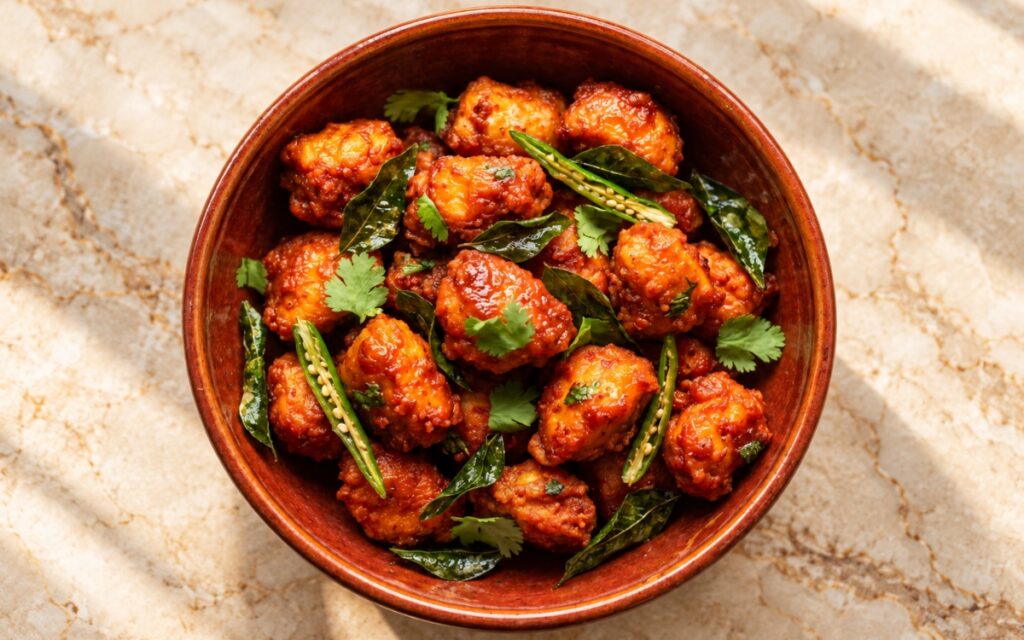
A classical dry-style Chicken 65 — bite-size boneless chicken thigh pieces marinated in yogurt, ginger-garlic, Kashmiri chilli and spices, fried until crisp and finished with fried curry leaves, green chillies and a spicy red-orange tempering, the key being chicken that is juicy inside, visibly crisp outside and glossy rather than sauced. Binding the marinade into a thick, pasty coating with cornstarch, rice flour and a little all-purpose flour, rather than a loose, runny yogurt mix, is the technique this whole dish depends on for its craggy, deep red-orange crust — a wet marinade slides off in the hot oil and fries up pale and patchy, the same coat-must-grip principle used elsewhere in this collection whenever a marinated protein goes straight into the fryer without a separate dredge. Frying in batches at a steady 170–175°C is what keeps the coating crisp and set rather than oily, while the thigh meat cooks through to 74°C. A brief final toss in the tempering is what coats every piece in a light, glossy film of garlic, chilli and lemon without softening the crust. The payoff is a Chicken 65 with real, restaurant-style punch — crackling edges, juicy thigh meat, smoky curry leaves, blistered green chillies and a bright, peppery red-orange glaze.
- Prep Time : 20 min
- Total Time : 1 hr 45 min
- Servings : 4
Ingredients
For the Chicken Marinade
- 1kg boneless chicken thighs, cut into 3–4cm bite-size pieces
- 150g thick plain yogurt
- 1½ tbsp ginger-garlic paste
- 2 tbsp lemon juice
- 2 tsp fine salt
- 2 tbsp Kashmiri chilli powder
- ½–1 tsp hot red chilli powder, to taste
- ½ tsp ground turmeric
- 1½ tsp ground coriander
- 1 tsp ground cumin
- 1 tsp garam masala
- 1 tsp freshly ground black pepper
- 1 large egg
- 40g cornstarch
- 35g rice flour
- 15g all-purpose flour
- Extra rice flour or cornstarch, 1 tsp at a time, only if needed
For Frying
- Neutral oil, enough for deep frying
For the Finishing Tempering
- 2 tbsp neutral oil
- 5–6 green chillies, slit lengthwise
- 20–25 curry leaves, thoroughly dried
- 1 tbsp finely chopped garlic
- ½ tsp Kashmiri chilli powder
- ¼ tsp black pepper
- 1–2 tbsp water
- 1 tsp lemon juice
- 2 tbsp chopped cilantro
- Pinch of salt, only if needed
Directions
- Dry the Chicken and Mix the Marinade
Cut the 1kg boneless chicken thighs into even 3–4cm bite-size pieces, then pat them thoroughly dry with paper towels until no moisture shows on the surface. In a large bowl, whisk together the 150g thick yogurt, 1½ tbsp ginger-garlic paste, 2 tbsp lemon juice, 2 tsp fine salt, 2 tbsp Kashmiri chilli powder, ½–1 tsp hot red chilli powder, ½ tsp turmeric, 1½ tsp ground coriander, 1 tsp ground cumin, 1 tsp garam masala, 1 tsp black pepper and the egg. Whisk until completely smooth and brick-red, with no streaks of yogurt or lumps of spice. Use the lower amount of hot chilli powder for moderate heat, or the full 1 tsp for a sharper bite. That thorough drying is what lets the marinade grip the meat, since a wet surface makes the coating slip and fry up thin and patchy. - Coat and Marinate
Add the 40g cornstarch, 35g rice flour and 15g all-purpose flour to the bowl and stir into a thick, smooth red paste. Add the chicken and mix thoroughly with a spoon or gloved hands, turning the pieces until every surface is evenly coated with no pale patches. The marinade should cling tightly and look thick and pasty, never runny or pooling at the bottom of the bowl. If it looks loose, stir in a little extra rice flour or cornstarch, 1 tsp at a time, until it genuinely grips the chicken. Cover and refrigerate for 45 minutes. That thick, clinging coating is exactly what fries up into the craggy, deep red-orange crust, since a wet marinade slides off in the oil and leaves the chicken pale and uneven. - Take the Chill Off the Chicken
Remove the chicken from the refrigerator 15–20 minutes before frying and leave it covered at room temperature. Stir once to redistribute the marinade and check it again — if the chicken has released liquid and the coating looks wet, stir in a little more rice flour, 1 tsp at a time, until it is thick and pasty once more. Meanwhile, pour the neutral oil into a deep, heavy pot to a depth of about 6–8cm, keeping it no more than half full, and begin heating it over medium heat. Check that the 20–25 curry leaves are completely dry, patting them with paper towel if needed. That short rest is what stops fridge-cold chicken from dropping the oil temperature too sharply, which would leave the coating greasy instead of crisp. - Fry the Chicken in Batches
Bring the oil to 170–175°C, checking with a thermometer. Fry the chicken in 3 batches, lowering the pieces in one at a time and separating any that touch so they do not fuse together. Fry each batch for 4–6 minutes, turning occasionally, until deep red-orange, crisp and firm outside and cooked through, with the thickest piece reaching at least 74°C. Lift out with a slotted spoon onto a wire rack or paper towel-lined tray, and let the oil return to 170–175°C before adding the next batch. Make sure every piece is crisp and set before it leaves the oil, because under-fried pieces soften quickly in the tempering. For extra crispness, especially if serving later, rest the fried chicken for 5 minutes, then refry it in 185–190°C oil for 45–60 seconds just before the final toss. That steady oil temperature is what sets the crust genuinely fast, since overloaded, cooler oil soaks into the coating and turns it heavy instead of crisp. - Make the Finishing Tempering
Heat the 2 tbsp neutral oil in a wide pan or wok over medium heat. Add the 5–6 slit green chillies and fry for 20–30 seconds, until blistered in spots. Add the dried curry leaves carefully, standing back as they splutter, and fry for a few seconds until crisp, aromatic and glossy. Add the 1 tbsp chopped garlic and cook for 15–20 seconds, just until fragrant and never browned. Add the ½ tsp Kashmiri chilli powder and ¼ tsp black pepper, stir immediately, then add 1–2 tbsp water at once to stop the spices scorching and form a light coating, followed by the 1 tsp lemon juice. That splash of water is what protects the ground chilli from burning, keeping the tempering bright red-orange instead of dark and bitter. - Toss and Serve
Raise the heat to medium-high, add all the fried chicken and toss well for 30–60 seconds, just until every piece is evenly coated and glossy, with the curry leaves and chillies spread throughout. Turn off the heat, add the 2 tbsp chopped cilantro and toss again. Taste a piece and add a pinch of salt only if needed. The chicken should look glossy and dry, with no liquid pooling in the pan; if a little remains, toss over the heat for a few seconds more. Serve immediately, while hot and crisp. That brief final toss is what coats the chicken without softening it, since lingering in the pan turns the light glaze into a wet sauce that steams the crust.
*Notes :
- The thick, clinging marinade deserves genuine recognition as the technique most directly responsible for the characteristic Chicken 65 crust. The recipe’s own warning that “A wet marinade slides off in the fryer and gives pale, uneven crust” reflects simple frying physics — cornstarch and rice flour bind with the yogurt and egg into a paste that grips the dried chicken, then dehydrates and sets into a craggy shell the moment it meets hot oil.
- Frying in batches at a steady 170–175°C deserves the same attention this technique receives throughout this collection’s other deep-fried recipes, because oil temperature decides whether the coating crisps or soaks. Crowding the pot or adding fridge-cold chicken drops the temperature too sharply — the coating then absorbs oil before it can set, which is exactly why the method takes the chill off the chicken and lets the oil recover between batches.
- The rice flour and cornstarch blend deserves genuine respect as the detail most directly responsible for a light, crisp crust rather than a bready one. The recipe’s own note that “Rice flour is important for a lighter, crisper crust” holds because rice flour has no gluten to toughen, while cornstarch helps the coating cling and fry up craggy — the small 15g of all-purpose flour simply adds enough structure to hold the shell together.
- The dryness of the finishing tempering deserves attention as a genuine, checkable readiness cue rather than a loose approximation. The chicken should look glossy with no liquid pooling in the pan after a 30–60 second toss — the recipe’s own reminder that “The goal is a light spicy glossy coating, not a wet sauce that softens the crust” is the reason the water stays at 1–2 tbsp and the heat goes off promptly.
Why This Recipe Works
This recipe works because every step protects the crust while keeping the meat juicy. Boneless thighs, cut into even 3–4cm pieces, stay genuinely moist through deep frying, while yogurt, lemon and warm spices season them right through during the 45-minute marinade. Cornstarch, rice flour and a little all-purpose flour turn that marinade into a thick paste that clings and fries up craggy and red-orange. Taking the chill off and frying in batches at 170–175°C sets the coating before it can absorb oil, and a quick toss with curry leaves, green chillies, garlic and lemon adds a glossy, aromatic finish without softening the crisp shell.
Ingredient Breakdown
Boneless Chicken Thighs (Not Breast)
The critical ingredient choice — extra fat keeps the bite-size pieces juicy through deep frying, where breast dries out.
Thick Flour-Bound Marinade
The critical technique — cornstarch, rice flour and egg turn the yogurt into a clinging paste that fries up genuinely craggy.
Thoroughly Dried Chicken
The critical safeguard — a dry surface lets the marinade grip tightly instead of slipping off in the hot oil.
Batch Frying at 170–175°C
The critical technique — a steady oil temperature sets the coating fast, so it crisps rather than soaking up oil.
Kashmiri Chilli Powder
The defining flavour ingredient — it gives the signature deep red-orange colour with moderate heat, so colour builds without excess spice.
Dried Curry Leaves and Green Chillies
The finishing touch — fried until crisp and blistered, they add smoky, citrusy aroma and fresh heat.
Brief Tempering Toss
The critical finishing technique — 30–60 seconds over medium-high heat glazes the chicken without giving the crust time to soften.
Flavor Structure Explained
This chicken 65 follows a layered balance model:
- Crisp, craggy foundation (cornstarch, rice flour, all-purpose flour, egg)
- Juicy, spiced centre (chicken thighs, yogurt, ginger-garlic paste, garam masala)
- Warm red-orange heat (Kashmiri chilli, hot chilli powder, black pepper)
- Aromatic, smoky accent (fried curry leaves, garlic, green chillies)
- Bright finishing note (lemon juice, cilantro)
A thick flour-and-egg coating fries into the crisp, craggy foundation that defines this dish. Beneath it, juicy thigh meat seasoned with yogurt, ginger-garlic and garam masala forms the spiced centre. Kashmiri chilli builds deep red-orange colour and gentle warmth, sharpened by hot chilli powder and black pepper. Curry leaves, garlic and blistered green chillies fried in the tempering bring a smoky, aromatic accent, while lemon juice and fresh cilantro add the genuinely bright finishing note that ties this Chicken 65 together.
Common Mistakes to Avoid
- Skipping the Drying Step – This leaves surface moisture that makes the marinade slip, so the coating fries up thin and patchy. Always pat the chicken pieces thoroughly dry before mixing.
- Leaving the Marinade Too Loose – This lets the coating slide off in the oil, giving a pale, uneven crust. Always add rice flour or cornstarch, 1 tsp at a time, until thick.
- Overcrowding the Fryer – This drops the oil temperature, so the coating absorbs oil and turns heavy instead of crisp. Always fry in 3 batches, letting the oil recover between them.
- Frying Wet Curry Leaves – This makes them splatter violently in the hot oil and risks burns. Always dry the leaves thoroughly and add them carefully.
- Simmering the Chicken in the Tempering – This turns the glossy glaze into a wet sauce that softens the crust. Always toss for only 30–60 seconds, then take the pan off the heat.
Variations
Chicken Breast Version
Swap the thighs for boneless chicken breast, per the recipe’s own note, reducing the frying time slightly and watching closely so the leaner meat stays moist instead of drying out.
Double-Fried Extra-Crisp Version
Fry all the chicken at 170–175°C until just cooked, rest it for 5 minutes, then refry at 185–190°C for 45–60 seconds before tossing, per the recipe’s own suggestion, for a sturdier crust that stays crisp longer.
Glossier Restaurant-Style Version
Use the full 2 tbsp water in the tempering, per the recipe’s own note, for a slightly glossier restaurant-style finish, keeping the toss brief so the coating stays light rather than saucy.
Milder Family Version
Leave out the hot red chilli powder and use only 2–3 green chillies, letting the Kashmiri chilli powder alone provide the signature red-orange colour with genuinely gentle heat for spice-shy eaters.
Storage & Make-Ahead
Chicken 65 is genuinely at its best eaten immediately after the final toss, since the crisp coating starts to soften within 10–15 minutes as steam escapes from the hot meat and the tempering settles into the crust.
The chicken can be coated in the marinade up to 4 hours ahead and kept covered in the refrigerator, but check the texture before frying and stir in a little extra rice flour if the chicken has released liquid.
For a party or a later serving, fry all the chicken once until just cooked and hold it on a wire rack for up to 1 hour, then refry at 185–190°C for 45–60 seconds just before the final toss.
Prepare the tempering ingredients ahead — slit green chillies, chopped garlic, chopped cilantro and thoroughly dried curry leaves — so the final toss takes under 2 minutes and the chicken reaches the table while it is still crackling.
Refrigerate leftovers in an airtight container for up to 2 days, and reheat them in a 200°C oven or air fryer for 6–8 minutes until piping hot and re-crisped, rather than in the microwave, which turns the coating soft.
Frequently Asked Questions
Why are boneless chicken thighs used instead of breast?
Thighs carry more fat and connective tissue, so the small pieces stay juicy through deep frying and the brief tempering toss. Breast meat is leaner and dries out quickly at the same temperatures, so it needs a slightly shorter frying time.
Why does the marinade contain cornstarch, rice flour and egg?
Together they turn the yogurt marinade into a thick paste that grips the chicken and fries into a crisp, craggy shell. Rice flour keeps the crust light, cornstarch helps it cling, and the egg binds everything into one even coating.
Why should the chicken lose its chill before frying?
Very cold chicken drops the oil temperature sharply as it goes in, so the coating absorbs oil before it can set. Resting it for 15–20 minutes at room temperature keeps the oil closer to 170–175°C and the crust genuinely crisp.
Why is water added to the tempering right after the chilli powder?
Ground chilli and pepper scorch within seconds in hot oil, turning dark and bitter. A splash of 1–2 tbsp water stops that instantly and forms a light, glossy coating that clings to the fried chicken without making it saucy.
Are there other classic Indo-Chinese, fried chicken, or Indian rice dishes worth trying?
Gobi Manchurian offers another classic Indo-Chinese direction worth exploring alongside this one. Indo-Chinese Chili Paneer and Karaage — Japanese Fried Chicken are also worth trying for other spicy Indo-Chinese and crisp fried chicken directions, and Cucumber Raita and Chicken Biryani offer other cooling side and fragrant Indian rice dishes worth exploring.
Nutrition Facts
( Per Serving )
- Calories
- ~660 kcal
- Protein
- 54 g
- Fat
- 38 g
- Carbs
- 26 g
-

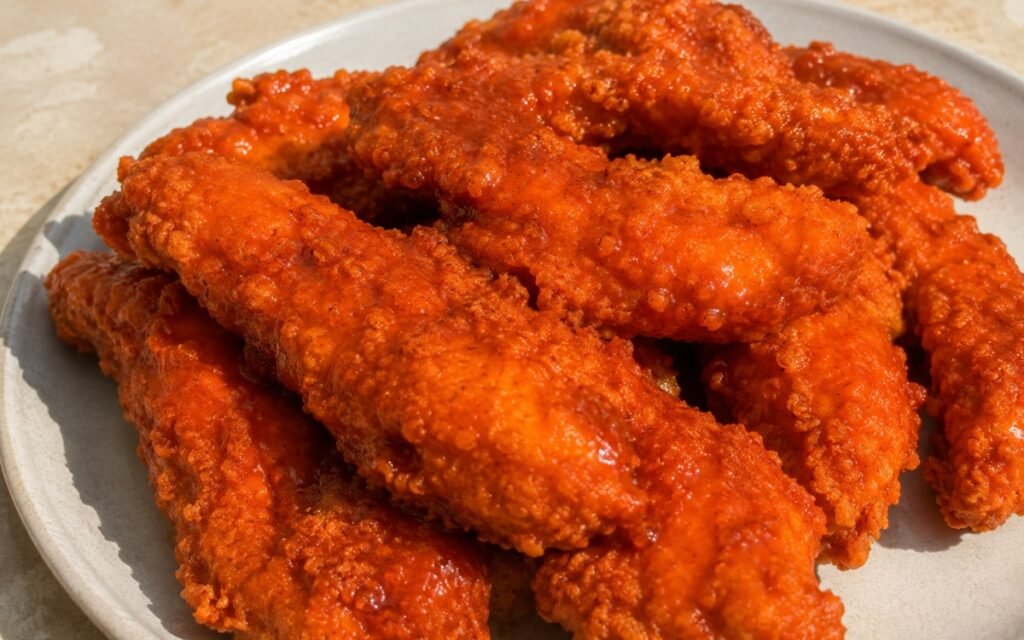
Crispy Buffalo Chicken Tenders
Chicken tenderloins breaded in three stages, fried until golden, oven-finished — tossed in buttery buffalo sauce just before serving. Crispy and tangy.
-
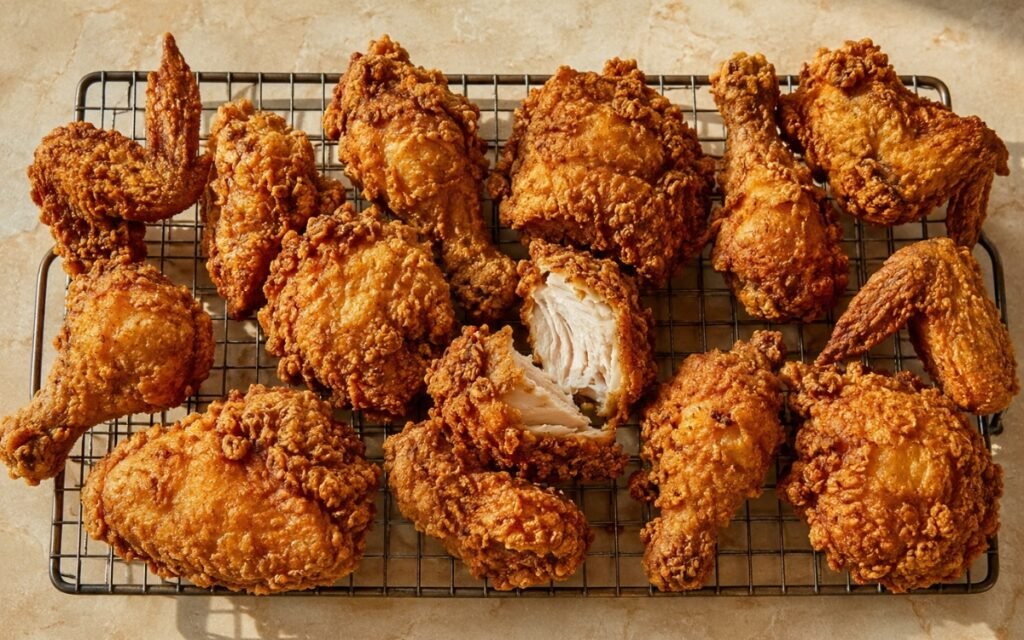
Crispiest Fried Chicken
Buttermilk-brined chicken with a thick, craggy double-dredged crust built using a cold-water rehydration dip, then double-fried until aggressively crunchy.
-
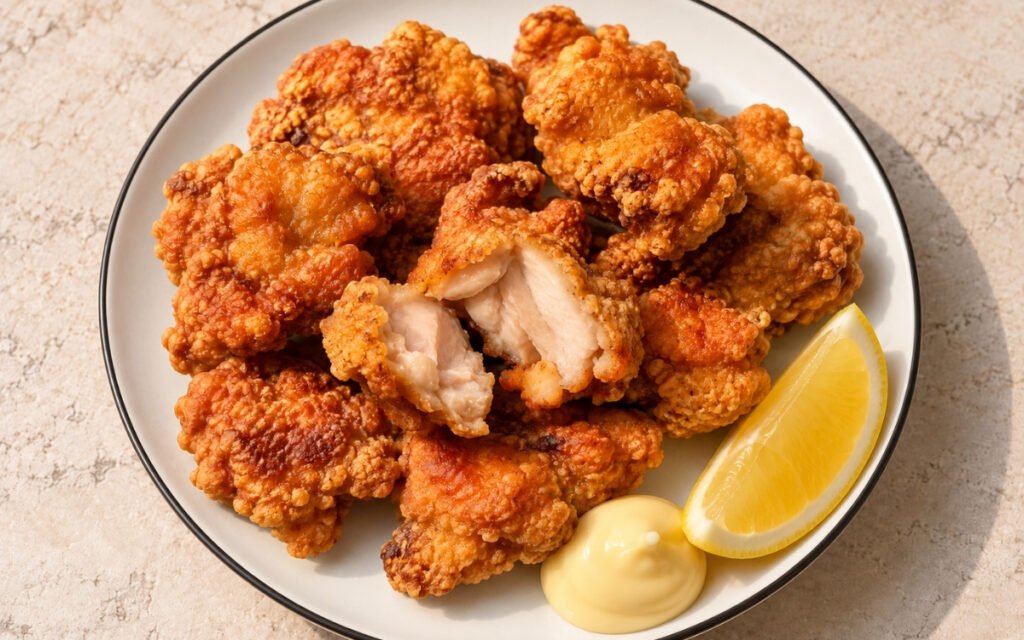
Karaage — Japanese Fried Chicken
Bite-sized double-fried chicken thigh pieces marinated in soy sauce, sake, ginger and garlic, coated in potato starch for a deeply golden, craggy crust.
-
Aloo Tikki Chaat
Crisp, shallow-fried spiced potato tikkis topped with yogurt, tamarind chutney, green chutney, sev, red onion, cilantro and tangy chaat spices.
-
Homemade Chicken Nuggets
A juicy chicken-and-pork blend shaped into hand-formed nuggets, coated in a craggy panko-breadcrumb crust, and fried until deeply golden.
-
Chilean Sopaipillas with Pebre
Pumpkin-based dough rolled, pricked, and fried until golden-brown and crisp-edged, served with a fresh, chopped pebre of tomato, onion, and cilantro.