
Tuna Niçoise Salad
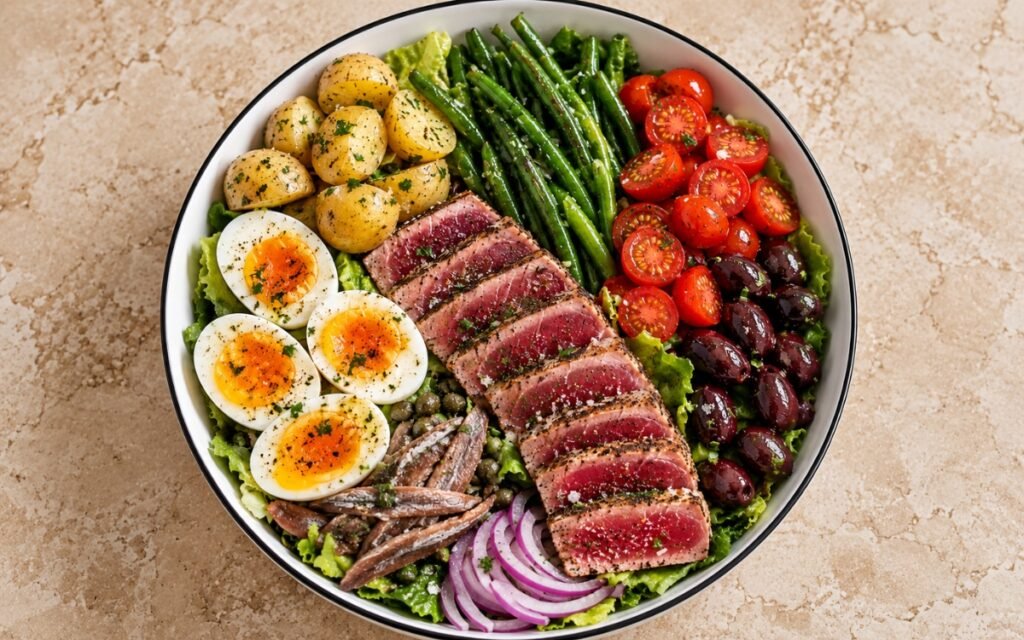
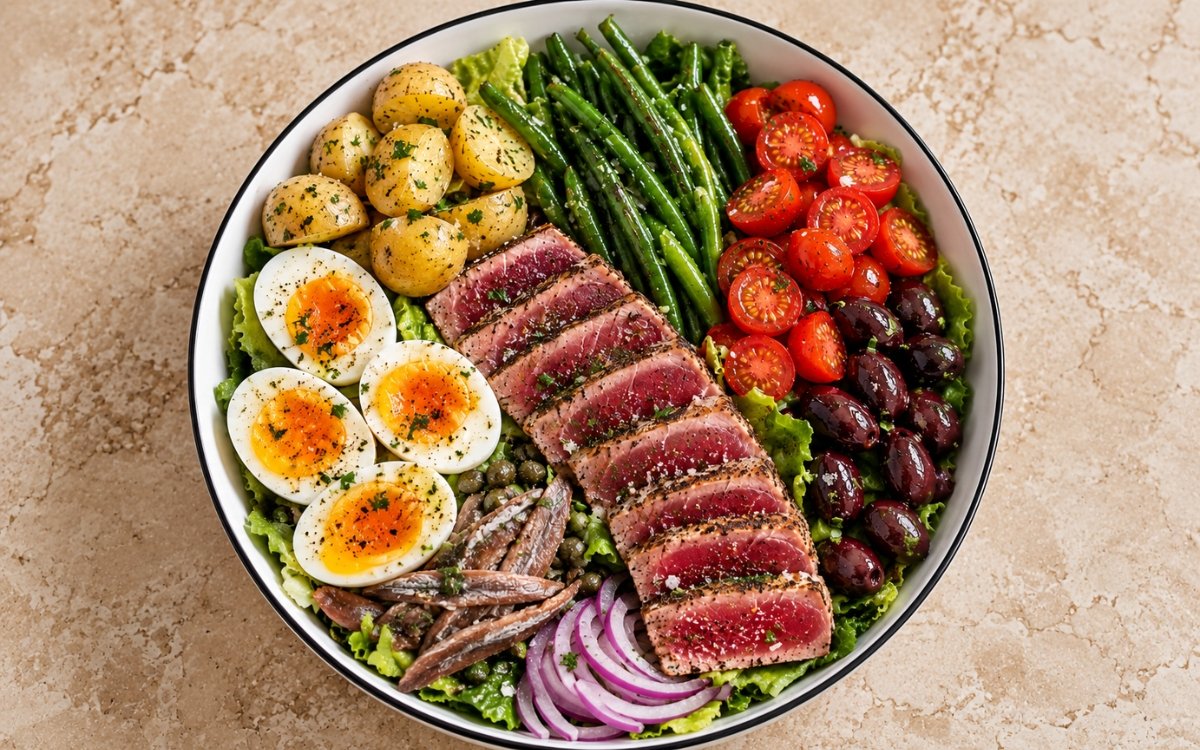
A classical composed Niçoise salad with seared rare tuna, jammy soft-boiled eggs, haricots verts, baby potatoes, cherry tomatoes, Niçoise olives, anchovies, and crisp greens, finished with a sharp mustard vinaigrette. Searing the tuna only very briefly, keeping its centre deep pink-red, is the technique this whole salad depends on for the genuine textural contrast a proper Niçoise is built around — cooking it through loses exactly the tender, ruby-red quality this dish specifically calls for, the same sear-briefly-keep-it-rare principle used elsewhere in this collection whenever a protein’s own contrast between seared exterior and raw or rare interior is central to a dish’s identity rather than incidental. Dressing the potatoes while they’re still warm is what lets them actually absorb the vinaigrette rather than simply sitting coated on the surface. Blanching and shocking the haricots verts, rather than sautéing them, is what keeps them vividly green and tender-crisp rather than dull and overcooked. The payoff is a salad with real, classical composure — crisp greens topped with distinct, neatly arranged sections of rare tuna, jammy eggs, dressed potatoes, and bright vegetables, all brightened by a sharp mustard vinaigrette.
Prep Time : 25 min
Cook Time : 20 min
Servings : 3
25 min
20 min
3
Ingredients
For the Tuna
• 4 tuna steaks, about 170–180g each
• 15ml olive oil
• 6g fine sea salt
• 3g black pepper
For the Eggs
• 6 large eggs
For the Potatoes
• 600g baby potatoes
• 10g fine sea salt
For the Haricots Verts
• 300g haricots verts or thin green beans
• Salted boiling water
• Ice water, for shocking
For the Vinaigrette
• 45ml red wine vinegar — this one on Amazon
• 15ml lemon juice
• 10g Dijon mustard — this one on Amazon
• 1 small garlic clove, very finely grated
• 4g fine sea salt
• 2g black pepper
• 90ml extra-virgin olive oil — this one on Amazon
For the Salad
• 1 small head romaine or butter lettuce, leaves separated or chopped
• 250g cherry tomatoes, halved
• 120g Niçoise olives or small black olives — this one on Amazon
• 8–12 anchovy fillets — this one on Amazon
• 1 small red onion, very thinly sliced, optional but fits the reference look
• 15g capers, optional
• 10g chopped parsley, optional for finishing
This post may contain affiliate links. As an Amazon Associate I earn from qualifying purchases, at no additional cost to you.
Directions
- Boil the Potatoes
Place the baby potatoes in a saucepan and cover with cold water by a few centimetres. Salt the water well and bring to a boil. Reduce to a steady simmer and cook for 12–18 minutes, depending on size, until the potatoes are just tender when pierced with a knife. Drain and let them steam dry for a few minutes. When cool enough to handle, halve or quarter the larger ones. The potatoes should be fully tender but not waterlogged or falling apart. A waxy potato that holds clean edges is the target. That brief steam-dry period lets residual surface moisture evaporate before the potatoes are handled or dressed, protecting them from turning waterlogged. - Cook the Eggs
Bring a saucepan of water to a boil. Lower in the eggs carefully and cook for 7½–8 minutes for jammy centres. Transfer immediately to ice water and cool completely. Peel and halve. The yolks should be softly jammy and deep golden, not runny and not chalky. That immediate ice bath does genuine, active work beyond simple cooling — it halts the carryover cooking that would otherwise continue firming the yolk past its intended jammy point. - Blanch the Haricots Verts
Bring a pot of well-salted water to a boil. Add the haricots verts and cook for 2–3 minutes until bright green and just tender-crisp. Transfer immediately to ice water, then drain very well. They should still have bite and stay vivid green. Overcooked grey beans ruin the structure of a Niçoise. That immediate ice bath halts the cooking process at exactly the point the beans are tender-crisp and vividly green — without it, residual heat would continue softening them and dulling that colour well past the intended texture. - Make the Vinaigrette
Whisk together the red wine vinegar, lemon juice, Dijon, garlic, salt, and black pepper. Slowly whisk in the olive oil until emulsified. Taste and adjust. The vinaigrette should be bright, sharp, and savoury enough to dress potatoes, vegetables, and tuna. That deliberate sharpness is a genuine, functional requirement given how many distinct components this composed salad carries — a milder vinaigrette would struggle to tie together potatoes, tender greens, and rich, oily tuna all at once. - Sear the Tuna
Pat the tuna steaks dry very thoroughly. Rub lightly with olive oil and season all over with salt and black pepper. Heat a skillet or grill pan over high heat until very hot. Sear the tuna for about 45–60 seconds per side for rare, or slightly longer if the steaks are very thick. The outside should take colour while the centre stays deep pink-red. Transfer to a board and rest for 3–5 minutes, then slice thickly. This salad wants seared rare tuna, not fully cooked tuna. The centre should stay tender and ruby-red. Drying the tuna thoroughly before it ever meets the hot pan is what allows that brief sear to actually build real colour on the surface — any residual moisture would convert to steam and prevent the direct contact real searing depends on, especially within such a genuinely short cook time. - Dress the Components
Place the warm potatoes in a bowl and spoon over a little vinaigrette while they are still slightly warm so they absorb it better. Lightly season the tomatoes and haricots verts with a little vinaigrette as well. Keep the greens only lightly dressed or undressed until final assembly so they stay crisp. That warmth genuinely matters for the potatoes specifically — warm potato flesh is more porous and receptive to absorbing the vinaigrette than a fully cooled one, letting the dressing actually penetrate rather than simply coat the surface. - Assemble the Salad
Arrange the greens in a large wide bowl or platter. Compose the salad in neat sections over the greens: seared sliced tuna, halved jammy eggs, dressed baby potatoes, haricots verts, cherry tomatoes, Niçoise olives, anchovy fillets, red onion if using, and capers if using. Drizzle the remaining vinaigrette over the composed salad or serve some on the side. Finish with a little black pepper and parsley if desired. Arranging every component in distinct, visible sections rather than tossing everything together is what gives a proper Niçoise its whole classical identity — each element stays recognisable in its own right rather than blending into an undifferentiated mix.
*Notes :
- Searing the tuna only very briefly, protecting its rare, ruby-red centre, deserves genuine recognition as the technique responsible for this salad’s entire textural identity. A Niçoise built around fully cooked tuna would lose exactly the tender, contrasting quality this dish is specifically constructed around — the brief sear here exists purely to build colour and a light crust on the exterior while leaving the interior essentially untouched by direct heat.
- Dressing the potatoes while they’re still genuinely warm deserves the same attention this technique receives throughout this collection’s other composed salads featuring potato. Warm potato flesh is considerably more porous and receptive than a fully cooled one, letting the vinaigrette actually absorb into the potato rather than simply sitting on its surface as a separate coating.
- Blanching and immediately shocking the haricots verts in ice water deserves recognition as the technique directly responsible for their vivid colour and proper tender-crisp texture. That immediate temperature shock halts the cooking process at exactly the intended point — without it, residual heat would continue softening the beans and dulling their colour well past what a proper Niçoise calls for.
- Arranging every component in distinct, composed sections, rather than tossing the salad together, deserves respect as the organizing principle behind this dish’s whole classical presentation. That deliberate structure is precisely what distinguishes a proper Niçoise from a simple mixed salad sharing similar ingredients — each element remains visually and texturally its own throughout the plate.
Why This Recipe Works
This recipe works because the tuna is dried thoroughly and seared only briefly, protecting its genuinely rare, tender centre. The eggs and haricots verts are both shocked in ice water immediately after cooking, halting carryover heat at exactly their intended textures — jammy yolks and vividly green, tender-crisp beans respectively.
The potatoes are dressed while still warm, letting them actually absorb the vinaigrette. A sharp, properly emulsified vinaigrette ties together the salad’s many distinct components, and arranging everything in composed sections delivers the classical presentation a proper Niçoise depends on.
Ingredient Breakdown
Briefly Seared, Rare Tuna
The critical technique — protects the tender, ruby-red centre this salad’s entire textural contrast depends on.
Ice-Bathed Jammy Eggs
The critical technique — halts carryover cooking at exactly the intended jammy point.
Blanched, Shocked Haricots Verts
The critical technique — immediate ice water preserves vivid colour and proper tender-crisp texture.
Warm-Dressed Potatoes
The critical technique — warm flesh absorbs the vinaigrette more fully than a cooled one would.
Composed, Sectioned Assembly
The organizing principle — distinct arrangement, rather than tossing, defines the classical Niçoise presentation.
Flavor Structure Explained
This tuna Niçoise salad follows a layered balance model:
- Crisp, cool foundation (romaine or butter lettuce)
- Tender, rare protein (briefly seared tuna)
- Rich, jammy centre (soft-boiled eggs)
- Bright, vegetal contrast (haricots verts, cherry tomatoes)
- Sharp, briny finish (Niçoise olives, anchovies, capers, vinaigrette)
Crisp romaine or butter lettuce provides this salad’s cool, fresh foundation. Briefly seared tuna, its centre still rare and ruby-red, adds tender, protein-rich contrast. Soft-boiled eggs, jammy and deep golden, contribute rich centres throughout the plate. Vividly green haricots verts and cherry tomatoes add bright, vegetal freshness. Niçoise olives, anchovies, capers, and a sharp mustard vinaigrette finish the salad with classical, briny sharpness that ties every composed section together.
Common Mistakes to Avoid
- Cooking the Tuna All the Way Through – This loses the tender, rare texture central to a proper Niçoise. Always sear only briefly, keeping the centre deep pink-red.
- Skipping the Ice Bath for the Eggs or Beans – This lets carryover heat push both past their intended textures. Always shock immediately in ice water.
- Dressing the Potatoes Once Fully Cooled – This prevents the vinaigrette from being properly absorbed. Always dress them while still warm.
- Sautéing the Haricots Verts Instead of Blanching – This dulls their colour and texture. Always blanch and shock them instead.
- Tossing the Salad Together Instead of Composing It – This loses the classical Niçoise presentation. Always arrange every component in distinct sections.
Variations
Extra-Rare Tuna Version
Sear even more briefly for a barely-touched exterior and a fully rare centre throughout.
Anchovy-Forward Version
Increase the anchovy fillets slightly for a more pronounced classical, briny character, per the recipe’s own emphasis.
Extra-Briny Version
Add extra capers and olives for a sharper, more assertively briny finished salad.
Grilled Tuna Version
Grill the tuna over high heat instead of pan-searing for a slightly smokier finished flavour.
Storage & Make-Ahead
For the most classical result, keep the salad composed, not tossed.
Dress the potatoes while warm; they absorb vinaigrette much better at that stage.
The tuna should be seared very briefly. If you cook it through, the salad loses its proper texture contrast.
Frequently Asked Questions
Why does the tuna need to stay rare rather than being cooked through?
A proper Niçoise depends on the tender, contrasting texture rare tuna provides. Cooking it through loses exactly that quality, which is why the sear here is kept genuinely brief, building colour on the outside while leaving the centre essentially untouched.
Why do the eggs and haricots verts both need an immediate ice bath?
That immediate temperature shock halts carryover cooking at precisely the intended point — jammy yolks for the eggs, vividly green tender-crisp texture for the beans. Without it, both would continue cooking past their ideal textures.
Why are the potatoes dressed while still warm rather than after cooling?
Warm potato flesh is considerably more porous and receptive to the vinaigrette than a cooled one, letting the dressing actually absorb into the potato rather than simply sitting on its surface.
Why is the salad composed in sections rather than tossed together?
That deliberate structure is what distinguishes a proper Niçoise from a simple mixed salad. Each component stays visually and texturally distinct throughout the plate, which is the organizing principle behind this dish’s classical presentation.
Are there other classic composed salad or seared seafood dishes worth trying?
Salmon Cobb Salad and Smoked Salmon Scrambled Eggs Plate both offer other classic composed or egg-forward seafood directions worth exploring. Pan-Seared Cod and Lemon Butter Baked Cod are also worth trying for other classic seared or baked fish preparations.
Nutrition Facts
( per serving )
Calories
~580 kcal
Protein
44 g
Fat
34 g
Carbs
28 g
Calories
~580 kcal
Protein
44 g
Fat
34 g
Carbs
28 g
Related Recipes
Related Recipes

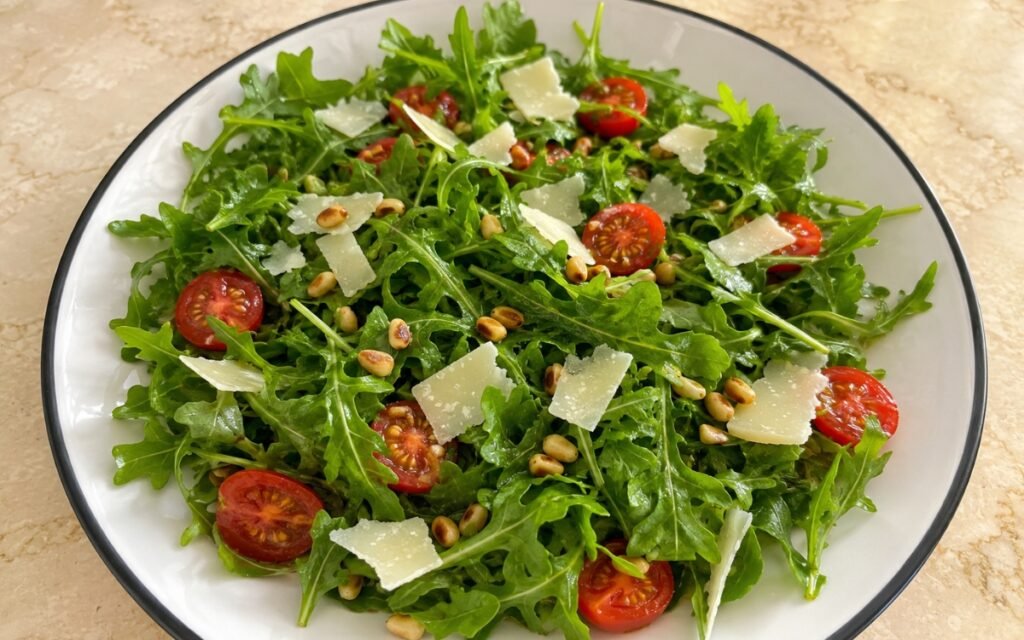
Simple Arugula Salad with Lemon Vinaigrette
Peppery arugula with lemon vinaigrette, cherry tomatoes, shaved Parmesan, and toasted pine nuts.
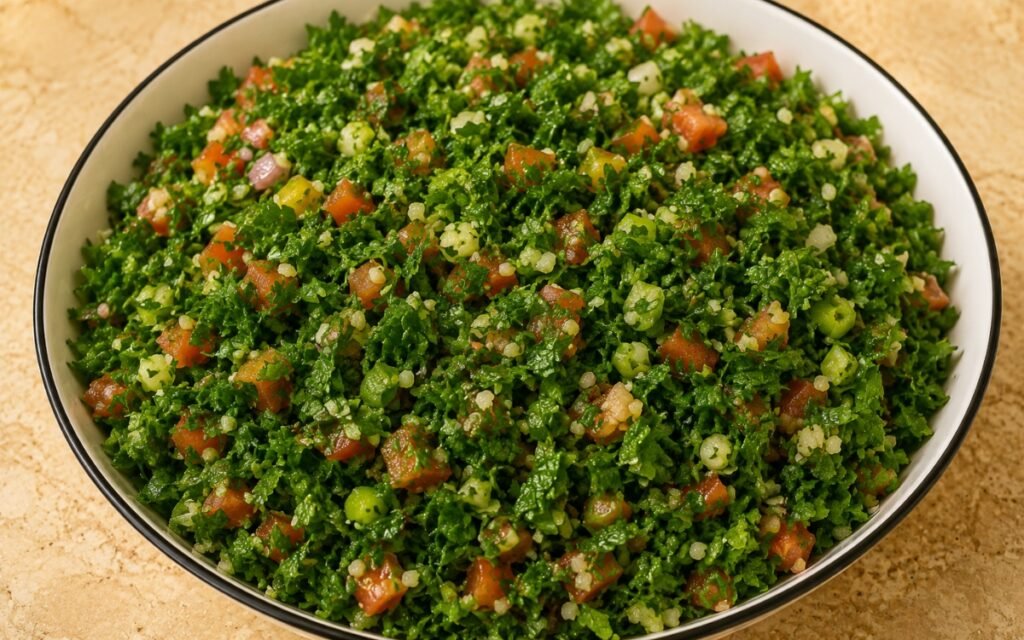
Classic Tabbouleh Salad
Authentic parsley-forward tabbouleh with bulgur, fresh mint, tomatoes, cucumber, and lemon dressing.
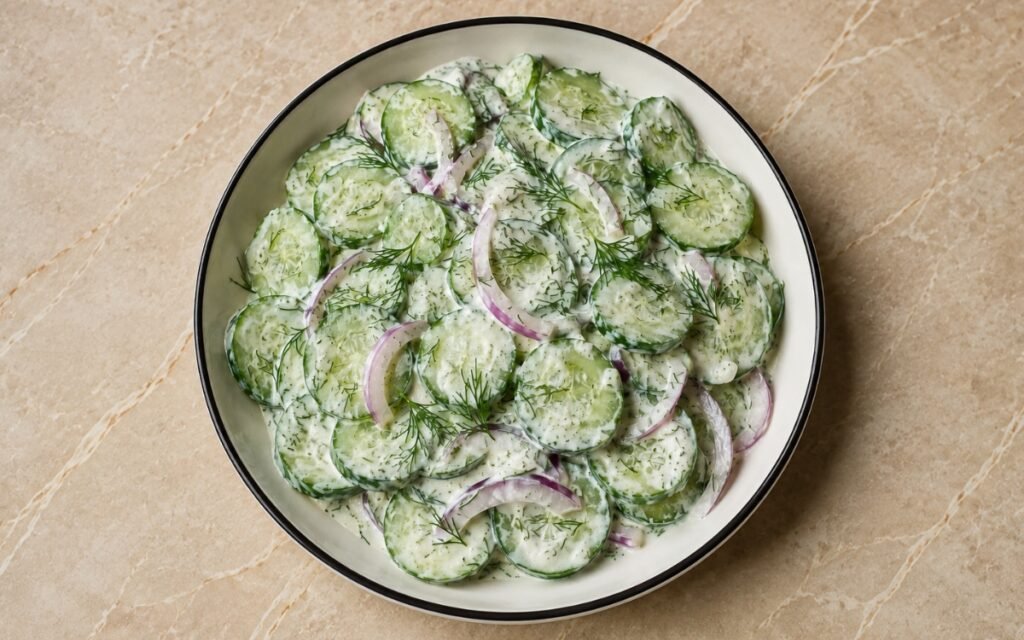
The Best Creamy Cucumber Salad
Crisp cucumbers tossed in tangy sour cream dressing with fresh dill, red onion, and garlic.
You might also like
You might also like
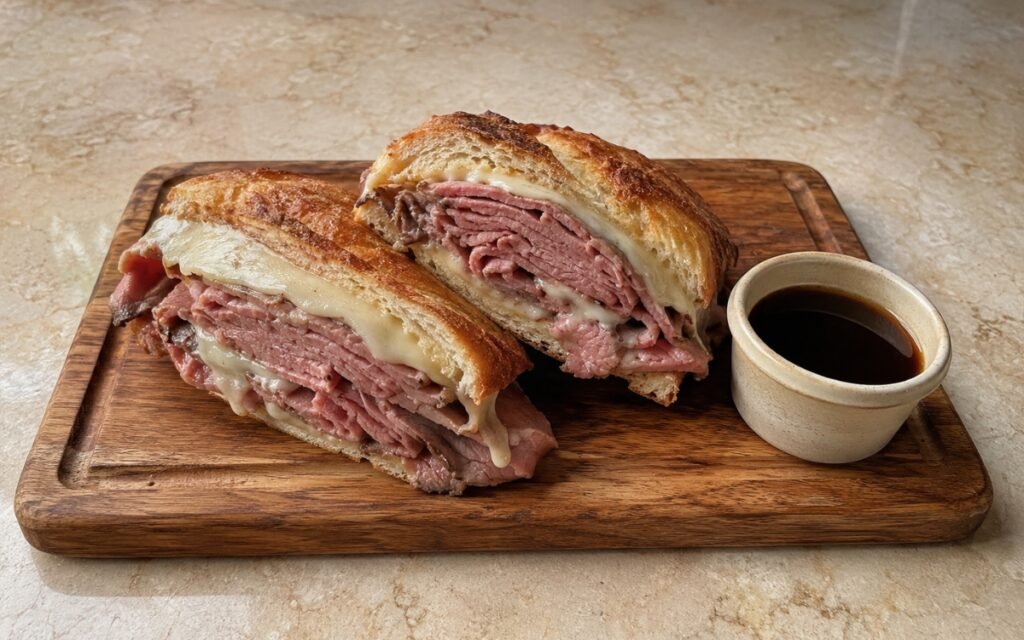
French Dip Sandwich
Thinly sliced, medium-rare roast beef and melted Swiss and provolone piled into a toasted homemade hoagie roll, served with savoury au jus for dipping.
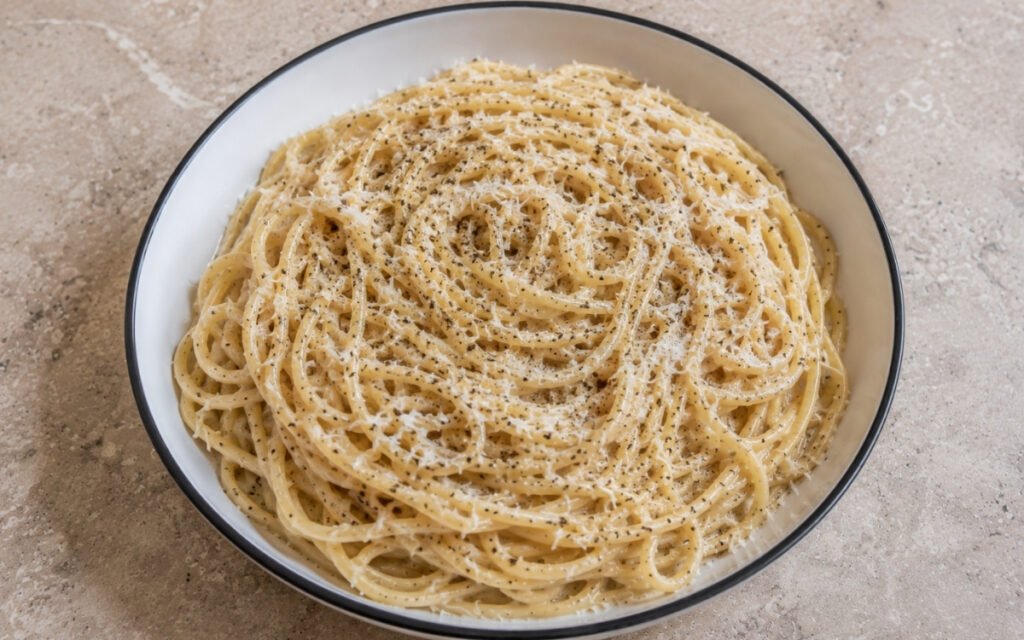
Classic Cacio e Pepe Pasta
Toasted cracked pepper, two cheeses, and chilled butter — the no-clump paste technique that makes this finally work.
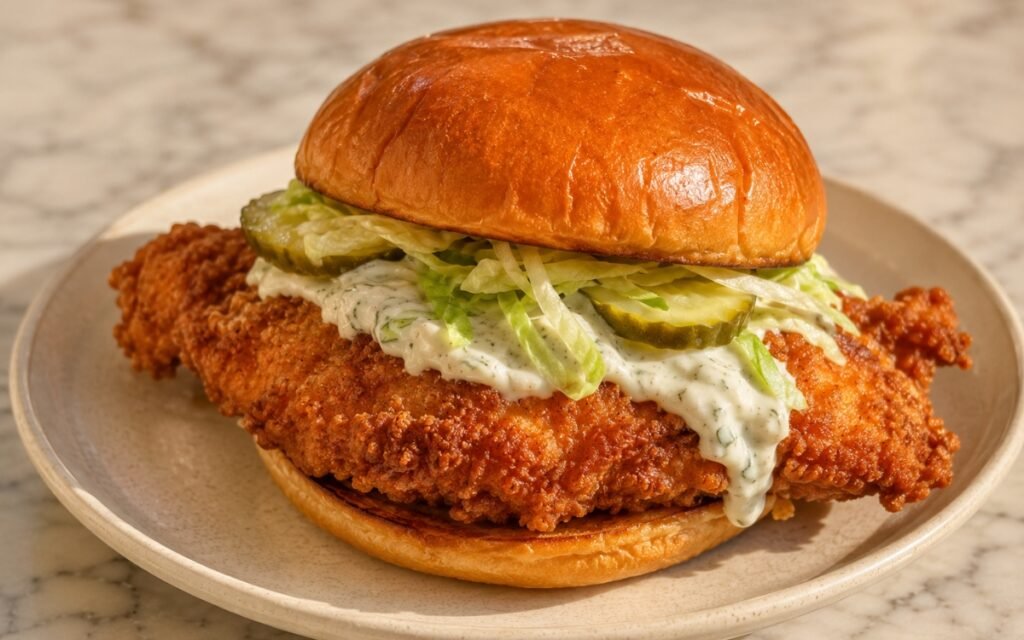
Crispy Fish Sandwich
Beer-battered cod fried until deeply golden and crisp, piled onto a soft toasted brioche bun with tangy tartar sauce, lettuce, and pickles.
Tuna Niçoise Salad
Ingredients
Method
- Place the baby potatoes in a saucepan and cover with cold water by a few centimetres. Salt the water well and bring to a boil. Reduce to a steady simmer and cook for 12–18 minutes, depending on size, until the potatoes are just tender when pierced with a knife. Drain and let them steam dry for a few minutes. When cool enough to handle, halve or quarter the larger ones. The potatoes should be fully tender but not waterlogged or falling apart. A waxy potato that holds clean edges is the target. That brief steam-dry period lets residual surface moisture evaporate before the potatoes are handled or dressed, protecting them from turning waterlogged.
- Bring a saucepan of water to a boil. Lower in the eggs carefully and cook for 7½–8 minutes for jammy centres. Transfer immediately to ice water and cool completely. Peel and halve. The yolks should be softly jammy and deep golden, not runny and not chalky. That immediate ice bath does genuine, active work beyond simple cooling — it halts the carryover cooking that would otherwise continue firming the yolk past its intended jammy point.
- Bring a pot of well-salted water to a boil. Add the haricots verts and cook for 2–3 minutes until bright green and just tender-crisp. Transfer immediately to ice water, then drain very well. They should still have bite and stay vivid green. Overcooked grey beans ruin the structure of a Niçoise. That immediate ice bath halts the cooking process at exactly the point the beans are tender-crisp and vividly green — without it, residual heat would continue softening them and dulling that colour well past the intended texture.
- Whisk together the red wine vinegar, lemon juice, Dijon, garlic, salt, and black pepper. Slowly whisk in the olive oil until emulsified. Taste and adjust. The vinaigrette should be bright, sharp, and savoury enough to dress potatoes, vegetables, and tuna. That deliberate sharpness is a genuine, functional requirement given how many distinct components this composed salad carries — a milder vinaigrette would struggle to tie together potatoes, tender greens, and rich, oily tuna all at once.
- Pat the tuna steaks dry very thoroughly. Rub lightly with olive oil and season all over with salt and black pepper. Heat a skillet or grill pan over high heat until very hot. Sear the tuna for about 45–60 seconds per side for rare, or slightly longer if the steaks are very thick. The outside should take colour while the centre stays deep pink-red. Transfer to a board and rest for 3–5 minutes, then slice thickly. This salad wants seared rare tuna, not fully cooked tuna. The centre should stay tender and ruby-red. Drying the tuna thoroughly before it ever meets the hot pan is what allows that brief sear to actually build real colour on the surface — any residual moisture would convert to steam and prevent the direct contact real searing depends on, especially within such a genuinely short cook time.
- Place the warm potatoes in a bowl and spoon over a little vinaigrette while they are still slightly warm so they absorb it better. Lightly season the tomatoes and haricots verts with a little vinaigrette as well. Keep the greens only lightly dressed or undressed until final assembly so they stay crisp. That warmth genuinely matters for the potatoes specifically — warm potato flesh is more porous and receptive to absorbing the vinaigrette than a fully cooled one, letting the dressing actually penetrate rather than simply coat the surface.
- Arrange the greens in a large wide bowl or platter. Compose the salad in neat sections over the greens: seared sliced tuna, halved jammy eggs, dressed baby potatoes, haricots verts, cherry tomatoes, Niçoise olives, anchovy fillets, red onion if using, and capers if using. Drizzle the remaining vinaigrette over the composed salad or serve some on the side. Finish with a little black pepper and parsley if desired. Arranging every component in distinct, visible sections rather than tossing everything together is what gives a proper Niçoise its whole classical identity — each element stays recognisable in its own right rather than blending into an undifferentiated mix.