Traditional Portuguese Caldo Verde
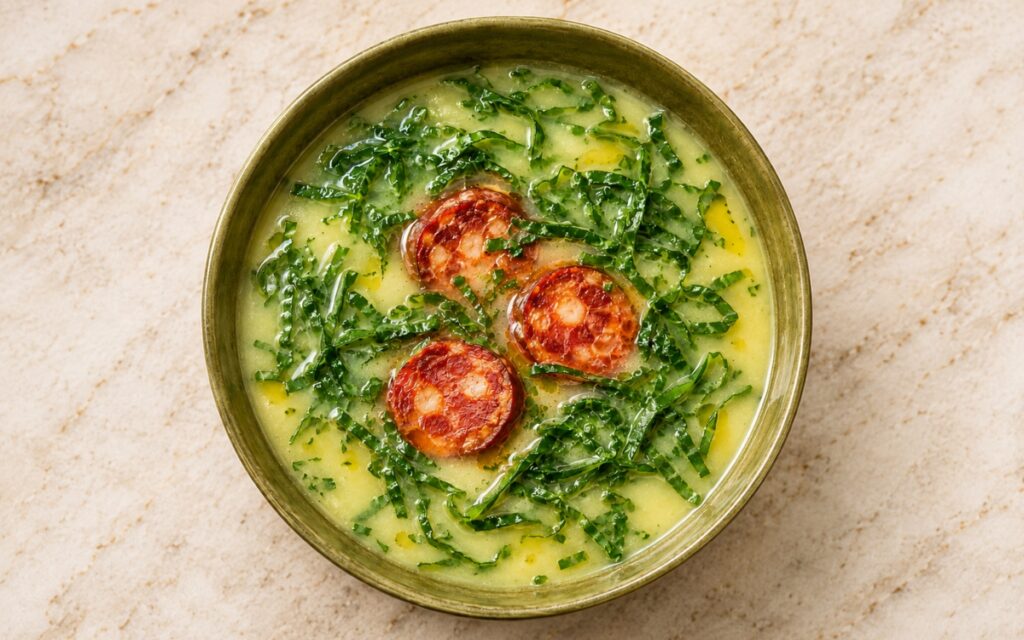
Traditional Portuguese caldo verde is a silky, lightly thickened potato soup of finely shredded collard greens, extra-virgin olive oil, and smoky chouriço, the potatoes, onion, and garlic simmered until tender and blended into a pale ivory base while delicate ribbons of dark green collards are cooked only briefly, the key being the contrast between a smooth, mellow broth and bright, tender green threads. Slicing the greens into extremely fine ribbons and adding them to the blended soup only at the end, rather than boiling them with the potatoes, is the technique this whole soup depends on for its colour and texture — long cooking dulls the leaves and turns them limp, the same add-the-greens-late principle used elsewhere in this collection whenever leafy vegetables must stay vivid. Simmering the chouriço whole in the broth is what lends gentle smoky depth without making the soup greasy or heavy. Finishing with raw olive oil, stirred in off the heat, is what keeps its fruity aroma intact. The payoff is a bowl of soup with real, rustic comfort — silky potato, tender emerald ribbons, and warm, paprika-rich sausage in every spoonful.
- Prep Time : 20 min
- Total Time : 58 min
- Servings : 4
Ingredients
For the Potato Soup Base
- 650g floury potatoes, such as Agria or Russet, peeled and roughly diced
- 150g yellow onion (about 1 medium onion), finely chopped
- 15g garlic (about 3 cloves), minced
- 35ml extra-virgin olive oil
- 1.4 litres water
- 7g fine sea salt, adjusted to taste
- 1g freshly ground black pepper, optional
For the Collard Greens and Chouriço
- 220g fresh Portuguese collard greens (couve galega), tough central stems removed
- 120g Portuguese smoked chouriço sausage (chouriço de carne), to be sliced into 12–16 thin rounds
For Finishing
- 20ml extra-virgin olive oil
- Fine sea salt, if needed
Directions
- Shred the Collard Greens
Wash the collard greens thoroughly and cut away the tough central ribs, then stack several leaves, roll them tightly into a cylinder, and slice crosswise into extremely thin ribbons, ideally 1–2mm wide. Separate the ribbons with your fingers so they do not clump, and keep them refrigerated until needed. They should look like long, fine, dark green threads, never broad pieces of kale. That fine shredding is what lets the greens cook in minutes and sit gracefully in the soup. - Build the Potato and Aromatic Base
Heat 35ml of olive oil in a large, heavy saucepan over medium-low heat, add the chopped onion, and cook for 5–6 minutes until soft and translucent without browning, then stir in the garlic for 30–45 seconds. Add the diced potatoes, stirring to coat them, pour in 1.4 litres of water with about 5g of the salt, and add the chouriço in one whole piece. Simmer partially covered for 20–25 minutes, until the potatoes break apart easily. That pale, gentle start is what keeps the base mild and silky. - Blend the Soup Smooth
Lift the whole chouriço out of the pan and set it aside, then blend the potatoes, onion, garlic, and broth with an immersion blender until completely smooth. The soup should turn pale ivory with a faint green-gold tint and flow easily from a ladle rather than resembling mashed potato, so add 50–150ml of hot water if needed to loosen it. Slice the cooked chouriço into 12–16 thin rounds. That blending is what thickens the soup naturally with no cream or flour. - Cook the Greens
Return the blended soup to a gentle simmer over medium-low heat, add the shredded greens, and stir to distribute them evenly. Simmer uncovered for 5–8 minutes, stirring occasionally so the potato base does not stick, until the greens are tender, dark emerald, and still in distinct narrow ribbons. Taste and adjust with the remaining salt and a little black pepper, adding a splash of hot water if the soup thickens too much. That short simmer is what keeps the leaves bright rather than dull and mushy. - Finish with Chouriço and Olive Oil
Return the sliced chouriço to the soup and warm it gently for 1–2 minutes, then remove the pan from the heat. Stir in about half of the reserved finishing olive oil, taste once more, and adjust the seasoning if necessary. Let the soup rest for about 2 minutes before serving so the flavours settle. The surface should show delicate golden and reddish-orange droplets. That off-heat oil is what preserves its fruity aroma. - Serve the Caldo Verde
Ladle the hot soup into four warm bowls, dividing the greens evenly so the narrow ribbons stay visible across the surface, and place three or four chouriço slices near the centre of each serving. Drizzle the remaining olive oil lightly over the four bowls and serve immediately, ideally with corn bread (broa de milho) or crusty country bread. That immediate serving is what keeps the soup silky, the greens vivid, and the sausage warm.
*Notes :
- Shredding the greens into extremely fine ribbons deserves genuine recognition as the technique most directly responsible for caldo verde’s characteristic look and texture. Broad pieces stay tough and need long cooking that dulls their colour, whereas threads 1–2mm wide soften in a few minutes, remain vivid green, and weave through the silky broth in every spoonful.
- Blending the potatoes without adding cream deserves the same attention this technique receives throughout this collection’s other rustic blended soups. Floury potatoes release plenty of starch, which thickens the broth into a pale, velvety base, and the soup should still flow from a ladle, so a splash of hot water is better than extra thickener if it tightens.
- Simmering the chouriço whole in the broth deserves genuine respect as the detail most directly responsible for the soup’s gentle smoky depth. The sausage seasons the potatoes as they cook, then comes out for slicing and returns at the end, which flavours the soup without leaving the meat overcooked, tough, or greasy, and keeps the slices pleasantly tender.
- Adding the finishing olive oil off the heat deserves attention as a genuine, checkable aroma cue rather than a loose approximation. Good extra-virgin oil loses its fruity, peppery fragrance when boiled, but stirred in after the pan leaves the heat it perfumes the whole bowl, and the last drizzle on top gives a final glossy, golden note.
Why This Recipe Works
This recipe works because it treats each component according to what it needs, rather than cooking everything together. Potatoes simmer with a pale onion and garlic base until they can be blended into a naturally thick, silky broth without cream. The chouriço flavours the pot gently and is returned only to warm through, while greens cut into fine threads cook for just minutes, so they stay tender, vivid, and distinct. Raw olive oil stirred in at the end keeps its fruity perfume, which makes each spoonful smooth, smoky, fresh, and deeply comforting without any cream.
Ingredient Breakdown
Floury Potatoes (Agria or Russet)
The structural foundation — their starch blends into a naturally silky, lightly creamy broth with no flour or cream.
Finely Shredded Couve Galega
The critical technique — cut into 1–2mm ribbons, the greens cook quickly and stay distinct, tender, and vividly green.
Portuguese Smoked Chouriço
The defining flavour ingredient — simmered whole and sliced later, it gives gentle smoky, paprika-rich flavour without making the soup heavy.
Onion and Garlic (Cooked Pale)
The flavour foundation — softened without browning, they keep the base mellow, sweet, and traditionally pale.
Extra-Virgin Olive Oil
The finishing touch — added after cooking, it keeps its fruity aroma and gives the soup a glossy sheen.
Flavor Structure Explained
This Portuguese caldo verde follows a layered balance model:
- Silky, mellow foundation (blended floury potato broth)
- Sweet, aromatic base (slowly softened onion and garlic)
- Tender, green freshness (finely shredded collard greens)
- Smoky, savoury accent (sliced Portuguese chouriço)
- Fruity, glossy finish (extra-virgin olive oil)
Blended potato provides the silky, mellow foundation of the soup, smooth enough to flow easily from a ladle. Slowly softened onion and garlic add a sweet, aromatic base underneath it, while finely shredded collards bring tender, green freshness and a little gentle chew through the bowl. Sliced chouriço supplies a smoky, savoury accent that stands out against the mild broth, and extra-virgin olive oil gives a fruity, glossy finish that ties this soup together.
Common Mistakes to Avoid
- Chopping the Greens Coarsely – This leaves them tough and slow to cook. Always roll the leaves and slice them into 1–2mm ribbons.
- Browning the Onions – This darkens the base and sweetens it too much. Always cook the onion and garlic gently until soft and pale.
- Adding Cream or Flour – This makes the soup heavy and dulls its character. Always let the blended potatoes provide the body.
- Boiling the Greens Too Long – This turns them dull and mushy. Always simmer the ribbons for only 5–8 minutes until tender.
- Boiling the Olive Oil – This destroys its fruity aroma. Always stir the finishing oil in after the soup leaves the heat.
Variations
Broa Pairing Version
Serve the soup with warm slices of Portuguese corn bread (broa de milho) or crusty country bread, which makes a heartier meal and lets each spoonful carry broth and crumb.
Extra-Smoky Version
Use a little more chouriço, about 160g in total, and slice it thicker, which makes the smoky, paprika-rich flavour more assertive while the broth stays smooth and the greens stay bright.
Tougher Greens Version
If the collards are mature and tough, cook the ribbons for an extra 3–5 minutes before finishing, which softens them fully without turning the soup grey or the greens mushy.
Vegetarian Version
Leave out the chouriço and add a pinch of smoked paprika to the onions, giving a lighter, meatless caldo verde that keeps the silky potato base and fresh green ribbons.
Storage & Make-Ahead
The potato soup base can be made one to two days ahead and refrigerated, and the shredded greens and sliced chouriço are best added only when it is reheated, so the colour, texture, and smoky flavour all stay fresh and distinct.
Refrigerate leftovers promptly at 4°C or below and eat them within 3 days, because potato soup thickens as it cools and the greens gradually lose their bright colour and their tender bite.
Reheat the soup gently over medium-low heat, adding a little water if the potato broth has thickened, and stir often so the base warms evenly without sticking or scorching on the bottom of the pan.
Keep the shredded greens refrigerated in a covered container until just before cooking, since cut leaves wilt, dry out, and darken quickly if they are left out at room temperature.
Hold back a little finishing olive oil for each reheated bowl, because a fresh drizzle after heating gives back the fruity, peppery aroma that gentle reheating otherwise mutes and flattens.
Frequently Asked Questions
Why are the collard greens cut into extremely thin ribbons?
Fine threads cook in a few minutes and stay tender and bright green, while broad pieces would need longer cooking that dulls their colour and leaves them tough, chewy, or limp in the smooth broth.
Why are the greens added after the soup is blended?
Blending them in would turn the whole soup murky and green and lose the distinct ribbons, whereas adding them to the finished base keeps them separate, vivid, and pleasantly tender.
Why are floury potatoes better than waxy ones for this soup?
Floury potatoes release more starch and break down completely, so the blended soup is naturally silky and thick without cream, while waxy potatoes give a less cohesive, slightly grainy texture.
Why is the olive oil stirred in after the soup is off the heat?
Heat drives off the delicate, fruity aroma of good extra-virgin oil, so adding it at the end keeps its fragrance and gives the soup a glossy sheen.
Are there other classic soup, potato, or stew dishes worth trying?
Caldo de Res and Caldo Tlalpeño both offer other classic soup directions worth exploring. Korean Army Stew / Budae Jjigae is also worth trying for another sausage-based stew, while Malai Kofta and Massaman Beef Curry offer other simmered potato dishes.
Nutrition Facts
( Per Serving )
- Calories
- ~380 kcal
- Protein
- 13 g
- Fat
- 20 g
- Carbs
- 38 g
-

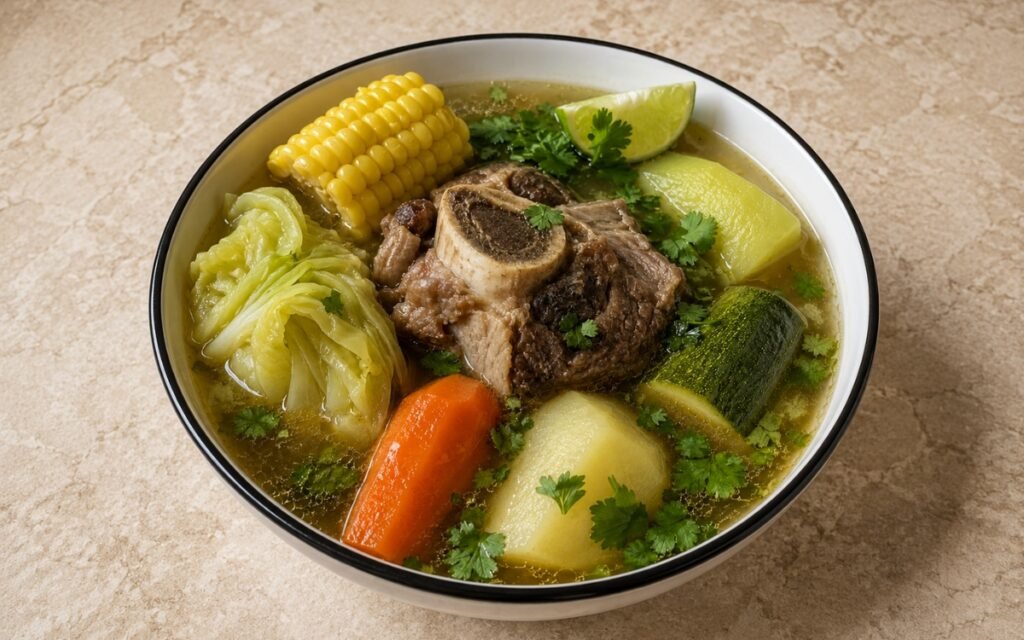
Caldo de Res
A clear, golden Mexican beef soup with gently simmered beef shank and large, staged vegetables — corn, potato, carrot, chayote, zucchini, and cabbage.
-
Korean Army Stew / Budae Jjigae
Spicy red kimchi stew with ramen, luncheon meat, sausages, tofu, and mushrooms, topped with a layer of melted cheese.
-
Malai Kofta
Soft potato-paneer koftas in a smooth, cashew-cream tomato gravy with warm spices.


-
Brioche Toast Bread
Enriched dough with four eggs and butter added gradually after gluten development — overnight cold-fermented for flavour, three-piece shaped in a loaf pan, baked to a deep golden glossy crust. The brioche built for toast.
-
Breakfast Hash with Eggs and Potatoes
Crispy diced potatoes, browned breakfast sausage, crisp bacon, peppers, onions, and eggs cooked directly into the hash with runny yolks.
-
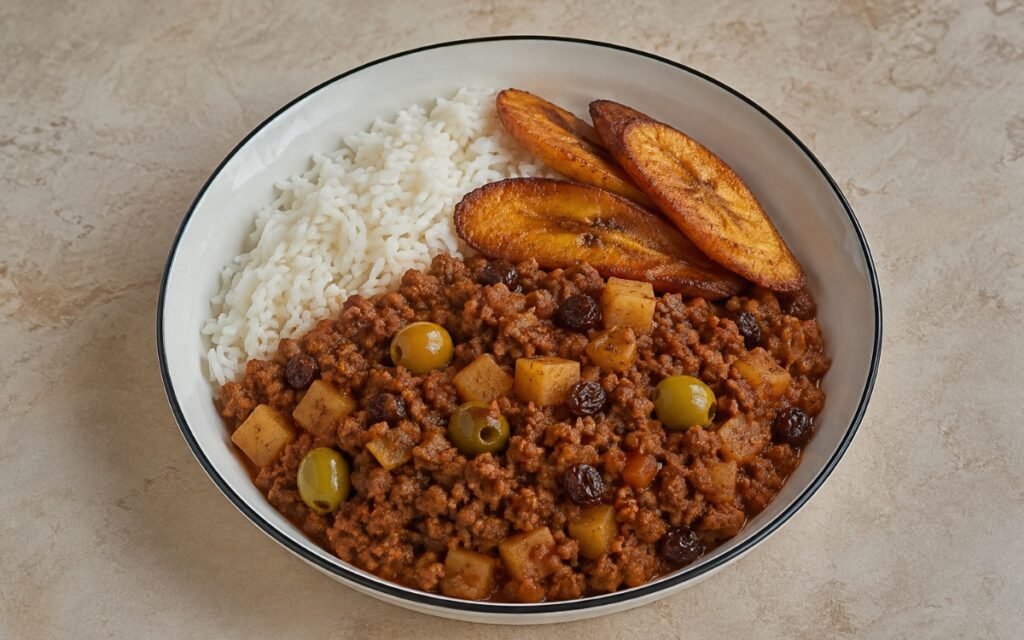
Cuban Picadillo
Seasoned ground beef simmered in a savory tomato sauce with green olives, raisins, and tender diced potatoes.