
Tallarines Verdes with Steak
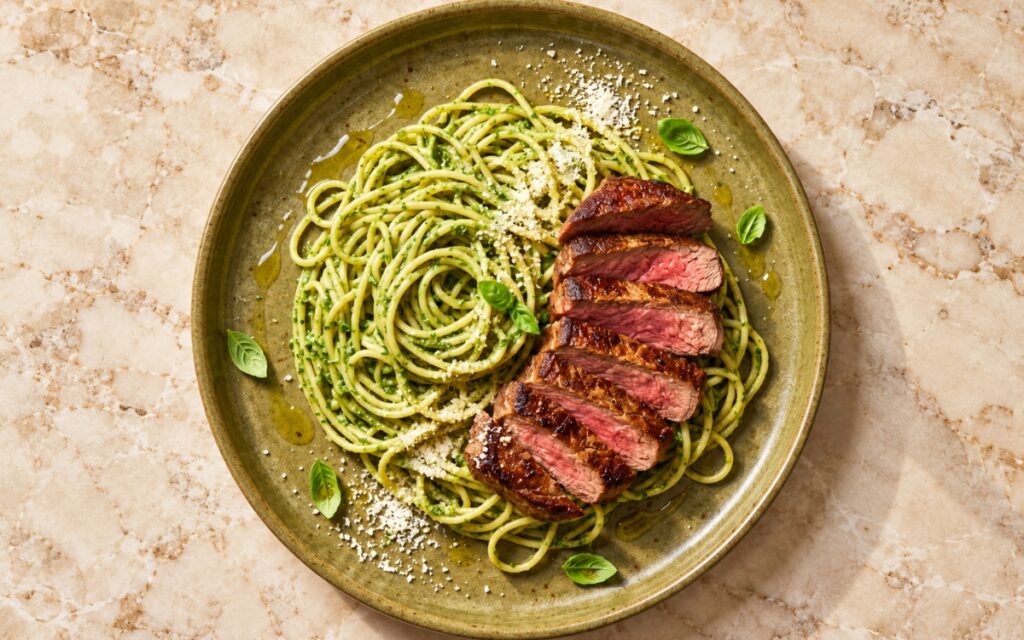
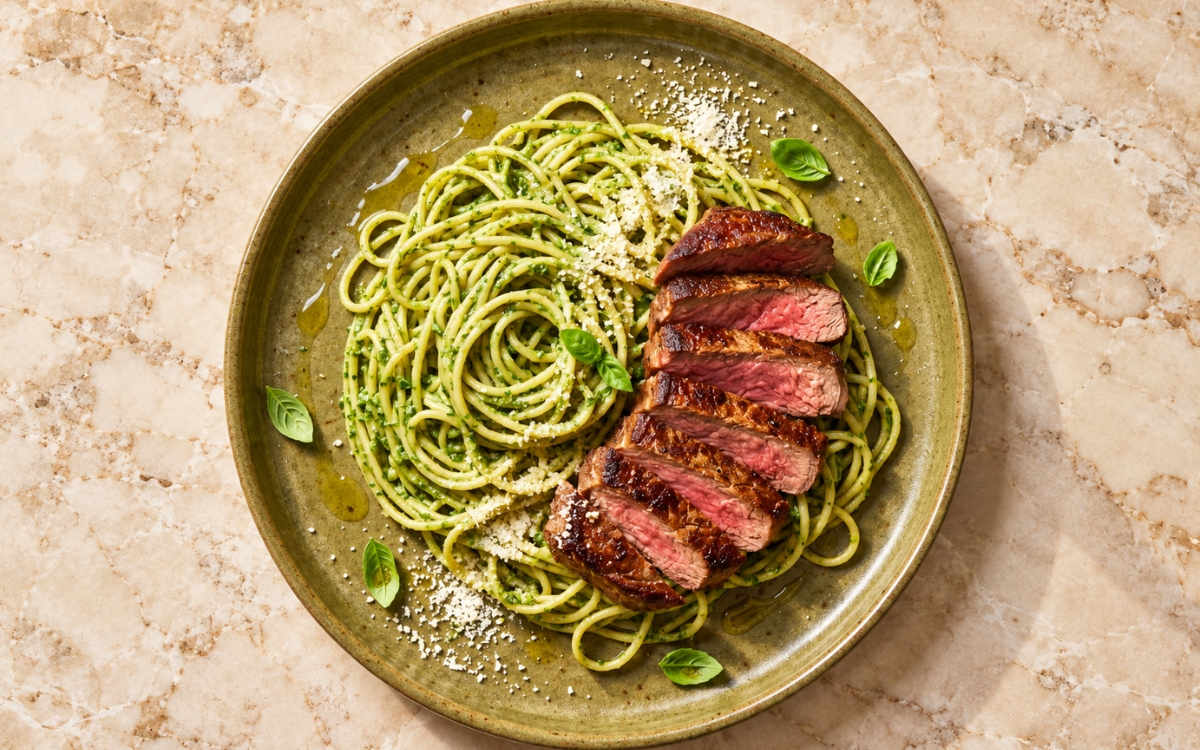
Peruvian-style green spaghetti coated in a creamy blended sauce of fresh basil, spinach, queso fresco, parmesan, evaporated milk, and a small amount of walnuts, then topped with fanned slices of seared steak that carry a deep brown crust and a juicy pink centre. Blending the briefly wilted spinach and onion with raw basil, cheese, and evaporated milk, rather than simmering the herbs in the sauce, is the technique this whole dish depends on for a vivid green colour and a smooth body — prolonged heat turns the chlorophyll olive-grey and can split the dairy, the same keep-it-fresh-and-brief principle used elsewhere in this collection whenever fresh herbs must carry the colour of a dish. Cooking the spaghetti only to al dente and finishing it in the sauce over low heat is what lets every strand absorb flavour without turning soft. Resting the seared steak for 8–10 minutes before slicing it across the grain is what keeps the juices in the meat and the slices tender. The payoff is a plate with real, bright contrast — glossy emerald pasta that tastes of basil, cheese, and nuts, beside rich, browned, pink-centred steak.
Prep Time : 25 min
Total Time : 1 hr 5 min
Servings : 4
25 min
1 hr 5 min
4
Ingredients
For the Steak
• 700–800g beef steak, such as sirloin, striploin, rump, or ribeye
• 1 tbsp neutral oil
• 1 tsp kosher salt, plus more to taste
• ½ tsp black pepper
• 2 garlic cloves, finely grated or mashed
• 1 tsp soy sauce, optional but useful for seasoning and browning
For the Green Sauce
• 80g fresh basil leaves, packed
• 150g spinach leaves
• 1 small onion, roughly chopped
• 2 garlic cloves, roughly chopped
• 2 tbsp neutral oil or olive oil
• 60g walnuts or pecans
• 120g queso fresco or feta-style fresh white cheese, crumbled
• 50g finely grated parmesan, plus extra for finishing
• 240ml evaporated milk
• 60–120ml pasta cooking water, as needed
• ½ tsp kosher salt, or to taste
• ¼ tsp black pepper
For the Pasta
• 400g spaghetti
• Water, for boiling
• Salt, for the pasta water
For Finishing
• Extra finely grated parmesan
• A small drizzle of olive oil, optional
Directions
- Season the Steak
Pat the steak very dry with paper towels, then rub it all over with the 1 tbsp oil, 1 tsp kosher salt, ½ tsp black pepper, 2 grated garlic cloves, and the teaspoon of soy sauce if using. Leave it on the counter for 15 minutes while you prepare the sauce ingredients, so it loses some of its fridge chill. A very thick steak may need a little longer in the pan or a short oven finish later. That dry, seasoned, slightly tempered surface is what browns quickly and cooks evenly instead of steaming grey in the pan. - Build the Sauce Base
Heat the 2 tbsp oil in a skillet over medium heat, add the roughly chopped onion, and cook for 3–4 minutes until softened but not deeply browned. Stir in the 2 chopped garlic cloves and cook for 30 seconds, just until fragrant. Add the 150g spinach and cook for 1–2 minutes, turning it constantly, until it has only just wilted and is still bright green. Remove the skillet from the heat and let the mixture cool slightly. That gentle, short cooking is what keeps the sauce fresh and green instead of dull and caramelised. - Blend the Green Sauce
In a blender, combine the cooled onion and spinach mixture with the 80g raw basil, the walnuts or pecans, 120g queso fresco, 50g parmesan, 240ml evaporated milk, ½ tsp kosher salt, and ¼ tsp black pepper. Blend until the sauce is completely smooth, bright green, and spoonable, stopping once to scrape down the sides. If it is very thick, add a splash of water or milk just to help it move, then taste and season boldly because it must coat a full batch of pasta. That raw basil, added at the end, is what keeps the herbal flavour strong and the colour vivid. - Sear the Steak
Heat a heavy skillet or grill pan over medium-high to high heat until very hot, adding a small film of oil only if the pan looks dry. Lay in the steak and leave it untouched for about 3–5 minutes until a deep brown crust forms and releases, then turn and cook the second side. For medium-rare, cook to an internal temperature of about 54–57°C; for medium, 60–63°C. Transfer the steak to a plate and rest it for 8–10 minutes before slicing. That unmoved contact and long rest are what build a dark crust and keep the juices inside the meat. - Cook the Pasta
While the steak rests, bring a large pot of well-salted water to a rolling boil, with water that tastes lightly salty. Cook the 400g spaghetti until just al dente according to the package time, usually 9–11 minutes, because it will finish cooking in the sauce. Scoop out at least 240ml of the starchy pasta water before draining, more than the recipe is likely to need, then drain the spaghetti without rinsing it. That reserved starchy water is what loosens and emulsifies the sauce later, so the pasta never turns tight or pasty. - Toss the Pasta with the Sauce
Pour the green sauce into a large skillet or pot over low heat, add the drained spaghetti, and toss well with tongs. Add the reserved pasta water 2–3 tablespoons at a time, about 60–120ml in total, until the sauce coats every strand smoothly and lightly creamily. Warm only until the pasta is hot and evenly coated, which takes about 2 minutes, and loosen again with a splash of pasta water if it tightens as it sits. That low, brief heat is what keeps the colour bright and stops the dairy from splitting. - Slice and Plate
Slice the rested steak across the grain into medium-thin slices, catching any juices that run onto the plate and tossing them over the pasta. Divide the green spaghetti among 4 plates in generous mounds, then fan the steak slices over one side of each portion, or divide all the slices evenly, so the browned crust stays visible. Finish with extra finely grated parmesan and, if you like, a tiny drizzle of olive oil, and serve at once while the pasta is hot and glossy. That immediate plating is what keeps the sauce silky and the steak warm.
*Notes :
- The blended sauce deserves genuine recognition as the technique most directly responsible for whether this dish looks and tastes like true tallarines verdes. Spinach supports the basil with body and a deeper green, and queso fresco gives the distinctly Peruvian profile, so the sauce stays creamy, smooth, and bright green rather than thin, grassy, or pale on the plate.
- Cooking the pasta only to al dente deserves the same attention this technique receives throughout this collection’s other sauced pasta dishes. The spaghetti finishes in the warm sauce and keeps absorbing it, so a strand that is already soft in the pot turns mushy, swollen, and heavy on the plate.
- The reserved pasta water deserves genuine respect as the detail most directly responsible for a sauce that clings instead of pooling. Its starch binds the evaporated milk and cheese into a glossy coating, and holding back more than you expect to use lets you loosen the pasta again if it tightens while you slice the steak.
- The 54–57°C reading for medium-rare, or 60–63°C for medium, deserves attention as a genuine, checkable doneness cue rather than a loose approximation. A crust can look finished long before the centre is ready, and a rested steak at this range stays juicy and tender against the creamy herb pasta instead of turning tough and dry.
Why This Recipe Works
This recipe works because the spinach is wilted only briefly and the basil goes into the blender raw, so the sauce keeps a vivid green colour and a fresh herbal flavour. Evaporated milk, queso fresco, parmesan, and walnuts give it body and a savoury, nutty depth without a long simmer. Spaghetti cooked to al dente and tossed with starchy pasta water over low heat takes up the sauce without going soft. A dry, well-seasoned steak seared hard and rested then adds a crisp crust and a juicy pink centre that balance the creamy pasta.
Ingredient Breakdown
Raw Basil with Wilted Spinach
The critical technique — raw basil keeps the herbal flavour sharp while briefly wilted spinach adds body and stable green.
Evaporated Milk and Queso Fresco
The structural foundation — they give the sauce a creamy, savoury body that coats the spaghetti without any cream or long simmer.
Walnuts or Pecans
The richness note — a small amount of nuts rounds the sauce with gentle, toasty depth without dominating the herbs.
Reserved Pasta Water (60–120ml)
The critical technique — its starch emulsifies and loosens the sauce, keeping the pasta glossy instead of pasty.
Seared and Rested Steak (54–57°C)
The centrepiece — a hard sear builds a browned crust, and resting keeps the pink centre juicy when sliced.
Finishing Parmesan
The finishing touch — a last dusting adds a salty, nutty top note that sharpens the creamy sauce.
Flavor Structure Explained
This Tallarines Verdes with Steak follows a layered balance model:
- Fresh herbal foundation (basil, spinach, lightly cooked onion and garlic)
- Creamy, savoury body (evaporated milk, queso fresco, parmesan)
- Toasty, nutty depth (walnuts or pecans)
- Browned, meaty centrepiece (seared sirloin or ribeye, garlic, soy)
- Sharp finishing note (extra parmesan, optional olive oil)
The basil and spinach supply the fresh, green foundation, and the evaporated milk and cheeses turn it into a creamy, savoury sauce that coats the spaghetti in a smooth, glossy layer. Walnuts add a quiet, toasty depth underneath without competing with the herbs. The seared steak brings salty, browned richness that contrasts with the soft pasta, and the final shower of parmesan adds the sharp note that ties the whole dish together.
Common Mistakes to Avoid
- Overcooking the Spinach – This turns the leaves dull and olive, draining the bright green from the sauce. Always wilt the spinach for only 1–2 minutes.
- Boiling the Sauce Hard – This mutes the colour and can split the dairy, leaving the sauce grainy. Always warm it over low heat only until the pasta is hot.
- Overcooking the Spaghetti – This leaves the strands soft before they meet the sauce, so they turn mushy once tossed. Always drain at al dente, since the pasta finishes in the sauce.
- Slicing the Steak Too Soon – This lets the juices run onto the board, leaving the slices dry and tough. Always rest the steak for 8–10 minutes and slice across the grain.
- Draining Away All the Pasta Water – This leaves no starchy liquid to loosen the sauce, so it tightens into paste. Always reserve at least 240ml before draining.
Variations
Feta Version
Use crumbled feta-style white cheese in place of queso fresco, reducing the added salt at first and tasting before adjusting, because feta is saltier and tangier than the milder queso fresco.
Pecan Version
Blend pecans in place of walnuts for a slightly sweeter, rounder nutty note that enriches the green sauce while still staying gentle enough not to dominate the basil.
Medium Steak Version
Cook the steak to 60–63°C instead of 54–57°C for a firmer, less pink centre, and allow a little extra time per side in the pan for thicker cuts.
Grill Pan Version
Sear the steak on a very hot grill pan rather than a skillet for charred crosshatch marks and a slightly smokier flavour, while keeping the same 8–10 minute rest.
Storage & Make-Ahead
Store leftover pasta and steak separately in airtight containers in the refrigerator for up to 3 days, because the sauce keeps tightening against the spaghetti as it cools and sits overnight.
Blend the green sauce up to 1 day ahead and keep it covered in the refrigerator, then warm it gently over low heat and taste for salt before tossing it with fresh pasta.
Season the steak about 15 minutes before searing rather than far ahead, since this recipe relies on a dry surface and a short tempering rest for a browned crust and an evenly cooked centre.
Reheat the pasta in a skillet over low heat with a splash of water or milk, stirring until loose and hot, so the sauce turns glossy and creamy again without splitting.
Slice and warm the leftover steak very briefly in a hot pan, or serve it cold over the reheated pasta, so the pink centre does not overcook into dry, grey meat.
Frequently Asked Questions
Why is the basil added raw to the blender instead of cooked with the spinach?
Raw basil keeps its sharp herbal flavour and vivid colour, whereas heat dulls both, so only the spinach and onion are cooked briefly to soften them and add body.
Why must the pasta be cooked only to al dente before it meets the sauce?
The spaghetti keeps cooking in the warm sauce and absorbs liquid as it sits, so pulling it at al dente leaves it tender and springy on the plate instead of mushy.
Why should the steak rest for 8–10 minutes before it is sliced?
Resting lets the muscle fibres relax and the juices redistribute through the meat, so the slices stay moist and pink instead of leaking onto the board and drying out.
Why is the sauce warmed only over low heat when it is tossed with the pasta?
High heat mutes the green colour and can split the evaporated milk and cheese, whereas low heat simply warms the sauce and lets it cling smoothly and creamily to the strands.
Are there other classic Peruvian, pesto, or steak dishes worth trying?
Peruvian Lomo Saltado offers another classic Peruvian steak direction worth exploring. Fresh Homemade Basil Pesto Pasta and Papa a la Huancaína are also worth trying for other herbal and creamy Peruvian-style directions, and Fresh Basil Pesto (Weeknight Batch) and Peruvian Green Sauce Chicken offer other green-sauce dishes worth exploring.
Nutrition Facts
( Per Serving )
Calories
~1050 kcal
Protein
62 g
Fat
52 g
Carbs
86 g
Calories
~1050 kcal
Protein
62 g
Fat
52 g
Carbs
86 g
Related Recipes
Related Recipes
-

Peruvian Green Sauce Chicken
Charred bone-in chicken thighs with deeply browned skin, served with fluffy white rice, raw red onion, lime wedges, and a thick, creamy green ají verde.
-
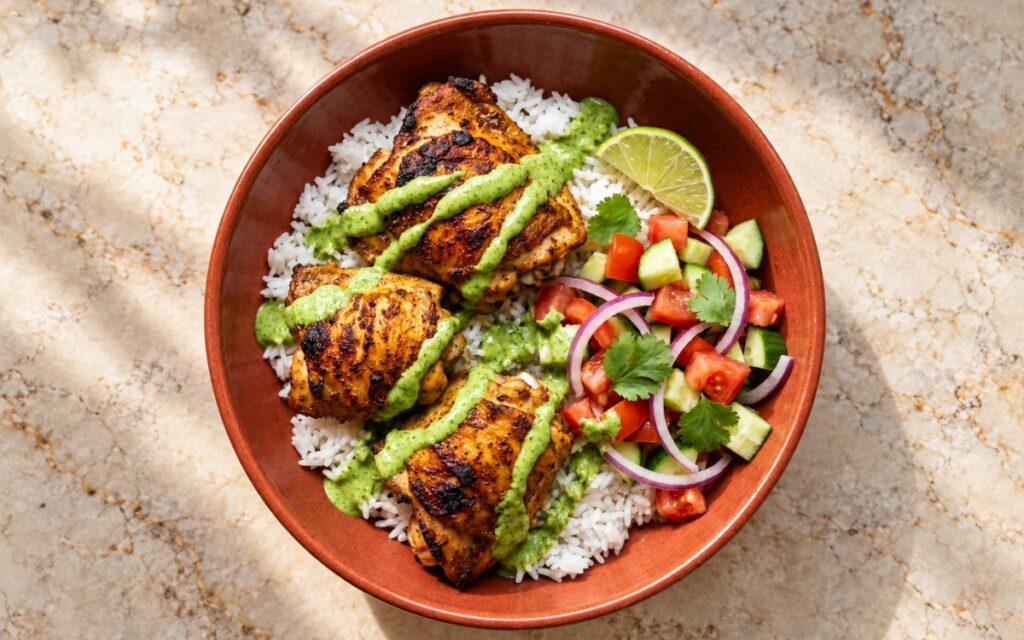
Peruvian Chicken Rice Bowl / Pollo a la Brasa Inspired
Dark roasted garlic-cumin chicken thighs over fluffy white rice with a fresh tomato-cucumber salad, cilantro, lime wedges, and creamy green ají verde.
-
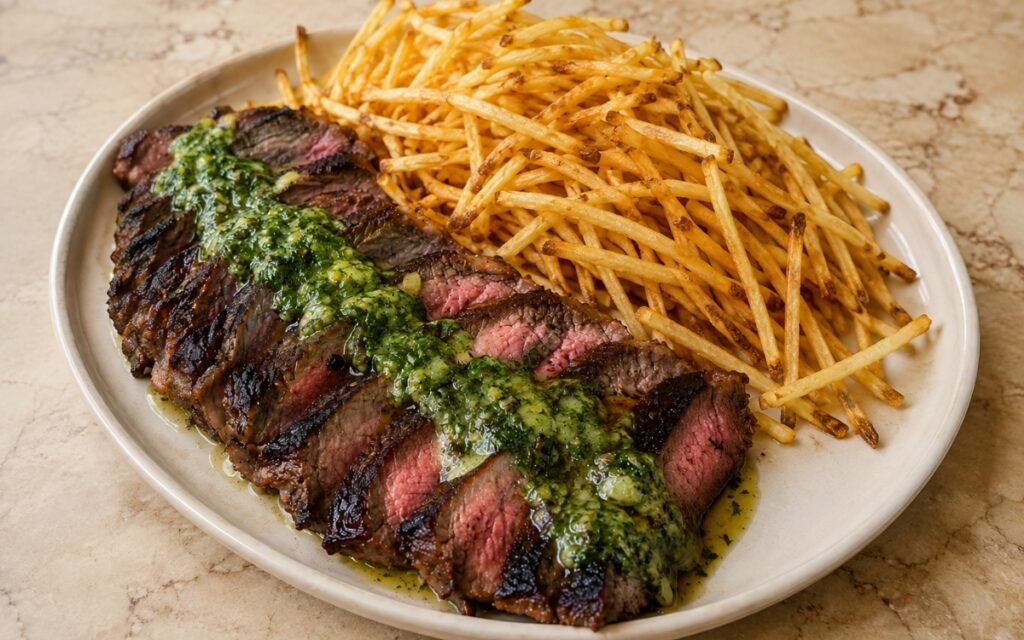
Paris Steak Frites
Seared medium-rare steak with a deep crust, double-fried shoestring frites, and a rich café de Paris-style herb butter sauce.

You might also like
You might also like
-
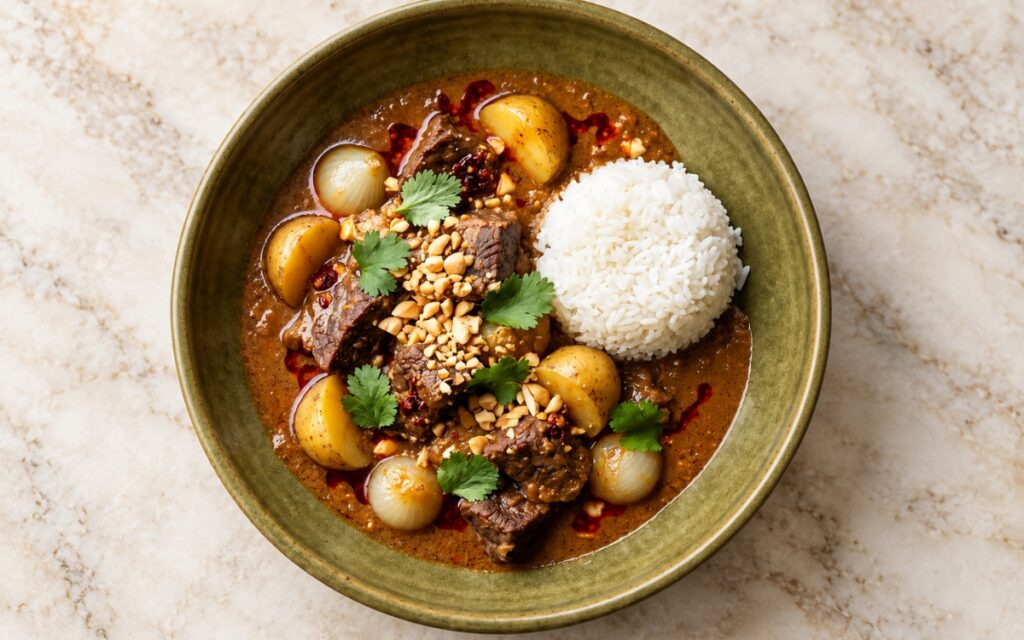
Massaman Beef Curry
Beef chuck braised in a rich, spiced coconut massaman sauce with baby potatoes, pearl onions and peanuts, served with jasmine rice.
-
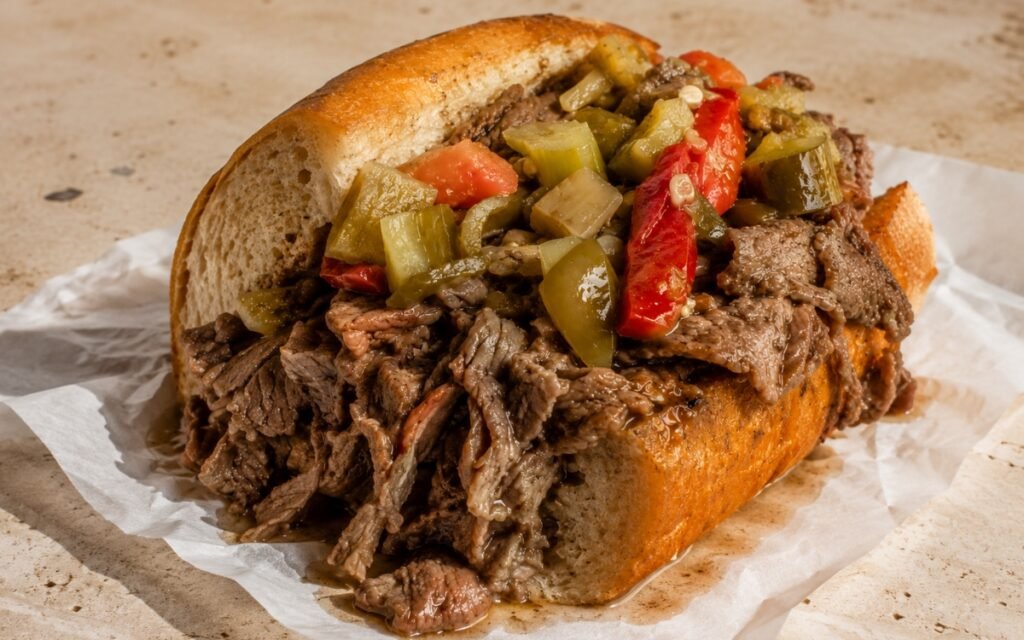
Italian Beef Sandwich
Thin-sliced roast beef warmed in a heavily seasoned au jus, piled into crusty homemade French rolls with sharp giardiniera and roasted peppers.
-
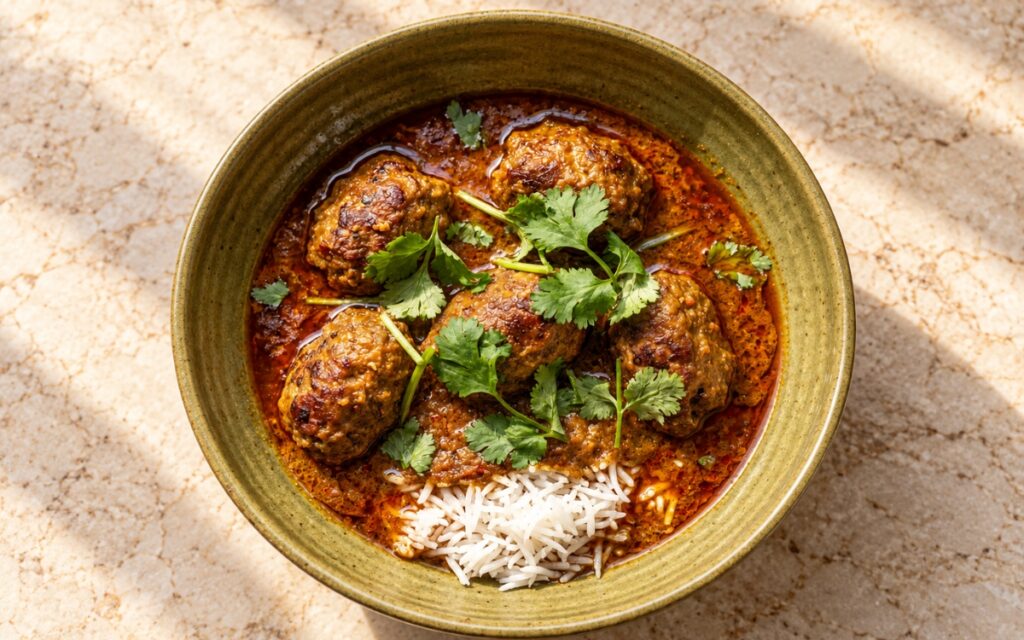
Kofta Ka Salan
Classical-style meat kofta curry with tender koftas simmered in a thinner, aromatic onion-tomato-yogurt salan, served with basmati rice.
Tallarines Verdes with Steak
Ingredients
Method
- Pat the steak very dry with paper towels, then rub it all over with the 1 tbsp oil, 1 tsp kosher salt, ½ tsp black pepper, 2 grated garlic cloves, and the teaspoon of soy sauce if using. Leave it on the counter for 15 minutes while you prepare the sauce ingredients, so it loses some of its fridge chill. A very thick steak may need a little longer in the pan or a short oven finish later. That dry, seasoned, slightly tempered surface is what browns quickly and cooks evenly instead of steaming grey in the pan.
- Heat the 2 tbsp oil in a skillet over medium heat, add the roughly chopped onion, and cook for 3–4 minutes until softened but not deeply browned. Stir in the 2 chopped garlic cloves and cook for 30 seconds, just until fragrant. Add the 150g spinach and cook for 1–2 minutes, turning it constantly, until it has only just wilted and is still bright green. Remove the skillet from the heat and let the mixture cool slightly. That gentle, short cooking is what keeps the sauce fresh and green instead of dull and caramelised.
- In a blender, combine the cooled onion and spinach mixture with the 80g raw basil, the walnuts or pecans, 120g queso fresco, 50g parmesan, 240ml evaporated milk, ½ tsp kosher salt, and ¼ tsp black pepper. Blend until the sauce is completely smooth, bright green, and spoonable, stopping once to scrape down the sides. If it is very thick, add a splash of water or milk just to help it move, then taste and season boldly because it must coat a full batch of pasta. That raw basil, added at the end, is what keeps the herbal flavour strong and the colour vivid.
- Heat a heavy skillet or grill pan over medium-high to high heat until very hot, adding a small film of oil only if the pan looks dry. Lay in the steak and leave it untouched for about 3–5 minutes until a deep brown crust forms and releases, then turn and cook the second side. For medium-rare, cook to an internal temperature of about 54–57°C; for medium, 60–63°C. Transfer the steak to a plate and rest it for 8–10 minutes before slicing. That unmoved contact and long rest are what build a dark crust and keep the juices inside the meat.
- While the steak rests, bring a large pot of well-salted water to a rolling boil, with water that tastes lightly salty. Cook the 400g spaghetti until just al dente according to the package time, usually 9–11 minutes, because it will finish cooking in the sauce. Scoop out at least 240ml of the starchy pasta water before draining, more than the recipe is likely to need, then drain the spaghetti without rinsing it. That reserved starchy water is what loosens and emulsifies the sauce later, so the pasta never turns tight or pasty.
- Pour the green sauce into a large skillet or pot over low heat, add the drained spaghetti, and toss well with tongs. Add the reserved pasta water 2–3 tablespoons at a time, about 60–120ml in total, until the sauce coats every strand smoothly and lightly creamily. Warm only until the pasta is hot and evenly coated, which takes about 2 minutes, and loosen again with a splash of pasta water if it tightens as it sits. That low, brief heat is what keeps the colour bright and stops the dairy from splitting.
- Slice the rested steak across the grain into medium-thin slices, catching any juices that run onto the plate and tossing them over the pasta. Divide the green spaghetti among 4 plates in generous mounds, then fan the steak slices over one side of each portion, or divide all the slices evenly, so the browned crust stays visible. Finish with extra finely grated parmesan and, if you like, a tiny drizzle of olive oil, and serve at once while the pasta is hot and glossy. That immediate plating is what keeps the sauce silky and the steak warm.