Ingredients
Method
Season the Steak
- Pat the steak very dry with paper towels, then rub it all over with the 1 tbsp oil, 1 tsp kosher salt, ½ tsp black pepper, 2 grated garlic cloves, and the teaspoon of soy sauce if using. Leave it on the counter for 15 minutes while you prepare the sauce ingredients, so it loses some of its fridge chill. A very thick steak may need a little longer in the pan or a short oven finish later. That dry, seasoned, slightly tempered surface is what browns quickly and cooks evenly instead of steaming grey in the pan.
Build the Sauce Base
- Heat the 2 tbsp oil in a skillet over medium heat, add the roughly chopped onion, and cook for 3–4 minutes until softened but not deeply browned. Stir in the 2 chopped garlic cloves and cook for 30 seconds, just until fragrant. Add the 150g spinach and cook for 1–2 minutes, turning it constantly, until it has only just wilted and is still bright green. Remove the skillet from the heat and let the mixture cool slightly. That gentle, short cooking is what keeps the sauce fresh and green instead of dull and caramelised.
Blend the Green Sauce
- In a blender, combine the cooled onion and spinach mixture with the 80g raw basil, the walnuts or pecans, 120g queso fresco, 50g parmesan, 240ml evaporated milk, ½ tsp kosher salt, and ¼ tsp black pepper. Blend until the sauce is completely smooth, bright green, and spoonable, stopping once to scrape down the sides. If it is very thick, add a splash of water or milk just to help it move, then taste and season boldly because it must coat a full batch of pasta. That raw basil, added at the end, is what keeps the herbal flavour strong and the colour vivid.
Sear the Steak
- Heat a heavy skillet or grill pan over medium-high to high heat until very hot, adding a small film of oil only if the pan looks dry. Lay in the steak and leave it untouched for about 3–5 minutes until a deep brown crust forms and releases, then turn and cook the second side. For medium-rare, cook to an internal temperature of about 54–57°C; for medium, 60–63°C. Transfer the steak to a plate and rest it for 8–10 minutes before slicing. That unmoved contact and long rest are what build a dark crust and keep the juices inside the meat.
Cook the Pasta
- While the steak rests, bring a large pot of well-salted water to a rolling boil, with water that tastes lightly salty. Cook the 400g spaghetti until just al dente according to the package time, usually 9–11 minutes, because it will finish cooking in the sauce. Scoop out at least 240ml of the starchy pasta water before draining, more than the recipe is likely to need, then drain the spaghetti without rinsing it. That reserved starchy water is what loosens and emulsifies the sauce later, so the pasta never turns tight or pasty.
Toss the Pasta with the Sauce
- Pour the green sauce into a large skillet or pot over low heat, add the drained spaghetti, and toss well with tongs. Add the reserved pasta water 2–3 tablespoons at a time, about 60–120ml in total, until the sauce coats every strand smoothly and lightly creamily. Warm only until the pasta is hot and evenly coated, which takes about 2 minutes, and loosen again with a splash of pasta water if it tightens as it sits. That low, brief heat is what keeps the colour bright and stops the dairy from splitting.
Slice and Plate
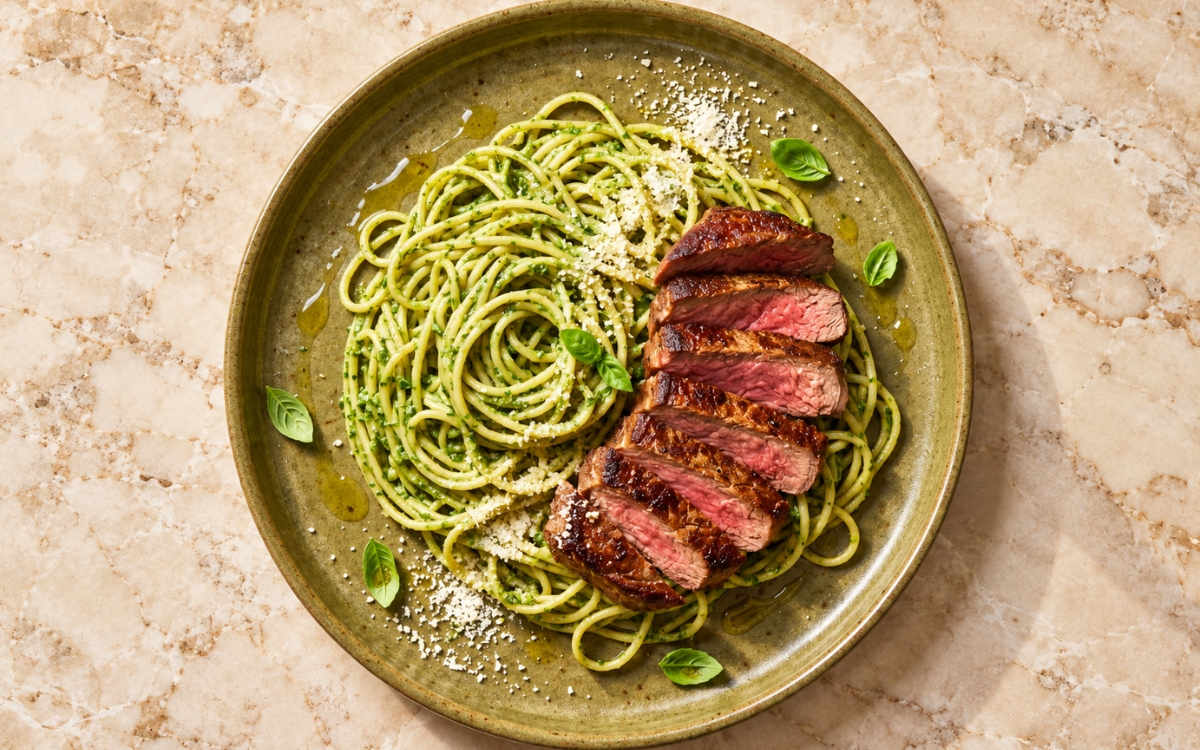
- Slice the rested steak across the grain into medium-thin slices, catching any juices that run onto the plate and tossing them over the pasta. Divide the green spaghetti among 4 plates in generous mounds, then fan the steak slices over one side of each portion, or divide all the slices evenly, so the browned crust stays visible. Finish with extra finely grated parmesan and, if you like, a tiny drizzle of olive oil, and serve at once while the pasta is hot and glossy. That immediate plating is what keeps the sauce silky and the steak warm.
Notes
The blended sauce deserves genuine recognition as the technique most directly responsible for whether this dish looks and tastes like true tallarines verdes. Spinach supports the basil with body and a deeper green, and queso fresco gives the distinctly Peruvian profile, so the sauce stays creamy, smooth, and bright green rather than thin, grassy, or pale on the plate.
Cooking the pasta only to al dente deserves the same attention this technique receives throughout this collection’s other sauced pasta dishes. The spaghetti finishes in the warm sauce and keeps absorbing it, so a strand that is already soft in the pot turns mushy, swollen, and heavy on the plate.
The reserved pasta water deserves genuine respect as the detail most directly responsible for a sauce that clings instead of pooling. Its starch binds the evaporated milk and cheese into a glossy coating, and holding back more than you expect to use lets you loosen the pasta again if it tightens while you slice the steak.
The 54–57°C reading for medium-rare, or 60–63°C for medium, deserves attention as a genuine, checkable doneness cue rather than a loose approximation. A crust can look finished long before the centre is ready, and a rested steak at this range stays juicy and tender against the creamy herb pasta instead of turning tough and dry.