
Palak Chicken Curry
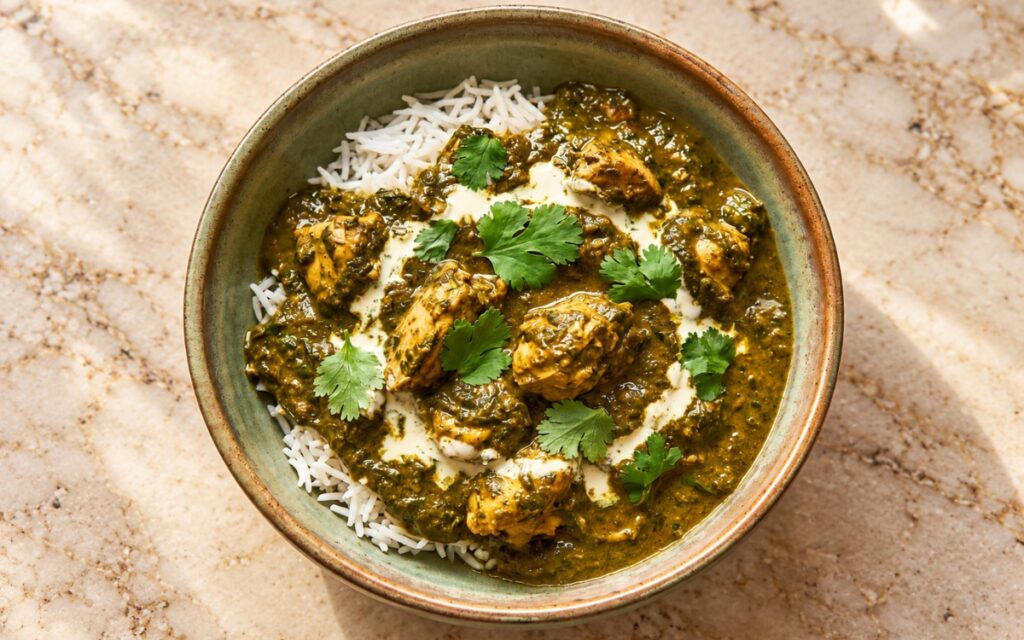
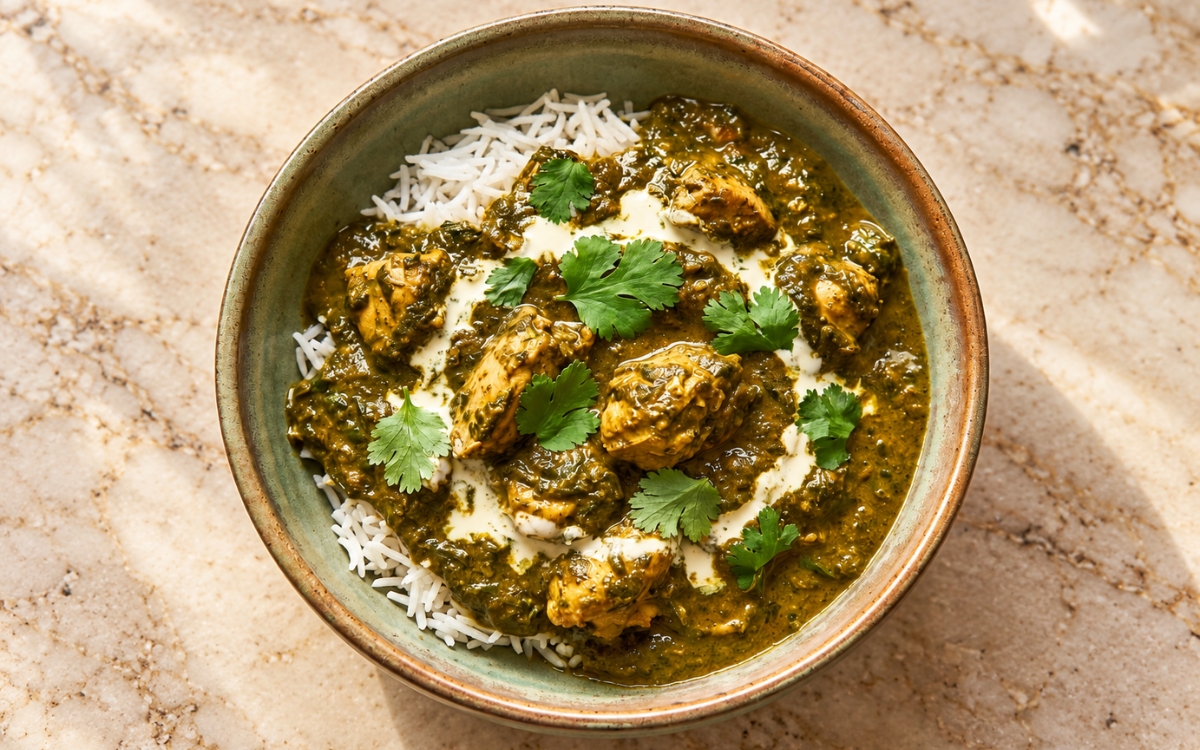
A classical-style palak chicken curry with tender chicken pieces simmered in a thick spinach-based green gravy. The sauce is rich, savory, lightly spiced, and glossy, with enough body to coat the chicken well. Served with fluffy rice for a complete bowl.
Prep Time : 25 min
Total Time : 1 hr 20 min
Servings : 4
25 min
1 hr 20 min
4
Ingredients
For the Rice
• 300 g basmati rice (75 g per serving)
• 480–525 ml water
• ½ tsp fine salt
• 1 tsp butter or ghee, optional
For the Chicken Marinade
• 800 g boneless skinless chicken thighs, cut into large bite-size pieces (about 4 cm)
• 120 g plain full-fat yogurt
• 1 tbsp lemon juice
• 1 tbsp ginger-garlic paste
• 1 tsp ground coriander
• 1 tsp ground cumin
• 1 tsp Kashmiri chili powder or mild chili powder
• ½ tsp turmeric
• ½ tsp garam masala
• 1 tsp fine salt
For the Palak Puree
• 500 g spinach
• 2 green chilies, roughly chopped
• 15 g ginger, roughly chopped
• 3 garlic cloves
• 2–4 tbsp water, only if needed for blending
For the Curry Base
• 2½ tbsp ghee or neutral oil
• 1 tsp cumin seeds
• 1 large onion, finely chopped
• 1 tbsp ginger-garlic paste
• 1 medium tomato, finely chopped
• 1 tsp ground coriander
• ½ tsp ground cumin
• ½ tsp turmeric
• ½ tsp Kashmiri chili powder or mild chili powder
• ¾ tsp fine salt, plus more to taste
• 80–120 ml hot water, as needed
For Finishing
• ½ tsp garam masala
• 2–3 tbsp heavy cream
• 1 tbsp butter or ghee
• ½ tsp kasuri methi, crushed, optional
• 1 small pinch sugar, only if needed
For Serving
• Chopped cilantro
• Extra cream for drizzling, optional
Directions
- Rinse and Cook the Rice
Rinse the basmati rice in several changes of cold water until the water runs mostly clear, then drain well. Soak for 20 minutes if time allows, then drain again. Combine the rice with 480 ml water, the salt, and the optional butter or ghee in a saucepan, using up to 525 ml if the rice wasn’t soaked. Bring to a boil, stir once, cover with a tight lid, reduce to low, and cook for 12 minutes. Turn off the heat and let the rice rest, covered, for 10 minutes before fluffing gently with a fork. The grains should end up tender and separate, not wet at the bottom. - Marinate the Chicken
Combine the chicken with the yogurt, lemon juice, ginger-garlic paste, coriander, cumin, chili powder, turmeric, garam masala, and salt in a bowl, mixing until every piece is well coated. Leave for 20 minutes at room temperature, or refrigerate for up to 8 hours — a short marination is enough for good flavor, while a longer one deepens the seasoning slightly further. - Blanch and Blend the Spinach
Bring a large pot of water to a boil, add the spinach, and cook for 45–60 seconds, just until wilted and bright green. Transfer it immediately to very cold water or ice water to stop the cooking, then drain well and squeeze lightly to remove the excess water. Add the spinach to a blender with the green chilies, chopped ginger, and garlic, and blend to a thick, smooth puree, adding only a little water if needed to keep it moving. The puree should stay thick rather than loose. - Sear the Chicken
Heat 1 tablespoon of the ghee or oil in a wide pan over medium-high heat. Add the marinated chicken in a single layer, working in 2 batches if needed so the pan isn’t crowded, and cook for 2–3 minutes per side until lightly colored in spots. The chicken doesn’t need to be fully cooked yet — remove it to a plate along with any juices. - Build the Curry Base
Lower the heat to medium, adding the remaining ghee or oil if needed. Add the cumin seeds and let them sizzle for 20–30 seconds, then add the chopped onion and cook for 8–10 minutes, stirring often, until soft and golden. Add the ginger-garlic paste and cook for 30–45 seconds, just until fragrant. Add the tomato and cook for 4–6 minutes until softened and reduced, with the raw tomato smell gone and the mixture looking slightly jammy. Stir in the ground coriander, cumin, turmeric, chili powder, and salt, cooking for 20–30 seconds; add a small splash of hot water if the pan looks dry so the spices don’t scorch. - Cook the Palak Chicken
Add the spinach puree and mix it thoroughly into the onion base. Cook over medium-low heat for 4–5 minutes, stirring often, until the raw blended smell is gone and the mixture has thickened slightly. Add 80–120 ml hot water as needed to reach a thick, spoon-coating consistency, then return the seared chicken and all its collected juices to the pan. Stir well, cover partially, and simmer gently for 8–10 minutes, stirring once or twice, until the chicken is fully cooked and tender. The curry is ready when the sauce is thick and glossy, a little fat shows lightly around the edges, and the chicken’s internal temperature reaches 74°C. - Finish
Lower the heat and stir in the garam masala, cream, butter or ghee, and crushed kasuri methi if using. Simmer very gently for 1 minute only, then taste and adjust the salt, adding a very small pinch of sugar if the spinach tastes sharp or overly earthy. Avoid boiling hard once the cream is in — it dulls the color and makes the finish less smooth. - Serve
Spoon the rice into bowls or place it partly underneath the curry. Top with the palak chicken, then finish with chopped cilantro and, if you like, a light cream drizzle.
*Notes :
- Chicken thighs stay juicy through the full simmer in this thick spinach gravy in a way breast doesn’t quite match; if using breast instead, shorten the final simmer slightly so it doesn’t dry out before the sauce is ready.
- The spinach shouldn’t simmer much longer than instructed once it’s blended into the base, since extended cooking at this stage dulls its bright color and can turn the flavor muddy rather than clean and fresh.
- Blanching and immediately shocking the spinach in cold water is the main step responsible for the curry’s bright green color; skipping that shock lets residual heat continue cooking the greens and flattens the color before the dish is even assembled.
- Tomato plays a background role here rather than a leading one — a larger quantity would push the dish toward a more tomato-forward curry and away from the classical green palak style this recipe is built around.
Why This Recipe Works
Marinating the chicken briefly in yogurt and spices seasons it and keeps it tender through the simmer that follows. Searing the chicken separately before it meets the spinach gravy builds a little surface color and flavor that simmering alone wouldn’t produce. Blanching and shocking the spinach locks in its bright color before the puree ever reaches the heat of the pan, and keeping the final simmer short once the chicken rejoins the sauce protects both the chicken’s tenderness and the gravy’s vivid green. Finishing with cream and butter only at the very end adds richness without the extended heat that would otherwise dull the color and separate the dairy.
Ingredient Breakdown
Chicken thighs
Hold up well through the double cooking of searing and simmering, staying juicier than breast over the same timeline.
Blanched and shocked spinach
The base of the curry’s color and flavor; the cold-water shock right after blanching is what keeps the green vivid through the rest of cooking.
Tomato
Used in a smaller, supporting quantity to add body and a light tang without pulling the dish away from its spinach-forward character.
Ginger-garlic paste
Used in both the marinade and the curry base, building a consistent aromatic backbone through every layer of the dish.
Heavy cream and finishing butter
Added only at the end, rounding out the curry’s richness without the extended heat that would dull the spinach’s color.
Flavor Structure Explained
This curry follows a layered balance model:
- Bright, earthy centerpiece (blanched and blended spinach)
- Core seasoning (yogurt-and-spice chicken marinade)
- Light savory depth (onion-tomato base)
- Aromatic top note (garam masala and kasuri methi)
- Smooth richness (cream)
Blanched and blended spinach serves as this curry’s bright, earthy centerpiece, its color protected by a quick shock in cold water right after blanching. The yogurt-and-spice chicken marinade provides the core seasoning that carries through the whole dish. The onion-tomato base underneath contributes a light savory depth that supports the spinach rather than overtaking it. Garam masala and kasuri methi finish the dish with an aromatic top note added only at the very end. A final smooth richness from the cream softens the spinach’s natural sharpness into something rounder, without masking the green flavor that defines the dish.
Common Mistakes to Avoid
- Overcooking the spinach puree once it’s in the pan – This dulls the color and can muddy the flavor; always keep the simmer at the times given.
- Skipping the ice-water shock after blanching – This lets the spinach lose some of its bright color before it’s even blended; always shock it in cold water right after blanching.
- Using too much tomato – This pushes the dish toward a different, tomato-forward style; always keep the tomato as a background note.
- Boiling hard after the cream goes in – This dulls the color and can make the sauce look less smooth; always keep this final stage at a gentle simmer.
Variations
Paneer Swap Version
Replace the chicken with lightly fried paneer cubes, added during the finishing stage rather than simmered the full 8–10 minutes, for a vegetarian version of the same sauce.
Extra-Rich Version
Increase the cream slightly and add an extra teaspoon of butter at the finishing stage for a noticeably richer curry.
Smoother Restaurant-Style Version
Blend the cooked onion-tomato base before combining it with the spinach puree for a more uniform, restaurant-style texture, rather than the lightly textured homestyle result the base recipe gives.
Extra-Spicy Version
Add an additional chopped green chili to the spinach puree for more heat without changing the dish’s color or base flavor.
Storage & Make-Ahead
Marinate the chicken up to 8 hours ahead and keep it covered in the refrigerator, which deepens the seasoning slightly compared to the 20-minute minimum.
Store leftover curry in an airtight container in the refrigerator for up to 3 days, keeping the rice separate so it doesn’t absorb the sauce and turn soft.
Reheat gently on the stovetop over low heat, stirring often and loosening with a splash of hot water if the sauce has thickened in the fridge.
Freeze the curry without the rice for up to 2 months, thawing in the refrigerator overnight before reheating gently on the stove.
Frequently Asked Questions
Why did my curry turn out a dull green instead of bright?
This usually traces back to the blanching step. Shocking the spinach in ice water immediately after blanching, and keeping the final simmer short once it’s in the sauce, are both what keep the color vivid.
Can I use chicken breast instead of thighs?
Yes, but shorten the final simmer slightly, since breast dries out more easily than thigh over the same amount of time in the sauce.
Why does my sauce taste thin instead of thick and glossy?
The spinach puree may have been too watery going in, or the sauce may need a few more minutes of simmering to concentrate before the chicken is added back.
Can I make this curry smoother and less textured?
Yes — blending the cooked onion-tomato base before combining it with the spinach gives a smoother, more restaurant-style result, though the lightly textured version is just as classical.
What else pairs well with this palak chicken curry?
Saag Paneer and Butter Chicken share a similar simmered, spiced approach if you want to build out an Indian-style dinner spread, and Chicken Korma offers a different, cream-forward curry for the same meal. For sides, Plain Steamed Basmati Rice is a simple alternative to the rice in this recipe, and Cucumber Raita adds a cooling contrast to the curry’s spice.
Nutrition Facts
( Per Serving — chicken, sauce, and rice )
Calories
~730 kcal
Protein
46 g
Fat
33 g
Carbs
68 g
Calories
~730 kcal
Protein
46 g
Fat
33 g
Carbs
68 g
Related Recipes
Related Recipes
-

Vietnamese Chicken Curry / Cà Ri Gà
Chicken thighs, potatoes and carrots simmered in a golden lemongrass coconut curry broth, served with jasmine rice, cilantro and cracked black pepper.
-
Chicken Fettuccine Alfredo
Seared chicken over fettuccine emulsified with butter, Parmigiano, and pasta water — the authentic no-cream Alfredo, 40 minutes.
-
Pipián Verde Chicken
Gently poached chicken finished in a vivid green pipián sauce of roasted tomatillos, pumpkin seeds, green chiles, and herbs.

You might also like
You might also like
-
Butter Chicken
Classic butter chicken with charred marinated chicken in a smooth, velvety tomato-cream sauce, served with basmati rice for a complete meal.
-
Salvadoran Chicken Pupusas
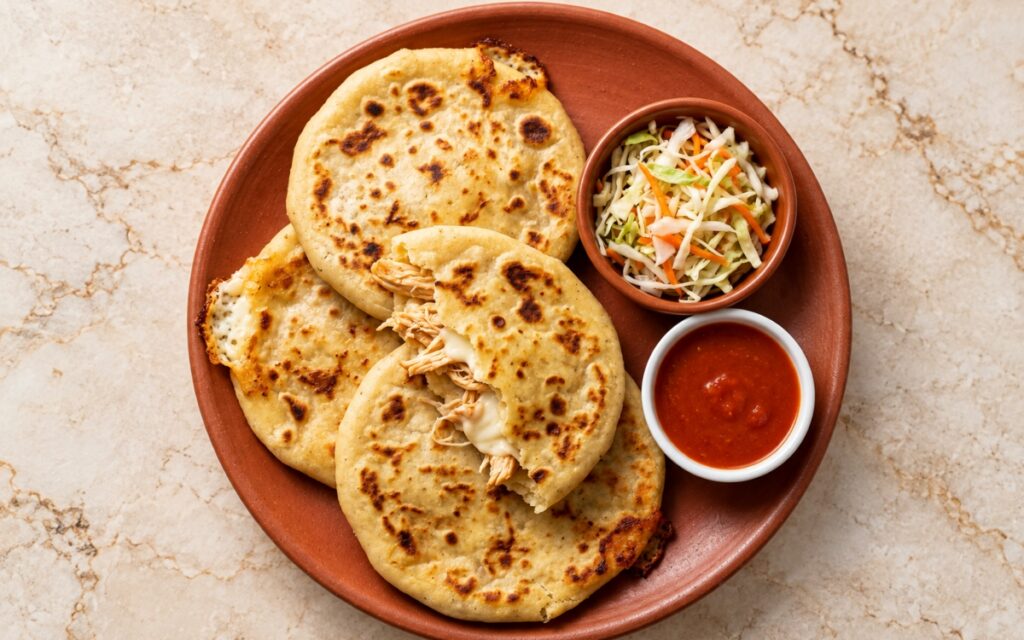
Thick corn masa pupusas filled with seasoned shredded chicken and melted white cheese, griddled until golden and served with curtido and salsa roja.
-
Taiwanese Three Cup Chicken (San Bei Ji)
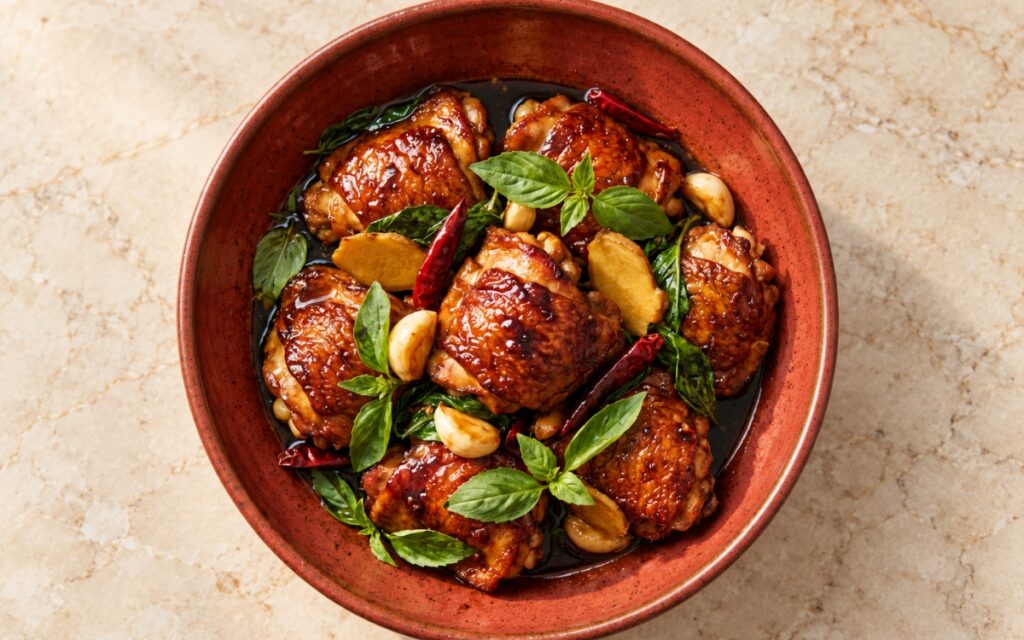
Glossy soy-braised chicken thighs with whole garlic cloves, thick ginger, dried red chilies, and fresh Thai basil in a dark, syrupy sauce.
Palak Chicken Curry
Ingredients
Method
- Rinse the basmati rice in several changes of cold water until the water runs mostly clear, then drain well. Soak for 20 minutes if time allows, then drain again. Combine the rice with 480 ml water, the salt, and the optional butter or ghee in a saucepan, using up to 525 ml if the rice wasn’t soaked. Bring to a boil, stir once, cover with a tight lid, reduce to low, and cook for 12 minutes. Turn off the heat and let the rice rest, covered, for 10 minutes before fluffing gently with a fork. The grains should end up tender and separate, not wet at the bottom.
- Combine the chicken with the yogurt, lemon juice, ginger-garlic paste, coriander, cumin, chili powder, turmeric, garam masala, and salt in a bowl, mixing until every piece is well coated. Leave for 20 minutes at room temperature, or refrigerate for up to 8 hours — a short marination is enough for good flavor, while a longer one deepens the seasoning slightly further.
- Bring a large pot of water to a boil, add the spinach, and cook for 45–60 seconds, just until wilted and bright green. Transfer it immediately to very cold water or ice water to stop the cooking, then drain well and squeeze lightly to remove the excess water. Add the spinach to a blender with the green chilies, chopped ginger, and garlic, and blend to a thick, smooth puree, adding only a little water if needed to keep it moving. The puree should stay thick rather than loose.
- Sear the Chicken
- Heat 1 tablespoon of the ghee or oil in a wide pan over medium-high heat. Add the marinated chicken in a single layer, working in 2 batches if needed so the pan isn’t crowded, and cook for 2–3 minutes per side until lightly colored in spots. The chicken doesn’t need to be fully cooked yet — remove it to a plate along with any juices.
- Lower the heat to medium, adding the remaining ghee or oil if needed. Add the cumin seeds and let them sizzle for 20–30 seconds, then add the chopped onion and cook for 8–10 minutes, stirring often, until soft and golden. Add the ginger-garlic paste and cook for 30–45 seconds, just until fragrant. Add the tomato and cook for 4–6 minutes until softened and reduced, with the raw tomato smell gone and the mixture looking slightly jammy. Stir in the ground coriander, cumin, turmeric, chili powder, and salt, cooking for 20–30 seconds; add a small splash of hot water if the pan looks dry so the spices don’t scorch.
- Add the spinach puree and mix it thoroughly into the onion base. Cook over medium-low heat for 4–5 minutes, stirring often, until the raw blended smell is gone and the mixture has thickened slightly. Add 80–120 ml hot water as needed to reach a thick, spoon-coating consistency, then return the seared chicken and all its collected juices to the pan. Stir well, cover partially, and simmer gently for 8–10 minutes, stirring once or twice, until the chicken is fully cooked and tender. The curry is ready when the sauce is thick and glossy, a little fat shows lightly around the edges, and the chicken’s internal temperature reaches 74°C.
- Lower the heat and stir in the garam masala, cream, butter or ghee, and crushed kasuri methi if using. Simmer very gently for 1 minute only, then taste and adjust the salt, adding a very small pinch of sugar if the spinach tastes sharp or overly earthy. Avoid boiling hard once the cream is in — it dulls the color and makes the finish less smooth.
- Spoon the rice into bowls or place it partly underneath the curry. Top with the palak chicken, then finish with chopped cilantro and, if you like, a light cream drizzle.