Ingredients
Method
Rinse and Cook the Rice
- Rinse the basmati rice in several changes of cold water until the water runs mostly clear, then drain well. Soak for 20 minutes if time allows, then drain again. Combine the rice with 480 ml water, the salt, and the optional butter or ghee in a saucepan, using up to 525 ml if the rice wasn't soaked. Bring to a boil, stir once, cover with a tight lid, reduce to low, and cook for 12 minutes. Turn off the heat and let the rice rest, covered, for 10 minutes before fluffing gently with a fork. The grains should end up tender and separate, not wet at the bottom.
Marinate the Chicken
- Combine the chicken with the yogurt, lemon juice, ginger-garlic paste, coriander, cumin, chili powder, turmeric, garam masala, and salt in a bowl, mixing until every piece is well coated. Leave for 20 minutes at room temperature, or refrigerate for up to 8 hours — a short marination is enough for good flavor, while a longer one deepens the seasoning slightly further.
Blanch and Blend the Spinach
- Bring a large pot of water to a boil, add the spinach, and cook for 45–60 seconds, just until wilted and bright green. Transfer it immediately to very cold water or ice water to stop the cooking, then drain well and squeeze lightly to remove the excess water. Add the spinach to a blender with the green chilies, chopped ginger, and garlic, and blend to a thick, smooth puree, adding only a little water if needed to keep it moving. The puree should stay thick rather than loose.
- Sear the Chicken
- Heat 1 tablespoon of the ghee or oil in a wide pan over medium-high heat. Add the marinated chicken in a single layer, working in 2 batches if needed so the pan isn't crowded, and cook for 2–3 minutes per side until lightly colored in spots. The chicken doesn't need to be fully cooked yet — remove it to a plate along with any juices.
Build the Curry Base
- Lower the heat to medium, adding the remaining ghee or oil if needed. Add the cumin seeds and let them sizzle for 20–30 seconds, then add the chopped onion and cook for 8–10 minutes, stirring often, until soft and golden. Add the ginger-garlic paste and cook for 30–45 seconds, just until fragrant. Add the tomato and cook for 4–6 minutes until softened and reduced, with the raw tomato smell gone and the mixture looking slightly jammy. Stir in the ground coriander, cumin, turmeric, chili powder, and salt, cooking for 20–30 seconds; add a small splash of hot water if the pan looks dry so the spices don't scorch.
Cook the Palak Chicken
- Add the spinach puree and mix it thoroughly into the onion base. Cook over medium-low heat for 4–5 minutes, stirring often, until the raw blended smell is gone and the mixture has thickened slightly. Add 80–120 ml hot water as needed to reach a thick, spoon-coating consistency, then return the seared chicken and all its collected juices to the pan. Stir well, cover partially, and simmer gently for 8–10 minutes, stirring once or twice, until the chicken is fully cooked and tender. The curry is ready when the sauce is thick and glossy, a little fat shows lightly around the edges, and the chicken's internal temperature reaches 74°C.
Finish
- Lower the heat and stir in the garam masala, cream, butter or ghee, and crushed kasuri methi if using. Simmer very gently for 1 minute only, then taste and adjust the salt, adding a very small pinch of sugar if the spinach tastes sharp or overly earthy. Avoid boiling hard once the cream is in — it dulls the color and makes the finish less smooth.
Serve
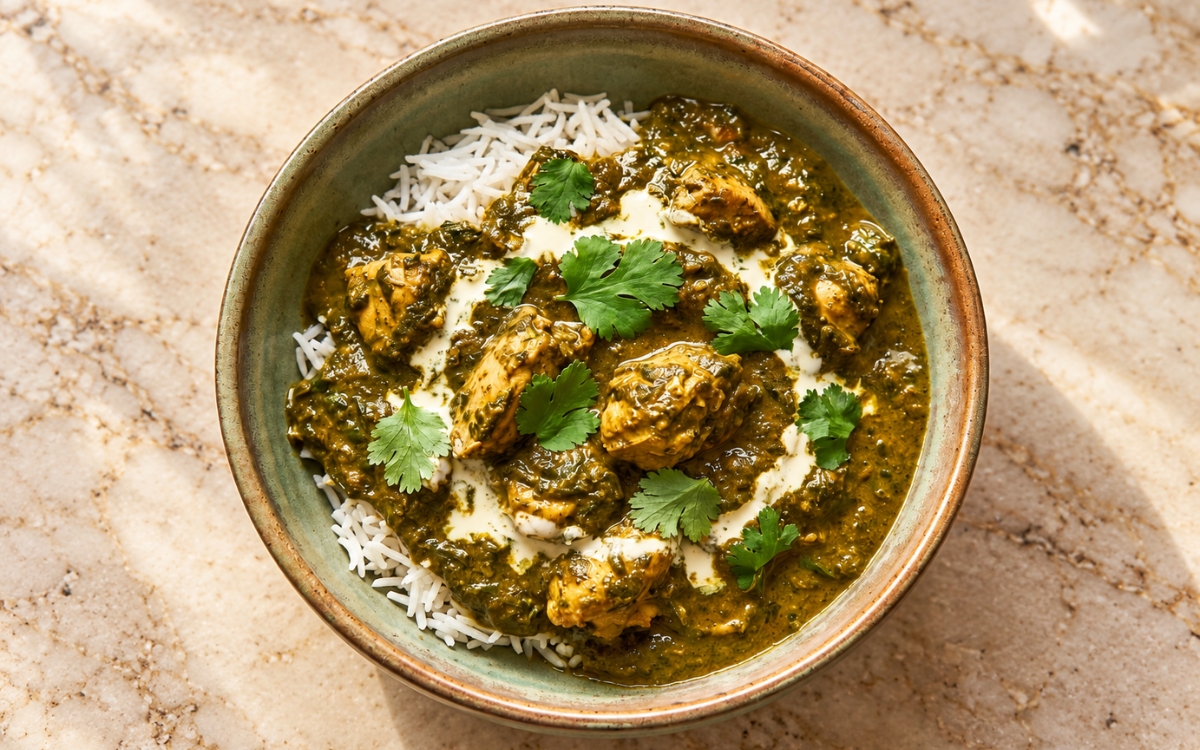
- Spoon the rice into bowls or place it partly underneath the curry. Top with the palak chicken, then finish with chopped cilantro and, if you like, a light cream drizzle.
Notes
Chicken thighs stay juicy through the full simmer in this thick spinach gravy in a way breast doesn't quite match; if using breast instead, shorten the final simmer slightly so it doesn't dry out before the sauce is ready.
The spinach shouldn't simmer much longer than instructed once it's blended into the base, since extended cooking at this stage dulls its bright color and can turn the flavor muddy rather than clean and fresh.
Blanching and immediately shocking the spinach in cold water is the main step responsible for the curry's bright green color; skipping that shock lets residual heat continue cooking the greens and flattens the color before the dish is even assembled.
Tomato plays a background role here rather than a leading one — a larger quantity would push the dish toward a more tomato-forward curry and away from the classical green palak style this recipe is built around.