Lebanese Arayes (Grilled Meat-Stuffed Pita)
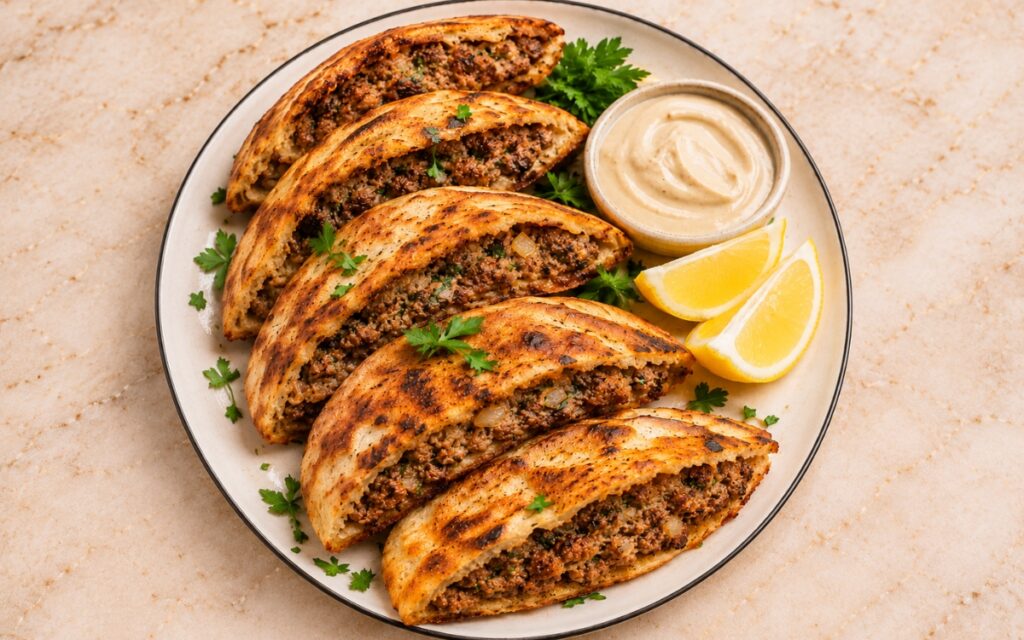
Lebanese arayes are eight thin semicircular Arabic pita pockets stuffed with raw minced beef and lamb, finely chopped onion, parsley, garlic, and warm Lebanese spices, then cooked until the bread is deeply golden and crisp and the exposed meat edges are richly caramelised, the key being the contrast between thin, crunchy toasted pita and a tender, succulent kafta-style filling. Pressing the raw filling into an even layer 8–10mm thick, rather than packing it unevenly, is the technique this whole dish depends on for bread and meat that finish together — a thick pocket leaves the pita burnt before the centre is cooked, the same even-thickness principle used elsewhere in this collection whenever a stuffed bread is cooked from raw. Cooking over steady medium heat is what lets the thin pita colour evenly while the meat cooks through to the centre. Searing the open meat edge against the hot pan is what builds the dark, savoury crust that the whole dish is known for. The payoff is an arayes with real, layered texture — crisp blistered bread, juicy spiced meat, and a cool, creamy lemon-tahini dip.
- Prep Time : 30 min
- Total Time : 1 hr 10 min
- Servings : 4
Ingredients
For the Kafta-Style Meat Filling
- 400g ground beef, preferably 80/20
- 400g ground lamb, about 15–20% fat
- 130g yellow onion, very finely chopped or grated and lightly squeezed
- 30g fresh flat-leaf parsley, finely chopped
- 8g garlic (about 2 cloves), finely grated
- 5g Lebanese seven-spice (baharat or sabaa baharat)
- 2g ground cumin
- 1g ground coriander
- 2g freshly ground black pepper
- 12g fine sea salt
- 5g fresh red chilli, very finely minced, optional
For the Arabic Pita Pockets
- 4 large round Lebanese Arabic pocket breads, about 20–22cm in diameter
- 30–40ml olive oil, for brushing both sides of the pita
For the Lemon-Tahini Sauce
- 120g tahini (smooth sesame paste)
- 45ml freshly squeezed lemon juice
- 8g garlic (about 2 cloves), very finely grated
- 100–140ml ice-cold water, added gradually
- 3g fine sea salt
- ¼ tsp ground cumin, optional
For Serving
- 1 lemon, cut into 4 wedges
- 15g fresh flat-leaf parsley leaves
- Additional lemon-tahini sauce, divided between four servings
Directions
- Mix the Meat Filling
Grate or very finely chop the onion, press it gently in a fine-mesh sieve to remove the free liquid while keeping some natural moisture, and finely chop the parsley. Grate the garlic to a paste and mince the optional chilli, removing the seeds for a milder result. Combine the beef, lamb, onion, parsley, garlic, seven-spice, cumin, coriander, pepper, salt, and chilli in a large bowl and mix by hand for 1–2 minutes until evenly seasoned and just cohesive. Cover and refrigerate for 20 minutes. Restrained mixing is what keeps the filling tender instead of dense. - Open the Pita Pockets
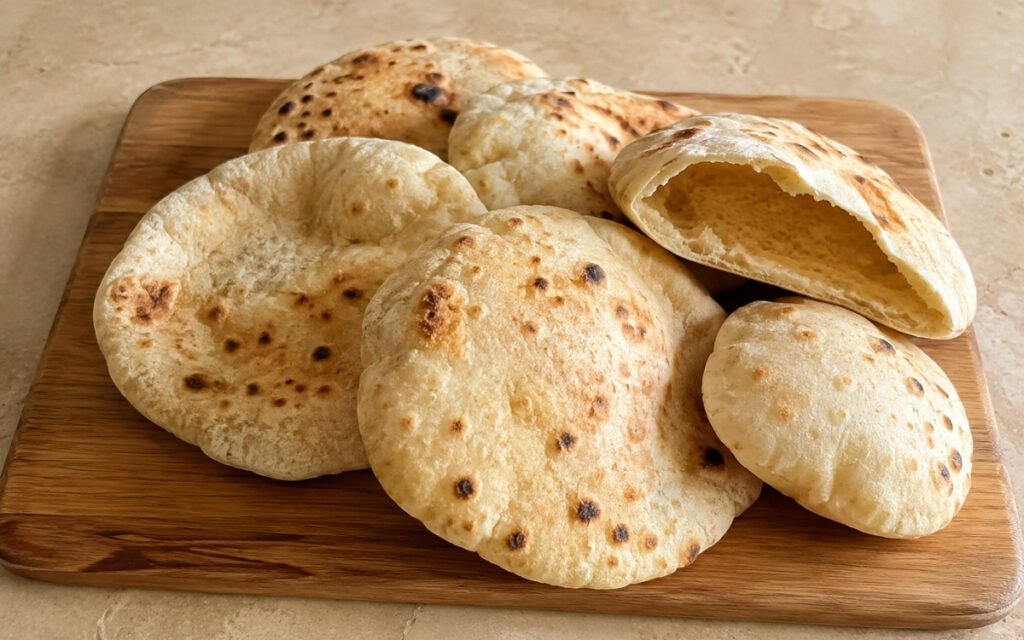
Place the four large pitas on a board and cut each cleanly through the centre into two equal semicircles, giving 8 halves. Open the straight cut edge of each half gently to separate the two layers into a pocket without tearing the curved outer edge. If the bread feels dry or brittle, warm it briefly in a covered skillet or a barely damp towel until flexible, and keep the opened halves covered with a clean towel. Intact curved edges are what stop the raw filling leaking out. - Fill and Shape the Arayes
Divide the chilled meat into 8 equal portions of about 115–120g each. Put one portion inside a pita half, spread it from the curved outer edge towards the straight opening with your fingers or a small spoon, and press it flat against both inner surfaces into an even layer 8–10mm thick that reaches the corners. Push the meat so it sits flush with, or just proud of, the open edge, then press the filled pita between your palms and arrange on a tray in a single layer. Even thickness is what lets bread and meat cook at the same pace. - Brush with Olive Oil
Pour the 30–40ml olive oil into a small bowl and brush a thin, even layer over both outer surfaces of each stuffed pita, paying attention to the rounded edges, until the bread has a delicate sheen without looking soaked or greasy. Leave the exposed meat edges uncovered so they touch the cooking surface directly. A thin film of oil is what encourages the pita to turn golden and crisp while protecting it from drying out before the meat is cooked. - Preheat the Pan
Set a large heavy cast-iron skillet, flat griddle, or grill pan over medium heat and let it preheat for 3–5 minutes until thoroughly hot but not smoking aggressively, brushing it lightly with oil if needed. Put a wire rack over a tray for the cooked arayes. If you are cooking in batches, heat the oven to 100°C to keep finished arayes warm. A surface at this temperature is what browns the pita on contact without scorching it before the filling cooks. - Cook the Arayes Until Golden and Crisp
Lay two or three stuffed halves flat in the hot pan without crowding, pressing very gently with a spatula for the first minute to encourage contact. Cook the first side for 4–6 minutes until a deep golden crust forms, turn carefully, and cook the second side for another 4–6 minutes, lowering the heat if the bread darkens too quickly. The pita should be golden-amber with toasted patches and the meat nearly cooked through. Steady medium heat is what crisps the bread while heat reaches the raw filling. - Sear the Meat Edges
Once both sides are golden, lift each arayes with tongs and stand it with the straight, exposed meat edge pressed against the hot pan for 1–2 minutes, repositioning slightly for even browning, until the open meat has dark golden and chestnut-coloured caramelised patches. Insert an instant-read thermometer sideways into the centre of the filling and cook until it reaches 71°C, then rest the arayes on the wire rack for 2–3 minutes. That direct contact is what creates the browned, savoury crust along the open edge. - Whisk the Lemon-Tahini Sauce
Put the tahini in a medium bowl, add the lemon juice, garlic, salt, and optional cumin, and whisk thoroughly; it may thicken or look seized at first, which is normal. Whisk in about 30ml of the ice-cold water, then add the rest gradually in small amounts, whisking continuously until the sauce is pale beige, creamy, and uniform and thick enough to coat a spoon. Taste, adjust the lemon and salt, and move to a bowl. Slow additions of cold water are what turn the paste into a smooth sauce. - Arrange and Serve
Arrange the cooked arayes on a large warm plate in a slightly overlapping row, with the straight, meat-filled edges facing up or towards the diner so the browned filling stays visible and the golden pita crusts are recognisable. Set a small bowl of lemon-tahini sauce beside them with the four lemon wedges, scatter the parsley leaves around the plate, and serve at once while the bread is hot and crisp. Serving the sauce separately is what keeps the pita from softening.
*Notes :
- Pressing the raw filling into an even layer 8–10mm thick deserves genuine recognition as the technique most directly responsible for crisp bread, juicy meat, and complete cooking at the same moment. A thick pocket leaves the centre raw when the pita is already dark, whereas a thin, even layer lets heat penetrate the meat at the same pace the bread browns.
- Draining the grated onion deserves the same attention this technique receives throughout this collection’s other stuffed and minced-meat dishes. Free onion liquid seeps into the thin bread and makes it limp and soggy from the inside, whereas pressed onion keeps enough natural moisture to flavour the meat without compromising the crisp, golden exterior.
- Using meat with 15–20% fat deserves genuine respect as the detail most directly responsible for a filling that stays juicy through a long, hot pan cook. Very lean meat dries out and turns crumbly before the pita reaches its golden crust, while the rendering fat bastes the filling and helps crisp the inside of the bread.
- Checking the filling with a thermometer deserves attention as a genuine, checkable readiness cue rather than a loose approximation. A reading of 71°C in the centre confirms that the raw minced meat is safely cooked, because golden bread alone cannot show whether a thick pocket has finished cooking inside, and the reading takes only a few seconds before the rest.
Why This Recipe Works
This recipe works because the raw filling and the bread are engineered to finish together. A fatty beef and lamb mixture with pressed onion, parsley, garlic, and Lebanese spices stays juicy and tender, and spreading it in an even layer of 8–10mm means it cooks through in the time the oiled pita needs to crisp. Medium heat colours the bread without scorching it, and a final sear on the open edge adds a dark caramelised crust that tastes of the pan. Cool, tart lemon-tahini served alongside balances the richness of the meat, so every bite stays lively rather than heavy.
Ingredient Breakdown
Beef and Lamb Together (800g)
The structural foundation — beef gives body while lamb adds richness and its distinctive savoury flavour to the filling.
Pressed Onion and Parsley
The critical technique — drained onion and finely chopped parsley keep the meat moist and fragrant without soaking the thin pita.
Lebanese Seven-Spice
The defining flavour ingredient — a warm blend of allspice, cinnamon, and pepper gives the filling its Levantine aroma.
Thin Arabic Pita Pockets
The structural choice — large, thin pockets crisp into blistered shells that hold the meat in an even layer.
Seared Meat Edges
The finishing technique — pressing the open filling against the hot pan builds the dark caramelised crust that marks real arayes.
Lemon-Tahini Sauce
The finishing touch — cool, tart, creamy sauce cuts through the rich lamb and beef and refreshes each bite.
Flavor Structure Explained
This Lebanese arayes follows a layered balance model:
- Crisp, toasted foundation (thin Arabic pita brushed with olive oil)
- Rich, savoury core (minced beef and lamb)
- Warm, aromatic depth (Lebanese seven-spice, cumin, coriander, and garlic)
- Fresh, green lift (onion, flat-leaf parsley, and lemon wedges)
- Cool, nutty finish (lemon-tahini sauce)
Thin toasted pita provides the crisp foundation, while minced beef and lamb give a rich, savoury core with a deeply caramelised edge along the opening. Seven-spice, cumin, coriander, and garlic add warm, aromatic depth that carries through the whole filling and into the crust. Onion, parsley, and lemon give a fresh, green lift, and the cool, nutty lemon-tahini sauce balances the richness and ties this Lebanese arayes together.
Common Mistakes to Avoid
- Overfilling the Pita – This leaves the centre raw while the bread burns. Always spread the filling evenly to 8–10mm.
- Skipping the Onion Squeeze – This lets free liquid soak into the thin bread and turn it soggy. Always press the grated onion in a sieve before mixing.
- Overworking the Meat – This packs the filling into a dense, rubbery paste. Always mix for only 1–2 minutes until the meat is just cohesive.
- Cooking Over Fierce Heat – This scorches the pita before the filling is done. Always cook over steady medium heat and check the centre reaches 71°C.
- Coating the Pita in Oil – This soaks the bread and makes it greasy instead of crisp. Always brush only a thin, even layer and rest the arayes on a wire rack.
Variations
Oven-Baked Version
Bake the lightly oiled stuffed pitas at 200°C for 15–20 minutes, turning halfway, until the meat reaches 71°C, then sear the open edges briefly in a hot skillet for a darker crust.
Charcoal-Grilled Version
Cook the arayes over medium-heat charcoal, turning both bread surfaces and checking the meat temperature, which adds a smoky aroma and deeper blistering than the skillet.
All-Beef Version
Use 800g ground beef in place of the beef and lamb mixture for a milder, more familiar filling while the seasoning, shaping, and cooking method stay exactly the same.
Chilli-Free Version
Leave out the optional fresh red chilli for a gentler filling that keeps the warm spice and herb flavours forward without any visible pepper fragments.
Storage & Make-Ahead
The seasoned meat mixture can be refrigerated in an airtight container for up to 24 hours before assembly, which lets the spices, garlic, and aromatics settle evenly into the meat before it is stuffed.
Open the pita halves and fill them just before cooking, because raw filling left sitting in thin bread for a long time draws moisture into the pocket and softens the crisp exterior.
Refrigerate cooked arayes promptly in an airtight container for up to 3 days, and keep the lemon-tahini sauce in a separate covered container so the bread never sits in sauce.
Reheat leftover arayes in a 180–190°C oven until thoroughly hot and the pita is crisp again, because a microwave leaves the thin bread soft, damp, and chewy rather than crunchy.
Cooked arayes can be kept warm on a wire rack set over a tray in a 100°C oven while later batches cook, since a rack lets steam escape instead of softening the crust.
Frequently Asked Questions
Why is the filling spread to an even 8–10mm thickness?
An even layer lets heat reach the centre of the raw meat in the time the pita takes to turn golden, whereas a thick or uneven pocket leaves the middle undercooked or the bread burnt.
Why must the grated onion be pressed before mixing?
Free onion liquid seeps into the thin pita and makes it limp, so pressing it out keeps the filling moist enough to be tender while the bread stays crisp.
Why are the meat edges seared against the pan at the end?
Direct contact with the hot surface browns the exposed minced meat into a dark, savoury crust, which gives the arayes its characteristic caramelised, savoury flavour all along the open edge of the pita.
Why is the lemon-tahini sauce whisked with ice-cold water?
Cold water gradually loosens the thick tahini into a smooth, pale, creamy emulsion, whereas adding it all at once or using warm water leaves the sauce grainy, stiff, or separated.
Are there other classic spiced meat, grilled, or Levantine dishes worth trying?
Meat Burek with Spiced Ground Beef and Simple Beef Kofta Skewers both offer other classic spiced minced-meat directions worth exploring, and Grilled Lamb Kebabs with Charred Veggies is also worth trying for another grilled lamb dish. Creamy Tahini Lemon Sauce is worth making as a creamy dip that suits the same table, while Baba Ganoush offers another Levantine mezze to serve alongside.
Nutrition Facts
( Per Serving — 2 arayes with tahini sauce )
- Calories
- ~810 kcal
- Protein
- 44 g
- Fat
- 54 g
- Carbs
- 42 g
-

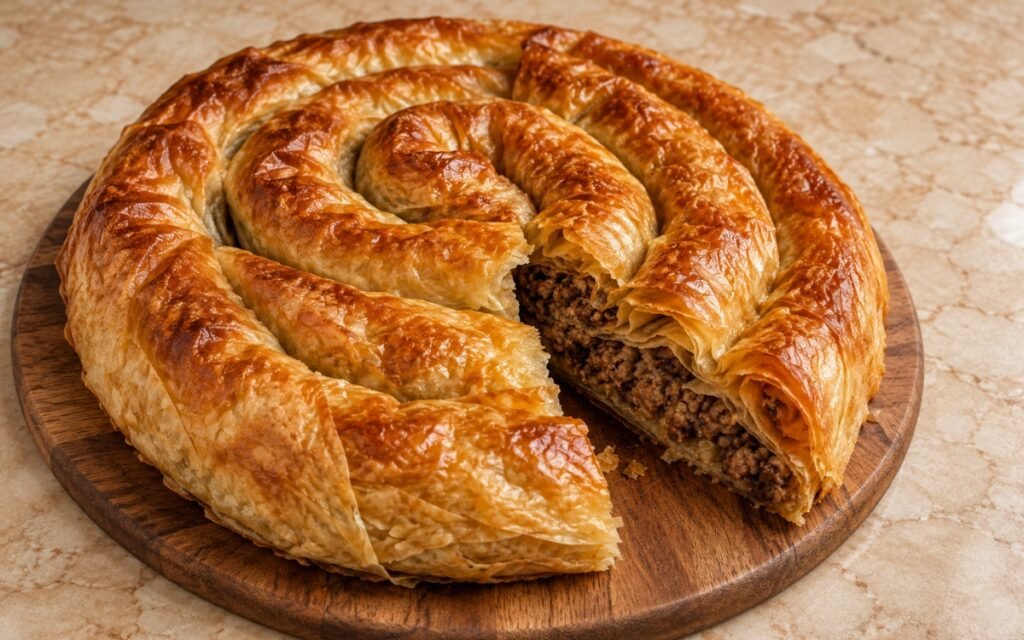
Meat Burek with Spiced Ground Beef
A round coiled phyllo pastry wrapped around savory spiced ground beef, baked until deeply golden, crisp, and flaky.
-
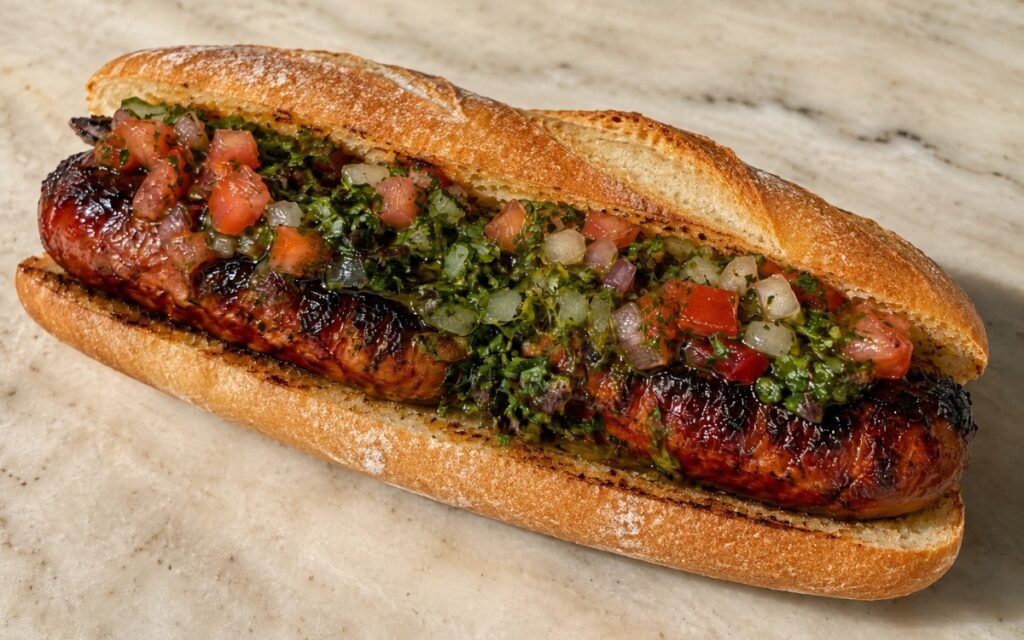
Argentine Choripán
Butterflied Argentinian chorizo seared until deeply charred and glossy, stuffed into a toasted roll with generous chimichurri and tomato-shallot salsa.
-
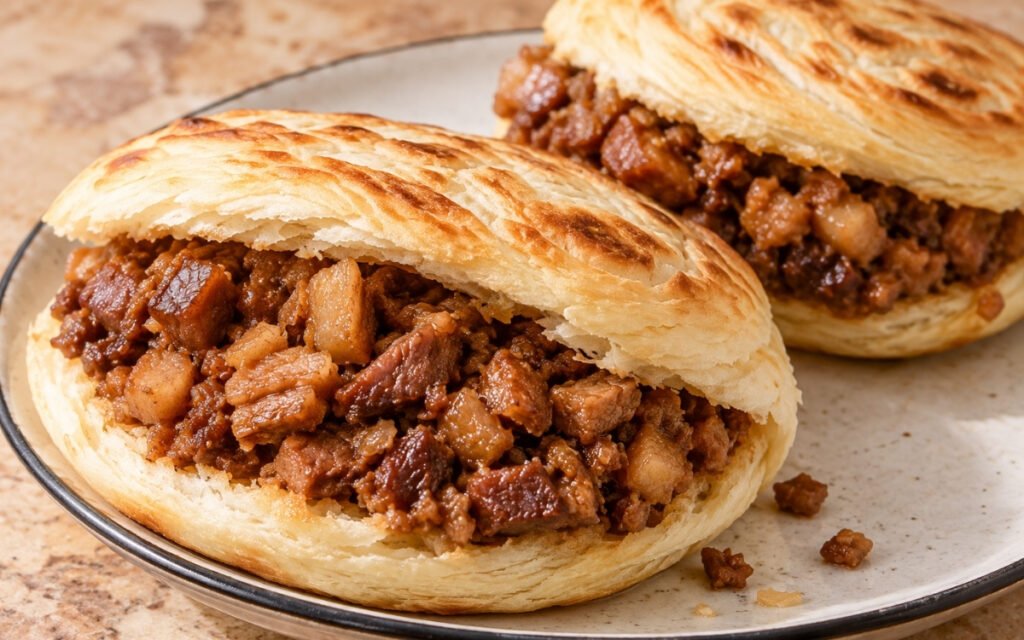
Roujiamo Sandwich
Crisp-outside, soft-inside flatbread packed with finely chopped, richly spiced braised pork belly and reduced braising juices.
-
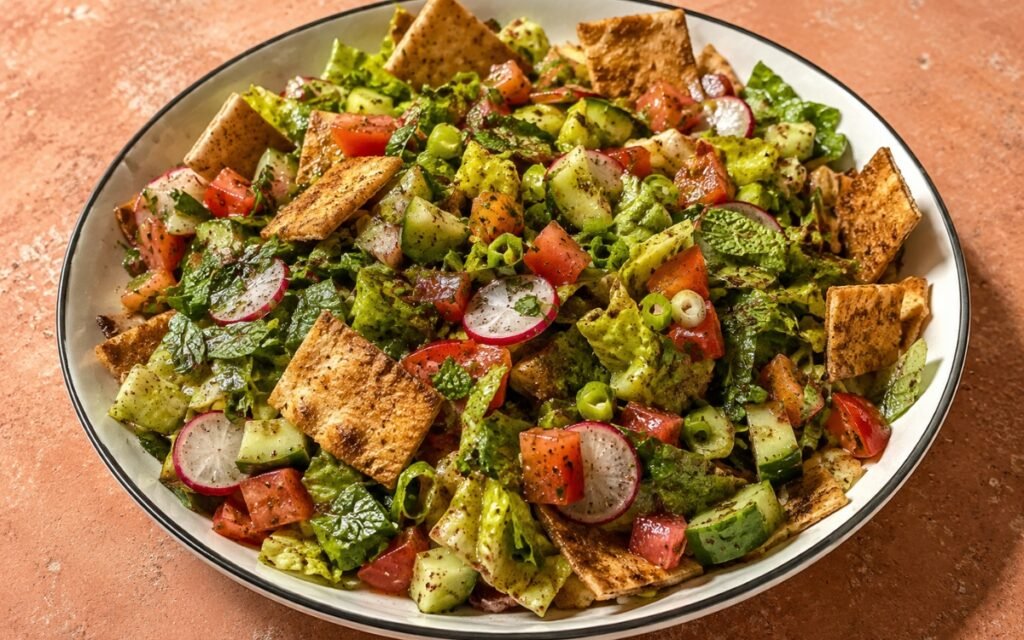
Lebanese Fattoush Salad
Crispy pita bread salad with fresh vegetables, herbs, and tangy sumac pomegranate dressing.
-
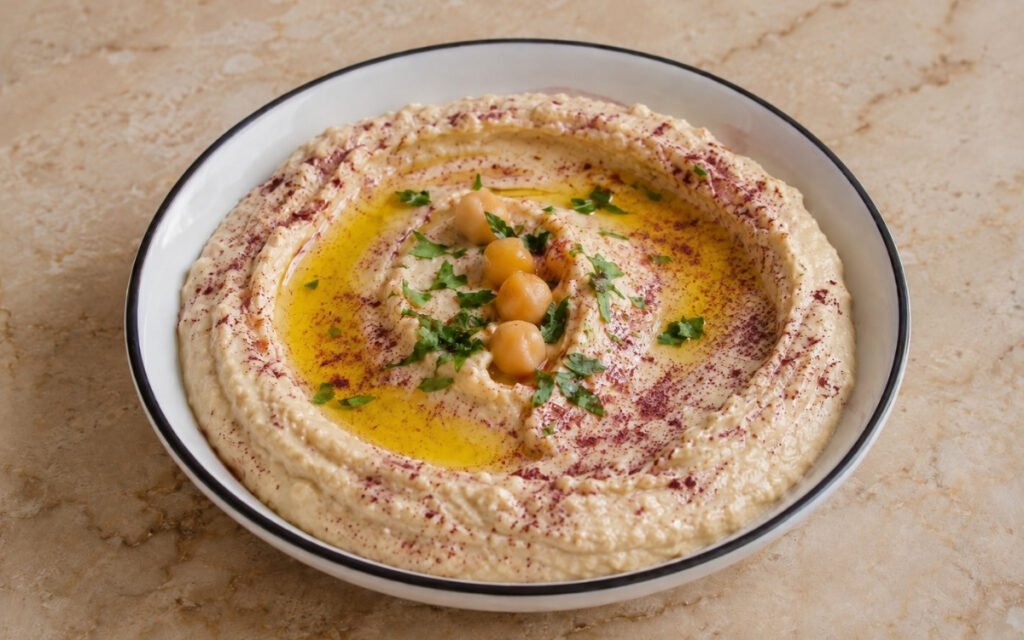
Classic Hummus
Dried chickpeas cooked with baking soda, processed warm with tahini, lemon, and garlic, emulsified with ice-cold water — the ultra-smooth base hummus that every flavoured variation is built on.
-
Homemade Pita Flatbread
Properly kneaded, evenly rolled, and cooked on a scorching surface — soft, pocket-forming pita flatbread in 2 hours, with oven and cast iron methods explained step by step.