
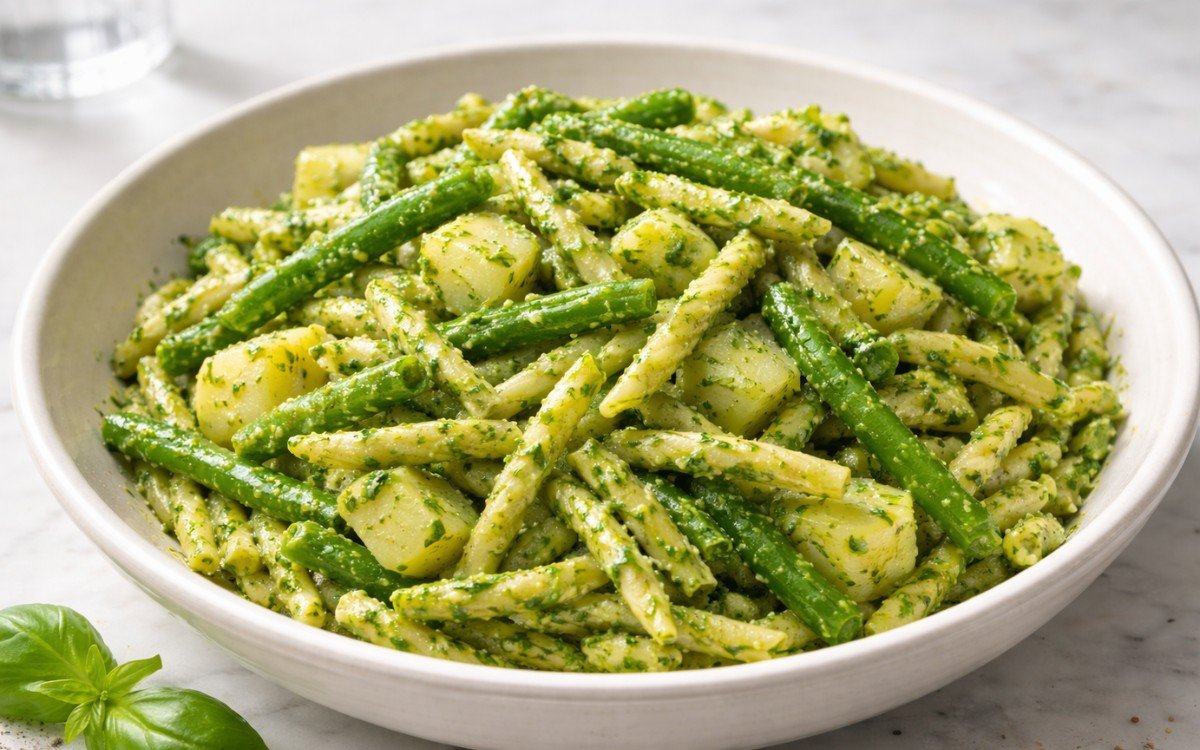
Fresh Homemade Basil Pesto Pasta
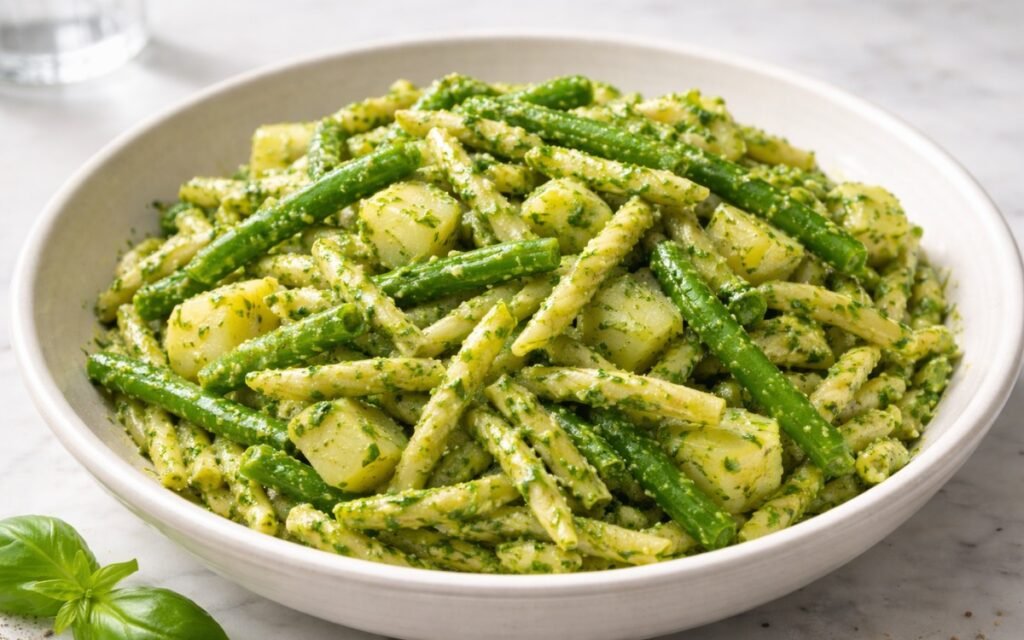
This authentic Italian basil pesto pasta showcases the vibrant flavors of fresh basil, toasted pine nuts, and aged Italian cheeses, all brought together with perfectly cooked pasta. The traditional Ligurian addition of tender potatoes and green beans creates a complete, satisfying meal that celebrates the essence of simple, quality ingredients. Ready in under 30 minutes, this recipe delivers restaurant-quality results with a silky, aromatic sauce that clings to every strand.
Prep Time : 15 min
Cook Time : 12 min
Servings : 4
15 min
12 min
4
Ingredients
For the Homemade Pesto
• 80g fresh basil leaves (about 4 packed cups), stems removed
• 50g pine nuts, lightly toasted
• 2 small garlic cloves (10g), roughly chopped
• 60g Parmigiano-Reggiano, finely grated, plus extra for serving — this one on Amazon
• 30g Pecorino Romano, finely grated — this one on Amazon
• 120ml extra-virgin olive oil, plus more for drizzling
• 15ml fresh lemon juice
• 5g fine sea salt
• 2g freshly ground black pepper
For the Pasta
• 400g dried pasta (preferably trofie, linguine, or gemelli) — this one on Amazon
• 150g green beans, trimmed and cut into 3cm pieces
• 120g Yukon Gold potatoes, peeled and diced into 1cm cubes
• Salt for pasta water
This post may contain affiliate links. As an Amazon Associate I earn from qualifying purchases, at no additional cost to you.
Directions
- Prepare the Vegetables
Bring a large pot of water to boil and salt generously until it tastes like the sea. Add the 120g diced potatoes and cook for 5 minutes, then add the 150g green beans and cook for 3 more minutes until both vegetables are tender. Use a spider or slotted spoon to transfer the vegetables to a bowl, reserving all the cooking water in the pot. - Make the Homemade Pesto
While the vegetables cook, prepare the pesto using a mortar and pestle or food processor. Add the 50g pine nuts and 10g garlic with a pinch of salt, pounding or pulsing until a rough paste forms. Add half of the 80g basil leaves and work them into the mixture until broken down. Add the remaining basil and continue until you achieve a textured paste that’s not completely smooth. Transfer to a medium bowl and stir in the 60g Parmigiano-Reggiano and 30g Pecorino Romano until well combined. Slowly drizzle in the 120ml olive oil while stirring constantly to emulsify. Add the 15ml lemon juice and 2g black pepper, then taste and adjust salt as needed. - Cook the Pasta
Return the vegetable cooking water to a rolling boil and add the 400g pasta. Cook according to package directions until al dente, usually 10-12 minutes. Reserve 240ml (1 cup) of the starchy pasta water before draining the pasta. - Combine and Emulsify
Return the drained pasta to the pot over low heat. Add all the pesto and 120ml of the reserved pasta water. Toss vigorously for 1-2 minutes, adding more pasta water as needed, until the sauce becomes creamy and clings to every strand of pasta. The starch in the pasta water will help create a silky, emulsified sauce. - Add Vegetables and Serve
Add the cooked potatoes and green beans to the pasta and toss gently to combine, allowing the potatoes to break down slightly and add body to the sauce. Divide among four warm bowls, drizzle each serving with extra-virgin olive oil, add freshly cracked black pepper, and serve immediately with extra Parmigiano-Reggiano at the table.
*Notes :
- The traditional Ligurian technique of adding potatoes and green beans enriches the sauce with starch from the potatoes while the green beans add subtle sweetness that perfectly complements the basil.
- Always use room-temperature ingredients for the best pesto emulsion, as cold basil bruises more easily and cold cheese won’t incorporate as smoothly into the oil.
- Reserve extra pasta water—it’s the secret to achieving that restaurant-quality creamy consistency that makes the sauce cling perfectly to the pasta without being oily.
Nutrition Facts
( per serving )
Calories
~848 kcal
Protein
25 g
Fat
50 g
Carbs
76 g
Calories
~848 kcal
Protein
25 g
Fat
50 g
Carbs
76 g
Related Recipes
Related Recipes

Creamy Parmesan Grits
Creamy Southern grits with Parmesan and butter—velvety smooth and incredibly comforting.
Grilled Mediterranean Veggie Bowl
Smoky grilled vegetables with lemon-herb quinoa, crispy chickpeas & creamy tahini-yogurt sauce.
Asian Crispy Rice
Golden, crunchy pan-fried rice with savory soy-sesame flavors and irresistibly crispy texture.


You might also like
You might also like
Classic Pork Chops
Bone-in pork chops seared golden with garlic butter—simple, juicy, and restaurant-worthy perfection.
Creamy Zucchini Pasta with Burrata
Silky zucchini sauce coats rigatoni, topped with burrata and crispy lemon breadcrumbs perfectly.
Classic Cacio e Pepe Pasta
Authentic Roman pasta with Pecorino Romano, black pepper, and butter in silky emulsified sauce.

Fresh Homemade Basil Pesto Pasta
Ingredients
Method
- Bring a large pot of water to boil and salt generously until it tastes like the sea. Add the 120g diced potatoes and cook for 5 minutes, then add the 150g green beans and cook for 3 more minutes until both vegetables are tender. Use a spider or slotted spoon to transfer the vegetables to a bowl, reserving all the cooking water in the pot.
- While the vegetables cook, prepare the pesto using a mortar and pestle or food processor. Add the 50g pine nuts and 10g garlic with a pinch of salt, pounding or pulsing until a rough paste forms. Add half of the 80g basil leaves and work them into the mixture until broken down. Add the remaining basil and continue until you achieve a textured paste that's not completely smooth. Transfer to a medium bowl and stir in the 60g Parmigiano-Reggiano and 30g Pecorino Romano until well combined. Slowly drizzle in the 120ml olive oil while stirring constantly to emulsify. Add the 15ml lemon juice and 2g black pepper, then taste and adjust salt as needed.
- Return the vegetable cooking water to a rolling boil and add the 400g pasta. Cook according to package directions until al dente, usually 10-12 minutes. Reserve 240ml (1 cup) of the starchy pasta water before draining the pasta.
- Return the drained pasta to the pot over low heat. Add all the pesto and 120ml of the reserved pasta water. Toss vigorously for 1-2 minutes, adding more pasta water as needed, until the sauce becomes creamy and clings to every strand of pasta. The starch in the pasta water will help create a silky, emulsified sauce.
- Add the cooked potatoes and green beans to the pasta and toss gently to combine, allowing the potatoes to break down slightly and add body to the sauce. Divide among four warm bowls, drizzle each serving with extra-virgin olive oil, add freshly cracked black pepper, and serve immediately with extra Parmigiano-Reggiano at the table.