
Eggs Benedict
Toasted English muffin halves topped with warm Canadian bacon or ham, perfectly poached eggs, and a thick glossy hollandaise sauce, finished with chives, black pepper, and a light dusting of paprika. The key is keeping the hollandaise warm but not hot, poaching the eggs gently so the whites set cleanly, and assembling everything right before serving so the muffins stay crisp and the yolks stay beautifully runny. Drizzling the warm melted butter into the yolks slowly, starting drop by drop, is the technique this whole sauce depends on for a genuine emulsion — adding fat too quickly overwhelms the yolks’ own emulsifying capacity before it has a chance to bind properly, the same slow-drizzle-emulsification principle used elsewhere in this collection whenever egg yolks need to absorb fat gradually rather than all at once. Keeping the poaching water at a genuine gentle simmer, never a full boil, is what lets the egg whites set cleanly around the yolk rather than turning ragged. Assembling every component only at the very last moment is what delivers this dish’s whole point — crisp muffin, warm ham, runny yolk, and glossy hollandaise all meeting together in the same bite. The payoff is a plate with real, classic contrast — a crisp base, tender ham, a soft-set egg, and rich, glossy hollandaise flowing over everything.

Prep Time : 20 min
Cook Time : 20 min
Servings : 4
20 min
20 min
4
Ingredients
For the Benedict Base
• 4 English muffins, split
• 8 slices Canadian bacon or thick ham
• 15g unsalted butter, for toasting the muffins, optional
For the Poached Eggs
• 8 large eggs
• Water, for poaching
• 15ml white vinegar
• 5g fine sea salt, optional for the water
For the Hollandaise Sauce
• 4 large egg yolks
• 15ml water
• 15ml fresh lemon juice, plus more to taste
• 170g unsalted butter — this one on Amazon
• 2 to 3g fine sea salt, to taste
• Black pepper, to taste
• Pinch of cayenne pepper or paprika, optional
For Finishing
• 1 tbsp fresh chives, finely chopped
• Extra black pepper, to taste
• Light pinch of paprika, for garnish
This post may contain affiliate links. As an Amazon Associate I earn from qualifying purchases, at no additional cost to you.
Directions
- Prep the Muffin and Ham Components
Split the English muffins and set them aside. Place the Canadian bacon or ham slices on a plate or tray so they are ready to warm through later. Eggs Benedict moves quickly once the eggs and hollandaise are ready, so having the base components prepped first makes assembly much easier. That upfront prep matters directly because hollandaise and poached eggs both have genuinely narrow windows of readiness — scrambling to prep the base components at the same time risks letting either the sauce or the eggs drift past their ideal moment. - Make the Clarified Butter Base for the Hollandaise
Melt the butter gently in a small saucepan over low heat until fully melted and hot, but not browned. Keep it warm. The butter should be hot enough to help emulsify the yolks, but not browned or aggressively bubbling. Genuinely hot butter is what allows the emulsion to form properly as it’s whisked into the yolks — butter that’s only lukewarm wouldn’t provide enough heat to help cook and thicken the yolks during that process. - Start the Hollandaise
In a heatproof bowl, whisk together the egg yolks, water, and lemon juice. Set the bowl over a saucepan of barely simmering water, making sure the bottom of the bowl does not touch the water. Whisk constantly for about 1 to 2 minutes, until the yolks look slightly thickened and creamy. Keeping the bowl above, rather than touching, the simmering water protects the yolks from direct, aggressive heat — that gentle, indirect warmth is what allows them to thicken gradually into a stable base rather than scrambling. - Emulsify the Hollandaise
While whisking constantly, slowly drizzle in the warm melted butter, starting drop by drop, then in a thin steady stream once the sauce begins to thicken. Continue whisking until the hollandaise is glossy, thick, and smooth. Season with the salt, black pepper, and a pinch of cayenne or paprika if using. If needed, add a few drops of lemon juice to brighten it. The finished hollandaise should ribbon off the whisk and hold softly on itself. It should be thick and glossy, not stiff or greasy. That initial drop-by-drop addition is what lets the yolks’ emulsifying capacity keep pace with the incoming fat — once enough butter has been successfully incorporated to establish a stable emulsion, the mixture can accept butter considerably faster without breaking. - Keep the Hollandaise Warm
Take the hollandaise off the heat and keep it in a warm spot while you finish the rest. If it thickens too much, whisk in 1 tsp warm water at a time until it loosens slightly. Never hold hollandaise over strong heat or it may split or scramble. Warm is good, hot is not. Egg-yolk-based emulsions are genuinely fragile against sustained high heat, and this warm-not-hot holding principle is what protects the sauce’s smooth texture right up until it’s spooned over the finished plate. - Toast the Muffins and Warm the Ham
Toast the English muffin halves until lightly golden. If you like, brush or spread lightly with a little butter. In a skillet over medium heat, warm the Canadian bacon or ham for about 1 to 2 minutes per side, just until heated through and lightly browned at the edges. Keep warm. Warming the ham only briefly, rather than fully cooking it further, respects that it’s typically already cured or cooked — this stage exists purely to bring it to serving temperature and add a little browned edge, not to cook it from raw. - Poach the Eggs
Bring a wide saucepan of water to a gentle simmer, not a full boil. Add the vinegar. Crack each egg into a small cup or ramekin first. Create a gentle swirl in the water, then lower the eggs in one at a time. Poach for about 3 to 4 minutes, until the whites are set but the yolks are still soft and runny. Lift the eggs out with a slotted spoon and let them drain briefly on a paper towel. The water should stay at a gentle simmer only. Boiling water makes ragged whites and can break the eggs apart. A hard boil agitates the water enough to physically tear apart the delicate egg white as it sets, producing the ragged, wispy strands a gentle simmer specifically avoids. - Assemble the Eggs Benedict
Place the toasted English muffin halves cut side up on plates. Top each half with one slice of Canadian bacon or ham. Place one poached egg on each. Spoon a generous layer of hollandaise over the top, letting it flow down the sides slightly. Assembling in this specific order — crisp muffin, warm ham, egg, then hollandaise — keeps the crispest component at the base, protecting it from sitting directly under the sauce any longer than necessary. - Finish and Serve
Scatter over the chopped chives. Finish with black pepper and a light pinch of paprika. Serve immediately. Eggs Benedict should be served right away while the muffin is still crisp, the egg is warm and runny, and the hollandaise is glossy and flowing. This dish’s entire appeal depends on catching every component at its individual best moment simultaneously — any real delay lets the muffin soften, the egg cool, or the hollandaise begin to set.
*Notes :
- Drizzling the warm butter into the egg yolks slowly, starting genuinely drop by drop, deserves recognition as the single technique most responsible for whether this hollandaise emulsifies properly or splits. Egg yolks can only absorb and bind fat at a certain rate, and adding butter too quickly overwhelms that capacity before a stable emulsion has even begun to form — the gradual approach specified here lets the sauce build its structure incrementally, becoming more tolerant of faster additions only once that structure is established.
- Keeping the finished hollandaise warm rather than hot deserves the same careful attention this technique receives throughout classic egg-yolk-based sauces. That emulsion is genuinely fragile against sustained high heat, which can cause the yolks to scramble or the fat to separate back out — the specific warm-holding principle here protects the sauce’s smooth, glossy texture right through to serving.
- Poaching the eggs at a genuine gentle simmer, never a full boil, deserves attention as the detail most responsible for clean, properly shaped poached eggs. A hard boil physically agitates the water enough to tear apart the delicate white as it sets around the yolk, producing ragged, wispy strands rather than the neat, cohesive shape a proper poach produces.
- The recipe’s own explicit emphasis on assembling everything only at the very last possible moment deserves to be understood as this dish’s actual organizing principle. Every earlier stage — prepping the base, making the hollandaise, poaching the eggs — exists to deliver each component at its own individual peak simultaneously, and any real delay at the assembly stage works against that carefully coordinated timing.
Why This Recipe Works
This recipe works because the hollandaise is built by drizzling warm butter into the yolks gradually, letting the emulsion form and strengthen incrementally rather than breaking under too much fat added too quickly. Keeping the finished sauce warm rather than hot protects its fragile emulsion right through to serving.
The eggs are poached at a genuine gentle simmer, producing clean, properly set whites around soft, runny yolks. Every component is prepped ahead so the final assembly happens quickly, delivering crisp muffin, warm ham, a soft-set egg, and glossy hollandaise all together at their individual best.
Ingredient Breakdown
Warm, Slowly Drizzled Melted Butter
The critical hollandaise technique — gradual addition lets the egg yolks’ emulsifying capacity keep pace, building a stable sauce.
Gently Whisked Egg Yolks (Off Direct Heat)
The sauce foundation — thickened gradually over indirect, gentle heat rather than direct, aggressive heat.
Warm-Held Hollandaise (Never Hot)
The critical finishing technique — protects the fragile emulsion from splitting or scrambling before serving.
Gently Simmered Poaching Water
The critical egg technique — produces clean, properly set whites rather than ragged, torn ones.
Last-Moment Assembly
The organizing principle — delivers every component at its own individual peak, together, in the same bite.
Flavor Structure Explained
This Eggs Benedict follows a layered balance model:
- Crisp toasted base (English muffin)
- Savoury protein layer (warmed Canadian bacon or ham)
- Soft-set centrepiece (gently poached egg)
- Rich glossy finish (hollandaise sauce)
- Fresh herbal, peppery accent (chives, black pepper, paprika)
The toasted English muffin provides a crisp, sturdy base. Warmed Canadian bacon or ham adds savoury, protein-rich depth. A gently poached egg, soft-set with a runny yolk, defines the dish’s centrepiece. Rich, glossy hollandaise finishes everything with buttery, tangy richness that flows over the whole plate. Fresh chives, black pepper, and a light dusting of paprika add a final layer of herbal and peppery accent that ties every component together.
Common Mistakes to Avoid
- Adding the Butter Too Quickly to the Hollandaise – This overwhelms the yolks’ emulsifying capacity and can split the sauce. Always drizzle it in slowly, starting drop by drop.
- Holding the Hollandaise Over Direct, Strong Heat – This risks scrambling the yolks or splitting the emulsion. Always keep it warm, never hot.
- Boiling the Poaching Water Hard – This tears apart the delicate egg white as it sets. Always keep the water at a genuine gentle simmer.
- Assembling Too Far in Advance – This lets the muffin soften, the egg cool, and the hollandaise begin to set. Always assemble right before serving.
- Skipping the Prep-Ahead Stage – This forces you to rush the hollandaise and poached eggs simultaneously. Always prep the base components first.
Variations
Eggs Florentine Version
Substitute sautéed spinach for the Canadian bacon for a vegetarian variation.
Smoked Salmon Version
Use thin slices of smoked salmon instead of Canadian bacon for a classic alternative.
Extra-Spicy Hollandaise Version
Increase the cayenne pepper for a more assertive heat throughout the sauce.
Sourdough Base Version
Substitute toasted sourdough for the English muffin for a different, heartier base.
Storage & Make-Ahead
Hollandaise can be held briefly, but it is best within about 20 to 30 minutes. Best served immediately.
If the hollandaise becomes too thick, whisk in a little warm water. If it starts to split, whisk in 1 tsp warm water very vigorously to bring it back.
Frequently Asked Questions
Why does the butter need to be drizzled into the hollandaise so slowly at first?
Egg yolks can only absorb and bind fat at a certain rate. Adding butter too quickly overwhelms that capacity before a stable emulsion has formed, which is why the gradual, drop-by-drop start matters so much.
Why can’t the finished hollandaise be kept hot rather than just warm?
This egg-yolk-based emulsion is genuinely fragile against sustained high heat, which can cause the yolks to scramble or the sauce to split. Keeping it warm rather than hot protects that smooth, glossy texture.
Why does the poaching water need to stay at a gentle simmer rather than a full boil?
A hard boil physically agitates the water enough to tear apart the delicate egg white as it sets, producing ragged, torn whites instead of a clean, properly shaped poached egg.
Why is it so important to assemble everything only right before serving?
This dish’s whole appeal depends on catching every component — crisp muffin, warm ham, runny egg, glossy hollandaise — at its own individual best moment simultaneously. Any real delay lets one or more components drift away from that peak.
Are there other classic brunch or egg-based dishes worth trying?
Homemade English Muffins is worth making from scratch as the classic base for this dish. Croque Madame, Breakfast Croissant Sandwich, and Avocado Toast with Jammy Eggs are also worth exploring for other classic brunch directions.
Nutrition Facts
( per serving )
Calories
~620 kcal
Protein
26 g
Fat
48 g
Carbs
28 g
Calories
~620 kcal
Protein
26 g
Fat
48 g
Carbs
28 g
Related Recipes
Related Recipes

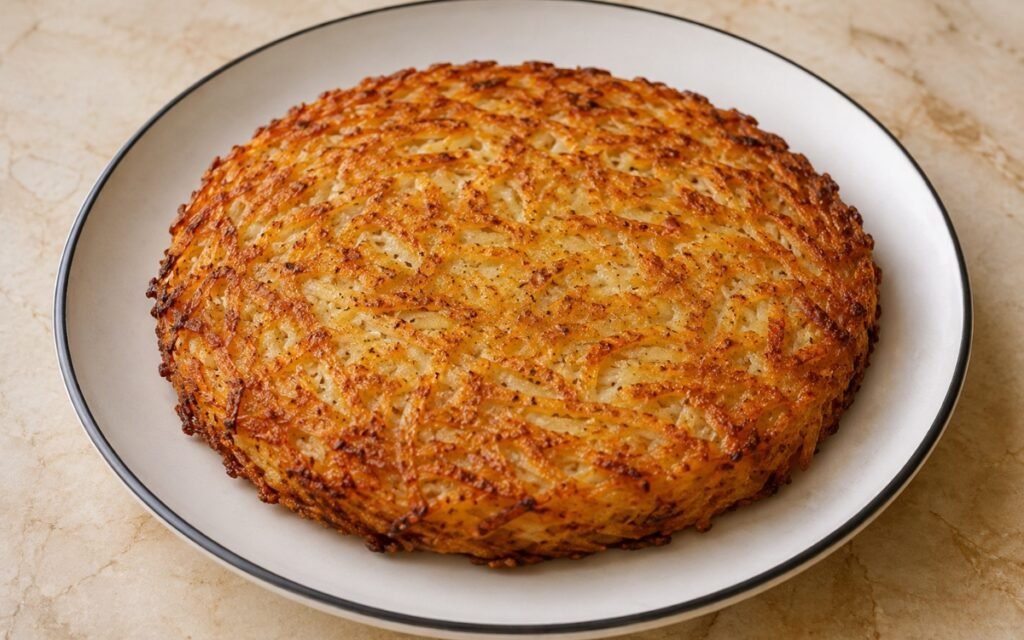
Crispy Hash Brown Potatoes
Shredded potatoes rinsed, wrung completely dry, seasoned, pressed into a cake, fried undisturbed until golden on both sides. Crisp and tender.
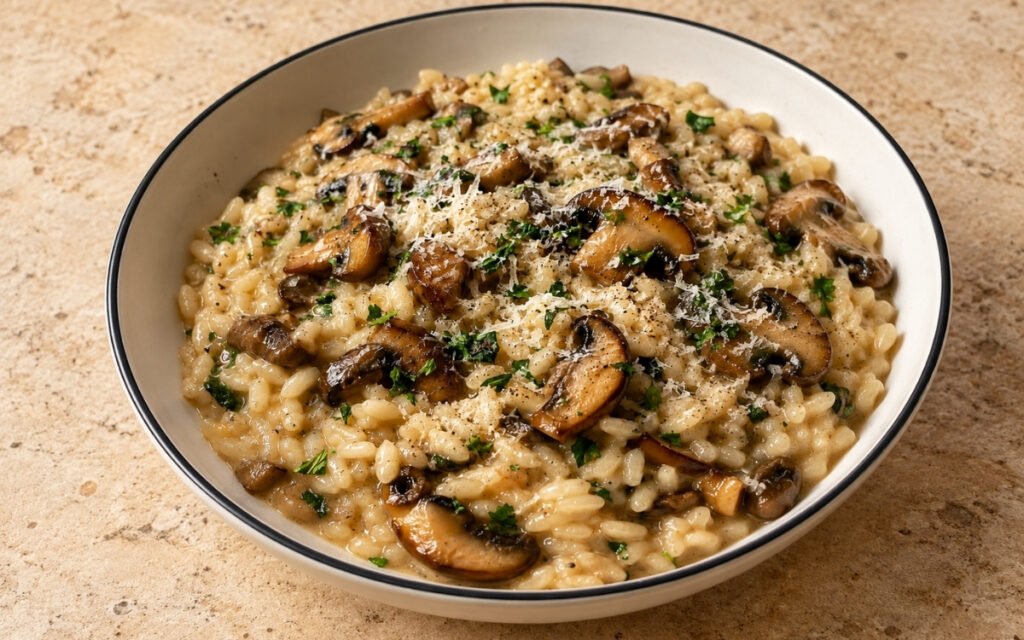
Mushroom Risotto
Creamy Arborio or Carnaroli rice with browned meaty mushrooms, white wine, shallot, and Parmesan, finished loose and silky.
Huevos Motuleños
Crisp corn tortillas layered with black beans and fried eggs, topped with light tomato sauce, ham, peas, and sweet fried plantain.

You might also like
You might also like
Tomato Basil Virgin Mary Mocktail
Ripe tomatoes blended with celery, fresh basil, lemon, and seasoning — gently strained, chilled, served over ice with celery and cracked black pepper.
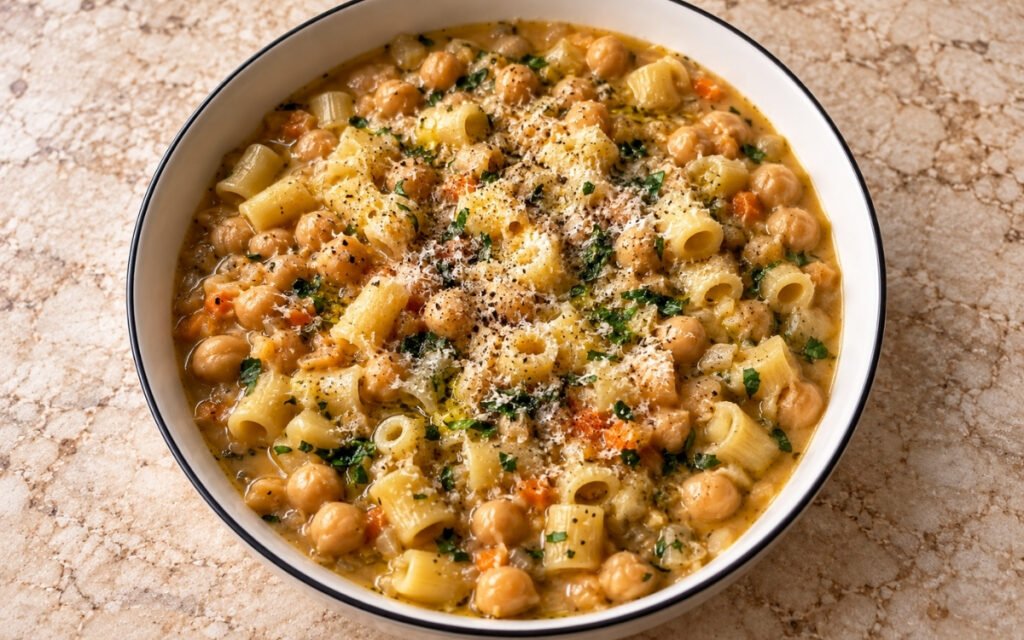
Pasta e Ceci
Small pasta and chickpeas in a thick, creamy brothy base with soffritto, garlic, and rosemary. Rustic Italian comfort food.
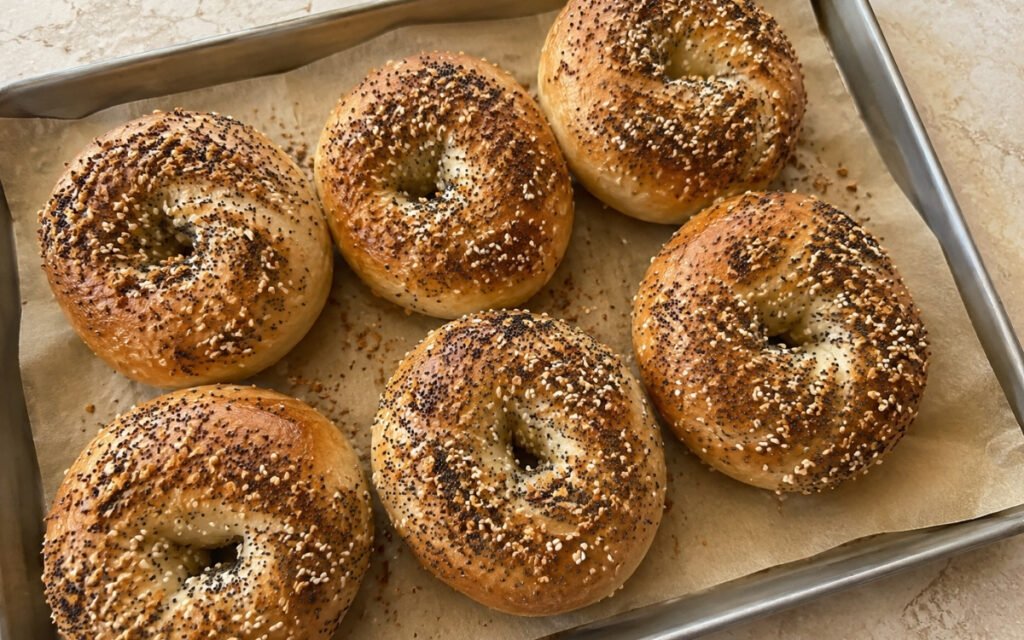
Everything Bagels
Barley malt dough, overnight cold proof, boiling bath, and everything seasoning — authentic chewy bagels that make every other version seem like an approximation.

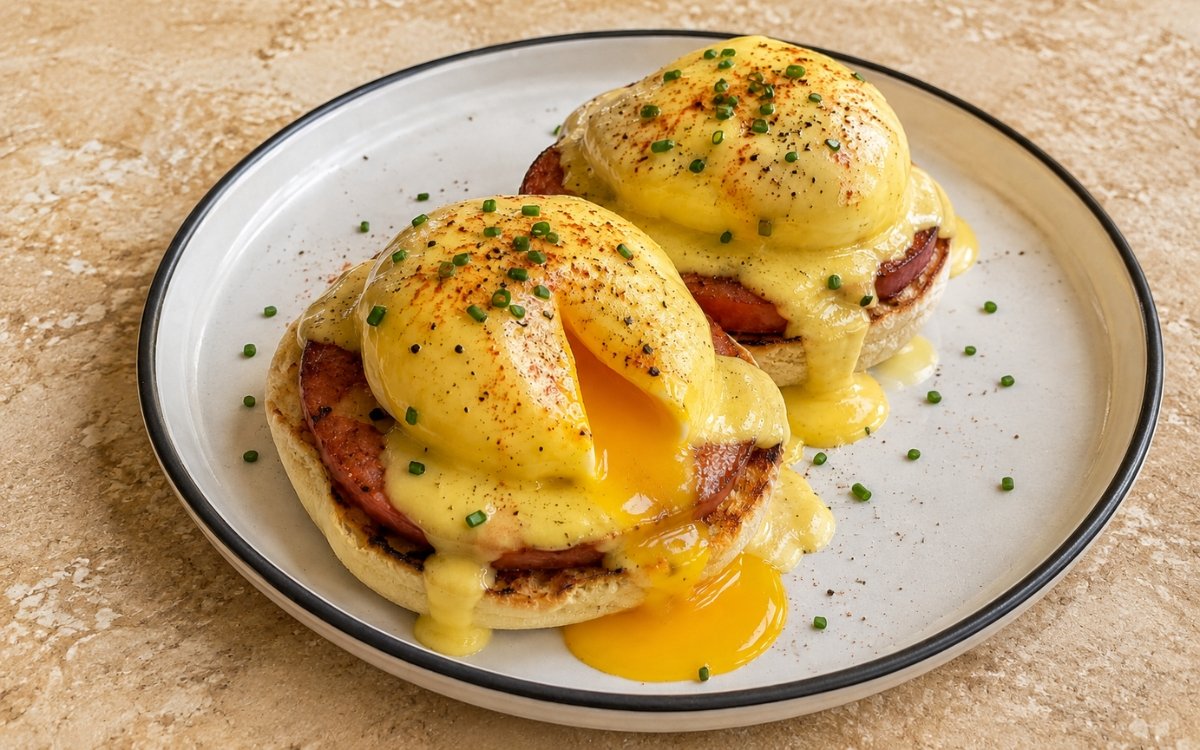
Eggs Benedict
Ingredients
Method
- Split the English muffins and set them aside. Place the Canadian bacon or ham slices on a plate or tray so they are ready to warm through later. Eggs Benedict moves quickly once the eggs and hollandaise are ready, so having the base components prepped first makes assembly much easier. That upfront prep matters directly because hollandaise and poached eggs both have genuinely narrow windows of readiness — scrambling to prep the base components at the same time risks letting either the sauce or the eggs drift past their ideal moment.
- Melt the butter gently in a small saucepan over low heat until fully melted and hot, but not browned. Keep it warm. The butter should be hot enough to help emulsify the yolks, but not browned or aggressively bubbling. Genuinely hot butter is what allows the emulsion to form properly as it’s whisked into the yolks — butter that’s only lukewarm wouldn’t provide enough heat to help cook and thicken the yolks during that process.
- In a heatproof bowl, whisk together the egg yolks, water, and lemon juice. Set the bowl over a saucepan of barely simmering water, making sure the bottom of the bowl does not touch the water. Whisk constantly for about 1 to 2 minutes, until the yolks look slightly thickened and creamy. Keeping the bowl above, rather than touching, the simmering water protects the yolks from direct, aggressive heat — that gentle, indirect warmth is what allows them to thicken gradually into a stable base rather than scrambling.
- While whisking constantly, slowly drizzle in the warm melted butter, starting drop by drop, then in a thin steady stream once the sauce begins to thicken. Continue whisking until the hollandaise is glossy, thick, and smooth. Season with the salt, black pepper, and a pinch of cayenne or paprika if using. If needed, add a few drops of lemon juice to brighten it. The finished hollandaise should ribbon off the whisk and hold softly on itself. It should be thick and glossy, not stiff or greasy. That initial drop-by-drop addition is what lets the yolks’ emulsifying capacity keep pace with the incoming fat — once enough butter has been successfully incorporated to establish a stable emulsion, the mixture can accept butter considerably faster without breaking.
- Take the hollandaise off the heat and keep it in a warm spot while you finish the rest. If it thickens too much, whisk in 1 tsp warm water at a time until it loosens slightly. Never hold hollandaise over strong heat or it may split or scramble. Warm is good, hot is not. Egg-yolk-based emulsions are genuinely fragile against sustained high heat, and this warm-not-hot holding principle is what protects the sauce’s smooth texture right up until it’s spooned over the finished plate.
- Toast the English muffin halves until lightly golden. If you like, brush or spread lightly with a little butter. In a skillet over medium heat, warm the Canadian bacon or ham for about 1 to 2 minutes per side, just until heated through and lightly browned at the edges. Keep warm. Warming the ham only briefly, rather than fully cooking it further, respects that it’s typically already cured or cooked — this stage exists purely to bring it to serving temperature and add a little browned edge, not to cook it from raw.
- Bring a wide saucepan of water to a gentle simmer, not a full boil. Add the vinegar. Crack each egg into a small cup or ramekin first. Create a gentle swirl in the water, then lower the eggs in one at a time. Poach for about 3 to 4 minutes, until the whites are set but the yolks are still soft and runny. Lift the eggs out with a slotted spoon and let them drain briefly on a paper towel. The water should stay at a gentle simmer only. Boiling water makes ragged whites and can break the eggs apart. A hard boil agitates the water enough to physically tear apart the delicate egg white as it sets, producing the ragged, wispy strands a gentle simmer specifically avoids.
- Place the toasted English muffin halves cut side up on plates. Top each half with one slice of Canadian bacon or ham. Place one poached egg on each. Spoon a generous layer of hollandaise over the top, letting it flow down the sides slightly. Assembling in this specific order — crisp muffin, warm ham, egg, then hollandaise — keeps the crispest component at the base, protecting it from sitting directly under the sauce any longer than necessary.
- Scatter over the chopped chives. Finish with black pepper and a light pinch of paprika. Serve immediately. Eggs Benedict should be served right away while the muffin is still crisp, the egg is warm and runny, and the hollandaise is glossy and flowing. This dish’s entire appeal depends on catching every component at its individual best moment simultaneously — any real delay lets the muffin soften, the egg cool, or the hollandaise begin to set.