
Cherry Limeade Pitcher Drink
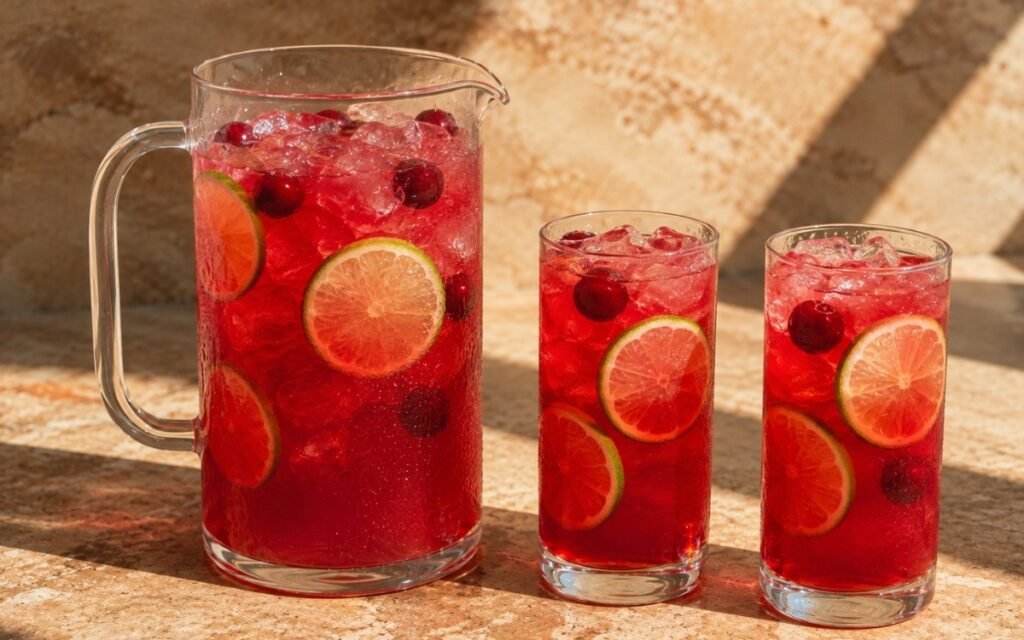
A vivid red cherry limeade made by macerating pitted cherries with lime zest and a little sugar or honey, then straining and finishing with cold water, lime juice, and a second infusion of whole cherries and lime slices. Macerating the cherries with lime zest and sugar before any liquid is added is the technique this whole drink depends on for real, concentrated cherry-lime flavour — that maceration draws the fruit’s own juice out through osmosis while the sugar simultaneously pulls aromatic oils from the zest, the same combined-maceration principle used elsewhere in this collection whenever a fruit and a citrus zest need to build flavour together before dilution. A second layer of lightly popped whole cherries and sliced lime, added only after the base is built, is what gives this drink a genuinely fresh second infusion of flavour rather than relying on the first extraction alone. Using only the lime’s green zest, avoiding any white pith, is what keeps this drink’s citrus edge clean rather than bitter. The payoff is a limeade that’s genuinely vivid red, bright, and layered — concentrated cherry-lime base meeting a fresh second infusion of whole fruit.
Prep Time : 25 min
Chill Time : 1-2 hr
Servings : 16
25 min
1-2 hr
16
Ingredients
For the Cherry-Lime Base
• 900g fresh sweet cherries, washed, stemmed, and pitted, divided
• 4 limes, very well washed
• 100–130g sugar or 80–100g mild honey — this one on Amazon
• 300ml freshly squeezed lime juice
• 3.2 to 3.4 liters very cold water, plus more as needed to reach 4 liters total
For the Second Infusion
• 2–3 limes, sliced into thin wheels or half-wheels
• 250–300g ice cubes for the pitcher, plus more for serving
• 300g of the pitted cherries from above, lightly pressed open with your fingers
This post may contain affiliate links. As an Amazon Associate I earn from qualifying purchases, at no additional cost to you.
Directions
- Zest and Macerate
Finely zest the 4 limes, using only the green outer part and avoiding the bitter white pith. Place 600g of the pitted cherries in a large bowl. Add the lime zest and the sugar or honey. Mash and muddle thoroughly until the cherries release plenty of juice and the sugar begins dissolving. Let sit for 20–30 minutes so the sugar draws out the cherry juices and the lime zest oils. Combining the sugar, cherries, and lime zest together in one maceration, rather than treating them separately, lets a single osmotic process do double duty — the same sugar pulling juice from the cherries is simultaneously pulling aromatic oil from the zest, building both flavours into one concentrated mixture at once. - Strain the Cherry Base
Transfer the macerated cherry mixture to a fine-mesh strainer set over a large bowl or pitcher. Press firmly to extract as much juice as possible. Discard the solids. You should have a concentrated cherry-lime base. Pressing firmly at this stage, rather than gently, is the right call specifically because this base has already had its aromatics fully developed through maceration — unlike a delicate herb infusion, there’s no risk of forcing out unwanted bitterness from macerated cherry pulp the way there would be with something like mint or lavender. - Build the Limeade
Add the fresh lime juice to the strained cherry base. Pour into a large pitcher. Add 3.2 liters of very cold water and stir well. Taste. Add a little more water if needed, aiming for a bright, tart-sweet balance. You want about 4 liters total once everything is in. This tasting checkpoint matters directly given how much cherry sweetness and lime tartness can both vary batch to batch — building in that adjustment stage accounts for that natural variability rather than assuming a fixed recipe always lands at the same balance. - Second Infusion
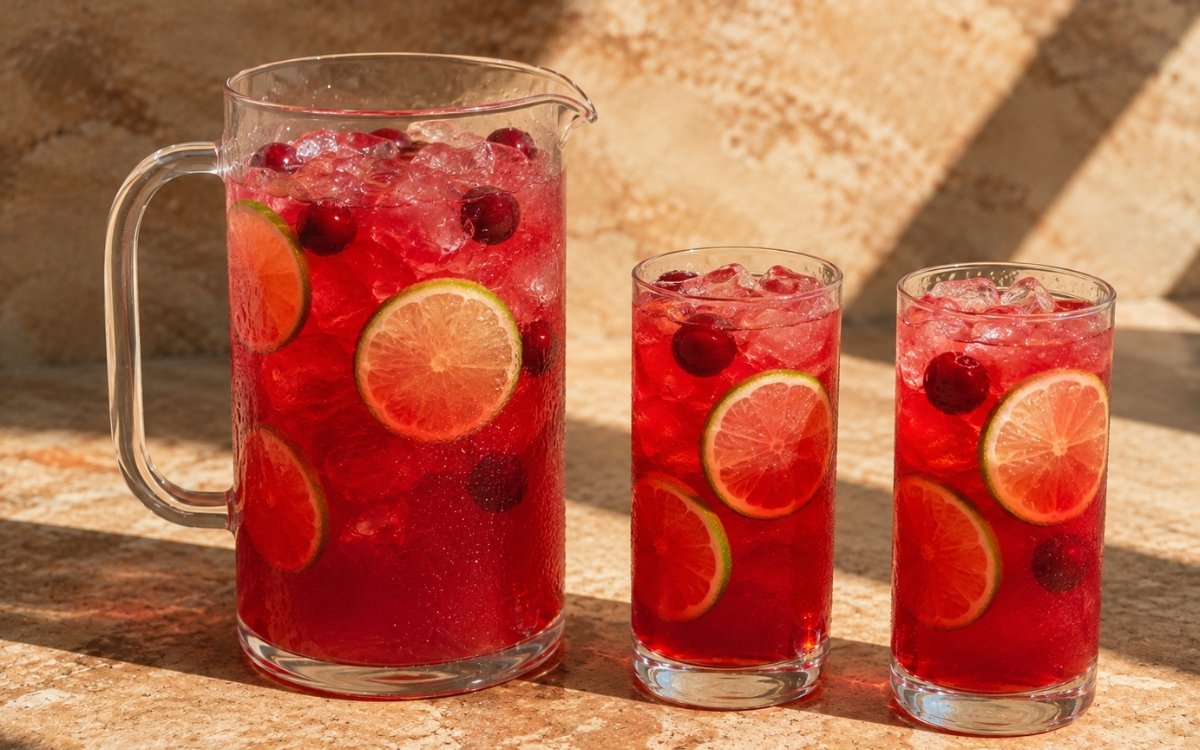
Add the remaining 300g pitted cherries, lightly popped open with your fingers, to the pitcher. Add the sliced lime wheels or half-wheels. Refrigerate for 1 to 2 hours so the drink picks up a fresh second layer of cherry and lime flavor. Lightly popping this second batch open, rather than leaving the cherries whole or crushing them hard, is what releases just enough fresh juice to layer new flavour into the already-built base without clouding the pitcher with excess pulp. - Add Ice and Serve
Just before serving, add ice to the pitcher and stir gently. Serve in ice-filled glasses with some cherries and lime slices in each glass. Adding the ice only at this final stage, rather than earlier during the infusion, protects the drink from being diluted before it’s had its full chilling and second-infusion time to develop properly.
*Notes :
- Macerating the cherries together with lime zest and sugar, rather than handling each component separately, deserves recognition as the technique responsible for this drink’s real, concentrated flavour foundation. That combined maceration lets one process — sugar’s osmotic draw — work on two ingredients simultaneously, pulling juice from the cherries and aromatic oil from the zest together, producing a base with real depth before any dilution ever begins.
- The two-stage cherry approach — one portion fully macerated and strained into a concentrated base, a second portion only lightly popped and added later as whole fruit — deserves genuine attention as a deliberate structural choice. That first portion builds the drink’s actual flavour foundation; the second, added only once the base is already built, contributes a fresh, distinct layer of flavour and visual appeal that a single-stage approach wouldn’t provide.
- The instruction to press firmly when straining the macerated cherry base, in contrast to the gentler pressing this collection typically recommends for delicate herbs, reflects real understanding of the ingredients involved. Cherries, unlike mint or lavender, don’t carry the same risk of releasing unwanted bitterness under firmer pressure — that distinction is worth noting specifically because it runs counter to the gentler default this collection applies elsewhere.
- The strict avoidance of white pith throughout zesting deserves the same careful attention it receives across every citrus-forward drink in this collection. Lime pith carries a real, distinct bitterness entirely separate from the fruit’s natural tartness — even a small amount worked accidentally into the zest can introduce a flavour that works directly against this drink’s bright, clean cherry-lime balance.
Why This Recipe Works
This recipe works because the cherries are macerated together with lime zest and sugar, letting one osmotic process build concentrated flavour from both ingredients at once. Straining that base with a firm press is appropriate here, unlike more delicate herb infusions, since cherries don’t carry the same risk of released bitterness.
A second batch of lightly popped whole cherries and sliced lime, added only after the base is built, layers in fresh flavour and visual appeal distinct from the first extraction. A final tasting checkpoint accounts for real variability in cherry sweetness and lime tartness, bringing every layer together into one vivid, balanced limeade.
Ingredient Breakdown
Macerated Cherries With Lime Zest and Sugar
The concentrated flavour foundation — one combined maceration draws real juice and aromatic zest oils together.
Firmly Strained Cherry-Lime Base
The critical technique — pressed firmly, appropriate here since cherries don’t carry the bitterness risk delicate herbs would.
Green Lime Zest (No Pith)
The aromatic addition — carefully separated from the bitter white pith, protecting the drink’s overall clean balance.
Second-Infusion Whole Cherries and Lime Slices
The layering technique — added only after the base is built, contributing fresh flavour distinct from the first extraction.
Late-Added Ice
The finishing structure — added only at the very final stage, protecting the drink from premature dilution during infusion.
Flavor Structure Explained
This cherry limeade pitcher drink follows a layered balance model:
- Concentrated fruity foundation (macerated, strained cherry-lime base)
- Bright citrus depth (lime zest, fresh lime juice)
- Sweet balancing base (sugar or honey)
- Fresh second layer (lightly popped whole cherries, sliced lime)
- Cool refreshing structure (cold water, ice)
The macerated, strained cherry-lime base provides this drink’s concentrated, foundational flavour, built from cherry juice and lime zest oils drawn out together. Fresh lime juice adds further bright citrus depth. Sugar or honey balances the whole drink’s tartness. A second infusion of lightly popped cherries and sliced lime layers in fresh, distinct flavour beyond the initial extraction. Cold water and ice tie every layer together into one vivid, refreshing, genuinely balanced limeade.
Common Mistakes to Avoid
- Muddling or Pressing Cherries With Pits Still In – This is a genuine safety risk. Always pit all cherries carefully before using.
- Zesting Too Deep Into the White Pith – This introduces bitterness that works against the drink’s bright balance. Always take only the green outer layer.
- Crushing the Second Batch of Cherries Too Hard – This clouds the pitcher and turns it pulpy. Always lightly pop them open instead.
- Using a Very Dark or Strongly Flavoured Honey – This can dominate the drink if substituted for sugar. Always use a mild, floral honey if going that route.
- Holding the Drink Too Long Without Removing the Lime – This introduces bitterness from the peel and pith over extended time. Always remove lime slices once the flavour is where you want it if holding longer.
Variations
Honey-Sweetened Version
Substitute mild honey for sugar in the maceration, per the recipe’s own guidance.
Extra-Tart Version
Add a splash more fresh lime juice at the tasting stage for a sharper finished drink.
Sparkling Version
Top each glass with a splash of chilled soda water just before serving for light effervescence.
Frozen Cherry Version
Substitute thawed frozen cherries for fresh, following the identical maceration method.
Storage & Make-Ahead
For the freshest taste, chill and serve the same day.
If holding the pitcher longer than a few hours, remove the lime slices once the flavor is where you want it, so the drink stays bright and not bitter.
The macerated, strained cherry-lime base can be made a few hours ahead and refrigerated separately before combining with water and the second infusion.
Frequently Asked Questions
Why are the cherries macerated together with lime zest and sugar instead of handled separately?
Combining them lets a single osmotic process work on both ingredients at once — sugar draws real juice from the cherries and aromatic oil from the zest simultaneously, building a base with genuine depth before any dilution begins.
Why is the macerated cherry base pressed firmly during straining rather than gently?
Unlike delicate herbs such as mint or lavender, cherries don’t carry the same risk of releasing bitterness under firmer pressure. Pressing firmly here simply extracts maximum juice from an already fully macerated mixture.
Why does this recipe add a second batch of cherries and lime after the base is already built?
That second infusion layers in fresh, distinct cherry and lime flavour beyond what the first concentrated extraction alone provides, giving the finished drink real depth and ongoing visual appeal.
Why is it so important to avoid the white pith when zesting the limes?
Lime pith carries real, distinct bitterness separate from the fruit’s natural tartness. Even a small amount worked into the zest can work directly against this drink’s bright, clean cherry-lime balance.
Are there other cherry, lime, or bright fruit-forward pitcher drinks worth trying?
Cherry Lemonade and Cherry Lime Rickey Mocktail both offer other cherry-forward drinks worth exploring. Raspberry Basil Limeade is also worth trying for a different bright, herbal-fruit limeade, and Kiwi Lime Infused Water offers a lighter, non-macerated citrus-fruit direction worth exploring.
Nutrition Facts
( per serving )
Calories
~70 kcal
Protein
0 g
Fat
0 g
Carbs
17 g
Calories
~70 kcal
Protein
0 g
Fat
0 g
Carbs
17 g
Related Recipes
Related Recipes

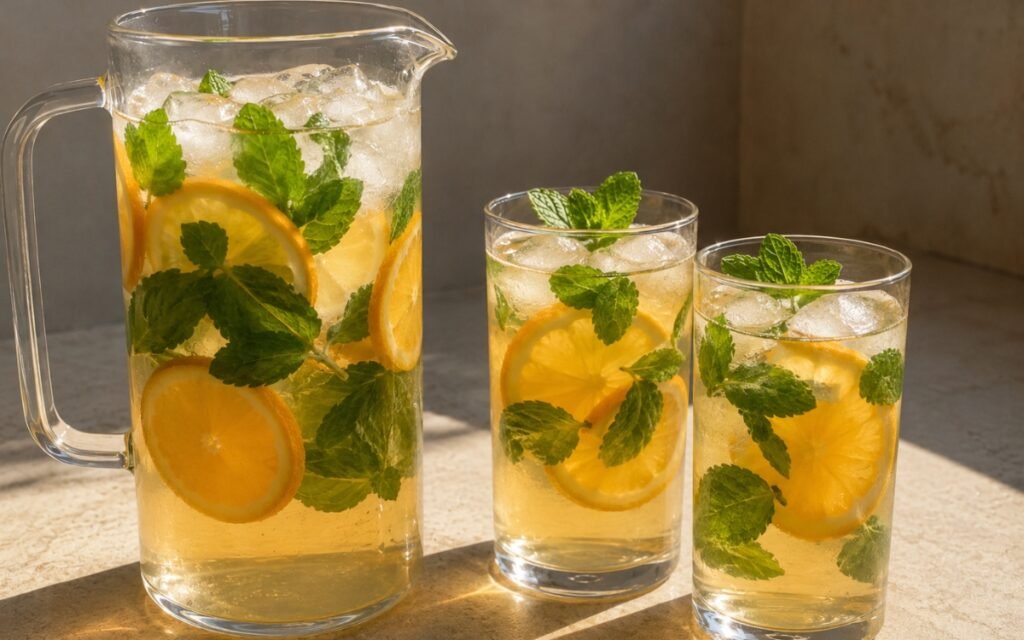
Orange Mint Infused Water
Orange pulp mashed, mint clapped in two stages — orange slices and fresh leaves cold-infused in 3L water for 1–4 hours, removed. Warm citrus and cool mint.
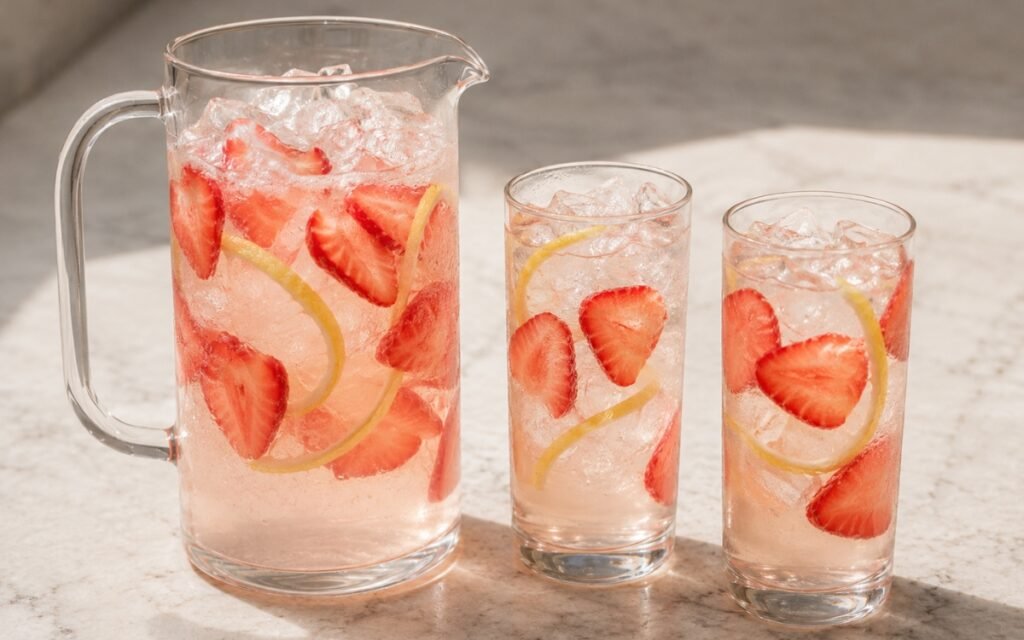
White Tea Strawberry Pitcher
White tea at 70–75°C for 3–4 minutes, strawberries gently infused 8–10 minutes — fully strained, cold water only (no juice), chilled. Pale, delicate, and refined.
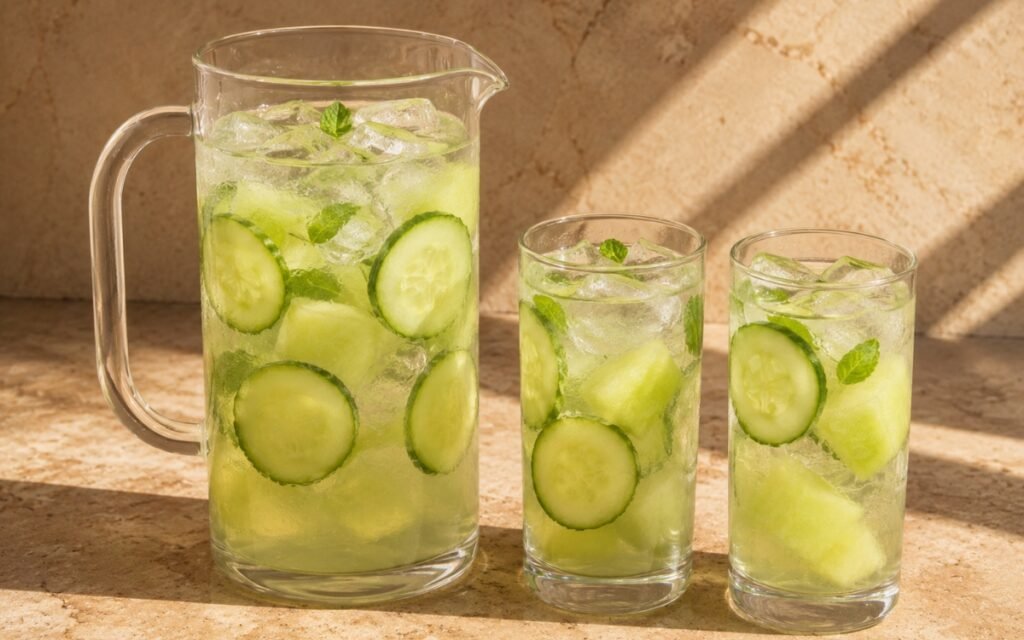
Cucumber Melon Infused Water
Unpeeled cucumber slices, ripe firm honeydew chunks, and lightly clapped mint infused cold for a clean, pale green-tinted spa-style water.
You might also like
You might also like
Pomegranate Ginger Sparkler Mocktail
Deep ruby pomegranate and rounded ginger warmth with lime over club soda — tart and dramatic.
Green Tea Lemonade
Sencha at 75–80°C for exactly 2–2½ minutes, bags not squeezed — honey-lemon syrup, fresh lemon, cold water, salt, chilled. Crisp, cool, and herbal-fresh.
Cherry Lime Rickey Mocktail
Dark cherries with lime juice and white verjus over club soda — sharp, fruity, and classic.
Cherry Limeade Pitcher Drink
Ingredients
Method
- Finely zest the 4 limes, using only the green outer part and avoiding the bitter white pith. Place 600g of the pitted cherries in a large bowl. Add the lime zest and the sugar or honey. Mash and muddle thoroughly until the cherries release plenty of juice and the sugar begins dissolving. Let sit for 20–30 minutes so the sugar draws out the cherry juices and the lime zest oils. Combining the sugar, cherries, and lime zest together in one maceration, rather than treating them separately, lets a single osmotic process do double duty — the same sugar pulling juice from the cherries is simultaneously pulling aromatic oil from the zest, building both flavours into one concentrated mixture at once.
- Transfer the macerated cherry mixture to a fine-mesh strainer set over a large bowl or pitcher. Press firmly to extract as much juice as possible. Discard the solids. You should have a concentrated cherry-lime base. Pressing firmly at this stage, rather than gently, is the right call specifically because this base has already had its aromatics fully developed through maceration — unlike a delicate herb infusion, there’s no risk of forcing out unwanted bitterness from macerated cherry pulp the way there would be with something like mint or lavender.
- Add the fresh lime juice to the strained cherry base. Pour into a large pitcher. Add 3.2 liters of very cold water and stir well. Taste. Add a little more water if needed, aiming for a bright, tart-sweet balance. You want about 4 liters total once everything is in. This tasting checkpoint matters directly given how much cherry sweetness and lime tartness can both vary batch to batch — building in that adjustment stage accounts for that natural variability rather than assuming a fixed recipe always lands at the same balance.
- Add the remaining 300g pitted cherries, lightly popped open with your fingers, to the pitcher. Add the sliced lime wheels or half-wheels. Refrigerate for 1 to 2 hours so the drink picks up a fresh second layer of cherry and lime flavor. Lightly popping this second batch open, rather than leaving the cherries whole or crushing them hard, is what releases just enough fresh juice to layer new flavour into the already-built base without clouding the pitcher with excess pulp.
- Just before serving, add ice to the pitcher and stir gently. Serve in ice-filled glasses with some cherries and lime slices in each glass. Adding the ice only at this final stage, rather than earlier during the infusion, protects the drink from being diluted before it’s had its full chilling and second-infusion time to develop properly.