
Kiwi Lime Infused Water
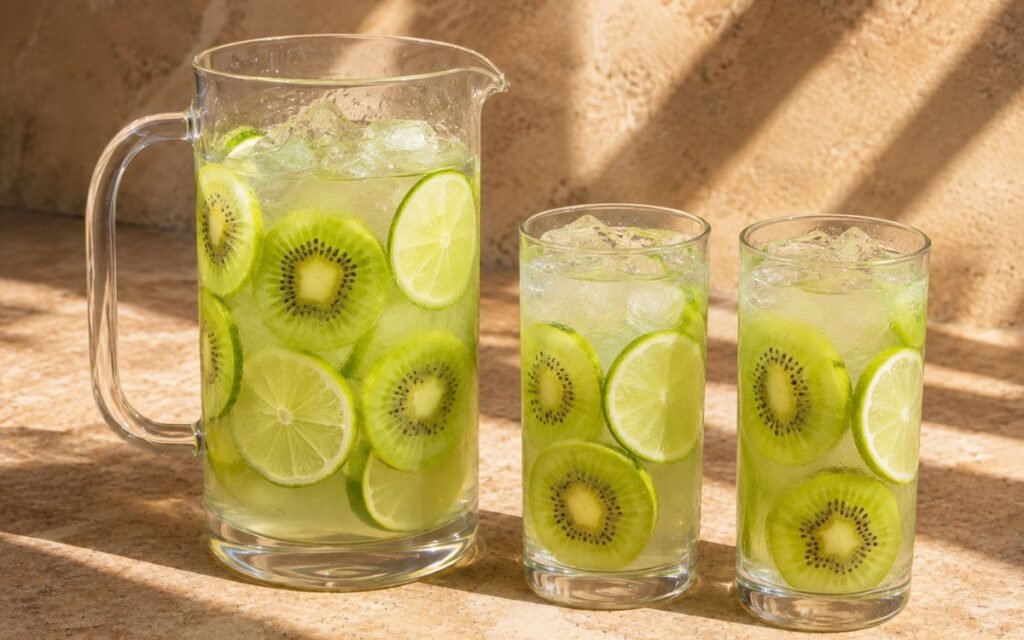
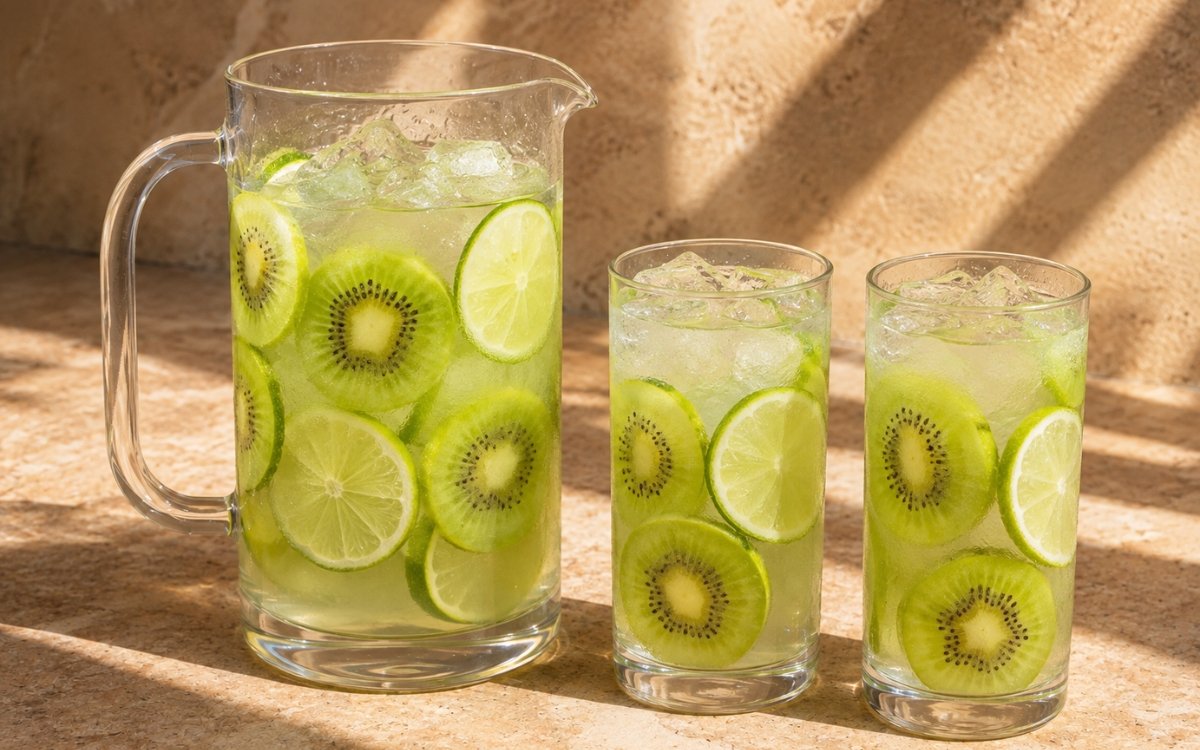
A very clean infused water with thin peeled kiwi slices and fresh lime wedges. Light, bright, almost clear, and best infused cold so the kiwi stays fresh and the lime stays sharp without turning bitter. Slicing the kiwi to a genuine 3mm thickness from ripe but still firm fruit is the technique this whole infusion depends on for staying clean rather than cloudy — softer kiwi breaks down quickly during the extended infusion window, clouding the water in a way firm fruit resists, the same firm-fruit-for-slow-infusion principle used elsewhere in this collection whenever a delicate fruit needs to hold its shape and release flavour gradually. Slicing the lime without squeezing it into the water is what keeps this a clean citrus infusion rather than sharp lime juice water. Tasting the water after the first hour, and removing the lime if it’s developed enough flavour, is what protects the water from the bitterness lime peel and pith can introduce over time. The payoff is a water that’s genuinely light, bright, and almost clear — fresh kiwi and gently infused lime, clean and refreshing.
Prep Time : 15 min
Infusion Time : 1-3 hr
Servings : 16
15 min
1-3 hr
16
Ingredients
For the Infused Water
• 4 liters cold filtered water
• 5 ripe but firm kiwis, peeled and sliced thinly
• 3 limes, well washed and sliced into thin wedges or half-wheels
• 00g ice cubes, optional for the pitcher
For Serving
• Extra ice cubes
• Extra thin peeled kiwi slices
• Extra thin lime wedges or wheels
This post may contain affiliate links. As an Amazon Associate I earn from qualifying purchases, at no additional cost to you.
Directions
- Prepare the Kiwi
Peel the kiwis and slice them into thin rounds, about 3mm thick. Use ripe but still firm kiwis. Very soft kiwi breaks down quickly and makes the water cloudy. Firm flesh holds its own structure through the infusion window, releasing flavour and colour gradually into the water rather than collapsing early and clouding it with soft, broken-down fruit particles. - Prepare the Lime
Wash the limes very well. Slice them into thin wedges or half-wheels. Do not squeeze the limes hard into the water. The goal is a clean citrus infusion, not sharp lime juice water. Slicing rather than juicing lets the lime’s aromatic peel oils and gentle flesh flavour steep gradually into the water, producing a lighter, more rounded citrus note than the sharper, more concentrated acidity actively squeezed juice would introduce. - Build the Pitcher
Add the kiwi slices and lime pieces to a large pitcher or drink dispenser. Pour in the cold filtered water. Add ice if serving soon. Starting with genuinely cold filtered water, rather than room-temperature water, gives the infusion a cold head start that helps protect both the kiwi and lime from breaking down any faster than the recipe intends. - Infuse Cold
Refrigerate for 1 to 3 hours. Taste after 1 hour. The water should be lightly fruity, gently tart, and clean. If the lime flavor is strong enough, remove some or all of the lime pieces. Tasting at that one-hour mark, rather than committing to a fixed infusion time blindly, is what lets the lime’s own developing intensity be judged directly — lime peel and pith continue releasing flavour the longer they steep, and that active check is the most reliable way to catch the point where the citrus is bright rather than heading toward bitter. - Serve
Fill glasses with fresh ice. Add a few kiwi slices and a thin lime wedge or wheel to each glass. Pour over the chilled infused water and serve cold. Using fresh, unsteeped kiwi and lime specifically for the glass garnish, rather than the pieces that have already infused for hours, keeps that visual presentation looking genuinely vivid and crisp rather than dulled from the extended soak.
*Notes :
- Choosing ripe but still firm kiwi, rather than fruit that’s softened past its ideal point, deserves recognition as the detail most directly responsible for whether this water stays clean and clear or turns cloudy partway through infusion. Kiwi’s own cell structure is genuinely delicate, and overly soft fruit begins breaking down almost immediately once sliced — firmer flesh, by contrast, holds its shape considerably longer, releasing flavour gradually rather than collapsing and clouding the water with fine fruit particles.
- Slicing the lime rather than squeezing it into the water reflects a real, deliberate choice about this infusion’s intended character. Squeezed juice delivers a concentrated, sharp hit of acidity all at once; sliced lime pieces instead release their flavour slowly and gently over the infusion period, producing a lighter, more rounded citrus presence that suits this water’s overall clean, understated identity far better than actively juiced lime would.
- Tasting the water specifically after the first hour, rather than trusting a single fixed infusion time, deserves genuine respect given how directly lime’s own peel and pith continue developing flavour the longer they’re left in water. That active tasting checkpoint is what lets the lime be pulled at precisely the point where its brightness is at its best, before extended contact pushes it toward the bitterness citrus pith is prone to releasing over time.
- The recipe’s own explicit guidance against muddling the fruit deserves to be treated as a genuine technique principle rather than a minor aside. Muddling would rupture both the kiwi and lime far more aggressively than simple slicing does, releasing pulp and cloudy particulate matter into the water that works directly against this infusion’s whole clean, nearly clear identity.
Why This Recipe Works
This recipe works because the kiwi is sliced to a specific thickness from genuinely ripe but firm fruit, holding its shape and releasing flavour gradually rather than clouding the water. The lime is sliced rather than squeezed, producing a gentler, more rounded citrus infusion instead of sharp juice water.
Tasting the water after the first hour lets the lime be removed at exactly the right moment, before its peel and pith develop any bitterness. Building the pitcher with cold water from the start protects both fruits from breaking down faster than intended, and fresh garnishes at serving keep the presentation genuinely vivid.
Ingredient Breakdown
Ripe but Firm, Thinly Sliced Kiwi
The fresh fruit foundation — firm flesh holds its shape through infusion, releasing flavour gradually rather than clouding the water.
Sliced (Not Squeezed) Lime
The gentle citrus element — slow release from sliced pieces produces a lighter, more rounded infusion than juiced lime would.
One-Hour Tasting Checkpoint
The critical technique — lets the lime’s developing intensity be judged directly, catching the point before bitterness develops.
Cold Filtered Water (From the Start)
The temperature protection — gives the infusion a cold head start that slows both fruits’ natural breakdown.
No Muddling
The overarching technique — keeps the water genuinely clean and nearly clear rather than cloudy with pulp.
Flavor Structure Explained
This kiwi lime infused water follows a layered balance model:
- Light fruity foundation (ripe, firm, thinly sliced kiwi)
- Gentle tart citrus (sliced, unsqueezed lime)
- Cool refreshing structure (cold water, ice)
Ripe, firm kiwi provides this water’s light, genuinely fruity foundation, its flavour released gradually rather than clouding the water. Sliced lime contributes gentle, rounded tartness, distinct from the sharper hit actively squeezed juice would deliver. Cold water and ice tie both fruits together into one clean, refreshing, nearly clear infusion.
Common Mistakes to Avoid
- Using Overly Soft Kiwi – This breaks down quickly and clouds the water. Always use ripe but still firm fruit.
- Squeezing the Lime Into the Water – This produces sharp lime juice water rather than a clean citrus infusion. Always slice the lime instead.
- Skipping the One-Hour Taste Check – This risks the lime developing bitterness the longer it sits. Always taste at that mark and remove the lime if needed.
- Muddling the Fruit – This clouds the water and introduces pulp. Always simply slice, never muddle.
- Storing the Lime In the Water Too Long – This introduces bitterness from the peel and pith. Always remove it after 2 to 3 hours if storing longer.
Variations
Extra-Kiwi Version
Increase the kiwi slightly for a more pronounced fruity flavour throughout.
Milder Citrus Version
emove the lime earlier than 1 hour if a very light citrus touch is preferred.
Mint-Added Version
Add a few lightly clapped mint leaves alongside the kiwi and lime for extra herbal freshness.
Extended Infusion Version
Follow the recipe’s own guidance on removing the lime at 2 to 3 hours if a longer infusion is needed.
Storage & Make-Ahead
Kiwi softens faster than cucumber or citrus, so this infused water is best made the same day.
Remove the lime after 2 to 3 hours if storing longer, since it can turn bitter from the peel and white pith.
Keep refrigerated and use within 24 hours for the freshest and safest result.
Frequently Asked Questions
Why does the kiwi need to be ripe but still firm rather than fully soft?
Very soft kiwi breaks down quickly once sliced, clouding the water with fine fruit particles. Firmer flesh holds its shape considerably longer, releasing flavour gradually rather than collapsing early.
Why is the lime sliced into the water rather than squeezed?
Squeezed juice delivers a concentrated, sharp burst of acidity all at once. Sliced lime pieces instead release their flavour slowly and gently, producing a lighter, more rounded citrus presence that suits this water’s clean identity.
Why does the water need to be tasted specifically after 1 hour?
Lime’s peel and pith continue developing flavour the longer they steep in water. Tasting at that mark is the most reliable way to catch the point where the citrus is bright rather than heading toward bitterness.
Why shouldn’t the fruit be muddled?
Muddling ruptures the kiwi and lime far more aggressively than slicing, releasing pulp and cloudy particulate matter that works directly against this infusion’s clean, nearly clear identity.
Are there other kiwi, lime, or light infused fruit drinks worth trying?
Kiwi Lemonade offers a related, more citrus-forward kiwi direction worth exploring directly. Kiwi Lime Sparkling Mocktail and Strawberry Lime Infused Water are also worth trying for other bright, fruit-forward drinks, and Lime Lemonade (Limenade) offers a different, purely citrus-forward lime drink worth exploring.
Nutrition Facts
( per serving )
Calories
~15 kcal
Protein
0 g
Fat
0 g
Carbs
5 g
Calories
~15 kcal
Protein
0 g
Fat
0 g
Carbs
5 g
Related Recipes
Related Recipes

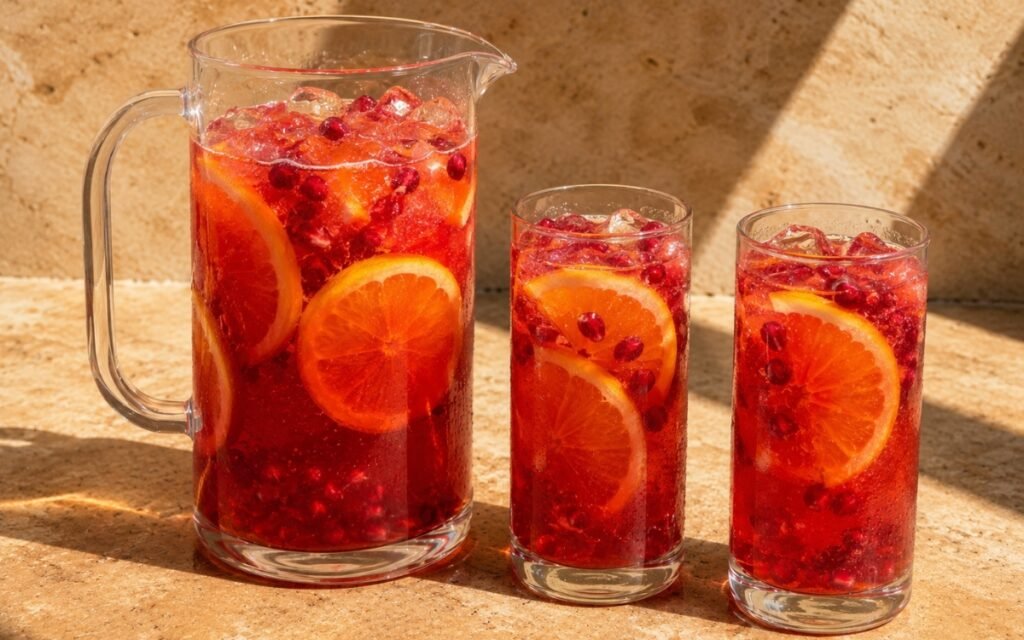
Pomegranate Orange Pitcher Drink
Pomegranate and orange juice combined with lightly bruised pomegranate arils, thin orange wheels, and a last-stage splash of sparkling water.
Green Tea Citrus Pitcher
Green tea at 75–80°C for 2–2½ minutes, dual citrus zest off heat — 500ml orange juice for body, lemon juice, salt, cold water, chilled. Delicate and citrus-bright.
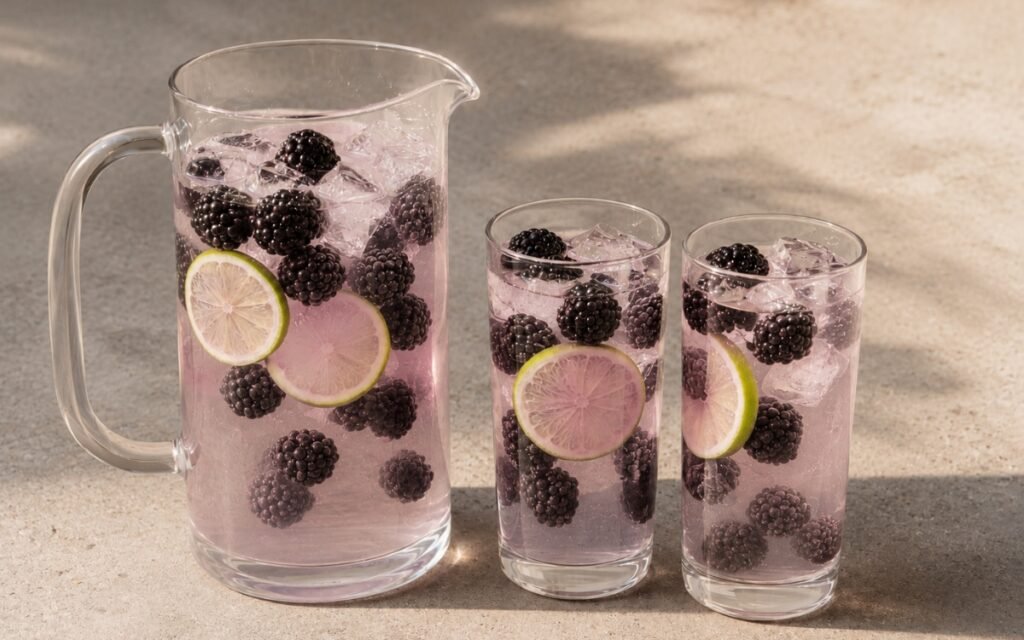
Blackberry Lime Infused Water
Blackberries mashed by cracking the skin without crushing seeds, whole blackberries and lime slices cold-infused in 3L water — removed after 4 hours. Dark purple and quietly complex.
You might also like
You might also like
Brown Sugar Shaken Espresso
Hard-shaken espresso with dissolved brown sugar syrup, poured over ice and topped with cold barista oat milk for a pale caramel gradient.
Iced Flat White
Double ristretto and cold whole milk over ice, finished with a whisper-thin microfoam sheen for a rich, caramel-coloured drink.
Peach Thyme Iced Tea
White tea at 75–80°C, peaches simmered and thyme steeped off heat 8–10 minutes — lemon juice added cold, served still over ice. Peach-forward and herbal.


Kiwi Lime Infused Water
Ingredients
Method
- Peel the kiwis and slice them into thin rounds, about 3mm thick. Use ripe but still firm kiwis. Very soft kiwi breaks down quickly and makes the water cloudy. Firm flesh holds its own structure through the infusion window, releasing flavour and colour gradually into the water rather than collapsing early and clouding it with soft, broken-down fruit particles.
- Wash the limes very well. Slice them into thin wedges or half-wheels. Do not squeeze the limes hard into the water. The goal is a clean citrus infusion, not sharp lime juice water. Slicing rather than juicing lets the lime’s aromatic peel oils and gentle flesh flavour steep gradually into the water, producing a lighter, more rounded citrus note than the sharper, more concentrated acidity actively squeezed juice would introduce.
- Add the kiwi slices and lime pieces to a large pitcher or drink dispenser. Pour in the cold filtered water. Add ice if serving soon. Starting with genuinely cold filtered water, rather than room-temperature water, gives the infusion a cold head start that helps protect both the kiwi and lime from breaking down any faster than the recipe intends.
- Refrigerate for 1 to 3 hours. Taste after 1 hour. The water should be lightly fruity, gently tart, and clean. If the lime flavor is strong enough, remove some or all of the lime pieces. Tasting at that one-hour mark, rather than committing to a fixed infusion time blindly, is what lets the lime’s own developing intensity be judged directly — lime peel and pith continue releasing flavour the longer they steep, and that active check is the most reliable way to catch the point where the citrus is bright rather than heading toward bitter.
- Fill glasses with fresh ice. Add a few kiwi slices and a thin lime wedge or wheel to each glass. Pour over the chilled infused water and serve cold. Using fresh, unsteeped kiwi and lime specifically for the glass garnish, rather than the pieces that have already infused for hours, keeps that visual presentation looking genuinely vivid and crisp rather than dulled from the extended soak.