
Bombay Sandwich
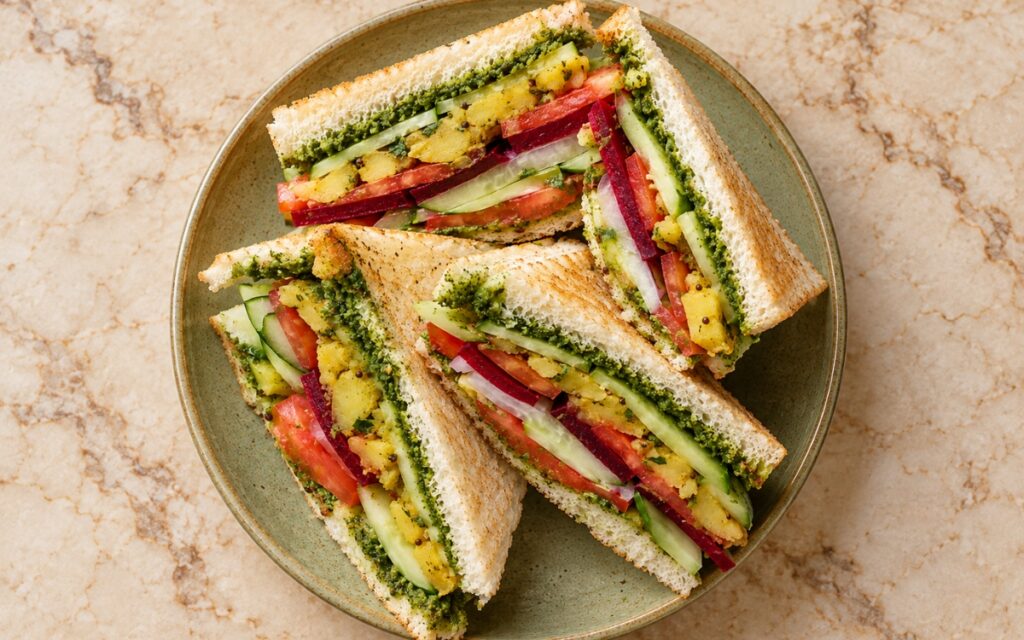
A classic Bombay-style vegetable sandwich — soft white bread spread with butter and thick green chutney, layered with boiled potato, cucumber, tomato, beetroot and red onion, seasoned with a tangy sandwich masala and cut into neat triangles, the key being a sandwich that tastes fresh and clearly layered rather than heavy or soggy. Keeping the chutney thick and every vegetable dry and thinly sliced, rather than blending a loose chutney and stacking wet tomato and cucumber, is the technique this whole sandwich depends on for clean, distinct layers — watery chutney and dripping vegetables soak into soft white bread within minutes and turn it pasty and torn, the same keep-the-moisture-out principle used elsewhere in this collection whenever juicy fresh fillings meet tender bread. A thin layer of softened butter under the chutney is what keeps the crumb soft instead of soaked. Boiling the potato and beetroot only until just tender is what lets them slice cleanly and sit flat. The payoff is a Bombay sandwich with real, street-stall freshness — soft bread, punchy herby chutney, tender potato, cool cucumber, sweet beetroot, crisp onion and a bright, tangy finish.
Prep Time : 25 min
Total Time : 55 min
Servings : 4
25 min
55 min
4
Ingredients
For the Green Chutney
• 50g cilantro leaves and tender stems
• 20g mint leaves
• 2 green chillies, roughly chopped
• 10g ginger, roughly chopped
• 1 small garlic clove, optional
• 1 tbsp lemon juice
• ½ tsp roasted cumin powder
• ½ tsp chaat masala
• ½ tsp sugar
• ½ tsp salt, or to taste
• 2–4 tbsp cold water, only as needed
For the Sandwich Masala
• 1 tsp chaat masala
• ½ tsp roasted cumin powder
• ¼ tsp black salt (kala namak)
• ¼ tsp salt
• ¼ tsp ground black pepper
For the Vegetable Filling
• 450–500g potatoes, about 3 medium, scrubbed
• Salt, for the cooking water
• 180–220g beetroot, about 1 medium, scrubbed
• 1 medium cucumber
• 2 medium tomatoes
• 1 small red onion
• 1–2 tbsp chopped cilantro, optional
• 1–2 tsp lemon juice, optional, for the potatoes
For the Assembly
• 8 slices soft white sandwich bread
• 40–50g butter, softened
Directions
- Boil the Potato and Beetroot
Place the whole, unpeeled potatoes in one pot and the whole beetroot in a separate pot, so the beetroot does not stain the potatoes. Cover both with cold water, add a generous pinch of salt for the cooking water to the potato pot, and bring both to a boil. Simmer the potatoes for 15–18 minutes and the beetroot for 30–40 minutes, depending on size, until a knife slides in easily. The potatoes should be cooked through but still firm enough to slice cleanly, and the beetroot tender but not soft. Drain each, then let them cool until comfortable to handle. That restraint in the pot is what keeps the filling genuinely sliceable, since overcooked potato crumbles into mash and soft beetroot bleeds moisture into the bread. - Make the Green Chutney
While the vegetables cook, place the 50g cilantro, the 20g mint leaves, the 2 green chillies, the 10g ginger, the garlic clove if using, the 1 tbsp lemon juice, the ½ tsp roasted cumin powder, the ½ tsp chaat masala, the ½ tsp sugar and the ½ tsp salt in a small blender jar. Add 2 tbsp of the cold water and blend, scraping down the sides, until smooth. Add the remaining water a spoonful at a time only if the blades cannot move. The chutney should be vivid green, punchy and thick enough to hold a ridge on a spoon, never pourable. Taste and adjust the salt or lemon. That thick consistency is what lets the chutney sit on the bread as a genuine layer of flavour instead of soaking into the crumb. - Slice the Vegetables and Mix the Masala
Peel the cooled potatoes and slice them 3–4mm thick, keeping the slices mostly intact. Peel the cooled beetroot and slice it thinly. Peel the cucumber if the skin is thick, then slice it thinly. Slice the 2 tomatoes thinly and, if they are very juicy, lay the slices on paper towel for a few minutes. Slice the red onion very thinly. Mix the 1 tsp chaat masala, the ½ tsp roasted cumin powder, the ¼ tsp black salt, the ¼ tsp salt and the ¼ tsp black pepper in a small bowl. If you want more seasoned potatoes, toss them gently with a pinch of this masala, the chopped cilantro and the 1–2 tsp lemon juice. That even, thin slicing is what lets the sandwich compress neatly instead of bulging and bursting when it is cut. - Butter and Chutney the Bread
Lay out the 8 slices of soft white sandwich bread on a clean board. Spread a thin, even layer of the softened butter over one side of every slice, right to the edges and corners. Spread a generous but even layer of green chutney over the butter on each slice, again reaching the edges. The butter should form a continuous film with no bare patches, and the chutney should sit on top as a distinct green layer. If the butter is too firm to spread without tearing the bread, soften it a little longer at room temperature. That buttered base is what acts as a moisture barrier, keeping the bread genuinely soft rather than soaked by the chutney and the vegetables above it. - Layer the Sandwiches
Choose 4 of the chutney-coated slices as bases. On each, arrange a layer of potato slices, then sprinkle lightly with sandwich masala. Add a layer of cucumber, then tomato, then beetroot, then onion, overlapping each layer slightly so it covers the bread evenly. Finish each stack with another very light sprinkle of sandwich masala, using the remainder of the blend across all 4 sandwiches. Top with the remaining 4 slices, chutney side down. Press gently but firmly with a flat palm to compact the layers. The finished sandwich should feel level and settled, not domed or sliding. That light, measured seasoning is what keeps the filling genuinely crisp, since excess salt draws water from the cucumber and tomato and wets the bread. - Cut and Serve
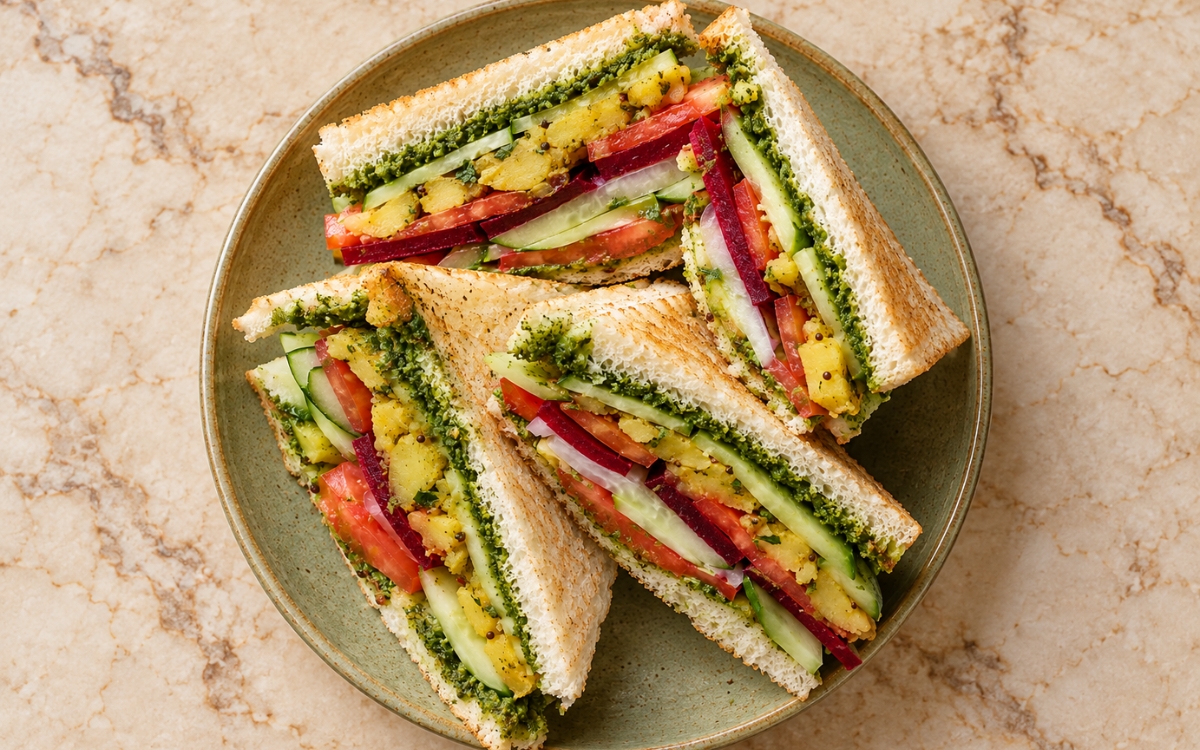
Trim the crusts with a sharp serrated knife if you want the classic neat look, though this is optional. Cut each sandwich diagonally into 2 triangles, using a gentle sawing motion rather than pressing straight down. Wipe the blade between cuts if chutney or beetroot smears onto it, so each cut edge stays clean. The cross-section should show distinct bands of white potato, pale green cucumber, red tomato, deep purple beetroot and onion between two green-edged slices. Serve immediately, while the vegetables are still cool and crisp. That immediate serving is what preserves the genuine contrast between soft bread and fresh filling, before the vegetables slowly release moisture into the crumb.
*Notes :
- Keeping the chutney thick and the vegetables dry deserves genuine recognition as the technique most directly responsible for whether this sandwich stays clean or turns wet. The recipe’s own note that this “is the main difference between a clean layered sandwich and a wet one” reflects how soft white bread behaves — its fine, open crumb draws in any free liquid almost immediately, so watery chutney or dripping tomato collapses it within minutes.
- The butter layer deserves the same attention this technique receives throughout this collection’s other layered sandwich and filled-bread dishes, because it does a structural job rather than a purely flavour one. Spread thinly to the edges, the fat forms a water-repellent film between the crumb and the chutney, which keeps the bread soft and intact even with a generous green layer on top.
- Cooking the potato and beetroot only until just tender deserves genuine respect as the detail most directly responsible for slices that sit flat and hold their shape. Overcooked potato breaks into crumbly mash that cannot form an even layer, while soft, overcooked beetroot weeps juice into the bread — the recipe’s own warning that overcooked vegetables “make the sandwich wet and messy” is exactly that problem.
- The 3–4mm potato slice deserves attention as a genuine, checkable readiness cue rather than a loose approximation. Thin, even slices of every vegetable let the stack compress into a level sandwich that cuts cleanly into triangles, whereas thick or uneven pieces create gaps and bulges that slide apart under the knife and push the filling out of the bread.
Why This Recipe Works
This recipe works because every moisture source is controlled before it reaches the bread. Potato and beetroot are boiled only until just tender, so they slice into firm, flat layers instead of crumbling or weeping. A thin coat of butter seals the crumb, and the thick, punchy green chutney sits on top as a flavour layer rather than a soak. Thinly sliced, blotted vegetables stack evenly and compress neatly, while a light, tangy sandwich masala seasons each layer without drawing out water. The result is a genuinely fresh, soft and clearly layered sandwich that cuts into clean triangles.
Ingredient Breakdown
Thick Green Chutney (Not Pourable)
The critical technique — minimal water keeps it concentrated, so it flavours the bread without soaking it.
Thin Butter Barrier to the Edges
The critical technique — a continuous film of fat stops chutney and vegetable juices reaching the crumb.
Just-Tender Boiled Potato and Beetroot
The structural foundation — firm vegetables slice cleanly into flat layers that support the stack without turning mushy.
Thin, Even Slicing (3–4mm Potato)
The critical technique — uniform slices compress into a level sandwich that cuts neatly without bursting.
Blotted Tomato Slices
The critical safeguard — removing surface juice from the wettest vegetable keeps the lower bread slice from turning soggy.
Chaat Masala and Black Salt Blend
The defining flavour ingredient — tangy, sulphurous and peppery, it gives the sandwich its unmistakable Bombay street-stall seasoning.
Soft White Sandwich Bread
The finishing touch — its tight, genuinely tender crumb compresses evenly around the filling, where airy or crusty bread would not.
Flavor Structure Explained
This Bombay sandwich follows a layered balance model:
- Soft, mild foundation (white sandwich bread, butter)
- Fresh, herbal punch (cilantro, mint, green chillies, ginger, lemon juice)
- Earthy, substantial body (boiled potato, beetroot)
- Cool, crisp contrast (cucumber, tomato, red onion)
- Tangy, savoury finish (chaat masala, black salt, roasted cumin, black pepper)
Soft white bread and butter give this sandwich its mild, yielding foundation. The thick green chutney brings a fresh, herbal punch of cilantro, mint, chilli and ginger, sharpened with lemon. Potato and beetroot add earthy body and quiet sweetness, so the sandwich feels substantial without becoming heavy. Cucumber, tomato and red onion supply cool, crisp contrast in every bite. The chaat masala and black salt blend adds the genuinely tangy, savoury finish that ties this Bombay sandwich together.
Common Mistakes to Avoid
- Thinning the Green Chutney Too Much – This lets the chutney seep into the bread, turning the sandwich soggy before it is served. Always add water a spoonful at a time and stop while it is thick.
- Skipping the Butter Layer – This leaves the crumb exposed to chutney and vegetable juices, which soften and tear the bread. Always spread a thin, continuous layer of butter to the edges first.
- Overcooking the Potato and Beetroot – This makes the potato crumble and the beetroot weep, so the layers turn wet and messy. Always stop boiling as soon as a knife slides in easily.
- Over-Salting Between the Layers – This draws water out of the cucumber and tomato and soaks the bottom slice. Always sprinkle the sandwich masala lightly, using only the measured blend.
- Cutting Thick, Uneven Vegetable Slices – This creates gaps and bulges that make the sandwich slide apart when cut. Always slice every vegetable thinly and evenly, with the potato at 3–4mm.
Variations
Toasted Street-Style Version
After assembling, spread a little extra butter on the outside of each sandwich and toast it on a skillet or sandwich press until lightly crisp and golden, for a warmer, crunchier finish.
Sev-Topped Version
Serve each sandwich with extra green chutney and a handful of sev on the side, per the recipe’s own note, so every bite can pick up more herby heat and a fine, salty crunch.
Ketchup Street-Stall Version
Offer tomato ketchup alongside the triangles, per the recipe’s own suggestion, for the sweet, tangy dipping contrast that many Bombay street stalls serve with the classic vegetable sandwich.
Street-Style Crushed Potato Version
Lightly crush a few of the potato slices by hand before layering, keeping them mostly intact, for a softer, more rustic potato layer while still building a level, neatly cut sandwich.
Storage & Make-Ahead
Choose soft white sandwich bread with a fine, tight crumb, since the recipe’s own note is clear that bread that is too airy or too crusty does not compress well around the filling.
Boil the potatoes and beetroot up to 1 day ahead, cool them completely, and refrigerate them whole and unpeeled in covered containers, then peel and slice them just before assembling.
Make the green chutney up to 1 day ahead and refrigerate it in a small airtight container with plastic wrap pressed onto the surface, which helps it keep its vivid green colour.
Slice the cucumber, tomato and onion no more than 1 hour before serving, keeping the tomato on paper towel, and assemble the sandwiches as close to serving time as possible, per the recipe’s own note.
Assembled sandwiches are best eaten within 30 minutes, though they can be wrapped tightly and refrigerated for up to 3 hours, after which the bread steadily softens and the layers begin to weep.
Frequently Asked Questions
Why does the bread need butter under the chutney?
Butter forms a thin, water-repellent film over the crumb, so the moisture in the chutney and vegetables stays on top instead of soaking in. Without it, soft white bread turns damp and pasty within minutes.
Why should the green chutney be thick rather than pourable?
A thick chutney stays as a distinct flavour layer on the bread, while a watery one seeps through the soft crumb almost immediately. Adding cold water only as needed keeps the chutney concentrated, punchy and spreadable.
Why are the potato and beetroot boiled only until just tender?
Just-tender vegetables slice cleanly into firm, flat layers that support the stack. Overcooked potato crumbles into mash, and soft beetroot releases juice, which makes the filling wet and the sandwich messy.
Why is the sandwich masala sprinkled so lightly between the layers?
Salt draws water out of cucumber and tomato within minutes, and that liquid runs straight into the bottom slice of bread. A light, measured sprinkle seasons each layer without turning the sandwich soggy.
Are there other classic Mumbai street food, chaat, or herby sauce dishes worth trying?
Vada Pav offers another classic Mumbai street food direction worth exploring alongside this one. Pav Bhaji and Aloo Tikki Chaat are also worth trying for other spiced Indian street snacks, and Green Zhoug and Samosa Chaat offer other herby sauce and tangy chaat directions worth exploring.
Nutrition Facts
( Per Serving — 1 sandwich )
Calories
~390 kcal
Protein
10 g
Fat
11 g
Carbs
63 g
Calories
~390 kcal
Protein
10 g
Fat
11 g
Carbs
63 g
Related Recipes
Related Recipes
-

Herby Turkey Burgers with Za’atar Cucumber Salad
Juicy herb-seasoned turkey burgers with za’atar cucumber salad, creamy tzatziki, and buttery rice.
-
Chicago-Style Hot Dog
A natural-casing all-beef frankfurter in a soft, steamed poppy-seed bun, dressed with mustard, relish, onion, tomato, and sport peppers.
-
Cuban Frita Burger
A paprika-red chorizo-beef patty glazed in tangy frita sauce, piled high with crispy thin shoestring potatoes on a toasted brioche bun.



You might also like
You might also like
-
Breakfast Burritos
Soft scrambled eggs, crispy breakfast potatoes, melted cheese, bacon, salsa, and avocado rolled in warm flour tortillas and toasted golden.
-
Double Smash Burger
Two thin smashed beef patties with melted American cheese, tangy burger sauce and dill pickle planks on a butter-toasted bun.
-
Chicken Kathi Roll Wraps
Soft homemade flatbreads rolled around spiced, lightly charred chicken, bell peppers, lemony onions, green chutney and a cooling yogurt sauce.



Bombay Sandwich
Ingredients
Method
- Place the whole, unpeeled potatoes in one pot and the whole beetroot in a separate pot, so the beetroot does not stain the potatoes. Cover both with cold water, add a generous pinch of salt for the cooking water to the potato pot, and bring both to a boil. Simmer the potatoes for 15–18 minutes and the beetroot for 30–40 minutes, depending on size, until a knife slides in easily. The potatoes should be cooked through but still firm enough to slice cleanly, and the beetroot tender but not soft. Drain each, then let them cool until comfortable to handle. That restraint in the pot is what keeps the filling genuinely sliceable, since overcooked potato crumbles into mash and soft beetroot bleeds moisture into the bread.
- While the vegetables cook, place the 50g cilantro, the 20g mint leaves, the 2 green chillies, the 10g ginger, the garlic clove if using, the 1 tbsp lemon juice, the ½ tsp roasted cumin powder, the ½ tsp chaat masala, the ½ tsp sugar and the ½ tsp salt in a small blender jar. Add 2 tbsp of the cold water and blend, scraping down the sides, until smooth. Add the remaining water a spoonful at a time only if the blades cannot move. The chutney should be vivid green, punchy and thick enough to hold a ridge on a spoon, never pourable. Taste and adjust the salt or lemon. That thick consistency is what lets the chutney sit on the bread as a genuine layer of flavour instead of soaking into the crumb.
- Peel the cooled potatoes and slice them 3–4mm thick, keeping the slices mostly intact. Peel the cooled beetroot and slice it thinly. Peel the cucumber if the skin is thick, then slice it thinly. Slice the 2 tomatoes thinly and, if they are very juicy, lay the slices on paper towel for a few minutes. Slice the red onion very thinly. Mix the 1 tsp chaat masala, the ½ tsp roasted cumin powder, the ¼ tsp black salt, the ¼ tsp salt and the ¼ tsp black pepper in a small bowl. If you want more seasoned potatoes, toss them gently with a pinch of this masala, the chopped cilantro and the 1–2 tsp lemon juice. That even, thin slicing is what lets the sandwich compress neatly instead of bulging and bursting when it is cut.
- Lay out the 8 slices of soft white sandwich bread on a clean board. Spread a thin, even layer of the softened butter over one side of every slice, right to the edges and corners. Spread a generous but even layer of green chutney over the butter on each slice, again reaching the edges. The butter should form a continuous film with no bare patches, and the chutney should sit on top as a distinct green layer. If the butter is too firm to spread without tearing the bread, soften it a little longer at room temperature. That buttered base is what acts as a moisture barrier, keeping the bread genuinely soft rather than soaked by the chutney and the vegetables above it.
- Choose 4 of the chutney-coated slices as bases. On each, arrange a layer of potato slices, then sprinkle lightly with sandwich masala. Add a layer of cucumber, then tomato, then beetroot, then onion, overlapping each layer slightly so it covers the bread evenly. Finish each stack with another very light sprinkle of sandwich masala, using the remainder of the blend across all 4 sandwiches. Top with the remaining 4 slices, chutney side down. Press gently but firmly with a flat palm to compact the layers. The finished sandwich should feel level and settled, not domed or sliding. That light, measured seasoning is what keeps the filling genuinely crisp, since excess salt draws water from the cucumber and tomato and wets the bread.
- Trim the crusts with a sharp serrated knife if you want the classic neat look, though this is optional. Cut each sandwich diagonally into 2 triangles, using a gentle sawing motion rather than pressing straight down. Wipe the blade between cuts if chutney or beetroot smears onto it, so each cut edge stays clean. The cross-section should show distinct bands of white potato, pale green cucumber, red tomato, deep purple beetroot and onion between two green-edged slices. Serve immediately, while the vegetables are still cool and crisp. That immediate serving is what preserves the genuine contrast between soft bread and fresh filling, before the vegetables slowly release moisture into the crumb.