
Raspberry White Chocolate Muffins
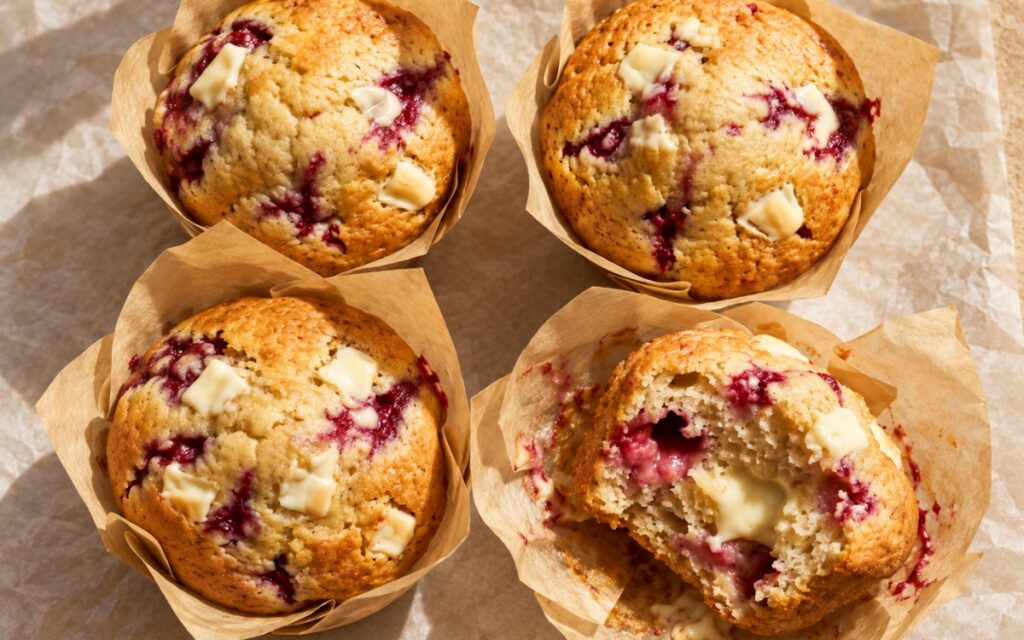
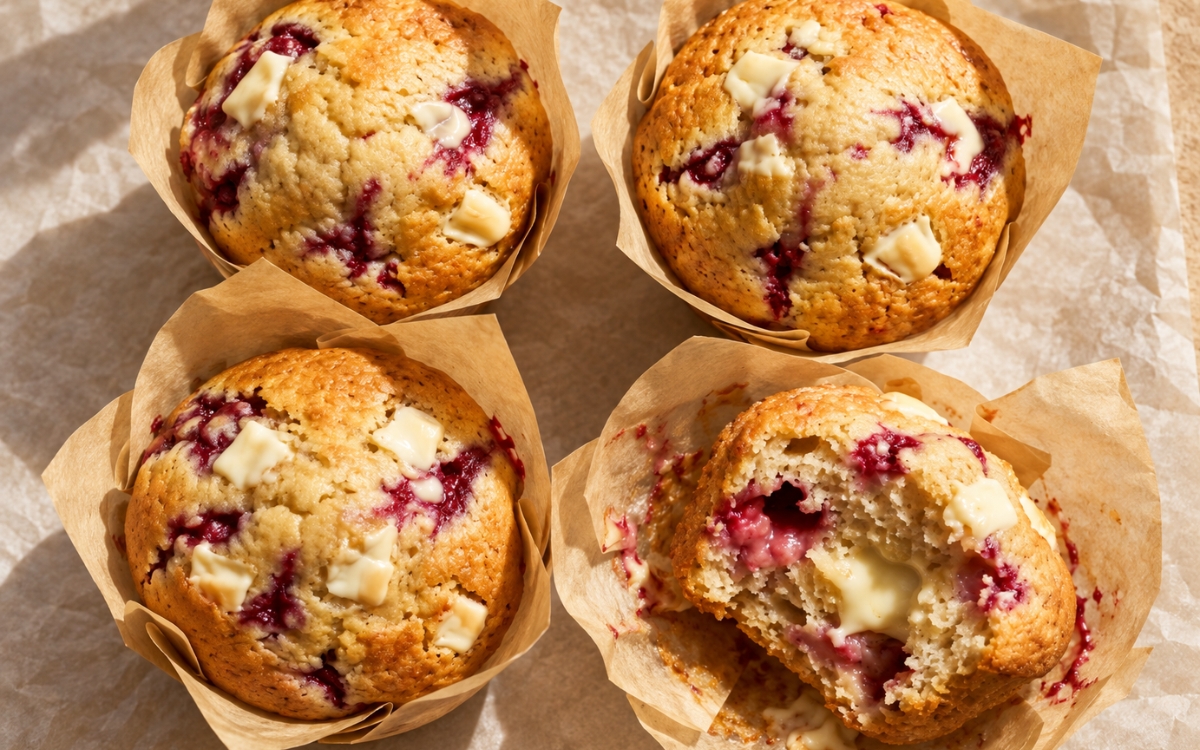
Bakery-style raspberry muffins with tall golden domed tops, a soft, moist vanilla crumb, jammy raspberry streaks, and generous pockets of creamy melted white chocolate, folded carefully so some berries stay intact while others naturally streak the batter. Tossing the raspberries in flour helps them stay suspended rather than bleeding everywhere, and chopping a white chocolate bar rather than using chips gives the large, molten pockets this muffin is built around. A high-heat oven start pushes the tops into a tall dome, and leaving some fruit and chocolate visible on the surface, rather than burying everything, is what gives these their bakery look.
Prep Time : 25 min
Total Time : 55 min
Servings : 12
25 min
55 min
12
Ingredients
For the Muffin Batter
• 290 g all-purpose flour
• 2½ tsp baking powder
• ½ tsp baking soda
• ½ tsp fine salt
• 160 g granulated sugar
• 2 large eggs, room temperature
• 115 g unsalted butter, melted and cooled slightly
• 60 ml neutral oil
• 180 g sour cream or full-fat Greek yogurt, room temperature
• 100 ml whole milk or buttermilk, room temperature
• 2 tsp vanilla extract
• 1 tsp finely grated lemon zest, optional but recommended
• 200 g raspberries, fresh or frozen
• 180 g white chocolate, chopped into roughly 8–12 mm chunks
• 1 tbsp all-purpose flour, for the raspberries
• 30–40 g additional white chocolate chunks, for topping
Directions
- Prepare the Oven and Pan
Heat the oven to 220°C / 425°F and line a standard 12-cup muffin pan with tall parchment tulip liners or sturdy muffin liners. For a high bakery-style dome, the cups need to be filled generously rather than only two-thirds full. - Prepare the Raspberries
If using fresh raspberries, make sure they’re dry, then toss them very gently with the tablespoon of flour. If using frozen raspberries, don’t thaw them; toss them with the flour straight from frozen and keep chilled until needed. Excess surface moisture from thawed berries can loosen the batter and create gummy purple pockets, so frozen berries should go into the batter at the very end, with the muffins baked immediately afterward. - Mix the Dry Ingredients
Whisk together the flour, baking powder, baking soda, and salt until evenly distributed, then set aside. - Build the Wet Base
Whisk the sugar and eggs in a large bowl for about 60 seconds, until smooth and slightly thickened. Whisk in the melted butter followed by the oil, then add the sour cream, milk or buttermilk, vanilla, and optional lemon zest, whisking only until smooth and emulsified. The combination of butter and oil is deliberate here: butter supplies flavor, while oil keeps the crumb moist even after the muffins cool. - Make the Batter
Add the dry ingredients to the wet mixture and fold gently with a spatula until the flour is about 80 to 90% incorporated, with a few streaks still visible. Add 150 g of the white chocolate and about 160 g of the raspberries, folding only a few times until just combined, then reserve the remaining raspberries and chocolate for the tops. Stop mixing as soon as the flour disappears; a perfectly smooth batter is actually undesirable here, since overmixing creates a tighter, breadier muffin. - Rest the Batter
Let the batter stand for 10 minutes at room temperature. This brief hydration period thickens the batter slightly and helps produce a taller dome. Don’t rest much longer if using frozen raspberries, since they’ll start releasing juice. - Fill the Muffin Cups
Divide the batter equally among the 12 muffin cups, filling approximately 85 to 90% full. Press the reserved raspberries lightly into the surface and add the remaining white chocolate chunks, leaving some clearly exposed rather than pushed deeply into the batter. Visible surface berries and chocolate matter for the finished bakery appearance; anything buried too deeply disappears during baking. - Bake
Bake at 220°C / 425°F for 5 minutes, then, without opening the oven door, reduce the temperature to 190°C / 375°F and continue baking for approximately 13 to 17 minutes. The muffins are ready when the tops are high and rounded, the edges are deep golden, the center springs back lightly, exposed white chocolate looks glossy and softened, and a skewer inserted into plain muffin crumb comes out with a few moist crumbs but no raw batter. Avoid testing directly through a raspberry or melted white chocolate pocket. By thermometer, the internal crumb temperature should be roughly 96–98°C / 205–208°F. - Cool
Leave the muffins in the pan for 7 to 10 minutes before transferring to a rack. For a broken muffin with visibly creamy chocolate, let them cool for about 15 to 20 minutes and serve while still slightly warm; white chocolate firms up noticeably as the muffins cool further.
*Notes :
- Chopped white chocolate from a bar gives large, creamy, molten pockets that standard baking chips won’t match, since chips are formulated to hold their shape more strongly under heat.
- Fresh raspberries give cleaner, more individual berry pockets, while frozen raspberries tend to create stronger red-purple streaking through the crumb; neither is wrong, they just produce slightly different looks.
- Folding the raspberries carefully matters here. Some natural breaking is desirable, since that’s what creates the visible streaks, but crushing all of them turns the batter uniformly pink instead.
- The batter needs to stay thick enough to mound from a scoop; a thinner batter spreads rather than producing the tall bakery domes this recipe is built around.
Why This Recipe Works
Tossing the raspberries in flour keeps them suspended through the batter instead of bleeding or sinking, and chopping a white chocolate bar gives large, molten pockets that chips can’t replicate. The high-heat oven start pushes the tops into a tall dome, and leaving some fruit and chocolate exposed on the surface is what gives these their bakery-style finished look.
Ingredient Breakdown
Flour-tossed raspberries
suspended fruit — the light coating helps them stay distributed through the batter instead of sinking or bleeding excessively.
Chopped white chocolate bar
molten pockets — larger, irregular pieces melt into bigger, creamier pools than standard chips would.
Butter and oil together
flavor and moisture — butter supplies flavor while oil keeps the crumb moist even once the muffins have cooled.
Sour cream or Greek yogurt
tender crumb — keeps the muffin moist and soft alongside the fruit and chocolate.
Optional lemon zest
brightness — sharpens the raspberry flavor without adding a separate citrus note of its own.
High-heat oven start
domed shape — the initial high temperature sets the tall dome before the batter has a chance to spread flat.
Flavor Structure Explained
This muffin layers fruit, cream, and vanilla rather than relying on one dominant flavor:
- a soft, moist vanilla crumb as the base
- jammy, naturally streaked raspberry pockets
- large, creamy pools of melted white chocolate
- a bright lemon undertone sharpening the raspberry
- exposed surface fruit and chocolate for a bakery-style finish
The raspberries are meant to stay partly intact and partly broken, so the batter shows natural streaking rather than turning evenly pink throughout.
Common Mistakes to Avoid
- Thawing frozen raspberries before using them – This causes excess moisture that loosens the batter and creates gummy purple pockets. Always keep frozen raspberries frozen until the moment they’re folded in.
- Overmixing once the raspberries and chocolate are added – This causes a tighter, breadier muffin instead of a light one. Always stop folding as soon as the ingredients are just combined.
- Using chocolate chips instead of a chopped bar – This causes smaller, more uniform pockets instead of large, creamy melted pools. Always chop a white chocolate bar for the best texture.
- Burying the surface raspberries and chocolate too deeply – This causes them to disappear during baking instead of showing on the finished top. Always press them in lightly, leaving them visible.
Variations
Blackberry Swap
Replace the raspberries with the same weight of blackberries, tossed the same way in flour, for a deeper, slightly tarter fruit flavor.
Dark Chocolate Version
Use chopped dark or semisweet chocolate instead of white for a more bittersweet contrast against the raspberries.
Almond Addition
Add ½ teaspoon of almond extract to the batter along with the vanilla for a classic raspberry-almond flavor pairing.
Streusel-Topped Version
Add a buttery streusel topping over the filled muffin cups, alongside the exposed raspberries and chocolate, for extra crunch.
Storage & Make-Ahead
Store completely cooled muffins airtight for up to 2 days at room temperature or about 4 days refrigerated.
Warm briefly before serving to soften the white chocolate again, since it firms up noticeably once the muffins cool or chill.
Frozen raspberries can be portioned and tossed with flour ahead of time, then kept in the freezer until you’re ready to fold them into the batter, which shortens prep on baking day.
The white chocolate can be chopped from a bar a day ahead and stored in an airtight container, so the only remaining steps on baking day are mixing and baking.
Frequently Asked Questions
Can I use frozen raspberries instead of fresh?
Yes, frozen raspberries work well and generally create stronger red-purple streaking. Don’t thaw them first; fold them in straight from frozen and bake right after filling the cups.
Why does the white chocolate need to be chopped from a bar instead of using chips?
Chopped chocolate melts into larger, creamier pools, while chips are formulated to hold their shape more, giving a more uniform, less dramatic texture.
My batter turned uniformly pink instead of streaky — what happened?
This usually means the raspberries were overmixed or crushed too much while folding. A gentler fold that leaves some berries intact gives the natural streaking this muffin is known for.
Why do I need to test doneness away from the raspberries and chocolate?
Both melted chocolate and raspberry juice can make a tester look wet even when the surrounding crumb is fully baked, so testing in plain batter gives a more accurate read.
What else pairs well with these muffins?
They go nicely alongside Raspberry White Chocolate Cheesecake Cookies, White Chocolate Blueberry Muffins, or Blackberry Cornmeal Muffins on a breakfast table, pair well with a Raspberry Iced Black Tea, and sit nicely next to a Raspberry Peach Smoothie Bowl for a fuller raspberry spread.
Nutrition Facts
( per serving, 1 muffin )
Calories
~400 kcal
Protein
6 g
Fat
22 g
Carbs
45 g
Calories
~400 kcal
Protein
6 g
Fat
22 g
Carbs
45 g
Related Recipes
Related Recipes
-

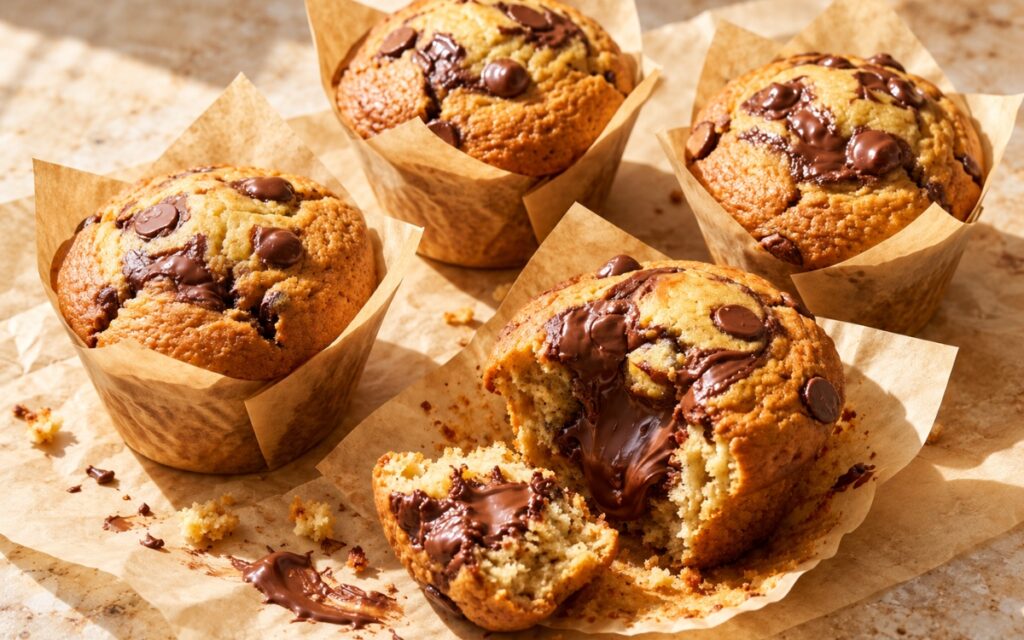
Nutella Chocolate Chip Muffins
Bakery-style muffins with chocolate chips and a soft, gooey Nutella center.
-
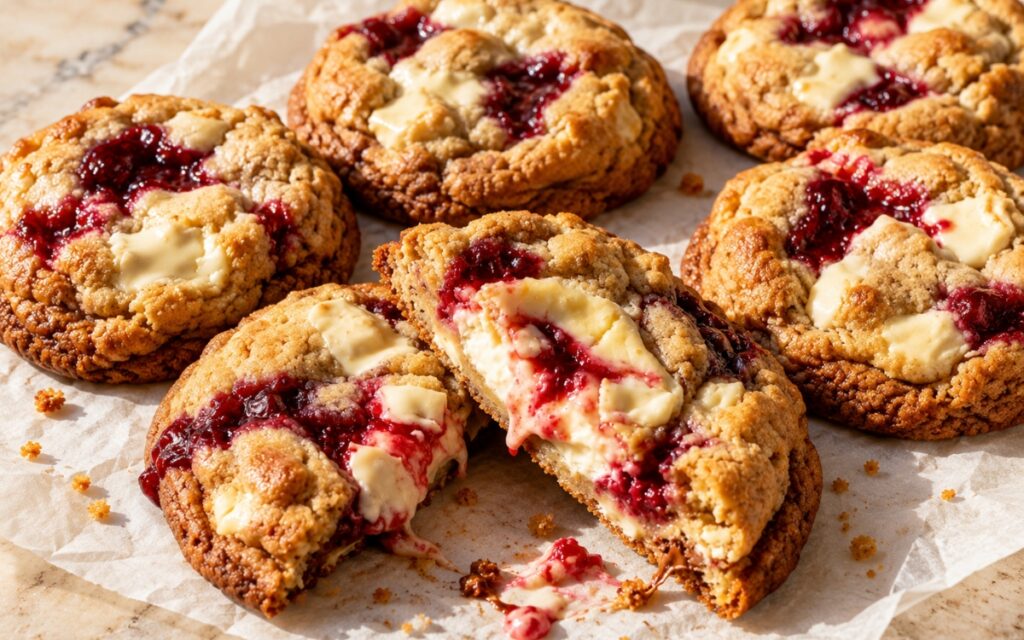
Raspberry White Chocolate Cheesecake Cookies
Soft bakery-style cookies stuffed with a creamy cheesecake center and jammy raspberry pockets.
-
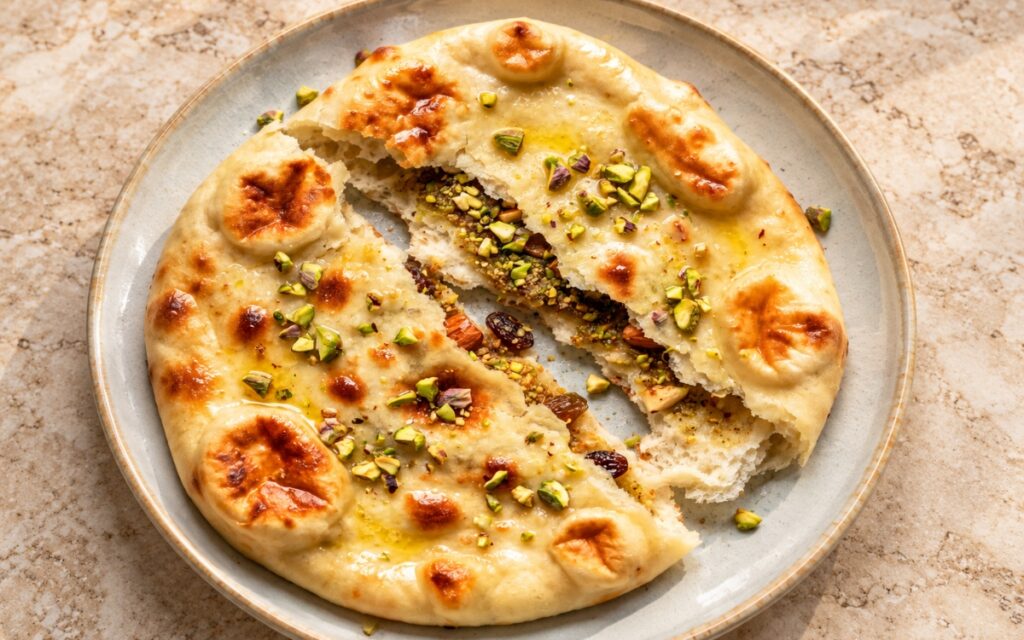
Peshwari Naan
Soft, slightly chewy naan stuffed with a classic sweet nut filling of coconut, almonds, raisins, and cardamom.
You might also like
You might also like
-
Brown Butter Blondies
Classic brown butter blondies with shiny crackly tops, deep caramel-butterscotch flavor, and a dense, chewy golden interior.
-
Classic Madeleines
Classic French shell-shaped madeleines with crisp golden-brown ridges, tender buttery crumb, and the signature raised hump.
-
Espresso Brownie Chocolate Chip Cookies
Dark, rich espresso brownie cookies with crinkled tops, soft fudgy centers, and plenty of melted chocolate throughout.

Raspberry White Chocolate Muffins
Ingredients
Method
- Heat the oven to 220°C / 425°F and line a standard 12-cup muffin pan with tall parchment tulip liners or sturdy muffin liners. For a high bakery-style dome, the cups need to be filled generously rather than only two-thirds full.
- If using fresh raspberries, make sure they’re dry, then toss them very gently with the tablespoon of flour. If using frozen raspberries, don’t thaw them; toss them with the flour straight from frozen and keep chilled until needed. Excess surface moisture from thawed berries can loosen the batter and create gummy purple pockets, so frozen berries should go into the batter at the very end, with the muffins baked immediately afterward.
- Whisk together the flour, baking powder, baking soda, and salt until evenly distributed, then set aside.
- Whisk the sugar and eggs in a large bowl for about 60 seconds, until smooth and slightly thickened. Whisk in the melted butter followed by the oil, then add the sour cream, milk or buttermilk, vanilla, and optional lemon zest, whisking only until smooth and emulsified. The combination of butter and oil is deliberate here: butter supplies flavor, while oil keeps the crumb moist even after the muffins cool.
- Add the dry ingredients to the wet mixture and fold gently with a spatula until the flour is about 80 to 90% incorporated, with a few streaks still visible. Add 150 g of the white chocolate and about 160 g of the raspberries, folding only a few times until just combined, then reserve the remaining raspberries and chocolate for the tops. Stop mixing as soon as the flour disappears; a perfectly smooth batter is actually undesirable here, since overmixing creates a tighter, breadier muffin.
- Let the batter stand for 10 minutes at room temperature. This brief hydration period thickens the batter slightly and helps produce a taller dome. Don’t rest much longer if using frozen raspberries, since they’ll start releasing juice.
- Divide the batter equally among the 12 muffin cups, filling approximately 85 to 90% full. Press the reserved raspberries lightly into the surface and add the remaining white chocolate chunks, leaving some clearly exposed rather than pushed deeply into the batter. Visible surface berries and chocolate matter for the finished bakery appearance; anything buried too deeply disappears during baking.
- Bake at 220°C / 425°F for 5 minutes, then, without opening the oven door, reduce the temperature to 190°C / 375°F and continue baking for approximately 13 to 17 minutes. The muffins are ready when the tops are high and rounded, the edges are deep golden, the center springs back lightly, exposed white chocolate looks glossy and softened, and a skewer inserted into plain muffin crumb comes out with a few moist crumbs but no raw batter. Avoid testing directly through a raspberry or melted white chocolate pocket. By thermometer, the internal crumb temperature should be roughly 96–98°C / 205–208°F.
- Leave the muffins in the pan for 7 to 10 minutes before transferring to a rack. For a broken muffin with visibly creamy chocolate, let them cool for about 15 to 20 minutes and serve while still slightly warm; white chocolate firms up noticeably as the muffins cool further.