
Raspberry White Chocolate Cheesecake Cookies
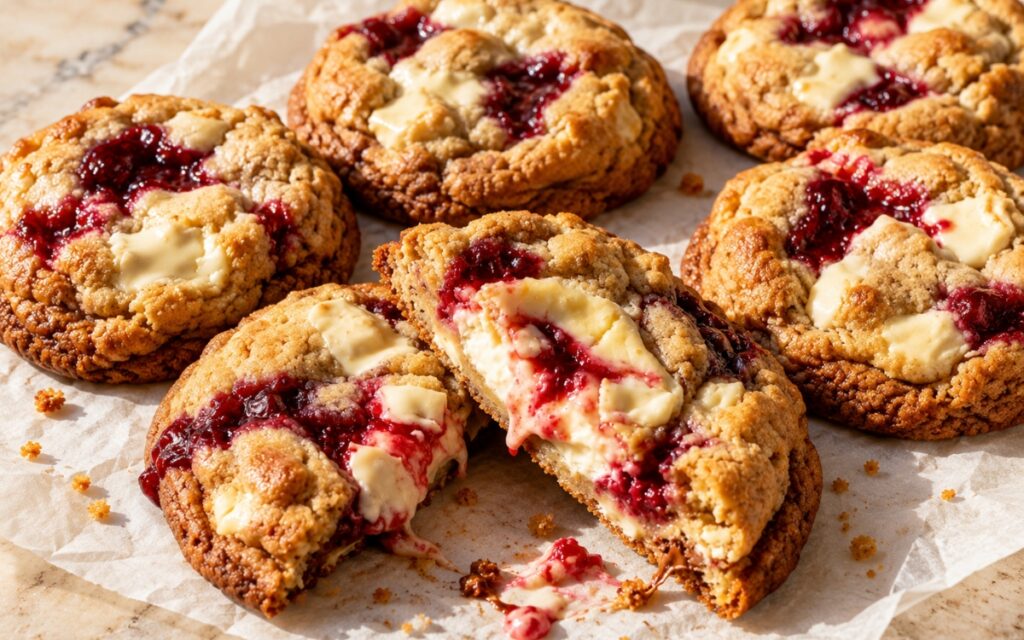
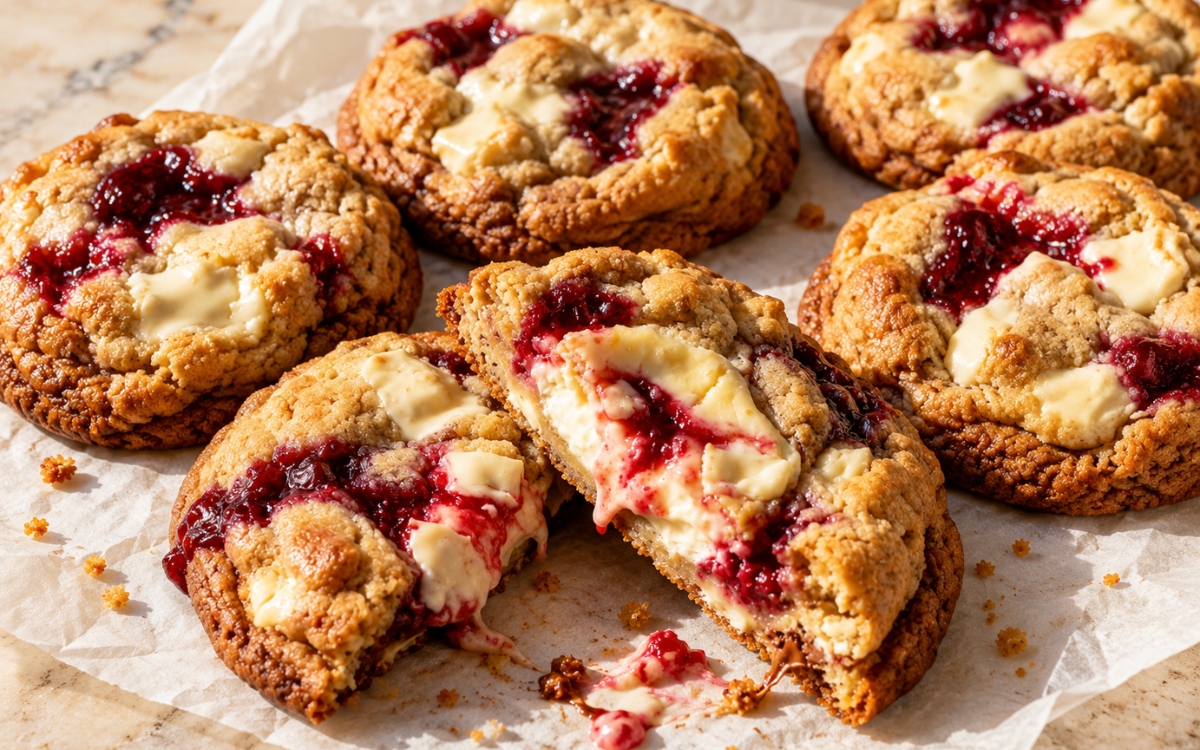
Soft, bakery-style cookies with golden edges, tender chewy centers, creamy white chocolate chunks, and jammy raspberry pockets, each one stuffed with a small cheesecake-style cream cheese center that stays soft and rich after baking. The cream cheese is frozen solid and the raspberry cooked down thick before either goes anywhere near the dough, similar to the filling method behind the Biscoff Chocolate Chip Cookies, so both stay as distinct pockets instead of dissolving into the dough. A chill before baking keeps the cookies thick and the stuffed centers in place, and pulling them while the middles still look soft is what leaves a creamy, slightly molten center once they’ve cooled.
Prep Time : 35 min
Total Time : 2 hr 5 min
Servings : 12
35 min
2 hr 5 min
12
Ingredients
For the Cheesecake Filling
• 225 g full-fat block cream cheese, cold
• 45 g granulated sugar
• ½ tsp vanilla extract
• 1 tsp cornstarch
For the Raspberry Component
• 180 g raspberries, fresh or frozen
• 45 g granulated sugar
• 2 tsp lemon juice
• 1½ tsp cornstarch
• 1 tbsp water
For the Cookie Dough
• 170 g unsalted butter, softened
• 140 g light brown sugar
• 100 g granulated sugar
• 1 large egg, room temperature
• 1 large egg yolk, room temperature
• 2 tsp vanilla extract
• 300 g all-purpose flour
• 20 g cornstarch
• 1 tsp baking soda
• ½ tsp baking powder
• ¾ tsp fine salt
• 180 g white chocolate, chopped into chunks, plus extra for topping if needed
Directions
- Make the Cheesecake Filling
Mix the cream cheese, sugar, vanilla, and cornstarch in a small bowl until smooth and thick. Scoop 24 small mounds, about 1 to 1½ teaspoons each, onto a parchment-lined tray and flatten them slightly into small discs. Freeze for 45 to 60 minutes, until firm enough to handle. The filling needs to be properly firm before it goes anywhere near the dough; soft filling will leak out during shaping instead of staying a defined center. - Make the Raspberry Mixture
Cook the raspberries, sugar, and lemon juice in a small saucepan over medium heat for 4 to 6 minutes, stirring and lightly crushing the berries, until juicy. Mix the cornstarch with the water to make a slurry, stir it in, and cook another 1 to 2 minutes until thick and jammy. Transfer to a bowl and cool completely. The mixture should be thick, not runny; a loose filling will make the cookies spread more and raises the risk of a blowout, so cook it a little longer if it still looks wet. - Make the Cookie Dough
Beat the butter with the brown sugar and granulated sugar until creamy and well combined, about 2 to 3 minutes. Beat in the egg, egg yolk, and vanilla until smooth, scraping the bowl well. In a separate bowl, whisk together the flour, cornstarch, baking soda, baking powder, and salt, then add this to the wet ingredients and mix just until combined before folding in the white chocolate chunks. The dough should be soft but thick; if it feels unusually loose, chill it for 15 to 20 minutes before assembling. - Portion and Fill
Line two trays with parchment and portion the dough into 24 pieces, about 40 to 45 g each. Flatten one portion into a disc, place one frozen cheesecake disc in the center, top with about 1 teaspoon of cooled raspberry mixture, then cover with a flap of dough or pull the dough around the filling and seal well. Don’t fully blend the raspberry into the dough; a few visible streaks and pockets are what you want. Roll gently into a ball and place on the tray, pressing 1 to 2 extra white chocolate chunks and a small dab of raspberry mixture onto the top if you want a more visible finish. Repeat with the remaining dough, sealing each one completely around the cheesecake center and pinching closed any seam where cream cheese shows through. - Chill Before Baking
Chill the assembled dough balls for 20 to 30 minutes. This helps the cookies bake thicker, keeps the cheesecake center in place longer, and reduces over-spreading. - Bake
Heat the oven to 175°C conventional or 160°C fan and line baking sheets with parchment. Space the chilled dough balls on the trays, about 6 per tray, and bake for 12 to 14 minutes, until the edges are golden, the tops are puffed and lightly crackled, and the centers still look a little soft. Don’t overbake; the cookies should look slightly underdone in the middle when they come out, since they continue setting as they cool. For rounder cookies, swirl a round cutter or bowl gently around each one immediately after baking while still hot. - Cool
Let the cookies cool on the tray for 10 minutes before transferring carefully to a wire rack. The cheesecake centers stay very soft while hot, so avoid moving the cookies too early. For the cleanest creamy center, let them cool until just warm before breaking one open.
*Notes :
- Full-fat block cream cheese holds its shape when frozen in a way spreadable tub cream cheese doesn’t; tub cream cheese is too soft and gives a weaker, less defined center once baked.
- The raspberry mixture has to be thick and fully cooled before it touches the dough. Warm or loose filling softens the dough during assembly and makes sealing the cookie around it far harder.
- White chocolate chunks melt into larger, more visible creamy pockets than chips do, which matters here since the cookie is already built around two other distinct fillings.
- A little raspberry leakage on top or at the seams is normal and even looks appealing, but major leaking usually means the filling wasn’t cooked thick enough or the dough wasn’t sealed completely around both centers.
Why This Recipe Works
Freezing the cheesecake filling solid and cooking the raspberry down thick gives both fillings enough structure to survive being wrapped in dough and baked, instead of leaking out or dissolving into the crumb. The chill before baking keeps the cookies thick and the fillings in place, and pulling them while the centers still look soft is what leaves a creamy cheesecake core and jammy raspberry pockets once they’ve cooled.
Ingredient Breakdown
Full-fat block cream cheese
cheesecake core — frozen into firm discs, it holds its shape through assembly and bakes into a soft, rich center rather than dissolving into the dough.
Raspberries
jammy pockets — cooked down with sugar and cornstarch until thick, they stay as distinct, tart pockets instead of turning the dough wet.
White chocolate chunks
creamy contrast — larger chunks melt into visible pools that balance the tartness of the raspberry.
Cornstarch (dough)
tenderizing agent — keeps the cookie’s crumb soft around two separate fillings rather than dense.
Brown sugar
moisture and chew — its molasses content keeps the base dough chewy even with the extra structure needed to wrap around two fillings.
Lemon juice
flavor sharpener — brightens the cooked raspberry mixture so it reads as tart jam rather than plain sweetened fruit.
Fine salt
flavor balance — cuts through the sweetness of the cream cheese filling, white chocolate, and sugar coating in the dough.
Flavor Structure Explained
This cookie stacks three distinct elements rather than blending them into one flavor:
- a buttery, golden-edged cookie base with a soft, chewy center
- a rich, tangy cheesecake core from the frozen cream cheese filling
- tart, jammy raspberry pockets running alongside the cheesecake center
- creamy white chocolate chunks softening the tartness
- a light salt balance keeping the overall cookie from tasting purely sweet
Each element stays separate rather than merging together, so a single bite can hit cookie, cheesecake, and raspberry as three distinct textures and flavors.
Common Mistakes to Avoid
- Using tub cream cheese instead of block – This causes a softer, weaker center that doesn’t hold its shape. Always use full-fat block cream cheese for the filling.
- Assembling with warm or loose raspberry mixture – This causes the dough to soften and makes sealing the cookie difficult. Always cool the raspberry mixture completely and cook it until thick before using it.
- Leaving a gap in the seal around either filling – This causes heavier leaking and uneven baking at the exposed seam. Always pinch the dough fully closed around both the cheesecake disc and the raspberry.
- Skipping the chill before baking – This causes the cookies to spread too much and lets the fillings shift out of place. Always chill the assembled dough balls for the full 20 to 30 minutes.
Variations
Blueberry Swap
Replace the raspberries with the same weight of blueberries, cooked down the same way, for a milder, less tart jammy pocket.
Dark Chocolate Version
Swap the white chocolate for dark or semisweet chocolate chunks for a more bittersweet contrast against the raspberry and cream cheese.
Lemon Cheesecake Twist
Add ½ teaspoon of finely grated lemon zest to the cheesecake filling for a brighter, more citrus-forward center.
Mini Cookie Version
Make 36 smaller cookies instead of 24 by reducing each dough portion to about 28 g and using slightly smaller amounts of both fillings, shortening the bake to 10–11 minutes.
Storage & Make-Ahead
Store cooled cookies in the refrigerator because of the cream cheese center, rather than at room temperature. Bring them to room temperature before serving, or warm briefly so the center softens again.
These cookies hold their best texture on day 1 and day 2, with the creamy center gradually firming up a little more each day they’re stored.
The cheesecake filling discs and raspberry mixture can both be made ahead and kept frozen or refrigerated until you’re ready to assemble and bake, which splits this recipe’s longer prep across two sessions if needed.
Avoid freezing the fully assembled, unbaked dough balls for long-term storage; the cream cheese center is best frozen on its own just before assembly rather than inside the finished dough ball.
Frequently Asked Questions
Why does the cream cheese filling need to be frozen first?
Freezing it solid lets it hold its shape through portioning and wrapping, so it bakes into a defined, creamy center instead of leaking out or blending into the dough.
My raspberry filling leaked out during baking — what went wrong?
This usually means the raspberry mixture wasn’t cooked thick enough, or the dough wasn’t fully sealed around it. A little leakage is normal and looks appealing, but heavier leaking points to one of those two things.
Can I use tub-style cream cheese instead of block?
It’s not recommended here. Tub cream cheese is softer and won’t hold its shape the same way once frozen, giving a weaker, less defined center.
Why do these need to be stored in the fridge instead of at room temperature?
The cream cheese center makes these more like a hybrid cookie-cheesecake than a standard cookie, so refrigeration keeps the filling food-safe and the texture correct.
What else pairs well with these cookies?
They sit well alongside Raspberry White Chocolate Muffins, Blueberry Cheesecake Crumble Muffins, or Chai White Chocolate Toffee Cookies on a dessert table, and pair nicely with a Raspberry Lemonade or a Basque Burnt Cheesecake for a fuller cheesecake-and-raspberry spread.
Nutrition Facts
( per serving, 2 cookies )
Calories
~470 kcal
Protein
6 g
Fat
23 g
Carbs
59 g
Calories
~470 kcal
Protein
6 g
Fat
23 g
Carbs
59 g
Related Recipes
Related Recipes
-

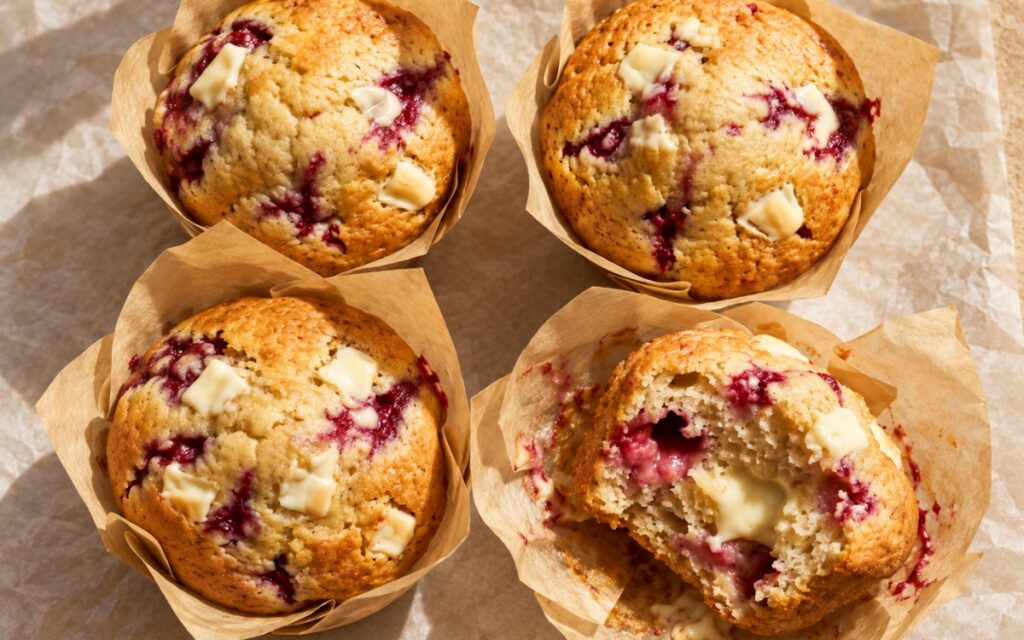
Raspberry White Chocolate Muffins
Bakery-style raspberry muffins with creamy melted white chocolate pockets.
-
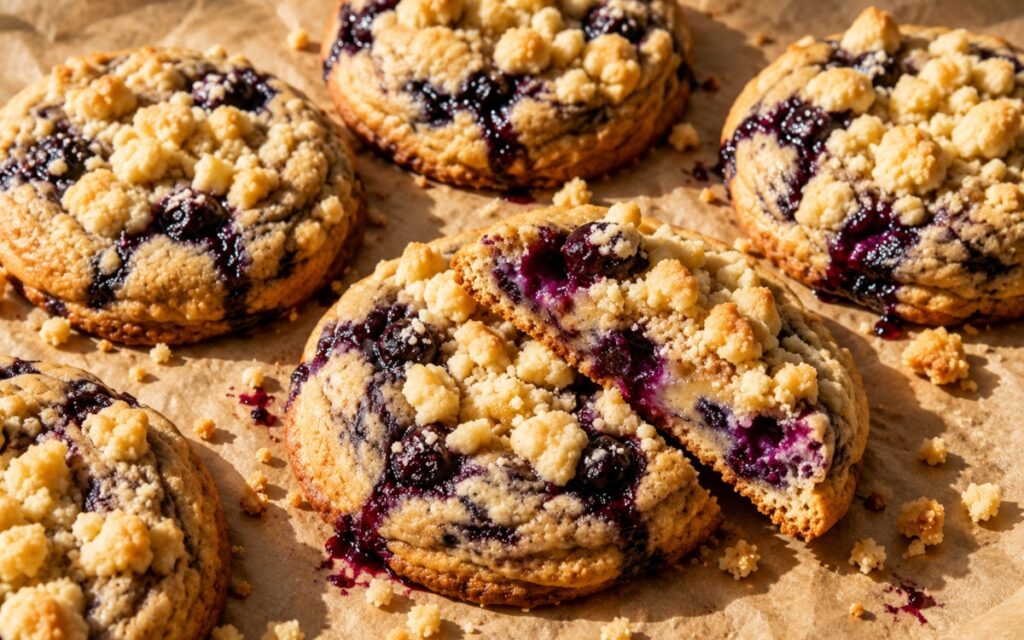
Blueberry Crumble Cookies
Thick, soft cookies with jammy blueberry streaks and a buttery crumble topping.
-
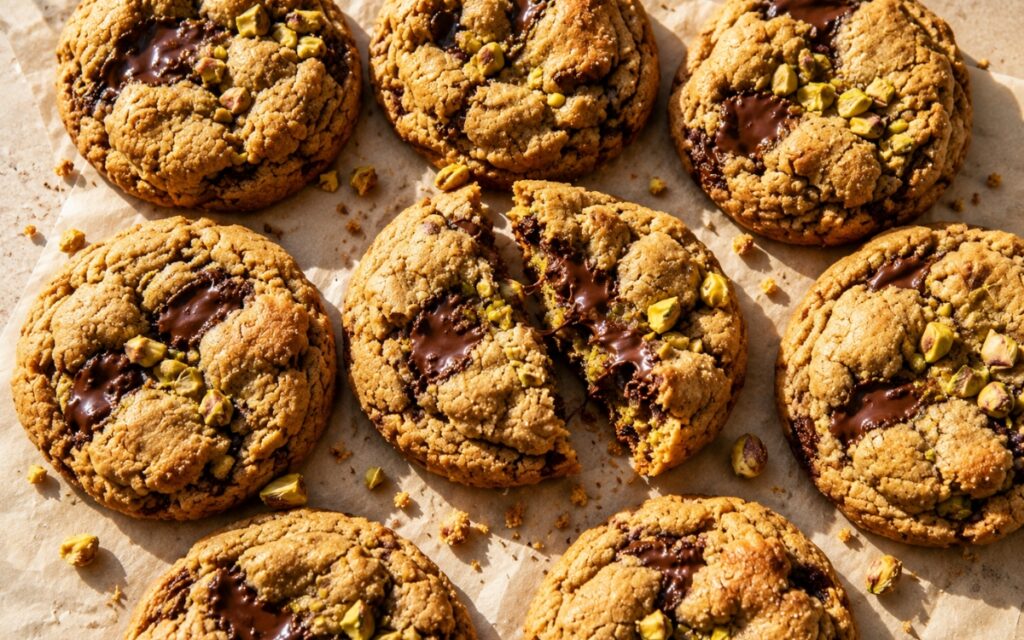
Brown Butter Pistachio Chocolate Chunk Cookies
Thick brown butter cookies with chopped pistachios and large melted dark chocolate chunks.
You might also like
You might also like
-
Blueberry Cheesecake Crumble Muffins
Bakery-style blueberry muffins with a creamy cheesecake center and crumble topping.
-
Salted Caramel Espresso Cookies
Soft, thick espresso cookies with gooey salted caramel hidden inside and a light sprinkle of flaky salt.
-
Raspberry White Chocolate Muffins
Bakery-style raspberry muffins with creamy melted white chocolate pockets.
Raspberry White Chocolate Cheesecake Cookies
Ingredients
Method
- Mix the cream cheese, sugar, vanilla, and cornstarch in a small bowl until smooth and thick. Scoop 24 small mounds, about 1 to 1½ teaspoons each, onto a parchment-lined tray and flatten them slightly into small discs. Freeze for 45 to 60 minutes, until firm enough to handle. The filling needs to be properly firm before it goes anywhere near the dough; soft filling will leak out during shaping instead of staying a defined center.
- Cook the raspberries, sugar, and lemon juice in a small saucepan over medium heat for 4 to 6 minutes, stirring and lightly crushing the berries, until juicy. Mix the cornstarch with the water to make a slurry, stir it in, and cook another 1 to 2 minutes until thick and jammy. Transfer to a bowl and cool completely. The mixture should be thick, not runny; a loose filling will make the cookies spread more and raises the risk of a blowout, so cook it a little longer if it still looks wet.
- Beat the butter with the brown sugar and granulated sugar until creamy and well combined, about 2 to 3 minutes. Beat in the egg, egg yolk, and vanilla until smooth, scraping the bowl well. In a separate bowl, whisk together the flour, cornstarch, baking soda, baking powder, and salt, then add this to the wet ingredients and mix just until combined before folding in the white chocolate chunks. The dough should be soft but thick; if it feels unusually loose, chill it for 15 to 20 minutes before assembling.
- Line two trays with parchment and portion the dough into 24 pieces, about 40 to 45 g each. Flatten one portion into a disc, place one frozen cheesecake disc in the center, top with about 1 teaspoon of cooled raspberry mixture, then cover with a flap of dough or pull the dough around the filling and seal well. Don’t fully blend the raspberry into the dough; a few visible streaks and pockets are what you want. Roll gently into a ball and place on the tray, pressing 1 to 2 extra white chocolate chunks and a small dab of raspberry mixture onto the top if you want a more visible finish. Repeat with the remaining dough, sealing each one completely around the cheesecake center and pinching closed any seam where cream cheese shows through.
- Chill the assembled dough balls for 20 to 30 minutes. This helps the cookies bake thicker, keeps the cheesecake center in place longer, and reduces over-spreading.
- Heat the oven to 175°C conventional or 160°C fan and line baking sheets with parchment. Space the chilled dough balls on the trays, about 6 per tray, and bake for 12 to 14 minutes, until the edges are golden, the tops are puffed and lightly crackled, and the centers still look a little soft. Don’t overbake; the cookies should look slightly underdone in the middle when they come out, since they continue setting as they cool. For rounder cookies, swirl a round cutter or bowl gently around each one immediately after baking while still hot.
- Let the cookies cool on the tray for 10 minutes before transferring carefully to a wire rack. The cheesecake centers stay very soft while hot, so avoid moving the cookies too early. For the cleanest creamy center, let them cool until just warm before breaking one open.