
Peshwari Naan
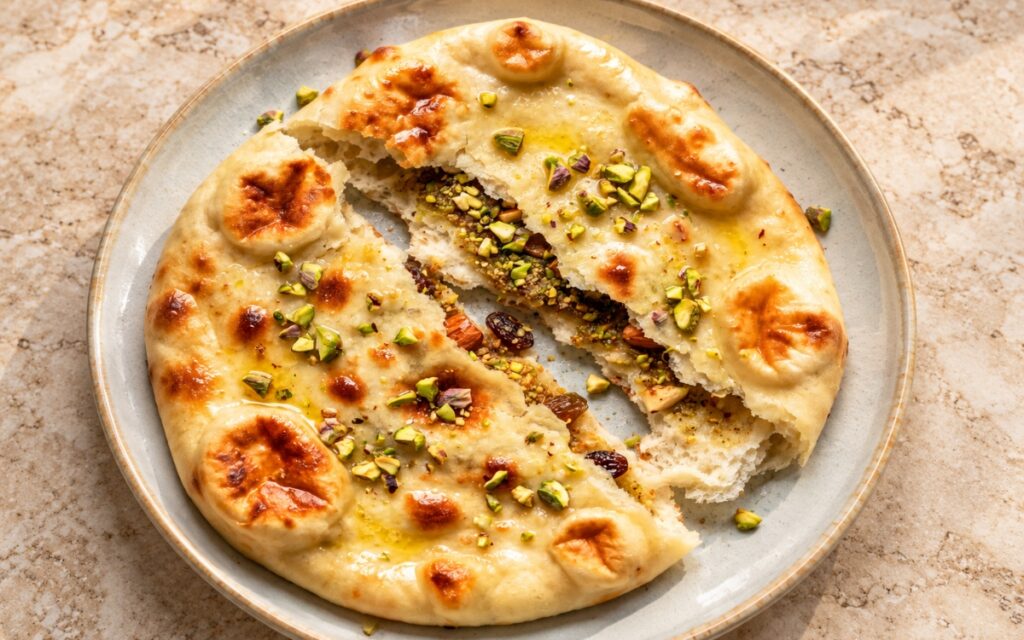
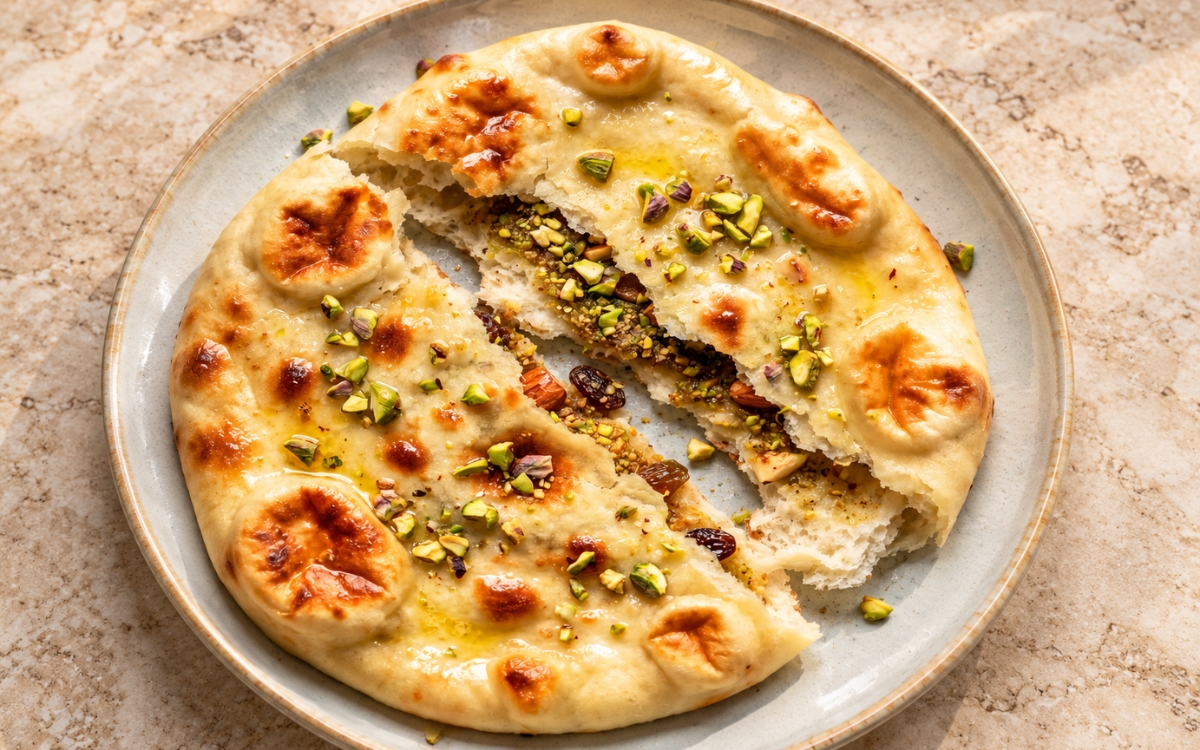
Soft, slightly chewy naan stuffed with a classic sweet nut filling of coconut, almonds, raisins, sugar, and cardamom. The filling stays moist enough to hold together but not wet, and the naan cooks up with a tender crumb, browned blisters, and a light buttery sheen.
Prep Time : 35 min
Total Time : 2 hr 15 min
Servings : 8
35 min
2 hr 15 min
8
Ingredients
For the Dough
• 500 g all-purpose flour, plus extra for dusting
• 7 g instant yeast
• 10 g sugar
• 8 g fine salt
• ½ tsp baking powder
• 60 g plain yogurt
• 30 g neutral oil or melted ghee
• 240–270 ml warm milk or warm water
For the Peshwari Filling
• 80 g unsweetened desiccated coconut
• 70 g ground almonds or very finely chopped almonds
• 60 g raisins or sultanas, finely chopped
• 50 g light brown sugar or white sugar
• 1 tsp ground cardamom
• Pinch of salt
• 2–4 tbsp milk or cream, only as needed to bind
• 20 g chopped pistachios, optional, for part of the filling or garnish
For Finishing
• 40 g melted butter or ghee
• 15–20 g chopped pistachios, for light garnish
Directions
- Make the Dough
Combine the flour, instant yeast, sugar, salt, and baking powder in a large bowl. Add the yogurt, oil or ghee, and 240 ml warm milk or water, mixing into a shaggy dough, then add more liquid only as needed until a soft, slightly tacky dough forms. Knead for 8–10 minutes until smooth and elastic — the dough should be soft and supple rather than stiff. Transfer to a lightly oiled bowl, cover, and let rise in a warm place for 1 to 1¼ hours, or until doubled. - Make the Filling
While the dough rises, mix the coconut, almonds, raisins, sugar, cardamom, and a pinch of salt. Add 2 tablespoons milk or cream first and mix, adding a little more only if needed — the filling should clump lightly when pressed in your hand without turning wet or pasty. Mix in some of the chopped pistachios if using. Keeping the filling on the drier side matters here, since a wet filling leaks during rolling and prevents the naan from puffing properly. - Divide the Dough and Filling
Punch down the dough lightly and divide it into 8 equal pieces, shaping each into a ball. Cover and let rest for 10 minutes so they relax. Divide the filling into 8 equal portions. - Stuff and Shape the Naans
Flatten one dough ball into a small round, about 10–12 cm wide, leaving the center slightly thicker than the edges. Place one portion of filling in the center, gather the edges up, and pinch tightly to seal. Turn seam-side down and let rest for 2–3 minutes, then gently roll or press into an oval or teardrop shape about 16–18 cm long. Repeat with the remaining dough and filling. Roll gently and evenly rather than pressing hard — too much pressure breaks the filling through the dough, and any thin spots can be lightly dusted with flour and patched before cooking. - Cook the Naan
Heat a cast-iron skillet, heavy frying pan, or tawa over medium-high to high heat until very hot. Place one naan onto the dry hot pan and cook for 1–2 minutes on the first side, until bubbles form and the underside has browned spots. Flip and cook the second side for 1–2 minutes more, until cooked through with deeper blistered patches, holding it briefly near a flame or under a hot broiler for extra color if you like. Transfer to a plate and immediately brush with melted butter or ghee. Repeat with the remaining naans. The finished naan should puff in places, show golden-brown blistering, and feel cooked through but still soft, with a warm, fragrant filling inside. - Finish and Serve
Brush all the cooked naans with more butter or ghee if desired and sprinkle lightly with chopped pistachios. Serve warm.
*Notes :
- A soft dough is essential for this recipe — a dough that’s too dry turns dense and is noticeably harder to stuff without tearing.
- Chopping the raisins finely, rather than leaving them whole, helps the filling distribute evenly through each naan and reduces the risk of a raisin piece tearing the dough while rolling.
- Ground almonds give a smoother, more classical filling texture than coarsely chopped ones, though both work fine if that’s what’s on hand.
- If the filling feels too loose right after mixing, letting it sit for 5 minutes allows the sugar to slightly hydrate the mixture, often bringing the texture back into the right range without adding more liquid.
Why This Recipe Works
Keeping the dough soft and slightly tacky, rather than firm, lets it stretch around the sweet filling without tearing during stuffing and rolling. Keeping the filling on the drier side — clumping when pressed but not wet — prevents it from leaking through the dough during shaping, which would otherwise stop the naan from puffing properly on the hot pan. Cooking the stuffed naan on a very hot, dry surface builds the blistered, golden-brown patches that define naan’s texture while cooking the dough through fast enough to keep the filling warm and fragrant rather than overcooked. Brushing with butter immediately after cooking adds richness and shine to the surface while it’s still hot enough to absorb it evenly.
Ingredient Breakdown
Soft, slightly tacky dough
Stretches around the sweet filling without tearing, in the same way a stuffed savory naan dough needs to.
Desiccated coconut and ground almonds
Form the body of the filling, with ground almonds specifically giving a smoother texture than coarser chopped nuts.
Finely chopped raisins
Distribute evenly through the filling and reduce the risk of tearing the dough compared to whole or roughly chopped raisins.
A small amount of milk or cream
Binds the dry filling ingredients together just enough to hold their shape without turning the mixture wet.
Melted butter, brushed on immediately after cooking
Adds richness and shine while the naan is still hot enough to absorb it evenly.
Flavor Structure Explained
This dish follows a layered balance model:
- Soft, blistered exterior (naan dough cooked on a hot dry pan)
- Sweet, nutty centerpiece (coconut and almond filling)
- Chewy, fruity texture (finely chopped raisins)
- Warm spice note (ground cardamom)
- Rich, buttery finish (melted butter and pistachio garnish)
Naan dough, cooked on a hot dry pan, provides this bread’s soft, blistered exterior, its char built through direct contact with a fully preheated surface. Coconut and ground almonds form a sweet, nutty centerpiece hidden inside, bound together just enough to hold their shape without turning wet. Finely chopped raisins add a chewy, fruity texture that distributes evenly through each bite. Ground cardamom contributes a warm spice note that ties the filling’s sweetness together. A final rich, buttery finish from the melted butter and pistachio garnish rounds out the naan right as it comes off the pan.
Common Mistakes to Avoid
- Making the filling too wet – This causes it to leak during rolling and stops the naan from puffing properly; always keep it clumping but not pasty.
- Using a dry, stiff dough – This makes the naan dense and harder to stuff; always keep the dough soft and slightly tacky.
- Pressing too hard while rolling – This breaks the filling through the dough; always roll gently and evenly from the center outward.
- Skipping the immediate butter brush – This leaves the naan less glossy and rich; always brush with melted butter right after each one comes off the pan.
Variations
Pistachio-Forward Version
Increase the pistachios in the filling itself, rather than just the garnish, for a more pronounced pistachio flavor throughout.
Sweeter Version
Increase the sugar slightly in the filling for a noticeably sweeter finished naan, closer to a dessert bread.
Nut-Free Version
Replace the almonds with extra coconut and a few more raisins for a simpler, nut-free take on the same filling.
Smaller Appetizer Version
Divide the dough and filling into 12 smaller portions instead of 8 for bite-sized sweet naans.
Storage & Make-Ahead
Make the filling up to 2 days ahead and store it in an airtight container in the refrigerator, bringing it to room temperature before stuffing.
Store leftover cooked naans in an airtight container at room temperature for up to 2 days, or in the refrigerator for up to 5 days.
Reheat in a dry skillet or a warm oven for a few minutes to bring back some softness and warmth, rather than microwaving, which can make the filling turn slightly rubbery.
Freeze uncooked stuffed naans, well wrapped, for up to 1 month, cooking from frozen on slightly lower heat to allow more time for the center to warm through.
Frequently Asked Questions
Can I make the filling ahead of time?
Yes, it keeps well in the refrigerator for up to 2 days; just bring it to room temperature before stuffing so it’s easier to work with.
Why did my filling leak out while rolling?
This usually means the filling was mixed too wet, or the dough was rolled too aggressively. Keeping the filling on the drier side and rolling gently both help prevent this.
Can I use chopped almonds instead of ground almonds?
Yes, though ground almonds give a smoother, more classical filling texture; coarsely chopped almonds will have a slightly more textured bite.
Why is my naan dense instead of soft?
This usually traces back to a dough that was too dry or under-proofed. A soft, slightly tacky dough and the full proofing time both matter for the final texture.
What else pairs well with this Peshwari naan?
Homemade Garlic Butter Naan is the savory counterpart if you want both styles on the same table, and Keema Naan offers a different, meat-stuffed version using a similar dough. Chicken Korma and Butter Chicken both pair especially well with Peshwari naan’s sweetness against their mild, creamy sauces, and Malai Kofta makes a good vegetarian option for the same reason.
Nutrition Facts
( Per Serving — 1 naan )
Calories
~500 kcal
Protein
10 g
Fat
21 g
Carbs
67 g
Calories
~500 kcal
Protein
10 g
Fat
21 g
Carbs
67 g
Related Recipes
Related Recipes

You might also like
You might also like
-

Butter Chicken
Classic butter chicken with charred marinated chicken in a smooth, velvety tomato-cream sauce, served with basmati rice for a complete meal.
-
Salted Caramel Espresso Cookies
Soft, thick espresso cookies with gooey salted caramel hidden inside and a light sprinkle of flaky salt.
-
Portokalopita
A classic Greek orange phyllo cake soaked with orange syrup, intensely moist with delicate syrup-soaked strands inside.



Peshwari Naan
Ingredients
Method
- Combine the flour, instant yeast, sugar, salt, and baking powder in a large bowl. Add the yogurt, oil or ghee, and 240 ml warm milk or water, mixing into a shaggy dough, then add more liquid only as needed until a soft, slightly tacky dough forms. Knead for 8–10 minutes until smooth and elastic — the dough should be soft and supple rather than stiff. Transfer to a lightly oiled bowl, cover, and let rise in a warm place for 1 to 1¼ hours, or until doubled.
- While the dough rises, mix the coconut, almonds, raisins, sugar, cardamom, and a pinch of salt. Add 2 tablespoons milk or cream first and mix, adding a little more only if needed — the filling should clump lightly when pressed in your hand without turning wet or pasty. Mix in some of the chopped pistachios if using. Keeping the filling on the drier side matters here, since a wet filling leaks during rolling and prevents the naan from puffing properly.
- Punch down the dough lightly and divide it into 8 equal pieces, shaping each into a ball. Cover and let rest for 10 minutes so they relax. Divide the filling into 8 equal portions.
- Flatten one dough ball into a small round, about 10–12 cm wide, leaving the center slightly thicker than the edges. Place one portion of filling in the center, gather the edges up, and pinch tightly to seal. Turn seam-side down and let rest for 2–3 minutes, then gently roll or press into an oval or teardrop shape about 16–18 cm long. Repeat with the remaining dough and filling. Roll gently and evenly rather than pressing hard — too much pressure breaks the filling through the dough, and any thin spots can be lightly dusted with flour and patched before cooking.
- Heat a cast-iron skillet, heavy frying pan, or tawa over medium-high to high heat until very hot. Place one naan onto the dry hot pan and cook for 1–2 minutes on the first side, until bubbles form and the underside has browned spots. Flip and cook the second side for 1–2 minutes more, until cooked through with deeper blistered patches, holding it briefly near a flame or under a hot broiler for extra color if you like. Transfer to a plate and immediately brush with melted butter or ghee. Repeat with the remaining naans. The finished naan should puff in places, show golden-brown blistering, and feel cooked through but still soft, with a warm, fragrant filling inside.
- Brush all the cooked naans with more butter or ghee if desired and sprinkle lightly with chopped pistachios. Serve warm.