
Malaysian Laksa Noodle Soup
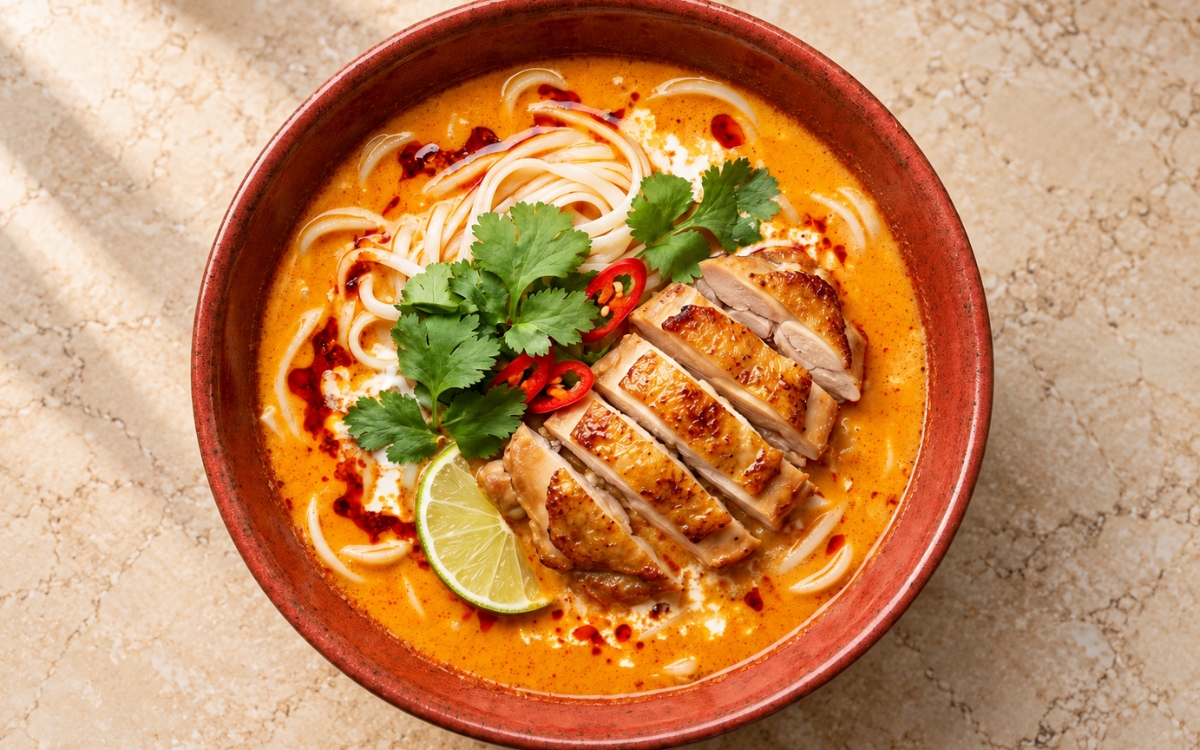
A classic Malaysian-style curry laksa — boneless chicken thighs and plentiful rice noodles in a vivid orange coconut broth built on a from-scratch spice paste, finished with cilantro, red chilli and lime, the key being a broth that is rich yet fluid enough to pour freely. Frying the blended paste for a full 8–10 minutes until the oil separates, rather than stirring it straight into the stock, is the technique this whole soup depends on for its deep, rounded flavour — an undercooked paste leaves the broth tasting raw and flat however long it simmers, the same cook-the-paste-first principle used elsewhere in this collection whenever a spice paste sets the character of a coconut broth. A gentle 12–15-minute simmer once the coconut milk goes in is what keeps the broth smooth and glossy rather than split and greasy. Searing the lightly seasoned thighs, then finishing the sliced strips briefly in the hot broth, is what keeps the chicken juicy and neatly visible on top of every bowl. The payoff is a noodle soup with real, layered richness — creamy orange broth, warm lemongrass and galangal fragrance, gentle chilli heat, springy noodles, tender chicken and a bright lime finish.

Prep Time : 30 min
Total Time : 1 hr 30 min
Servings : 4
30 min
1 hr 30 min
4
Ingredients
For the Chicken
• 600g boneless chicken thighs, about 4 large thighs
• 1 tsp fine salt
• ½ tsp white pepper
• 1 tsp light soy sauce
• 1 tsp neutral oil
• 1 tbsp neutral oil, for searing
For the Laksa Paste
• 8 dried red chillies, stemmed, seeded if preferred
• 4 shallots, roughly chopped
• 5 garlic cloves
• 25g fresh ginger, sliced
• 25g fresh galangal, sliced
• 2 lemongrass stalks, tender inner part only, sliced
• 20g fresh turmeric, sliced, or 1½ tsp ground turmeric
• 3 candlenuts, or 2 tbsp unsalted cashews as a substitute
• 1 tsp belacan (shrimp paste), lightly toasted
• 2 tbsp neutral oil, only if needed to help blend
For the Broth
• 2 tbsp neutral oil
• 750ml chicken stock
• 400ml full-fat coconut milk
• 250ml water, plus extra hot water only if needed
• 2 kaffir lime leaves
• 1 tbsp fish sauce, plus extra to taste
• 1½ tsp sugar
• 1 tsp salt, plus extra to taste
For the Noodles
• 600g cooked rice noodles, ideally medium-thick laksa noodles or rice vermicelli, from about 250–300g dried, cooked and drained
For the Garnish
• 1 small bunch cilantro, leaves picked
• 1 red chilli, thinly sliced
• 2 limes, cut into wedges
• 2–3 tbsp extra full-fat coconut milk, for drizzling, optional
Optional Chilli Oil Finish (Recommended for a glossy red drizzle and a little extra heat on top)
• 2 tbsp neutral oil
• 1 tsp chilli flakes or 1 tsp chilli paste
Directions
- Soak the Chillies and Prep the Aromatics
Put the 8 stemmed dried red chillies in a heatproof bowl, shaking out the seeds first if you prefer a milder broth, then cover them with hot water and soak for 15 minutes, until soft and pliable. Meanwhile, roughly chop the 4 shallots, peel the 5 garlic cloves, and slice the 25g ginger, 25g galangal and 20g fresh turmeric. Peel the 2 lemongrass stalks down to the pale, tender core and slice it thinly, discarding the tough outer layers, which stay fibrous however long they blend. Wrap the 1 tsp belacan in a small square of foil and toast it in a dry pan over medium heat for about 1 minute per side, until it smells strongly roasted. That brief toast is what mellows the shrimp paste’s raw pungency into a deep, rounded savouriness. - Season the Chicken
Pat the 600g chicken thighs dry with paper towels, then toss them with the 1 tsp fine salt, ½ tsp white pepper, 1 tsp light soy sauce and 1 tsp neutral oil until every surface is lightly coated. Leave them to sit for 15 minutes while you blend the paste, and no longer. This is a light seasoning step rather than a heavy marinade, so the surface should look lightly glossed, never wet or saturated. Drying the thighs first matters, since surface moisture dilutes the seasoning and later stops the meat from browning in the pan. That short, light seasoning is what flavours the chicken without curing it or competing with the broth. - Blend the Laksa Paste
Drain the soaked chillies well. Add them to a blender with the shallots, garlic, ginger, galangal, lemongrass, turmeric (or 1½ tsp ground turmeric), the 3 candlenuts or 2 tbsp cashews and the toasted belacan. Blend to a thick, mostly smooth paste, scraping down the sides often and adding the 2 tbsp neutral oil a little at a time only if the blades stall. Keep going in short bursts for 2–3 minutes, until no visible strands of lemongrass or galangal remain. If the paste still looks grainy, scrape it down and blend once more. That smooth texture is what lets the paste fry evenly and gives the finished broth a genuinely silky rather than rough body. - Sear the Chicken
Heat the 1 tbsp neutral oil in a large frying pan over medium-high heat until it shimmers. Lay in the seasoned thighs smooth side down and sear for 3–4 minutes without moving them, until light golden-brown patches form, then turn and sear for 2–3 minutes on the second side. The chicken should look lightly browned and still feel springy, not firm or dry, and it does not need to be cooked through yet. Transfer it to a board and rest for 5 minutes while the paste starts frying, then slice into thick strips. That brief, hot sear is what builds savoury browned flavour on the surface while leaving the inside juicy for its final minutes in the broth. - Fry the Laksa Paste
Heat the 2 tbsp neutral oil in a large soup pot over medium heat. Add all of the laksa paste and fry for 8–10 minutes, stirring often and scraping the base so nothing catches, until the paste darkens slightly, smells sweet and aromatic, and the oil begins to separate at the edges. The raw garlic-and-shallot smell should be completely gone, and the mixture should look glossy and concentrated. If it starts to stick or colour too quickly, lower the heat and stir in a spoonful of the measured water. That full, patient fry is what cooks out the paste’s raw edge and gives the broth its genuinely deep, rounded flavour. - Simmer the Broth
Pour in the 750ml chicken stock, 400ml coconut milk and 250ml water, then add the 2 kaffir lime leaves, 1 tbsp fish sauce, 1½ tsp sugar and 1 tsp salt. Stir well, scraping the fried paste up from the base, and bring to a gentle simmer over medium heat, which takes about 5 minutes. Simmer uncovered for 12–15 minutes, stirring occasionally so the coconut fat does not collect unevenly at the edges, and never let it reach a hard boil. The broth should turn a rich orange colour and smell rounded, fragrant and slightly sweet-savoury. That gentle, uncovered simmer is what genuinely melds the paste into the liquid while keeping the coconut milk smooth. - Cook the Noodles
While the broth simmers, bring a large pot of water to the boil. Cook the 250–300g dried rice noodles according to the package timing, usually 3–8 minutes depending on thickness, until just tender but still springy. Drain them and rinse very briefly only if they seem to be carrying on cooking or turning sticky; you should have about 600g cooked noodles. If using ready-cooked or fresh laksa noodles instead, loosen them, pour boiling water over them to warm through, then drain well. Cooking them during the simmer keeps the time line tight without leaving them waiting long. That just-tender drain is what keeps the noodles springy, since they keep softening once the hot broth goes over. - Make the Optional Chilli Oil
If using the optional chilli oil finish, warm the 2 tbsp neutral oil in a small pan over low heat for about 1 minute, until it is hot but nowhere near smoking. Stir in the 1 tsp chilli flakes or chilli paste and keep stirring for 20–30 seconds, until the oil turns a clear, vivid red and smells toasty. Take the pan off the heat straight away and tip the oil into a small bowl so the residual heat does not keep cooking the chilli. If the flakes darken towards brown or smell acrid, discard them and start again. That low, brief bloom is what draws out the chilli’s colour without turning it bitter. - Finish the Broth and Chicken
Fish out the kaffir lime leaves, then taste the broth and adjust it, adding more fish sauce or salt a little at a time if it needs seasoning. If it tastes too intense, loosen it with a splash of extra hot water; if it seems thin, simmer for a few more minutes. Slide the sliced chicken into the gently simmering broth for 2–3 minutes, or a minute longer if needed, until it reaches 74°C at the thickest strip, then lift it out with a slotted spoon. If the broth looks slightly split, lower the heat and whisk gently. The finished broth should be rich but still fluid enough to pour freely. That final taste-led adjustment is what absorbs the natural variation in stock, fish sauce and coconut milk from brand to brand. - Assemble the Bowls
Divide the noodles among 4 deep bowls, about 150g each. Ladle the hot laksa broth over and around the noodles, giving each bowl a generous share, then arrange the chicken strips on top so they stay clearly visible. Scatter over the cilantro leaves and sliced red chilli, and tuck 2 lime wedges into each bowl. Finish with a light drizzle of the chilli oil and the extra coconut milk, if using. Each bowl should show abundant noodles in a vivid orange broth, with the chicken and fresh garnish bright on top. Serve immediately. That last-minute garnish is what keeps the herbs and chilli genuinely fresh and vivid against the rich, hot broth.
*Notes :
- Frying the laksa paste deserves genuine recognition as the technique most directly responsible for whether this broth tastes deep and rounded or raw and flat. The recipe’s own warning that “If the paste is undercooked, the broth will taste raw and flat” reflects simple chemistry — the aromatic compounds in chilli, shallot, galangal and turmeric bloom fully only in hot oil, so the paste needs its full 8–10 minutes before any liquid goes in.
- The smoothness of the paste deserves the same attention this technique receives throughout this collection’s other Southeast Asian curries, because texture decides how evenly the paste fries. The recipe’s own note that “A coarse paste will taste raw longer and give a rougher broth texture” explains the long blend — lemongrass and galangal are fibrous, so only the pale, tender lemongrass core goes in, and the blender keeps running until no visible strands remain.
- The gentle simmer deserves genuine respect as the detail most directly responsible for a smooth, glossy broth. The recipe’s own instruction to “Keep the broth at a gentle simmer, not a hard boil, so the coconut milk stays smooth” is exactly why the heat stays low for the full 12–15 minutes — a rolling boil breaks the coconut milk’s emulsion, so the fat separates into a greasy, curdled-looking layer on the surface.
- The broth’s final consistency deserves attention as a genuine, checkable readiness cue rather than a loose approximation. The recipe’s own guidance that the broth “should be rich but still fluid enough to pour freely around the noodles” gives a clear target — laksa is a soup rather than a thick curry, so loosen it with a splash of hot water or reduce it for a few minutes until it flows easily from the ladle.
Why This Recipe Works
This recipe works because every part of the bowl is prepared for its own job before it all comes together. Soaked dried chillies, galangal, lemongrass, fresh turmeric, candlenuts and toasted belacan are blended into a smooth paste, then fried for 8–10 minutes until the oil separates, so the broth tastes cooked, layered and genuinely aromatic. Stock and coconut milk then simmer gently for 12–15 minutes, absorbing the paste without splitting. Lightly seasoned chicken is seared first and finished briefly in the broth, so it stays juicy. Springy noodles drained just tender and fresh garnishes added last complete a rich, vivid and balanced bowl.
Ingredient Breakdown
Oil-Separated Fried Paste (8–10 Minutes)
The critical technique — a full, patient fry cooks out raw garlic and shallot for a deep, rounded broth.
Smooth Blended Laksa Paste
The structural foundation — thorough blending removes lemongrass and galangal fibres, keeping the broth silky rather than rough.
Galangal and Toasted Belacan
The defining flavour ingredient — together they give the piney, savoury depth behind genuine Southeast Asian laksa character.
Gentle Simmer (Never a Hard Boil)
The critical safeguard — low, steady heat keeps the coconut milk emulsified, smooth and glossy instead of split.
Boneless Chicken Thighs
The critical ingredient choice — thigh meat stays juicy through searing and finishing in the broth, where breast would turn dry.
Just-Tender Rice Noodles
The critical timing technique — draining them while still springy leaves room for softening once the hot broth goes over.
Cilantro, Red Chilli and Lime
The finishing touch — fresh herbs, heat and acidity cut through the coconut richness and brighten every spoonful.
Flavor Structure Explained
This Malaysian laksa noodle soup follows a layered balance model:
- Rich, creamy foundation (full-fat coconut milk, chicken stock)
- Fragrant aromatic core (lemongrass, galangal, ginger, fresh turmeric, kaffir lime leaves)
- Warm chilli heat (soaked dried red chillies, fresh red chilli, optional chilli oil)
- Savoury-sweet depth (toasted belacan, fish sauce, soy sauce, candlenuts, sugar)
- Tender, springy body (seared chicken thighs, rice noodles)
- Bright, fresh finish (lime, cilantro)
Coconut milk and chicken stock lay the rich, creamy foundation of the broth. Lemongrass, galangal, ginger, turmeric and lime leaves build the fragrant aromatic core, while the soaked dried chillies and fresh red chilli add warm, rounded heat rather than a raw burn. Toasted belacan, fish sauce, soy, candlenuts and a little sugar give the broth genuine savoury-sweet depth. Juicy chicken and springy rice noodles give each bowl substance, and lime and cilantro bring the bright, fresh finish that ties this laksa together.
Common Mistakes to Avoid
- Leaving the Paste Coarse – This leaves fibrous lemongrass in the broth and a raw taste that lingers through the simmer. Always blend until the paste is smooth, with no visible strands remaining.
- Rushing the Paste Fry – This leaves the broth tasting raw, flat and sharp with garlic and shallot. Always fry the paste for the full 8–10 minutes, until the oil separates.
- Boiling the Broth Hard – This splits the coconut milk into a greasy, broken layer on the surface. Always keep the broth at a gentle simmer once the coconut milk goes in.
- Overcooking the Chicken When Searing – This dries out the thigh meat before it has its final minutes in the hot broth. Always sear only until lightly browned and still springy.
- Overcooking the Noodles – This leaves them soft and swollen once the hot broth is poured over them. Always drain them just tender, while they still feel springy.
Variations
Store-Bought Paste Version
Replace the homemade paste with about 4–5 tbsp good store-bought laksa paste, per the recipe’s own note, still frying it well in the oil before adding the liquids for a quicker weeknight bowl.
Prawn Stock Version
Add a small splash of prawn stock to the broth, per the recipe’s own suggestion, for a more classical seafood depth, keeping it subtle so it never overpowers the chicken.
Fresh Laksa Noodle Version
Use 600g fresh laksa noodles, per the recipe’s own note on the best noodle choice, warming them briefly in boiling water for a thicker, chewier and more traditional bite.
Milder Version
Seed all 8 dried chillies before soaking and skip the chilli oil, giving a gentler, family-friendly broth that keeps the full coconut richness and lemongrass fragrance.
Storage & Make-Ahead
Choose fresh galangal and firm lemongrass with a pale, tender core, and use full-fat coconut milk, since the recipe’s own note stresses that galangal and shrimp paste are important for proper Southeast Asian laksa character.
The laksa paste can be blended up to 3 days ahead and refrigerated in a sealed jar with plastic pressed onto its surface, or frozen in portions for up to 3 months, then thawed and fried as usual.
Store leftover broth in an airtight container in the fridge for up to 2 days, per the recipe’s own note, keeping the noodles and chicken in separate containers so the noodles do not absorb too much liquid.
Reheat the broth gently over medium-low heat until steaming, never at a hard boil, and if it splits slightly, lower the heat and whisk gently until it turns smooth again.
Warm stored noodles briefly in boiling water and add the chicken to the reheating broth for 2–3 minutes, until it reaches 74°C, then garnish freshly so the bowl stays as bright as on the first day.
Frequently Asked Questions
Why does the laksa paste need to fry for 8–10 minutes before the liquid goes in?
Frying cooks out the raw garlic and shallot and blooms the chilli, galangal and turmeric in hot oil. Once the paste darkens slightly and the oil separates, it is properly cooked, giving the broth a deep, rounded flavour that simmering raw paste never achieves.
Why should the broth only simmer gently after the coconut milk is added?
Coconut milk is an emulsion of fat and water, and a hard boil breaks it apart. A gentle simmer keeps the broth smooth and glossy, while rolling bubbles leave it split, with a greasy layer of separated coconut fat sitting on top.
Why is the chicken only seared in the pan rather than cooked through?
Searing builds browned, savoury flavour on the surface while the inside stays juicy. The sliced strips then finish in the simmering broth for 2–3 minutes until they reach 74°C, so they arrive tender rather than dry from cooking twice.
Why do the galangal and toasted belacan matter so much in this laksa?
Galangal adds a sharp, piney fragrance that ginger alone cannot match, and toasted belacan brings deep, savoury, gently funky body. Together they give the broth its genuine Southeast Asian laksa character, which is why the recipe advises against skipping both.
Are there other classic curry noodle, Southeast Asian curry, or chicken and rice dishes worth trying?
Khao Soi Chicken Curry Noodles offers another classic coconut curry noodle direction worth exploring. Singapore Curry Noodles and Tom Yum Noodle Soup are also worth trying for other spiced Southeast Asian noodle directions, and Indonesian Beef Rendang and Ginger Scallion Chicken over Rice offer a slow-cooked curry and a gentle chicken-and-rice dish worth exploring.
Nutrition Facts
( Per Serving — 1 bowl )
Calories
~840 kcal
Protein
38 g
Fat
45 g
Carbs
70 g
Calories
~840 kcal
Protein
38 g
Fat
45 g
Carbs
70 g
Related Recipes
Related Recipes
-

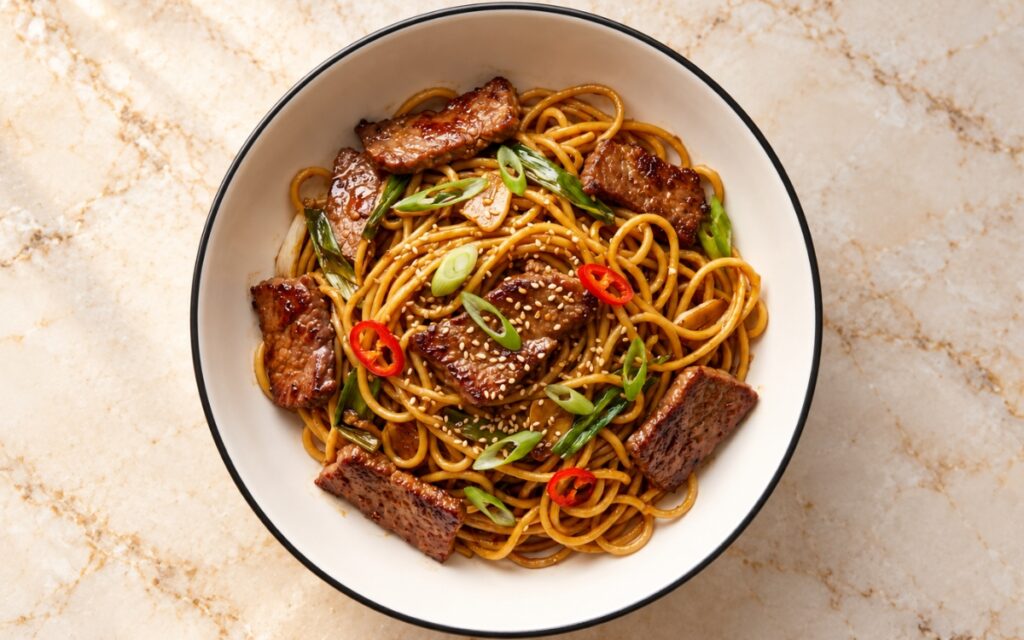
Mongolian Beef and Noodles
Lo mein-style wheat noodles tossed with seared beef, scallions, garlic and ginger in a dark, glossy savoury-sweet Mongolian-style sauce.
-
Sichuan Chili Oil Wontons
Juicy pork wontons served in a glossy Sichuan red oil sauce of chili oil, soy and black vinegar, topped with scallions, cilantro and peanuts.
-
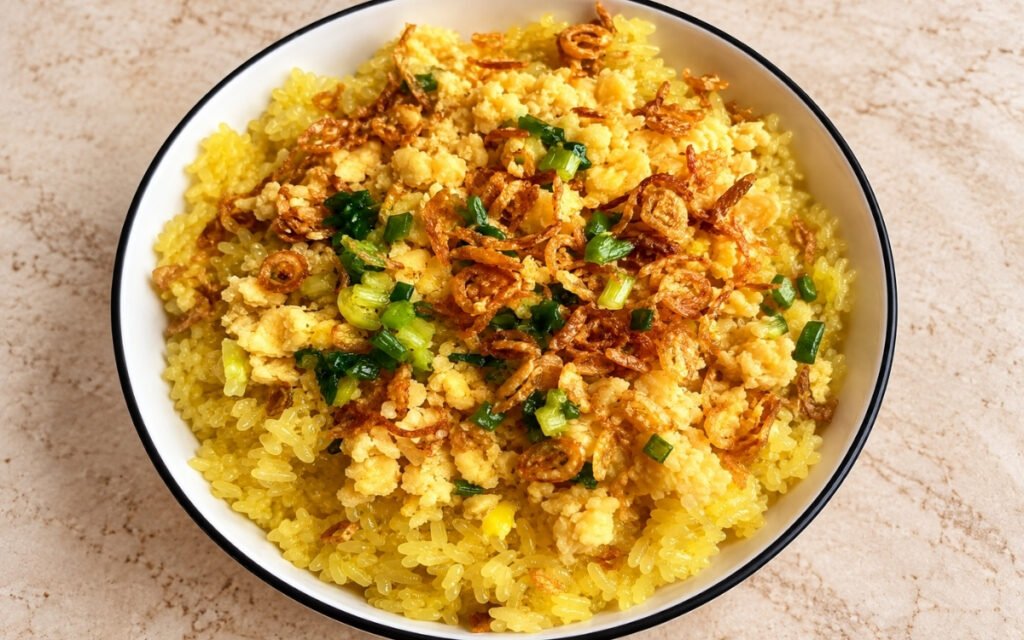
Vietnamese Turmeric Sticky Rice (Xôi Xéo)
Golden turmeric sticky rice topped with soft crumbled mung bean, crispy fried shallots, and glossy scallion oil.

You might also like
You might also like
-
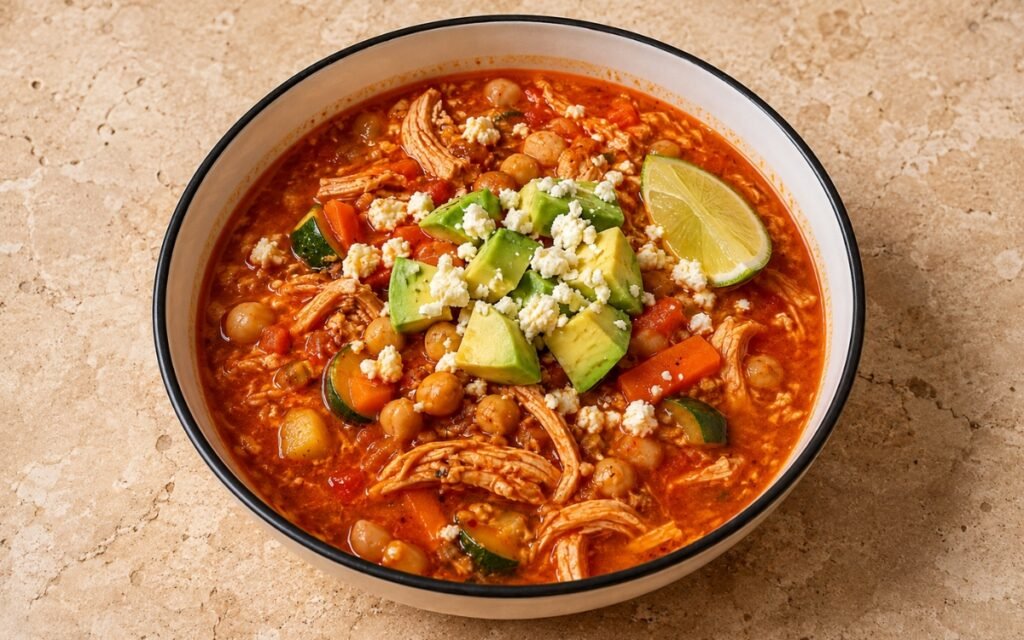
Caldo Tlalpeño
A clear chipotle-tomato chicken broth with shredded chicken, chickpeas, carrots, and zucchini, finished with avocado and queso fresco.
-
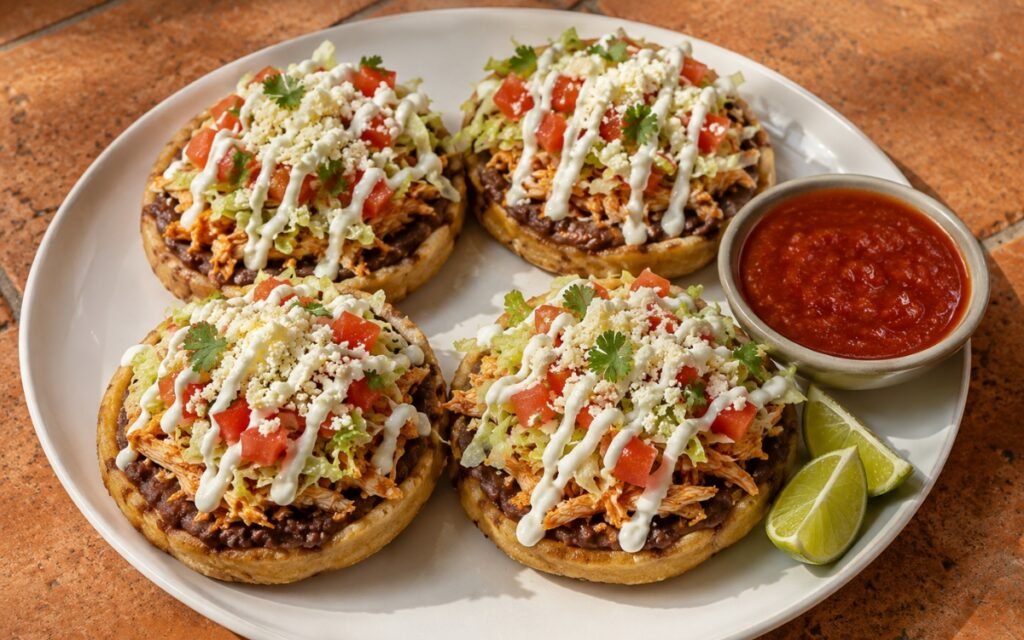
Pollo Sopes with Refried Beans
Thick masa sopes shaped with a raised rim, fried golden, and layered with refried black beans, adobo-simmered shredded chicken, lettuce, tomato, and crema.
-
Indonesian Beef Rendang
Beef chuck slow-braised in coconut milk and a fried shallot, galangal and lemongrass paste until dark and clinging, served with jasmine rice.

Malaysian Laksa Noodle Soup
Ingredients
Method
- Put the 8 stemmed dried red chillies in a heatproof bowl, shaking out the seeds first if you prefer a milder broth, then cover them with hot water and soak for 15 minutes, until soft and pliable. Meanwhile, roughly chop the 4 shallots, peel the 5 garlic cloves, and slice the 25g ginger, 25g galangal and 20g fresh turmeric. Peel the 2 lemongrass stalks down to the pale, tender core and slice it thinly, discarding the tough outer layers, which stay fibrous however long they blend. Wrap the 1 tsp belacan in a small square of foil and toast it in a dry pan over medium heat for about 1 minute per side, until it smells strongly roasted. That brief toast is what mellows the shrimp paste’s raw pungency into a deep, rounded savouriness.
- Pat the 600g chicken thighs dry with paper towels, then toss them with the 1 tsp fine salt, ½ tsp white pepper, 1 tsp light soy sauce and 1 tsp neutral oil until every surface is lightly coated. Leave them to sit for 15 minutes while you blend the paste, and no longer. This is a light seasoning step rather than a heavy marinade, so the surface should look lightly glossed, never wet or saturated. Drying the thighs first matters, since surface moisture dilutes the seasoning and later stops the meat from browning in the pan. That short, light seasoning is what flavours the chicken without curing it or competing with the broth.
- Drain the soaked chillies well. Add them to a blender with the shallots, garlic, ginger, galangal, lemongrass, turmeric (or 1½ tsp ground turmeric), the 3 candlenuts or 2 tbsp cashews and the toasted belacan. Blend to a thick, mostly smooth paste, scraping down the sides often and adding the 2 tbsp neutral oil a little at a time only if the blades stall. Keep going in short bursts for 2–3 minutes, until no visible strands of lemongrass or galangal remain. If the paste still looks grainy, scrape it down and blend once more. That smooth texture is what lets the paste fry evenly and gives the finished broth a genuinely silky rather than rough body.
- Heat the 1 tbsp neutral oil in a large frying pan over medium-high heat until it shimmers. Lay in the seasoned thighs smooth side down and sear for 3–4 minutes without moving them, until light golden-brown patches form, then turn and sear for 2–3 minutes on the second side. The chicken should look lightly browned and still feel springy, not firm or dry, and it does not need to be cooked through yet. Transfer it to a board and rest for 5 minutes while the paste starts frying, then slice into thick strips. That brief, hot sear is what builds savoury browned flavour on the surface while leaving the inside juicy for its final minutes in the broth.
- Heat the 2 tbsp neutral oil in a large soup pot over medium heat. Add all of the laksa paste and fry for 8–10 minutes, stirring often and scraping the base so nothing catches, until the paste darkens slightly, smells sweet and aromatic, and the oil begins to separate at the edges. The raw garlic-and-shallot smell should be completely gone, and the mixture should look glossy and concentrated. If it starts to stick or colour too quickly, lower the heat and stir in a spoonful of the measured water. That full, patient fry is what cooks out the paste’s raw edge and gives the broth its genuinely deep, rounded flavour.
- Pour in the 750ml chicken stock, 400ml coconut milk and 250ml water, then add the 2 kaffir lime leaves, 1 tbsp fish sauce, 1½ tsp sugar and 1 tsp salt. Stir well, scraping the fried paste up from the base, and bring to a gentle simmer over medium heat, which takes about 5 minutes. Simmer uncovered for 12–15 minutes, stirring occasionally so the coconut fat does not collect unevenly at the edges, and never let it reach a hard boil. The broth should turn a rich orange colour and smell rounded, fragrant and slightly sweet-savoury. That gentle, uncovered simmer is what genuinely melds the paste into the liquid while keeping the coconut milk smooth.
- While the broth simmers, bring a large pot of water to the boil. Cook the 250–300g dried rice noodles according to the package timing, usually 3–8 minutes depending on thickness, until just tender but still springy. Drain them and rinse very briefly only if they seem to be carrying on cooking or turning sticky; you should have about 600g cooked noodles. If using ready-cooked or fresh laksa noodles instead, loosen them, pour boiling water over them to warm through, then drain well. Cooking them during the simmer keeps the time line tight without leaving them waiting long. That just-tender drain is what keeps the noodles springy, since they keep softening once the hot broth goes over.
- If using the optional chilli oil finish, warm the 2 tbsp neutral oil in a small pan over low heat for about 1 minute, until it is hot but nowhere near smoking. Stir in the 1 tsp chilli flakes or chilli paste and keep stirring for 20–30 seconds, until the oil turns a clear, vivid red and smells toasty. Take the pan off the heat straight away and tip the oil into a small bowl so the residual heat does not keep cooking the chilli. If the flakes darken towards brown or smell acrid, discard them and start again. That low, brief bloom is what draws out the chilli’s colour without turning it bitter.
- Fish out the kaffir lime leaves, then taste the broth and adjust it, adding more fish sauce or salt a little at a time if it needs seasoning. If it tastes too intense, loosen it with a splash of extra hot water; if it seems thin, simmer for a few more minutes. Slide the sliced chicken into the gently simmering broth for 2–3 minutes, or a minute longer if needed, until it reaches 74°C at the thickest strip, then lift it out with a slotted spoon. If the broth looks slightly split, lower the heat and whisk gently. The finished broth should be rich but still fluid enough to pour freely. That final taste-led adjustment is what absorbs the natural variation in stock, fish sauce and coconut milk from brand to brand.
- Divide the noodles among 4 deep bowls, about 150g each. Ladle the hot laksa broth over and around the noodles, giving each bowl a generous share, then arrange the chicken strips on top so they stay clearly visible. Scatter over the cilantro leaves and sliced red chilli, and tuck 2 lime wedges into each bowl. Finish with a light drizzle of the chilli oil and the extra coconut milk, if using. Each bowl should show abundant noodles in a vivid orange broth, with the chicken and fresh garnish bright on top. Serve immediately. That last-minute garnish is what keeps the herbs and chilli genuinely fresh and vivid against the rich, hot broth.