
Japanese Curry Udon
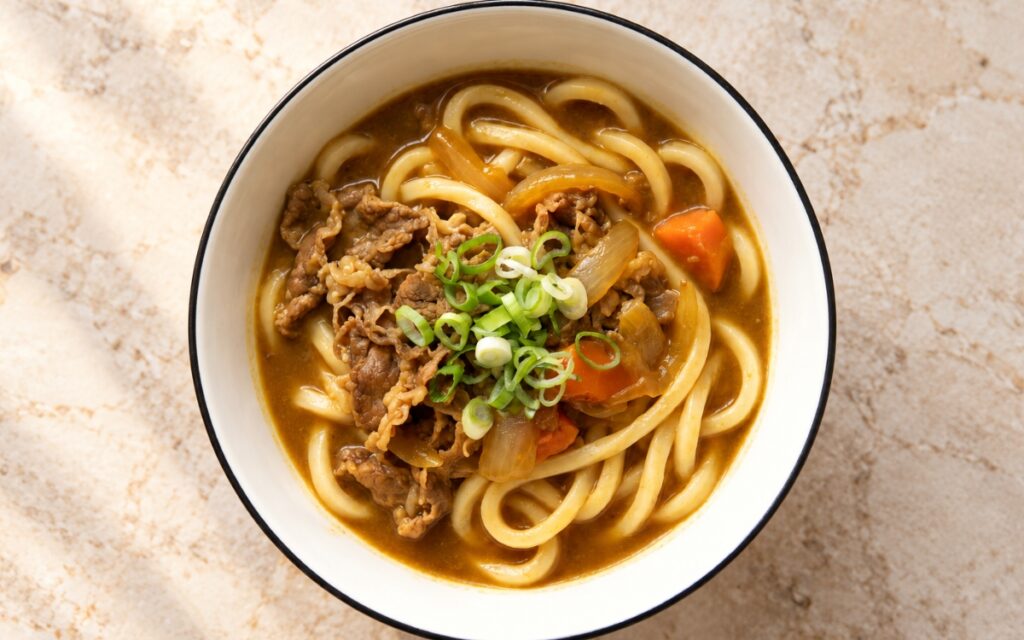
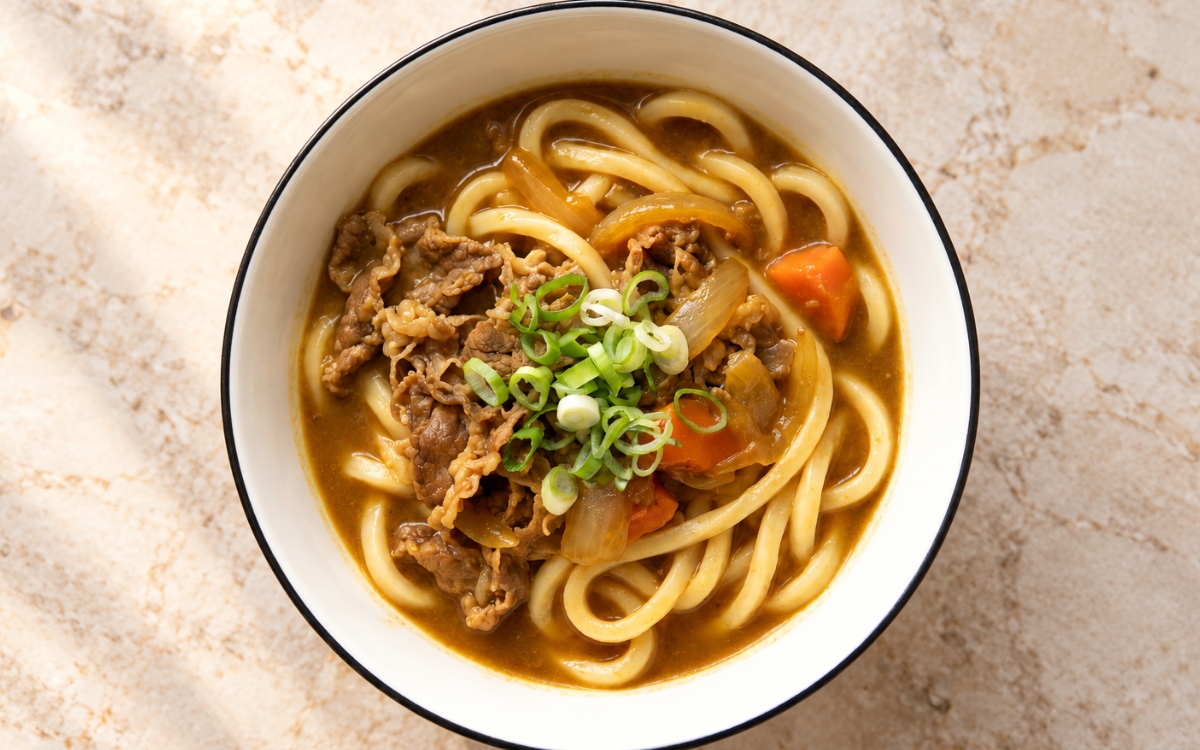
A classic Japanese curry udon built from thick, chewy udon noodles in a glossy, golden-brown curry broth with thinly sliced beef, softened onion, and small pieces of carrot, finished with fresh scallion and kept looser than plate curry, the key being a gentle dashi base that stays rounded rather than heavy. Dissolving the curry roux into the simmering dashi a little at a time over low heat, rather than dropping the blocks in all at once, is the technique this whole broth depends on for a smooth, glossy, lightly thickened finish — large pieces added to hot liquid clump and catch on the base of the pot, leaving a lumpy sauce that tastes floury, the same dissolve-gradually-over-gentle-heat principle used elsewhere in this collection whenever a roux-based sauce must stay silky. Softening the onions slowly without browning them is what keeps the broth mellow and sweet instead of sharp or roasted. Adding the paper-thin beef only after the broth is smooth is what lets it cook in seconds and stay tender. The payoff is a bowl with real, comforting depth — springy udon coated in a glossy curry broth, silky onion, tender carrot, and soft, juicy beef under a bright scatter of scallion.
Prep Time : 15 min
Total Time : 40 min
Servings : 4
15 min
40 min
4
Ingredients
For the Noodles
• 800g fresh or frozen udon noodles, 4 portions
For the Beef and Vegetables
• 350–400g very thinly sliced beef, shabu-shabu or hot pot style, ribeye, chuck roll, or sirloin
• 2 medium yellow onions, halved and thinly sliced
• 1 medium carrot, peeled and cut into small, thin half-moons or small chunks
• 2–3 scallions, finely sliced, for garnish
For the Curry Broth
• 1 tbsp neutral oil
• 1,000ml dashi stock
• 3 tbsp soy sauce
• 2 tbsp mirin
• 1 tsp sugar
• 90–120g Japanese curry roux blocks, chopped
• 1–2 tsp cornstarch mixed with 1 tbsp cold water, only if needed to adjust thickness
Directions
- Prep the Ingredients
Halve the 2 medium yellow onions and slice them thinly and evenly, then peel the carrot and cut it into small, thin half-moons so it softens quickly in the broth. Separate the 350–400g of beef slices if they are stuck together, chop the 90–120g of curry roux into small pieces, and finely slice the 2–3 scallions for garnish. Set everything within reach of the stove, because the cooking moves quickly once the onions go in. That small-carrot, paper-thin-beef preparation is what lets every element finish tender in the same short cooking window. - Soften the Onions and Carrot
Heat 1 tbsp neutral oil in a medium pot over medium heat, then add the onions and cook for 5–7 minutes, stirring often, until softened and just starting to turn translucent. Add the carrot and cook for 2 more minutes, keeping the heat moderate so nothing takes on deep colour. The onions should look pale gold and glossy, never dark or roasted, because this dish should stay gentle and rounded. That patient softening is what removes the sharpness from the onions and gives the finished broth its mellow sweetness. - Build the Dashi Broth
Pour in 1,000ml of dashi, then add 3 tbsp soy sauce, 2 tbsp mirin, and 1 tsp sugar, stirring to combine. Bring the pot to a gentle simmer and cook for 6–8 minutes, until the carrot pieces are just tender when pierced and the onions are completely soft. Keep the bubbles lazy rather than rolling, so the dashi stays clear and fragrant. That short simmer is what seasons the vegetables and builds a savoury-sweet base before the roux ever goes in. - Dissolve the Curry Roux
Lower the heat to low, or lift the pot off the burner, and add the chopped roux a little at a time, stirring after each addition until it dissolves completely before adding more. Simmer gently for 2–3 minutes, until the broth turns glossy and golden-brown and lightly coats the back of a spoon without looking heavy like plate curry. If it is too thin, simmer 1–2 minutes more or stir in the cornstarch slurry of 1–2 tsp cornstarch and 1 tbsp cold water; if it is too thick, loosen it with a splash of hot dashi. That gradual, low-heat dissolving is what prevents clumps and keeps the broth smooth. - Cook the Beef
Once the broth is completely smooth, add the thinly sliced beef and push the slices apart with chopsticks or a spoon so they do not clump. Simmer gently for 1–2 minutes, just until the beef changes from red to pale brown and turns tender, then lower the heat further. Never let the broth boil hard at this stage, since thin beef tightens and turns tough within moments. That brief, gentle simmer is what leaves the beef silky and juicy instead of grey and chewy. - Prepare the Udon
Cook the 800g of udon according to the package instructions: frozen udon usually needs 1–2 minutes in boiling water, while fresh vacuum-packed udon needs only a brief loosening in hot water. Drain well, rinsing only if the package requires it, and divide the hot noodles among 4 bowls. The udon should stay thick, springy, and chewy rather than soft. That quick cook and thorough drain are what keep the noodles bouncy and stop stray water from thinning the curry broth. - Assemble and Serve
Ladle the hot curry broth, with the beef, onions, and carrots, over the udon so the noodles are partly submerged but still visible. Scatter the finely sliced scallions over the top and serve immediately while the bowls are piping hot. If the broth thickens as it waits, loosen it with a splash of hot dashi or hot water and rebalance with a little soy sauce. That immediate service is what keeps the broth silky and lightly coating, since curry thickens steadily as it cools.
*Notes :
- Dissolving the roux gradually deserves genuine recognition as the technique most directly responsible for a smooth, glossy broth. Roux blocks are packed with flour and fat, so large pieces melt unevenly in hot liquid and form stubborn lumps, whereas small additions stirred in over low heat disperse evenly and thicken the broth in a controlled way.
- Softening the onions without browning them deserves the same attention this technique receives throughout this collection’s other gentle, rounded noodle soups. Deep browning turns the sugars dark and bitter and pushes the broth towards a roasted plate-curry flavour, while patient softening keeps it sweet, mellow, and light enough to suit a bowl of udon.
- Using paper-thin beef and a very short simmer deserves genuine respect as the detail most directly responsible for tender meat. Shabu-shabu slices cook through in a minute or two, and any longer or any harder boil tightens the proteins and leaves the beef dry and chewy in an otherwise silky bowl.
- The thickness of the broth deserves attention as a genuine, checkable readiness cue rather than a loose approximation. It should coat a spoon lightly yet still run freely, looser than curry rice and thicker than ordinary noodle soup, because a heavy sauce clings to the udon in clumps while a watery one slides straight off.
Why This Recipe Works
This recipe works because a gently simmered dashi base, seasoned with soy sauce, mirin, and a little sugar, gives the curry a Japanese backbone before any roux is added. Onions softened slowly without browning make the broth sweet and mellow rather than sharp. Dissolving the roux a little at a time over low heat keeps the sauce smooth and lightly thickened. Paper-thin beef cooks in moments in the finished broth and stays tender, and thick, springy udon carries the glossy curry in every bite.
Ingredient Breakdown
Curry Roux Blocks (Added Gradually)
The critical technique — small pieces dissolved slowly over low heat give a smooth, glossy, lightly thickened broth without clumps.
Thinly Sliced Beef (Shabu-Shabu Style)
The critical ingredient choice — paper-thin slices cook in a minute or two and stay tender, where thick cuts would turn tough.
Dashi Stock
The flavour foundation — it gives the broth its distinctly Japanese savoury depth, which plain stock cannot quite match behind the curry.
Gently Softened Yellow Onions
The core flavour-building stage — slow, pale cooking brings out mellow sweetness and body without any dark, roasted bitterness.
Thick Udon Noodles (Drained Well)
The structural foundation — their springy, chewy bite stands up to the rich broth, provided they are not overcooked or left wet.
Soy Sauce and Mirin
The seasoning balance — salty umami and gentle sweetness round the roux so the broth tastes layered rather than flat or one-note.
Sliced Scallion Garnish
The finishing touch — a fresh, sharp green scatter cuts through the rich curry and brightens each bowl.
Flavor Structure Explained
This Japanese curry udon follows a layered balance model:
- Chewy, springy foundation (thick udon noodles)
- Savoury umami base (dashi, soy sauce)
- Warm, spiced richness (Japanese curry roux)
- Mellow sweet balance (softened onion, carrot, mirin, sugar)
- Fresh, sharp finishing note (sliced scallion)
Thick udon noodles give the bowl its springy, chewy base. Dashi and soy sauce lay down a savoury umami foundation, and the curry roux layers warm spice and gentle richness over it. Softened onion, carrot, mirin, and a little sugar round everything with mellow sweetness so the broth never turns heavy or harsh. Fresh scallion adds a crisp, bright finish that ties the Japanese curry udon together.
Common Mistakes to Avoid
- Dropping the Roux In All at Once – This leaves large pieces that melt unevenly and form stubborn lumps in the broth. Always chop the roux and add it a little at a time over low heat, stirring until dissolved.
- Browning the Onions Deeply – This pushes the broth towards a dark, roasted flavour that overwhelms the gentle dashi base. Always cook the onions over medium heat until just soft and translucent.
- Boiling the Broth After Adding the Beef – This tightens the paper-thin slices and leaves them dry and chewy. Always keep the simmer gentle and cook the beef for only 1–2 minutes.
- Overcooking the Udon – This turns the thick noodles soft and mushy so they lose their springy, chewy bite. Always follow the package time and drain the noodles well.
- Leaving the Broth Too Thick or Too Thin – This either clings to the noodles like plate curry or runs off them like plain soup. Always adjust with a cornstarch slurry or a splash of hot dashi until it lightly coats a spoon.
Variations
Chicken Version
Replace the beef with thinly sliced chicken thigh and simmer it for 3–4 minutes until cooked through, giving a juicier, milder bowl that still suits the gentle dashi and curry broth.
Fried Tofu Version
Add strips of aburaage fried tofu to the broth with the carrot, so they soak up the curry and give a sweet, spongy contrast to the chewy noodles.
Spicier Version
Choose a hot-grade Japanese curry roux in place of the mild one, or finish each bowl with a pinch of shichimi togarashi, for a warmer, sharper broth that keeps the same silky texture.
Katsu Topping Version
Top each bowl with a sliced, freshly fried pork or chicken cutlet just before serving, which adds a crisp, savoury contrast, though the coating softens quickly in the hot broth.
Storage & Make-Ahead
Japanese curry udon is best served immediately, because the udon keeps absorbing the broth and the curry thickens steadily as it sits, so plan to eat each bowl while the noodles are springy and the broth is glossy.
The curry broth without the beef can be made up to 2 days ahead and refrigerated in an airtight container, since the roux and vegetables hold well and the flavour deepens overnight.
Reheat the broth gently over low heat, loosening it with a splash of hot dashi or water and adjusting the seasoning with a little soy sauce, then add the beef only in the last minute or two.
Keep the cooked udon separate from the broth and refrigerate it for up to 1 day, then loosen it in hot water for a few seconds before serving so it stays springy rather than gummy.
Leftover broth with the beef keeps refrigerated for up to 2 days, although the beef firms on reheating, and the curry broth also freezes for up to 1 month without the noodles.
Frequently Asked Questions
Why is the curry roux added a little at a time over low heat?
Roux blocks are dense with flour and fat, so dropping them in whole leaves clumps that melt unevenly, whereas small additions stirred over gentle heat dissolve fully and thicken the broth into a smooth, glossy sauce.
Why are the onions softened without browning?
Pale, patient softening releases their sweetness and keeps the broth mellow and rounded, whereas deep browning adds dark, roasted notes that turn the dish towards heavy plate curry and bury the gentle dashi flavour.
Why is the beef added only after the broth is smooth?
Paper-thin beef cooks in 1–2 minutes, so adding it to a finished, gently simmering broth keeps it tender, whereas simmering it while the roux dissolves would toughen it and cloud the sauce.
Why should the broth be thinner than Japanese curry rice?
Udon needs a sauce that coats lightly and still flows around the noodles, so a broth looser than plate curry and thicker than ordinary noodle soup clings without clumping or turning the bowl heavy.
Are there other classic Japanese curry, udon, or comfort bowl dishes worth trying?
Katsu Curry — Japanese Pork Cutlet Curry offers another classic Japanese curry direction worth exploring. Yaki Udon Stir-Fry Noodles and Kimchi Udon Stir-Fry Noodles are also worth trying for other udon directions, and Katsudon and Miso Butter Corn Ramen offer other comforting Japanese bowls worth exploring.
Nutrition Facts
( Per Serving )
Calories
~690 kcal
Protein
30 g
Fat
27 g
Carbs
80 g
Calories
~690 kcal
Protein
30 g
Fat
27 g
Carbs
80 g
Related Recipes
Related Recipes
-

Orange Chicken Rice Bowl
Crisp fried chicken coated in thick glossy orange sauce, served over jasmine rice with steamed broccoli, sesame seeds, scallions, and orange zest.
-
Kung Pao Chicken
Small seared chicken cubes in a glossy soy-chili glaze with dried red chilies, Sichuan peppercorns, roasted peanuts, scallions and green bell pepper pieces.
-
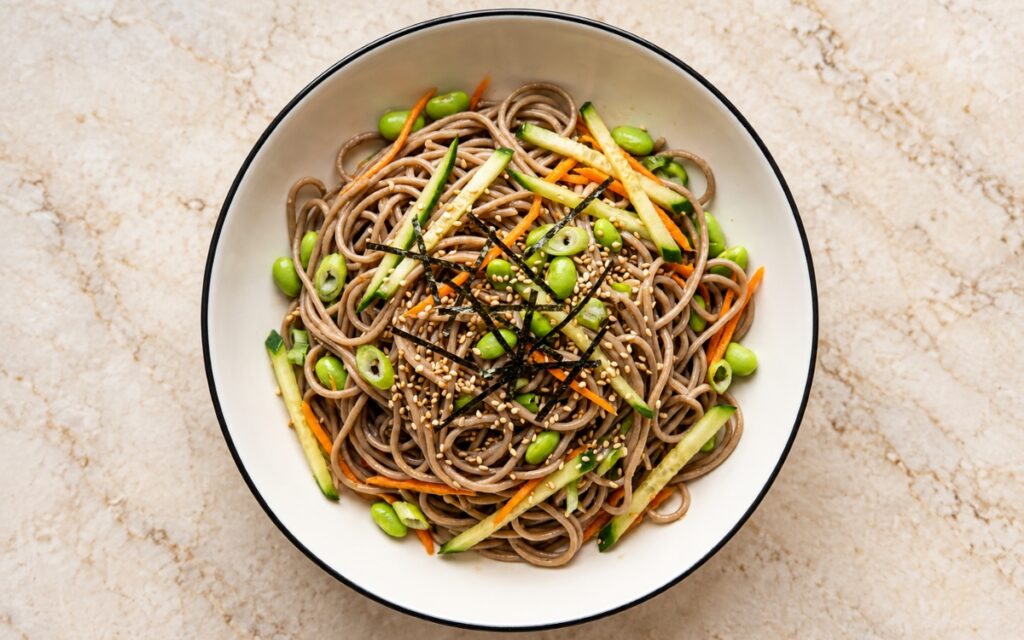
Cold Soba Noodle Salad
Chilled buckwheat soba in a glossy soy-sesame dressing with crisp cucumber, carrot, scallions, edamame, sesame seeds, and fine nori strips.


You might also like
You might also like
-
Chicken Pad Thai
Stir-fried flat rice noodles with browned chicken, egg, bean sprouts and garlic chives in a tamarind sauce, topped with peanuts and lime.
-
Alambre Tacos
Soft corn tortillas filled with charred steak, smoky bacon, blistered peppers and onions, and melted Oaxaca cheese, finished with salsa roja, cilantro, and scallions.
-
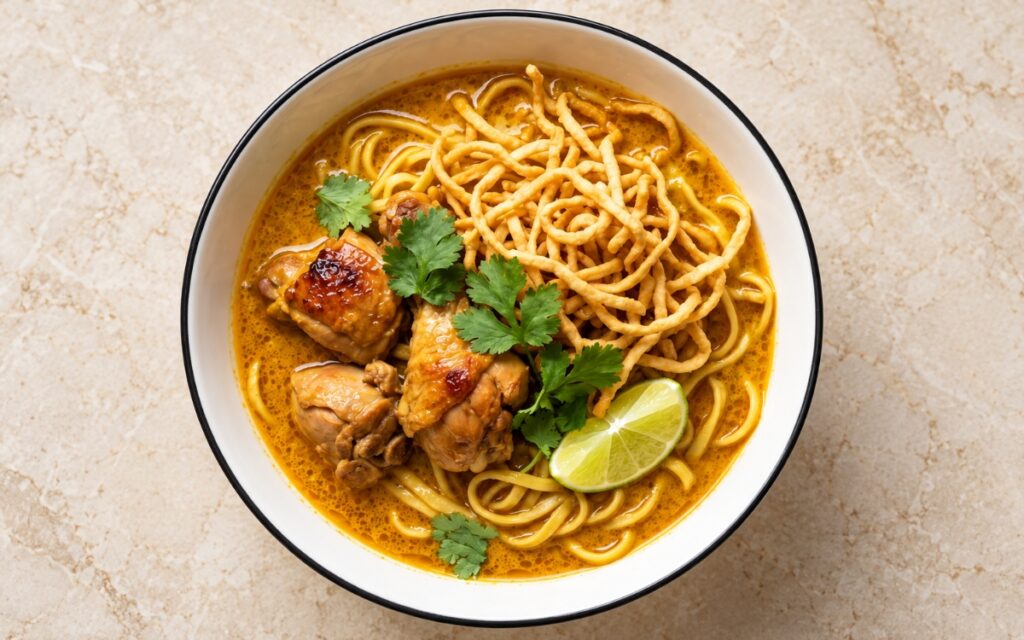
Khao Soi Chicken Curry Noodles
Chicken thighs in a golden coconut curry broth over egg noodles, topped with crisp fried noodles, cilantro, lime and sharp pickled garnishes.


Japanese Curry Udon
Ingredients
Method
- Halve the 2 medium yellow onions and slice them thinly and evenly, then peel the carrot and cut it into small, thin half-moons so it softens quickly in the broth. Separate the 350–400g of beef slices if they are stuck together, chop the 90–120g of curry roux into small pieces, and finely slice the 2–3 scallions for garnish. Set everything within reach of the stove, because the cooking moves quickly once the onions go in. That small-carrot, paper-thin-beef preparation is what lets every element finish tender in the same short cooking window.
- Heat 1 tbsp neutral oil in a medium pot over medium heat, then add the onions and cook for 5–7 minutes, stirring often, until softened and just starting to turn translucent. Add the carrot and cook for 2 more minutes, keeping the heat moderate so nothing takes on deep colour. The onions should look pale gold and glossy, never dark or roasted, because this dish should stay gentle and rounded. That patient softening is what removes the sharpness from the onions and gives the finished broth its mellow sweetness.
- Pour in 1,000ml of dashi, then add 3 tbsp soy sauce, 2 tbsp mirin, and 1 tsp sugar, stirring to combine. Bring the pot to a gentle simmer and cook for 6–8 minutes, until the carrot pieces are just tender when pierced and the onions are completely soft. Keep the bubbles lazy rather than rolling, so the dashi stays clear and fragrant. That short simmer is what seasons the vegetables and builds a savoury-sweet base before the roux ever goes in.
- Lower the heat to low, or lift the pot off the burner, and add the chopped roux a little at a time, stirring after each addition until it dissolves completely before adding more. Simmer gently for 2–3 minutes, until the broth turns glossy and golden-brown and lightly coats the back of a spoon without looking heavy like plate curry. If it is too thin, simmer 1–2 minutes more or stir in the cornstarch slurry of 1–2 tsp cornstarch and 1 tbsp cold water; if it is too thick, loosen it with a splash of hot dashi. That gradual, low-heat dissolving is what prevents clumps and keeps the broth smooth.
- Once the broth is completely smooth, add the thinly sliced beef and push the slices apart with chopsticks or a spoon so they do not clump. Simmer gently for 1–2 minutes, just until the beef changes from red to pale brown and turns tender, then lower the heat further. Never let the broth boil hard at this stage, since thin beef tightens and turns tough within moments. That brief, gentle simmer is what leaves the beef silky and juicy instead of grey and chewy.
- Cook the 800g of udon according to the package instructions: frozen udon usually needs 1–2 minutes in boiling water, while fresh vacuum-packed udon needs only a brief loosening in hot water. Drain well, rinsing only if the package requires it, and divide the hot noodles among 4 bowls. The udon should stay thick, springy, and chewy rather than soft. That quick cook and thorough drain are what keep the noodles bouncy and stop stray water from thinning the curry broth.
- Ladle the hot curry broth, with the beef, onions, and carrots, over the udon so the noodles are partly submerged but still visible. Scatter the finely sliced scallions over the top and serve immediately while the bowls are piping hot. If the broth thickens as it waits, loosen it with a splash of hot dashi or hot water and rebalance with a little soy sauce. That immediate service is what keeps the broth silky and lightly coating, since curry thickens steadily as it cools.