
Khao Soi Chicken Curry Noodles
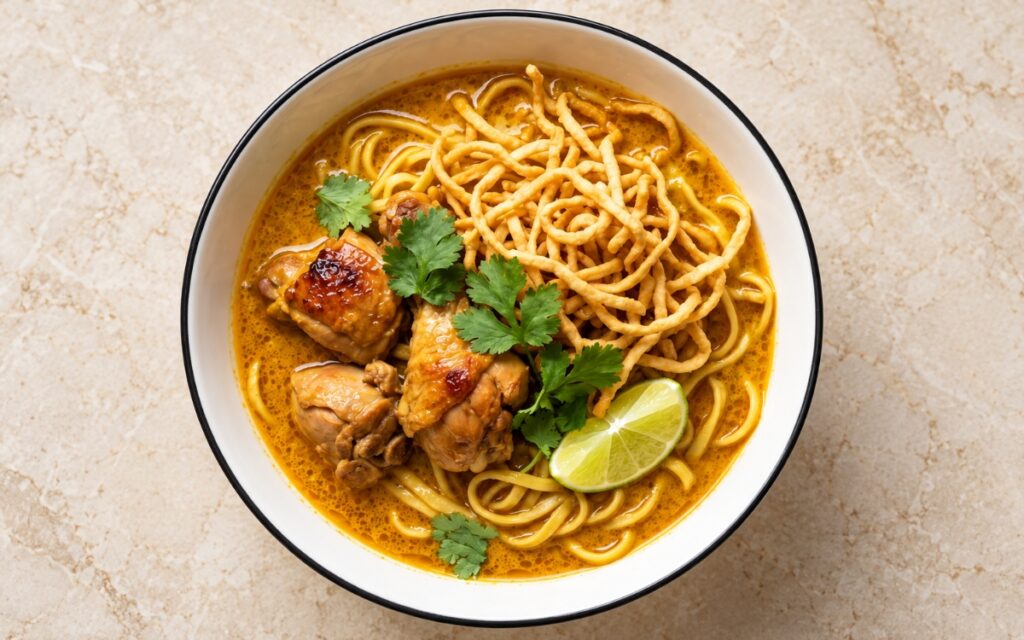
A classic Northern Thai-style khao soi — tender chicken thighs simmered in a rich, golden coconut curry broth over soft egg noodles, crowned with a nest of crisp fried noodles and finished with cilantro, lime and sharp pickled garnishes, the key being a broth that is richer than a soup yet still loose enough to pour. Frying the thick homemade curry paste in coconut cream until small beads of oil separate, rather than simply stirring it into the liquid, is the technique this whole curry depends on for its deep, rounded flavour — paste added straight to the broth stays harsh, raw-tasting and thin however long it simmers, the same fry-until-it-splits principle used elsewhere in this collection whenever a curry paste sets the character of a coconut broth. A gentle 18–22-minute simmer is what keeps the coconut milk smooth and the chicken thighs genuinely tender rather than tight. Boiling most of the noodles and frying a small portion until crisp is what gives every bowl its signature soft-and-crunchy contrast. The payoff is a noodle bowl with real, layered richness — creamy golden broth, warm toasted spice, juicy chicken, springy noodles, a crackling fried topping and a bright, sour finish.
Prep Time : 30 min
Total Time : 1 hr 5 min
Servings : 4
30 min
1 hr 5 min
4
Ingredients
For the Chicken
• 800g boneless skinless chicken thighs, cut into large bite-size pieces
• ½ tsp salt
• ¼ tsp black or white pepper
For the Curry Paste
• 6 dried mild-to-medium red chillies, stemmed and seeded
• 3 shallots, roughly chopped
• 5 garlic cloves
• 20g fresh ginger, sliced
• 20g fresh turmeric, sliced, or 1½ tsp ground turmeric
• 1 tbsp coriander seeds
• 1 tsp cumin seeds
• ½ tsp ground cardamom, or seeds from 3 green cardamom pods
• 1 tbsp mild curry powder
• 1 tsp shrimp paste, optional but recommended for deeper savoury depth
• 2–3 tbsp water, only as needed to help blend
For the Curry Broth
• 2 tbsp neutral oil
• 800ml full-fat coconut milk, divided
• 500ml chicken stock
• 1 tbsp fish sauce, plus extra to taste
• 1½ tsp palm sugar or light brown sugar, plus extra to taste
• 1 tbsp light soy sauce
• 1 tbsp Thai red curry paste, optional, only for a deeper chilli colour
• Extra chicken stock or hot water, to loosen, only if needed
• Salt, only if needed at the end
For the Noodles
• 600g fresh egg noodles, separated, about 480g for boiling and 120g for the crisp fried topping
• Neutral oil, for deep-frying
• 1 tsp neutral oil, for tossing the boiled noodles, only if needed
For the Garnish
• 1 small handful fresh cilantro leaves
• 2 limes, cut into wedges
Optional Traditional Garnishes (Recommended for the sharp, acidic contrast that khao soi needs)
• 120g pickled mustard greens, chopped
• 1 small shallot or ¼ red onion, very thinly sliced
• Chilli oil or chilli flakes, to serve
Directions
- Soften the Chillies and Toast the Spices
Put the 6 stemmed, seeded dried chillies in a heatproof bowl, cover them with hot water and soak for 10–15 minutes, until soft and pliable. Meanwhile, toast the 1 tbsp coriander seeds and 1 tsp cumin seeds in a dry pan over medium heat for 1–2 minutes, shaking often, until fragrant and only a shade darker, never deep brown. Tip them straight onto a plate to stop the cooking. While the chillies soak, roughly chop the 3 shallots, peel the 5 garlic cloves, slice the 20g ginger and 20g fresh turmeric, and cut the 800g chicken thighs into large bite-size pieces. Drain the chillies well once softened. That brief, watchful toast is what wakes the seeds’ aromatic oils without the bitterness of scorched spice. - Blend the Curry Paste
Add the drained chillies, shallots, garlic, ginger, turmeric (or 1½ tsp ground turmeric), toasted coriander and cumin, ½ tsp ground cardamom, 1 tbsp curry powder and 1 tsp shrimp paste, if using, to a blender or small food processor. Blend to a smooth, thick paste, scraping down the sides often and adding the 2–3 tbsp water only a spoonful at a time, just enough to keep the blades moving. The paste should hold its shape on a spoon, with no visible fibres or grit from the ginger and turmeric. If it does turn loose, expect to fry it a little longer in the next stage to drive off the extra water. That thick, smooth texture is what lets the paste fry properly and gives the finished broth a silky rather than gritty body. - Fry the Paste in Coconut Cream
Season the chicken pieces with the ½ tsp salt and ¼ tsp pepper and set aside. Heat the 2 tbsp neutral oil in a wide, heavy pot over medium heat, add all of the curry paste and fry for 2–3 minutes, stirring often, until very fragrant and slightly darker. Add about 200ml of the coconut milk, taking the thick cream from the top of the cans first, and keep frying and stirring for 3–5 minutes, until the mixture thickens and small beads of reddish oil separate at the edges. The paste should smell cooked and toasty, never sharp or raw. That oil separation is what gives the broth its genuinely deeper, rounder curry flavour, since the spices bloom fully in fat rather than steeping in liquid. - Simmer the Chicken in the Curry
Add the seasoned chicken and stir to coat every piece in the fried paste, then cook for 2–3 minutes, until the surfaces turn opaque and begin to firm. Pour in the remaining 600ml coconut milk and the 500ml chicken stock, then stir in the 1 tbsp fish sauce, 1½ tsp palm sugar and 1 tbsp light soy sauce, adding the 1 tbsp Thai red curry paste now only if a deeper orange-red tone is wanted. Bring to a gentle simmer and cook, uncovered or partially covered, for 18–22 minutes, until the chicken is tender and reaches 74°C at the thickest piece. The broth should look golden, rich and lightly thickened but still pourable. That gentle simmer, never a hard boil, is what keeps the coconut milk from splitting harshly and the chicken from tightening. - Fry the Crisp Noodle Topping
While the curry simmers, set aside about 120g of the separated egg noodles for frying, keeping the remaining 480g for boiling. Pour neutral oil into a small, deep pan to a depth of about 4–5cm, no more than half full, and heat it to 170–175°C. Fry the noodles in small batches for 20–40 seconds each, until light golden, crisp and puffed in places, letting the oil return to temperature between batches. Lift them out onto paper towels to drain well. Meanwhile, bring a large pot of water to the boil for the remaining noodles. That fast, hot fry is what sets the noodles into a genuinely crunchy nest rather than a greasy, chewy tangle. - Balance the Broth
Once the chicken is cooked, taste the broth and adjust. Add more fish sauce, a little at a time, if it needs salt and savouriness, and a pinch more palm sugar if it tastes sharp rather than rounded. If the broth feels too thick, loosen it with a splash of extra stock or hot water; if it is too thin, simmer it uncovered for a few more minutes. Add salt only if it still needs it. The finished broth should be creamy but not heavy, warmly spiced, slightly sweet, salty and savoury, and rich enough to coat the noodles lightly. That final taste-led balance is what absorbs the natural variation in curry powder, fish sauce and coconut milk from brand to brand. - Boil the Egg Noodles
Drop the 480g noodles into the boiling water and cook for 1–2 minutes, just until tender but still slightly firm at the centre. Drain them immediately and rinse very briefly under cold water only if they seem to be carrying on cooking. If they look sticky, toss them with the 1 tsp neutral oil. Cook them only now, at the very end, since boiled noodles left waiting clump together and soften before the bowls are filled. That slightly firm drain is what keeps the noodles springy once they sit in the hot curry broth. - Assemble the Bowls
Divide the boiled noodles among 4 deep bowls, about 120g each. Ladle the hot curry broth and chicken over the top, making sure each bowl gets roughly 200g chicken and a generous share of broth. Pile the crisp fried noodles on top of each bowl and finish with cilantro leaves and lime wedges. If using the optional traditional garnishes, serve the 120g chopped pickled mustard greens, the thinly sliced shallot or red onion, and the chilli oil or flakes on the side, or add a little to each bowl. Serve at once. That last-minute topping is what keeps the fried noodles crisp against the soft noodles and creamy broth beneath.
*Notes :
- Frying the paste in the coconut cream deserves genuine recognition as the technique most directly responsible for whether this broth tastes deep and rounded or raw and thin. The recipe’s own note that “the paste-and-coconut-cream frying step is one of the key technical stages for authentic flavor” reflects simple chemistry — the aromatic compounds in chilli, turmeric and spice bloom in fat, so the paste must cook until oil beads separate before liquid dilutes it.
- The thickness of the curry paste deserves the same attention this technique receives throughout this collection’s other Thai curries, because texture decides how well the paste fries. A loose, watery paste steams in the pot rather than frying — the recipe’s own warning that a wet paste will “fry poorly and delay oil separation later” is exactly why the water goes in only a spoonful at a time, just enough to move the blades.
- The two-way noodle treatment deserves genuine respect as the detail most directly responsible for the bowl’s classic character. The recipe’s own note that “using both boiled and fried noodles is essential to the classical texture contrast” explains the method’s timing — the crisp nest is fried while the curry simmers and added only at the table, while the boiled noodles are drained slightly firm because they keep softening in the hot broth.
- The broth’s final consistency deserves attention as a genuine, checkable readiness cue rather than a loose approximation. The recipe’s own guidance that “khao soi broth should be richer than a normal soup but looser than a thick curry” gives a clear target — the broth should coat the noodles lightly and still pour freely, so thicken it with a few minutes’ uncovered simmering or loosen it with a splash of hot stock.
Why This Recipe Works
This recipe works because each component is handled for its own job before the bowl comes together. Soaked dried chillies, toasted whole spices and fresh turmeric are blended into a thick paste, then fried in coconut cream until the oil separates, so the curry tastes cooked, toasty and genuinely deep. Chicken thighs then simmer gently in coconut milk and stock for 18–22 minutes, turning tender while the broth stays smooth rather than split. Taste-led seasoning balances salt, sweetness and richness at the end. Boiled noodles drained slightly firm and a crisp fried topping added last give every spoonful a soft-and-crunchy contrast in a golden, aromatic broth.
Ingredient Breakdown
Oil-Separated Fried Paste
The critical technique — frying the paste in coconut cream blooms the spices in fat for a deeper, rounder broth.
Thick, Smooth Curry Paste
The structural foundation — minimal blending water lets the paste fry properly and keeps the broth silky, not gritty.
Dried Mild-to-Medium Red Chillies
The defining flavour ingredient — soaked and blended, they give warm colour and gentle, rounded heat.
Boneless Chicken Thighs
The critical ingredient choice — thigh meat stays juicy through an 18–22-minute simmer, where breast would dry out.
Gentle Simmer (Never a Hard Boil)
The critical safeguard — steady, low heat keeps the coconut milk smooth and the chicken tender.
Crisp Fried Egg Noodles
The finishing technique — a quick fry at 170–175°C creates the crunchy nest khao soi is known for.
Lime and Traditional Garnishes
The finishing touch — lime, pickled mustard greens and shallot cut through the coconut richness with genuine acidity.
Flavor Structure Explained
This khao soi chicken curry noodles follows a layered balance model:
- Rich, creamy foundation (full-fat coconut milk, chicken stock)
- Warm, toasty spice core (toasted coriander, cumin, cardamom, curry powder, turmeric)
- Gentle chilli warmth (soaked dried red chillies, optional chilli oil)
- Savoury-sweet balance (fish sauce, light soy sauce, palm sugar, shrimp paste)
- Soft-and-crisp body (chicken thighs, boiled and fried egg noodles)
- Sharp, fresh finish (lime, pickled mustard greens, shallot, cilantro)
Coconut milk and chicken stock lay the rich, creamy foundation. Toasted coriander and cumin, cardamom, curry powder and turmeric build the warm spice core, while the soaked dried chillies add gentle, rounded warmth rather than raw heat. Fish sauce, soy sauce, palm sugar and shrimp paste balance the broth between savoury and sweet. Tender chicken and the two kinds of egg noodle give the bowl its soft-and-crisp body, and lime, pickled greens, shallot and cilantro bring the sharp, fresh finish that ties this khao soi together.
Common Mistakes to Avoid
- Adding Too Much Water to the Paste – This leaves a loose paste that steams instead of frying and delays the oil separation. Always add water a spoonful at a time, only to move the blades.
- Skipping the Coconut Cream Fry – This leaves the paste tasting raw and the finished broth thin and harsh. Always fry the paste in the thick cream until beads of oil separate.
- Boiling the Curry Hard – This splits the coconut milk harshly and toughens the chicken thighs. Always keep the broth at a gentle simmer for the full 18–22 minutes.
- Overcooking the Boiled Noodles – This leaves them soft and clumped once they sit in the hot broth. Always drain them after 1–2 minutes, while still slightly firm.
- Topping the Bowls Too Early – This lets the fried noodles absorb broth and lose their crunch before anyone eats. Always pile them on just before the bowls reach the table.
Variations
Deeper Red Version
Stir the optional 1 tbsp Thai red curry paste in with the stock, per the recipe’s own suggestion, for a deeper orange-red broth with a little more chilli depth and colour.
Bone-In Chicken Version
Use about 1kg bone-in chicken drumsticks or thighs and simmer them in the curry for 35–40 minutes, until tender and 74°C at the bone, for a richer, more traditional broth.
Ground Turmeric Version
Replace the 20g fresh turmeric with 1½ tsp ground turmeric, per the recipe’s own alternative, for an equally golden broth with a slightly earthier, less bright turmeric note.
Milder Version
Use 4 dried chillies instead of 6 and serve the chilli oil only on the side, giving a gentler, family-friendly bowl that keeps the full spice warmth and coconut richness.
Storage & Make-Ahead
Choose fresh egg noodles that are soft and pliable rather than dried at the edges, and use full-fat coconut milk, since reduced-fat versions never fry to the oil-beaded stage the broth genuinely depends on.
The curry paste can be blended up to 3 days ahead and refrigerated in a sealed jar with plastic pressed onto its surface, or frozen in portions for up to 3 months, then thawed and fried as usual.
Store leftover curry broth and chicken in an airtight container in the fridge for up to 3 days, keeping the boiled noodles and the fried noodles in separate containers, per the recipe’s own note on reheating.
Reheat the broth gently over medium-low heat until steaming, never at a hard boil, and warm the stored noodles briefly in hot water rather than in the curry so they do not turn soft.
If the curry thickens after standing, add a splash of hot stock and re-balance the seasoning before serving, and keep leftover fried noodles airtight at room temperature for up to 1 day, adding them only at serving.
Frequently Asked Questions
Why does the curry paste need to be fried in coconut cream before the rest of the liquid?
Frying blooms the paste’s spice and chilli compounds in fat and cooks out its raw, grassy edge. Once small beads of oil separate, the paste is properly cooked, giving the broth the deeper, rounder flavour that simply stirring paste into liquid never achieves.
Why are some of the egg noodles fried and the rest boiled?
The two textures are what make khao soi distinctive. Soft boiled noodles soak up the curry broth beneath, while the crisp fried nest on top adds genuine crunch and a toasty flavour, giving every spoonful a contrast neither noodle could provide alone.
Why should the boiled noodles stay slightly firm when drained?
They keep cooking once they sit in the hot curry broth. Draining them after 1–2 minutes, while still slightly firm at the centre, means they reach the table tender and springy rather than soft, swollen and clumped together.
Why are chicken thighs used instead of chicken breast?
Thigh meat carries more fat and connective tissue, so it stays juicy and genuinely tender through an 18–22-minute simmer in the curry. Breast meat is leaner and tightens at the same timing, turning dry and stringy in the broth.
Are there other classic curry noodle, coconut curry, or pickled side dishes worth trying?
Malaysian Laksa Noodle Soup offers another classic curry noodle direction worth exploring. Thai Green Curry Chicken and Singapore Curry Noodles are also worth trying for other curry-led directions, and Tom Kha Gai Coconut Chicken Soup and Pickled Red Onion offer a coconut soup and a sharp pickled side worth exploring.
Nutrition Facts
( Per Serving — 1 bowl )
Calories
~1190 kcal
Protein
60 g
Fat
64 g
Carbs
95 g
Calories
~1190 kcal
Protein
60 g
Fat
64 g
Carbs
95 g
Related Recipes
Related Recipes
-

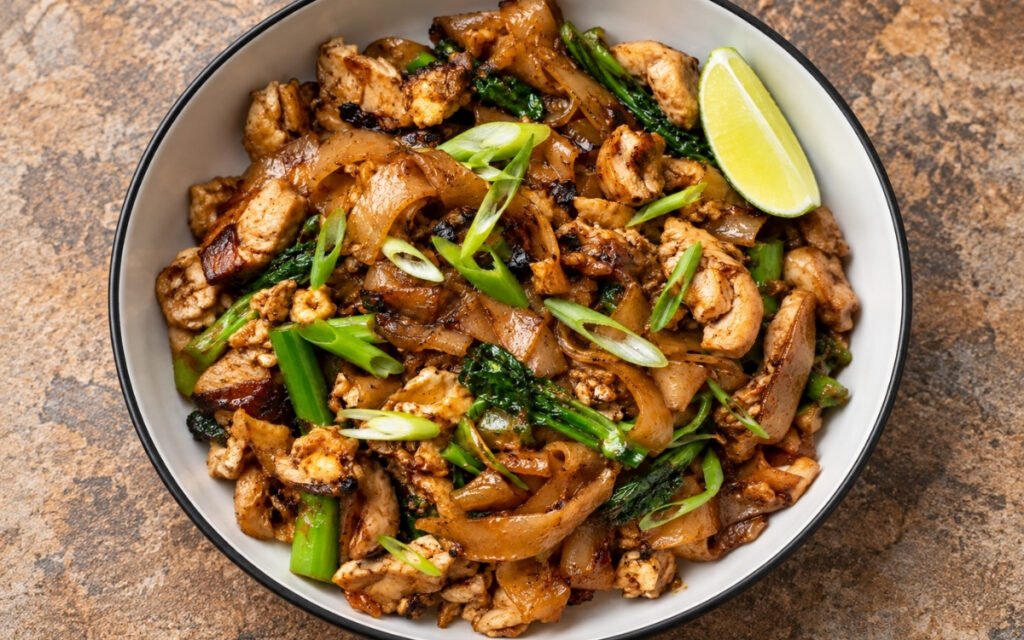
Pad See Ew — Thai Stir-Fried Wide Noodles
Wide rice noodles stir-fried with dark soy sauce, Chinese broccoli, sliced chicken, and egg over high heat for smoky wok-hei char.
-
Filipino Chicken Inasal Rice Bowl
Calamansi and lemongrass marinated chicken thighs, grilled and basted with annatto oil, served over fluffy jasmine rice with scallions and citrus.
-
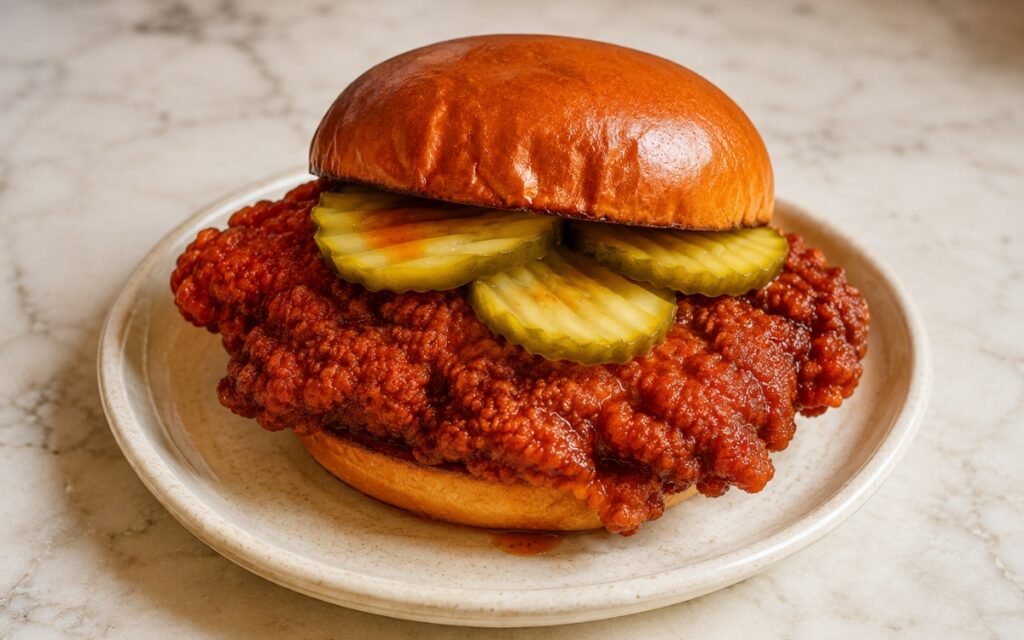
Nashville Hot Chicken Sandwich
Double-dredged, cold-water-rehydrated fried chicken coated in a fiery Nashville hot glaze, served on toasted brioche with mayonnaise and dill pickles.

You might also like
You might also like
-
Peruvian Green Sauce Chicken
Charred bone-in chicken thighs with deeply browned skin, served with fluffy white rice, raw red onion, lime wedges, and a thick, creamy green ají verde.
-
Shrimp Pad Thai
Stir-fried flat rice noodles with seared shrimp, egg, bean sprouts and garlic chives in a tamarind sauce, topped with peanuts and lime.
-
Thai Cashew Chicken Rice Bowl
Seared chicken thighs, roasted whole cashews, red and green peppers and onion in a glossy oyster-soy sauce, served over fluffy jasmine rice.


Khao Soi Chicken Curry Noodles
Ingredients
Method
- Put the 6 stemmed, seeded dried chillies in a heatproof bowl, cover them with hot water and soak for 10–15 minutes, until soft and pliable. Meanwhile, toast the 1 tbsp coriander seeds and 1 tsp cumin seeds in a dry pan over medium heat for 1–2 minutes, shaking often, until fragrant and only a shade darker, never deep brown. Tip them straight onto a plate to stop the cooking. While the chillies soak, roughly chop the 3 shallots, peel the 5 garlic cloves, slice the 20g ginger and 20g fresh turmeric, and cut the 800g chicken thighs into large bite-size pieces. Drain the chillies well once softened. That brief, watchful toast is what wakes the seeds’ aromatic oils without the bitterness of scorched spice.
- Add the drained chillies, shallots, garlic, ginger, turmeric (or 1½ tsp ground turmeric), toasted coriander and cumin, ½ tsp ground cardamom, 1 tbsp curry powder and 1 tsp shrimp paste, if using, to a blender or small food processor. Blend to a smooth, thick paste, scraping down the sides often and adding the 2–3 tbsp water only a spoonful at a time, just enough to keep the blades moving. The paste should hold its shape on a spoon, with no visible fibres or grit from the ginger and turmeric. If it does turn loose, expect to fry it a little longer in the next stage to drive off the extra water. That thick, smooth texture is what lets the paste fry properly and gives the finished broth a silky rather than gritty body.
- Season the chicken pieces with the ½ tsp salt and ¼ tsp pepper and set aside. Heat the 2 tbsp neutral oil in a wide, heavy pot over medium heat, add all of the curry paste and fry for 2–3 minutes, stirring often, until very fragrant and slightly darker. Add about 200ml of the coconut milk, taking the thick cream from the top of the cans first, and keep frying and stirring for 3–5 minutes, until the mixture thickens and small beads of reddish oil separate at the edges. The paste should smell cooked and toasty, never sharp or raw. That oil separation is what gives the broth its genuinely deeper, rounder curry flavour, since the spices bloom fully in fat rather than steeping in liquid.
- Add the seasoned chicken and stir to coat every piece in the fried paste, then cook for 2–3 minutes, until the surfaces turn opaque and begin to firm. Pour in the remaining 600ml coconut milk and the 500ml chicken stock, then stir in the 1 tbsp fish sauce, 1½ tsp palm sugar and 1 tbsp light soy sauce, adding the 1 tbsp Thai red curry paste now only if a deeper orange-red tone is wanted. Bring to a gentle simmer and cook, uncovered or partially covered, for 18–22 minutes, until the chicken is tender and reaches 74°C at the thickest piece. The broth should look golden, rich and lightly thickened but still pourable. That gentle simmer, never a hard boil, is what keeps the coconut milk from splitting harshly and the chicken from tightening.
- While the curry simmers, set aside about 120g of the separated egg noodles for frying, keeping the remaining 480g for boiling. Pour neutral oil into a small, deep pan to a depth of about 4–5cm, no more than half full, and heat it to 170–175°C. Fry the noodles in small batches for 20–40 seconds each, until light golden, crisp and puffed in places, letting the oil return to temperature between batches. Lift them out onto paper towels to drain well. Meanwhile, bring a large pot of water to the boil for the remaining noodles. That fast, hot fry is what sets the noodles into a genuinely crunchy nest rather than a greasy, chewy tangle.
- Once the chicken is cooked, taste the broth and adjust. Add more fish sauce, a little at a time, if it needs salt and savouriness, and a pinch more palm sugar if it tastes sharp rather than rounded. If the broth feels too thick, loosen it with a splash of extra stock or hot water; if it is too thin, simmer it uncovered for a few more minutes. Add salt only if it still needs it. The finished broth should be creamy but not heavy, warmly spiced, slightly sweet, salty and savoury, and rich enough to coat the noodles lightly. That final taste-led balance is what absorbs the natural variation in curry powder, fish sauce and coconut milk from brand to brand.
- Drop the 480g noodles into the boiling water and cook for 1–2 minutes, just until tender but still slightly firm at the centre. Drain them immediately and rinse very briefly under cold water only if they seem to be carrying on cooking. If they look sticky, toss them with the 1 tsp neutral oil. Cook them only now, at the very end, since boiled noodles left waiting clump together and soften before the bowls are filled. That slightly firm drain is what keeps the noodles springy once they sit in the hot curry broth.
- Divide the boiled noodles among 4 deep bowls, about 120g each. Ladle the hot curry broth and chicken over the top, making sure each bowl gets roughly 200g chicken and a generous share of broth. Pile the crisp fried noodles on top of each bowl and finish with cilantro leaves and lime wedges. If using the optional traditional garnishes, serve the 120g chopped pickled mustard greens, the thinly sliced shallot or red onion, and the chilli oil or flakes on the side, or add a little to each bowl. Serve at once. That last-minute topping is what keeps the fried noodles crisp against the soft noodles and creamy broth beneath.