
Thai Cashew Chicken Rice Bowl
A Thai-style cashew chicken rice bowl — bite-size chicken thigh pieces stir-fried with roasted whole cashews, red and green bell peppers and onion in a glossy oyster-soy sauce, spooned over fluffy jasmine rice, the key being distinct, browned chicken and cashews that still crunch. Searing the marinated chicken in a very hot wok in batches, rather than crowding it all in at once, is the technique this whole stir-fry depends on for glossy, lightly browned pieces — an overloaded pan loses its heat and steams the chicken pale and wet in its own juices, the same sear-in-batches principle used elsewhere in this collection whenever a stir-fry relies on high heat to colour the meat before the sauce goes in. A short cornstarch-and-oil marinade is what keeps the thigh pieces juicy and gives them the smooth, silky surface that holds the sauce. Adding the cashews only at the very end, after the sauce has thickened, is what keeps them distinct, crunchy and clearly visible in every bowl. The payoff is a rice bowl with real, restaurant-style shine — savoury chicken, crisp-tender peppers, sweet onion and toasty cashews in a sauce that clings to the rice rather than flooding it.

Prep Time : 25 min
Total Time : 45 min
Servings : 4
25 min
45 min
4
Ingredients
For the Jasmine Rice
• 300g jasmine rice
• 450ml water
• A small pinch of salt, optional
For the Chicken and Marinade
• 800g boneless skinless chicken thighs, cut into bite-size pieces
• 1 tbsp light soy sauce
• 1 tbsp oyster sauce
• 1 tsp fish sauce
• 2 tsp cornstarch
• ¼ tsp white pepper
• 1 tsp neutral oil
For the Sauce
• 3 tbsp oyster sauce
• 2 tbsp light soy sauce
• 1–1½ tsp dark soy sauce
• 1 tbsp fish sauce
• 2 tsp brown sugar or palm sugar
• 120ml chicken stock or water
• 2 tsp cornstarch
For the Stir-Fry
• 2–3 tbsp neutral oil, divided
• 1 large red bell pepper, cut into bite-size chunks
• 1 large green bell pepper, cut into bite-size chunks
• 1 large yellow onion, cut into medium wedges or thick slices
• 5 garlic cloves, finely chopped
• 120g roasted whole cashews, ideally unsalted
• 3 scallions, sliced on a bias, divided
• 1 small handful cilantro, roughly torn or picked, divided
Optional Dried Chillies and Chilli Jam (Classical heat and a slightly glossier, restaurant-style finish)
• 4–6 dried red chillies, broken into pieces, deseeded for milder heat
• 1 tsp chilli jam
Directions
- Cook the Jasmine Rice
Rinse the 300g jasmine rice in cold water, swirling it with your fingers and changing the water 2–3 times, until it runs mostly clear, then drain well. Combine the rice, 450ml water and the small pinch of salt, if using, in a saucepan and bring to a boil over medium-high heat. Cover tightly, reduce to very low heat and cook for 12 minutes, then take it off the heat and leave it to rest, still covered, for 10 minutes before fluffing with a fork; a rice cooker works just as well with the same quantities. Start the marinade as soon as the lid goes on, so the rice is ready before the wok heats. That measured 1:1.5 ratio and covered rest are what keep the grains fluffy and separate rather than heavy or wet under the stir-fry. - Marinate the Chicken
Put the 800g bite-size chicken thigh pieces in a bowl and add the 1 tbsp light soy sauce, 1 tbsp oyster sauce, 1 tsp fish sauce, 2 tsp cornstarch, ¼ tsp white pepper and 1 tsp neutral oil. Mix thoroughly with your hands or a spoon for about 30 seconds, until every piece is evenly coated and no dry cornstarch remains at the bottom of the bowl. The chicken should look lightly glossy rather than wet. Leave it to sit for 15 minutes while you prepare the sauce and vegetables. That thin cornstarch-and-oil coating is what keeps the thigh meat juicy in the fierce heat and gives each piece a smoother stir-fried surface for the sauce to cling to. - Prepare the Sauce and Vegetables
In a small bowl, whisk together the 3 tbsp oyster sauce, 2 tbsp light soy sauce, 1–1½ tsp dark soy sauce, 1 tbsp fish sauce, 2 tsp brown sugar or palm sugar, 120ml chicken stock or water and 2 tsp cornstarch, adding the 1 tsp chilli jam if using, until the sugar and cornstarch have dissolved. Set it aside. Cut the red and green bell peppers into bite-size chunks and the onion into medium wedges or thick slices, not thin strips. Finely chop the 5 garlic cloves, slice the 3 scallions on a bias and pick the cilantro. Break the dried chillies into pieces if using, and keep the 120g cashews within reach. That complete preparation matters because the stir-fry moves fast and genuinely cannot wait while you chop. - Sear the Chicken in Batches
Heat a large wok or wide heavy skillet over high heat until it is very hot and a drop of water sizzles away instantly. Add 1–1½ tbsp of the neutral oil, swirling it around the pan. Add half the chicken in a single layer and leave it largely undisturbed for 2–3 minutes, until the undersides are lightly browned, then stir-fry for another 2–3 minutes, until mostly cooked through with light browning at the edges. Lift it onto a plate and repeat with the second batch, adding a little of that oil first if the pan looks dry. The pieces should look genuinely distinct and glossy, not pale and sitting in liquid. That batch searing is what keeps the wok hot enough to brown the chicken instead of steaming it. - Stir-Fry the Aromatics and Vegetables
Return the wok to high heat and add the remaining 1–1½ tbsp neutral oil. If using the dried chillies, add them first and stir-fry for 10–15 seconds, just until fragrant and darkened slightly, never blackened. Add the chopped garlic and stir quickly for 10 seconds, then add the onion and stir-fry for 1 minute. Add the red and green bell peppers and stir-fry for 1½–2 minutes, tossing constantly, until they are slightly softened but still genuinely vibrant and a little crisp at the centre. If the garlic starts to brown too fast, lift the wok off the heat for a moment. That short, hot cooking is what keeps the vegetables colourful and lightly crisp rather than collapsing into the sauce. - Finish the Stir-Fry
Return the chicken and any juices from the plate to the wok. Stir the prepared sauce again to lift the settled cornstarch from the bottom of the bowl, then pour it in. Toss continuously for 1–2 minutes, until the sauce thickens, turns glossy and coats the chicken and vegetables, and the thickest piece of chicken reaches 74°C / 165°F with no pink at the centre. The sauce should cling with a shine, neither pooling thinly like soup nor turning pasty; stop as soon as it looks right. Add the 120g cashews and about two-thirds of the scallions and toss briefly, just to combine. Turn off the heat and fold in a little of the cilantro, keeping most of it for garnish. That late addition is what keeps the cashews distinct and crunchy. - Assemble the Bowls
Fluff the rested jasmine rice once more and divide it among 4 bowls, giving each a generous bed. Spoon the cashew chicken over the top so every bowl gets about 200g of chicken, a share of red and green peppers and onion, plenty of cashews and enough sauce to coat rather than flood the rice. Scatter over the remaining scallions and cilantro. Serve immediately, while the vegetables are still crisp and the cashews still crunchy. That quick assembly is what lets the rice catch just a little of the glossy sauce while every component stays genuinely distinct and visible in the bowl.
*Notes :
- Searing the chicken in batches deserves genuine recognition as the technique most directly responsible for whether the chicken ends up browned and glossy or pale and stewed. The recipe’s own warning that “Overcrowding will steam the chicken instead of browning it” reflects simple physics — 800g of cold, marinated meat dropped in at once pulls the wok far below searing heat, so the juices pool and boil instead of evaporating.
- Keeping the peppers and onion crisp-tender deserves the same attention this technique receives throughout this collection’s other stir-fries, because the vegetables carry most of the bowl’s colour and crunch. The recipe’s own target that “The vegetables should stay colorful and lightly crisp, not collapse into the sauce” is why the onion gets about 1 minute and the peppers only 1½–2 minutes, cut into chunky bite-size pieces rather than thin strips.
- Adding the cashews at the very end deserves genuine respect as the detail most directly responsible for nuts that still crunch when the bowl reaches the table. The recipe’s own instruction to “Add the cashews near the end so they stay distinct and keep some bite” matters because cashews absorb moisture quickly — tossed through the thickening sauce for minutes, they turn soft, dull and almost bean-like.
- The finished sauce consistency deserves attention as a genuine, checkable readiness cue rather than a loose approximation. The recipe’s own reminder that “If reduced too far, it becomes sticky and heavy rather than glossy” means stopping the moment the sauce clings to the chicken and vegetables with a shine, usually within 1–2 minutes, before it thickens into a paste or leaves a thin pool behind.
Why This Recipe Works
This recipe works because every component is prepared to hold its own texture through a fast, very hot stir-fry. The cornstarch-and-oil marinade protects the thigh meat, and searing it in batches gives each piece browned edges before it leaves the wok. The vegetables then cook only briefly in fresh hot oil, so they soften slightly without losing their colour or genuine crunch. A premixed sauce thickened with cornstarch coats everything in 1–2 minutes, and the cashews go in last, so the bowl finishes glossy, savoury and properly crunchy over a bed of fluffy, separate jasmine rice.
Ingredient Breakdown
Batch-Seared Chicken Thighs
The critical technique — a very hot, uncrowded wok browns the edges and keeps each piece distinct and juicy.
Cornstarch-and-Oil Marinade (15 Minutes)
The critical technique — the light coating protects the meat and gives it a silky surface that holds the sauce.
Premixed Oyster-Soy Sauce
The flavour foundation — oyster sauce, soy, fish sauce and a little sugar build a savoury-forward, never sugary glaze.
Cornstarch in the Sauce
The structural choice — it thickens the stock into a glossy coating within 1–2 minutes, so nothing needs long reducing.
Chunky Bell Peppers and Onion
The critical timing technique — cut bite-size and stir-fried briefly, they stay vibrant and lightly crisp rather than limp.
Fluffy Jasmine Rice (1:1.5 Ratio)
The structural foundation — measured water and a covered rest keep the grains separate, never heavy or wet.
Roasted Whole Cashews Added Last
The finishing touch — tossed in just before serving, they keep their toasty crunch and stay clearly visible.
Flavor Structure Explained
This Thai cashew chicken rice bowl follows a layered balance model:
- Soft, neutral foundation (fluffy jasmine rice)
- Savoury, juicy centre (seared marinated chicken thighs)
- Crisp, sweet vegetable contrast (red and green bell peppers, onion)
- Glossy, salty-sweet coating (oyster sauce, light and dark soy, fish sauce, brown sugar)
- Toasty, crunchy richness (roasted whole cashews, optional dried red chillies)
- Fresh green lift (scallions, cilantro)
Fluffy jasmine rice forms the soft, neutral foundation that catches the sauce without turning wet. Seared, marinated chicken thighs bring the savoury, juicy centre, while the red and green peppers and onion add crisp, gently sweet contrast. The oyster-soy sauce, rounded with fish sauce and a little brown sugar, coats everything in a glossy, salty-sweet layer, and the cashews add toasty richness and crunch. Scallions and cilantro bring the fresh green lift that ties this Thai cashew chicken rice bowl together.
Common Mistakes to Avoid
- Crowding the Wok With All the Chicken – This drops the temperature so the chicken steams pale and wet instead of browning. Always sear it in 2 batches in a very hot wok.
- Chopping While the Wok Is Hot – This leaves the chicken or vegetables overcooking while you cut and measure. Always prepare the sauce, vegetables and cashews before any heat goes on.
- Overcooking the Peppers and Onion – This collapses them into the sauce and dulls their colour. Always stir-fry the peppers for only 1½–2 minutes, until slightly softened but still crisp.
- Adding the Cashews Too Early – This softens them in the sauce, so they lose their crunch and blend into the stir-fry. Always toss them in just before turning off the heat.
- Reducing the Sauce Too Far – This turns the glossy coating sticky, heavy and pasty. Always stop tossing as soon as the sauce clings to the chicken with a shine.
Variations
Milder Family-Style Version
Reduce the dried red chillies to 1–2 or leave them out entirely, per the recipe’s own note, for a softer bowl that keeps its savoury sauce, sweet peppers and cashew crunch.
Raw Cashew Version
Toast raw cashews separately in a dry pan over medium heat until golden, per the recipe’s own note, before adding them at the end, so they bring the same toasty crunch as roasted ones.
Chilli Jam Version
Whisk the optional 1 tsp chilli jam into the sauce for a slightly sweeter, glossier, restaurant-style finish that deepens the colour without overpowering the savoury oyster-soy base.
Skillet Version
Use a wide heavy skillet in place of a wok, per the recipe’s own note, searing the chicken in batches and keeping the heat high so it still browns rather than steams.
Storage & Make-Ahead
Roasted unsalted whole cashews give the cleanest flavour and genuine control over saltiness, since the oyster sauce, soy sauce and fish sauce already season the bowl generously, so check the label and toast raw cashews before cooking.
The peppers, onion, garlic and scallions can be cut up to a day ahead and the sauce whisked and refrigerated in a covered jar, as long as it is stirred well again before it goes into the wok.
This bowl is best served immediately, because the recipe’s own holding note warns that the vegetables soften and the cashews lose crispness if it sits too long, so cook the stir-fry only once the rice is resting.
Store leftover stir-fry and rice in separate airtight containers in the fridge for up to 3 days, cooling the rice quickly and refrigerating it within an hour of cooking, since cooked rice should never sit warm for long.
Reheat the stir-fry briefly in a hot wok or covered in the microwave until steaming throughout, and microwave the rice with a splash of water under a cover, accepting that the cashews will be softer than on the first day.
Frequently Asked Questions
Why does the chicken need to be seared in batches?
A single layer of chicken in a very hot wok browns before its juices escape, giving glossy, lightly browned edges. Crowding all 800g in at once cools the pan, so the meat releases liquid and steams pale and wet instead.
Why does the marinade include cornstarch and a little oil?
The cornstarch forms a thin coating that shields the thigh meat from the fierce heat and keeps it juicy, while the oil stops the pieces sticking together. Together they give the chicken a smooth, silky surface for the sauce to cling to.
Why should the sauce be stirred again just before it goes in?
Cornstarch does not dissolve in cold liquid; it settles to the bottom of the bowl within minutes. Stirring it back through ensures the whole sauce thickens evenly into a glossy coating instead of forming lumps or staying thin.
Why are dried red chillies used instead of fresh ones?
Dried chillies fried briefly in oil release a toasty, genuinely rounded heat that is more classical in Thai cashew chicken, per the recipe’s own note. Fresh chillies bring a sharper, greener heat that pulls the dish away from its savoury, roasted character.
Are there other classic stir-fry, curry, or rice bowl dishes worth trying?
Pad Krapao — Thai Basil Stir-Fry offers another classic Thai stir-fry direction worth exploring. Kung Pao Chicken and Thai Green Curry Chicken are also worth trying for other bold chicken directions, and Honey Sesame Chicken Rice Bowls and Cilantro Lime Jasmine Rice offer other rice-based dishes worth exploring.
Nutrition Facts
( Per Serving )
Calories
~870 kcal
Protein
52 g
Fat
35 g
Carbs
87 g
Calories
~870 kcal
Protein
52 g
Fat
35 g
Carbs
87 g
Related Recipes
Related Recipes
-

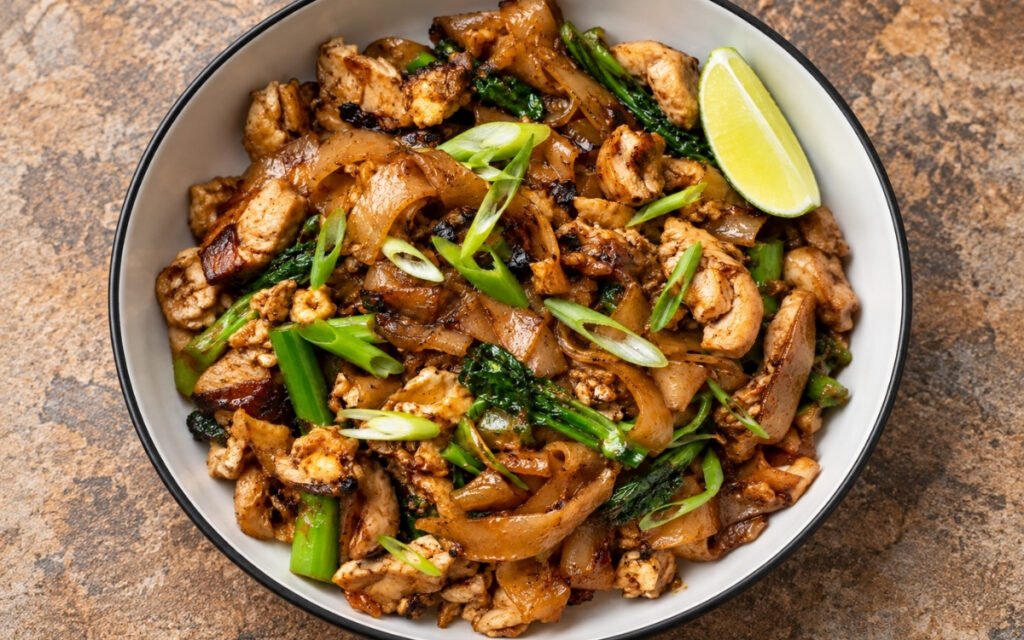
Pad See Ew — Thai Stir-Fried Wide Noodles
Wide rice noodles stir-fried with dark soy sauce, Chinese broccoli, sliced chicken, and egg over high heat for smoky wok-hei char.
-
Singapore Curry Noodles
Thin rice noodles stir-fried in a yellow curry seasoning with shrimp, egg, bell peppers, red onion and bean sprouts, topped with peanuts and lime.
-
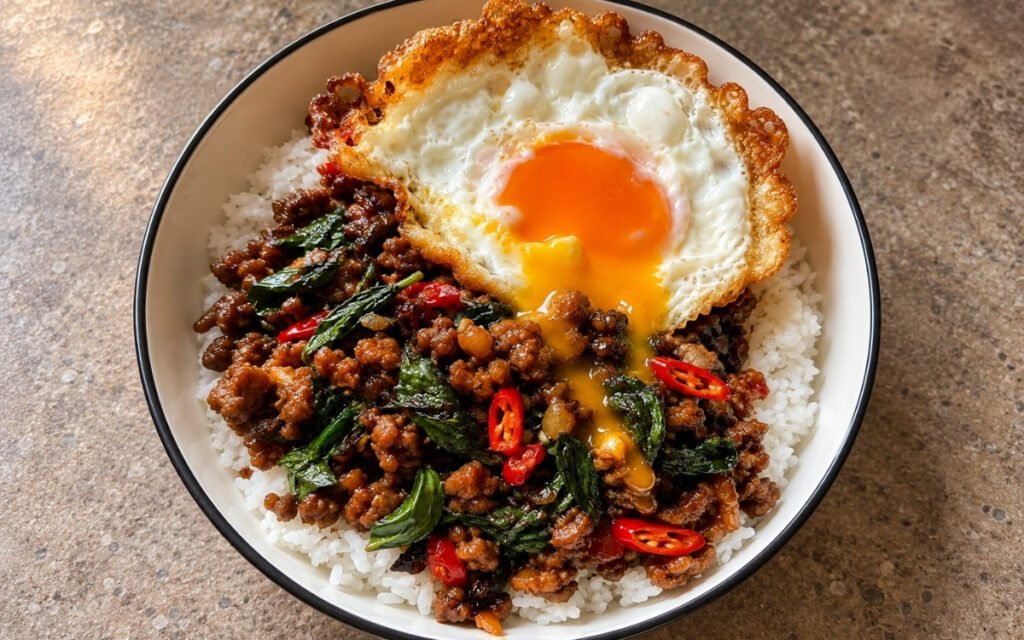
Pad Krapao — Thai Basil Stir-Fry
Hard-caramelized minced pork with garlic, chilies, glossy sauce, and Thai holy basil, served over jasmine rice with a crispy fried egg.

You might also like
You might also like
-
Malaysian Laksa Noodle Soup
Chicken thighs and rice noodles in a rich orange coconut curry broth, finished with cilantro, sliced red chilli and fresh lime.
-
Kung Pao Chicken
Small seared chicken cubes in a glossy soy-chili glaze with dried red chilies, Sichuan peppercorns, roasted peanuts, scallions and green bell pepper pieces.
-
Orange Chicken Rice Bowl
Crisp fried chicken coated in thick glossy orange sauce, served over jasmine rice with steamed broccoli, sesame seeds, scallions, and orange zest.


Thai Cashew Chicken Rice Bowl
Ingredients
Method
- Rinse the 300g jasmine rice in cold water, swirling it with your fingers and changing the water 2–3 times, until it runs mostly clear, then drain well. Combine the rice, 450ml water and the small pinch of salt, if using, in a saucepan and bring to a boil over medium-high heat. Cover tightly, reduce to very low heat and cook for 12 minutes, then take it off the heat and leave it to rest, still covered, for 10 minutes before fluffing with a fork; a rice cooker works just as well with the same quantities. Start the marinade as soon as the lid goes on, so the rice is ready before the wok heats. That measured 1:1.5 ratio and covered rest are what keep the grains fluffy and separate rather than heavy or wet under the stir-fry.
- Put the 800g bite-size chicken thigh pieces in a bowl and add the 1 tbsp light soy sauce, 1 tbsp oyster sauce, 1 tsp fish sauce, 2 tsp cornstarch, ¼ tsp white pepper and 1 tsp neutral oil. Mix thoroughly with your hands or a spoon for about 30 seconds, until every piece is evenly coated and no dry cornstarch remains at the bottom of the bowl. The chicken should look lightly glossy rather than wet. Leave it to sit for 15 minutes while you prepare the sauce and vegetables. That thin cornstarch-and-oil coating is what keeps the thigh meat juicy in the fierce heat and gives each piece a smoother stir-fried surface for the sauce to cling to.
- In a small bowl, whisk together the 3 tbsp oyster sauce, 2 tbsp light soy sauce, 1–1½ tsp dark soy sauce, 1 tbsp fish sauce, 2 tsp brown sugar or palm sugar, 120ml chicken stock or water and 2 tsp cornstarch, adding the 1 tsp chilli jam if using, until the sugar and cornstarch have dissolved. Set it aside. Cut the red and green bell peppers into bite-size chunks and the onion into medium wedges or thick slices, not thin strips. Finely chop the 5 garlic cloves, slice the 3 scallions on a bias and pick the cilantro. Break the dried chillies into pieces if using, and keep the 120g cashews within reach. That complete preparation matters because the stir-fry moves fast and genuinely cannot wait while you chop.
- Heat a large wok or wide heavy skillet over high heat until it is very hot and a drop of water sizzles away instantly. Add 1–1½ tbsp of the neutral oil, swirling it around the pan. Add half the chicken in a single layer and leave it largely undisturbed for 2–3 minutes, until the undersides are lightly browned, then stir-fry for another 2–3 minutes, until mostly cooked through with light browning at the edges. Lift it onto a plate and repeat with the second batch, adding a little of that oil first if the pan looks dry. The pieces should look genuinely distinct and glossy, not pale and sitting in liquid. That batch searing is what keeps the wok hot enough to brown the chicken instead of steaming it.
- Return the wok to high heat and add the remaining 1–1½ tbsp neutral oil. If using the dried chillies, add them first and stir-fry for 10–15 seconds, just until fragrant and darkened slightly, never blackened. Add the chopped garlic and stir quickly for 10 seconds, then add the onion and stir-fry for 1 minute. Add the red and green bell peppers and stir-fry for 1½–2 minutes, tossing constantly, until they are slightly softened but still genuinely vibrant and a little crisp at the centre. If the garlic starts to brown too fast, lift the wok off the heat for a moment. That short, hot cooking is what keeps the vegetables colourful and lightly crisp rather than collapsing into the sauce.
- Return the chicken and any juices from the plate to the wok. Stir the prepared sauce again to lift the settled cornstarch from the bottom of the bowl, then pour it in. Toss continuously for 1–2 minutes, until the sauce thickens, turns glossy and coats the chicken and vegetables, and the thickest piece of chicken reaches 74°C / 165°F with no pink at the centre. The sauce should cling with a shine, neither pooling thinly like soup nor turning pasty; stop as soon as it looks right. Add the 120g cashews and about two-thirds of the scallions and toss briefly, just to combine. Turn off the heat and fold in a little of the cilantro, keeping most of it for garnish. That late addition is what keeps the cashews distinct and crunchy.
- Fluff the rested jasmine rice once more and divide it among 4 bowls, giving each a generous bed. Spoon the cashew chicken over the top so every bowl gets about 200g of chicken, a share of red and green peppers and onion, plenty of cashews and enough sauce to coat rather than flood the rice. Scatter over the remaining scallions and cilantro. Serve immediately, while the vegetables are still crisp and the cashews still crunchy. That quick assembly is what lets the rice catch just a little of the glossy sauce while every component stays genuinely distinct and visible in the bowl.