
Iced Hazelnut Latte
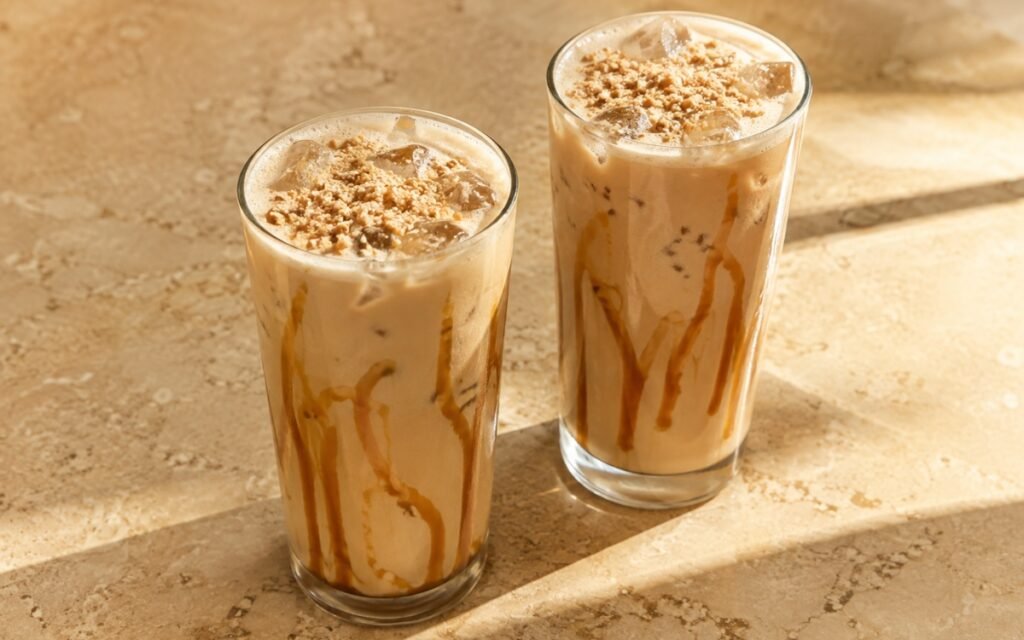
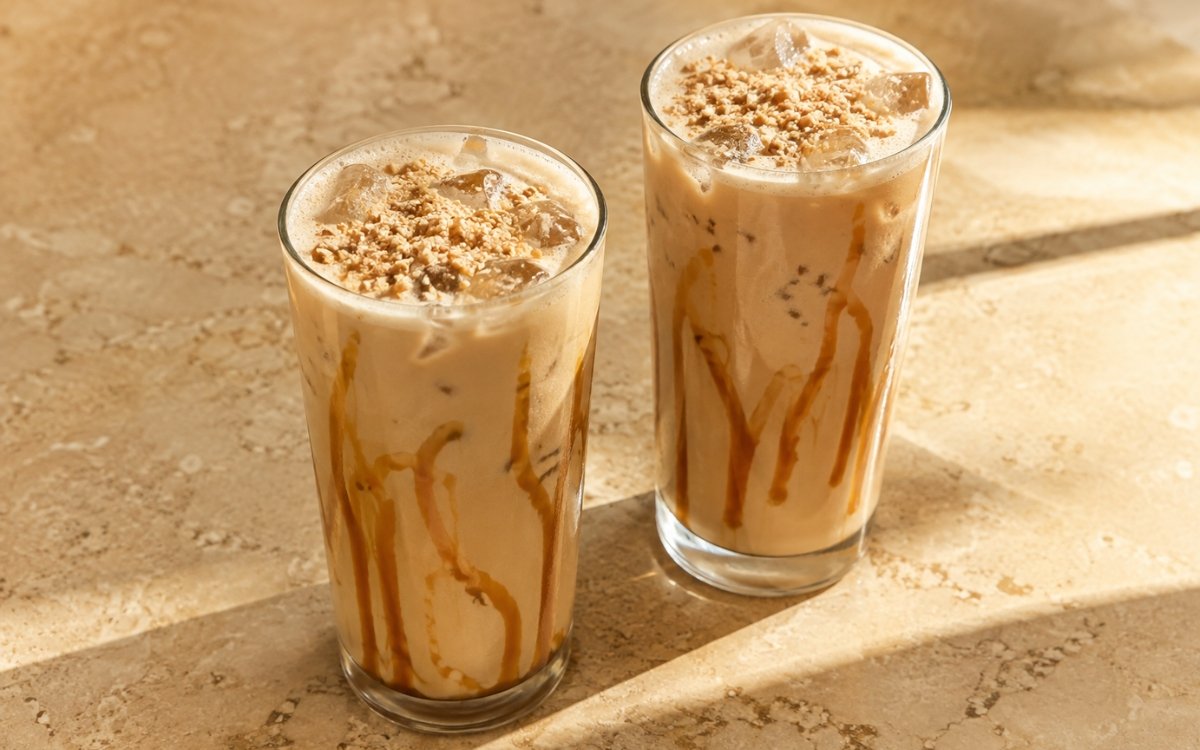
A classic iced hazelnut latte made with hazelnut syrup, cold milk, ice, and freshly brewed espresso. Smooth, milk-forward, and lightly nutty, with a pale caramel-cream colour, a very thin foam layer, and a subtle caramel finish. Loosening the hazelnut syrup with a small splash of milk before the glass is fully built is the technique this whole drink depends on for even sweetness — syrup left to sit undissolved at the bottom produces a drink that starts weak and turns overly sweet by the final sips, the same loosen-first principle used elsewhere in this collection whenever a syrup-based sweetener needs to distribute fully through a layered cold drink rather than settling unevenly. Keeping the finishing caramel drizzle genuinely restrained is what preserves the drink’s identity as a hazelnut latte rather than letting it read as a caramel drink instead. Building the glass in the correct order — syrup, loosening splash, ice, milk, espresso poured over the top last — is what produces both even flavour and the classic visible swirl. The payoff is a drink that’s genuinely milk-forward with a warm, pale caramel-cream colour, finished with only the lightest foam, caramel touch, and a single whole hazelnut for garnish.
Prep Time : 5 min
Cook Time : 5 min
Servings : 2
5 min
5 min
2
Ingredients
For the Iced Hazelnut Latte
• 120ml espresso, freshly brewed (4 standard shots total, counting 1 shot = 30ml)
• 300ml cold whole milk — this one on Amazon
• 30ml hazelnut syrup (15ml per serving) — this one on Amazon
• 8–10 ice cubes
For Finishing
• 20–30ml cold milk, optional, for a very thin foam layer
• 10–15ml caramel sauce, for a very light drizzle — this one on Amazon
• 2 whole hazelnuts, for garnish
This post may contain affiliate links. As an Amazon Associate I earn from qualifying purchases, at no additional cost to you.
Directions
- Brew the Espresso
Brew 120ml espresso total, equal to 4 standard 30ml shots. Let it sit for 30–60 seconds only if it is extremely hot, but do not let it go flat. The espresso should taste fresh, clean, and aromatic. Hazelnut is a soft flavour, so harsh or stale espresso stands out immediately. A gentle, soft nut flavour like hazelnut has little capacity to mask or compete with a flawed shot — clean, fresh espresso is what allows the hazelnut note to register clearly as a supporting flavour rather than getting overwhelmed by any bitterness in the coffee itself. - Build the Hazelnut Base
Divide the hazelnut syrup evenly between 2 glasses, 15ml per glass. Add a small splash of the cold milk to each glass and stir briefly to loosen the syrup. The syrup should begin dissolving into the milk base instead of sitting as a heavy layer at the bottom. This helps the sweetness distribute evenly through the drink. Loosening the syrup with a small amount of milk while the glass is still simple and mostly empty is considerably more effective than trying to mix it later, once ice and the rest of the milk have already been added on top. - Add Ice and Milk
Fill each glass generously with ice. Pour 150ml cold whole milk into each glass over the ice. The glasses should look pale and milk-forward, with enough room left for the espresso and finishing foam. The milk should be fully cold so the drink stays crisp and refreshing. Building on top of the already-loosened hazelnut base keeps that base’s flavour distributed through the glass from the start, rather than sitting as a separate, concentrated layer beneath everything else. - Pour in the Espresso
Pour 60ml espresso into each glass over the milk and ice. Let it swirl through the drink naturally, then stir briefly. The drink should settle into a pale caramel-cream colour with a warm golden tint from the hazelnut syrup. It should look slightly richer than a plain iced latte, but still clearly milk-based. Pouring the espresso last, over the fully built hazelnut-milk base, is what produces the same visible swirling effect used throughout this collection’s classic iced espresso drinks — the hot espresso falling through the cold, already-flavoured milk in visible ribbons before the final stir combines everything. - Create the Thin Foam Layer
If you want the more polished café-style finish, froth the extra cold milk very lightly until it forms only a thin soft foam. Spoon a small amount over the top of each drink. The top should have only a very light foam layer, not a thick cappuccino-style cap. The correct finish is a thin creamy surface. Stopping well short of a substantial foam is a deliberate restraint that keeps this drink reading clearly as a latte — pushing the foam any thicker would move the presentation toward a cappuccino instead. - Finish and Serve
Drizzle a very small amount of caramel sauce over the foam surface. Place 1 whole hazelnut gently on the top of each drink and serve immediately. The caramel should be subtle, not dominant. The finished latte should still read clearly as a hazelnut latte, not a caramel drink. Keeping both the caramel drizzle and the hazelnut garnish minimal is what preserves a clean, uncluttered finish — more of either would start competing with the drink’s own core identity rather than simply accenting it.
*Notes :
- The loosening step for the hazelnut syrup deserves real attention despite how minor it looks on paper. Syrup poured into a glass and left to sit at the bottom, waiting for an eventual stir once the drink is fully built, tends to stay concentrated there through much of the drinking experience, producing a sip sequence that starts weak and turns cloyingly sweet toward the end. Loosening it early, while the glass is still mostly empty, prevents that uneven distribution from developing in the first place.
- Keeping the espresso itself genuinely clean and fresh matters more in this particular drink than it might in a bolder-flavoured one. Hazelnut’s flavour profile is inherently soft and gentle, which means it has considerably less capacity to compete with or mask any bitterness or staleness in a flawed shot — a stale or harsh espresso would simply dominate the drink rather than working alongside the hazelnut note as intended.
- The restraint applied to both the caramel drizzle and the foam layer reflects a consistent design principle running through this entire recipe. Each finishing touch is meant to accent the drink rather than define it — a foam layer kept deliberately thin, a caramel drizzle kept deliberately light, both exist to add polish without shifting the drink’s actual identity away from being a hazelnut latte first.
- The single-hazelnut garnish, explicitly called out as sufficient on its own, is worth respecting as a genuine stylistic choice rather than an underdeveloped presentation. A minimal, single-nut garnish keeps the drink’s visual presentation clean and elegant; adding more risks the top of the drink looking cluttered or busy rather than composed, working against the same restrained aesthetic the caramel and foam guidance both point toward.
Why This Recipe Works
This recipe works because the hazelnut syrup is loosened into the milk while the glass is still simple and mostly empty, ensuring even sweetness rather than a concentrated, unevenly distributed layer.
The glass is then built in a deliberate order — syrup, loosening splash, ice, milk, espresso poured over the top last — which produces both consistent flavour and the classic visible swirl.
Clean, fresh espresso lets the hazelnut’s gentle flavour register clearly, and every finishing touch — the thin foam, the light caramel drizzle, the single hazelnut garnish — is kept deliberately restrained so the drink reads clearly as a hazelnut latte rather than drifting toward a caramel drink or a cappuccino.
Ingredient Breakdown
Hazelnut Syrup, Loosened Before Building
The flavouring component — mixed with a small splash of milk early so sweetness distributes evenly rather than concentrating at the bottom.
Freshly Brewed, Clean Espresso
The coffee foundation — needs to be genuinely fresh, since hazelnut’s subtle flavour has little capacity to mask a flawed or stale shot.
Correct Build Order (Syrup, Milk, Ice, Espresso)
The technique — this sequence produces both even flavour distribution and the classic visible swirl effect.
Restrained Thin Foam Layer
The optional finishing texture — kept light specifically to preserve the drink’s identity as a latte rather than a cappuccino.
Minimal Caramel Drizzle and Single Hazelnut Garnish
The final presentation touches — both kept deliberately light so the drink’s finish stays clean rather than cluttered or caramel-dominant.
Flavor Structure Explained
This iced hazelnut latte follows a layered balance model:
- Smooth milky foundation (cold whole milk)
- Bold aromatic centre (freshly brewed espresso)
- Subtle nutty warmth (hazelnut syrup)
- Light finishing sweetness (thin foam, light caramel drizzle)
Cold whole milk provides the smooth, mellow foundation that dominates the finished drink, staying genuinely milk-forward. Freshly brewed espresso layers in bold, aromatic coffee flavour that tints and flavours the milk without overpowering it. Hazelnut syrup contributes a subtle, warm, nutty character that supports the espresso rather than competing with it. A thin foam layer and a light caramel drizzle finish the drink with just a touch of extra polish and sweetness, kept restrained enough to leave the hazelnut flavour clearly in charge.
Common Mistakes to Avoid
- Adding the Syrup Without Loosening It First – Unmixed syrup stays concentrated at the bottom, producing weak early sips and overly sweet final ones. Always stir in a small splash of milk to loosen it before building the rest of the glass.
- Using Stale or Harsh Espresso – Hazelnut’s soft, gentle flavour has little room to shine against a flawed shot. Always use fresh, clean espresso.
- Pouring the Espresso Before the Milk – This loses the classic layered swirl effect. Always build the glass with syrup, ice, and milk first, espresso last.
- Over-Frothing the Top Foam – A thick cap pushes the drink toward cappuccino territory rather than staying a proper latte. Always keep it thin and light.
- Overdoing the Caramel Drizzle or Garnish – Too much of either turns the drink into something closer to a caramel drink or a cluttered presentation. Always keep both restrained.
Variations
Sweeter Version
Increase the hazelnut syrup slightly for a more pronounced, sweeter café-style balance.
Oat Milk Version
Substitute a barista-style oat milk for the dairy milk, following the identical build and syrup technique.
Extra-Strong Version
Increase to 3 shots of espresso per serving for a bolder, more coffee-forward drink while keeping the same hazelnut balance.
Chocolate-Hazelnut Version
Add a very light drizzle of chocolate sauce alongside the caramel for a Nutella-adjacent finish.
Storage & Make-Ahead
This drink is meant to be built and served fresh; it does not hold or store well once assembled, since the ice will continue melting and diluting the drink over time.
Espresso can be brewed just before building the glasses, but should not be brewed far in advance, since its flavour and aroma fade noticeably as it sits.
Cold milk and hazelnut syrup should both be kept refrigerated until the moment of use for the best temperature contrast and visual effect.
Frequently Asked Questions
Why does the hazelnut syrup need to be loosened with milk before the rest of the glass is built?
Syrup left sitting at the bottom of a fully built glass tends to stay concentrated there, producing weak early sips followed by overly sweet final ones. Loosening it early, while the glass is still mostly empty, ensures even distribution throughout the drink.
Why does the espresso need to be especially fresh and clean for this particular drink?
Hazelnut’s flavour is inherently soft and gentle, giving it far less capacity to mask or compete with a bitter or stale shot than a bolder-flavoured syrup would have. Fresh, clean espresso is what lets the hazelnut note register clearly as a proper supporting flavour.
Why does the caramel drizzle need to stay so light?
This is specifically a hazelnut latte, and too much caramel would shift the drink’s identity toward reading as a caramel drink instead. A subtle, restrained drizzle adds a light finishing touch without letting the caramel dominate.
Why does the foam layer need to stay thin rather than being frothed generously?
A thick, substantial foam cap moves the drink’s presentation toward a cappuccino rather than staying a proper latte. Keeping it thin preserves the drink’s correct classic identity.
Are there other flavoured iced lattes worth trying?
Classic Iced Latte, Iced Vanilla Latte, Crème Brûlée Iced Latte, and Maple Cinnamon Iced Latte all build on this same syrup-and-espresso technique, each bringing its own distinct flavour direction to the same classic milk-forward format.
Nutrition Facts
( per serving )
Calories
~240 kcal
Protein
8 g
Fat
9 g
Carbs
30 g
Calories
~240 kcal
Protein
8 g
Fat
9 g
Carbs
30 g
Related Recipes
Related Recipes

Cold Brew Coffee
Coarsely ground coffee steeped in cold water for 12–16 hours, strained twice for clarity, and served black over a single large ice cube.
Iced Pistachio Latte
Smooth homemade pistachio syrup, cold milk, and ice topped with freshly brewed espresso, for a milk-forward, lightly nutty latte.
Iced Affogato
High-quality vanilla gelato topped with freshly brewed hot espresso poured immediately, for the classic hot-cold contrast.

You might also like
You might also like
Cherry Limeade Pitcher Drink
Macerated, strained cherry-lime base combined with fresh lime juice and a second infusion of whole cherries and lime slices for a vivid red limeade.
Mint Lime White Tea Cooler
Properly brewed white tea combined with a cold-style mint-lime infusion and fresh lime juice for a pale, clean, elegant iced tea cooler.
Blackberry Sage Iced Black Tea
Properly brewed black tea combined with cold-macerated fresh blackberries and a gentle cold sage infusion for a dark, berry-rich iced tea.



Iced Hazelnut Latte
Ingredients
Method
- Brew 120ml espresso total, equal to 4 standard 30ml shots. Let it sit for 30–60 seconds only if it is extremely hot, but do not let it go flat. The espresso should taste fresh, clean, and aromatic. Hazelnut is a soft flavour, so harsh or stale espresso stands out immediately. A gentle, soft nut flavour like hazelnut has little capacity to mask or compete with a flawed shot — clean, fresh espresso is what allows the hazelnut note to register clearly as a supporting flavour rather than getting overwhelmed by any bitterness in the coffee itself.
- Divide the hazelnut syrup evenly between 2 glasses, 15ml per glass. Add a small splash of the cold milk to each glass and stir briefly to loosen the syrup. The syrup should begin dissolving into the milk base instead of sitting as a heavy layer at the bottom. This helps the sweetness distribute evenly through the drink. Loosening the syrup with a small amount of milk while the glass is still simple and mostly empty is considerably more effective than trying to mix it later, once ice and the rest of the milk have already been added on top.
- Fill each glass generously with ice. Pour 150ml cold whole milk into each glass over the ice. The glasses should look pale and milk-forward, with enough room left for the espresso and finishing foam. The milk should be fully cold so the drink stays crisp and refreshing. Building on top of the already-loosened hazelnut base keeps that base’s flavour distributed through the glass from the start, rather than sitting as a separate, concentrated layer beneath everything else.
- Pour 60ml espresso into each glass over the milk and ice. Let it swirl through the drink naturally, then stir briefly. The drink should settle into a pale caramel-cream colour with a warm golden tint from the hazelnut syrup. It should look slightly richer than a plain iced latte, but still clearly milk-based. Pouring the espresso last, over the fully built hazelnut-milk base, is what produces the same visible swirling effect used throughout this collection’s classic iced espresso drinks — the hot espresso falling through the cold, already-flavoured milk in visible ribbons before the final stir combines everything.
- If you want the more polished café-style finish, froth the extra cold milk very lightly until it forms only a thin soft foam. Spoon a small amount over the top of each drink. The top should have only a very light foam layer, not a thick cappuccino-style cap. The correct finish is a thin creamy surface. Stopping well short of a substantial foam is a deliberate restraint that keeps this drink reading clearly as a latte — pushing the foam any thicker would move the presentation toward a cappuccino instead.
- Drizzle a very small amount of caramel sauce over the foam surface. Place 1 whole hazelnut gently on the top of each drink and serve immediately. The caramel should be subtle, not dominant. The finished latte should still read clearly as a hazelnut latte, not a caramel drink. Keeping both the caramel drizzle and the hazelnut garnish minimal is what preserves a clean, uncluttered finish — more of either would start competing with the drink’s own core identity rather than simply accenting it.