Greek Avgolemono Soup
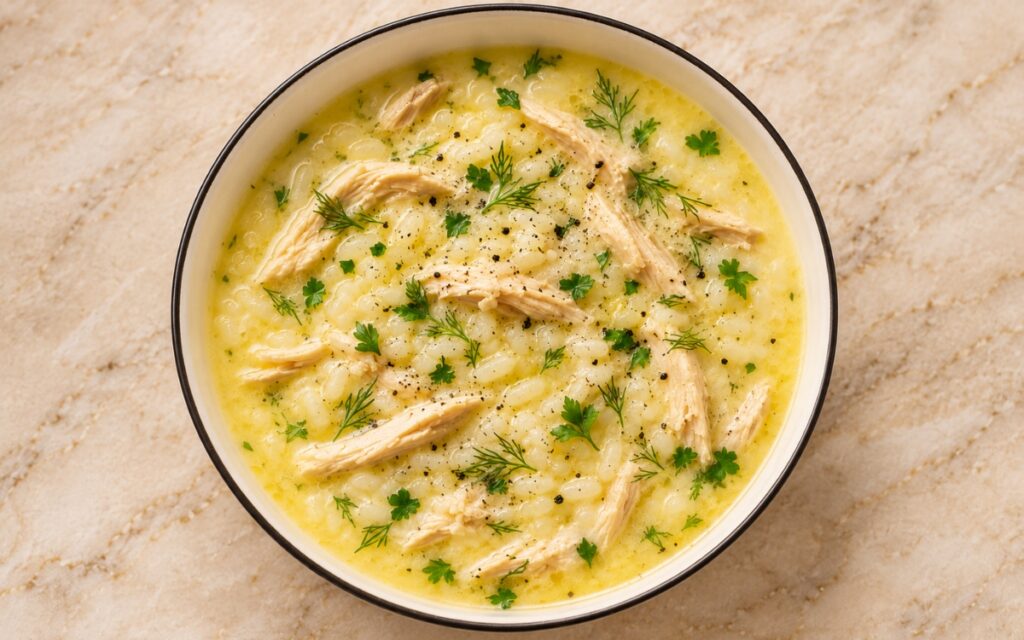
Greek avgolemono soup is a generous bowl of tender hand-shredded chicken breast and plump, soft white rice in a silky, pale golden lemon-egg broth, finished with fresh dill and parsley and a scatter of cracked black pepper, with no cream, flour, or butter anywhere in the pot. Tempering the whisked eggs and lemon juice with ladlefuls of hot broth, rather than pouring them straight into the pot, is the technique this whole soup depends on for its smooth, velvety body — cold eggs meeting boiling liquid scramble into curds and leave a grainy broth, the same temper-before-you-combine principle used elsewhere in this collection whenever eggs enrich a hot liquid. Poaching the chicken breasts at a bare simmer, rather than a rolling boil, is what keeps the meat pale, juicy, and easy to pull into natural strands. Cooking the rice fully in the aromatic broth before the eggs go in is what lets its released starch lend natural, lightly creamy body. The payoff is a soup with real, comforting depth — soft, plump rice, tender chicken strands, and a bright, lemony, silky ivory-gold broth lifted by fresh herbs.
- Prep Time : 20 min
- Total Time : 1 hr 15 min
- Servings : 6
Ingredients
For the Chicken and Aromatic Broth
- 900g boneless, skinless chicken breasts
- 3.2 litres good-quality chicken stock, preferably low-sodium
- 1 medium yellow onion (about 150g), peeled and halved
- 2 bay leaves
- 1 tsp fine sea salt, or to taste depending on the stock
- ½ tsp freshly ground black pepper
For the Rice
- 300g Greek Carolina rice, or other medium-grain white rice
- 300–500ml additional hot chicken stock or water, only if needed to adjust the final consistency
For the Avgolemono (Lemon-Egg Mixture)
- 4 large eggs
- 2 additional egg yolks
- 150ml freshly squeezed lemon juice, about 4 large lemons
- 400–500ml hot broth from the soup, for tempering the eggs
For Finishing and Garnish
- 15g fresh dill, finely chopped
- 10g fresh flat-leaf parsley, finely chopped
- ½ tsp freshly ground black pepper, or to taste
- Fine sea salt, to taste
Directions
- Prepare the Ingredients
Pat the chicken breasts dry, trim away any tough connective tissue, and leave them whole rather than cutting them into pieces. Peel and halve the onion, measure the rice, and squeeze the lemons, straining out the seeds. Crack the 4 whole eggs into a large heatproof bowl and add the 2 extra yolks. Finely chop the dill and parsley, keeping a few small leaves for garnish. Rinse the rice briefly only if it is dusty, since some natural starch is wanted in the soup. That preparation is what lets the tempering later happen without any pause. - Gently Poach the Chicken
Pour the 3.2 litres of stock into a large, heavy-bottomed pot, add the halved onion, bay leaves, salt, and pepper, and bring to a gentle simmer over medium heat. Lower the heat slightly, add the whole breasts, and hold the stock at about 80–85°C, with only occasional small bubbles, for 15–22 minutes depending on their thickness. Check the thickest part, which should reach 74°C. Transfer the chicken to a plate, cover loosely, and discard the onion and bay leaves. That gentle poaching is what keeps the meat pale, juicy, and tender. - Shred the Chicken
Let the poached chicken cool for about 5 minutes, until comfortable to handle. Using two forks or clean hands, pull it apart along its natural fibres into irregular, medium-length strands about 3–6cm long, leaving a few larger pieces for texture. Transfer to a bowl, spoon 2–3 tbsp of the warm poaching broth over it, and cover loosely. The strands should separate easily and look moist rather than dry or stringy. That splash of broth is what keeps the shredded chicken juicy while the soup finishes. - Cook the Rice in the Broth
Bring the strained stock back to a gentle boil, add the 300g rice, and stir once to prevent sticking. Reduce the heat to medium-low and simmer for 17–22 minutes, stirring occasionally, until the rice is completely tender, plump, and slightly swollen, with no firm centre and individual grains still recognisable. If the soup thickens too much, add a little hot stock or water. Then reduce the heat to its lowest setting. That full cooking before the eggs go in is what prevents the broth from curdling later. - Prepare the Avgolemono Mixture
Whisk the 4 whole eggs and 2 extra yolks in the heatproof bowl for about 1 minute, until completely combined and lightly frothy. Gradually add the 150ml lemon juice while continuing to whisk, until the mixture is smooth, uniform, and pale yellow. Set the bowl beside the stove, along with a ladle. Whisking before the lemon goes in is what breaks up the whites so the mixture blends evenly and tempers without leaving streaks. - Temper the Eggs with Hot Broth
Take the pot off the heat and let the bubbling stop for 1–2 minutes. Ladle out about 100ml of hot broth, avoiding rice, and pour it into the egg mixture in a very thin stream while whisking constantly. Repeat in roughly 100ml additions until 400–500ml of broth has been incorporated. The mixture should turn warm, pale yellow, smooth, and slightly foamy, like a thin cream, with no curds or grainy flecks. That gradual warming is what stops the eggs scrambling. - Incorporate the Avgolemono into the Soup
Make sure the soup is no longer boiling, then slowly pour the tempered mixture back into the pot, stirring continuously with a whisk or wooden spoon. Place the pot over the lowest possible heat and warm gently, stirring constantly, until the broth turns uniformly pale ivory-yellow and slightly thickened. For food safety, bring it to about 71°C without letting it boil, using a thermometer, and remove it from the heat at once. That gentle final heating is what keeps the lemon-egg emulsion smooth. - Return the Chicken and Adjust the Consistency
Fold the shredded chicken into the finished broth with a wooden spoon and warm it through for 2–3 minutes on very low heat if needed. If the rice has absorbed too much liquid, add warm stock in small increments, stirring gently after each. Taste and adjust the salt, pepper, and lemon, adding 5–10ml of extra juice at a time if more acidity is wanted. The soup should be silky, lightly thickened, and fluid enough to move when the bowl is tilted. That adjustment is what balances the lemon against the broth. - Add Fresh Herbs and Rest
Stir about two-thirds of the chopped dill and parsley into the soup and reserve the rest for garnish. Take the pot completely off the heat and let the soup rest for 5 minutes, then stir once more before serving. The herbs should stay bright green and fragrant instead of cooking down to dull flecks. That short rest is what lets the flavours settle and the broth hold its soft, velvety body. - Assemble and Serve
Divide the soup among 6 warm, deep ceramic bowls, giving each about 150g of raw-weight chicken and 50g of dry-weight rice, with enough silky broth to surround them. Lay a few natural chicken strands near the surface, then finish with the reserved dill, a few small parsley leaves, and freshly cracked black pepper. Serve immediately while warm. That fresh dill and pepper are what give the pale, mellow broth its final lift.
*Notes :
- Tempering the eggs with hot broth deserves genuine recognition as the technique most directly responsible for a smooth, silky avgolemono. Whole eggs and yolks that meet boiling liquid all at once set instantly into curds, whereas a thin stream of hot broth whisked into them warms the proteins gradually so they stay suspended and thicken the soup evenly.
- Keeping the final heat below a boil deserves the same attention this technique receives throughout this collection’s other egg-thickened sauces and custards. Once the lemon-egg mixture is in, a rolling boil curdles it and turns the broth grainy, whereas stirring over the lowest heat to about 71°C thickens it gently and keeps it both smooth and safe.
- Poaching the chicken at 80–85°C deserves genuine respect as the detail most directly responsible for tender, pale strands. A hard boil tightens the breast fibres and leaves them dry and rubbery, whereas a gentle simmer cooks them evenly to 74°C so they shred easily into juicy pieces that stay moist and tender in the finished bowl.
- Measuring the lemon juice before tasting deserves attention as a genuine, checkable seasoning cue rather than a loose approximation. Starting with 150ml gives a soup that tastes distinctly fresh and lemony without turning sharp, and small additions of 5–10ml after the eggs are in let you adjust the acidity precisely instead of overshooting the balance.
Why This Recipe Works
This recipe works because each stage protects the one that follows it. Poaching the chicken gently keeps it tender and pale, and cooking the rice fully in the aromatic stock releases the starch that gives the broth its natural body. Whisking the eggs with lemon and tempering them with hot broth lets them blend into the soup without scrambling. A final low, carefully monitored warming then thickens the broth into a smooth, ivory-gold, velvety soup with no cream, flour, or butter at all, finished with fresh dill.
Ingredient Breakdown
Tempered Eggs and Yolks
The critical technique — four eggs plus two yolks give richness and body, but only if warmed gradually before joining the soup.
Freshly Squeezed Lemon Juice (150ml)
The defining flavour ingredient — it gives avgolemono its bright, clean acidity and balances the richness of the eggs.
Gently Poached Chicken Breast
The structural foundation — a bare simmer keeps the meat pale and juicy so it shreds into tender strands.
Greek Carolina Rice
The structural choice — its starch gives the broth a lightly creamy body without cream or flour.
Low-Sodium Chicken Stock
The flavour foundation — it makes up most of the soup, so a flavourful, controlled-salt stock sets its quality.
Dill and Parsley
The finishing touch — fresh herbs add a green, aromatic freshness that lifts the mellow lemon-egg broth.
Flavor Structure Explained
This Greek avgolemono soup follows a layered balance model:
- Savoury, mellow foundation (chicken stock and gently poached chicken)
- Soft, starchy body (plump Greek Carolina rice and released starch)
- Bright, tangy lift (fresh lemon juice)
- Silky, golden richness (tempered whole eggs and yolks)
- Fresh, herbal finish (dill, parsley, and cracked black pepper)
Chicken stock and gently poached chicken provide the savoury, mellow foundation of the bowl, while plump rice adds a soft, starchy body that thickens the broth naturally. Fresh lemon juice gives the broth a bright, tangy lift, and the tempered eggs turn it into a silky, golden, rich liquid without any dairy. Dill, parsley, and cracked black pepper then add a fresh, herbal, gently peppery finish that ties this Greek avgolemono soup together.
Common Mistakes to Avoid
- Pouring the Eggs Straight into the Pot – This scrambles them into curds and leaves a grainy broth. Always whisk hot broth into the eggs gradually before returning the mixture to the soup.
- Boiling the Soup After the Eggs Go In – This curdles the lemon-egg emulsion. Always keep the heat at its lowest and stop at about 71°C.
- Boiling the Chicken Hard – This tightens the fibres and leaves the breast dry and rubbery. Always poach at 80–85°C until the thickest part reaches 74°C.
- Adding the Eggs Before the Rice Is Tender – This risks curdling while the rice finishes cooking. Always cook the rice completely tender first, then lower the heat.
- Adjusting the Lemon Without Tasting – This can make the soup sharply sour. Always start with the measured 150ml and adjust in 5–10ml steps.
Variations
Orzo Version
Replace the rice with the same weight of orzo, simmering it until tender in the broth before adding the avgolemono, which gives a slightly silkier, pasta-style soup while keeping the same lemony body.
Thigh Version
Poach boneless, skinless chicken thighs instead of breasts, which gives richer, juicier shreds and a slightly deeper flavour while the lemon-egg broth and the tempering method stay exactly the same.
Extra-Lemony Version
Stir in an extra 5–10ml of fresh lemon juice at a time after the eggs are incorporated, tasting between additions, which gives a brighter, more tart broth without disturbing the silky texture.
Herb-Forward Version
Stir the full amount of dill and parsley into the soup before resting rather than reserving a third for garnish, which gives a greener, more aromatic bowl at the cost of a plainer top.
Storage & Make-Ahead
The chicken can be poached and shredded in advance and kept covered in a little of its broth in the refrigerator, so that only the rice and avgolemono need to be finished shortly before serving for the best texture.
Refrigerate leftover soup promptly for up to 2–3 days in an airtight container, remembering that the rice continues to absorb broth as it sits and will thicken the soup considerably.
Reheat the soup slowly over low heat while stirring, adding small amounts of warm chicken stock to restore the original consistency, and never allow it to boil or the egg will curdle.
Make the avgolemono mixture and temper it shortly before serving instead of ahead of time, because the lemon-egg thickening is at its smoothest and silkiest the moment it has just been heated through.
Serve the soup in warm bowls straight after resting, and add the fresh dill and parsley at the table, so the herbs stay bright green and fragrant against the pale, creamy-looking broth.
Frequently Asked Questions
Why must the eggs be tempered with hot broth before joining the soup?
Adding hot broth a little at a time warms the egg proteins gradually, so they stay smooth and silky, whereas a sudden jump to boiling temperature sets them into curds.
Why is the rice cooked completely before the lemon-egg mixture is added?
Once the eggs are in, the soup can no longer be boiled without curdling, so the rice must already be tender, releasing its starch to give the broth natural body.
Why is the chicken poached at 80–85°C instead of boiled?
A gentle simmer cooks the breast evenly to 74°C without tightening the fibres, which keeps it pale, juicy, and easy to shred, whereas a hard boil leaves it dry.
Why does the soup stop at about 71°C instead of being brought to a boil?
Warming to about 71°C cooks the egg enough to thicken the broth and make it safe, while avoiding a boil keeps the emulsion smooth instead of grainy and curdled.
Are there other classic soup, bread, or Greek rice dishes worth trying?
Caldo Tlalpeño and Pozole Verde both offer other classic soup directions worth exploring. Brioche Toast Bread and Challah Bread are also worth trying as breads that suit a bowl of soup, and Greek Lemon Rice offers another lemony Greek rice dish.
Nutrition Facts
( Per Serving — 1 bowl )
- Calories
- ~520 kcal
- Protein
- 48 g
- Fat
- 12 g
- Carbs
- 52 g
-

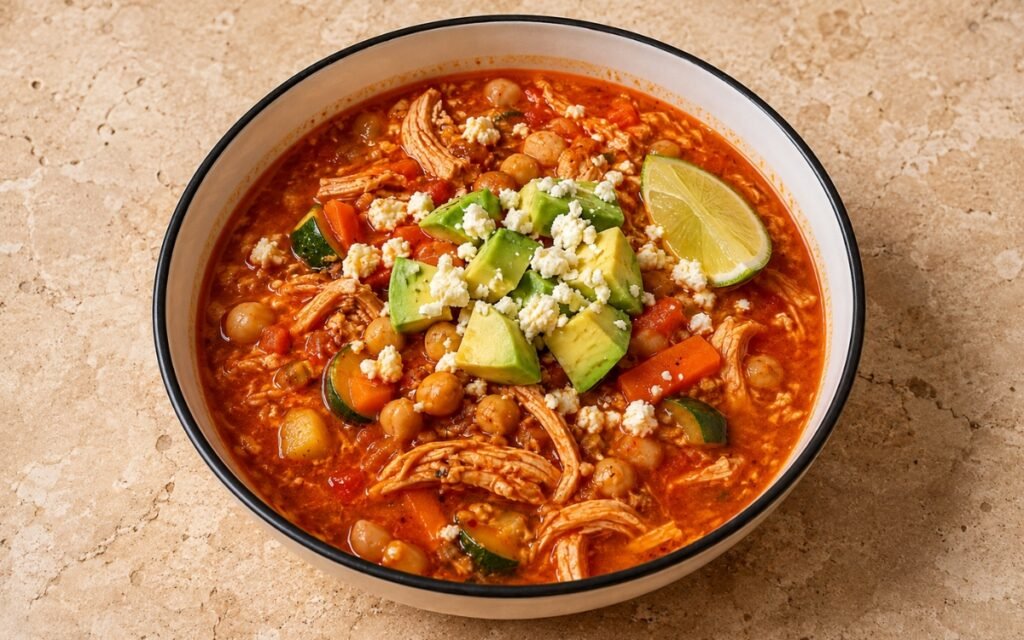
Caldo Tlalpeño
A clear chipotle-tomato chicken broth with shredded chicken, chickpeas, carrots, and zucchini, finished with avocado and queso fresco.
-
Brioche Toast Bread
Enriched dough with four eggs and butter added gradually after gluten development — overnight cold-fermented for flavour, three-piece shaped in a loaf pan, baked to a deep golden glossy crust. The brioche built for toast.
-
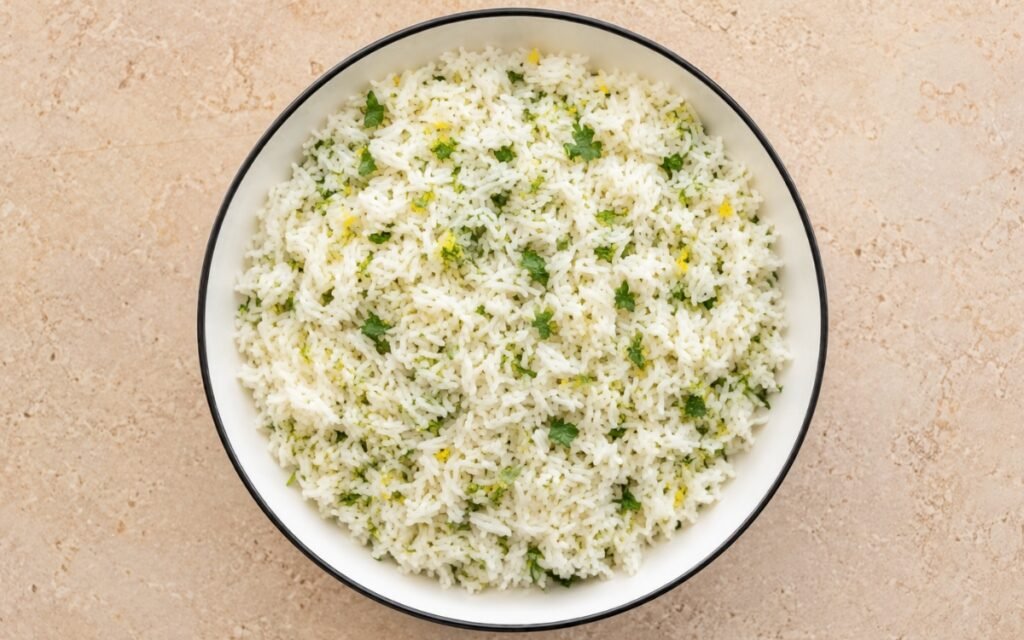
Greek Lemon Rice
Rice rinsed clear, cooked with garlic, broth, and lemon juice undisturbed until fluffy, finished with fresh herbs and zest. Bright and tangy.

-
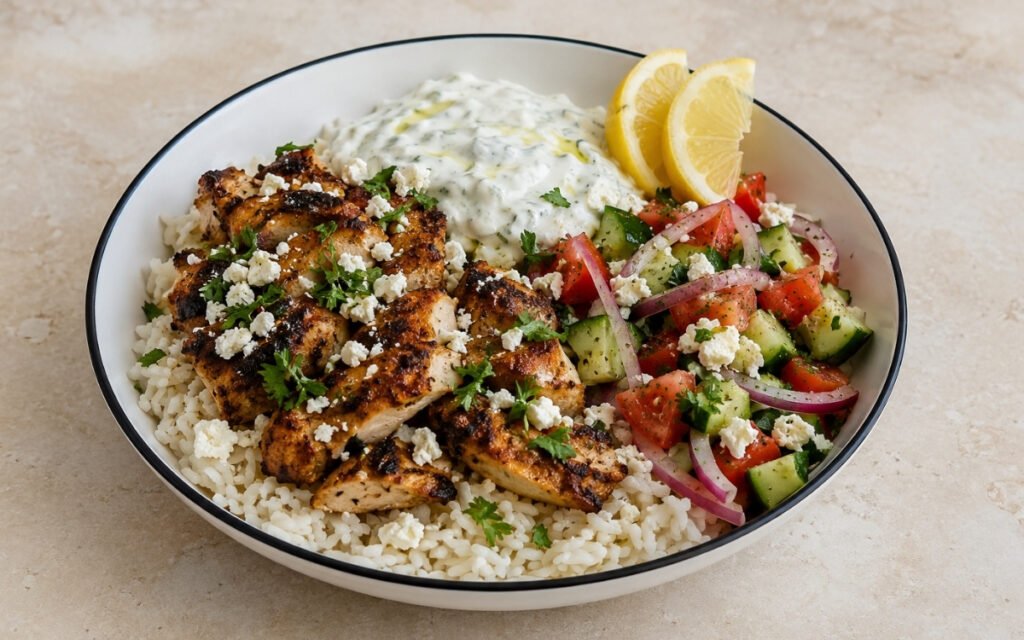
Greek Chicken Gyro Rice Bowl
Chicken thighs marinated fifteen minutes, seared in a single layer, rested and sliced — basmati, cucumber-tomato salad, tzatziki, feta.
-
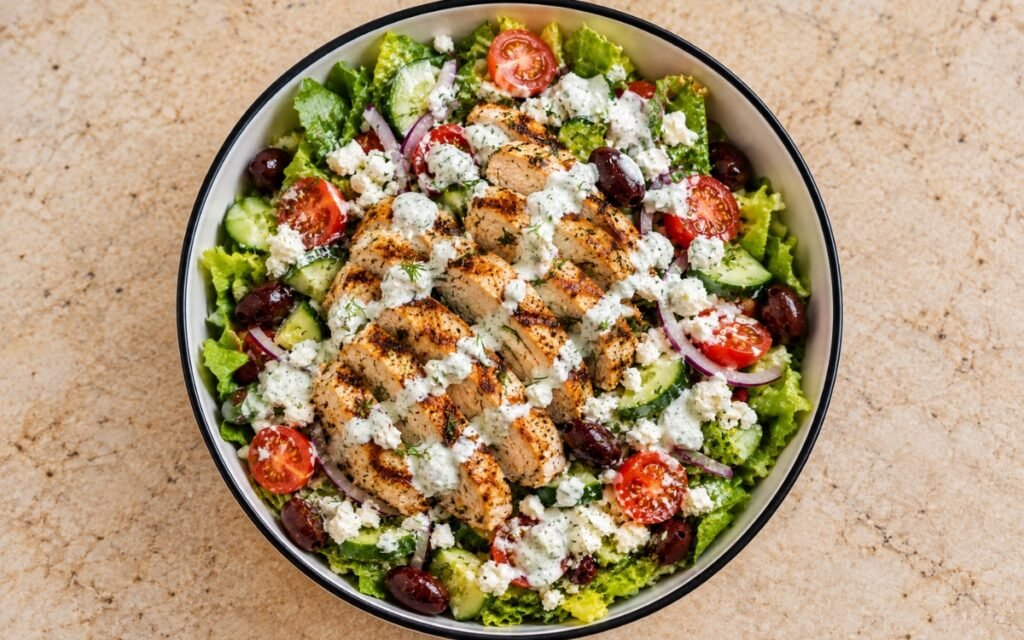
Greek Chicken Salad with Tzatziki Dressing
Grilled Greek-marinated chicken breast over crisp greens with cucumber, cherry tomatoes, Kalamata olives, feta, and creamy tzatziki dressing.
-
Chicken Pad Thai
Stir-fried flat rice noodles with browned chicken, egg, bean sprouts and garlic chives in a tamarind sauce, topped with peanuts and lime.