
Tortellini in Brodo
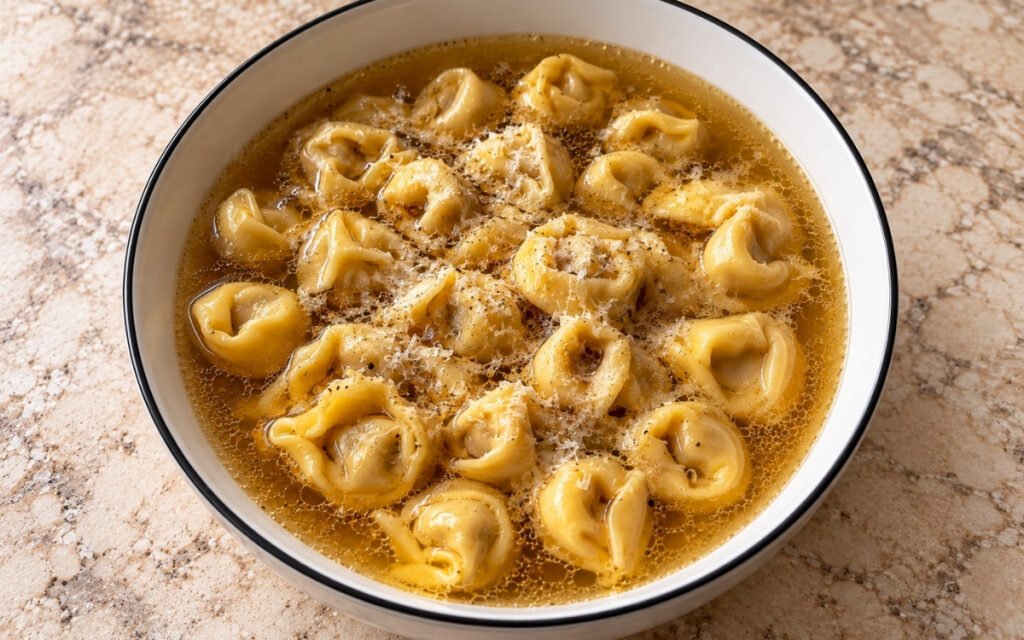
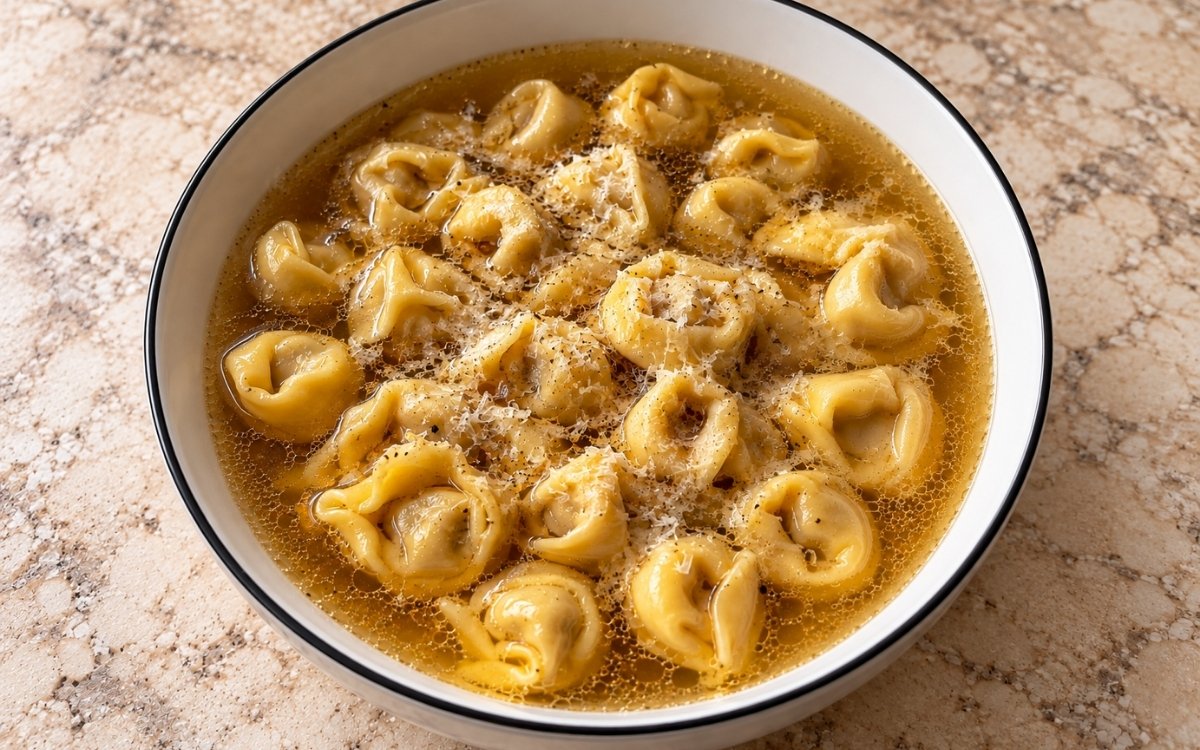
A classical northern Italian soup of small meat tortellini served in a clear, shimmering golden broth — clean-tasting and delicate but deeply savory, with tortellini that stay plump and tender without bursting, finished simply with finely grated Parmigiano-Reggiano. Starting the broth from cold water and heating it slowly, rather than bringing it to a hard boil, keeps it clear — a hard boil early on clouds the broth and toughens the meat. Maintaining only a quiet simmer with small bubbles throughout the extended cook, never an aggressive boil, is the single detail that separates a clear brodo from a cloudy soup stock. Adding the tortellini only once the strained broth is back to a gentle simmer, and never boiling hard afterward, protects their delicate wrappers from bursting open. The result is a soup with elegant restraint — a clean, golden, deeply savoury broth cradling plump, tender tortellini, finished with nothing more than grated Parmigiano-Reggiano.
Prep Time : 20 min
Cook Time : 3 hr, 10 min
Servings : 4
20 min
3 hr, 10 min
4
Ingredients
For the Broth
• 500g beef shank or beef chuck with bone if possible
• 700g chicken pieces (legs, wings, back, or a mix; a soup chicken or capon pieces are ideal)
• 2.5L cold water
• 1 medium onion, halved
• 1 medium carrot, roughly cut
• 2 celery stalks, roughly cut
• Small handful parsley stems
• 1 bay leaf
• 6 whole black peppercorns
• 12–14g fine salt, plus more to taste
For the Tortellini
• 600g fresh or refrigerated small meat tortellini, preferably classic meat tortellini, small size — this one on Amazon
• 30–50g Parmigiano-Reggiano, finely grated, for serving — this one on Amazon
Optional Finishing
• Extra grated Parmigiano-Reggiano
• A few grinds of black pepper, if desired
This post may contain affiliate links. As an Amazon Associate I earn from qualifying purchases, at no additional cost to you.
Directions
- Build the Broth
Put the beef, chicken, cold water, onion, carrot, celery, parsley stems, bay leaf, and peppercorns into a large pot. Bring up to a very gentle simmer over medium heat. Do not rush this stage. As the broth starts heating, skim off the foam and impurities from the surface several times. Start from cold water and heat slowly. This extracts flavor gradually and helps produce a clearer broth. A hard boil early on will cloud the broth and toughen the meat. The cold start gives proteins time to release gradually into the liquid as the temperature climbs, rather than seizing suddenly under a hard boil and clouding the broth with coagulated particles. - Simmer Gently
Once the broth reaches a light simmer, add the salt and reduce the heat to low. Simmer uncovered or partially covered for 2½ to 3 hours, maintaining only a gentle movement in the liquid. Skim occasionally if needed. The broth should never boil aggressively. You want a quiet simmer with only small bubbles. This is the main difference between a clear brodo and a cloudy soup stock. By the end, the broth should taste full, clean, and savory, and the chicken and beef should be fully cooked and tender. The long, gentle simmer draws flavour slowly from the beef and chicken without the agitation that would cloud the broth. - Strain and Finish the Broth
Strain the broth through a fine sieve into a clean pot. Discard the vegetables and aromatics. If you want an even cleaner broth, strain it a second time through a finer sieve or cheesecloth. Taste and adjust salt. If the broth is very fatty, let it settle for a few minutes and skim some fat from the top, but do not remove all of it — a light golden sheen is desirable and classical. You should have about 1.8 to 2 liters finished broth. Tortellini in brodo should taste delicate, not greasy. Leave enough fat for flavor, but not so much that the surface becomes heavy. That deliberate restraint in skimming — removing some fat but never all of it — keeps the broth’s classical character, since a light golden sheen carries flavour that a fully defatted broth would lose entirely. - Cook the Tortellini
Bring the strained broth back to a gentle simmer. Add the tortellini and cook according to their type: fresh or refrigerated tortellini usually take 2–4 minutes, dried tortellini usually take 8–12 minutes, or according to package timing. Stir gently once or twice so they do not stick. Cook just until the tortellini are tender and heated through. Do not boil hard after adding the tortellini. A strong boil can break them open and turn the broth starchy or cloudy. If using packaged tortellini that release a lot of starch, you can cook them separately in water and transfer them into hot broth for serving. This keeps the broth cleaner. For good-quality fresh tortellini, cooking directly in the broth is more classical. Keeping the simmer gentle at this stage protects the tortellini’s own delicate wrappers from the physical agitation a hard boil would introduce — that same agitation is exactly what causes them to burst and release starch back into the broth. - Serve
Warm the serving bowls. Divide the tortellini among the bowls and ladle the hot broth over them. Finish with a light to moderate sprinkle of finely grated Parmigiano-Reggiano. Serve immediately. Warming the bowls beforehand protects the broth’s own temperature from dropping the instant it’s ladled in, keeping the whole dish hot right through to the first spoonful.
*Notes :
- Start the broth from cold water and heat it slowly; no other step affects clarity as much. A hard boil early on clouds the broth and toughens the meat. Proteins released gradually as the temperature climbs slowly stay in far better control than those forced out suddenly under aggressive heat.
- Keep only a quiet simmer with small bubbles for the whole 2½ to 3-hour cook. No later step can rescue a broth that has been allowed to boil hard.
- Leave a light golden sheen of fat on the finished broth rather than skimming it all away; this is classical, not an oversight. Some fat carries flavour a fully defatted broth would lose, while too much makes the soup heavy rather than delicate.
- Keep the simmer gentle once the tortellini go in, or the broth turns starchy and cloudy. A hard boil at this stage physically agitates the delicate pasta wrappers enough to burst them open, releasing their own starch directly back into the broth this whole recipe was built to keep clean.
Why This Recipe Works
This recipe works because the broth starts from cold water and heats slowly, letting proteins release gradually rather than clouding under sudden heat. A long, gentle simmer over several hours extracts full flavour from the beef and chicken.
Straining thoroughly, while leaving a light golden fat sheen, protects the broth’s own delicate, classical character. The tortellini are added only once the strained broth is back to a gentle simmer, and kept there rather than boiled hard, protecting their wrappers from bursting.
Serving immediately, in warmed bowls, delivers the dish at its cleanest, most delicate, and most deeply savoury.
Ingredient Breakdown
Cold-Started Beef and Chicken Broth
Gradual heating from cold water lets proteins release slowly, producing a clear result.
Long, Gentle Simmer (2½–3 Hours)
Patient, quiet cooking is the main difference between a clear brodo and a cloudy stock.
Thoroughly Strained Broth (With Restrained Fat Skimming)
Removes solids while deliberately preserving a light, classical golden sheen for flavour.
Small, Classic Meat Tortellini
The centrepiece — traditional small size, more authentic to brodo than oversized filled pasta.
Gently Simmered Tortellini (Never Boiled Hard)
Protects the delicate wrappers from bursting and clouding the finished broth.
Simple Parmigiano-Reggiano Finish
The finishing touch — the only addition this classic dish needs, letting the broth’s own flavour remain the focus.
Flavor Structure Explained
The flavours are simple and layered:
- Clean, savoury foundation (slowly built, thoroughly strained beef and chicken broth)
- Rich, plump centrepiece (small, classic meat tortellini)
- Delicate golden richness (restrained, classically preserved fat sheen)
- Sharp finishing note (finely grated Parmigiano-Reggiano)
A slowly built, thoroughly strained beef and chicken broth provides this dish’s clean, savoury foundation, its clarity protected through patient, gentle cooking. Small, classic meat tortellini serve as the rich, plump centrepiece, kept tender and intact through careful, gentle simmering. A restrained, classically preserved fat sheen adds delicate golden richness without turning the dish heavy. Finely grated Parmigiano-Reggiano finishes the soup with a final, sharp note, tying this elegant, restrained classic together with nothing more than it needs.
Common Mistakes to Avoid
- Starting the Broth From Hot Water or Boiling It Hard – This clouds the broth and toughens the meat. Always start from cold water and heat slowly.
- Letting the Broth Boil Aggressively at Any Stage – This is the main cause of a cloudy, rather than clear, finished broth. Always maintain only a gentle, quiet simmer.
- Skimming Away All the Broth’s Fat – This loses real, classical flavour. Always leave a light golden sheen rather than defatting it completely.
- Boiling the Tortellini Hard Once Added – This breaks them open and clouds the broth with starch. Always keep the simmer gentle once they’re in.
- Letting Tortellini Sit Too Long in the Hot Broth – This causes them to over-soften and swell. Always store broth and tortellini separately if making ahead.
Variations
Beef-Forward Version
Use a higher proportion of beef shank or chuck relative to chicken for a deeper, more robust finished broth.
Separately Cooked Tortellini Version
Cook packaged tortellini that release a lot of starch separately in plain water, then transfer them into the hot broth for serving, keeping the broth cleaner.
Fuller Meal Version
Increase the tortellini to 150g per serving rather than the lighter 100 to 125g first-course portion, for a heartier, more substantial bowl.
Extra-Peppery Version
Finish each bowl with a few grinds of fresh black pepper alongside the Parmigiano-Reggiano for a subtle, sharp accent against the broth’s own delicate flavour.
Storage & Make-Ahead
The broth is the soul of this dish, and if it turns out weak, the whole soup will taste flat no matter how good the tortellini themselves are, so give the long, gentle simmering stage the real patience and time it needs.
A mixed beef and chicken broth gives a noticeably more classical and rounded flavour than relying on chicken alone, and keeping the tortellini small, rather than reaching for oversized filled pasta, stays truer to what’s traditionally served in a proper brodo.
For a first course, plan on about 100 to 125g of tortellini per serving, while a fuller, more substantial meal calls for closer to 150g per serving, and always serve extra Parmigiano-Reggiano at the table so everyone can add more to their own taste.
If you’re making this ahead of time, store the finished broth and the tortellini completely separately whenever possible, since tortellini left sitting in hot broth for an extended time will continue to over-soften and swell well past their ideal texture.
The finished broth should look clear and golden, with the tortellini plump and fully intact rather than broken, gummy, or overcooked, and this dish is best served immediately.
Frequently Asked Questions
Why does the broth need to start from cold water rather than being brought to a boil quickly?
Starting cold and heating slowly lets proteins release gradually into the liquid as the temperature climbs. A hard boil forces that same release suddenly, which clouds the broth and toughens the meat.
Why must the broth stay at only a gentle simmer for the entire multi-hour cook?
That patient, quiet simmering is the main difference between a clear brodo and a cloudy soup stock. Even brief aggressive boiling at any point can compromise the clarity the rest of the process worked to build.
Why shouldn’t all the fat be skimmed from the finished broth?
A light golden sheen of fat is desirable and classical, carrying flavour the broth would otherwise lose. The goal is delicate, not greasy, which is why some fat is deliberately left rather than removed entirely.
Why can’t the tortellini be boiled hard once they’re added to the broth?
A strong boil physically agitates the delicate pasta wrappers enough to break them open, releasing their own starch directly into the broth and turning it cloudy rather than staying clear.
Are there other classic Italian broth-based, risotto, or chicken pasta dishes worth trying?
Chicken Saltimbocca offers another classic Italian dish worth exploring. Risotto alla Milanese and Garlic Knots are also worth trying for other classic Italian directions, and Lemon Chicken Cutlet Orzo and Chicken Garlic Parmesan Pasta offer other comforting chicken pasta dishes worth exploring.
Nutrition Facts
( per serving )
Calories
~420 kcal
Protein
28 g
Fat
16 g
Carbs
38 g
Calories
~420 kcal
Protein
28 g
Fat
16 g
Carbs
38 g
Related Recipes
Related Recipes

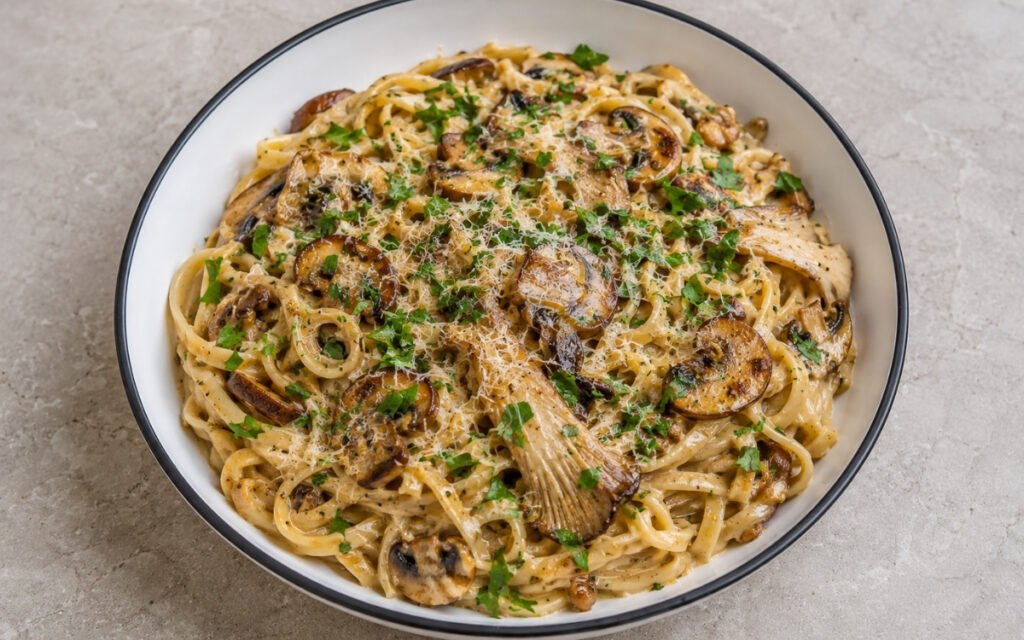
Creamy Mushroom Garlic Pasta
Seared mushrooms for texture and a concentrated mushroom paste for invisible depth — cream sauce over pappardelle, 35 minutes.
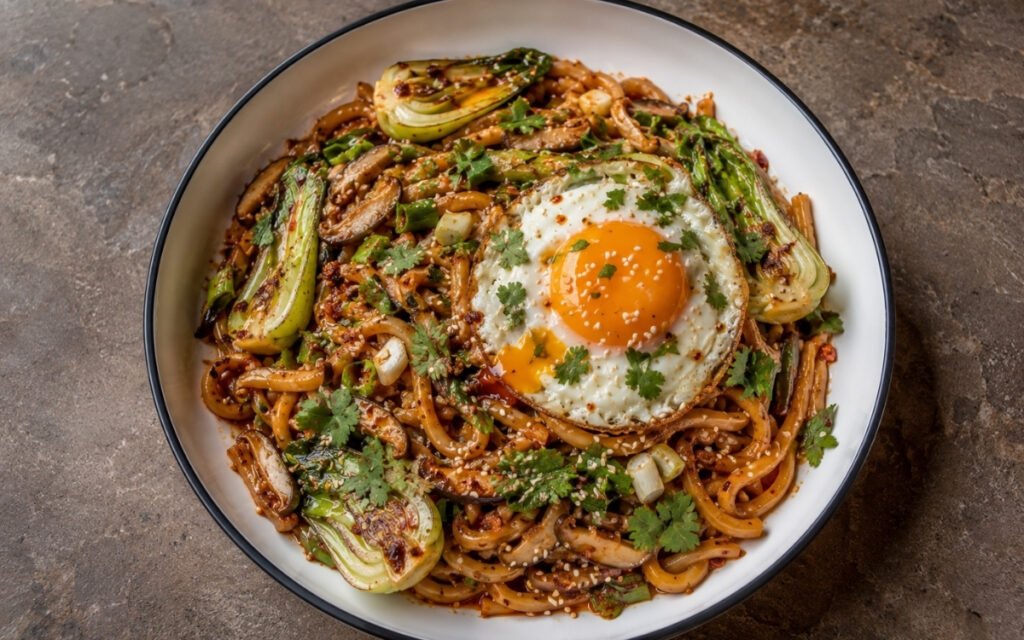
Spicy Chili Garlic Oil Noodles
Homemade gochugaru and Sichuan peppercorn oil over noodles with shiitake — crispy fried egg on top, 25 minutes.
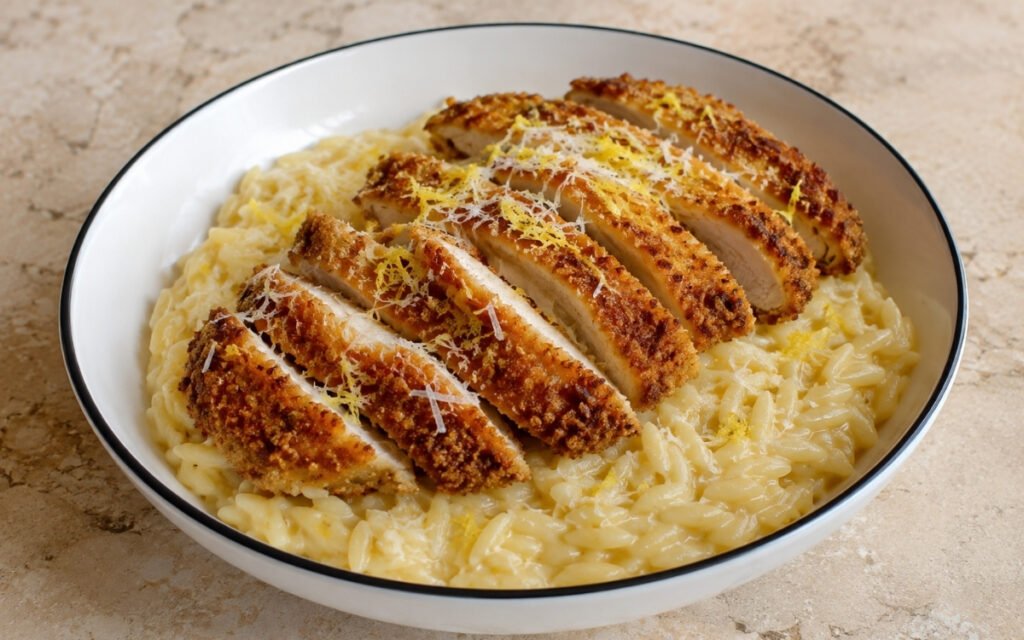
Lemon Chicken Cutlet Orzo
Crispy Parmesan-breaded cutlets sliced over creamy caramelised onion, double lemon, and ricotta orzo — 55 minutes.
You might also like
You might also like
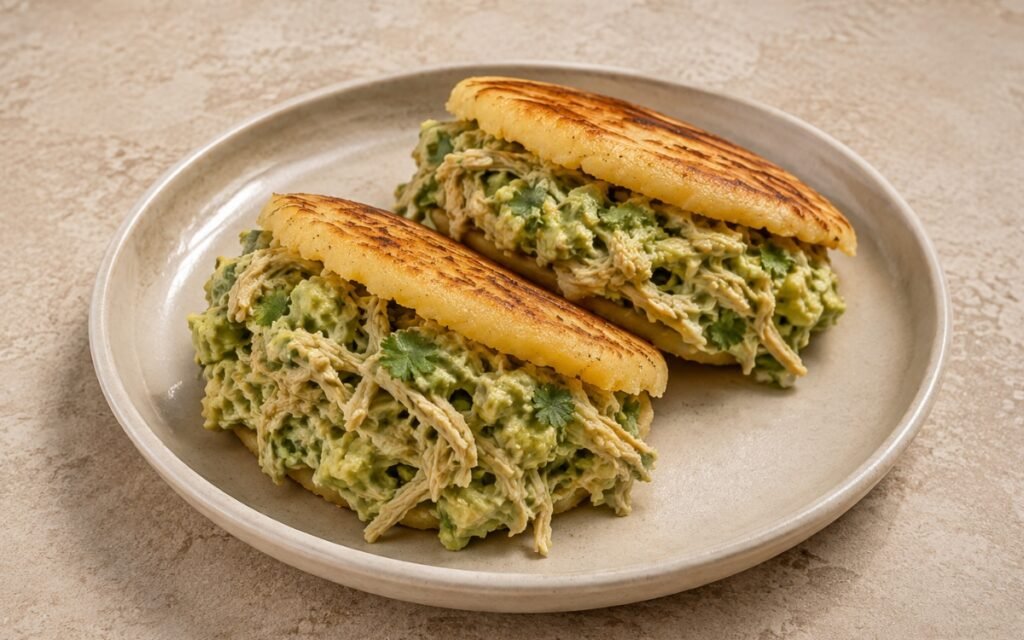
Arepas Reina Pepiada
Crisp, golden masarepa arepas split open and generously stuffed with a creamy shredded chicken and avocado filling.
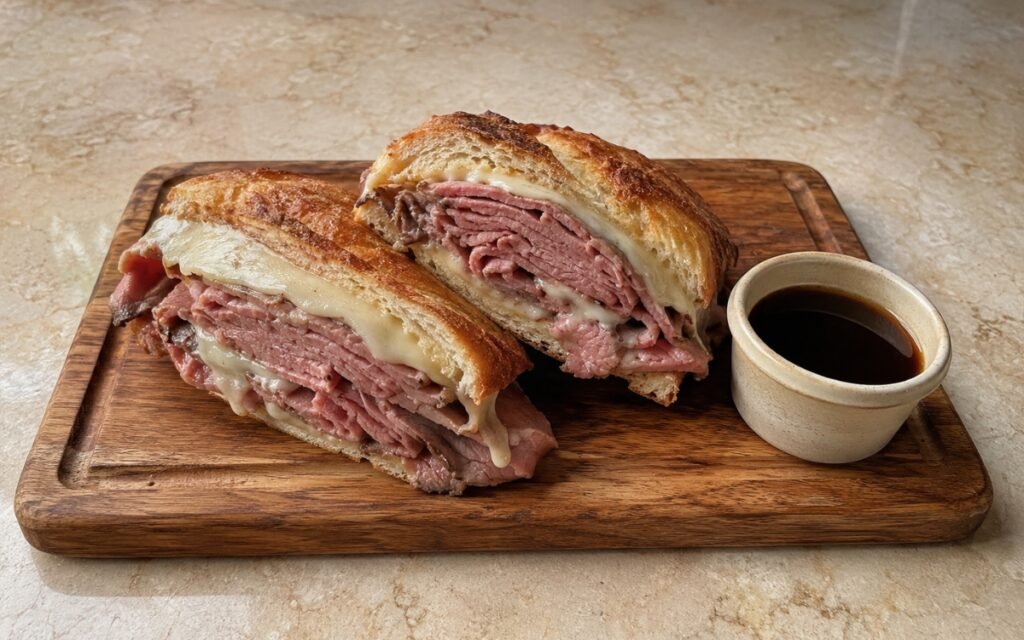
French Dip Sandwich
Thinly sliced, medium-rare roast beef and melted Swiss and provolone piled into a toasted homemade hoagie roll, served with savoury au jus for dipping.
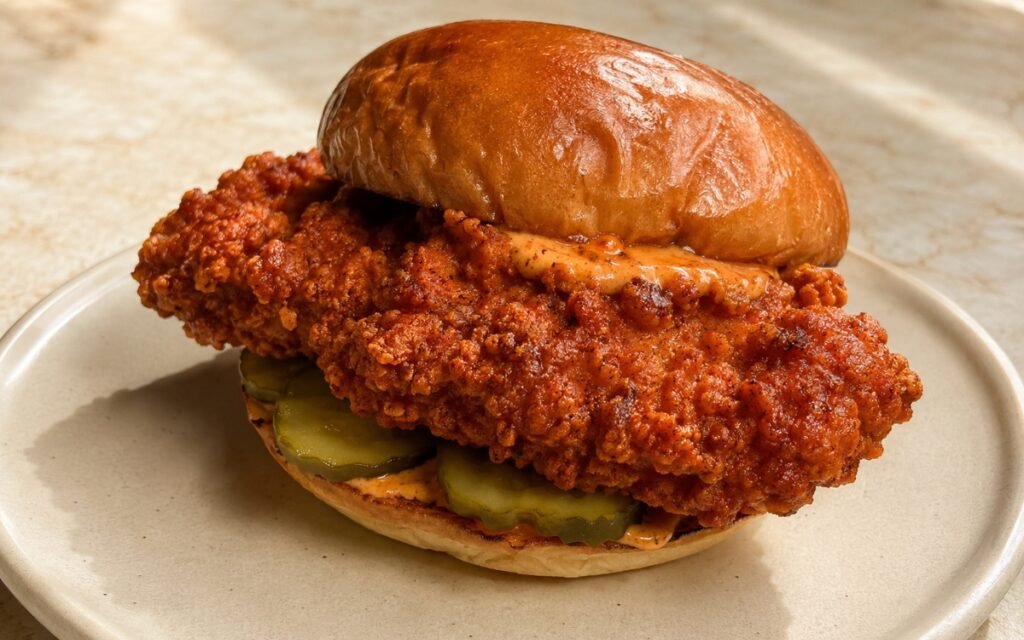
Spicy Fried Chicken Sandwich
Ultra-crispy gochujang-marinated chicken with pickles, melted cheese, and garlicky heat stacked on toasted brioche.
Tortellini in Brodo
Ingredients
Method
- Put the beef, chicken, cold water, onion, carrot, celery, parsley stems, bay leaf, and peppercorns into a large pot. Bring up to a very gentle simmer over medium heat. Do not rush this stage. As the broth starts heating, skim off the foam and impurities from the surface several times. Start from cold water and heat slowly. This extracts flavor gradually and helps produce a clearer broth. A hard boil early on will cloud the broth and toughen the meat. The cold start gives proteins time to release gradually into the liquid as the temperature climbs, rather than seizing suddenly under a hard boil and clouding the broth with coagulated particles.
- Once the broth reaches a light simmer, add the salt and reduce the heat to low. Simmer uncovered or partially covered for 2½ to 3 hours, maintaining only a gentle movement in the liquid. Skim occasionally if needed. The broth should never boil aggressively. You want a quiet simmer with only small bubbles. This is the main difference between a clear brodo and a cloudy soup stock. By the end, the broth should taste full, clean, and savory, and the chicken and beef should be fully cooked and tender. The long, gentle simmer draws flavour slowly from the beef and chicken without the agitation that would cloud the broth.
- Strain the broth through a fine sieve into a clean pot. Discard the vegetables and aromatics. If you want an even cleaner broth, strain it a second time through a finer sieve or cheesecloth. Taste and adjust salt. If the broth is very fatty, let it settle for a few minutes and skim some fat from the top, but do not remove all of it — a light golden sheen is desirable and classical. You should have about 1.8 to 2 liters finished broth. Tortellini in brodo should taste delicate, not greasy. Leave enough fat for flavor, but not so much that the surface becomes heavy. That deliberate restraint in skimming — removing some fat but never all of it — keeps the broth’s classical character, since a light golden sheen carries flavour that a fully defatted broth would lose entirely.
- Bring the strained broth back to a gentle simmer. Add the tortellini and cook according to their type: fresh or refrigerated tortellini usually take 2–4 minutes, dried tortellini usually take 8–12 minutes, or according to package timing. Stir gently once or twice so they do not stick. Cook just until the tortellini are tender and heated through. Do not boil hard after adding the tortellini. A strong boil can break them open and turn the broth starchy or cloudy. If using packaged tortellini that release a lot of starch, you can cook them separately in water and transfer them into hot broth for serving. This keeps the broth cleaner. For good-quality fresh tortellini, cooking directly in the broth is more classical. Keeping the simmer gentle at this stage protects the tortellini’s own delicate wrappers from the physical agitation a hard boil would introduce — that same agitation is exactly what causes them to burst and release starch back into the broth.
- Warm the serving bowls. Divide the tortellini among the bowls and ladle the hot broth over them. Finish with a light to moderate sprinkle of finely grated Parmigiano-Reggiano. Serve immediately. Warming the bowls beforehand protects the broth’s own temperature from dropping the instant it’s ladled in, keeping the whole dish hot right through to the first spoonful.