
Tomato Spinach Farfalle Pasta
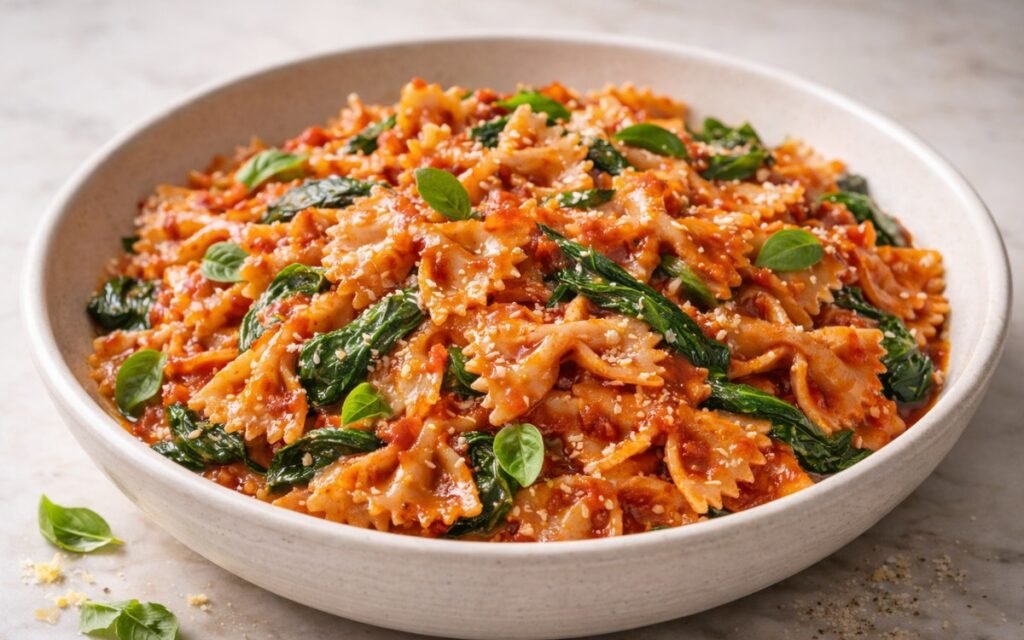
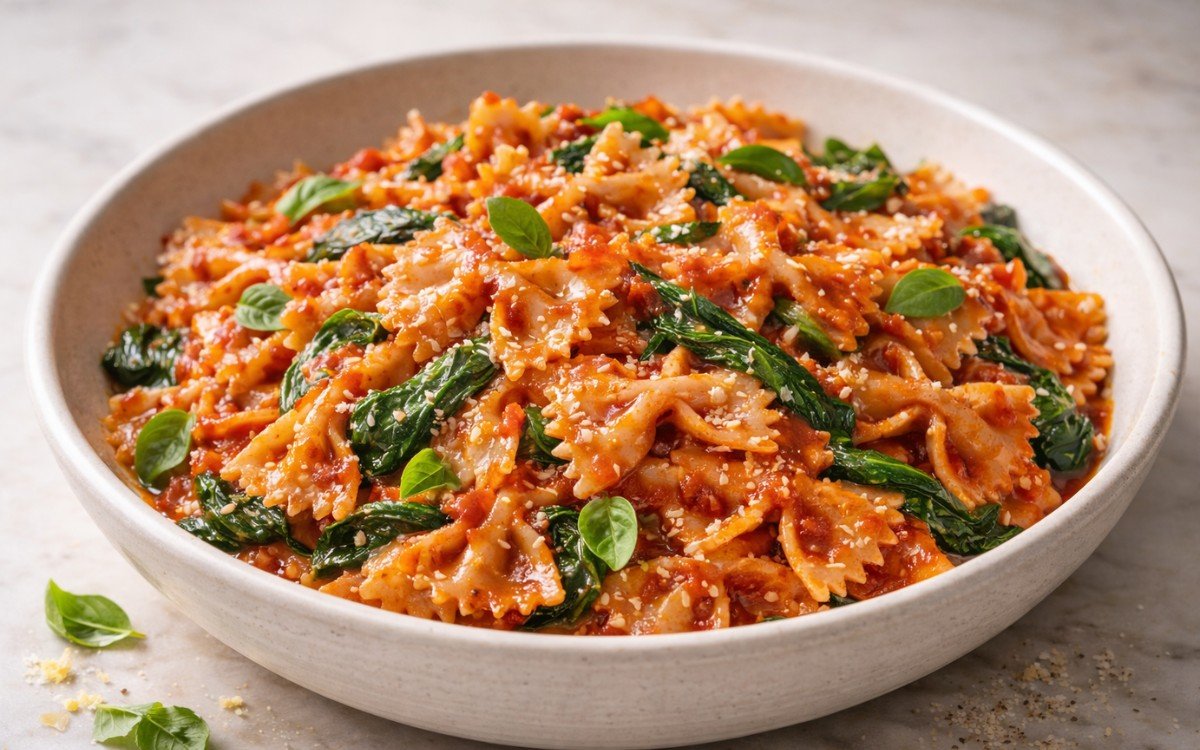
This tomato spinach farfalle pasta is weeknight comfort with a clean ingredient list. A quick tomato sauce builds depth from properly caramelized tomato paste and softened aromatics, then baby spinach wilts directly into the pan for freshness and color. Tossing the pasta with reserved starchy water turns everything glossy and cohesive instead of loose and watery. It’s simple, dependable, and ready in 30 minutes.
Prep Time : 10 min
Cook Time : 20 min
Servings : 4
10 min
20 min
4
Ingredients
For the Pasta
• 340 g farfalle pasta — this one on Amazon
• Salt, for pasta water
• 240 ml pasta water, reserved
For the Tomato Spinach Sauce
• 60 ml extra virgin olive oil — this one on Amazon
• 1 medium yellow onion (150 g), finely diced
• 4 cloves garlic (16 g), minced
• 200 g baby spinach
• 30 g tomato paste
• 800 g canned crushed tomatoes
• 1 teaspoon (6 g) kosher salt
• 1/2 teaspoon (1 g) freshly ground black pepper
• 1 g red pepper flakes (1/2 teaspoon), optional
• 15 ml balsamic vinegar, optional
For Finishing
• 60 g finely grated Parmesan cheese, plus more for serving — this one on Amazon
• 20 g fresh basil leaves, torn
This post may contain affiliate links. As an Amazon Associate I earn from qualifying purchases, at no additional cost to you.
Directions
- Cook the Pasta
Bring a large pot of water to a rolling boil and salt it generously — it should taste properly seasoned. Add the farfalle and cook until al dente, following package timing but tasting 1 minute early. Before draining, reserve 240 ml of the starchy pasta water. Drain the pasta and set aside. Do not rinse — the surface starch is critical for emulsifying the sauce later. - Build the Sauce Base
While the pasta cooks, heat a large skillet over medium heat and add the olive oil. Add the diced onion and cook for 4–5 minutes, stirring occasionally, until softened and lightly translucent. You’re not browning aggressively here — just building sweetness. Add the minced garlic and cook 45–60 seconds until fragrant. Immediately stir in the tomato paste and cook it for a full 2 minutes, stirring constantly and pressing it into the pan. The paste should darken slightly and smell deeper and sweeter — this step removes the raw edge and adds body to the final sauce. - Simmer the Tomato Sauce
Add the crushed tomatoes, salt, black pepper, and red pepper flakes (if using). Stir well and bring to a steady simmer. Let cook for 8–10 minutes, stirring occasionally, until the sauce thickens slightly and the oil begins to shimmer faintly on the surface. Taste and adjust seasoning. If the tomatoes feel sharp or one-dimensional, stir in the balsamic vinegar for subtle balance. The sauce should taste rounded, not acidic. - Wilt the Spinach
Add the baby spinach directly into the simmering sauce. Toss gently for 60–90 seconds until just wilted. The spinach should collapse but stay bright green. Overcooking at this stage will dull both the color and flavor. - Finish Pasta in the Sauce
Add the drained farfalle to the skillet. Pour in 120 ml of reserved pasta water and increase heat slightly. Toss vigorously for 1–2 minutes so the starch emulsifies with the olive oil and tomatoes, creating a glossy coating. If the sauce looks thick or tight, add more pasta water 30 ml at a time, tossing between additions. The goal is a sauce that clings to the ridges and folds of the farfalle, not one that pools at the bottom of the pan. - Finish and Serve
Remove from heat. Add the Parmesan and torn basil, tossing quickly so the cheese melts evenly into the sauce. Divide among four warm bowls and finish with extra Parmesan if desired. Serve immediately while glossy and cohesive.
*Notes :
- Tomato paste must be cooked properly. Two full minutes of direct heat transforms it from sharp and metallic to sweet and concentrated. Skip that and your sauce will always taste slightly raw.
- Spinach goes in at the very end. It should wilt from residual heat, not simmer endlessly. Overcooked spinach turns dull, watery, and drags the sauce down with it.
- Pasta water is the control knob. If the sauce looks thin, toss harder. If it looks thick, add more pasta water. Starch and motion are what create a restaurant-style finish — not extra cheese and definitely not more oil.
- Olive oil matters here. This is a simple sauce, so use one that tastes good on its own. Cheap oil makes the entire dish feel flat.
- Serve immediately. This is at its best when glossy and fluid — let it sit too long and the starch tightens.
Nutrition Facts
( per serving )
Calories
~573 kcal
Protein
26 g
Fat
19 g
Carbs
77 g
Calories
~573 kcal
Protein
26 g
Fat
19 g
Carbs
77 g
Related Recipes
Related Recipes

Baked Mac and Cheese
Velvety cheese sauce clings to tender pasta beneath a bubbling, golden crust with deep, savory richness.
Grilled Mediterranean Veggie Bowl
Smoky grilled vegetables with lemon-herb quinoa, crispy chickpeas & creamy tahini-yogurt sauce.
White Tea Lemonade
Delicate lemonade with white tea whisper, light, floral, exceptionally clean, and quietly refined.

You might also like
You might also like
Spicy Tuna Rice Bowl
Seared sesame-crusted tuna over sushi rice with spicy gochugaru mayo and fresh vegetables.
Teriyaki Glazed Salmon
Broiled salmon with homemade teriyaki creates a caramelized glaze that’s sweet, savory, and lacquered.
Grilled Mediterranean Veggie Bowl
Smoky grilled vegetables with lemon-herb quinoa, crispy chickpeas & creamy tahini-yogurt sauce.
Tomato Spinach Farfalle Pasta
Ingredients
Method
- Bring a large pot of water to a rolling boil and salt it generously — it should taste properly seasoned. Add the farfalle and cook until al dente, following package timing but tasting 1 minute early. Before draining, reserve 240 ml of the starchy pasta water. Drain the pasta and set aside. Do not rinse — the surface starch is critical for emulsifying the sauce later.
- While the pasta cooks, heat a large skillet over medium heat and add the olive oil. Add the diced onion and cook for 4–5 minutes, stirring occasionally, until softened and lightly translucent. You’re not browning aggressively here — just building sweetness. Add the minced garlic and cook 45–60 seconds until fragrant. Immediately stir in the tomato paste and cook it for a full 2 minutes, stirring constantly and pressing it into the pan. The paste should darken slightly and smell deeper and sweeter — this step removes the raw edge and adds body to the final sauce.
- Add the crushed tomatoes, salt, black pepper, and red pepper flakes (if using). Stir well and bring to a steady simmer. Let cook for 8–10 minutes, stirring occasionally, until the sauce thickens slightly and the oil begins to shimmer faintly on the surface. Taste and adjust seasoning. If the tomatoes feel sharp or one-dimensional, stir in the balsamic vinegar for subtle balance. The sauce should taste rounded, not acidic.
- Add the baby spinach directly into the simmering sauce. Toss gently for 60–90 seconds until just wilted. The spinach should collapse but stay bright green. Overcooking at this stage will dull both the color and flavor.
- Add the drained farfalle to the skillet. Pour in 120 ml of reserved pasta water and increase heat slightly. Toss vigorously for 1–2 minutes so the starch emulsifies with the olive oil and tomatoes, creating a glossy coating. If the sauce looks thick or tight, add more pasta water 30 ml at a time, tossing between additions. The goal is a sauce that clings to the ridges and folds of the farfalle, not one that pools at the bottom of the pan.
- Remove from heat. Add the Parmesan and torn basil, tossing quickly so the cheese melts evenly into the sauce. Divide among four warm bowls and finish with extra Parmesan if desired. Serve immediately while glossy and cohesive.
Notes
- Tomato paste must be cooked properly. Two full minutes of direct heat transforms it from sharp and metallic to sweet and concentrated. Skip that and your sauce will always taste slightly raw.
- Spinach goes in at the very end. It should wilt from residual heat, not simmer endlessly. Overcooked spinach turns dull, watery, and drags the sauce down with it.
- Pasta water is the control knob. If the sauce looks thin, toss harder. If it looks thick, add more pasta water. Starch and motion are what create a restaurant-style finish — not extra cheese and definitely not more oil.
- Olive oil matters here. This is a simple sauce, so use one that tastes good on its own. Cheap oil makes the entire dish feel flat.
- Serve immediately. This is at its best when glossy and fluid — let it sit too long and the starch tightens.