
Tomato Pasta with Ricotta & Italian Sausage
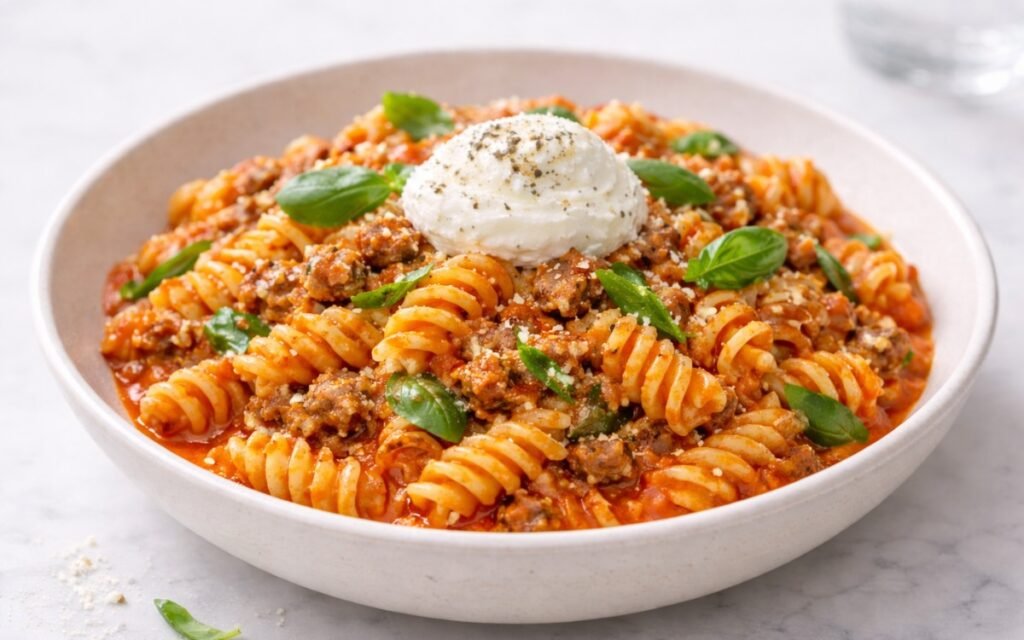
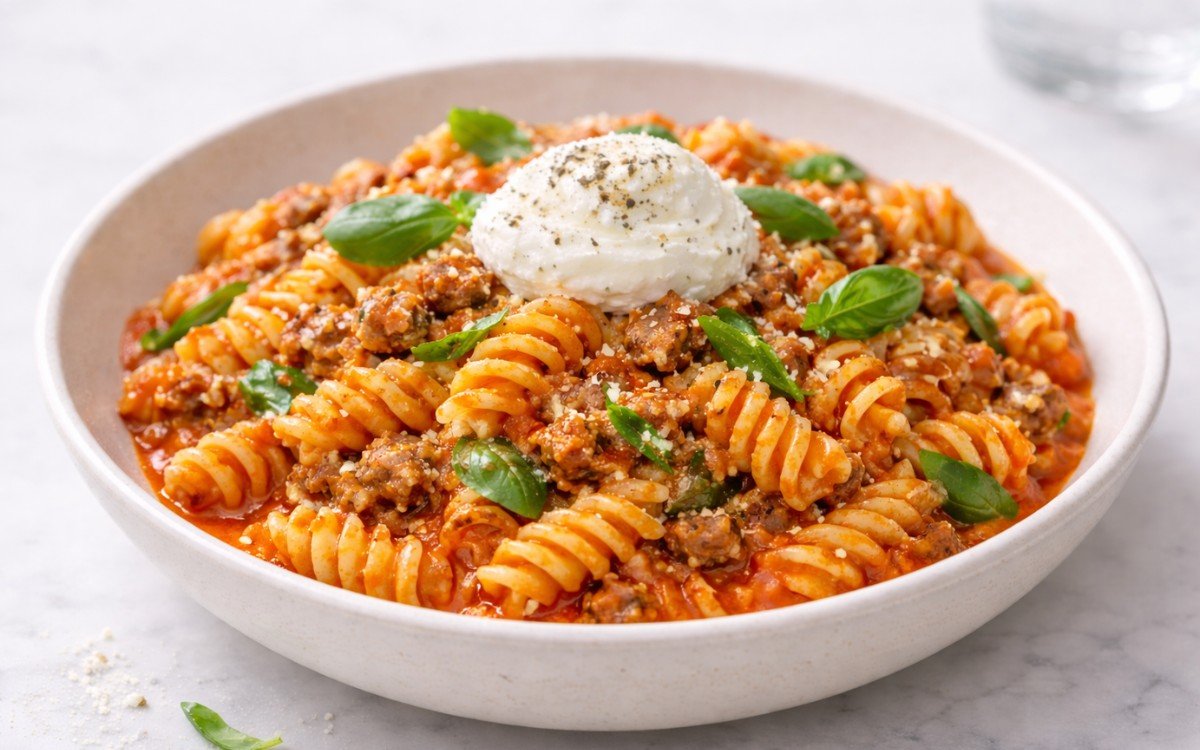
This tomato pasta with ricotta and Italian sausage is the kind of weeknight dinner that tastes like it simmered all afternoon, yet it’s on the table in 40 minutes. Crumbled sausage builds deep savory foundation, a concentrated tomato base turns glossy and rich, and a final swirl of ricotta makes everything creamy without heavy cream. Bold, structured, and deeply comforting — exactly the payoff you want after a long day.
Prep Time : 15 min
Cook Time : 25 min
Servings : 4
15 min
25 min
4
Ingredients
For the Pasta
• 340 g fusilli or penne rigate — this one on Amazon
• Salt, for pasta water
• 240 ml pasta water, reserved
For the Sausage Tomato Sauce
• 320 g Italian sausage (hot or sweet), casings removed
• 30 ml extra virgin olive oil — this one on Amazon
• 1 medium yellow onion (150 g), finely diced
• 4 cloves garlic (16 g), minced
• 30 g tomato paste
• 180 ml dry white wine
• 800 g canned crushed tomatoes
• 1 teaspoon (6 g) kosher salt, plus more to taste
• 1/2 teaspoon (1 g) freshly ground black pepper
• 1/2 teaspoon (1 g) red pepper flakes (optional)
For the Ricotta Finish
• 250 g whole milk ricotta
• 60 g freshly grated Parmesan cheese — this one on Amazon
• 20 g fresh basil leaves, torn
• 15 ml extra virgin olive oil, for serving
This post may contain affiliate links. As an Amazon Associate I earn from qualifying purchases, at no additional cost to you.
Directions
- Cook the Pasta
Bring a large pot of water to a rolling boil and salt it aggressively — it should taste like the sea. Add the pasta and cook until 2 minutes shy of al dente, stirring occasionally to prevent sticking. Before draining, reserve 240 ml of the starchy pasta water — this is critical for finishing the sauce. Drain the pasta and set aside; do not rinse. - Brown the Sausage
Heat a large, deep skillet over medium-high heat. Add the olive oil, then crumble in the sausage. Spread it out and let it brown undisturbed for 1–2 minutes before breaking it up — this develops deeper caramelization. Cook for 5–6 minutes total, breaking into bite-sized pieces, until deeply golden and the fat has rendered. Transfer the sausage to a plate, leaving the flavorful drippings and browned bits (fond) in the pan. - Build the Tomato Base
Reduce heat to medium. Add the diced onion to the same skillet and cook 3–4 minutes, stirring occasionally, until softened and lightly translucent. Add the garlic and red pepper flakes (if using) and cook 45–60 seconds until fragrant — do not brown the garlic. Stir in the tomato paste and cook for 2 full minutes, stirring constantly, until it darkens slightly and smells sweet and concentrated. This step removes raw acidity and builds depth. - Deglaze and Simmer
Pour in the white wine, scraping the bottom of the pan to lift all browned bits. Let it reduce by about half, 2–3 minutes, until the alcohol cooks off and the sauce smells round rather than sharp. Add the crushed tomatoes, salt, and black pepper. Bring to a lively simmer and cook for 8–10 minutes, stirring occasionally, until slightly thickened and glossy. Return the browned sausage and any accumulated juices to the skillet. Simmer together for another 2–3 minutes to fully integrate. - Finish the Pasta in the Sauce
Add the drained pasta directly into the skillet. Pour in 120 ml of the reserved pasta water and toss vigorously for 2–3 minutes over medium heat. The pasta will finish cooking in the sauce while releasing starch that emulsifies everything together. If the sauce feels tight or dry, add more pasta water 30 ml at a time, tossing hard between additions. The goal is a silky, clinging coating — not a watery pool, not a thick paste. - Swirl in Ricotta and Serve
Remove the skillet from heat completely. Add the ricotta and Parmesan and toss quickly until the sauce becomes creamy and evenly coats every piece of pasta. The residual heat will melt the cheese gently without curdling it. Fold in the torn basil. Taste and adjust salt if needed. Divide into warm bowls and finish with a drizzle of olive oil and extra Parmesan if desired.
*Notes :
- Push the browning on the sausage. Deep caramelization equals deep flavor, and the fond left in the pan becomes the backbone of the entire sauce. Pale sausage equals flat sauce.
- Cook the tomato paste properly. Two minutes of active cooking transforms it from acidic and raw to sweet and concentrated — skipping this step leaves the sauce one-dimensional.
- Ricotta must be added off heat. High heat will cause it to tighten and turn grainy instead of silky. The goal is creamy suspension, not melted cheese clumps.
- If the pasta looks dry or “stuck,” do not add more tomatoes or oil — add pasta water and toss aggressively. The starch is what creates restaurant-level texture and cohesion.
- This dish reheats well. Add a splash of water before warming to restore the sauce’s silkiness.
Nutrition Facts
( per serving )
Calories
~868 kcal
Protein
37 g
Fat
43 g
Carbs
79 g
Calories
~868 kcal
Protein
37 g
Fat
43 g
Carbs
79 g
Related Recipes
Related Recipes

Blackberry Jasmine Iced Tea
Delicate jasmine tea with blackberry purée and lemon peel, softly fruity, floral, clean, and precisely restrained.
Roasted Veggie Quinoa Bowl
Za’atar roasted veggies, creamy hummus, quinoa & lemon-tahini drizzle in one vibrant bowl.
Korean Beef Bulgogi Rice Bowl
Tender marinated ribeye with pickled cucumbers, kimchi & runny egg over rice—Korean comfort.
You might also like
You might also like
Chili Lime Chicken Rice Bowl
Zesty marinated chicken with charred corn, beans, and creamy chili-lime drizzle over cilantro rice.
Peppercorn Crusted Steak
Tender steak coated in crushed black peppercorns, seared with butter, and finished with brandy sauce.
Austrian Pork Schnitzel
Crispy-coated pork cutlets pounded thin and fried golden in the classic Viennese tradition.
Tomato Pasta with Ricotta & Italian Sausage
Ingredients
Method
- Bring a large pot of water to a rolling boil and salt it aggressively — it should taste like the sea. Add the pasta and cook until 2 minutes shy of al dente, stirring occasionally to prevent sticking. Before draining, reserve 240 ml of the starchy pasta water — this is critical for finishing the sauce. Drain the pasta and set aside; do not rinse.
- Heat a large, deep skillet over medium-high heat. Add the olive oil, then crumble in the sausage. Spread it out and let it brown undisturbed for 1–2 minutes before breaking it up — this develops deeper caramelization. Cook for 5–6 minutes total, breaking into bite-sized pieces, until deeply golden and the fat has rendered. Transfer the sausage to a plate, leaving the flavorful drippings and browned bits (fond) in the pan.
- Reduce heat to medium. Add the diced onion to the same skillet and cook 3–4 minutes, stirring occasionally, until softened and lightly translucent. Add the garlic and red pepper flakes (if using) and cook 45–60 seconds until fragrant — do not brown the garlic. Stir in the tomato paste and cook for 2 full minutes, stirring constantly, until it darkens slightly and smells sweet and concentrated. This step removes raw acidity and builds depth.
- Pour in the white wine, scraping the bottom of the pan to lift all browned bits. Let it reduce by about half, 2–3 minutes, until the alcohol cooks off and the sauce smells round rather than sharp. Add the crushed tomatoes, salt, and black pepper. Bring to a lively simmer and cook for 8–10 minutes, stirring occasionally, until slightly thickened and glossy. Return the browned sausage and any accumulated juices to the skillet. Simmer together for another 2–3 minutes to fully integrate.
- Add the drained pasta directly into the skillet. Pour in 120 ml of the reserved pasta water and toss vigorously for 2–3 minutes over medium heat. The pasta will finish cooking in the sauce while releasing starch that emulsifies everything together. If the sauce feels tight or dry, add more pasta water 30 ml at a time, tossing hard between additions. The goal is a silky, clinging coating — not a watery pool, not a thick paste.
- Remove the skillet from heat completely. Add the ricotta and Parmesan and toss quickly until the sauce becomes creamy and evenly coats every piece of pasta. The residual heat will melt the cheese gently without curdling it. Fold in the torn basil. Taste and adjust salt if needed. Divide into warm bowls and finish with a drizzle of olive oil and extra Parmesan if desired.
Notes
- Push the browning on the sausage. Deep caramelization equals deep flavor, and the fond left in the pan becomes the backbone of the entire sauce. Pale sausage equals flat sauce.
- Cook the tomato paste properly. Two minutes of active cooking transforms it from acidic and raw to sweet and concentrated — skipping this step leaves the sauce one-dimensional.
- Ricotta must be added off heat. High heat will cause it to tighten and turn grainy instead of silky. The goal is creamy suspension, not melted cheese clumps.
- If the pasta looks dry or “stuck,” do not add more tomatoes or oil — add pasta water and toss aggressively. The starch is what creates restaurant-level texture and cohesion.
- This dish reheats well. Add a splash of water before warming to restore the sauce’s silkiness.