Ingredients
Method
Cook the Pasta
- Bring a large pot of water to a full rolling boil and salt aggressively — the water should taste like the sea. Add the fusilli or penne rigate and cook, stirring occasionally to prevent sticking, until exactly 2 minutes shy of the package's al dente time. The pasta finishes cooking in the sauce during the tossing step, so it must be pulled noticeably underdone. Before draining, reserve 240ml of the starchy pasta water in a heatproof jug — this water is the emulsifying tool that binds the ricotta finish into the sauce during the final toss. Drain without rinsing and set aside.
Brown the Sausage Deeply
- Heat a large, deep skillet over medium-high heat. Add the 30ml of olive oil and allow to heat until shimmering. Crumble the 320g of sausage with casings removed into the pan in rough pieces — not fine crumbles, but irregular, bite-sized chunks that will remain present and textural in the finished dish. Spread the pieces out and leave undisturbed for 1–2 minutes before breaking them apart. This initial undisturbed period allows the bottom surface of each piece to develop the deep caramelisation that produces the fond — without it, the sausage browns more superficially and the pan retains less concentrated flavour for the sauce base. Continue cooking, breaking into smaller pieces, for a total of 5–6 minutes until deeply golden across most surfaces and the fat has rendered completely into the pan. The sausage must be genuinely deeply browned — the entire flavour depth of this recipe begins here, and pale sausage produces a flat sauce regardless of subsequent technique. Transfer the browned sausage to a plate using a slotted spoon, leaving all rendered fat and fond in the skillet.
Build the Tomato Sauce Base
- Reduce the heat to medium. Add the 150g of finely diced yellow onion to the sausage fat remaining in the skillet. Cook for 3–4 minutes, stirring occasionally, until completely softened and lightly translucent. The onion softens in the richly flavoured rendered sausage fat, absorbing its savoury character while contributing its own background sweetness. Add the 16g of minced garlic and the optional red pepper flakes. Cook for 45–60 seconds, stirring constantly — at medium heat in hot sausage fat, minced garlic moves quickly toward browning, and constant stirring keeps every piece moving. Stir in the 30g of tomato paste and press it against the hot pan surface. Cook for 2 full minutes, stirring and pressing constantly — this is the most flavour-generative 2 minutes in the recipe. The tomato paste undergoes Maillard caramelisation at its direct contact points with the hot pan, converting its sharp, raw acidity into a darker, slightly sweet, concentrated tomato depth. The paste should visibly deepen from bright red to brick-red and smell noticeably sweeter and less acidic by the end of the 2 minutes. Skipping or rushing this step produces a one-dimensional, slightly raw-tasting tomato sauce regardless of how long it subsequently simmers.
Deglaze and Simmer
- Pour in the 180ml of dry white wine and immediately scrape the bottom of the pan firmly to lift all the fond — the wine dissolves every bit of caramelised sausage protein and tomato paste from the surface into the sauce. Allow to bubble vigorously for 2–3 minutes until reduced by approximately half and the raw alcohol edge has cooked off — the sauce should smell round and fruity rather than sharp and spiritous. Add the 800g of crushed tomatoes, 6g of salt, and 1g of black pepper. Stir to combine and bring to a lively simmer. Cook uncovered for 8–10 minutes, stirring occasionally, until the sauce has thickened slightly and developed a glossy, concentrated appearance — the surface should look shiny rather than the duller, more watery appearance of freshly added crushed tomatoes. Return the browned sausage pieces and all their accumulated resting juices to the skillet. Stir to incorporate and simmer together for 2–3 minutes — the sausage heats through and exchanges flavour with the tomato sauce, the juices from the resting plate dissolving into the sauce and enriching it.
Finish the Pasta in the Sauce
- Add the drained, underdone pasta directly to the skillet. Pour in 120ml of the reserved pasta water. Toss vigorously over medium heat for 2–3 minutes using tongs — lifting the pasta from the bottom and folding it over the top continuously. The pasta finishes cooking in the sauce during this tossing period, absorbing the sausage-tomato character directly into its structure. The pasta's surface starch releases into the surrounding sauce simultaneously, progressively thickening and enriching it with each passing minute. The finished sauce should be silky and clinging — coating each piece of pasta as a unified film rather than pooling at the bottom of the pan. If the sauce tightens beyond this correct consistency, add the remaining pasta water in 30ml increments while tossing. The correct test: when you lift a forkful of pasta, the sauce should cling to each piece rather than dripping off freely.
Fold in Ricotta and Serve
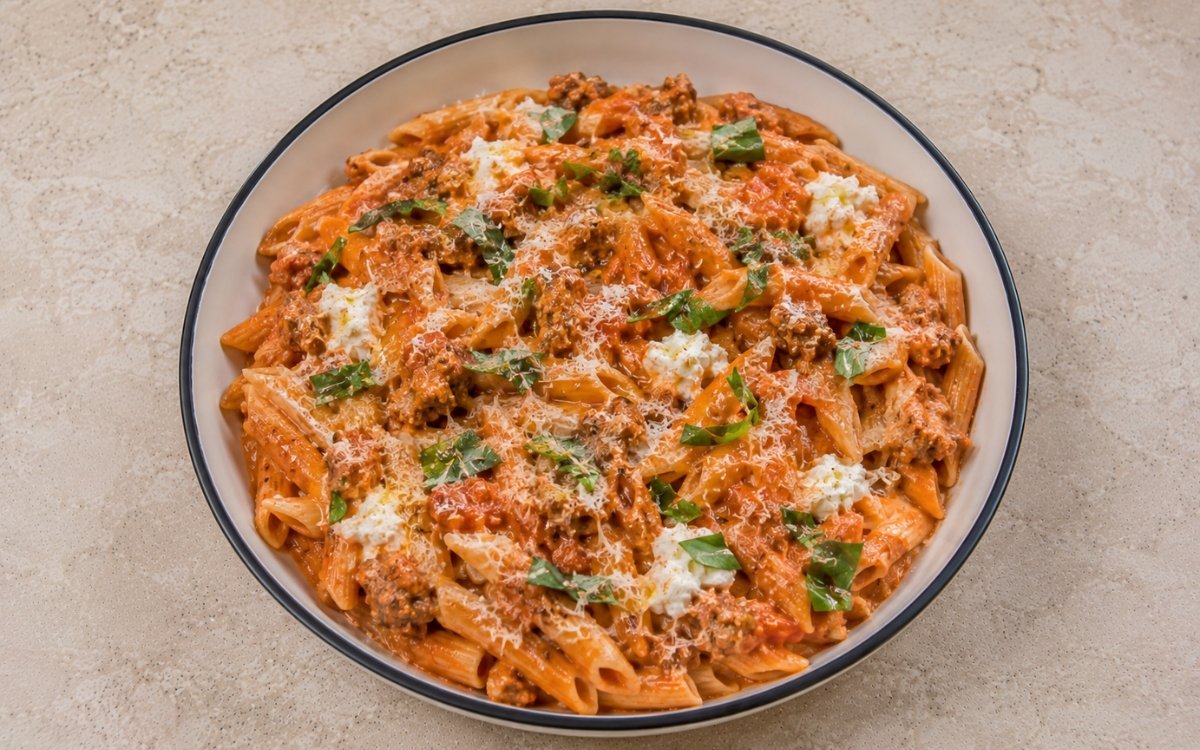
- Remove the skillet from the heat completely. Add the 250g of whole milk ricotta and 60g of freshly grated Parmesan. Toss quickly to combine — the residual heat of the pasta and sauce melts the ricotta and Parmesan gently into the surrounding sauce. The ricotta must be added off the heat — at direct high heat, ricotta's proteins tighten and the cheese separates into small, grainy curds rather than dispersing smoothly into the sauce as a creamy, coating element. The correctly added ricotta should produce a visible transformation in the sauce: what was a concentrated, somewhat sharp tomato-sausage coating becomes smooth, slightly pale, and creamy — the ricotta's fat and protein emulsifying with the starchy pasta sauce into a unified, silky consistency that resembles a cream sauce without containing any cream. Fold in the torn basil leaves. Taste and adjust with additional salt if needed. Divide among four warm bowls immediately. Drizzle a small amount of the finishing olive oil over each portion. Add additional grated Parmesan at the table.
Notes
The ricotta finish is the specific technique that makes this dish distinct from both a plain sausage tomato pasta and a cream pasta. Whole milk ricotta has a fat content of approximately 14–17% — lower than cream cheese or mascarpone but sufficient to produce the smooth, coating emulsification effect when folded into a hot, starchy tomato sauce. The ricotta's proteins, when gently heated in contact with the pasta's released starch, form a smooth suspension — distributing through the sauce as fine particles that produce a creamy mouthfeel without being detectable as individual cheese pieces. The result is a sauce that is simultaneously recognisably tomato-based and specifically creamy in a way that plain tomato sauce is not.
The importance of deep sausage browning cannot be overstated in this recipe. The fond produced by 5–6 minutes of proper browning is the concentrated flavour substrate that everything else builds on — the white wine dissolves it, the tomatoes simmer in it, the pasta absorbs it. A pale sausage sear produces insufficient fond, and the resulting sauce will taste flat and undeveloped regardless of the quality of the tomatoes or the precision of the subsequent technique. If the sausage is not producing dark, caramelised drippings on the pan surface after 4 minutes, the heat is too low — increase it and continue browning.