Thai Green Curry Short Rib Rice Bowl
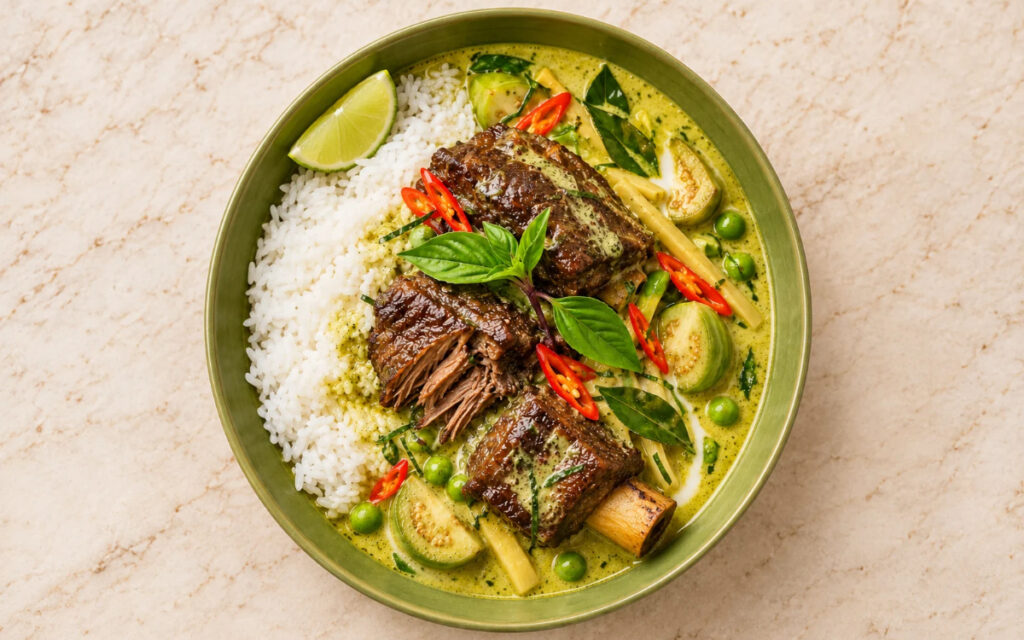
Thai green curry short rib rice bowls pair slow-braised beef short ribs, seared dark and cooked until fork-tender, with a silky green coconut curry of fresh chilies, lemongrass, and galangal and a pile of fluffy jasmine rice, the key being the contrast between the deeply browned, rich beef and the bright, herbal, lightly sweet sauce around it. Frying the freshly pounded curry paste in thick coconut cream before any other liquid goes in is the technique this whole curry depends on for its aromatic depth — the cream’s fat carries the chili, lemongrass, and shrimp paste flavours and cooks off their raw edge, the same fry-the-aromatics-in-fat-first principle used elsewhere in this collection whenever a spice paste must bloom. Braising the ribs gently in the oven, never at a rolling boil, is what keeps the meat tender yet intact instead of stringy. Adding the Thai basil only at the very end, once the pot is off the heat, is what preserves its perfume and its bright colour. The payoff is a bowl with real, layered Thai character — tender beef, a glossy jade-green sauce, tender eggplants, and fragrant white rice.
- Prep Time : 40 min
- Total Time : 4 hr 10 min
- Servings : 4
Ingredients
For the Braised Beef Short Ribs
- 1.1kg bone-in beef short ribs (4 individual English-cut pieces)
- 700g boneless beef short rib meat, cut into 8 substantial pieces
- 25ml neutral cooking oil
- 10g fine sea salt
- 2g freshly ground black pepper
- 1 litre unsalted beef stock
- 1 stalk lemongrass, bruised
- 15g fresh galangal, sliced
- 2 makrut lime leaves, torn
For the Homemade Thai Green Curry Paste
- 40g fresh mild green Thai chilies, roughly chopped
- 20g green Thai bird’s-eye chilies, stems removed
- 30g lemongrass, tender inner portions only, finely sliced
- 25g fresh galangal, finely chopped
- 35g shallots, chopped
- 20g garlic, chopped
- 10g fresh cilantro roots and tender stems, finely chopped
- 2g makrut lime zest (about 1 tsp)
- 5g Thai fermented shrimp paste (kapi)
- 3g coriander seeds (about 1 tsp)
- 1g cumin seeds (about ½ tsp)
- 1g white peppercorns
- 2g fine sea salt
For the Green Coconut Curry
- 200ml thick unsweetened coconut cream
- 600ml full-fat unsweetened coconut milk
- 200ml strained beef braising liquid, defatted
- The entire batch of Thai green curry paste
- 240g small Thai green eggplants, quartered
- 60g Thai pea eggplants, whole
- 130g bamboo shoots, drained and cut into thin strips
- 5 makrut lime leaves, central ribs removed (3 torn, 2 finely shredded for finishing)
- 25ml Thai fish sauce, adjusted to taste
- 15g palm sugar, finely chopped
- 25g fresh Thai basil leaves, divided
- 2 fresh red Thai chilies, thinly sliced diagonally
For the Jasmine Rice
- 300g Thai jasmine rice
- 450ml water
- 2g fine sea salt
For Finishing and Serving
- 1 lime, cut into 4 wedges
- Reserved Thai basil leaves, from the 25g above
- Reserved shredded makrut lime leaves and red Thai chili slices
- 20ml coconut cream, optional, for finishing
Directions
- Sear the Beef Short Ribs
Preheat the oven to 160°C conventional / 145°C fan. Pat the bone-in and boneless short ribs thoroughly dry and season them with the salt and black pepper. Heat the neutral oil in a large Dutch oven over medium-high heat and sear the beef in batches for 2–3 minutes per side, until deeply browned with dark mahogany patches, then move it to a plate and keep the pan juices. The crust should be dark while the inside stays raw. That uncrowded sear is what builds the roasted, caramelized flavour the finished curry sits on. - Slowly Braise the Short Ribs
Return the beef and its juices to the Dutch oven, add the beef stock, bruised lemongrass, sliced galangal, and torn makrut lime leaves, and bring to a gentle simmer. Cover tightly and braise in the oven for 2 hours 45 minutes to 3 hours 30 minutes, checking tenderness after 2½ hours, until the meat is fork-tender but still holds its shape. Lift out the beef, strain the liquid, and reserve 200ml defatted for the curry. Keep the beef covered and warm. That low, steady heat is what softens the connective tissue without letting the meat fall apart. - Prepare the Thai Green Curry Paste
Toast the coriander seeds, cumin seeds, and white peppercorns in a dry skillet over medium-low heat for about 1 minute until fragrant, then grind them finely. In a mortar and pestle, pound the green chilies with the salt until broken down, then add the lemongrass, galangal, makrut lime zest, cilantro roots, garlic, and shallots a little at a time. Pound in the shrimp paste and ground spices until the paste is thick, naturally green, and free of fibrous pieces. A powerful blender with a splash of water also works. That fine texture is what lets the paste dissolve smoothly into the sauce. - Fry the Green Curry Paste in Coconut Cream
Heat a wide, heavy-bottomed saucepan or wok over medium heat, add the 200ml of thick coconut cream, and simmer for 3–5 minutes, stirring occasionally, until it thickens and small droplets of coconut oil appear. Add the green curry paste and fry for 3–5 minutes, stirring often, until deeply fragrant and slightly darker. Pour in the 600ml of coconut milk and the 200ml of reserved braising liquid and stir until smooth. The sauce should be pale jade-green. That frying in the cream’s own fat is what blooms the paste’s aromatics and removes its raw edge. - Simmer the Thai Eggplants and Bamboo Shoots
Add the three torn makrut lime leaves, fish sauce, and palm sugar to the curry and bring it to a gentle simmer. Add the quartered green eggplants and whole pea eggplants and cook for 6–8 minutes until tender but still in shape, then add the bamboo shoots and simmer for 2–3 minutes more. Taste, and adjust the fish sauce and palm sugar until the sauce balances salty, spicy, aromatic, and lightly sweet. The sauce should flow silkily. That short cooking time is what keeps the eggplants intact instead of collapsing into the curry. - Finish the Beef in the Green Curry
Return the braised beef pieces to the simmering curry and spoon the sauce over them without stirring aggressively. Simmer gently for 4–5 minutes, just until the beef is heated through and coated in the green coconut sauce, then fold in about two-thirds of the Thai basil and remove the pot from the heat once the leaves wilt and release their aroma. Keep the rest of the basil, the red chili slices, and the shredded makrut lime leaves for serving. That brief finish is what keeps the ribs large and tender, and the basil fragrant and green. - Cook the Thai Jasmine Rice
Rinse the jasmine rice several times under cold water until the water runs mostly clear, drain it well, and transfer it to a saucepan with the 450ml of water and 2g of salt. Bring to a boil, cover tightly, reduce the heat to low, and cook for 12–15 minutes until the water is absorbed. Remove from the heat and rest covered for 10 minutes, then fluff gently with a fork. The grains should be tender, fluffy, and distinct. That closed lid throughout cooking and resting is what holds in the steam that finishes the rice. - Assemble the Thai Green Curry Short Rib Rice Bowls
Divide the jasmine rice among four warm bowls, placing it along one side, and spoon the green curry generously into the other side with the eggplants, pea eggplants, and bamboo shoots visible in the sauce. Set one bone-in short rib and two boneless pieces on top of each bowl, spooning a little sauce over them while leaving some seared surfaces exposed. Add Thai basil leaves, red chili slices, and shredded makrut lime leaves, an optional swirl of the 20ml coconut cream, and a lime wedge. That immediate serving keeps the rice fluffy and the beef hot.
*Notes :
- Frying the curry paste in thick coconut cream before adding any other liquid deserves genuine recognition as the technique most directly responsible for this bowl’s aromatic depth. The cream’s fat carries and blooms the chili, lemongrass, galangal, and shrimp paste flavours, and cooks off their raw, sharp edge before the sauce is thinned, so the finished curry tastes rounded and deep.
- Braising the short ribs at a gentle simmer in the oven deserves the same attention this technique receives throughout this collection’s other slow-cooked beef dishes. Steady, moderate heat dissolves the connective tissue into rich, succulent meat while the pieces stay large, whereas a hard boil would tighten the fibres, squeeze out their juices, and shred them into stringy strands.
- Balancing the fish sauce and palm sugar gradually deserves genuine respect as the detail most directly responsible for the sauce’s salty, sweet, spicy harmony. Seasoning is best adjusted only after the coconut milk, braising liquid, and vegetables are in, because each of them shifts the final saltiness and sweetness of the curry in its own way.
- Adding the Thai basil in the last minutes deserves attention as a genuine, checkable finishing cue rather than a loose approximation. The leaves should wilt but stay vivid green and fragrant, whereas basil simmered for longer turns dark and loses the clean, anise-like perfume that lifts the heavy coconut and beef at the very end of cooking.
Why This Recipe Works
This recipe works because each component is cooked to its own best point before they meet in the bowl. Searing in batches builds a dark, roasted crust, and a gentle oven braise turns the ribs tender without letting them fall apart. The curry paste is fried in coconut cream so its aromatics bloom, then thinned with coconut milk and braising liquid into a silky, glossy sauce. Eggplants and bamboo shoots stay in shape, and basil goes in last, so every bowl balances rich beef, bright herbs, and fluffy rice.
Ingredient Breakdown
Bone-In and Boneless Short Ribs
The structural foundation — bone-in pieces add depth and presence, while boneless pieces braise evenly and are easy to serve.
Coconut Cream (Fried With the Paste)
The critical technique — its fat blooms the curry paste’s aromatics and gives the sauce its rich body.
Homemade Green Curry Paste
The defining flavour ingredient — fresh chilies, lemongrass, galangal, and shrimp paste give a bright, layered fragrance that jarred paste lacks.
Thai Green and Pea Eggplants
The critical ingredient choice — they stay tender yet intact, adding a mild bitterness that cuts through the rich coconut and beef.
Fish Sauce and Palm Sugar
The finishing technique — adjusted gradually, they balance the salty, sweet, and spicy notes of the sauce.
Thai Basil (Added Last)
The finishing touch — its anise-like perfume lifts the curry and keeps a vivid green colour when added at the end.
Flavor Structure Explained
This Thai green curry short rib rice bowl follows a layered balance model:
- Rich, savoury foundation (seared and braised beef short ribs)
- Creamy, aromatic body (coconut cream, coconut milk, and braising liquid)
- Bright, herbal heat (green chilies, lemongrass, galangal, and makrut lime)
- Salty-sweet balance (fish sauce and palm sugar)
- Fresh, fragrant lift (Thai basil, red chili, and lime)
Seared and braised short ribs provide the rich, savoury foundation of the bowl. Coconut cream, coconut milk, and braising liquid add a creamy, aromatic body that carries the paste. Green chilies, lemongrass, galangal, and makrut lime bring bright, herbal heat, while fish sauce and palm sugar set the salty-sweet balance. Thai basil, red chili, and lime add a fresh, fragrant lift at the end, and the plain jasmine rice beside it ties this rice bowl together.
Common Mistakes to Avoid
- Crowding the Pot While Searing – This steams the beef instead of browning it and loses the deep roasted flavour. Always sear the ribs in batches with space between them.
- Boiling the Braise Hard – This tightens the meat fibres and shreds the ribs into stringy pieces. Always keep the braising liquid at a gentle simmer in the oven.
- Scorching the Curry Paste – This turns the aromatics bitter and dulls the green colour. Always fry the paste in coconut cream over medium heat, adding a splash of milk if it sticks.
- Overcooking the Eggplants – This collapses them into the sauce and loses their shape and texture. Always simmer them only 6–8 minutes until tender but still whole.
- Stirring the Basil in Early – This darkens the leaves and loses their perfume. Always fold it in at the very end and remove the pot from the heat once it wilts.
Variations
Boneless-Only Version
Use about 1.8kg of boneless short rib in place of the mixed cuts for easier serving and slightly quicker braising, though the bowl loses the bone-in presence and some depth.
Store-Bought Paste Version
Replace the homemade paste with a good green curry paste, frying it in the coconut cream the same way, which saves the pounding but gives a less fresh, less layered fragrance.
Extra-Spicy Version
Add more of the green bird’s-eye chilies to the paste and a few extra sliced red chilies to the finish, which raises the heat while the coconut and palm sugar still balance it.
Make-Ahead Braise Version
Braise the ribs up to 2 days ahead and refrigerate them in their cooking liquid, then make the curry fresh and finish the beef in it, which splits the work across two days.
Storage & Make-Ahead
Braise the short ribs up to 2 days ahead and refrigerate them in their cooking liquid, since the flavour deepens overnight and the cold fat sets on top for easy removal before the curry is made.
Refrigerate the curry and the rice separately at 4°C or below for up to 3 days, cooling them promptly, because rice held in the curry turns soft and the sauce thins out.
Reheat the curry gently over low heat with the beef in it, adding a splash of coconut milk or water if it has thickened, so the sauce stays silky and the ribs do not toughen.
Reheat the jasmine rice with a spoonful of water, covered, until steaming hot throughout, and add the fresh Thai basil, chili, and lime only at serving so their colour and perfume stay bright.
Avoid freezing the assembled bowls, because the eggplants and rice soften badly, though the braised beef alone can be frozen in its liquid and the curry freezes better without the basil.
Frequently Asked Questions
Why are the short ribs seared in batches before they are braised?
Crowding the pot makes the meat steam instead of brown, which loses the dark crust. Searing in batches develops the roasted flavour that deepens the whole curry and braising liquid later.
Why is the curry paste fried in coconut cream before the coconut milk goes in?
The cream’s fat carries the paste’s aromatic compounds and cooks off their raw edge. Frying it first blooms the flavour, whereas adding thin milk first would simply dilute it.
Why must the braising liquid stay at a gentle simmer rather than boil?
Hard boiling tightens the muscle fibres and shreds the meat, leaving stringy, dry ribs. A low, steady simmer dissolves the connective tissue gradually while the large pieces keep their shape.
Why is the Thai basil added only at the end of cooking?
Prolonged heat quickly turns basil dark and removes its clean, anise-like perfume. Folding it in once the curry is off the heat keeps the leaves vivid green and fragrant.
Are there other classic Thai rice bowl, noodle bowl, or burrito bowl dishes worth trying?
Caribbean Jerk Chicken Rice Bowl and Beef Burrito Rice Bowl are other rice bowls that pair a seasoned protein with rice, and Idli Sambar Bowl shares the coconut note. Thai Peanut Chicken Noodle Bowl keeps the Thai flavours but swaps the rice for noodles, while Soy Ginger Glaze is a savoury glaze that can finish a rice bowl like this one.
Nutrition Facts
( Per Serving — 1 bowl )
- Calories
- ~1020 kcal
- Protein
- 58 g
- Fat
- 68 g
- Carbs
- 56 g
-

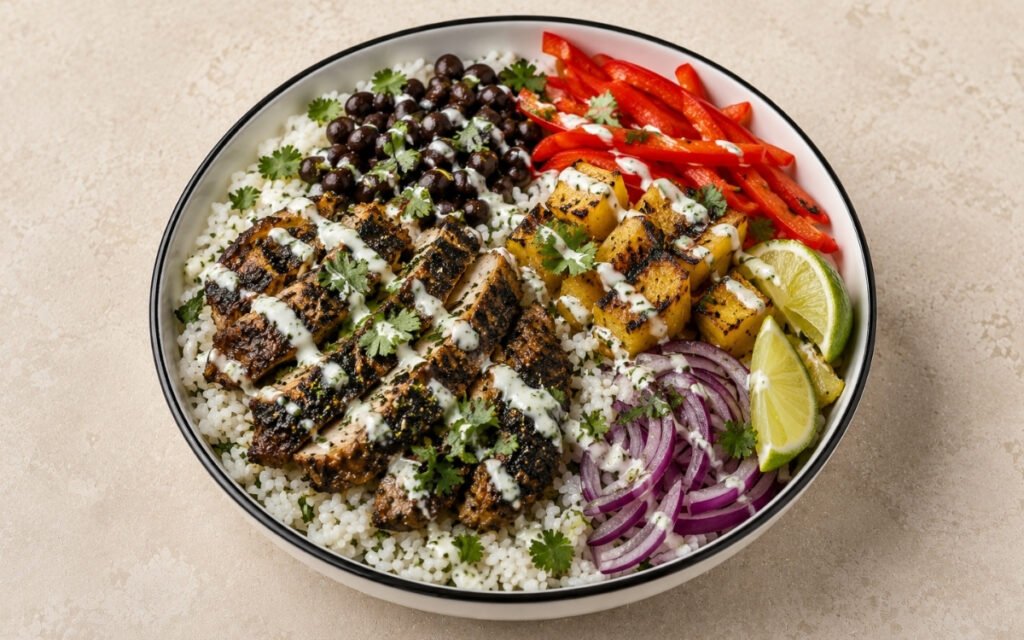
Caribbean Jerk Chicken Rice Bowl
Charred jerk-spiced chicken over coconut rice with black beans, grilled pineapple, peppers, and lime-cilantro crema.
-
Idli Sambar Bowl
Soft steamed idlis served in bowls of warm, brothy toor dal and vegetable sambar with a thick spoonful of fresh coconut chutney.
-
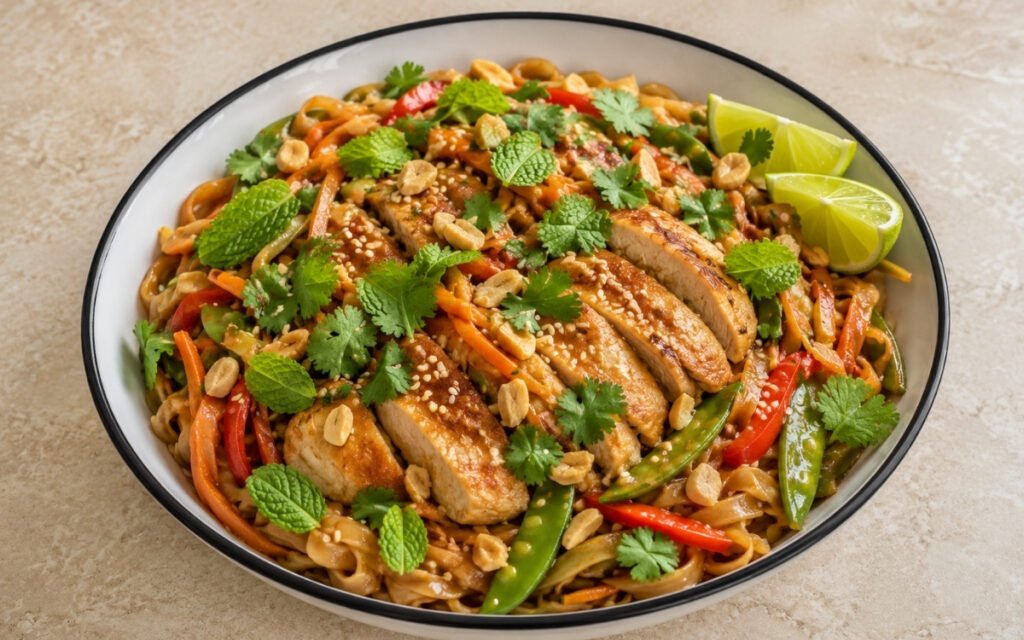
Thai Peanut Chicken Noodle Bowl
Seared chicken and flat rice noodles tossed in sriracha-ginger peanut sauce with stir-fried vegetables — cilantro, mint, crushed peanuts, and lime over the top. 45 minutes.

-
Soy Ginger Glaze
Glossy soy sauce, mirin, honey and fresh ginger reduce into a sticky 8-minute glaze for salmon, chicken and tofu.
-
Massaman Beef Curry
Beef chuck braised in a rich, spiced coconut massaman sauce with baby potatoes, pearl onions and peanuts, served with jasmine rice.
-
Khao Soi Chicken Curry Noodles
Chicken thighs in a golden coconut curry broth over egg noodles, topped with crisp fried noodles, cilantro, lime and sharp pickled garnishes.