
Strawberry Tarragon White Iced Tea
A light, elegant iced white tea with fresh strawberry flavor and a gentle tarragon note. The white tea is brewed at the correct lower temperature, the strawberries are cold-macerated for fresh flavor, and the tarragon is infused cold so the final drink stays delicate and clean. Brewing the white tea at a genuinely controlled 78–82°C, never boiling, is the technique this whole drink depends on for its delicate floral character — white tea is the most heat-sensitive tea style used in this collection, and boiling water would flatten its subtle character or push it toward bitterness, the same below-boiling-extraction principle used elsewhere for green tea but applied here at an even gentler level. Infusing the tarragon entirely cold, and tasting it as it steeps, is what keeps its distinctive anise-like note restrained and supportive rather than medicinal. Macerating the strawberries cold with sugar is what preserves their fresh, bright flavour and natural blush colour instead of turning them jammy. The payoff is a tea that’s genuinely light, elegant, and clean — white tea’s delicate character meeting fresh strawberry and a whisper of tarragon.
Prep Time : 20 min
Cook Time : 10 min
Servings : 8
20 min
10 min
8
Ingredients
For the White Tea Base
• 16g loose white tea or 8 white tea bags — this one on Amazon
• 1.25 liters water
• 120 to 150g granulated sugar, to taste — this one on Amazon
For the Strawberry Extraction
• 350g ripe strawberries, hulled and sliced
• 35g granulated sugar
For the Tarragon Infusion
• 10 to 12g fresh tarragon, about 5 to 6 small sprigs, plus more for garnish
To Finish
• 450 to 550ml cold water, as needed
• 5 to 10ml fresh lemon juice, optional, only if needed for brightness
• Pinch of fine sea salt, optional
For Serving
• Ice cubes
• Thin fresh strawberry slices
• Small fresh tarragon sprigs
This post may contain affiliate links. As an Amazon Associate I earn from qualifying purchases, at no additional cost to you.
Directions
- Brew the White Tea
Heat 1.25 liters water to 78 to 82°C. Add the white tea and steep for 3 to 4 minutes. Do not use boiling water and do not oversteep, or the tea will lose its delicate floral character and can turn flat or slightly bitter. White tea leaves are minimally processed compared to green or black tea, leaving their delicate compounds especially vulnerable to both overheating and oversteeping at once — the specific temperature and steep window here protect that fragile character from both directions simultaneously. - Sweeten the Tea
Strain the tea into a bowl or pitcher. While still warm, stir in 120 to 150g sugar until fully dissolved. Let the tea cool to room temperature. Dissolving the sugar while the tea is still genuinely warm takes advantage of sugar’s much greater solubility at that temperature, ensuring it fully dissolves rather than leaving any undissolved granules once the tea cools. - Cold-Macerate the Strawberries
Place the sliced strawberries in a bowl with 35g sugar. Toss well, then lightly press a portion of the fruit with a fork to release juice. Let sit for 20 to 30 minutes in the refrigerator. This keeps the strawberry flavor fresh and bright instead of cooked or jammy. Sugar draws moisture directly out of the strawberries’ own cell structure through osmosis, concentrating real fruit juice into the bowl entirely without any heat ever touching the berries. - Strain the Strawberry Base
Pour the strawberries through a fine-mesh sieve over a bowl. Press gently to extract the juice and some soft pulp, but do not force too much fiber through. Discard the solids or reserve for another use. Pressing only gently, rather than forcing the fruit hard through the sieve, keeps the finished drink clean and light rather than heavy with fibrous strawberry solids. - Cold-Infuse the Tarragon
Lightly bruise the fresh tarragon between your fingers. Add it to the cooled sweet tea and refrigerate for 30 to 45 minutes. Taste after 20 to 25 minutes. Remove the tarragon once the tea has a gentle herbal, lightly anise-like note. It should stay subtle and refined. Tasting partway through this steep, rather than committing to a single fixed time, is what lets tarragon’s distinctive anise-like character be judged directly against how it’s actually developing — that flavour can shift from pleasantly subtle to genuinely medicinal within a fairly narrow window, and active tasting is the only reliable way to catch that transition precisely. - Combine and Balance
Stir the strained strawberry juice into the tarragon-infused tea. Add 450 to 550ml cold water until the drink tastes light, clean, and balanced. If needed, add 5 to 10ml lemon juice for brightness, or a tiny pinch of salt to sharpen the fruit flavor. The final yield should be about 2 liters. This tasting checkpoint matters directly given how much both strawberry ripeness and the developed tarragon infusion can vary — building in that adjustment stage accounts for that natural variability rather than assuming a fixed recipe always lands at the same balance. - Chill and Serve
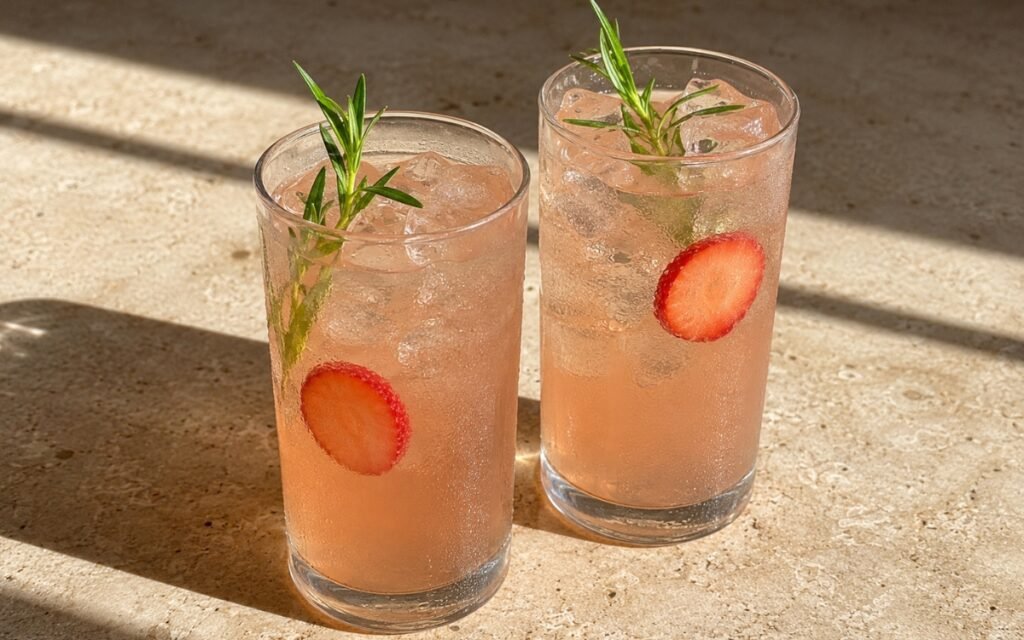
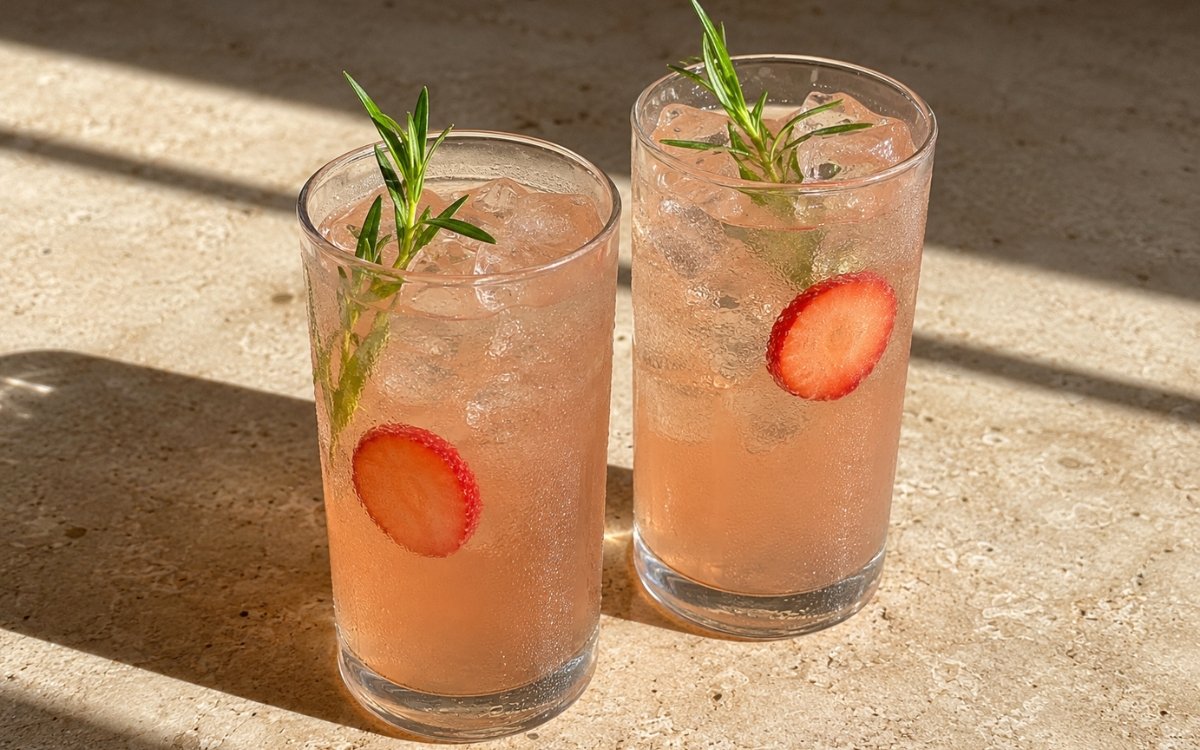
Chill for at least 30 minutes before serving. Fill tall glasses with ice. Add a thin strawberry slice inside each glass and garnish with a small fresh tarragon sprig. Pour over the iced tea and serve immediately. Using fresh, uninfused strawberry slices and tarragon sprigs specifically for garnish, rather than reusing the spent maceration or infusion, keeps the visual presentation looking genuinely vivid rather than dulled.
*Notes :
- Brewing the white tea within that specific 78–82°C window deserves genuine respect as the single detail most responsible for this drink’s delicate character. White tea undergoes the least processing of any major tea style, leaving its already-subtle compounds especially vulnerable to both overheating and oversteeping — either mistake flattens the tea’s naturally light, floral quality in a way that’s difficult to correct once it’s happened, which is exactly why this recipe treats that temperature and timing with the same care applied to green tea, only more so.
- Infusing the tarragon entirely cold, and tasting it periodically as it steeps, deserves the same attention this collection gives to every genuinely assertive fresh herb. Tarragon’s distinctive anise-like flavour compounds can shift quickly, even in cold water, from a pleasant, subtle background note to something considerably stronger and more medicinal — active tasting during that steep is what lets the herb be pulled at precisely the right moment, before it moves past supportive and into dominant.
- Cold-macerating the strawberries, pressing them only gently during straining, follows the same underlying logic protecting fresh fruit throughout this collection’s other iced tea and lemonade recipes. That gentle handling draws out real, concentrated fruit juice through osmosis while keeping the finished tea light and clean, rather than heavy with the berries’ own fibrous pulp.
- The recipe’s own explicit guidance that tarragon should remain “a whisper behind the strawberry, not the dominant note” deserves to be treated as this drink’s actual organizing principle. Every technique choice here — the cold infusion, the specific tasting checkpoint, the restrained sprig count — exists specifically to protect that intended balance, keeping tarragon in a genuinely supporting role.
Why This Recipe Works
This recipe works because the white tea is brewed within a genuinely controlled temperature and time window, protecting its especially delicate, minimally processed character from both overheating and oversteeping. The strawberries are cold-macerated and gently strained, preserving their fresh, bright flavour rather than turning jammy or heavy.
The tarragon is infused entirely cold and tasted carefully as it steeps, keeping its distinctive anise note restrained and supportive rather than medicinal. A final tasting checkpoint accounts for real variability across the fresh components, bringing everything together into one light, elegant, balanced iced tea.
Ingredient Breakdown
Properly Brewed White Tea
The delicate foundation — brewed within a specific, controlled temperature and time window given how minimally processed and heat-sensitive white tea leaves are.
Controlled Brewing Temperature (78–82°C)
The critical technique — protects the tea’s subtle floral character from both overheating and oversteeping simultaneously.
Cold-Macerated, Gently Strained Strawberries
The fresh fruit foundation — sugar draws out real juice through osmosis, kept light rather than heavy with fibrous pulp.
Cold-Infused Fresh Tarragon (Tasted As It Steeps)
The critical technique — kept entirely off heat and actively monitored to stay a subtle, supporting note rather than becoming dominant.
Optional Fresh Lemon Juice
The finishing brightness — added only to lift the drink if needed, without overwhelming strawberry and tarragon’s own delicate balance.
Flavor Structure Explained
This strawberry tarragon white iced tea follows a layered balance model:
- Delicate floral foundation (properly brewed white tea)
- Sweet balancing base (granulated sugar)
- Fresh berry depth (cold-macerated strawberries)
- Restrained herbal whisper (cold-infused tarragon, tasted as it steeps)
- Optional bright finish (fresh lemon juice)
Properly brewed white tea provides this drink’s delicate, floral foundation, its subtle character protected by careful temperature and timing. Sugar balances that lightness without overwhelming it. Cold-macerated strawberries contribute fresh, genuinely bright berry depth rather than a jammy character. A cold-infused tarragon addition, tasted carefully as it steeps, layers in a restrained, anise-like herbal whisper that supports rather than dominates the strawberry flavour. An optional touch of fresh lemon juice finishes the drink with additional brightness if needed, tying white tea’s delicacy, strawberry’s freshness, and tarragon’s subtle note together into one elegant, balanced drink.
Common Mistakes to Avoid
- Brewing the White Tea With Boiling Water – This flattens the tea’s delicate character or turns it bitter. Always heat the water to the specified 78–82°C.
- Oversteeping the White Tea – This produces a flat or slightly bitter base. Always strain within the specified 3 to 4 minute window.
- Cooking the Strawberries Instead of Cold-Macerating Them – This turns their flavour jammy rather than fresh. Always use the cold maceration method.
- Steeping the Tarragon in Hot Tea Instead of Cold – This pushes the herb toward a harsh, medicinal character. Always infuse it only in the already-cooled tea.
- Not Tasting the Tarragon Infusion as It Steeps – This risks the herb overdeveloping past its subtle, supportive point. Always taste around 20 to 25 minutes and remove it at the right moment.
Variations
Extra-Fruity Version
Increase the strawberries slightly for a more pronounced fruit flavour throughout.
Brighter Version
Include the optional lemon juice for extra citrus lift alongside the berry and herb balance.
Lighter Sugar Version
Stay closer to 120g sugar in the tea base if using especially sweet strawberries, per the recipe’s own guidance.
Sparkling Version
Top each glass with a splash of chilled soda water just before serving for light effervescence.
Storage & Make-Ahead
Best served the same day, but it keeps well refrigerated for up to 24 hours. This recipe makes about 2 litres, enough for 8 servings.
The white tea base and strawberry juice can both be made a few hours ahead and refrigerated separately before combining with a fresh tarragon infusion.
Frequently Asked Questions
Why does the white tea need such a specific, lower brewing temperature?
White tea is minimally processed compared to green or black tea, leaving its already-subtle compounds especially vulnerable to overheating. Water that’s too hot flattens the tea’s naturally light, floral character or pushes it toward bitterness.
Why does the tarragon need to be infused cold rather than steeped in the hot tea?
Tarragon’s distinctive anise-like flavour compounds can shift quickly toward something considerably stronger and more medicinal under heat. Cold infusion, combined with careful tasting, is what keeps that note restrained and supportive rather than overpowering.
Why does the tarragon infusion need to be tasted rather than following a fixed time?
Tarragon’s character can shift quickly even in cold water, moving from a pleasant, subtle note to something too strong within a fairly narrow window. Active tasting is the only reliable way to catch that transition and pull the herb at the right moment.
Why are the strawberries only gently pressed during straining rather than forced through?
Forcing too much fibrous pulp through would make the finished tea heavier and less clean. Gentle pressing captures the real, concentrated juice while keeping the drink light.
Are there other white tea, strawberry, or herbal iced teas worth trying?
Basil Strawberry White Iced Tea and Strawberry Rosemary Iced White Tea both offer other strawberry-and-herb white tea directions worth exploring. White Tea Strawberry Pitcher and Strawberry Lemonade are also worth trying for other strawberry-forward drinks.
Nutrition Facts
( per serving )
Calories
~75 kcal
Protein
0 g
Fat
0 g
Carbs
19 g
Calories
~75 kcal
Protein
0 g
Fat
0 g
Carbs
19 g
Related Recipes
Related Recipes

Lemon Balm Strawberry Green Iced Tea
Green tea at 75–80°C for 2–3 minutes, strawberry syrup made separately and strained, lemon balm clapped and infused cold 6–10 minutes — honey, chilled. Clean and softly fruity.
Verbena Peach Iced Black Tea
Light black tea at 90–95°C for 2½–3 minutes, peach syrup made separately, verbena clapped and infused cold 8–12 minutes — lemon peel, chilled. Floral, aromatic, softly fruity.
Cucumber Lemon Balm Green Iced Tea
Properly brewed green tea combined with strained cucumber juice and a gentle cold lemon balm infusion for a very pale, delicate, garden-fresh iced tea.


You might also like
You might also like
Classic Fresh Lemonade
Simple syrup without reduction, fresh lemon juice with natural pulp — salt, cold water, syrup adjusted by taste, chilled. Crisp, bright, and precisely balanced.
Apple Lemonade
Cold-extracted lemon zest and juice combined with strained, skin-on apple purée for a crisp, pale golden lemonade.
Cold Brew Coffee
Coarsely ground coffee steeped in cold water for 12–16 hours, strained twice for clarity, and served black over a single large ice cube.



Strawberry Tarragon White Iced Tea
Ingredients
Method
- Heat 1.25 liters water to 78 to 82°C. Add the white tea and steep for 3 to 4 minutes. Do not use boiling water and do not oversteep, or the tea will lose its delicate floral character and can turn flat or slightly bitter. White tea leaves are minimally processed compared to green or black tea, leaving their delicate compounds especially vulnerable to both overheating and oversteeping at once — the specific temperature and steep window here protect that fragile character from both directions simultaneously.
- Strain the tea into a bowl or pitcher. While still warm, stir in 120 to 150g sugar until fully dissolved. Let the tea cool to room temperature. Dissolving the sugar while the tea is still genuinely warm takes advantage of sugar’s much greater solubility at that temperature, ensuring it fully dissolves rather than leaving any undissolved granules once the tea cools.
- Place the sliced strawberries in a bowl with 35g sugar. Toss well, then lightly press a portion of the fruit with a fork to release juice. Let sit for 20 to 30 minutes in the refrigerator. This keeps the strawberry flavor fresh and bright instead of cooked or jammy. Sugar draws moisture directly out of the strawberries’ own cell structure through osmosis, concentrating real fruit juice into the bowl entirely without any heat ever touching the berries.
- Pour the strawberries through a fine-mesh sieve over a bowl. Press gently to extract the juice and some soft pulp, but do not force too much fiber through. Discard the solids or reserve for another use. Pressing only gently, rather than forcing the fruit hard through the sieve, keeps the finished drink clean and light rather than heavy with fibrous strawberry solids.
- Lightly bruise the fresh tarragon between your fingers. Add it to the cooled sweet tea and refrigerate for 30 to 45 minutes. Taste after 20 to 25 minutes. Remove the tarragon once the tea has a gentle herbal, lightly anise-like note. It should stay subtle and refined. Tasting partway through this steep, rather than committing to a single fixed time, is what lets tarragon’s distinctive anise-like character be judged directly against how it’s actually developing — that flavour can shift from pleasantly subtle to genuinely medicinal within a fairly narrow window, and active tasting is the only reliable way to catch that transition precisely.
- Stir the strained strawberry juice into the tarragon-infused tea. Add 450 to 550ml cold water until the drink tastes light, clean, and balanced. If needed, add 5 to 10ml lemon juice for brightness, or a tiny pinch of salt to sharpen the fruit flavor. The final yield should be about 2 liters. This tasting checkpoint matters directly given how much both strawberry ripeness and the developed tarragon infusion can vary — building in that adjustment stage accounts for that natural variability rather than assuming a fixed recipe always lands at the same balance.
- Chill for at least 30 minutes before serving. Fill tall glasses with ice. Add a thin strawberry slice inside each glass and garnish with a small fresh tarragon sprig. Pour over the iced tea and serve immediately. Using fresh, uninfused strawberry slices and tarragon sprigs specifically for garnish, rather than reusing the spent maceration or infusion, keeps the visual presentation looking genuinely vivid rather than dulled.