
Crispy Pan-Seared Duck Breast
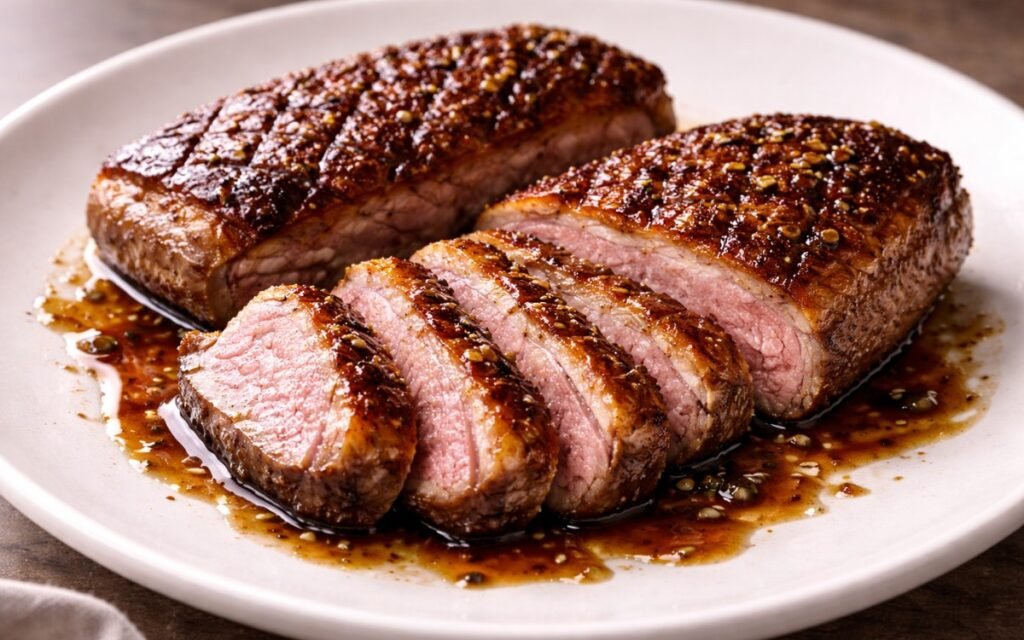
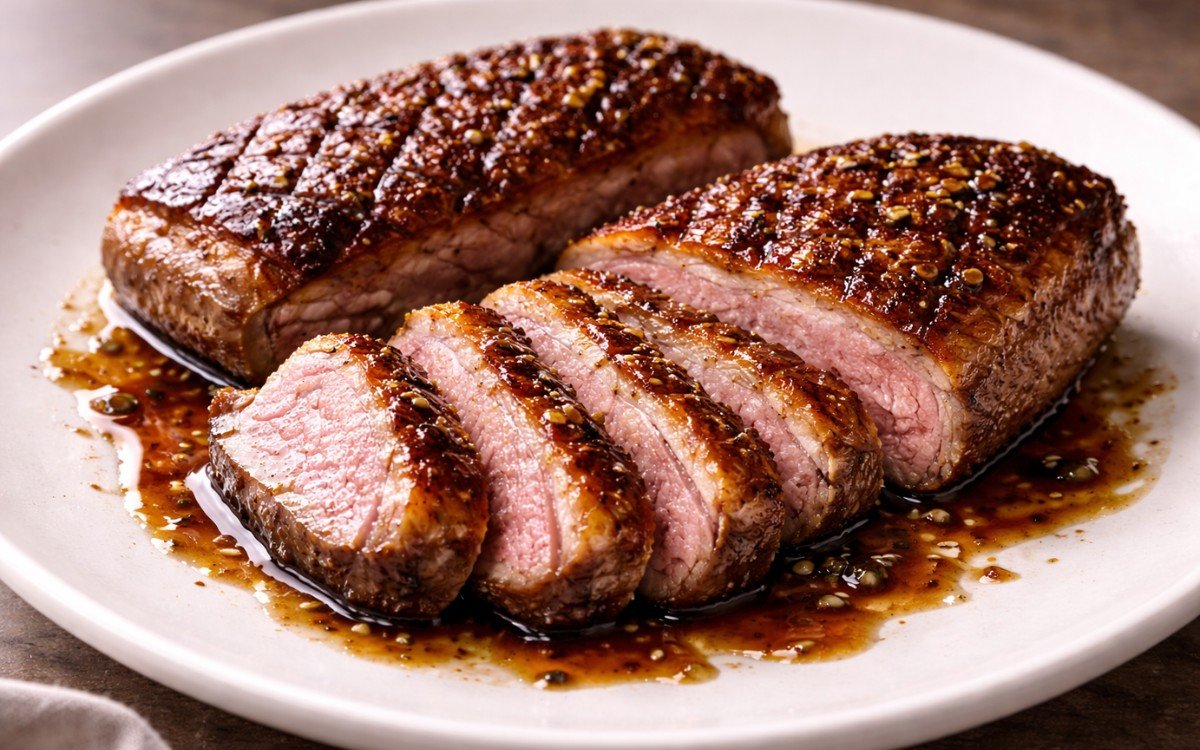
Restaurant-quality duck breast with impossibly crispy skin and tender, rosy meat achieved through a simple cold-pan technique. The rendered fat creates a glossy honey-balsamic glaze that elevates this elegant protein to special-occasion status. Master this method once, and you’ll have a impressive dish that’s surprisingly approachable for any home cook.
Prep Time : 10 min
Cook Time : 18 min
Servings : 4
10 min
18 min
4
Ingredients
For the Duck
• 800g duck breast (2 large breasts)
• 10g fine sea salt — this one on Amazon
• 5g freshly ground black pepper
• 3g Chinese five-spice powder (optional)
For the Pan Sauce
• 15ml honey — this one on Amazon
• 15ml balsamic vinegar — this one on Amazon
This post may contain affiliate links. As an Amazon Associate I earn from qualifying purchases, at no additional cost to you.
Directions
- Score the Duck Skin
Using a sharp knife, score the duck skin in a crosshatch pattern, cutting through the fat layer but not into the meat itself. Space the cuts about 1cm apart to maximize fat rendering and create an even, crispy surface. - Season and Temper
Season both sides of the duck breasts generously with 10g salt, 5g pepper, and 3g five-spice powder if using. Let the duck sit at room temperature for 30 minutes to ensure even cooking. - Start in a Cold Pan
Place the duck breasts skin-side down in a cold, dry skillet—no oil needed. Turn the heat to medium-low and begin the rendering process slowly. - Render the Fat
Cook for 12-14 minutes as the fat renders out and the skin gradually turns golden and crispy. Periodically pour off the accumulated fat into a heatproof container, tilting the pan to collect it without removing the duck. - Sear the Flesh Side
When the skin is deeply golden and crackling-crisp, flip the breasts over. Increase the heat to medium-high and cook the flesh side for 3-4 minutes until the internal temperature reaches 54°C (130°F) for perfect medium-rare. - Create the Pan Sauce
Remove the duck to a cutting board. Add 15ml honey and 15ml balsamic vinegar to the hot pan, swirling to combine with the remaining drippings and create a glossy sauce. - Rest and Slice
Let the duck rest for 5 minutes to allow the juices to redistribute. Slice against the grain into thin medallions and drizzle with the honey-balsamic pan sauce before serving.
*Notes :
- Starting in a cold pan is essential—it allows the fat to render slowly and completely, resulting in shatteringly crisp skin without burning.
- Score deeply through the fat layer but stop before hitting the meat; this network of cuts is crucial for rendering and preventing the skin from shrinking.
- Save all that rendered duck fat in the refrigerator—it’s culinary gold for roasting potatoes, sautéing vegetables, or making the world’s best fried eggs.
- Duck is best served medium-rare to medium (54-60°C); cooking beyond this makes the meat tough and dry, so use a meat thermometer for precision.
- Pair with roasted root vegetables, sautéed greens, or a bright citrus salad to balance the richness.
Nutrition Facts
( per serving )
Calories
~593 kcal
Protein
38 g
Fat
45 g
Carbs
5 g
Calories
~593 kcal
Protein
38 g
Fat
45 g
Carbs
5 g
Related Recipes
Related Recipes

Classic Sparkling Lemonade
Bright lemon bite lifted by lively bubbles and gentle sweetness for crisp, refreshing sparkle.
Spicy Garlic Cucumber Salad
Crunchy cucumbers tossed in soy, chili oil, yuzu, and garlic deliver sharp, spicy refreshment.
Crispy Zucchini Fritters
Golden, crispy zucchini fritters with Parmesan and herbs—perfectly crunchy and flavorful.


You might also like
You might also like
Juicy Beef Meatballs
Tender beef meatballs with golden crust, juicy center, and savory herbs—perfect for any meal.
Chili Lime Shrimp
Spicy, citrus-kissed shrimp with garlic and chilies, perfectly seared in minutes for bold flavor.
Crispy Honey Garlic Chicken
Crispy chicken thighs tossed in sticky honey-garlic glaze with ginger, sesame, and caramelized edges.


Crispy Pan-Seared Duck Breast
Ingredients
Method
- Using a sharp knife, score the duck skin in a crosshatch pattern, cutting through the fat layer but not into the meat itself. Space the cuts about 1cm apart to maximize fat rendering and create an even, crispy surface.
- Season both sides of the duck breasts generously with 10g salt, 5g pepper, and 3g five-spice powder if using. Let the duck sit at room temperature for 30 minutes to ensure even cooking.
- Place the duck breasts skin-side down in a cold, dry skillet—no oil needed. Turn the heat to medium-low and begin the rendering process slowly.
- Cook for 12-14 minutes as the fat renders out and the skin gradually turns golden and crispy. Periodically pour off the accumulated fat into a heatproof container, tilting the pan to collect it without removing the duck.
- When the skin is deeply golden and crackling-crisp, flip the breasts over. Increase the heat to medium-high and cook the flesh side for 3-4 minutes until the internal temperature reaches 54°C (130°F) for perfect medium-rare.
- Remove the duck to a cutting board. Add 15ml honey and 15ml balsamic vinegar to the hot pan, swirling to combine with the remaining drippings and create a glossy sauce.
- Let the duck rest for 5 minutes to allow the juices to redistribute. Slice against the grain into thin medallions and drizzle with the honey-balsamic pan sauce before serving.
Notes
- Starting in a cold pan is essential—it allows the fat to render slowly and completely, resulting in shatteringly crisp skin without burning
- Score deeply through the fat layer but stop before hitting the meat; this network of cuts is crucial for rendering and preventing the skin from shrinking
- Save all that rendered duck fat in the refrigerator—it’s culinary gold for roasting potatoes, sautéing vegetables, or making the world’s best fried eggs
- Duck is best served medium-rare to medium (54-60°C); cooking beyond this makes the meat tough and dry, so use a meat thermometer for precision
- Pair with roasted root vegetables, sautéed greens, or a bright citrus salad to balance the richness