
Mortadella Focaccia Sandwich with Stracciatella
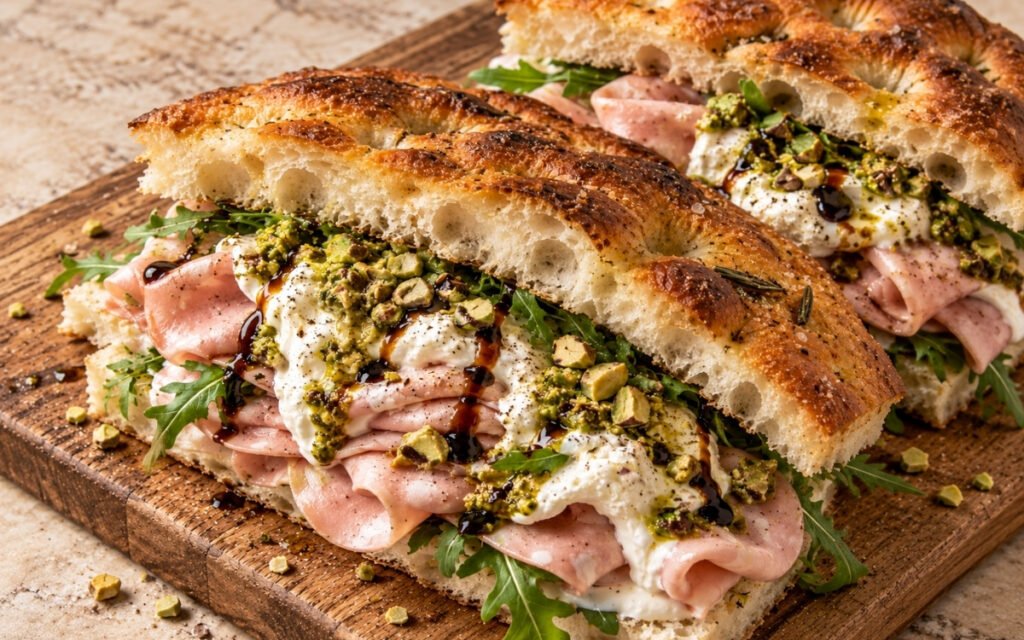
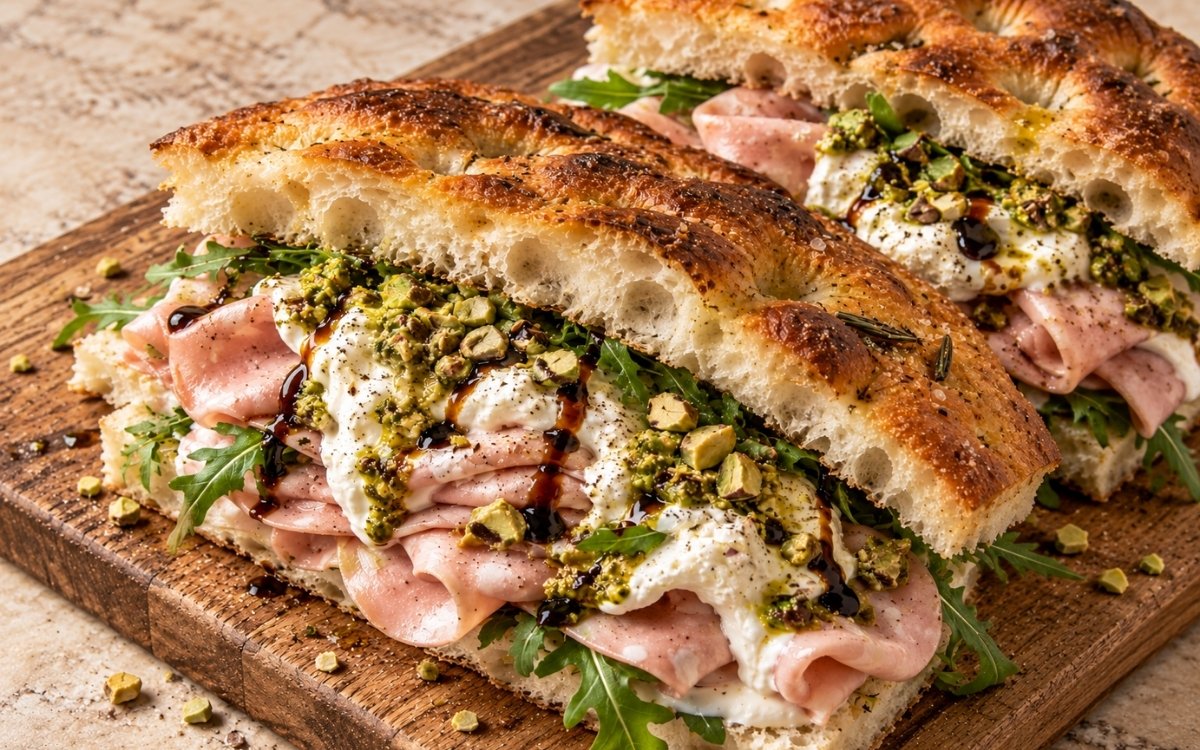
A rich Italian-style focaccia sandwich filled with folded mortadella, creamy stracciatella, peppery arugula, pistachio paste, crushed pistachios and a small splash of balsamic for acidity, built on airy focaccia, folded mortadella for real volume, slightly drained stracciatella, and restrained balsamic that cuts the richness without dominating. Folding the mortadella slices loosely, rather than laying them flat, is the technique this whole sandwich depends on for its real, abundant, layered look — flat slices sit dense and compact, while folding creates genuine height and texture, the same fold-for-volume principle used elsewhere in this collection whenever a thin, delicate cured meat needs to read as generous rather than flat once assembled. Draining the stracciatella slightly before it ever goes on the sandwich is what protects the focaccia from soaking through and collapsing. Keeping the balsamic genuinely restrained, used only for acidity rather than sweetness, is what lets it cut through the richness without turning the whole sandwich muddy. The payoff is a sandwich with real, deliberate contrast — airy, lightly crisped focaccia, folded pink mortadella, creamy stracciatella, nutty pistachio paste, and peppery arugula, finished with a whisper of balsamic.
Prep Time : 20 min
Cook Time : 5 min
Servings : 4
20 min
5 min
4
Ingredients
For the Sandwiches
• 4 rectangular pieces good-quality focaccia, about 3 x 6 in / 7.5 x 15cm each, split horizontally — store-bought or homemade using Focaccia recipe
• 360–480g mortadella, very thinly sliced
• 300–350g stracciatella cheese
• 60g fresh arugula
• 40g roasted unsalted pistachios, roughly chopped
• 10–15ml aged balsamic vinegar or balsamic glaze — this one on Amazon
• Extra-virgin olive oil, for finishing
• Black pepper, to taste
• Flaky salt, only if needed
For the Pistachio Paste
• 80g shelled roasted unsalted pistachios — this one on Amazon
• 35–45ml extra-virgin olive oil — this one on Amazon
• 20g Parmigiano-Reggiano, finely grated — this one on Amazon
• 5g fresh basil leaves, optional
• 1 small pinch salt
• 1 small pinch black pepper
• 5–10ml lemon juice, only if needed to brighten
This post may contain affiliate links. As an Amazon Associate I earn from qualifying purchases, at no additional cost to you.
Directions
- Make the Pistachio Paste
Add the pistachios, olive oil, Parmigiano-Reggiano, basil if using, salt and black pepper to a small food processor. Pulse until thick, spreadable and slightly coarse. Add a little more olive oil only if needed. Taste. Add a few drops of lemon juice only if the paste tastes flat. The paste should be rich and nutty, not loose like a dressing. It needs to sit on the focaccia without running out of the sandwich. That deliberately coarse, thick texture is what lets the paste actually stay put as a real, spreadable layer — anything looser would run straight out of the sandwich the moment it’s picked up. - Prepare the Focaccia
Split each focaccia piece horizontally. If the focaccia is soft or cold, warm it in a dry pan or oven for 3–5 minutes until the edges feel lightly crisp but the inside stays soft. Do not toast the focaccia until hard. This sandwich needs crisp edges and an airy interior, not a crunchy bread shell that squeezes out the filling. That restrained warming, stopping well short of a full toast, protects the bread’s own airy interior while still building just enough edge crispness to hold together under a genuinely generous filling. - Prepare the Stracciatella
Spoon the stracciatella into a small bowl. If it is very wet, let it sit in a fine sieve for 5–10 minutes. Season lightly with black pepper. Add only a tiny pinch of salt if needed. Wet stracciatella can soak the focaccia and make the sandwich collapse. It should be creamy and loose, but not watery. That brief draining removes just enough excess liquid to protect the focaccia beneath it, without pushing the cheese’s own naturally loose, creamy texture toward something drier and less appealing. - Build the Base
Spread pistachio paste over the bottom half of each focaccia piece. Add a small handful of arugula over the paste. Drizzle with just a little extra-virgin olive oil. The arugula goes under the mortadella so it catches some fat and moisture without making the top slide around. Placing the arugula in this specific position, beneath rather than on top of the mortadella, is what lets it pick up real flavour from the richer layers above while still staying anchored enough that the sandwich doesn’t slide apart when eaten. - Add Mortadella
Fold the mortadella slices loosely and pile them generously over the arugula. Use about 90–120g mortadella per sandwich, depending on how abundant you want the filling. Do not lay mortadella flat. Folding creates height, texture and the abundant layered look from the reference image. That folding technique is specifically what transforms thin, delicate slices into a genuinely voluminous, textured layer — laid flat, the same amount of meat would sit considerably denser and flatter, losing the abundant look this sandwich depends on. - Add Stracciatella, Pistachios and Balsamic
Spoon stracciatella over the mortadella in uneven creamy ribbons. Scatter chopped pistachios over the cheese. Add a very light splash or drizzle of balsamic. Finish with black pepper. Balsamic is for acidity, not sweetness overload. Too much turns the sandwich muddy and fights the pistachio and mortadella. That genuine restraint with the balsamic protects the sandwich’s own delicate balance — its job here is purely to cut through the richness of the mortadella, stracciatella, and pistachio paste, not to introduce a competing, dominant sweetness. - Close and Serve
Place the top focaccia halves over the filling and press very gently. Cut in half if desired and serve immediately. The sandwich should show airy focaccia, folded pink mortadella, creamy white stracciatella, green pistachio paste, arugula and small dark balsamic streaks. Pressing only gently, rather than firmly, protects the mortadella’s own carefully folded volume from being flattened right before the sandwich is even served.
*Notes :
- Folding the mortadella slices loosely, rather than laying them flat, deserves genuine recognition as the technique responsible for this sandwich’s whole abundant, layered appearance. That folding transforms thin, delicate cured meat into something with real, visible height and texture — the recipe’s own explicit reference to achieving “the abundant layered look” reflects exactly how much this one technique matters to the finished result.
- Draining the stracciatella briefly before it goes onto the sandwich deserves the same attention this collection gives to any genuinely wet cheese used as a sandwich filling. That short rest in a sieve removes just enough excess liquid to protect the focaccia beneath it from soaking through and collapsing, while still preserving the cheese’s own naturally loose, creamy character.
- Keeping the balsamic genuinely restrained, used specifically for acidity rather than allowed to introduce real sweetness, deserves attention as a deliberate, functional choice central to this sandwich’s overall balance. The recipe’s own explicit warning that too much balsamic “turns the sandwich muddy” reflects real understanding of what this one ingredient’s actual job is here — cutting through richness, not competing with it.
- Warming the focaccia only lightly, stopping well before a full toast, deserves genuine respect as a deliberate restraint specific to what this particular bread needs. A fully toasted, hard shell would squeeze the generous filling right out with every bite, working directly against the airy, substantial sandwich this recipe is built around.
Why This Recipe Works
This recipe works because the pistachio paste is kept genuinely thick and coarse, staying put on the focaccia rather than running out. The focaccia is warmed only lightly, protecting its own airy interior while still building enough edge crispness to hold together.
The stracciatella is drained briefly, protecting the bread from soaking through, and the mortadella is folded rather than laid flat, building real, visible volume.
Balsamic is used with genuine restraint, cutting through the sandwich’s richness without dominating it, and gentle final pressing preserves every carefully built layer right through to serving.
Ingredient Breakdown
Thick, Coarse Pistachio Paste
The critical technique — a spreadable, not loose, consistency lets it stay put on the focaccia rather than running out.
Lightly Warmed Focaccia
The critical technique — restrained warming builds edge crispness while protecting the bread’s own airy interior.
Briefly Drained Stracciatella
The critical technique — removes just enough excess moisture to protect the focaccia from soaking through.
Folded, Not Flat, Mortadella
The critical technique — transforms thin slices into a genuinely voluminous, textured layer with real visible height.
Under-Layered Arugula
The critical technique — positioned to catch flavour from the richer layers above while anchoring the sandwich’s structure.
Restrained Balsamic
The finishing technique — used purely for acidity to cut richness, never allowed to introduce dominant sweetness.
Flavor Structure Explained
This mortadella focaccia sandwich follows a layered balance model:
- Airy, lightly crisped foundation (warmed focaccia)
- Rich, nutty base (pistachio paste)
- Peppery, fresh lift (arugula)
- Abundant, savoury centre (folded mortadella)
- Creamy, rich finish (drained stracciatella, crushed pistachios)
- Sharp acidic accent (restrained balsamic)
Lightly warmed focaccia provides this sandwich’s airy, genuinely crisped foundation. A thick, coarse pistachio paste contributes rich, nutty base flavour. Fresh arugula adds peppery, bright lift right beneath the meat. Folded mortadella defines the sandwich’s abundant, savoury centre with real visible volume. Drained stracciatella and crushed pistachios finish the filling with creamy, rich texture, and a restrained streak of balsamic ties everything together with the sharp acidic accent this rich combination genuinely needs.
Common Mistakes to Avoid
- Laying the Mortadella Flat – This produces a dense, flat filling rather than the abundant, layered look this sandwich depends on. Always fold the slices loosely.
- Skipping the Stracciatella’s Draining Step – This risks soaking through and collapsing the focaccia. Always drain it briefly if it looks very wet.
- Toasting the Focaccia Until Hard – This squeezes the generous filling out with every bite. Always warm it only lightly, keeping the interior soft.
- Overdoing the Balsamic – This turns the sandwich muddy and fights the other flavours. Always use it sparingly, purely for acidity.
- Making the Pistachio Paste Too Loose – This lets it run out of the sandwich rather than staying put. Always keep it thick, spreadable, and slightly coarse.
Variations
Extra-Nutty Version
Increase the crushed pistachios scattered over the stracciatella for a more pronounced crunch and nuttiness throughout every bite of the finished sandwich.
Herbed Pistachio Paste Version
Include the optional fresh basil in the pistachio paste, per the recipe’s own suggestion, for a more herbaceous, aromatic base layer beneath the mortadella and arugula.
Balsamic Glaze Version
Use balsamic glaze rather than aged balsamic vinegar, per the recipe’s own note, accepting a visually bolder, more concentrated streak while still applying it with the same genuine restraint.
Extra-Mortadella Version
Increase the mortadella toward the higher end of the recommended range, per the recipe’s own guidance, for a more generously filled, meat-forward finished sandwich.
Storage & Make-Ahead
Use thinly sliced mortadella specifically for this sandwich, since thick slices feel noticeably heavier and simply don’t fold as well into the loose, voluminous layers this recipe depends on for its whole visual and textural character.
The stracciatella should be fresh and creamy, drained slightly first if it looks especially watery, and roasted unsalted pistachios give better overall flavour control than salted ones, since you can then season everything else to taste without worrying about compounding saltiness.
Balsamic glaze looks visually stronger and more dramatic once drizzled, while aged balsamic vinegar tends to taste cleaner and less sweet, so either option works well here as long as it’s used lightly and with real restraint.
The focaccia itself should be thick enough to genuinely hold this generous filling together, but not so tall that the finished sandwich becomes awkward or difficult to actually eat once assembled and closed.
This sandwich is genuinely best assembled right before serving, since the filling is moist enough that it will soften the focaccia noticeably if left to sit too long, and it’s worth leaving tomato out entirely here, since it would only add unwanted wetness and distract from the core mortadella-stracciatella-pistachio combination.
Frequently Asked Questions
Why is the mortadella folded rather than laid flat in the sandwich?
Folding creates genuine height and texture, transforming thin, delicate slices into the abundant, layered look this sandwich is specifically built around. Laid flat, the same amount of meat would sit considerably denser and less visually generous.
Why does the stracciatella need to be drained if it looks watery?
Wet stracciatella can soak straight into the focaccia and make the whole sandwich collapse. A brief drain removes just enough excess liquid to protect the bread while keeping the cheese’s own creamy character intact.
Why shouldn’t the focaccia be toasted until fully hard?
This sandwich depends on crisp edges paired with a genuinely airy interior. A fully toasted, hard shell would squeeze the generous filling right out with every bite instead.
Why does the balsamic need to be used so sparingly?
Balsamic’s job here is purely acidity, cutting through the sandwich’s overall richness. Too much introduces real, dominant sweetness that turns the whole sandwich muddy and fights against the pistachio and mortadella instead of balancing them.
Are there other classic focaccia, Italian sandwich, or fresh cheese-forward dishes worth trying?
Focaccia and Garlic Butter Focaccia are both worth making from scratch as the foundation for this and other sandwiches. Pizza Bianca Caprese is also worth trying for another rich, fresh cheese-forward Italian dish, and Burrata with Grilled Peach Salad and Italian Tomato Basil Salad pair naturally alongside this sandwich.
Nutrition Facts
( Per Serving — 1 sandwich )
Calories
~780 kcal
Protein
34 g
Fat
56 g
Carbs
38 g
Calories
~780 kcal
Protein
34 g
Fat
56 g
Carbs
38 g
Related Recipes
Related Recipes

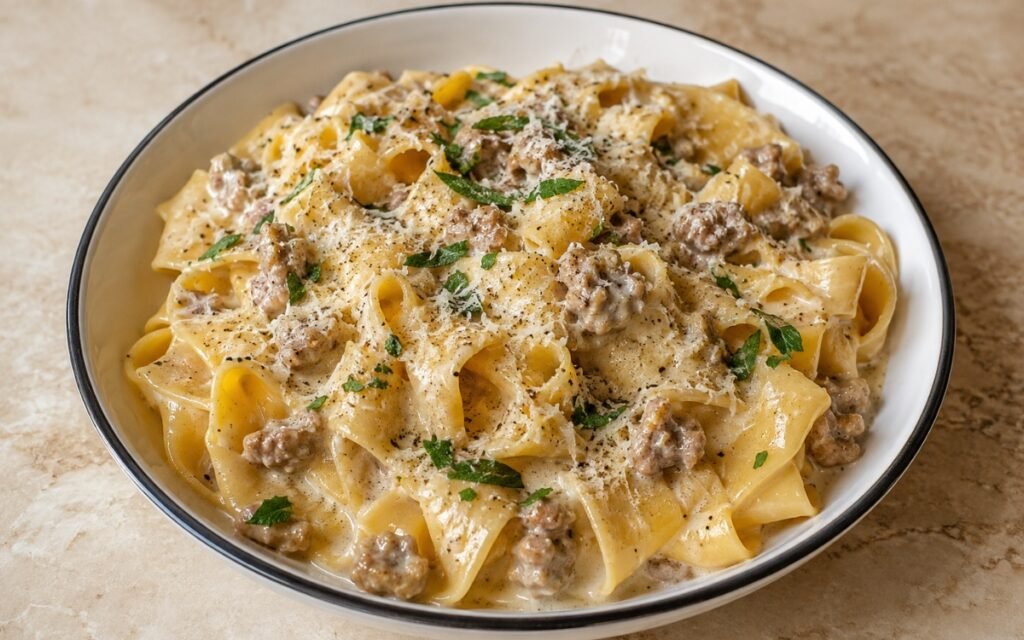
Pappardelle White Sausage Ragù
Wide pappardelle ribbons coated in a pale, glossy sausage ragù emulsified from browned sausage fat, pasta water, and Parmigiano-Reggiano.
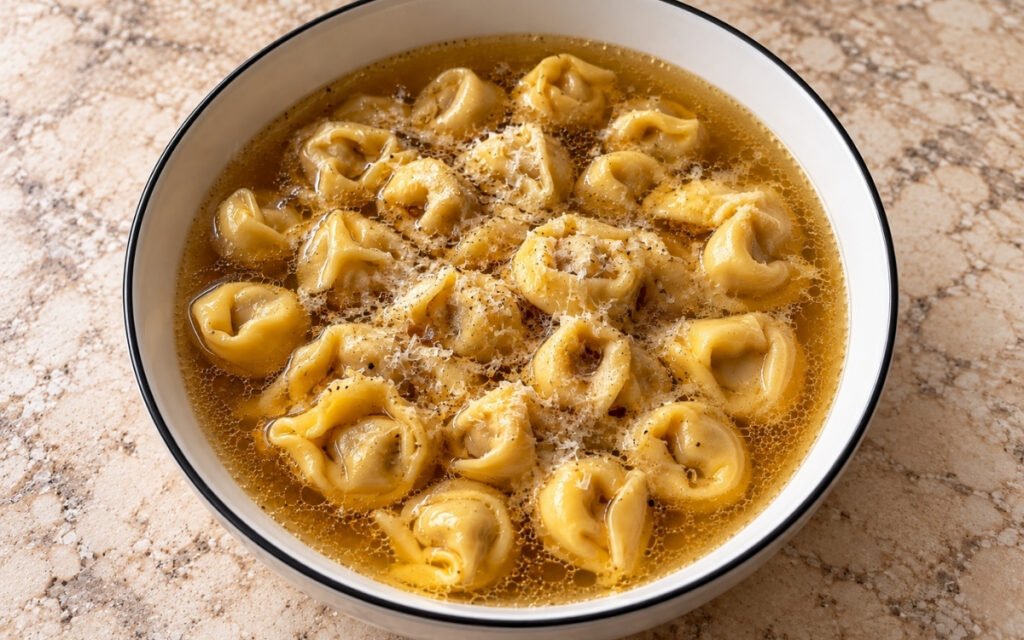
Tortellini in Brodo
Small meat tortellini in a clear, golden, deeply savory beef and chicken broth, finished simply with Parmigiano-Reggiano.
Shrimp Po’Boy Tacos
Crispy fried shrimp in warm homemade corn tortillas with cold shredded lettuce, tomato, pickles, and creamy remoulade.

You might also like
You might also like
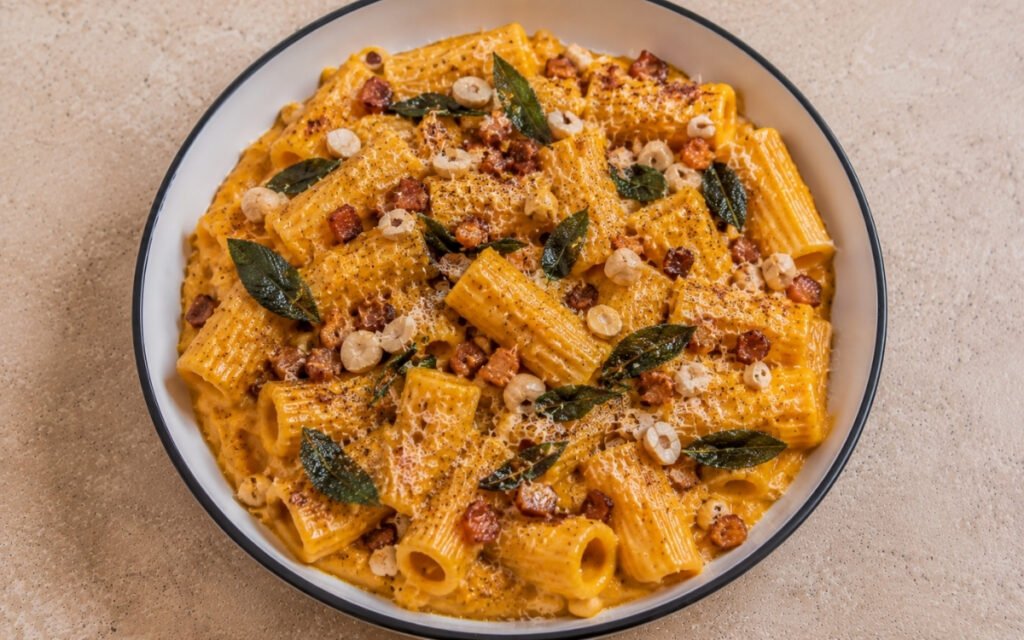
Creamy Pumpkin Sauce Pasta with Pancetta
Pumpkin cream sauce in pancetta fat, topped with crispy pancetta, fried sage, and hazelnuts — 40 minutes.
Spicy Fried Chicken Sandwich
Ultra-crispy gochujang-marinated chicken with pickles, melted cheese, and garlicky heat stacked on toasted brioche.
Tiramisu
Espresso-soaked savoiardi layered with a light, airy mascarpone cream, finished generously with unsweetened cocoa powder.
Mortadella Focaccia Sandwich with Stracciatella
Ingredients
Method
- Add the pistachios, olive oil, Parmigiano-Reggiano, basil if using, salt and black pepper to a small food processor. Pulse until thick, spreadable and slightly coarse. Add a little more olive oil only if needed. Taste. Add a few drops of lemon juice only if the paste tastes flat. The paste should be rich and nutty, not loose like a dressing. It needs to sit on the focaccia without running out of the sandwich. That deliberately coarse, thick texture is what lets the paste actually stay put as a real, spreadable layer — anything looser would run straight out of the sandwich the moment it’s picked up.
- Split each focaccia piece horizontally. If the focaccia is soft or cold, warm it in a dry pan or oven for 3–5 minutes until the edges feel lightly crisp but the inside stays soft. Do not toast the focaccia until hard. This sandwich needs crisp edges and an airy interior, not a crunchy bread shell that squeezes out the filling. That restrained warming, stopping well short of a full toast, protects the bread’s own airy interior while still building just enough edge crispness to hold together under a genuinely generous filling.
- Spoon the stracciatella into a small bowl. If it is very wet, let it sit in a fine sieve for 5–10 minutes. Season lightly with black pepper. Add only a tiny pinch of salt if needed. Wet stracciatella can soak the focaccia and make the sandwich collapse. It should be creamy and loose, but not watery. That brief draining removes just enough excess liquid to protect the focaccia beneath it, without pushing the cheese’s own naturally loose, creamy texture toward something drier and less appealing.
- Spread pistachio paste over the bottom half of each focaccia piece. Add a small handful of arugula over the paste. Drizzle with just a little extra-virgin olive oil. The arugula goes under the mortadella so it catches some fat and moisture without making the top slide around. Placing the arugula in this specific position, beneath rather than on top of the mortadella, is what lets it pick up real flavour from the richer layers above while still staying anchored enough that the sandwich doesn’t slide apart when eaten.
- Fold the mortadella slices loosely and pile them generously over the arugula. Use about 90–120g mortadella per sandwich, depending on how abundant you want the filling. Do not lay mortadella flat. Folding creates height, texture and the abundant layered look from the reference image. That folding technique is specifically what transforms thin, delicate slices into a genuinely voluminous, textured layer — laid flat, the same amount of meat would sit considerably denser and flatter, losing the abundant look this sandwich depends on.
- Spoon stracciatella over the mortadella in uneven creamy ribbons. Scatter chopped pistachios over the cheese. Add a very light splash or drizzle of balsamic. Finish with black pepper. Balsamic is for acidity, not sweetness overload. Too much turns the sandwich muddy and fights the pistachio and mortadella. That genuine restraint with the balsamic protects the sandwich’s own delicate balance — its job here is purely to cut through the richness of the mortadella, stracciatella, and pistachio paste, not to introduce a competing, dominant sweetness.
- Place the top focaccia halves over the filling and press very gently. Cut in half if desired and serve immediately. The sandwich should show airy focaccia, folded pink mortadella, creamy white stracciatella, green pistachio paste, arugula and small dark balsamic streaks. Pressing only gently, rather than firmly, protects the mortadella’s own carefully folded volume from being flattened right before the sandwich is even served.