
Lavender Iced Latte
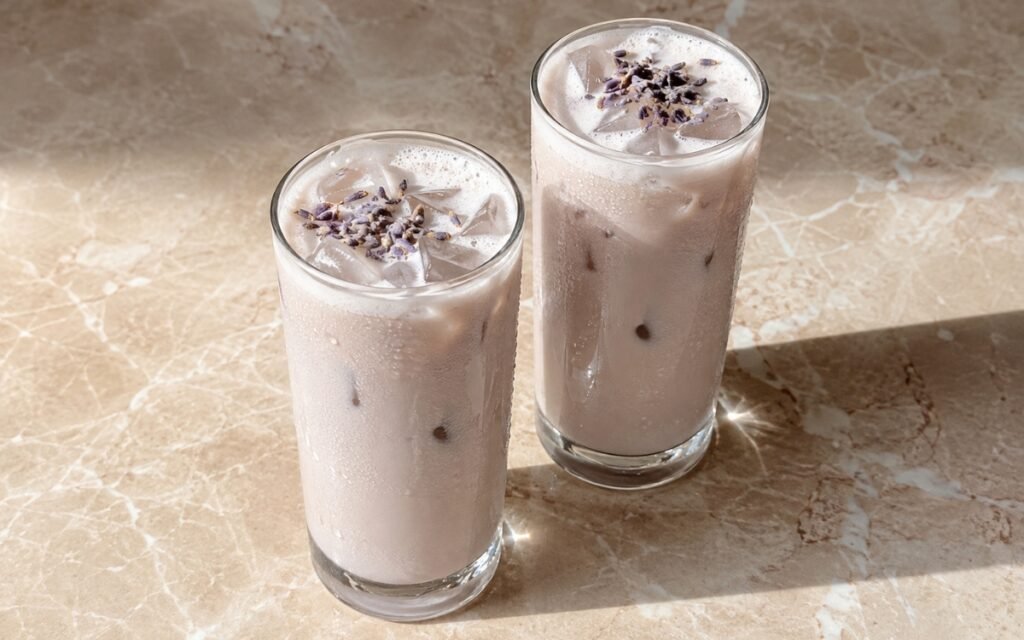
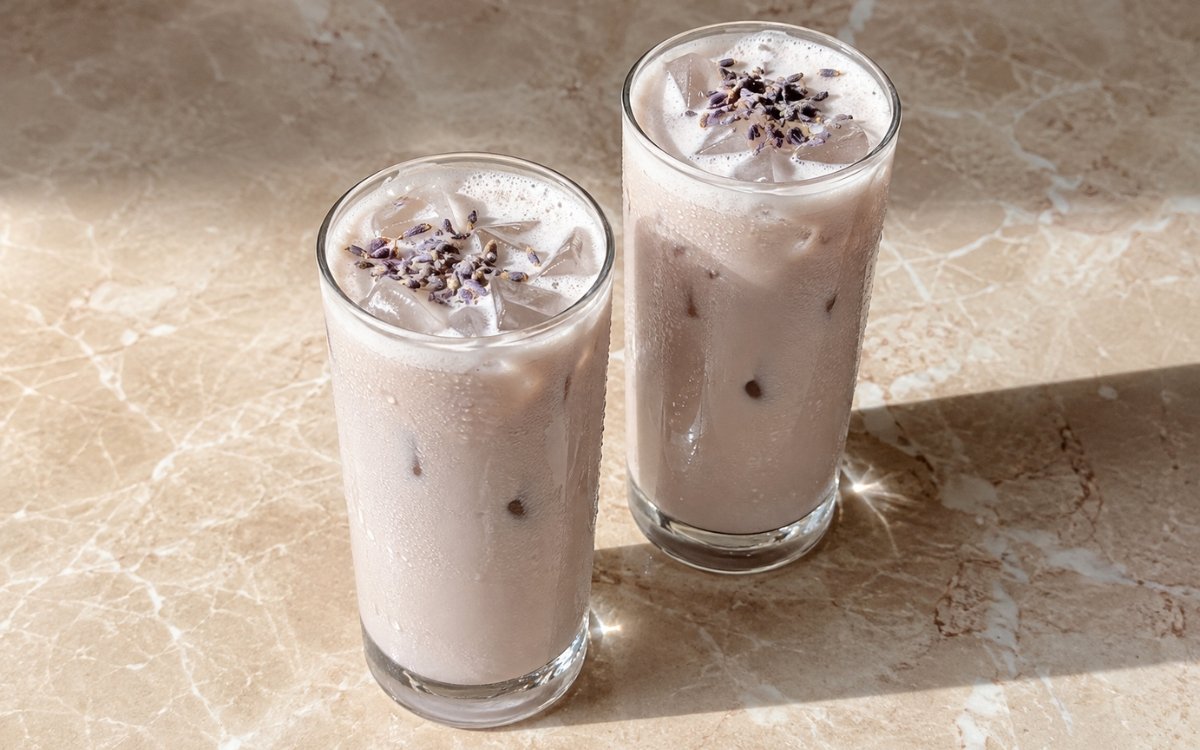
A classic lavender iced latte made with espresso, lavender syrup, cold milk, and ice, finished with a very thin foam layer and a small dried lavender sprig. The drink should be smooth, floral, and restrained — softly sweet with a delicate lavender note that supports the coffee rather than overwhelming it. Keeping the lavender steep genuinely short is the technique this whole drink depends on for staying elegant rather than soapy — lavender’s flavour compounds intensify quickly under extended contact with hot liquid, turning from floral to aggressively perfumed well before most other steeped flavourings would, the same short-and-controlled steep principle used elsewhere in this collection whenever a delicate botanical needs precise timing rather than generous instinct. Loosening that syrup with a small splash of milk before the glass is fully built is what keeps the lavender flavour and sweetness distributed evenly rather than concentrated unevenly at the bottom. Using genuinely culinary-grade dried lavender, rather than a decorative or fragranced version, is what keeps the flavour clean and food-safe rather than tasting of potpourri. The payoff is a drink that settles into a genuinely subtle, barely-there beige-lilac tone, softly floral but still clearly reading as a proper latte.
Prep Time : 8 min
Cook Time : 5 min
Servings : 2
8 min
5 min
2
Ingredients
For the Lavender Syrup
• 80g granulated sugar
• 80ml water
• 2 tsp dried culinary lavender buds — this one on Amazon
• 1 small pinch fine sea salt
• ¼ tsp vanilla extract, optional — this one on Amazon
For the Iced Latte
• 120ml espresso, freshly brewed (4 standard shots total, counting 1 shot = 30ml)
• 300ml cold whole milk (or 2% milk if preferred) — this one on Amazon
• 30ml lavender syrup (15ml per serving)
• 8–10 ice cubes
For Finishing
• 30–40ml cold milk, optional, for a very thin foam layer
• 2 small dried culinary lavender sprigs
This post may contain affiliate links. As an Amazon Associate I earn from qualifying purchases, at no additional cost to you.
Directions
- Make the Lavender Syrup
Add the sugar, water, dried lavender buds, and salt to a small saucepan. Warm over medium heat, stirring until the sugar fully dissolves. Bring just to a gentle simmer, then remove from the heat. Let the lavender steep for 5 minutes. Stir in the vanilla if using. Strain the syrup through a fine sieve and let it cool completely. The syrup should smell floral and clean, not aggressively perfumed. Lavender becomes soapy very quickly if over-steeped, so keeping the steep short is one of the main control points in the recipe. This precisely timed steep is worth treating as a genuine technical requirement rather than a rough guideline — lavender’s aromatic oils extract disproportionately fast relative to many other dried botanicals, and even a few extra minutes of contact time can tip the syrup from pleasantly floral into something closer to soap. - Brew the Espresso
Brew 120ml espresso total, equal to 4 standard 30ml shots. Let it stand for 30–60 seconds only if it is extremely hot, but do not let it sit long enough to lose freshness. The espresso should be fresh, balanced, and aromatic. Lavender is delicate, so harsh or burnt espresso will dominate the drink and flatten the floral character. A genuinely clean, well-balanced shot is what lets the lavender’s subtle floral note register clearly alongside the coffee — anything sharp or bitter in the espresso simply overwhelms that delicate flavour rather than sitting alongside it. - Build the Lavender Base
Add 15ml lavender syrup to each glass. Add a small splash of the cold milk to each glass and stir briefly to loosen the syrup. This step matters because syrup left sitting in a heavy layer at the base gives uneven sweetness and uneven lavender flavour. The drink should start with the syrup already partially dissolved. Loosening the syrup while the glass is still simple and mostly empty gives it a genuine, direct chance to disperse evenly, rather than attempting the same mixing later once ice and the remaining milk are already in place. - Add Ice and Milk
Fill each glass generously with ice. Pour 150ml cold milk into each glass over the ice. The glasses should look very pale and milk-forward. The lavender effect in the drink should stay soft and subtle. If the base already looks dark or overly tinted, the balance is wrong before the espresso even goes in. Checking the colour at this intermediate stage, before the espresso is even added, gives a useful early warning if the syrup-to-milk ratio has already drifted too concentrated. - Pour in the Espresso
Pour 60ml espresso into each glass over the milk and ice. Let it swirl naturally for a moment, then stir briefly. The finished liquid should settle into a very pale beige-lilac or soft grey-mauve impression rather than a strong purple drink. The colour should be barely there but visible, and the drink should still clearly read as a latte. This specific, deliberately understated colour target functions as a genuine diagnostic for the drink’s balance — a result that reads as a strong, visibly purple drink signals either too much syrup or too much colouring relative to the milk and espresso. - Create the Thin Foam Layer
If you want the more polished café-style finish, froth the extra cold milk very lightly until it forms only a thin soft foam. Spoon a small amount over the top of each drink. The foam should stay minimal. Too much foam turns the drink into something closer to an iced cappuccino. The correct finish is only a light surface layer. Stopping well short of a substantial foam is what keeps this drink’s presentation reading as delicate rather than pushing toward a heavier, more filling format. - Finish and Serve
Rest 1 small dried lavender sprig across the rim of each glass and serve immediately. The garnish should stay restrained and aromatic. It should suggest lavender, not make the drink look overloaded or potpourri-like. This same restraint applies to the garnish as it does to the syrup itself — a single small sprig completes the drink’s elegant presentation without tipping it toward looking fussy or decorative for its own sake.
*Notes :
- The lavender syrup’s tightly controlled 5-minute steep deserves to be understood as the single most consequential timing decision in this entire recipe. Lavender’s aromatic oils extract into hot liquid at a genuinely fast rate compared to many other dried botanicals, and the window between “pleasantly floral” and “aggressively soapy” is considerably narrower here than it would be for something like a cinnamon stick or dried citrus peel. This is precisely why the recipe frames the steep time as one of the main control points rather than a flexible suggestion.
- The instruction to use genuinely culinary-grade dried lavender, rather than any decorative or fragranced version, is worth taking seriously as a real safety and quality distinction, not just a preference. Lavender sold for potpourri or craft purposes is often treated with additives or fragrances never intended for consumption, and using it in a syrup meant to be drunk would introduce flavours — and potentially substances — that have no place in a food product.
- The drink’s deliberately understated colour target reflects a genuine design philosophy running through the whole recipe. This is meant to be a coffee drink with a supporting lavender note, not a lavender drink that happens to contain coffee — the pale, barely-there beige-lilac tone specified here is a direct visual expression of that priority, and any result reading as a strong, visibly purple drink signals the balance has tipped away from that intended relationship.
- Keeping the espresso genuinely clean and fresh matters more here than in many other flavoured lattes, given how subtle and easily overwhelmed lavender’s own character is. A harsh or stale shot doesn’t simply compete with the lavender — it can flatten and mask it almost entirely, since lavender has nowhere near the assertiveness needed to stand up against a genuinely flawed coffee base.
Why This Recipe Works
This recipe works because the lavender syrup’s steep is precisely controlled to stay within lavender’s narrow window of pleasant floral flavour before it tips toward soapy. Genuinely culinary-grade lavender protects both flavour and food safety, and loosening the syrup into the milk before the glass is fully built ensures even distribution.
Clean, fresh espresso lets the lavender’s delicate note register clearly rather than being flattened, and the drink’s specifically pale, understated colour target confirms the coffee stays the dominant element with lavender playing a genuinely supporting role. Restrained finishing touches — thin foam, a single sprig — complete the presentation without tipping toward decorative excess.
Ingredient Breakdown
Genuinely Culinary Dried Lavender
The syrup’s defining ingredient — food-safe and untreated, avoiding the additives found in decorative or fragranced versions.
Precisely Timed 5-Minute Steep
The critical technique — lavender’s fast-extracting aromatics require careful timing to stay floral rather than turning soapy.
Syrup Loosened Before Building
The technique — mixed with a small splash of milk early so flavour and sweetness distribute evenly rather than settling.
Freshly Brewed, Clean Espresso
Orange juice adds natural sweetness, fruit body, and volume. It balances verjus sharpness and gives the drink a recognizable sangria flavor profile. Freshly squeezed juice provides cleaner aromatics and better integration than packaged juice.
Restrained Colour and Garnish
The presentation philosophy — a deliberately pale, barely-there tone and a single sprig, both reflecting the drink’s coffee-first identity.
Flavor Structure Explained
This lavender iced latte follows a layered balance model:
- Smooth milky foundation (cold whole milk)
- Bold clean coffee centre (freshly brewed espresso)
- Delicate floral note (precisely steeped lavender syrup)
- Elegant restrained finish (thin foam, single sprig)
Cold whole milk provides the smooth, mellow foundation that dominates much of the finished drink, staying genuinely milk-forward. Freshly brewed, clean espresso layers in bold, unmistakable coffee flavour that remains the drink’s clear centre. The precisely steeped lavender syrup contributes a delicate, restrained floral note that supports rather than competes with the coffee. A minimal thin foam and a single dried lavender sprig finish the presentation with elegant restraint, keeping the whole drink reading as a proper coffee first, floral-accented second.
Common Mistakes to Avoid
- Over-Steeping the Lavender – This turns the syrup soapy rather than pleasantly floral. Always keep the steep to the specified 5 minutes.
- Using Decorative or Fragranced Lavender – This can introduce off-flavours or unsafe additives never intended for consumption. Always use genuinely culinary-grade dried lavender.
- Adding the Syrup Without Loosening It First – Unmixed syrup produces uneven flavour and sweetness. Always stir it with a small splash of milk before building the rest of the glass.
- Using Harsh or Stale Espresso – This flattens and can mask lavender’s delicate character almost entirely. Always use fresh, clean espresso.
- Letting the Drink Turn Visibly Purple – This signals too much syrup or colouring relative to the milk and espresso. Always aim for the pale, barely-there beige-lilac target.
Variations
Sweeter Version
Use 20ml lavender syrup per serving instead of 15ml for a more pronounced sweetness.
Vanilla-Lavender Version
Include the optional vanilla extract in the syrup for a rounder, softer floral profile.
2% Milk Version
Substitute 2% milk for whole milk for a slightly lighter body while keeping the same technique.
Extra-Strong Version
Increase to 3 shots of espresso per serving for a bolder coffee presence beneath the lavender.
Storage & Make-Ahead
The lavender syrup can be made ahead and refrigerated in a sealed jar for up to 2 weeks.
This drink is meant to be built and served fresh; it does not hold or store well once assembled, since the ice will continue melting and diluting the drink over time.
Espresso can be brewed just before building the glasses, but should not be brewed far in advance, since its flavour and aroma fade noticeably as it sits.
Frequently Asked Questions
Why does the lavender syrup’s steeping time need to be so precisely controlled?
Lavender’s aromatic oils extract into hot liquid considerably faster than many other dried botanicals, and the window between pleasantly floral and aggressively soapy is genuinely narrow. Keeping the steep to the specified 5 minutes is what stays on the right side of that line.
Why does this recipe specifically require culinary-grade lavender rather than any dried lavender on hand?
Lavender sold for decorative or potpourri purposes is often treated with additives or fragrances never intended for consumption. Using genuinely culinary-grade lavender protects both the drink’s flavour and its food safety.
Why does the finished drink need to stay so pale rather than a more visibly purple colour?
This is meant to be a coffee drink with a supporting lavender note, not a lavender drink that happens to contain coffee. The specifically pale, barely-there colour target is a direct expression of that priority — a strongly purple result signals the balance has tipped too far toward the syrup.
Why does the espresso need to be especially clean and fresh for this particular drink?
Lavender’s flavour is genuinely subtle and easily overwhelmed. A harsh or stale shot doesn’t just compete with it — it can flatten and mask the lavender almost entirely, since lavender lacks the assertiveness to stand up against a flawed coffee base.
Are there other floral or delicate flavoured iced lattes worth trying?
Iced Rose Latte explores a closely related floral direction worth comparing directly. Iced Vanilla Latte, Honey Almondmilk Cold Brew, and Pistachio Cream Iced Latte are also worth exploring for a different gentle, restrained flavour profile.
Nutrition Facts
( per serving )
Calories
~200 kcal
Protein
8 g
Fat
8 g
Carbs
24 g
Calories
~200 kcal
Protein
8 g
Fat
8 g
Carbs
24 g
Related Recipes
Related Recipes

Freddo Espresso
Hot espresso shaken hard with ice until chilled, aerated, and capped with thick foam, then poured over fresh ice.
Frozen Coffee Slushie
Strong chilled coffee, simple syrup, a touch of milk, and plenty of ice blended in short pulses for a coarse, icy slushie.
Mont Blanc Iced Coffee
Strong chilled coffee topped with soft whipped cream and a piped chestnut cream mountain, inspired by the classic Mont Blanc pastry.
You might also like
You might also like
Yuzu Lemonade
Cold-extracted lemon zest and juice combined with yuzu juice and gently added sparkling water for a bright, lightly effervescent lemonade.
Cucumber Lemonade
Cold-extracted lemon zest and juice combined with smooth strained cucumber juice for a light, pale green, refreshing lemonade.
Plain Steamed Basmati Rice
Basmati rinsed thoroughly, boiled uncovered then simmered covered undisturbed for 15 minutes, rested and fluffed. Long, separate grains every time.

Lavender Iced Latte
Ingredients
Method
- Add the sugar, water, dried lavender buds, and salt to a small saucepan. Warm over medium heat, stirring until the sugar fully dissolves. Bring just to a gentle simmer, then remove from the heat. Let the lavender steep for 5 minutes. Stir in the vanilla if using. Strain the syrup through a fine sieve and let it cool completely. The syrup should smell floral and clean, not aggressively perfumed. Lavender becomes soapy very quickly if over-steeped, so keeping the steep short is one of the main control points in the recipe. This precisely timed steep is worth treating as a genuine technical requirement rather than a rough guideline — lavender’s aromatic oils extract disproportionately fast relative to many other dried botanicals, and even a few extra minutes of contact time can tip the syrup from pleasantly floral into something closer to soap.
- Brew 120ml espresso total, equal to 4 standard 30ml shots. Let it stand for 30–60 seconds only if it is extremely hot, but do not let it sit long enough to lose freshness. The espresso should be fresh, balanced, and aromatic. Lavender is delicate, so harsh or burnt espresso will dominate the drink and flatten the floral character. A genuinely clean, well-balanced shot is what lets the lavender’s subtle floral note register clearly alongside the coffee — anything sharp or bitter in the espresso simply overwhelms that delicate flavour rather than sitting alongside it.
- Add 15ml lavender syrup to each glass. Add a small splash of the cold milk to each glass and stir briefly to loosen the syrup. This step matters because syrup left sitting in a heavy layer at the base gives uneven sweetness and uneven lavender flavour. The drink should start with the syrup already partially dissolved. Loosening the syrup while the glass is still simple and mostly empty gives it a genuine, direct chance to disperse evenly, rather than attempting the same mixing later once ice and the remaining milk are already in place.
- Fill each glass generously with ice. Pour 150ml cold milk into each glass over the ice. The glasses should look very pale and milk-forward. The lavender effect in the drink should stay soft and subtle. If the base already looks dark or overly tinted, the balance is wrong before the espresso even goes in. Checking the colour at this intermediate stage, before the espresso is even added, gives a useful early warning if the syrup-to-milk ratio has already drifted too concentrated.
- Pour 60ml espresso into each glass over the milk and ice. Let it swirl naturally for a moment, then stir briefly. The finished liquid should settle into a very pale beige-lilac or soft grey-mauve impression rather than a strong purple drink. The colour should be barely there but visible, and the drink should still clearly read as a latte. This specific, deliberately understated colour target functions as a genuine diagnostic for the drink’s balance — a result that reads as a strong, visibly purple drink signals either too much syrup or too much colouring relative to the milk and espresso.
- If you want the more polished café-style finish, froth the extra cold milk very lightly until it forms only a thin soft foam. Spoon a small amount over the top of each drink. The foam should stay minimal. Too much foam turns the drink into something closer to an iced cappuccino. The correct finish is only a light surface layer. Stopping well short of a substantial foam is what keeps this drink’s presentation reading as delicate rather than pushing toward a heavier, more filling format.
- Rest 1 small dried lavender sprig across the rim of each glass and serve immediately. The garnish should stay restrained and aromatic. It should suggest lavender, not make the drink look overloaded or potpourri-like. This same restraint applies to the garnish as it does to the syrup itself — a single small sprig completes the drink’s elegant presentation without tipping it toward looking fussy or decorative for its own sake.