
Kale Pineapple Ginger Smoothie
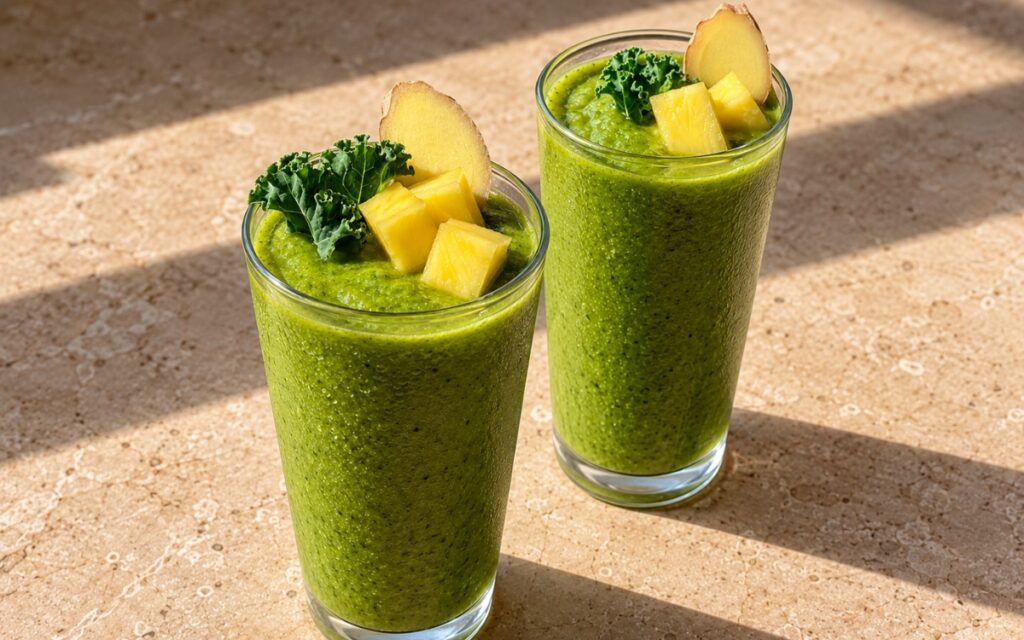
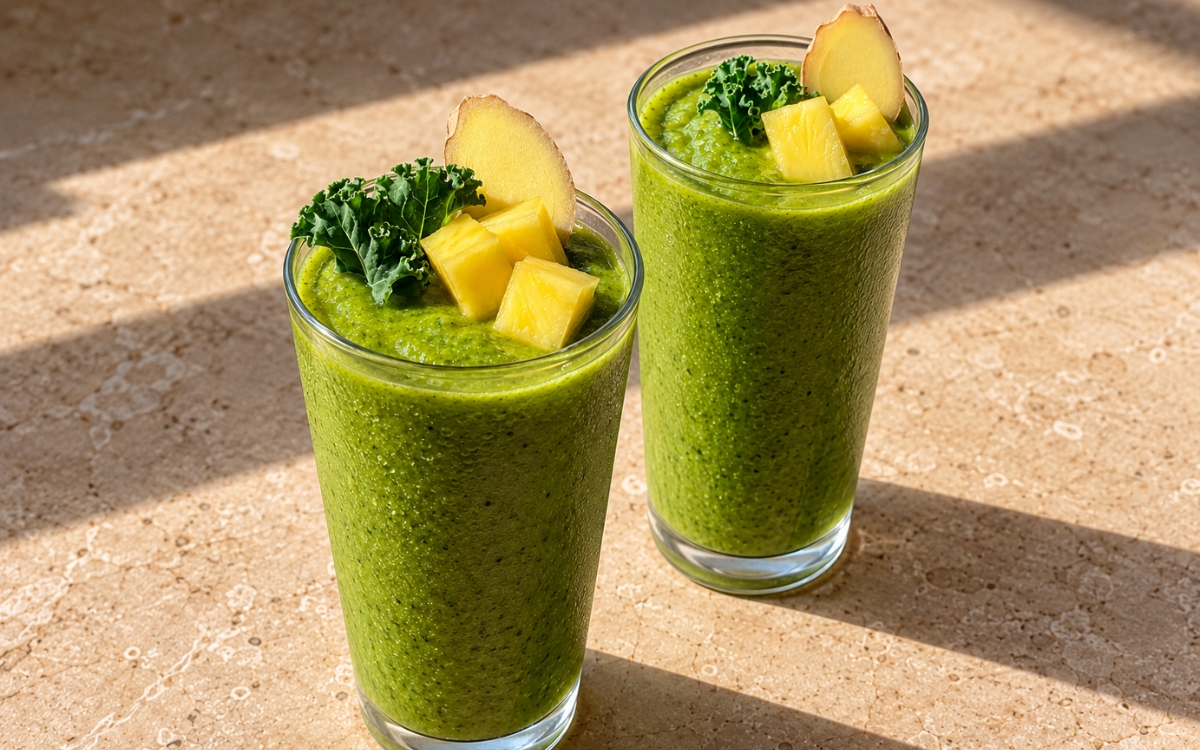
A bright green kale pineapple ginger smoothie with a fresh tropical profile, balanced sweetness, and a smooth but lightly speckled texture from the greens, pineapple bringing body and acidity, banana softening the kale and ginger, and yogurt adding a creamy finish. Removing every trace of tough kale stem and thick center rib before chopping is the technique this whole smoothie depends on for real, non-stringy texture — stems stay fibrous and make the drink stringy even after blending, the same strip-the-tough-ribs-first principle used elsewhere in this collection whenever a leafy green’s own real smoothness depends on removing the one component a blender genuinely can’t fully break down. Loading the liquid and soft ingredients into the blender before the kale is what helps the greens break down properly and reduces both green flecks and unblended fibers. Adding the ginger with real restraint, starting moderate, is what accounts for how much stronger it tastes once it’s actually blended fine. The payoff is a smoothie with real, bright tropical contrast — vivid green, lightly speckled body with real pineapple sweetness and a sharp ginger edge, finished with pineapple chunks, ginger slices, and kale leaves.
Prep Time : 10 min
Total Time : 10 min
Servings : 4
10 min
10 min
4
Ingredients
For the Smoothie
• 90g kale leaves, tough stems and center ribs removed
• 400g pineapple chunks, preferably frozen
• 2 medium ripe bananas, sliced, preferably frozen (about 220–240g peeled weight)
• 250g Greek yogurt
• 240ml cold coconut water, orange juice, or a mix of both
• 15g fresh ginger, peeled and sliced
• 1 tbsp fresh lime juice
• 1–2 tbsp honey or maple syrup, optional, to taste
• Pinch of fine salt
• 4–6 ice cubes, only if not using frozen fruit
Optional Garnish
• Small pineapple chunks
• 4 thin slices fresh ginger
• 4 small kale leaves
Directions
- Prep the Kale and Fruit
Remove the tough stems and thick center ribs from the kale and roughly chop the leaves. Slice the banana and use it frozen if possible. Measure the pineapple and keep it cold or frozen. Do not use the kale stems in the smoothie. They stay fibrous and make the drink stringy even after blending. That deliberate removal eliminates the one component a blender genuinely can’t fully break down — no amount of blending time would smooth those tough, fibrous ribs into the rest of the mixture. - Load the Blender in the Right Order
Add the coconut water or juice, Greek yogurt, lime juice, honey if using, and salt to the blender first. Add the kale next, then the ginger, banana, and pineapple. Add ice only if needed. Putting the liquid and soft ingredients in first helps the kale blend properly and reduces green flecks and unblended fibers. That specific layering order gives the kale genuine, direct contact with liquid before the denser fruit is ever added, letting the blades work through the greens properly rather than fighting past fruit stacked on top of them. - Blend the Greens Fully
Blend on high for 30–45 seconds, then stop and check the texture. If the kale is not fully broken down, blend again until the mixture looks evenly green and smooth. Before serving, there should be no visible large kale pieces and no obvious fibrous strands. That deliberate pause to check the texture mid-process is a real, practical safeguard — kale’s own fibrous structure can resist full breakdown more stubbornly than softer greens, and confirming it’s fully smooth before moving on protects the finished drink from any lingering stringiness. - Adjust Consistency and Flavor
If the smoothie is too thick to move freely in the blender, add a little more cold liquid, 1–2 tbsp at a time. Taste and adjust: add more honey if the pineapple is very tart, add a little more lime juice if it tastes flat, add a little more ginger only if you want a sharper finish. Ginger gets stronger as it blends more finely, so start moderate and adjust carefully. That specific warning reflects a real, physical process — finely blended ginger releases considerably more of its own sharp, pungent oils than a coarser piece would, meaning its real intensity only becomes apparent once it’s already fully incorporated. - Serve
Pour into 4 glasses, about 250ml each. Garnish with a few pineapple chunks, a thin ginger slice, and a small kale leaf if desired. Serve immediately while cold and thick. That immediate serving captures the smoothie at its genuinely thickest, coldest, and most vividly green, before it has any real chance to thicken further or begin separating.
*Notes :
- Removing every trace of tough kale stem and thick center rib before chopping deserves genuine recognition as the technique most directly responsible for whether this smoothie achieves real, non-stringy texture. The recipe’s own explicit warning that stems “stay fibrous and make the drink stringy even after blending” reflects a real, physical limitation no amount of blending time can fully correct — that removal has to happen before the kale ever reaches the blades.
- Loading the liquid and soft ingredients into the blender before the kale deserves the same attention this technique receives throughout this collection’s other green, leaf-heavy smoothies. The recipe’s own explicit note that this order “helps the kale blend properly and reduces green flecks and unblended fibers” reflects real, practical understanding of how directly that sequencing affects the greens’ own ability to fully break down.
- Adding the ginger with real, deliberate restraint deserves genuine attention as a detail specific to how this particular ingredient behaves once blended. The recipe’s own explicit warning that “ginger gets stronger as it blends more finely” reflects a real, physical process this careful, incremental approach is specifically built to account for.
- Pausing partway through blending to check the kale’s own texture deserves genuine respect as a real, practical safeguard rather than an unnecessary extra step. Kale’s own fibrous structure can resist full breakdown more stubbornly than many softer greens, and confirming it’s genuinely smooth before moving forward protects against any lingering stringiness in the finished drink.
Why This Recipe Works
This recipe works because every tough stem and rib is removed from the kale before it’s ever chopped, eliminating the one component a blender simply can’t fully smooth out. The blender is loaded with liquid and soft ingredients first, giving the kale real, direct contact before denser fruit is added. Blending is checked and repeated as needed until the greens are genuinely fully broken down. The ginger is added with real restraint, accounting for how much stronger it tastes once finely blended, and serving immediately delivers the smoothie at its freshest, thickest, and most vividly green.
Ingredient Breakdown
Stem- and Rib-Free Kale
The critical technique — removes the one fibrous component a blender genuinely can’t fully smooth out.
Liquid-and-Soft-Ingredient-First Blender Order
The critical technique — gives the kale real, direct liquid contact before denser fruit is added.
Checked, Repeated Blending for the Greens
The critical technique — confirms the kale is genuinely fully broken down before moving forward.
Restrained, Incremental Ginger
The critical technique — accounts for how much stronger finely blended ginger actually tastes once fully incorporated.
Frozen Pineapple and Banana
The critical technique — build real thickness and cold without watering the smoothie down.
Immediate Serving
The finishing technique — captures the smoothie at its freshest, thickest, and most vividly green.
Flavor Structure Explained
This kale pineapple ginger smoothie follows a layered balance model:
- Bright, vegetal foundation (fully broken-down kale)
- Tropical body and acidity (frozen pineapple)
- Mellow, softening sweetness (ripe, frozen banana)
- Sharp, warming accent (fresh ginger)
- Creamy finish (Greek yogurt, lime juice)
Fully broken-down kale provides this smoothie’s bright, genuinely vegetal foundation, its own fibrous toughness removed before it ever reaches the blender. Frozen pineapple contributes real tropical body and acidity throughout. Ripe, frozen banana softens both the kale and ginger with mellow, natural sweetness. Fresh ginger adds a sharp, warming accent, carefully restrained to avoid overpowering the rest of the drink. Greek yogurt and a touch of lime juice finish the smoothie with a creamy, balanced close that ties this bright, tropical green smoothie together.
Common Mistakes to Avoid
- Leaving Kale Stems or Ribs in the Mix – This makes the finished drink stringy even after blending. Always remove them thoroughly before chopping.
- Adding the Kale on Top of the Fruit Rather Than First – This leaves more unblended fibers and visible green flecks. Always load liquid and soft ingredients first, then the kale.
- Skipping the Mid-Blend Texture Check – This risks serving a smoothie with lingering, unbroken kale pieces. Always pause and check before moving forward.
- Adding Too Much Ginger Upfront – This can make the smoothie unexpectedly sharp once fully blended. Always start moderate and adjust carefully.
- Letting the Smoothie Sit Before Serving – This lets it thicken and separate slightly. Always serve immediately after blending.
Variations
Baby or Lacinato Kale Version
Use baby kale or lacinato kale instead of curly kale, per the recipe’s own note, for a smoother blend and a slightly less assertive overall flavour.
Orange Juice Version
Use orange juice as the liquid, per the recipe’s own note on it giving “a sweeter, brighter, more fruit-forward result,” for a more vivid, citrus-forward finished smoothie.
Lighter Version
Replace part or all of the Greek yogurt with more coconut water or juice, per the recipe’s own guidance, for a lighter, less creamy finished texture.
Two-Stage Blending Version
If your blender isn’t very strong, blend the liquid and kale first, per the recipe’s own suggestion, then add the remaining ingredients and blend again for the smoothest possible result.
Storage & Make-Ahead
Frozen pineapple and frozen banana give the best thick, cold texture without watering the smoothie down, making them the preferred choice over fresh fruit whenever possible.
Greek yogurt makes this smoothie creamier and rounds out both the kale and ginger; for a lighter version, replace part or all of it with more coconut water or juice instead.
Coconut water keeps the smoothie fresher and lighter, while orange juice gives a sweeter, brighter, more fruit-forward result, so choose based on the character you’re after.
Curly kale works well here, but baby kale or lacinato kale will blend more smoothly and taste slightly less assertive, which is worth considering if you’re new to kale smoothies.
If your blender isn’t especially strong, blend the liquid and kale together first, then add the remaining ingredients and blend again, and know this smoothie is genuinely best served right after blending, since it thickens slightly and separates a bit if left to sit.
Frequently Asked Questions
Why do the kale stems and center ribs need to be removed so thoroughly?
Those stems stay genuinely fibrous and stringy even after extended blending. No amount of time in the blender can fully smooth them out, which is why they need to be removed by hand before the kale is ever chopped.
Why does the liquid go into the blender before the kale rather than after?
That order gives the kale real, direct contact with liquid before denser fruit is ever added on top, helping the blades work through the greens properly and reducing both green flecks and unblended fibers.
Why does the ginger need to be added so carefully, starting moderate?
Ginger genuinely gets stronger the more finely it’s blended, releasing more of its own sharp, pungent flavour than a coarser piece would. Starting moderate and adjusting afterward protects against an unexpectedly sharp final result.
Why is it worth pausing partway through blending to check the kale’s texture?
Kale’s own fibrous structure can resist full breakdown more stubbornly than many other greens. Checking mid-process and blending further if needed protects the finished smoothie from any lingering, stringy texture.
Are there other classic green, tropical, or ginger-forward smoothie recipes worth trying?
Tropical Green Smoothie and Cucumber Apple Green Smoothie both offer other classic green smoothie directions worth exploring. Carrot Orange Ginger Smoothie is also worth trying for another ginger-forward variation, and Avocado Banana Spinach Smoothie and Green Smoothie Bowl with Kiwi offer other green-forward smoothies and bowls worth exploring.
Nutrition Facts
( Per Serving — 250ml )
Calories
~220 kcal
Protein
10 g
Fat
2 g
Carbs
44 g
Calories
~220 kcal
Protein
10 g
Fat
2 g
Carbs
44 g
Related Recipes
Related Recipes
-

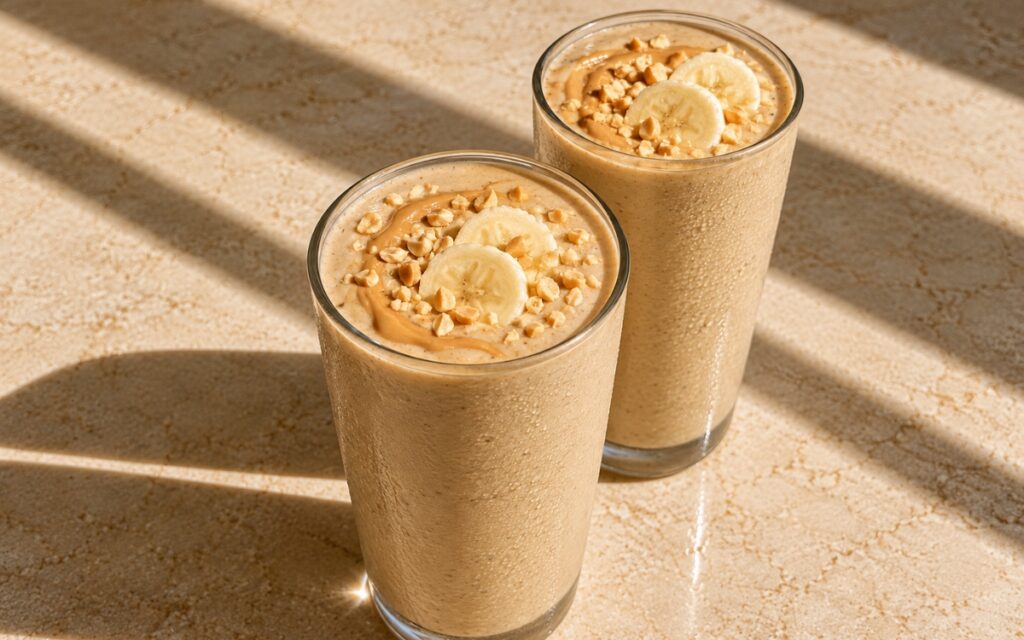
Peanut Butter Banana Protein Smoothie
A thick, creamy peanut butter banana smoothie blended with banana, peanut butter, Greek yogurt and protein powder, finished with peanut butter, peanuts, and banana coins.
-
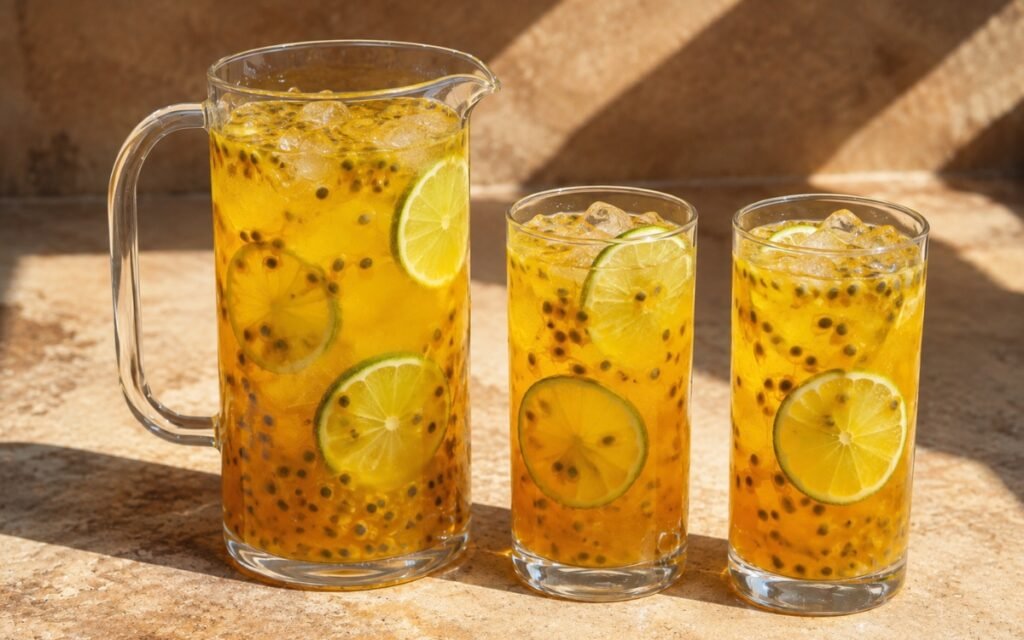
Passion Fruit Lime Pitcher Drink
Gently mashed passion fruit pulp combined with fresh lime juice and sliced limes for a bright golden, tropical, double-lime pitcher drink.
-
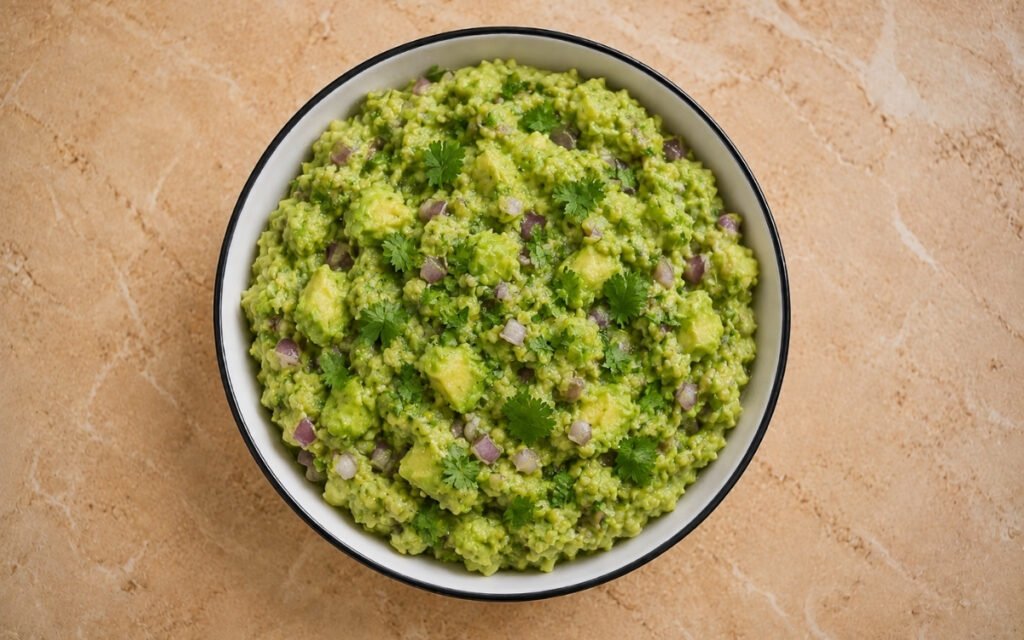
Classic Guacamole
Three ripe avocados folded with red onion, jalapeño, lime, and cumin — rustic, rich, and perfectly seasoned in 20 minutes.
You might also like
You might also like
-
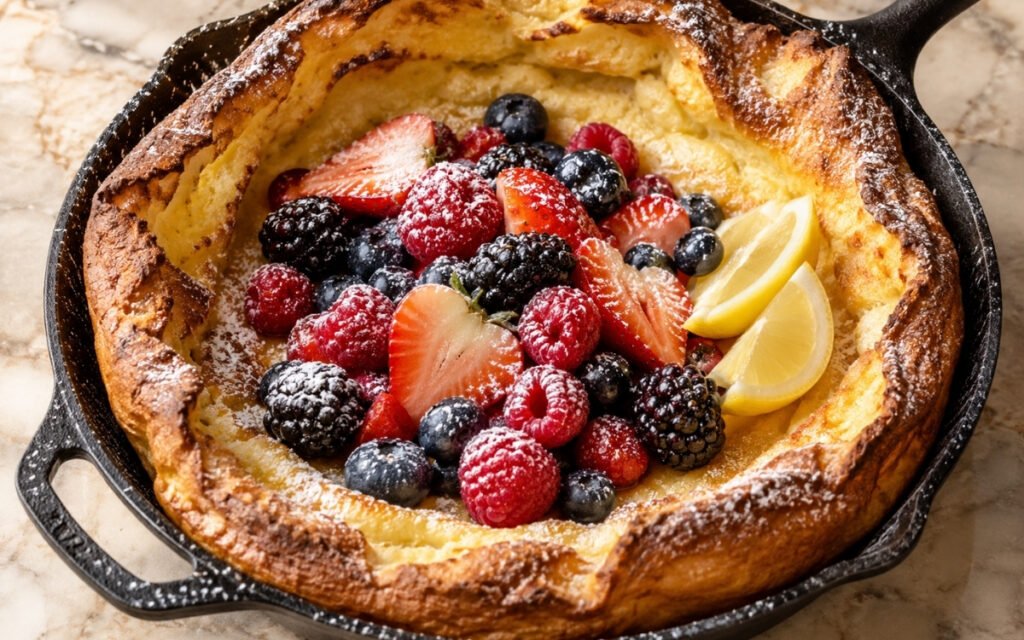
Dutch Baby Pancake
Four individual Dutch babies baked in small cast-iron skillets until dramatically puffed and crisp, filled with fresh mixed berries and powdered sugar.
-
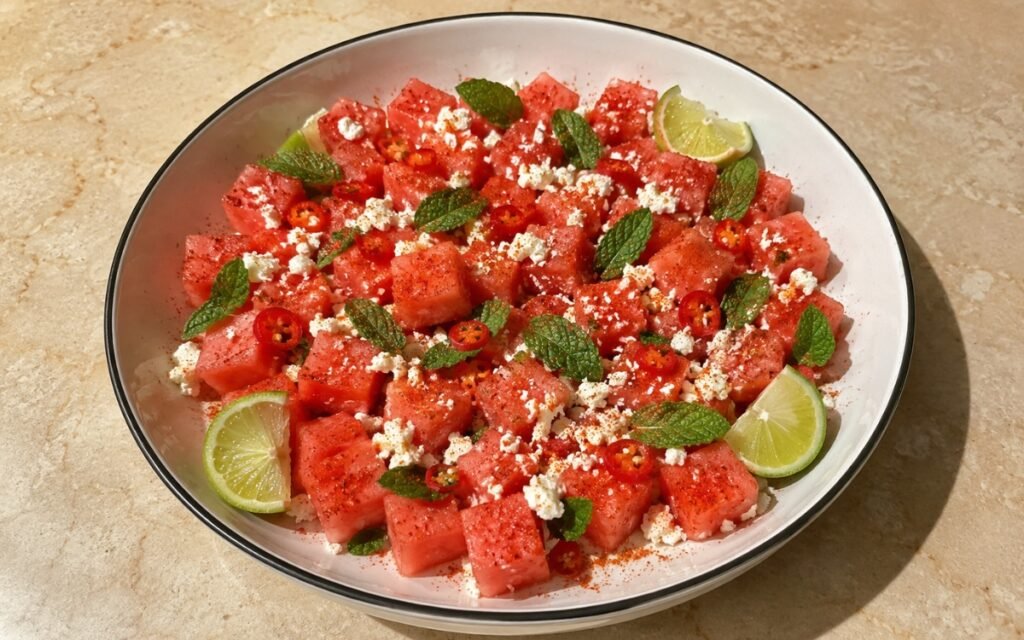
Watermelon Tajín Salad
Watermelon drained 5 minutes, tossed with Tajín, lime, and olive oil — cotija crumbled over the top with fresno chili, fresh mint, and an extra Tajín dusting. The summer salad in 25 minutes.
-
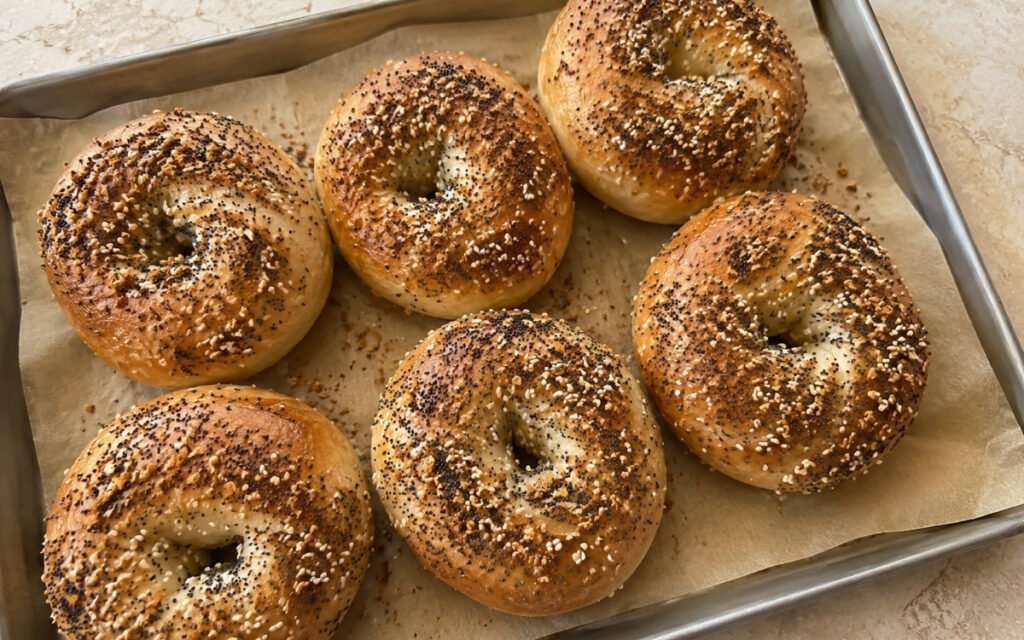
Everything Bagels
Barley malt dough, overnight cold proof, boiling bath, and everything seasoning — authentic chewy bagels that make every other version seem like an approximation.
Kale Pineapple Ginger Smoothie
Ingredients
Method
- Remove the tough stems and thick center ribs from the kale and roughly chop the leaves. Slice the banana and use it frozen if possible. Measure the pineapple and keep it cold or frozen. Do not use the kale stems in the smoothie. They stay fibrous and make the drink stringy even after blending. That deliberate removal eliminates the one component a blender genuinely can’t fully break down — no amount of blending time would smooth those tough, fibrous ribs into the rest of the mixture.
- Add the coconut water or juice, Greek yogurt, lime juice, honey if using, and salt to the blender first. Add the kale next, then the ginger, banana, and pineapple. Add ice only if needed. Putting the liquid and soft ingredients in first helps the kale blend properly and reduces green flecks and unblended fibers. That specific layering order gives the kale genuine, direct contact with liquid before the denser fruit is ever added, letting the blades work through the greens properly rather than fighting past fruit stacked on top of them.
- Blend on high for 30–45 seconds, then stop and check the texture. If the kale is not fully broken down, blend again until the mixture looks evenly green and smooth. Before serving, there should be no visible large kale pieces and no obvious fibrous strands. That deliberate pause to check the texture mid-process is a real, practical safeguard — kale’s own fibrous structure can resist full breakdown more stubbornly than softer greens, and confirming it’s fully smooth before moving on protects the finished drink from any lingering stringiness.
- If the smoothie is too thick to move freely in the blender, add a little more cold liquid, 1–2 tbsp at a time. Taste and adjust: add more honey if the pineapple is very tart, add a little more lime juice if it tastes flat, add a little more ginger only if you want a sharper finish. Ginger gets stronger as it blends more finely, so start moderate and adjust carefully. That specific warning reflects a real, physical process — finely blended ginger releases considerably more of its own sharp, pungent oils than a coarser piece would, meaning its real intensity only becomes apparent once it’s already fully incorporated.
- Pour into 4 glasses, about 250ml each. Garnish with a few pineapple chunks, a thin ginger slice, and a small kale leaf if desired. Serve immediately while cold and thick. That immediate serving captures the smoothie at its genuinely thickest, coldest, and most vividly green, before it has any real chance to thicken further or begin separating.