
Honey Lemonade
A simple golden honey lemonade with a clean bright lemon flavor and gentle floral sweetness. The lemon character comes from both fresh juice and a peel infusion using only the yellow zest, while the honey is handled gently at low temperature so it keeps its aroma instead of tasting flat or cooked. Taking only the yellow zest, carefully avoiding any white pith, is the technique this whole lemonade depends on for its clean flavour — that pith carries real bitterness that no amount of honey’s own sweetness corrects, the same zest-only-no-pith principle used elsewhere in this collection whenever citrus aroma needs extracting cleanly rather than bitterly. Steeping that zest directly in honey, rather than in a separately made syrup, is what lets the honey pull in the lemon oils and aroma while staying fundamentally unheated and uncooked. Keeping the honey at low temperature throughout, warming it only enough to loosen if genuinely necessary, is what preserves its own floral character rather than flattening it into something cooked-tasting. The payoff is a lemonade that’s genuinely golden, clean, and bright — real lemon character meeting honey’s own gentle floral sweetness, neither one overwhelming the other.

Prep Time : 20 min
Chill Time : 30 min
Servings : 8
20 min
30 min
8
Ingredients
For the Lemon-Honey Base
• Zest of 3 large lemons, yellow part only, no white pith
• 200g mild floral honey — this one on Amazon
• 280ml fresh lemon juice, from about 5–6 lemons
For the Lemonade
• 1.55L very cold water
For Serving
• Ice cubes
• 2 lemons, cut into thin wheels
This post may contain affiliate links. As an Amazon Associate I earn from qualifying purchases, at no additional cost to you.
Directions
- Extract the Lemon Oils into the Honey
Finely zest 3 lemons, taking only the yellow outer peel and leaving all white pith behind. Place the zest in a bowl with the honey and stir well. Let it sit for 15–20 minutes so the honey pulls in the lemon oils and aroma. If your honey is very thick, set the bowl over barely warm water for a few minutes just to loosen it slightly. Do not let it get hot — keep it low temperature, just warm enough to make it fluid and easy to mix. Honey’s own natural viscosity is actually what makes it an effective medium for this infusion — its thick, slow-moving texture holds the zest in close, sustained contact, letting the lemon oils steep directly into it over that resting time. - Juice the Lemons
Juice the lemons until you have 280ml fresh lemon juice. Strain out the seeds. Add the lemon juice to the lemon-honey mixture and whisk until the honey loosens and blends in. The lemon juice’s own acidity and liquid volume are what actually loosen the honey into something pourable and mixable — that combination transforms the thick, infused honey into a genuine liquid base ready to be built into the full lemonade. - Build the Lemonade
Pour the lemon-honey base into a large pitcher. Add the cold water and stir very well until fully combined. For a cleaner, brighter lemonade, strain the mixture through a fine-mesh sieve into the pitcher, pressing lightly on the zest, then discard the solids. Straining at this stage removes the spent zest pieces after they’ve already given up their aromatic oils to the honey, producing a cleaner final drink without losing any of the flavour that zest already contributed. - Chill
Refrigerate for 30 minutes, or until fully cold. That resting period lets the honey, lemon, and water fully integrate together, producing a more unified flavour than serving the drink immediately after mixing. - Serve
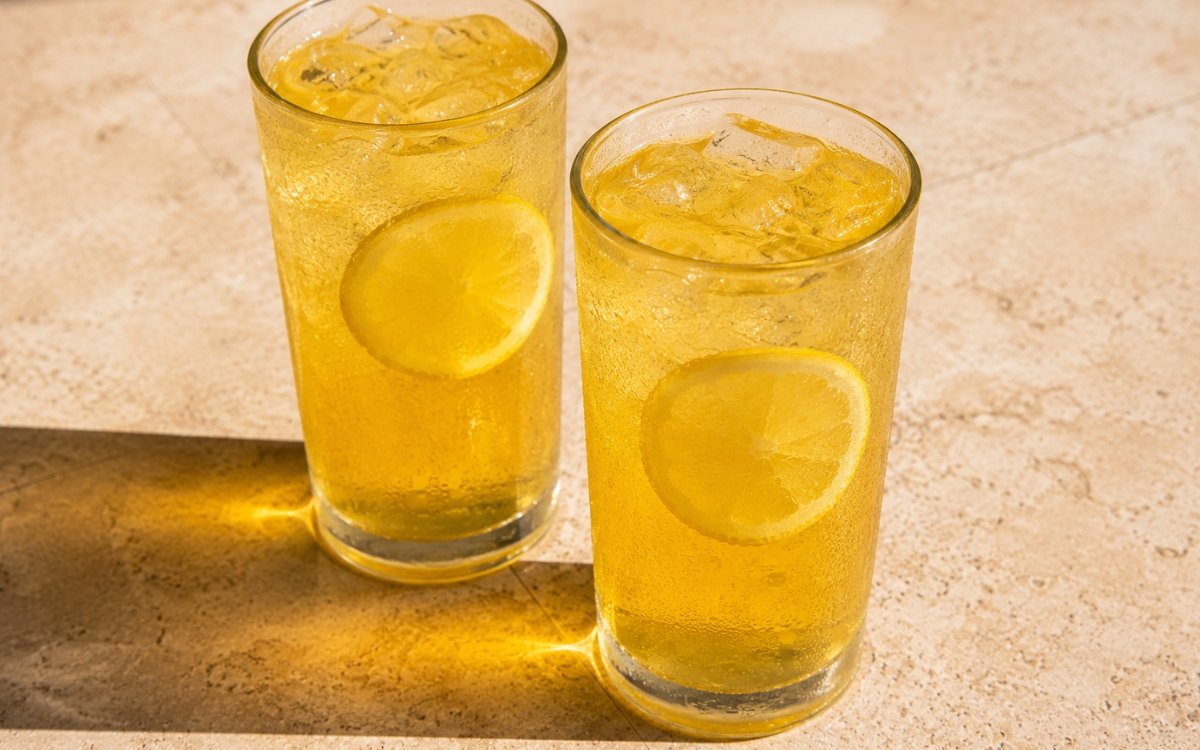
Place ice in tall glasses and slide a thin lemon wheel inside each glass. Pour in the honey lemonade and serve immediately. Serving right after chilling, rather than letting the pitcher sit out, keeps the drink at its coldest and most refreshing right when it’s poured.
*Notes :
- The strict avoidance of white pith throughout zesting deserves the same careful attention it receives across every citrus-forward drink in this collection. Lemon pith carries a real, distinct bitterness entirely separate from the fruit’s natural tartness — even a small amount worked accidentally into the zest can introduce a flavour that lingers through the whole finished pitcher, working directly against honey’s own gentle sweetness.
- Steeping the zest directly in honey, rather than in a separate sugar syrup, is worth understanding as a deliberate technique choice specific to this recipe. Honey’s naturally thick, viscous texture holds the zest in prolonged, close contact in a way a thinner liquid wouldn’t as effectively, letting the lemon oils infuse directly into the honey itself over that resting period rather than needing a separate infusion step.
- Keeping the honey’s temperature genuinely low throughout, warming it only if strictly necessary to loosen thick honey, protects a real and specific quality this recipe depends on. Honey carries its own delicate floral aromatics that heat can diminish or flatten, similar to how heat affects lemon zest’s own volatile oils — the low-temperature handling specified here is what keeps that floral character intact rather than cooking it into something duller and less distinct.
- Choosing a mild, floral honey specifically, as the recipe’s own notes recommend, deserves real attention rather than being treated as a flexible substitution. Very dark, robust honey varieties carry considerably stronger, more assertive flavours that can dominate this drink’s delicate balance between lemon brightness and honey sweetness — a mild honey is what lets both components come through in proper proportion.
Why This Recipe Works
This recipe works because the lemon zest is worked carefully to avoid any white pith, protecting the drink from unnecessary bitterness. Steeping that zest directly in honey, rather than a separate syrup, takes advantage of honey’s own thick texture to hold sustained contact with the zest during infusion.
Keeping the honey at genuinely low temperature throughout preserves its delicate floral aromatics rather than cooking them flat. A mild, floral honey variety lets both lemon and honey come through in proper balance, and a proper chilling period brings every component together into one cohesive, clean-tasting drink.
Ingredient Breakdown
Yellow Lemon Zest (No Pith)
The aromatic foundation — carefully separated from the bitter white pith, protecting the drink’s clean flavour.
Mild, Floral Honey
The sweetening base — chosen specifically for its gentle character, letting it balance with lemon rather than dominating the drink.
Honey-Steeped Zest Infusion
The critical technique — honey’s own thick texture holds sustained contact with the zest, infusing lemon oils directly.
Low-Temperature Honey Handling
The preservation technique — protects honey’s own delicate floral aromatics from the flattening effect heat would cause.
Fresh Lemon Juice
The tartness and loosening agent — its acidity and liquid volume transform the thick, infused honey into a pourable, mixable base.
Flavor Structure Explained
This honey lemonade follows a layered balance model:
- Bright citrus foundation (fresh lemon juice, zest infusion)
- Gentle floral sweetness (mild honey)
- Cool refreshing structure (cold water, ice)
- Clean unadorned finish (no additional spices or flavours)
Fresh lemon juice and honey-infused zest provide this drink’s bright, clean citrus foundation. Mild, floral honey contributes gentle sweetness distinct from plain sugar’s flatter profile, its own delicate aroma preserved through careful low-temperature handling. Cold water and ice keep the whole lemonade properly refreshing. With no additional flavours or spices, the finish stays clean and simple, letting the balance between lemon and honey speak entirely for itself.
Common Mistakes to Avoid
- Zesting Too Deep Into the White Pith – This introduces noticeable bitterness that’s difficult to correct afterward. Always take only the thin, fragrant yellow layer.
- Heating the Honey Too Much – This flattens its delicate floral aroma into something cooked-tasting. Always keep it at genuinely low temperature, only warming enough to loosen if strictly needed.
- Using a Very Dark, Strongly Flavoured Honey – This can dominate the drink’s balance between lemon and honey. Always use a mild, floral variety like clover, wildflower, or acacia.
- Skipping the Straining Step – This leaves spent zest pieces in the finished drink unnecessarily. Always strain for the cleanest, brightest result.
- Serving Without a Proper Chill – The lemon and honey flavours taste more separate without time to settle together. Always refrigerate at least 30 minutes before serving.
Variations
Extra-Tart Version
Add 1–2 extra tablespoons of lemon juice for a sharper, more assertively tart lemonade.
Sweeter Version
Stir in 1–2 extra tablespoons of honey for a softer, sweeter finished drink.
Herbal Version
Add a small sprig of fresh mint or thyme to the pitcher while it chills for a subtle herbal note.
Sparkling Version
Top each glass with a splash of chilled soda water just before serving for light effervescence.
Storage & Make-Ahead
Best served very cold for the cleanest flavor. This recipe makes about 2 litres, enough for 8 glasses of roughly 250ml each.
The lemon-honey base can be made a few hours ahead and refrigerated separately before combining with the cold water.
Frequently Asked Questions
Why is it so important to avoid the white pith when zesting the lemons?
Lemon pith carries real, distinct bitterness separate from the fruit’s natural tartness. Even a small amount worked into the zest can introduce a flavour that lingers through the whole finished pitcher, working against honey’s own gentle sweetness.
Why is the zest steeped directly in honey rather than in a separate syrup?
Honey’s naturally thick, viscous texture holds the zest in prolonged, close contact in a way a thinner liquid wouldn’t as effectively, letting the lemon oils infuse directly into the honey itself over the resting period.
Why does the honey need to stay at such a low temperature throughout?
Honey carries its own delicate floral aromatics that heat can diminish or flatten, similar to how heat affects lemon zest’s volatile oils. Low-temperature handling is what keeps that floral character intact rather than cooking it flat.
Why does the recipe specifically call for mild, floral honey rather than any honey on hand?
Very dark, robust honey varieties carry considerably stronger flavours that can dominate this drink’s delicate balance. A mild honey lets both the lemon and honey come through in proper proportion rather than one overwhelming the other.
Are there other bright, floral, or citrus-forward drinks worth trying?
Chamomile Peach Iced Tea and Lavender Honey Green Iced Tea both offer other gentle, floral drink directions worth exploring. Classic Fresh Lemonade and Fig Honey Lemon Sparkler Mocktail are also worth trying for other bright, honey- or lemon-forward drinks.
Nutrition Facts
( per serving )
Calories
~90 kcal
Protein
0 g
Fat
0 g
Carbs
23 g
Calories
~90 kcal
Protein
0 g
Fat
0 g
Carbs
23 g
Related Recipes
Related Recipes

Iced Tea Lemonade
Ceylon tea at 90–95°C for 2½–3 minutes, bags not squeezed — honey-lemon syrup, fresh lemon juice, cold water, salt, chilled. Lemonade leads, tea supports.
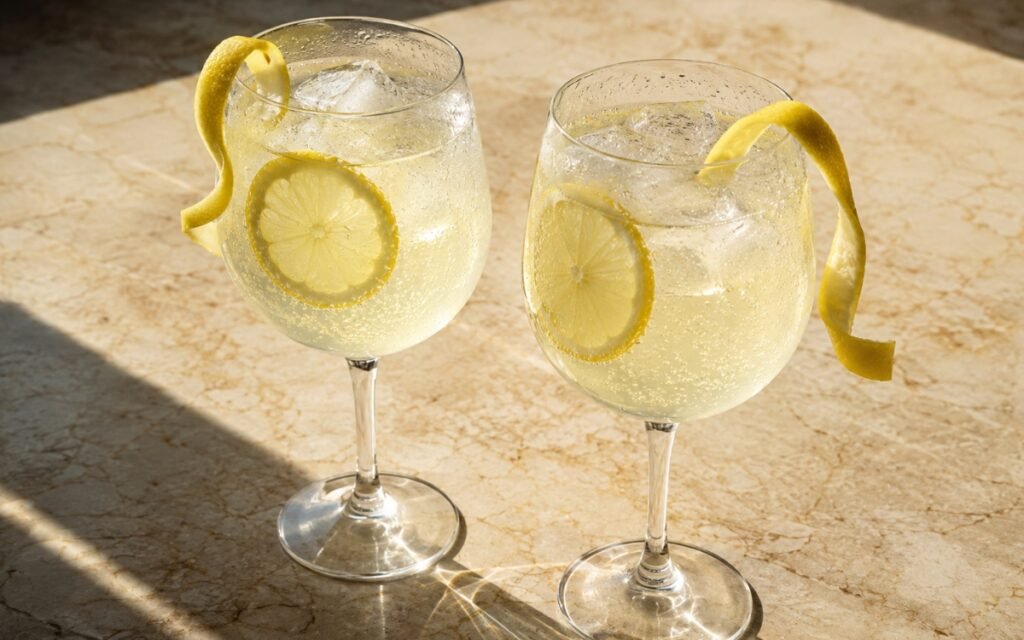
Classic Sparkling Lemonade
Lemon base chilled separately, sparkling water side-poured and gently stirred right before serving — less sugar for carbonation’s sweetness enhancement. Crisp, bright, and fully fizzy.
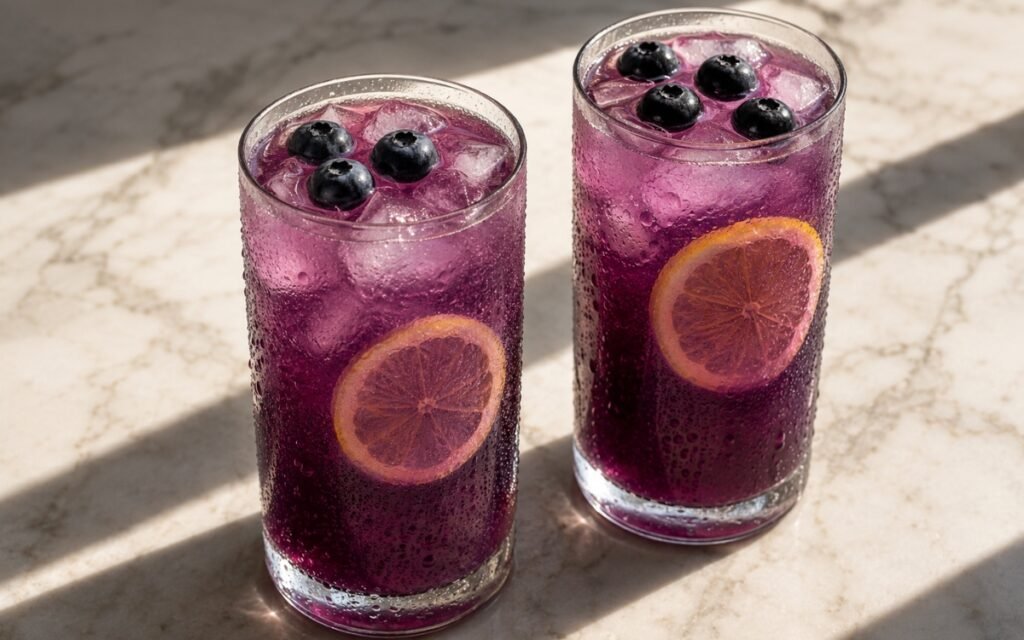
Fresh Blueberry Lemonade
Blueberries simmered with lemon zest and salt for extraction — vivid purple syrup pressed and combined with fresh lemon juice cold. Deeply coloured and tart.

You might also like
You might also like
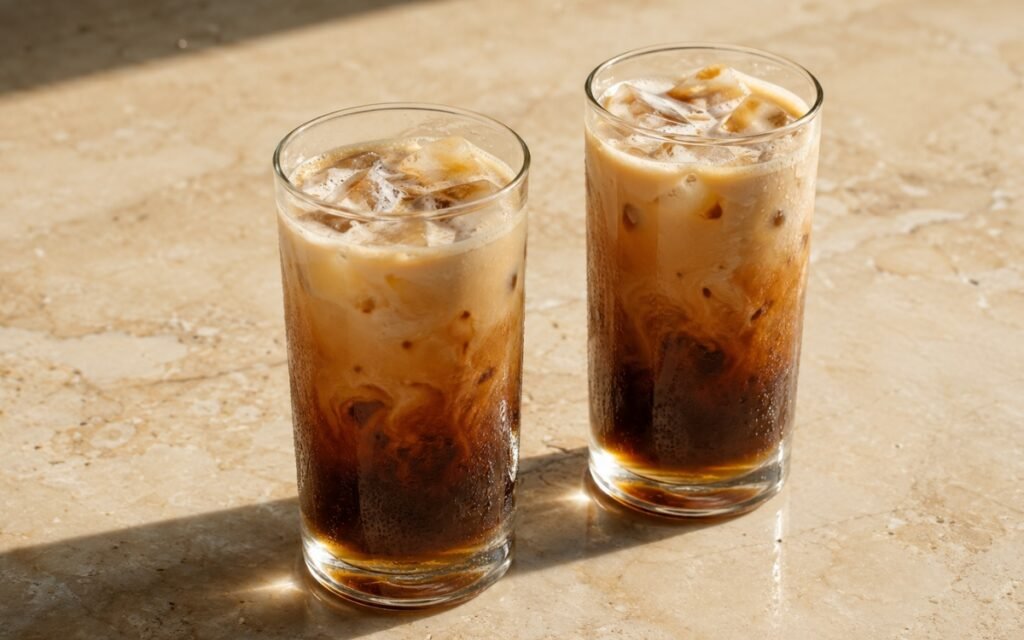
Honey Almondmilk Cold Brew
Strong, chilled cold brew coffee sweetened with honey syrup and softened with a restrained pour of cold almond milk.
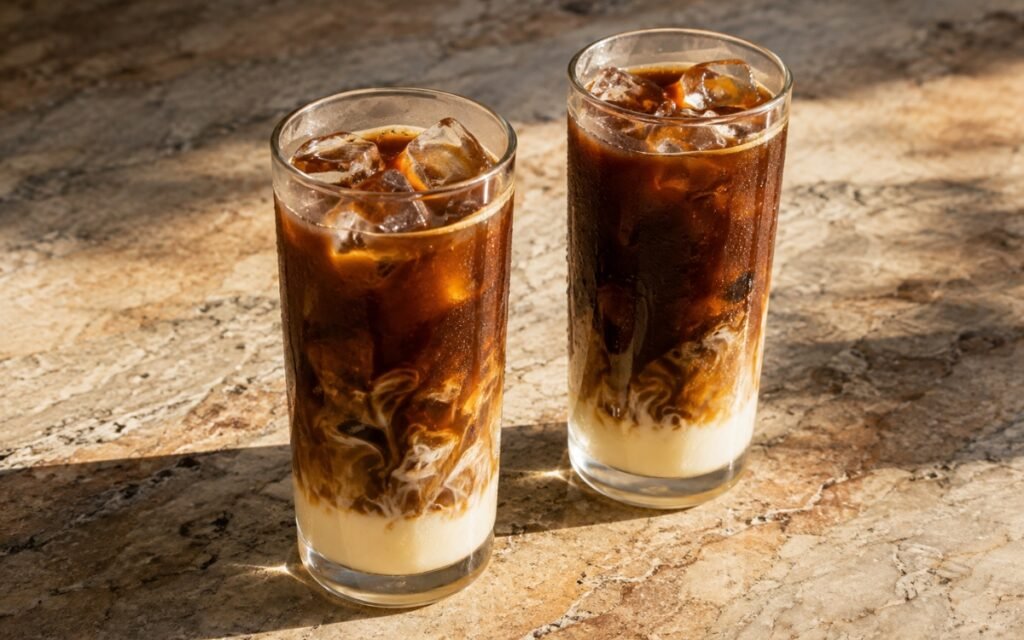
Vietnamese Iced Coffee
Strong dark-roast coffee brewed through a phin filter directly over sweetened condensed milk, poured over crushed ice for the classic layered drink.
Cucumber Lemon Infused Water
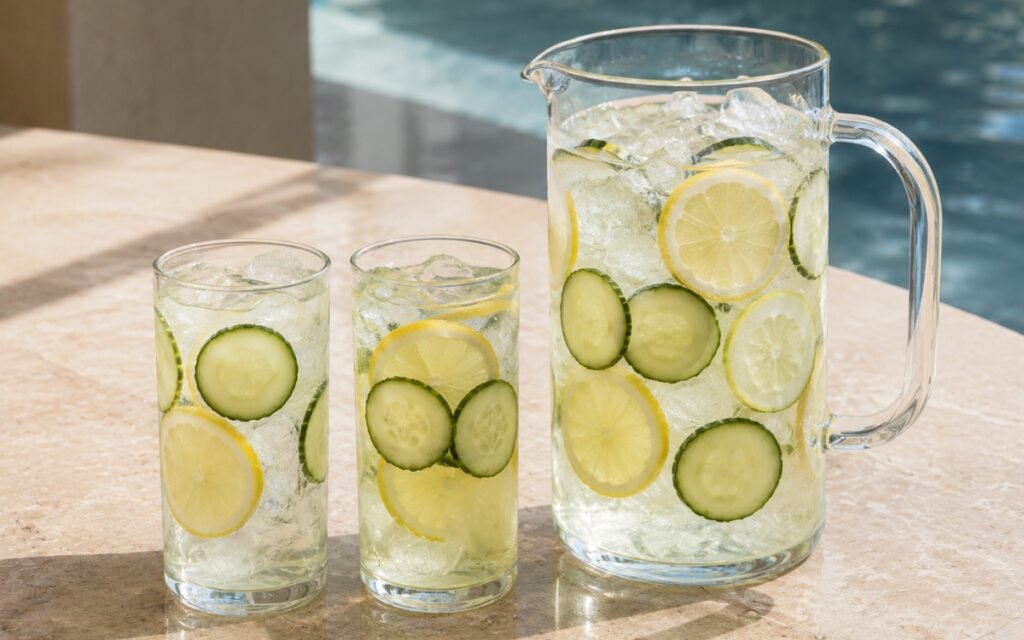
Cucumber lightly crushed and cold-infused with lemon slices in 3L water — removed after 4 hours maximum to prevent bitterness. Clean, cool, and quietly aromatic.
Honey Lemonade
Ingredients
Method
- Finely zest 3 lemons, taking only the yellow outer peel and leaving all white pith behind. Place the zest in a bowl with the honey and stir well. Let it sit for 15–20 minutes so the honey pulls in the lemon oils and aroma. If your honey is very thick, set the bowl over barely warm water for a few minutes just to loosen it slightly. Do not let it get hot — keep it low temperature, just warm enough to make it fluid and easy to mix. Honey’s own natural viscosity is actually what makes it an effective medium for this infusion — its thick, slow-moving texture holds the zest in close, sustained contact, letting the lemon oils steep directly into it over that resting time.
- Juice the lemons until you have 280ml fresh lemon juice. Strain out the seeds. Add the lemon juice to the lemon-honey mixture and whisk until the honey loosens and blends in. The lemon juice’s own acidity and liquid volume are what actually loosen the honey into something pourable and mixable — that combination transforms the thick, infused honey into a genuine liquid base ready to be built into the full lemonade.
- Pour the lemon-honey base into a large pitcher. Add the cold water and stir very well until fully combined. For a cleaner, brighter lemonade, strain the mixture through a fine-mesh sieve into the pitcher, pressing lightly on the zest, then discard the solids. Straining at this stage removes the spent zest pieces after they’ve already given up their aromatic oils to the honey, producing a cleaner final drink without losing any of the flavour that zest already contributed.
- Refrigerate for 30 minutes, or until fully cold. That resting period lets the honey, lemon, and water fully integrate together, producing a more unified flavour than serving the drink immediately after mixing.
- Place ice in tall glasses and slide a thin lemon wheel inside each glass. Pour in the honey lemonade and serve immediately. Serving right after chilling, rather than letting the pitcher sit out, keeps the drink at its coldest and most refreshing right when it’s poured.