Greek Pastitsio
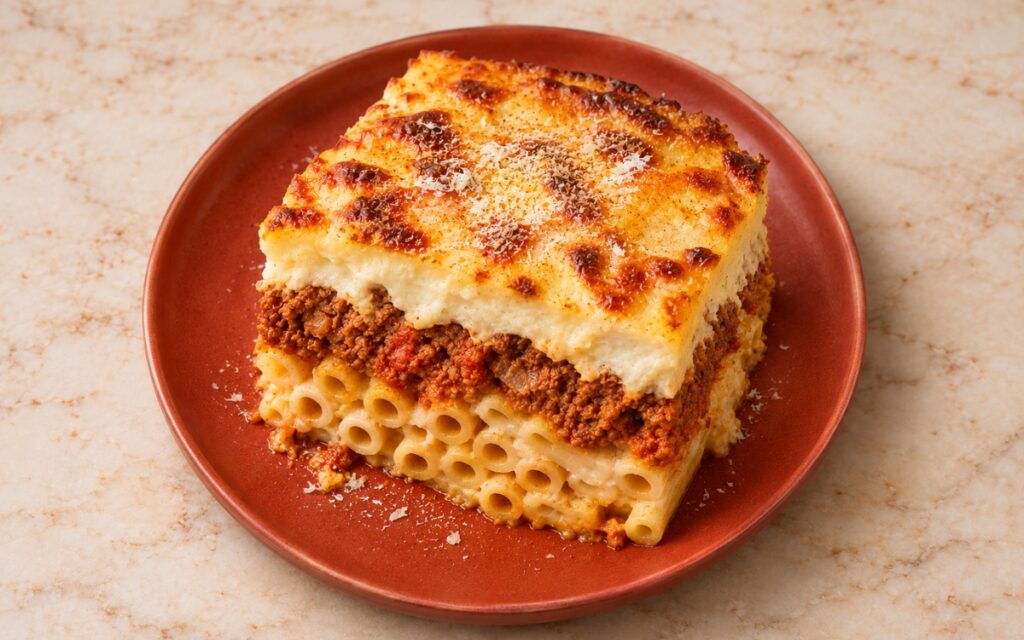
Greek pastitsio is a tall, sliceable baked pasta built in three distinct layers: thick, long tubular pasta lightly bound with egg white and grated Greek cheese, a rich, deeply browned beef ragù simmered with tomato, red wine, and warm cinnamon and allspice, and a thick, velvety béchamel enriched with egg yolks and cheese, baked until the top is deeply golden, the key being the contrast between firm, aligned macaroni, savoury meat, and a creamy, custardy crown. Cooking the pasta two minutes short of tender and binding it with egg whites and cheese, rather than boiling it fully soft, is the technique this whole pastitsio depends on for a base that stays defined and holds its slice — overcooked pasta turns mushy under the weight of the layers, the same finish-cooking-in-the-oven principle used elsewhere in this collection whenever pasta bakes. Reducing the ragù until thick is what stops it flooding the pasta. Resting for 45 minutes is what lets the layers set. The payoff is a pastitsio with real, structured depth — tender tubes, concentrated spiced meat, and a golden, softly set béchamel.
- Prep Time : 45 min
- Total Time : 3 hr 25 min
- Servings : 6
Ingredients
For the Traditional Greek Beef Ragù
- 900g ground beef, preferably 85/15 lean-to-fat ratio
- 250g yellow onions (about 2 medium), finely diced
- 4 garlic cloves, finely minced
- 45ml extra virgin olive oil
- 40g tomato paste
- 400g canned crushed tomatoes
- 150ml dry red wine
- 1 small cinnamon stick, about 5cm long
- 3 whole allspice berries
- 2 bay leaves
- ¼ tsp ground cloves, optional
- 5g granulated sugar, optional, depending on tomato acidity
- 9g fine sea salt, or to taste
- 1 tsp freshly ground black pepper
- 15g fresh flat-leaf parsley, finely chopped
For the Traditional Greek Pastitsio Pasta
- 500g Greek pastitsio macaroni No. 2, or thick, long tubular bucatini
- 2 egg whites, from the eggs used for the béchamel
- 60g finely grated kefalotyri or kefalograviera cheese
- 25ml extra virgin olive oil
- 30g fine salt, for about 4 litres of pasta cooking water
For the Thick Greek Béchamel
- 110g unsalted butter
- 110g all-purpose flour
- 1.1 litres whole milk
- 2 egg yolks, from the eggs used for the pasta
- 100g finely grated kefalotyri, kefalograviera, or Greek graviera cheese
- ½ tsp freshly grated nutmeg
- 6g fine sea salt, adjusted to the saltiness of the cheese
- ¼ tsp ground white pepper
For Assembly and Finishing
- 15g unsalted butter, for greasing the baking dish
- 20g finely grated kefalotyri or kefalograviera cheese, for the top
- 1 small pinch freshly grated nutmeg, optional, for finishing
Directions
- Prepare the Ingredients and Baking Dish
Finely dice the onions, mince the garlic, finely chop the parsley, and measure the tomatoes, paste, wine, and spices. Grate all the Greek cheese and divide it between the pasta, béchamel, and topping portions. Separate the 2 eggs, keeping the whites and yolks in separate small bowls in the refrigerator until needed. Grease the base and sides of a deep 23 × 33cm baking dish with the 15g of butter and set it aside. Having everything ready is what lets the browning, pasta, and sauces be timed so they finish together. - Brown the Ground Beef
Set a large, heavy skillet or Dutch oven over medium-high heat and add about 15ml of the olive oil. Add half the beef in an even layer and leave it undisturbed for 2–3 minutes until the underside forms a deep brown crust, then break it into small, irregular crumbles and cook 3–4 minutes more until most of the moisture has evaporated. Move it to a bowl with its juices and repeat with the remaining beef. That batch browning is what builds the roasted flavour a pale, steamed ragù lacks. - Build the Onion, Garlic, and Tomato Base
Reduce the heat to medium, add the remaining olive oil to the same pan, and cook the diced onions for 6–8 minutes, stirring occasionally, until soft and lightly golden. Stir in the garlic for 30–45 seconds, then the tomato paste for about 2 minutes until it darkens from bright red to deep brick red. Pour in the red wine, scrape the pan thoroughly to release the browned residue, and simmer for 3–5 minutes until the wine has reduced by about half. That reduction is what removes the wine’s raw edge. - Simmer and Reduce the Beef Ragù
Return the beef and its juices to the pan, add the crushed tomatoes, cinnamon stick, allspice, bay leaves, cloves and sugar if using, the salt, and the pepper, and stir well. Bring to a gentle simmer, lower the heat, and cook uncovered for 30–40 minutes, stirring occasionally and breaking up clumps, until the sauce is thick and coats the crumbles heavily. Add a splash of water only if it begins to stick. Remove the whole spices, stir in the parsley, and adjust the seasoning. That reduction is what keeps the ragù from flooding the pasta. - Cook the Tubular Pasta
Bring about 4 litres of water to a vigorous boil, add the 30g salt, and add the 500g pasta, stirring gently during the first minute. Cook for about 2 minutes less than the packet instructs, until it bends without snapping but is still noticeably firm in the centre, taking care not to break the long tubes. Drain thoroughly without rinsing, tip into a wide bowl, drizzle with the 25ml olive oil, and toss gently. Let it cool until warm rather than steaming hot. That early draining is what leaves room for the oven to finish the pasta. - Bind the Pasta with Egg Whites and Cheese
Beat the 2 egg whites lightly with a fork until fluid. Check that the pasta is warm but no longer very hot, scatter over the 60g of cheese, and toss gently. Pour the whites over and turn the strands with two large spoons or clean hands until evenly coated, without crushing the tubes. Move the pasta into the prepared dish, arranging the strands parallel to the long side, spread evenly, and press very gently into a compact, level layer. That binding is what holds the base together when sliced. - Make the Béchamel Roux and Sauce
Warm the 1.1 litres of milk in a saucepan over medium-low heat until hot but not boiling. In a large, heavy pan over medium heat, melt the butter without browning, add the flour, and whisk constantly for 2–3 minutes into a pale, glossy roux. Lower the heat and whisk in about 150ml of milk until a dense paste forms and then smooths, then another 150–200ml, then the rest in several additions. Cook 5–8 minutes, then simmer 1–2 minutes until noticeably thick. That thickness is what makes it set into a tall crown. - Season and Enrich the Béchamel
Take the sauce off the heat and stir in the nutmeg, salt, white pepper, and the 100g of cheese until melted and smooth. Let it cool briefly until it no longer bubbles. Whisk the 2 egg yolks in a small bowl, whisk in 2 tablespoons of béchamel, then 2 more, and pour the tempered yolks back into the pan, whisking until smooth, thick, and glossy. Reserve about 60ml for the ragù and keep the rest warm with cling film on the surface. That tempering is what prevents the yolks from scrambling. - Assemble the Three Distinct Layers
Heat the oven to 190°C conventional / 175°C fan. Check that the pasta lies in parallel strands and that the ragù is thick with no free liquid, then fold the reserved 60ml of béchamel into the meat so it holds together when cut. Spoon the ragù over the pasta and spread it evenly without pressing it into the tubes. Spoon the remaining béchamel over the meat, from the edges inward, and spread it 2–2.5cm thick. Smooth the top, scatter over the 20g of cheese, and add a pinch of nutmeg if you like. That order is what gives the clean three-layer slice. - Bake Until Deeply Golden
Bake on the centre rack at 190°C / 175°C fan for 45–55 minutes, avoiding opening the oven during the first 30 minutes. The béchamel should firm and puff slightly, turning deeply golden with darker toasted patches while the edges bubble gently. Rotate the dish once in the last 15 minutes if it browns unevenly, bake 5–10 minutes longer if the centre is pale, or grill for the final 1–3 minutes with close watching. That gentle heat is what sets the egg-rich topping without drying the pasta. - Rest, Cut, and Serve
Set the dish on a heatproof surface and rest it uncovered for about 45 minutes, leaving a further 10–15 minutes for the cleanest cuts. With a long, sharp knife, cut straight down into 6 squares of two columns by three rows, wiping the blade between cuts. Lift each portion with a wide spatula supporting the pasta base, and serve warm on a plate with the cut face outward, finishing with a little cheese or nutmeg if you like. That long rest is what lets the layers firm.
*Notes :
- Cooking the pasta two minutes short of the packet time deserves genuine recognition as the technique most directly responsible for a base that keeps its tubular shape. The macaroni finishes cooking in the oven while absorbing moisture from the ragù and béchamel, so fully boiled pasta turns soft and mushy under the weight of the layers and the slice loses its defined, circular cross-section.
- Binding the pasta with egg whites and cheese deserves the same attention this technique receives throughout this collection’s other layered baked dishes. The whites coagulate in the oven and glue the strands into a compact, sliceable layer, whereas unbound pasta slides apart when the portion is lifted and leaves a loose pile of tubes beneath the meat and sauce.
- Reducing the ragù until it holds no free liquid deserves genuine respect as the detail most directly responsible for tall, clean slices. Excess liquid seeps into the pasta and softens the béchamel from below during baking, whereas a thick, concentrated sauce stays in its own layer and gives the casserole the three distinct bands that define a good pastitsio.
- Resting the baked dish for about 45 minutes deserves attention as a genuine, checkable readiness cue rather than a loose approximation. The béchamel continues to firm as it cools, the meat layer settles, and the pasta absorbs any remaining moisture, so a sharp knife passes cleanly through whereas slicing immediately lets hot, fluid layers collapse.
Why This Recipe Works
This recipe works because every layer is prepared to carry the weight of the others. Slightly undercooked pasta bound with egg white and cheese holds its aligned tubes, while a deeply browned, thickly reduced ragù adds savoury flavour without flooding the base. A thick béchamel enriched with tempered yolks and cheese sets into a golden, custardy crown in a moderate oven. A long, uncovered rest then firms every layer together, so each square comes out tall, neat, and clearly layered, with firm tubes, rich meat, and a creamy, softly set top.
Ingredient Breakdown
Pasta Cooked Two Minutes Short
The critical technique — it finishes in the oven, so the tubes stay defined instead of turning soft under the layers.
Egg White and Cheese Binder
The structural foundation — the whites set during baking and glue the aligned strands into a firm, sliceable base.
Thickly Reduced Beef Ragù
The critical safeguard — cooking off the liquid keeps the meat layer concentrated and stops it soaking the pasta.
Cinnamon, Allspice, and Cloves
The flavour foundation — a small amount adds the warm Greek aroma without turning the meat sauce sweet.
Thick, Egg-Enriched Béchamel
The finishing technique — the extra flour and tempered yolks make a topping that sets tall and custardy.
Kefalotyri or Kefalograviera
The defining flavour ingredient — a salty, savoury Greek cheese flavours the pasta, the béchamel, and the golden top.
Flavor Structure Explained
This Greek pastitsio follows a layered balance model:
- Firm, tender base (aligned macaroni bound with egg white and cheese)
- Rich, savoury middle (browned beef ragù with tomato and red wine)
- Warm, aromatic background (cinnamon, allspice, bay, and optional cloves)
- Creamy, nutty crown (nutmeg-scented béchamel with egg yolks and cheese)
- Salty, golden finish (grated kefalotyri browned on the surface)
Aligned macaroni forms the firm, tender base, and a browned beef ragù with tomato and red wine gives a rich, savoury middle. Cinnamon, allspice, and bay add a warm, aromatic background, while a thick nutmeg-scented béchamel with egg yolks crowns each square with a creamy, nutty layer. Grated kefalotyri browns on top for a salty, golden finish that ties this Greek pastitsio together.
Common Mistakes to Avoid
- Boiling the Pasta Fully Soft – This turns it mushy under the weight of the layers. Always cook it about 2 minutes less than the packet instructs.
- Leaving the Ragù Wet – This floods the pasta and softens the béchamel from below. Always simmer it until thick, with no significant free liquid.
- Adding the Yolks to Hot Béchamel – This scrambles them into grainy bits. Always cool the sauce briefly and temper the yolks with a little béchamel first.
- Making a Thin Béchamel – This runs into the meat and will not set tall. Always use the full flour proportion and cook it until noticeably thick.
- Cutting the Pastitsio Too Soon – This lets hot, fluid layers collapse. Always rest the dish uncovered for about 45 minutes before cutting.
Variations
Bucatini Version
Use thick Italian bucatini in place of Greek pastitsio macaroni No. 2, which is the closest practical substitute and still gives long, hollow tubes that can be aligned for a clear cross-section.
Graviera Version
Use a milder Greek graviera in the béchamel in place of kefalotyri, which gives a gentler, slightly sweeter topping, while Pecorino Romano is a more assertive option that needs less added salt.
Dark-Spice Version
Include the optional ground cloves in the ragù and a little extra nutmeg in the béchamel, which gives a warmer, more traditional spiced flavour without changing the structure of the three layers.
Make-Ahead Version
Assemble the whole casserole earlier, refrigerate it covered, and bake it later with a slightly longer time, which saves effort on the day while keeping the layers and topping the same.
Storage & Make-Ahead
The ragù can be prepared up to two days in advance and refrigerated, which saves time on the day and lets the spices settle before the layers are assembled and baked.
The whole casserole can also be assembled ahead and refrigerated covered, then baked with a few extra minutes, which is useful when the béchamel and ragù have both been made earlier.
Refrigerate leftover portions promptly in an airtight container for up to 3–4 days, since the egg-enriched béchamel and the meat layer should not sit at room temperature after cooling.
Freeze fully baked, cooled portions wrapped tightly for up to about 3 months, then reheat individual squares covered loosely with foil at 170°C until hot, uncovering for the final minutes.
Rest the baked pastitsio longer than 45 minutes for especially clean slices, then reheat individual portions gently, since a cooler, firmer casserole cuts into taller, neater squares.
Frequently Asked Questions
Why is the pasta cooked two minutes less than the packet instructs?
The pasta finishes cooking in the oven as it absorbs moisture from the layers, so a slightly firm start keeps the tubes defined instead of turning mushy under the weight of the meat and béchamel.
Why are egg whites tossed through the pasta?
The whites set as they bake and bind the aligned strands into a compact layer, so the base holds together when sliced instead of sliding apart into loose tubes beneath the meat.
Why must the ragù be reduced until thick?
A thick, concentrated ragù stays in its own layer, whereas a loose sauce seeps into the pasta and softens the béchamel from below, blurring the three layers and making the portion collapse when cut.
Why does pastitsio need a 45-minute rest before cutting?
Resting lets the béchamel firm as it cools and the meat and pasta layers settle together, so a sharp knife cuts clean squares instead of dragging hot, fluid layers apart.
Are there other classic baked pasta, beef ragù, or Greek side dishes worth trying?
Lasagne alla Bolognese and Slow-Simmered Beef Ragù Pasta both offer other classic meat-sauce pasta directions worth exploring. Baked Three-Cheese Mac and Cheese and Baked Ziti are also worth trying for other baked pasta dishes, while Authentic Greek Village Side Salad offers a fresh Greek salad that suits a rich baked main.
Nutrition Facts
( Per Serving — 1 large square )
- Calories
- ~1100 kcal
- Protein
- 52 g
- Fat
- 52 g
- Carbs
- 96 g
-

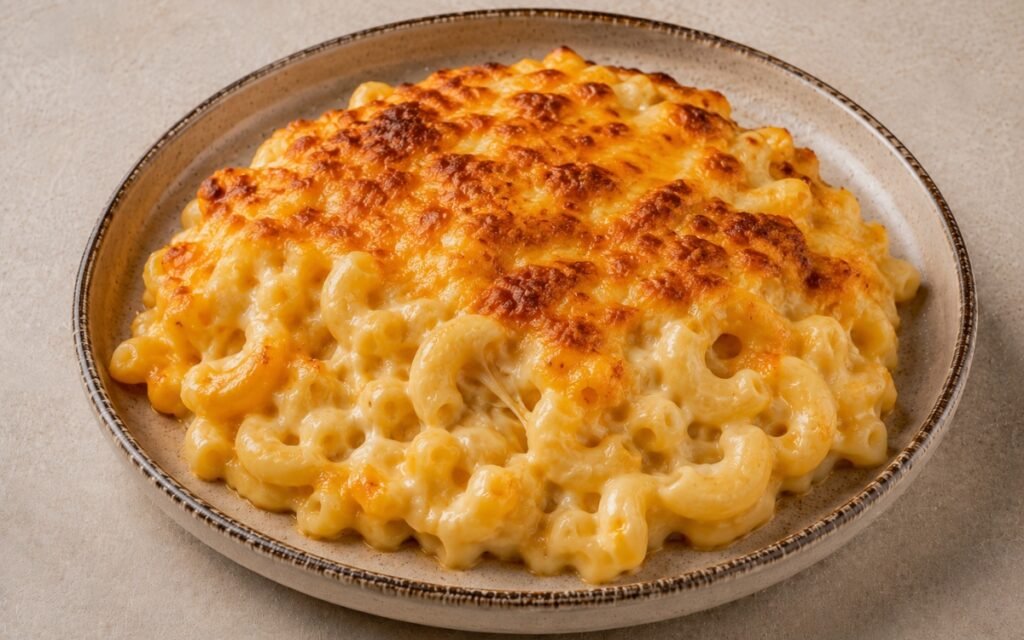
Baked Three-Cheese Mac and Cheese
Cheddar, Gruyère, and mozzarella melted into a béchamel off the heat — layered with underdone macaroni, baked bubbling, broiled golden. Serves 12.
-
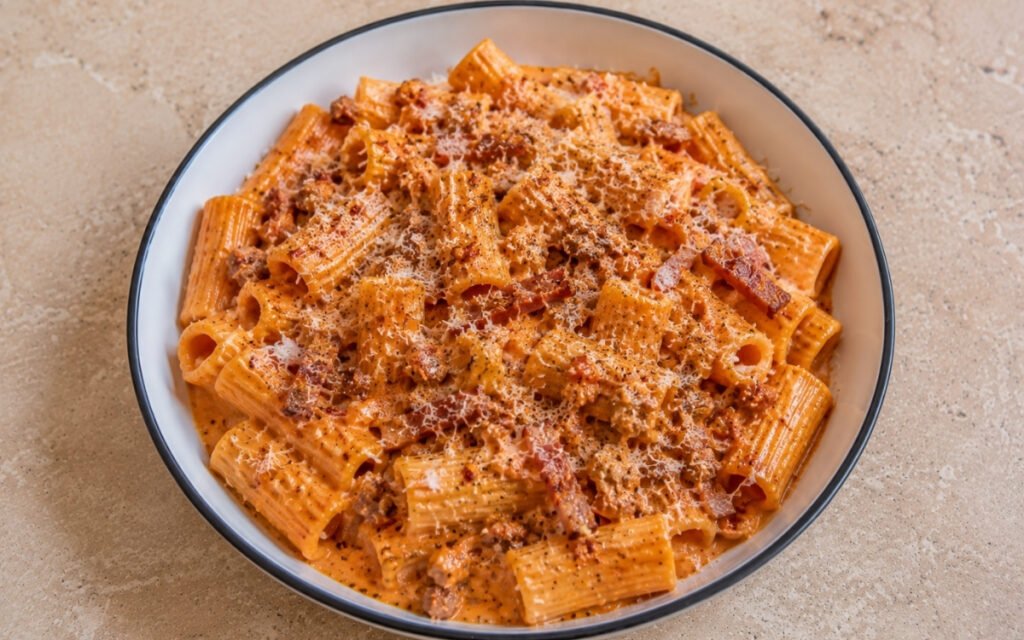
Authentic Pasta alla Zozzona
Glossy rigatoni with crisp guanciale, browned sausage and tomato in a creamy Pecorino sauce, finished with black pepper.
-
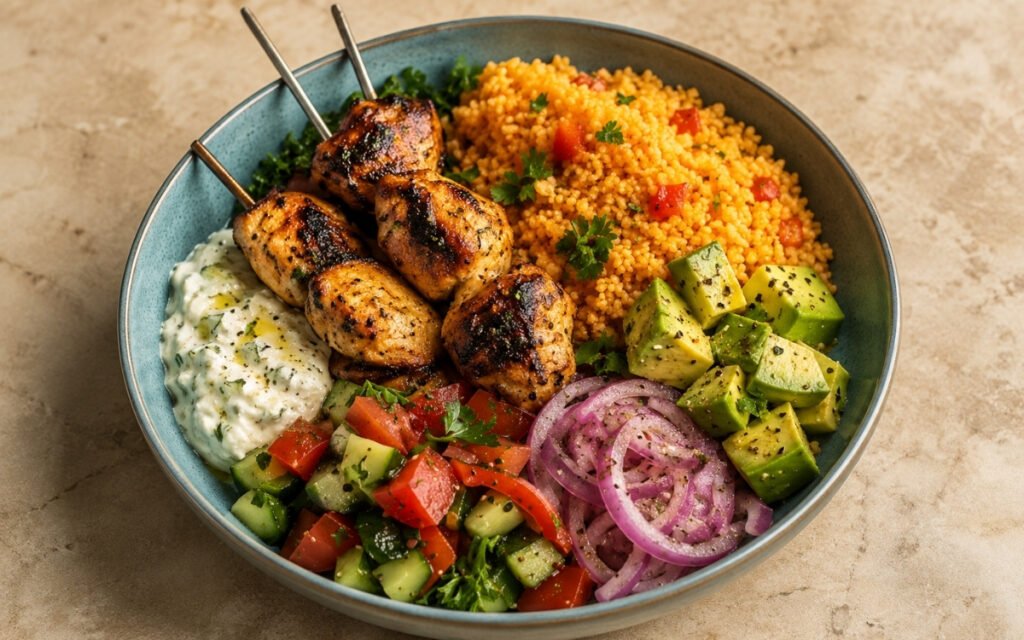
Greek Chicken Souvlaki Mediterranean Bowl
Charred chicken souvlaki over golden couscous with tzatziki, pink pickled onion, tomato-cucumber salad and avocado.
-
Steak Salad Bowl with Garlic Vinaigrette
Seared sirloin over fresh greens with roasted tomatoes, feta, and bold garlic vinaigrette.
-
Authentic Greek Village Side Salad
Authentic Greek village salad with cucumbers, tomatoes, olives, and feta in lemon-oregano dressing.
-
Greek Lemon Rice
Rice rinsed clear, cooked with garlic, broth, and lemon juice undisturbed until fluffy, finished with fresh herbs and zest. Bright and tangy.