
Beet Berry Smoothie
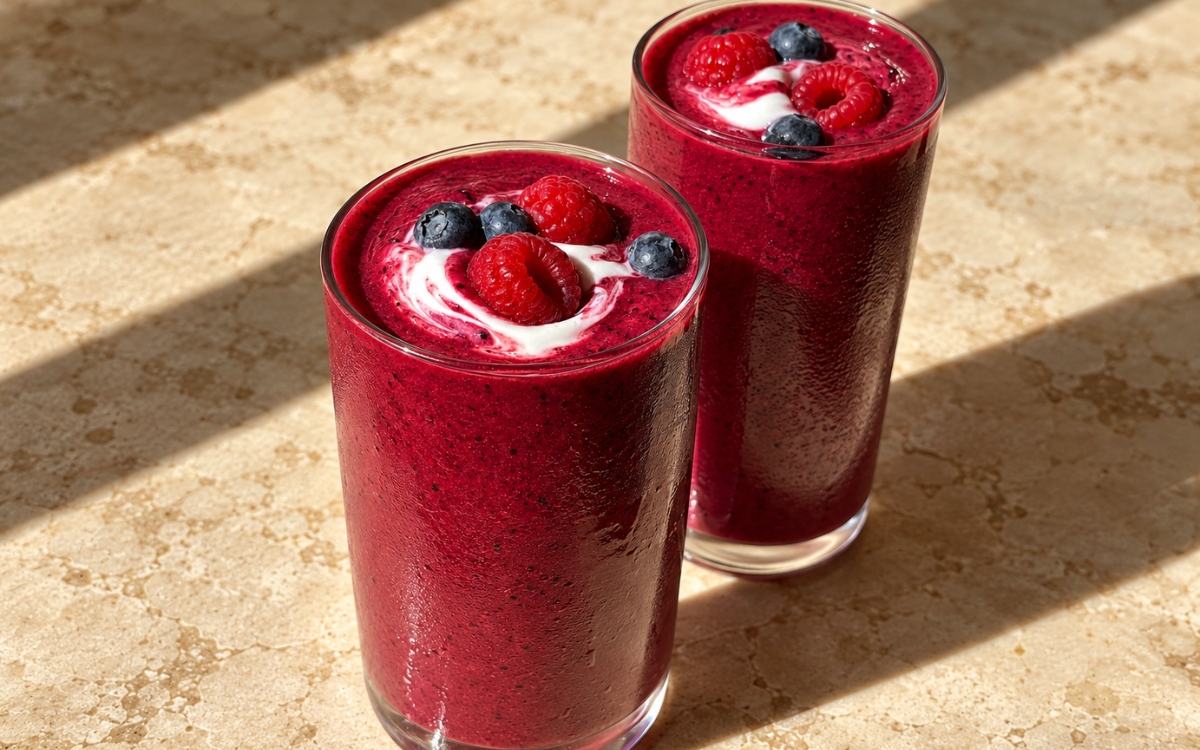
A thick, glossy beet berry smoothie made with cooked beetroot, mixed berries, banana, and Greek yogurt, with an intense ruby-magenta color, gentle earthy sweetness, bright berry acidity, and a creamy, smooth texture. Using genuinely cooked beetroot, rather than raw, is the technique this whole smoothie depends on for real, smooth texture — raw beet can be too fibrous, too earthy, and much harder to blend completely smooth, the same cooked-not-raw principle used elsewhere in this collection whenever a genuinely dense, fibrous root vegetable’s own final smoothness depends on the softening that only real cooking can achieve before it’s ever blended. Building the blender with liquid first is what helps the blades catch the heavier beet and frozen fruit more easily and prevents the mixture from stalling. Tasting carefully before serving is what accounts for how much beet sweetness itself can naturally vary batch to batch. The payoff is a smoothie with real, vivid contrast — thick, glossy, ruby-magenta body with earthy beet depth and bright berry acidity, finished with a yogurt swirl, raspberries, and blueberries.

Prep Time : 15 min
Total Time : 15 min
Servings : 4
15 min
15 min
4
Ingredients
For the Smoothie
• 180g cooked beetroot, peeled and chopped
• 250g mixed berries (blueberries, raspberries, strawberries, or a frozen berry mix)
• 1 medium ripe banana, sliced
• 240g Greek yogurt
• 240ml cold milk (whole milk or any preferred milk)
• 120ml orange juice or apple juice
• 1–2 tbsp honey or maple syrup, optional, to taste
• 1 tsp lemon juice
• ½ tsp vanilla extract, optional
• Pinch of fine salt
• 120–160g ice cubes, if using fresh fruit; if using frozen berries, reduce or omit the ice as needed
For the Garnish
• 4 raspberries
• 8 blueberries
• 4 small spoonfuls or swirls of Greek yogurt
Directions
- Prep the Ingredients
Make sure the beetroot is fully cooked, peeled, and chilled. Cut it into small chunks so it blends smoothly. Wash and hull any fresh berries if needed. Slice the banana. Use cooked beet, not raw, for a classical smoothie texture. Raw beet can be too fibrous, too earthy, and much harder to blend completely smooth. That genuine cooking process softens the beet’s own dense, fibrous structure well beyond what blending alone could ever achieve on raw flesh, giving it the real, smooth texture this classical style depends on. - Build the Blender Base
Add the milk and juice to the blender first. Add the Greek yogurt, cooked beetroot, berries, banana, lemon juice, vanilla if using, honey if using, and the pinch of salt. Blend on high for 30–45 seconds until the mixture is mostly smooth. Putting the liquids in first helps the blades catch the heavier beet and frozen fruit more easily and prevents the mixture from stalling. That specific layering order gives the blades genuine liquid to work with immediately, pulling the dense beet and fruit down into that liquid rather than letting them sit resistant above them. - Blend to the Final Texture
Add the ice if needed, then blend again on high for 30–60 seconds until fully smooth, thick, and glossy. Pause once or twice to scrape down the sides if necessary. If the smoothie is too thick, add a little extra milk, 1–2 tbsp at a time, until it reaches a thick but pourable consistency. The finished smoothie should be vividly ruby-magenta, creamy, and uniform, with only tiny berry flecks visible and no noticeable beet pieces. That specific, checkable target — no noticeable beet pieces — confirms the cooked flesh has genuinely broken down completely into the rest of the smooth mixture. - Taste and Adjust
Taste the smoothie and adjust if needed: add more honey if the berries are tart, add a little more lemon juice for brightness, add a little more milk if it is too dense, add a few more ice cubes if you want it colder and thicker. Beet sweetness varies a lot. Taste before serving so the balance between earthy beet, tart berries, and creamy yogurt is right. That deliberate, final taste check accounts for real, genuine variation in how sweet any given beet actually turns out to be — no fixed recipe amount can fully predict that in advance. - Serve
Divide evenly among 4 glasses, about 250ml per serving. Top each with a small swirl of Greek yogurt, then garnish with raspberries and blueberries. Serve immediately while cold and thick. That immediate serving captures the smoothie at its genuinely thickest, coldest, and most vividly ruby-magenta, before it has any real chance to separate or dull.
*Notes :
- Using genuinely cooked beetroot, rather than raw, deserves recognition as the technique most directly responsible for this smoothie’s real, smooth texture. The recipe’s own explicit warning that raw beet “can be too fibrous, too earthy, and much harder to blend completely smooth” reflects a real, common failure point this one choice protects against from the very start.
- Building the blender with liquid first, before the beet and fruit, deserves genuine attention as a real, functional technique rather than an arbitrary sequence. The recipe’s own explicit note that this order “helps the blades catch the heavier beet and frozen fruit more easily and prevents the mixture from stalling” reflects real, practical understanding of how a blender’s own blades actually work through dense, resistant ingredients.
- Tasting carefully before serving, rather than trusting a fixed recipe amount, deserves genuine respect as the detail responsible for whether this smoothie’s final balance actually lands correctly. The recipe’s own explicit note that “beet sweetness varies a lot” reflects real, honest acknowledgment that no set amount of honey or lemon juice can fully predict what any given beet will actually need.
- Banana’s own presence in this recipe deserves attention as a deliberate, functional ingredient rather than simply an extra fruit. The recipe’s own explicit note that it “softens the earthy beet flavor and helps make the smoothie creamier and more classical in texture” reflects real understanding of how directly that one ingredient shapes the finished drink’s overall character.
Why This Recipe Works
This recipe works because genuinely cooked beetroot is used specifically for its real, smooth texture, protecting against the fibrous, earthy result raw beet would produce. The blender is loaded with liquid first, letting the blades catch the dense beet and fruit more easily. Banana softens the beet’s own earthy flavour, building a creamier, more classical texture. Tasting carefully before serving accounts for how much beet sweetness naturally varies, and serving immediately delivers the smoothie at its most vividly ruby-magenta and thickest.
Ingredient Breakdown
Cooked, Chilled Beetroot
The critical ingredient choice — real cooking softens the beet’s dense, fibrous structure far beyond what blending alone could achieve.
Liquid-First Blender Order
The critical technique — lets the blades catch the heavier beet and fruit more easily, preventing stalling.
Banana
The critical technique — softens the beet’s own earthy flavour, building a creamier, more classical texture.
Checked Blending for Full Smoothness
The critical technique — a specific target of no noticeable beet pieces confirms complete breakdown.
Final Taste-Based Adjustment
The critical technique — accounts for real, genuine variation in how sweet any given beet actually is.
Immediate Serving
The finishing technique — captures the smoothie at its most vividly coloured and thickest.
Flavor Structure Explained
This beet berry smoothie follows a layered balance model:
- Thick, creamy foundation (Greek yogurt, cold milk, orange or apple juice)
- Earthy, sweet depth (cooked beetroot)
- Bright, fruity body (mixed berries, ripe banana)
- Sharp, brightening accent (lemon juice)
- Fresh finishing garnish (yogurt swirl, raspberries, blueberries)
Greek yogurt, cold milk, and orange or apple juice together provide this smoothie’s thick, genuinely creamy foundation. Cooked beetroot contributes real, earthy sweetness and the drink’s own vivid colour. Mixed berries and ripe banana add bright, fruity body, the banana also softening the beet’s own assertive flavour. A touch of lemon juice adds a sharp, brightening accent that keeps the whole drink from tasting flat. A final yogurt swirl, raspberries, and blueberries finish each glass with a fresh, visually striking garnish that completes this vividly coloured, earthy-sweet smoothie.
Common Mistakes to Avoid
- Using Raw Beetroot Instead of Cooked – This leaves the smoothie fibrous, overly earthy, and difficult to blend smooth. Always use fully cooked, chilled beetroot.
- Adding the Beet and Fruit to the Blender Before the Liquid – This can cause the blender to stall against the dense ingredients. Always add the liquid first.
- Skipping the Final Taste Check – This risks an unbalanced smoothie, since beet sweetness varies considerably. Always taste and adjust before serving.
- Omitting the Banana – This leaves the beet’s own earthy flavour more pronounced and the texture less creamy. Always include it for a more classical result.
- Letting the Smoothie Sit Before Serving – This lets it separate and dull slightly. Always serve immediately after blending.
Variations
Vacuum-Packed Beet Version
Use cooked, vacuum-packed beetroot, per the recipe’s own note, as long as it’s plain and not packed in vinegar, for a convenient, equally effective alternative to cooking fresh beets yourself.
Strained, Less-Seedy Version
Strain the blended smoothie if using only raspberries, per the recipe’s own note, for a smoother finish without as many visible seeds.
Extra-Cold Version
Chill the beetroot before blending, per the recipe’s own guidance, keeping the smoothie cold without needing too much additional ice.
Full-Fat Yogurt Version
Use full-fat or 2% Greek yogurt specifically, per the recipe’s own note on it giving the smoothest result, for a richer finished texture.
Storage & Make-Ahead
Cooked, vacuum-packed beetroot works well for this recipe as long as it’s genuinely plain and not packed in vinegar, offering a convenient alternative to cooking fresh beets from scratch.
Frozen berries give the best thick texture and deepest colour, so lean toward those over fresh berries whenever possible for the most vivid, classical result.
Banana softens the earthy beet flavour and helps make the smoothie creamier and more classical in texture, so don’t skip it even though beet and berries are the headline ingredients.
Greek yogurt gives this smoothie real body and tang, with full-fat or 2% yogurt giving the smoothest finished result compared to lower-fat alternatives.
Chill the beetroot before blending so the smoothie stays cold without needing too much ice, and know this smoothie is genuinely best served immediately; if it sits, stir or re-blend briefly before serving.
Frequently Asked Questions
Why does the beetroot need to be cooked rather than used raw?
Raw beet is genuinely too fibrous and earthy for this smoothie’s intended texture, and it’s considerably harder to blend completely smooth. Cooking softens that dense structure far beyond what blending alone could ever achieve.
Why does the liquid need to go into the blender before the beet and fruit?
That order helps the blender’s own blades catch the heavier, denser beet and frozen fruit more easily, preventing the whole mixture from stalling against ingredients that would otherwise sit resistant above the blades.
Why is banana included in a smoothie that’s primarily about beet and berries?
Banana genuinely softens the beet’s own earthy flavour and helps build a creamier, more classical smoothie texture. Without it, the beet’s assertive, earthy character would come through considerably more strongly.
Why is it so important to taste the smoothie before serving rather than trusting the recipe’s fixed amounts?
Beet sweetness varies a great deal from one beet to the next. Tasting carefully before serving is what actually confirms the right balance between the earthy beet, tart berries, and creamy yogurt for that particular batch.
Are there other classic beet, berry, or açaí-forward smoothie recipes worth trying?
Beet Berry Smoothie Bowl offers another classic beet-berry direction worth exploring, in bowl form. Mixed Berry Protein Smoothie and Carrot Orange Ginger Smoothie are also worth trying for other classic vegetable-forward smoothies, and Blackberry Banana Smoothie and Açaí Berry Smoothie Bowl offer other fruit-forward smoothies and bowls worth exploring.
Nutrition Facts
( Per Serving — 250ml )
Calories
~200 kcal
Protein
10 g
Fat
3 g
Carbs
36 g
Calories
~200 kcal
Protein
10 g
Fat
3 g
Carbs
36 g
Related Recipes
Related Recipes
-

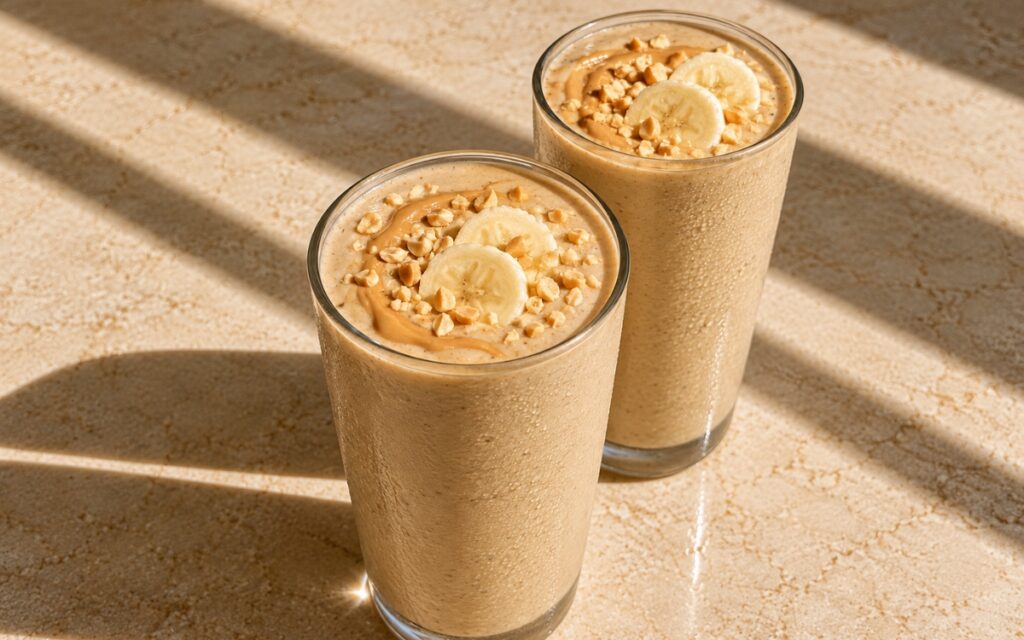
Peanut Butter Banana Protein Smoothie
A thick, creamy peanut butter banana smoothie blended with banana, peanut butter, Greek yogurt and protein powder, finished with peanut butter, peanuts, and banana coins.
-
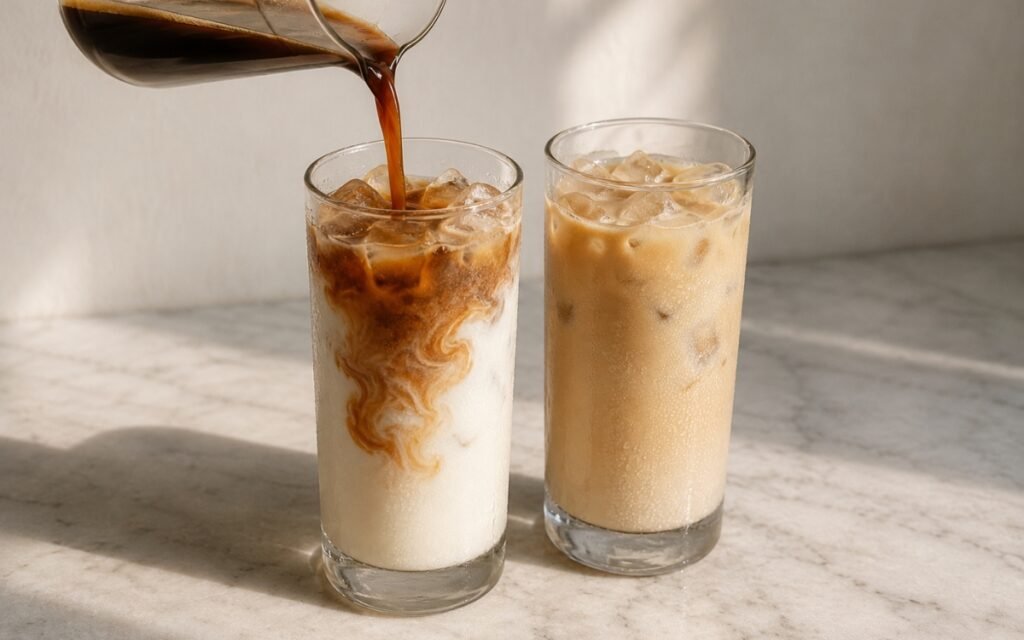
Classic Iced Latte
Cold milk and ice topped with freshly brewed espresso poured slowly for the signature swirl, then stirred into a smooth, milk-forward iced latte.
-
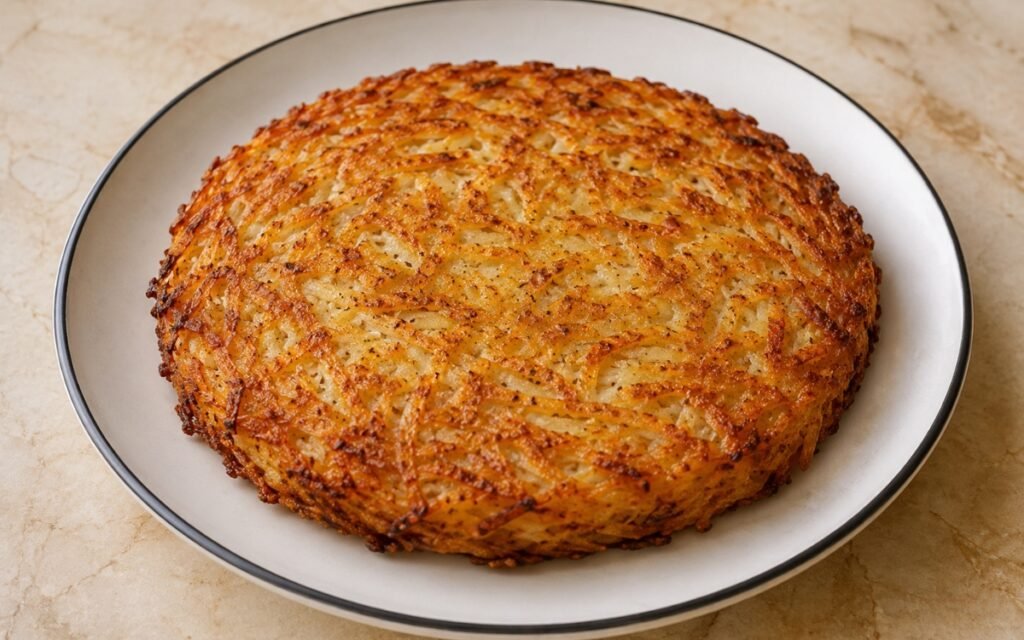
Crispy Hash Brown Potatoes
Shredded potatoes rinsed, wrung completely dry, seasoned, pressed into a cake, fried undisturbed until golden on both sides. Crisp and tender.
You might also like
You might also like
-
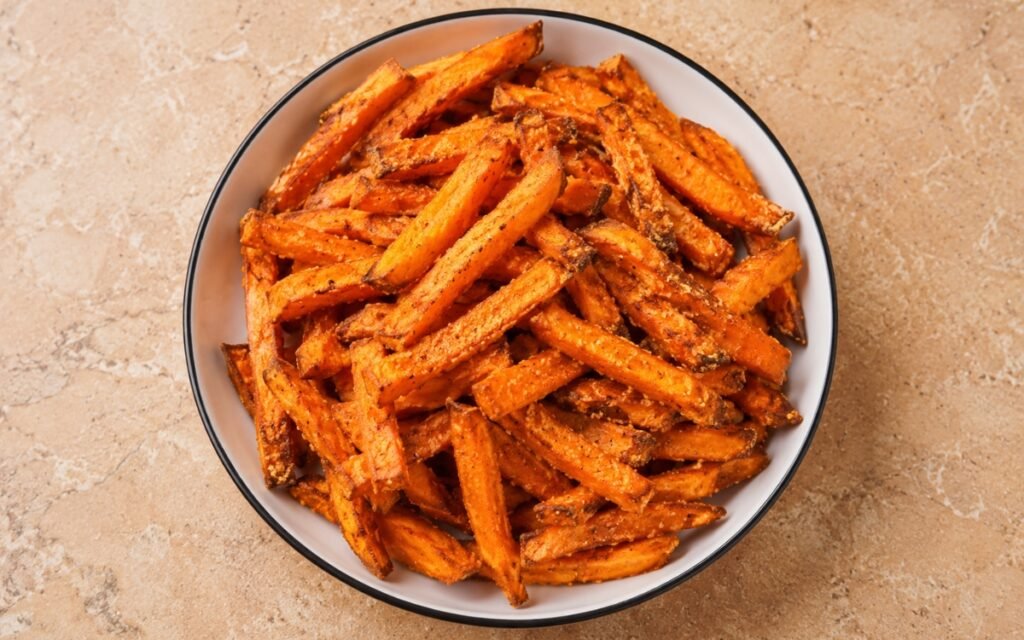
Crispy Sweet Potato Fries
Sweet potatoes soaked, dried, lightly coated in cornstarch, seasoned, and baked until golden and crisp. Sweet, savory, and satisfying.
-
Pear Ginger Pitcher Drink
Cold-infused ripe pears and thinly sliced fresh ginger, both skin-on, with a touch of lemon juice for a pale golden, gently spiced pitcher drink.
-
Açaí Berry Smoothie Bowl
Thick, glossy açaí smoothie bowl built on frozen berries and banana, topped with granola and coconut flakes.
Beet Berry Smoothie
Ingredients
Method
- Make sure the beetroot is fully cooked, peeled, and chilled. Cut it into small chunks so it blends smoothly. Wash and hull any fresh berries if needed. Slice the banana. Use cooked beet, not raw, for a classical smoothie texture. Raw beet can be too fibrous, too earthy, and much harder to blend completely smooth. That genuine cooking process softens the beet’s own dense, fibrous structure well beyond what blending alone could ever achieve on raw flesh, giving it the real, smooth texture this classical style depends on.
- Add the milk and juice to the blender first. Add the Greek yogurt, cooked beetroot, berries, banana, lemon juice, vanilla if using, honey if using, and the pinch of salt. Blend on high for 30–45 seconds until the mixture is mostly smooth. Putting the liquids in first helps the blades catch the heavier beet and frozen fruit more easily and prevents the mixture from stalling. That specific layering order gives the blades genuine liquid to work with immediately, pulling the dense beet and fruit down into that liquid rather than letting them sit resistant above them.
- Add the ice if needed, then blend again on high for 30–60 seconds until fully smooth, thick, and glossy. Pause once or twice to scrape down the sides if necessary. If the smoothie is too thick, add a little extra milk, 1–2 tbsp at a time, until it reaches a thick but pourable consistency. The finished smoothie should be vividly ruby-magenta, creamy, and uniform, with only tiny berry flecks visible and no noticeable beet pieces. That specific, checkable target — no noticeable beet pieces — confirms the cooked flesh has genuinely broken down completely into the rest of the smooth mixture.
- Taste the smoothie and adjust if needed: add more honey if the berries are tart, add a little more lemon juice for brightness, add a little more milk if it is too dense, add a few more ice cubes if you want it colder and thicker. Beet sweetness varies a lot. Taste before serving so the balance between earthy beet, tart berries, and creamy yogurt is right. That deliberate, final taste check accounts for real, genuine variation in how sweet any given beet actually turns out to be — no fixed recipe amount can fully predict that in advance.
- Divide evenly among 4 glasses, about 250ml per serving. Top each with a small swirl of Greek yogurt, then garnish with raspberries and blueberries. Serve immediately while cold and thick. That immediate serving captures the smoothie at its genuinely thickest, coldest, and most vividly ruby-magenta, before it has any real chance to separate or dull.