
Pear Ginger Pitcher Drink
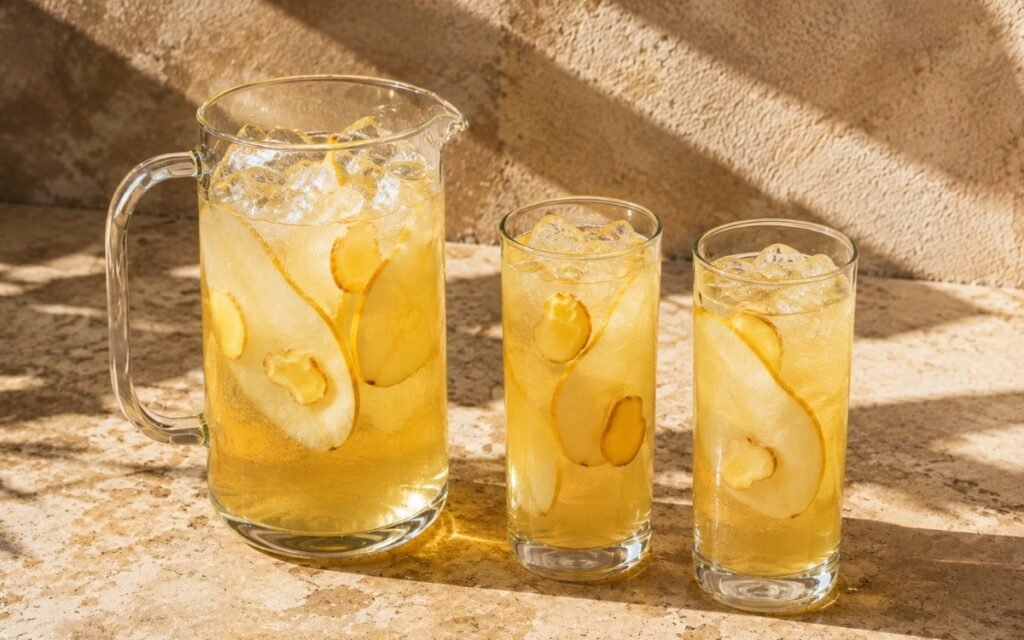
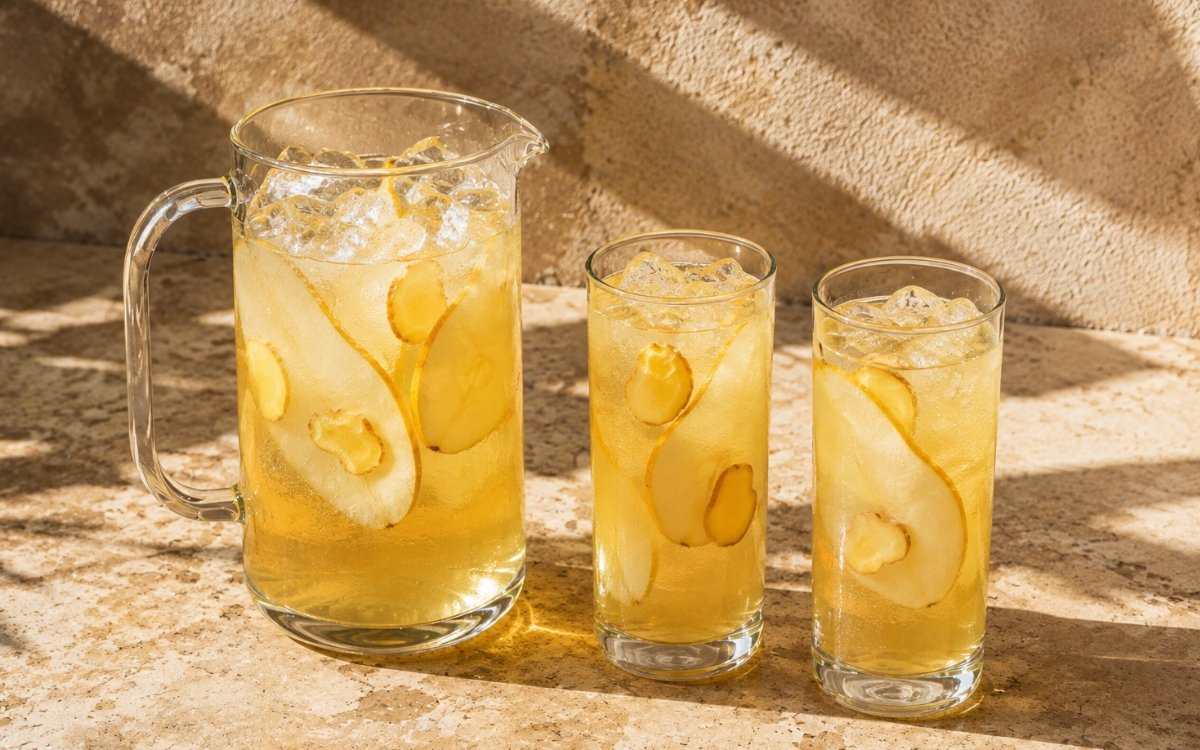
A pale golden pitcher drink with clean pear sweetness and a gentle fresh ginger edge. The pears and ginger are infused cold with the skins left on for fuller flavor, while a small amount of lemon juice keeps the drink bright and helps slow browning. Slicing the ginger very thin, into real coins rather than grated or thick chunks, is the technique this whole drink depends on for a clean, gradual infusion — thin slices expose enough surface area to release flavour steadily over the many-hour window without clouding the water or turning overly sharp, the same thin-and-even-slicing principle used elsewhere in this collection whenever a pungent ingredient needs controlled, gradual extraction. Keeping both the pear and ginger skins on is what carries fuller flavour and colour into the drink than peeled versions would provide. Tasting the infusion at the 4-hour mark, rather than committing blindly to the full 8 hours, is what lets ginger’s own developing warmth be judged directly. The payoff is a pitcher drink that’s genuinely pale golden and clean — pear’s natural sweetness meeting ginger’s gentle, controlled warmth.
Prep Time : 20 min
Infusion Time : 4-8 hr
Servings : 16
20 min
4-8 hr
16
Ingredients
For the Pear Ginger Base
• 1.4kg ripe but firm pears, well washed, skin on
• 90 to 120g fresh ginger, well scrubbed, unpeeled
• 160 to 220g granulated sugar or mild honey, to taste — this one on Amazon
• 80ml fresh lemon juice
• 1 small pinch fine sea salt
• 3.6 to 3.8 liters cold filtered water
For the Pitcher
• 500 to 700g ice cubes, plus more for serving
• Extra thin pear slices, optional
• Extra thin ginger slices, optional
This post may contain affiliate links. As an Amazon Associate I earn from qualifying purchases, at no additional cost to you.
Directions
- Prepare the Pears
Wash the pears very well because the skins stay on. Core them and slice thinly, about 3 to 4mm thick. Set aside about 400g pear slices for the final pitcher. Roughly chop the remaining 1kg pears for the base. Use pears that are ripe enough to smell sweet, but still firm enough to slice cleanly. Overripe pears cloud the drink and break down too fast. Choosing pears at exactly this ripeness window — sweet-smelling but still firm — protects the finished drink from two directions at once: underripe fruit wouldn’t carry enough natural sweetness, while overripe fruit breaks down too quickly and clouds the water well before the infusion is complete. - Prepare the Ginger
Scrub the ginger well and slice it very thinly into coins. Keep the peel on. Thin slices give a clean, gradual ginger infusion. Grated ginger would make the drink cloudy and too sharp. Slicing this thin gives the ginger considerably more exposed surface area relative to its total mass — that greater surface area is exactly what lets it release flavour steadily and predictably over many hours, rather than sitting largely inert like a thick chunk would, or overwhelming the drink immediately the way grated ginger’s much larger total exposed surface would. - Start the Cold Extraction
Add the chopped pears, ginger slices, sugar or honey, lemon juice, and pinch of salt to a large pitcher or container. Pour over 3.6 liters cold filtered water and stir well. Press the pears lightly with a spoon just enough to help them release flavor, but do not mash them into pulp. That light press ruptures just enough of the pear’s own cell structure to help its flavour begin releasing into the surrounding water, without breaking it down so far that the drink turns cloudy with fine fruit particles. - Cold Infuse
Cover and refrigerate for 4 to 8 hours. Taste after 4 hours. If the ginger is already strong enough, strain the base earlier. If you want a slightly warmer ginger note, continue infusing closer to 8 hours. The ginger controls the edge of the drink. Longer infusion means more spice, not necessarily more pear flavor. That specific distinction — longer infusion primarily builds ginger intensity rather than pear character — is exactly why tasting at 4 hours matters directly, since it lets the ginger’s own developing strength be judged and stopped at precisely the point that suits personal preference. - Strain the Base
Strain the infused drink through a fine-mesh sieve into a clean pitcher. Press the pears lightly, but do not force pulp through. Discard the spent fruit and ginger. Pressing only lightly here, consistent with the gentle handling throughout the recipe, keeps the finished drink genuinely clean rather than grainy or cloudy with forced-through pear pulp. - Build the Serving Pitcher
Add the reserved thin pear slices and a few fresh ginger slices to the strained drink. Add ice just before serving. Taste and adjust: more cold water if too strong; a little more lemon juice if flat; a little more sugar or honey if the pears were not sweet enough. Final volume should be about 4 liters. This final tasting checkpoint matters directly given how much both pear sweetness and ginger’s developed strength can vary — building in that adjustment stage accounts for that natural variability rather than assuming a fixed recipe always lands at the same balance. - Serve
Fill glasses with ice. Pour in the pear ginger drink and include a few pear slices in each glass. Serve very cold. Adding fresh pear slices at this final stage, alongside the drink itself, keeps the visual presentation looking genuinely crisp rather than relying only on fruit that’s already spent hours infusing.
*Notes :
- Slicing the ginger genuinely thin deserves recognition as the technique most directly responsible for whether this drink develops evenly over its long infusion window. Ginger’s own pungent compounds release from its exposed cut surfaces, and thin slices expose far more of that surface relative to the root’s total volume than thick chunks would — that difference is what allows a clean, gradual, predictable release of flavour rather than either an underdeveloped or unpredictably harsh result.
- Choosing pears at that specific ripeness window — sweet-smelling but still genuinely firm — deserves the same attention this collection gives to fruit ripeness throughout its other fresh-fruit infusions. That firmness matters directly here because this is a multi-hour, sometimes overnight infusion; fruit that’s already soft when it goes into the water has considerably less structural integrity left to survive that extended contact without breaking down and clouding the drink.
- Tasting the infusion specifically at the 4-hour mark, rather than committing blindly to the full range, deserves genuine respect given the recipe’s own explicit distinction between how longer infusion affects ginger versus pear. Since extended time primarily builds ginger’s own intensity rather than adding meaningfully more pear flavour, that tasting checkpoint is a real, functional tool for controlling the drink’s final character rather than a vague suggestion.
- Keeping both the pear and ginger skins on throughout deserves recognition as a deliberate choice for fuller flavour and colour, consistent with similar peel-on techniques used elsewhere in this collection. The recipe’s own explicit clarification that the lemon juice exists to brighten the pear and slow oxidation, not to make the drink lemonade-style, is worth taking seriously — that distinction protects the drink’s actual identity as pear-and-ginger-forward rather than citrus-led.
Why This Recipe Works
This recipe works because the ginger is sliced genuinely thin, giving it enough exposed surface area to release flavour steadily and evenly over the long infusion window. Pears chosen at exactly the right ripeness — sweet but still firm — hold their structure through that extended contact rather than clouding the water.
Tasting specifically at the 4-hour mark lets ginger’s developing intensity, the drink’s primary variable over time, be controlled precisely. Keeping both skins on throughout carries fuller flavour and colour into the finished drink, and a final tasting checkpoint accounts for real variability in both pear sweetness and ginger strength.
Ingredient Breakdown
Very Thinly Sliced Fresh Ginger
The critical technique — thin coins expose maximum surface area, letting flavour release steadily and evenly over many hours.
Ripe but Firm Pears (Skin On)
The sweet foundation — chosen at exactly the ripeness window that holds structure through extended infusion without clouding the drink.
Light Pressing (Not Mashing)
The gentle technique — releases flavour from both pear and ginger without breaking either down enough to cloud the water.
4-Hour Tasting Checkpoint
The critical control — lets ginger’s developing intensity, the drink’s primary time-based variable, be judged and stopped precisely.
Fresh Lemon Juice (Brightening, Not Citrus-Forward)
The finishing touch — keeps the drink bright and slows oxidation without shifting its identity toward lemonade.
Flavor Structure Explained
This pear ginger pitcher drink follows a layered balance model:
- Clean sweet foundation (ripe but firm pears, skin on)
- Gentle warming depth (very thinly sliced, cold-infused fresh ginger)
- Bright anti-oxidation edge (fresh lemon juice)
- Cool refreshing structure (cold water, ice)
Ripe but firm pears, skin left on, provide this drink’s clean, genuinely sweet foundation, chosen specifically to hold structure through the long cold infusion. Very thinly sliced fresh ginger contributes gentle, gradually developing warming depth, its own intensity directly controlled by the tasting checkpoint. Fresh lemon juice brightens the whole drink and helps slow oxidation, without shifting its identity toward a citrus-forward drink. Cold water and ice tie every layer together into one pale golden, refreshing pitcher drink.
Common Mistakes to Avoid
- Slicing the Ginger Too Thick or Grating It – Thick slices extract too slowly, while grated ginger clouds the water and turns overly sharp. Always slice it very thin, into coins.
- Using Overripe Pears – These cloud the drink and break down too fast. Always use pears that are ripe enough to smell sweet but still firm.
- Skipping the 4-Hour Taste Check – This risks the ginger developing more intensity than preferred. Always taste at that mark and strain earlier if needed.
- Mashing the Pears Into Pulp – This clouds the drink and produces a grainy texture. Always press only lightly.
- Treating the Lemon Juice as the Main Flavour – This shifts the drink’s identity away from pear-and-ginger. Always use it only to brighten and slow oxidation, as intended.
Variations
Stronger Ginger Version
Infuse closer to the full 8 hours for a more pronounced, warming ginger note.
Lighter Ginger Version
Strain at the 4-hour mark for a more delicate, subtle ginger presence.
Honey-Sweetened Version
Substitute mild honey for granulated sugar, per the recipe’s own guidance.
Sparkling Version
Top each glass with a splash of chilled soda water just before serving for light effervescence.
Storage & Make-Ahead
Best served the same day, but it can be kept refrigerated for up to 24 hours.
Remove the ginger after the infusion window so the drink does not become too spicy.
The strained base can be made ahead and refrigerated, with fresh pear and ginger slices added closer to serving.
Frequently Asked Questions
Why does the ginger need to be sliced so thin rather than grated or left in thicker pieces?
Thin slices expose considerably more surface area relative to the ginger’s total volume, letting flavour release steadily and evenly. Grated ginger clouds the water and extracts too sharply, while thick chunks release flavour too slowly and unevenly.
Why do the pears need to be ripe but still firm rather than fully soft?
This is a multi-hour infusion, and fruit that’s already soft when added has considerably less structural integrity to survive that extended contact without breaking down and clouding the water.
Why does the drink need to be tasted specifically at the 4-hour mark?
Longer infusion primarily builds ginger’s own intensity rather than adding meaningfully more pear flavour. Tasting at 4 hours is a real, functional way to control the drink’s final character based on that specific dynamic.
Why is the lemon juice included if this isn’t meant to be a lemonade-style drink?
The lemon juice’s role here is specifically to brighten the pear’s flavour and slow oxidation, not to add citrus character. That distinction protects the drink’s actual identity as pear-and-ginger-forward.
Are there other pear, ginger, or gently spiced fruit drinks worth trying?
Pear Lemonade and Pear Ginger Sparkler Mocktail both offer other pear-forward drink directions worth exploring. Peach Ginger Lemonade is also worth trying for a related, ginger-forward stone fruit drink, and Apple Lemonade offers another orchard-style fruit lemonade worth exploring.
Nutrition Facts
( per serving )
Calories
~80 kcal
Protein
0 g
Fat
0 g
Carbs
20 g
Calories
~80 kcal
Protein
0 g
Fat
0 g
Carbs
20 g
Related Recipes
Related Recipes

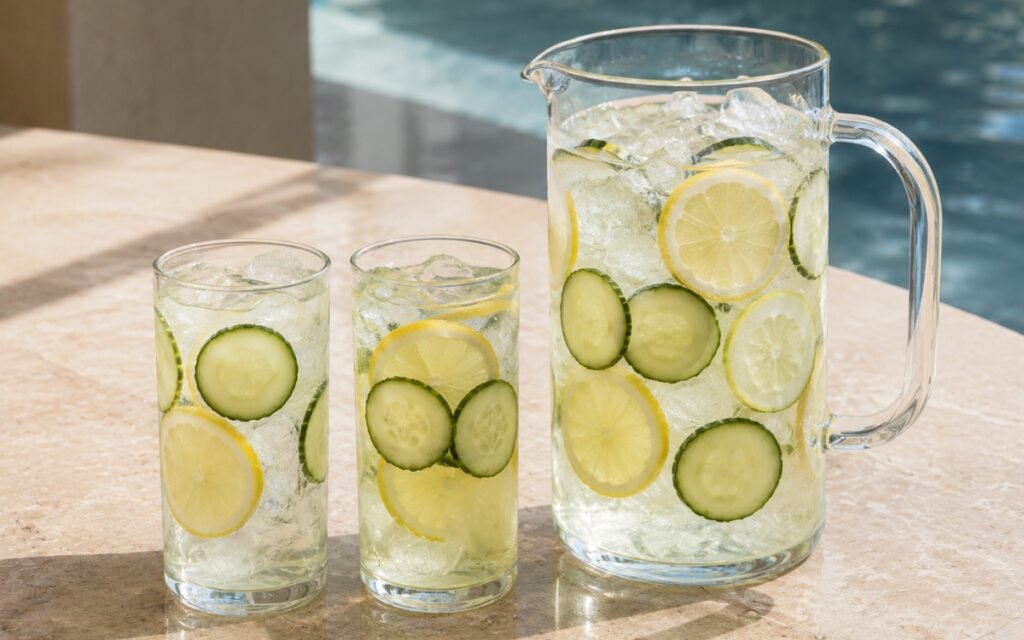
Cucumber Lemon Infused Water
Cucumber lightly crushed and cold-infused with lemon slices in 3L water — removed after 4 hours maximum to prevent bitterness. Clean, cool, and quietly aromatic.
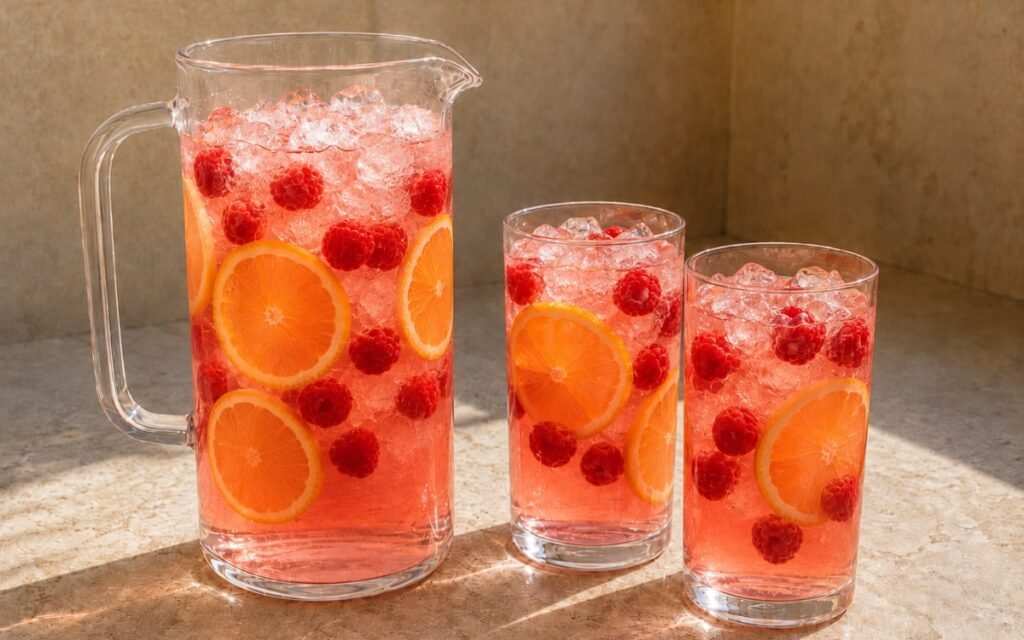
Raspberry Orange Infused Water
Orange pulp and raspberries very lightly pressed — whole fruit cold-infused in 3L water for 1–4 hours, removed. Warm coral-pink, fragrant, and hydrating.
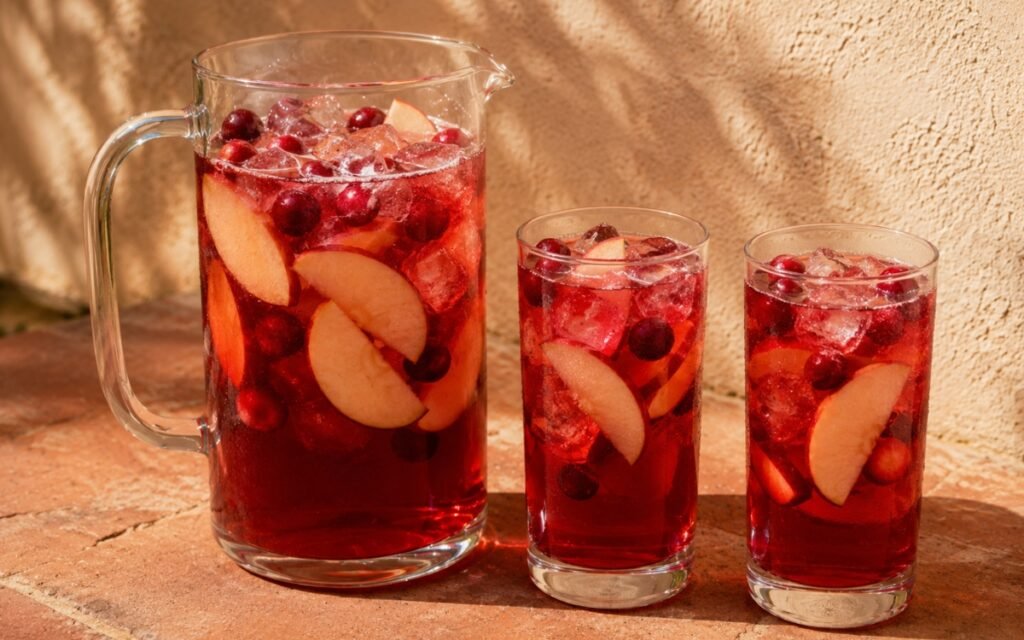
Apple Cranberry Pitcher Drink
Skin-on apples and cranberries with one cinnamon stick simmered 8–10 minutes in light brown sugar syrup — strained, combined with apple juice, cold water, chilled. Crisp and tart.
You might also like
You might also like
Cucumber Lemonade
Cold-extracted lemon zest and juice combined with smooth strained cucumber juice for a light, pale green, refreshing lemonade.
Tamarind Lemonade
Cold-extracted lemon zest and juice combined with a gently extracted, deep amber tamarind base for a vivid, tangy lemonade.
Honey Lemonade
Fresh lemon juice and honey-infused lemon zest combined with cold water for a simple, golden lemonade.
Pear Ginger Pitcher Drink
Ingredients
Method
- Wash the pears very well because the skins stay on. Core them and slice thinly, about 3 to 4mm thick. Set aside about 400g pear slices for the final pitcher. Roughly chop the remaining 1kg pears for the base. Use pears that are ripe enough to smell sweet, but still firm enough to slice cleanly. Overripe pears cloud the drink and break down too fast. Choosing pears at exactly this ripeness window — sweet-smelling but still firm — protects the finished drink from two directions at once: underripe fruit wouldn’t carry enough natural sweetness, while overripe fruit breaks down too quickly and clouds the water well before the infusion is complete.
- Scrub the ginger well and slice it very thinly into coins. Keep the peel on. Thin slices give a clean, gradual ginger infusion. Grated ginger would make the drink cloudy and too sharp. Slicing this thin gives the ginger considerably more exposed surface area relative to its total mass — that greater surface area is exactly what lets it release flavour steadily and predictably over many hours, rather than sitting largely inert like a thick chunk would, or overwhelming the drink immediately the way grated ginger’s much larger total exposed surface would.
- Add the chopped pears, ginger slices, sugar or honey, lemon juice, and pinch of salt to a large pitcher or container. Pour over 3.6 liters cold filtered water and stir well. Press the pears lightly with a spoon just enough to help them release flavor, but do not mash them into pulp. That light press ruptures just enough of the pear’s own cell structure to help its flavour begin releasing into the surrounding water, without breaking it down so far that the drink turns cloudy with fine fruit particles.
- Cover and refrigerate for 4 to 8 hours. Taste after 4 hours. If the ginger is already strong enough, strain the base earlier. If you want a slightly warmer ginger note, continue infusing closer to 8 hours. The ginger controls the edge of the drink. Longer infusion means more spice, not necessarily more pear flavor. That specific distinction — longer infusion primarily builds ginger intensity rather than pear character — is exactly why tasting at 4 hours matters directly, since it lets the ginger’s own developing strength be judged and stopped at precisely the point that suits personal preference.
- Strain the infused drink through a fine-mesh sieve into a clean pitcher. Press the pears lightly, but do not force pulp through. Discard the spent fruit and ginger. Pressing only lightly here, consistent with the gentle handling throughout the recipe, keeps the finished drink genuinely clean rather than grainy or cloudy with forced-through pear pulp.
- Add the reserved thin pear slices and a few fresh ginger slices to the strained drink. Add ice just before serving. Taste and adjust: more cold water if too strong; a little more lemon juice if flat; a little more sugar or honey if the pears were not sweet enough. Final volume should be about 4 liters. This final tasting checkpoint matters directly given how much both pear sweetness and ginger’s developed strength can vary — building in that adjustment stage accounts for that natural variability rather than assuming a fixed recipe always lands at the same balance.
- Fill glasses with ice. Pour in the pear ginger drink and include a few pear slices in each glass. Serve very cold. Adding fresh pear slices at this final stage, alongside the drink itself, keeps the visual presentation looking genuinely crisp rather than relying only on fruit that's already spent hours infusing.