
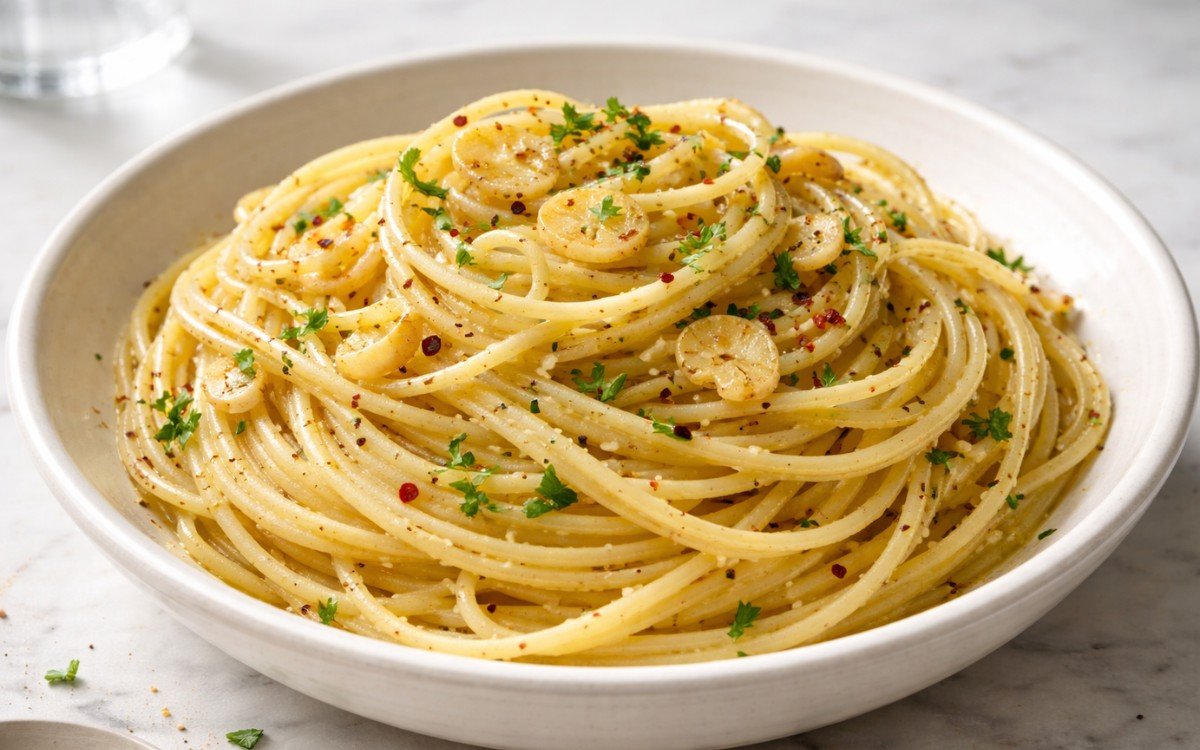
4-Ingredient Aglio e Olio Pasta
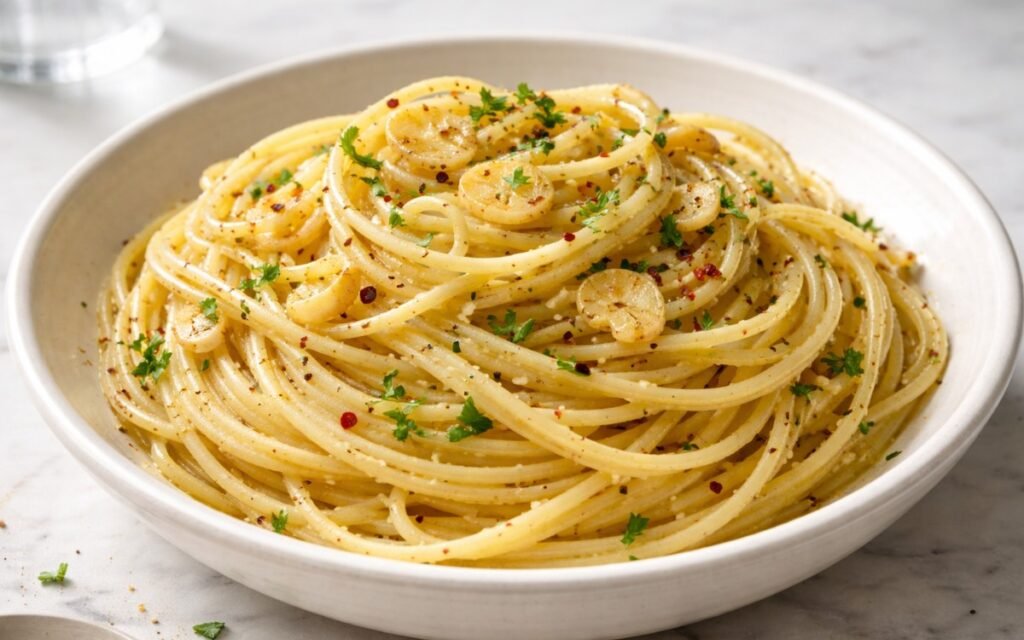
This classic Roman pasta proves that simplicity creates magic—just spaghetti, garlic, olive oil, and red pepper flakes transform into a silky, fragrant masterpiece in 20 minutes. The secret lies in the technique: paper-thin garlic slices gently coaxed to golden perfection, then emulsified with starchy pasta water to create a glossy coating that clings to every strand. It’s minimalist Italian cooking at its finest, where quality ingredients and proper execution deliver extraordinary flavor.
Prep Time : 5 min
Cook Time : 15 min
Servings : 4
5 min
15 min
4
Ingredients
For the Pasta
• 450g spaghetti or spaghettoni — this one on Amazon
• 15g kosher salt (for pasta water)
For the Sauce
• 120ml extra-virgin olive oil (preferably Sicilian or Ligurian)
• 40g garlic cloves (about 10-12 cloves), sliced paper-thin
• 3g red pepper flakes (about 1½ teaspoons)
For Finishing
• 20g fresh flat-leaf parsley, roughly chopped (optional but traditional)
• Extra-virgin olive oil for drizzling
This post may contain affiliate links. As an Amazon Associate I earn from qualifying purchases, at no additional cost to you.
Directions
- Cook the Pasta
Bring 4 liters of water to a rolling boil in your largest pot. Add 15g kosher salt—the water should taste like the sea. Add 450g spaghetti and stir immediately to prevent clumping. Cook until 2 minutes shy of package directions for al dente (typically 7-8 minutes total). Reserve 240ml pasta cooking water before draining. - Prepare the Garlic
While pasta cooks, slice 40g garlic cloves lengthwise into thin, translucent sheets using a sharp knife or mandoline—uniformity ensures even cooking without burning. This is critical for authentic aglio e olio. - Create the Garlic Oil Base
About 4 minutes before pasta is ready, heat 120ml olive oil in your largest skillet over medium-low heat. Add sliced garlic and 3g red pepper flakes. Cook gently, swirling pan frequently, until garlic turns pale golden and fragrant, about 3-4 minutes. Watch carefully—garlic should sizzle softly but never smoke. If it browns too quickly, pull pan off heat momentarily. - Build the Emulsion
When garlic reaches a light champagne color with crispy edges, add 120ml reserved pasta water to the skillet (it will sputter dramatically—this is expected). Swirl vigorously to create a cloudy emulsion. The starch from pasta water will help sauce cling to noodles. - Toss and Emulsify
Using tongs, transfer pasta directly from pot to skillet (some clinging water is beneficial). Increase heat to medium-high. Toss pasta continuously for 90 seconds, adding more pasta water 30ml at a time if mixture seems dry. The goal is a glossy, creamy coating that clings to each strand—not oily or watery. - Finish and Serve
Kill the heat. Add 20g chopped parsley if using, and toss 10 more seconds. The residual heat will wilt the parsley while preserving its bright color and fresh flavor. Taste and adjust salt if needed. Serve immediately in warmed bowls, drizzling each portion with a thin stream of your best finishing olive oil. Never add cheese—it’s considered sacrilege in this Roman classic.
*Notes :
- The emulsion is everything: Vigorous tossing with starchy pasta water creates a creamy, unified sauce without cream. If sauce breaks and looks oily, add a splash more pasta water and toss aggressively over heat to re-emulsify.
- Garlic slicing technique matters: Paper-thin slices cook evenly and create delicate flavor. Thicker chunks will be raw inside while burnt outside. Use a mandoline for consistency if your knife skills aren’t confident.
- Oil quality is paramount: Since this dish has only four ingredients, use the best extra-virgin olive oil you can afford. Fruity Ligurian oils add grassy notes; peppery Tuscan oils bring assertive character.
Nutrition Facts
( per serving )
Calories
~698 kcal
Protein
15 g
Fat
31 g
Carbs
84 g
Calories
~698 kcal
Protein
15 g
Fat
31 g
Carbs
84 g
Related Recipes
Related Recipes

Bacon Egg and Cheese Bagel
Smoky bacon, soft eggs, melted cheese, and cream cheese stacked inside a toasted bagel.
Crispy Zucchini Fritters
Golden, crispy zucchini fritters with Parmesan and herbs—perfectly crunchy and flavorful.
Slow-Simmered Beef Ragù Pasta
Tender beef simmered for hours in rich tomato-wine sauce, perfectly coating rigatoni pasta.


You might also like
You might also like
Hot Honey Salmon Rice Bowl
Spicy-sweet hot honey glazed salmon over jasmine rice with avocado, cucumber, and pickled veggies.
Calabrian Chili Penne Arrabbiata
Spicy penne Arrabbiata with Calabrian chili heat and glossy tomato sauce ready in 25 minutes.
Classic Ribeye Steak
Marbled ribeye seared to perfection and basted with garlic herb butter for steakhouse flavor.

4-Ingredient Aglio e Olio Pasta
Ingredients
Method
- Bring 4 liters of water to a rolling boil in your largest pot. Add 15g kosher salt—the water should taste like the sea. Add 450g spaghetti and stir immediately to prevent clumping. Cook until 2 minutes shy of package directions for al dente (typically 7-8 minutes total). Reserve 240ml pasta cooking water before draining.
- While pasta cooks, slice 40g garlic cloves lengthwise into thin, translucent sheets using a sharp knife or mandoline—uniformity ensures even cooking without burning. This is critical for authentic aglio e olio.
- About 4 minutes before pasta is ready, heat 120ml olive oil in your largest skillet over medium-low heat. Add sliced garlic and 3g red pepper flakes. Cook gently, swirling pan frequently, until garlic turns pale golden and fragrant, about 3-4 minutes. Watch carefully—garlic should sizzle softly but never smoke. If it browns too quickly, pull pan off heat momentarily.
- When garlic reaches a light champagne color with crispy edges, add 120ml reserved pasta water to the skillet (it will sputter dramatically—this is expected). Swirl vigorously to create a cloudy emulsion. The starch from pasta water will help sauce cling to noodles.
- Using tongs, transfer pasta directly from pot to skillet (some clinging water is beneficial). Increase heat to medium-high. Toss pasta continuously for 90 seconds, adding more pasta water 30ml at a time if mixture seems dry. The goal is a glossy, creamy coating that clings to each strand—not oily or watery.
- Kill the heat. Add 20g chopped parsley if using, and toss 10 more seconds. The residual heat will wilt the parsley while preserving its bright color and fresh flavor. Taste and adjust salt if needed. Serve immediately in warmed bowls, drizzling each portion with a thin stream of your best finishing olive oil. Never add cheese—it's considered sacrilege in this Roman classic.