
Lemon Poppy Seed Crinkle Cookies
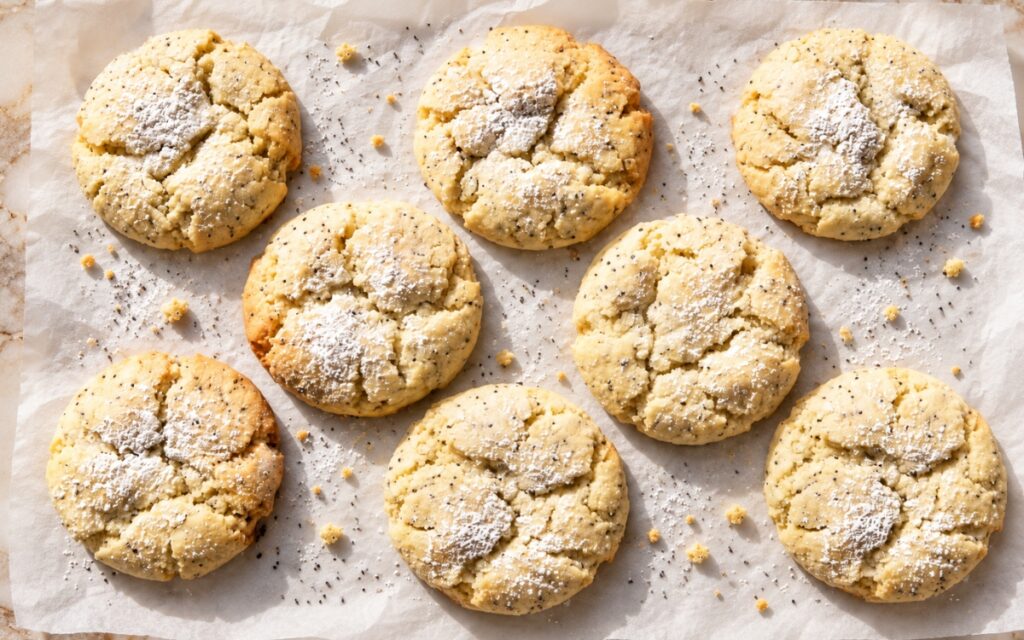
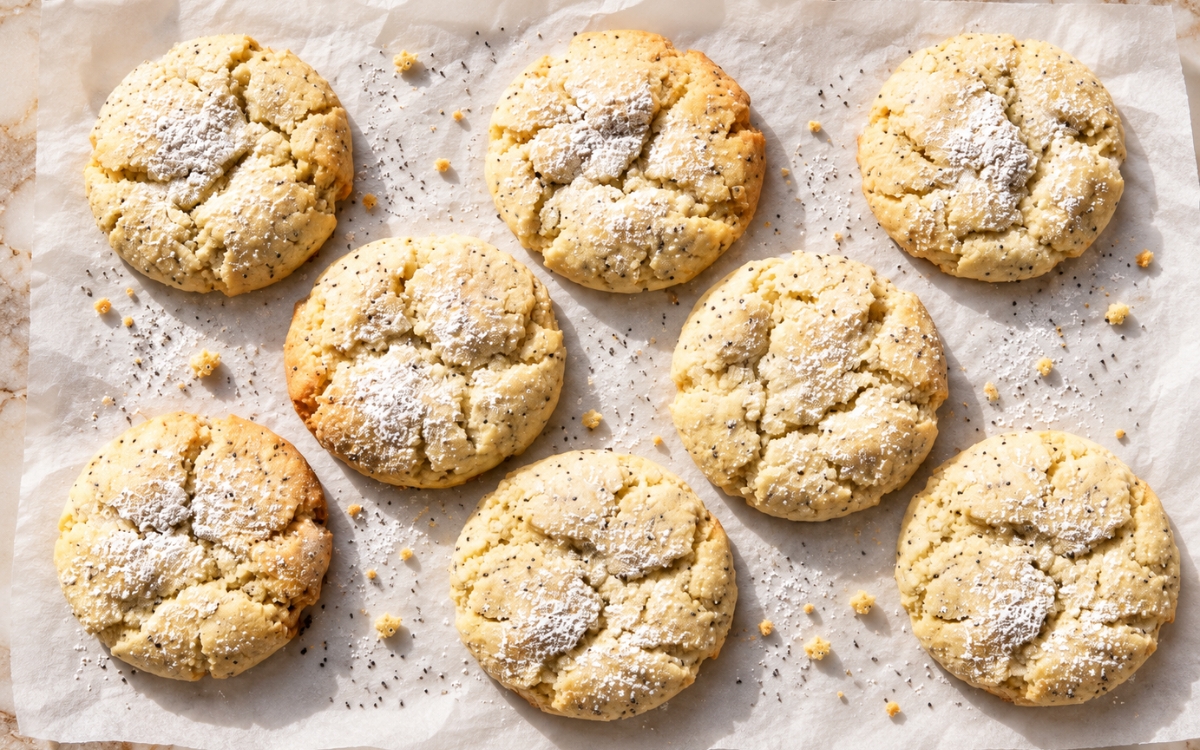
Soft, chewy lemon cookies with crackled powdered sugar tops, tiny flecks of poppy seed throughout, and bright citrus flavor built from both zest and juice. Rubbing the lemon zest into the sugar before mixing releases the lemon oils directly into the dough, giving a stronger, more even citrus flavor than adding zest on its own later. A chill firms the dough enough to roll cleanly and hold its shape through the double sugar coating, and the thick powdered sugar layer is what cracks open into the classic crinkle pattern as the cookies spread in the oven.
Prep Time : 25 min
Total Time : 1 hr 45 min
Servings : 12
25 min
1 hr 45 min
12
Ingredients
For the Cookie Dough
• 115 g unsalted butter, softened
• 200 g granulated sugar
• 1 tbsp finely grated lemon zest (from 2 lemons)
• 1 large egg, room temperature
• 1 large egg yolk, room temperature
• 2 tbsp fresh lemon juice
• 1 tsp vanilla extract
• 260 g all-purpose flour
• 1 tbsp cornstarch
• 1 tsp baking powder
• ¼ tsp baking soda
• ½ tsp fine salt
• 1 tbsp poppy seeds
For Rolling
• 60 g granulated sugar
• 90–100 g powdered sugar
Directions
- Make the Lemon Sugar Base
Rub the granulated sugar and lemon zest together with your fingertips in a large bowl until the sugar feels slightly damp and smells strongly of lemon; this releases the lemon oils directly into the sugar for a more even citrus flavor. Add the softened butter and beat until smooth and creamy, 2 to 3 minutes, until pale and lightly fluffy without needing to be fully whipped. Beat in the egg and egg yolk until fully incorporated, scraping the bowl well, then add the lemon juice and vanilla and mix until smooth. The mixture may look slightly curdled at first; keep mixing and it comes together once the dry ingredients are added. - Mix the Dry Ingredients
Whisk together the flour, cornstarch, baking powder, baking soda, salt, and poppy seeds in a separate bowl. Add this to the wet mixture and mix on low speed or fold with a spatula just until no dry flour remains, without overmixing. The finished dough should be soft and sticky but thick enough to hold its shape. - Chill the Dough
Cover and chill the dough for 1 hour. This lets the dough firm up enough to roll cleanly, helps the cookies spread evenly, and gives the crinkle tops a better chance to form in the oven. If the dough still feels very soft after an hour, chill it for another 15 to 20 minutes. - Portion and Coat
Heat the oven to 175°C conventional or 160°C fan and line two baking trays with parchment. Scoop the dough into 24 equal portions, about 28 to 30 g each, and roll into balls. Roll each ball first in granulated sugar, then coat generously in powdered sugar, aiming for a thick, opaque layer for the best crackled finish. Arrange on the trays with space between them, about 6 to 8 per tray. If the dough warms up and turns sticky while rolling, refrigerate it briefly before continuing, since soft dough flattens too much and loses its definition. - Bake
Bake one tray at a time for 10 to 12 minutes, until the tops are puffed and crackled, the edges are lightly golden, and the centers look just set but still soft. Don’t overbake; for soft crinkle cookies, the centers should still feel tender when they come out, since they continue setting on the tray. Dough that’s gone especially cold, or a cooler oven, may need up to 13 minutes. - Cool
Let the cookies cool on the baking tray for 5 to 7 minutes before transferring to a wire rack. The cookies are delicate while hot, and this brief rest lets the bottoms set without drying out the centers.
*Notes :
- Rubbing the zest into the sugar rather than adding it later is one of the more important steps for flavor here; it releases the lemon oils straight into the sugar, giving a stronger and more even citrus flavor throughout the dough.
- Cornstarch works alongside the flour to keep the cookies soft and tender, supporting the slightly thicker crinkle texture these cookies are meant to have.
- The double sugar coating does two separate jobs: the granulated sugar underneath gives the powdered sugar something to grip, and the powdered sugar on top is what cracks into the classic white crinkle pattern as the cookies bake and spread.
- Keeping the dough cold all the way to the oven matters more here than in most drop cookies, since dough that warms up while rolling flattens faster and loses the clean crackle the coating is meant to produce.
Why This Recipe Works
Rubbing the lemon zest into the sugar builds citrus flavor straight into the dough, while chilling the dough firms it up enough to roll cleanly and hold its shape under a thick sugar coating. That thick powdered sugar layer is what splits open into the familiar crinkle pattern as the cookies spread and bake, and pulling them while the centers still look soft keeps them tender once they’ve cooled.
Ingredient Breakdown
Lemon zest rubbed into sugar
flavor base — releasing the lemon oils into the sugar before mixing gives a stronger, more even citrus flavor than zest added later would.
Fresh lemon juice
brightness — adds a tart edge that balances the sweetness of the double sugar coating.
Poppy seeds
texture and visual contrast — tiny flecks throughout the dough give a light crunch and a classic speckled look against the pale crumb.
Cornstarch
tenderizing agent — softens the crumb slightly to support the thicker, more tender crinkle texture.
Granulated sugar coating
grip layer — gives the powdered sugar on top something to hold onto instead of sliding or dissolving away.
Powdered sugar coating
crinkle layer — a thick, opaque coat is what cracks open into the classic white crinkle pattern as the cookies spread.
Egg plus extra yolk
richness and chew — the added yolk gives the dough extra fat and a softer, more tender chew than a single whole egg would.
Flavor Structure Explained
This cookie balances bright citrus against sweetness, with poppy seeds adding texture rather than flavor:
- a strong, even lemon flavor from zest rubbed into the sugar
- a tart lift from fresh lemon juice
- tiny poppy seeds for light crunch and visual contrast
- a soft, tender, slightly chewy crumb
- a sweet, crackled sugar coating that contrasts against the tartness underneath
The lemon flavor is meant to come through clearly against the sweet sugar coating rather than being muted by it, which is why the zest-and-sugar step at the start matters so much.
Common Mistakes to Avoid
- Skipping the zest-and-sugar rub – This causes a flatter, less pronounced lemon flavor throughout the dough. Always rub the zest into the sugar until fragrant before adding the butter.
- Coating too lightly in powdered sugar – This causes the sugar to dissolve during baking instead of cracking into the classic crinkle look. Always coat generously for a thick, opaque layer.
- Letting the dough warm up while rolling – This causes the cookies to flatten too much and lose their shape. Always rechill the dough briefly if it turns sticky before you finish rolling.
- Overbaking until the centers look fully set – This causes a dry, less tender cookie. Always pull the tray while the centers still look just set but soft.
Variations
Extra Lemon Version
Increase the zest to 1½ tablespoons while keeping the juice at 2 tablespoons, for a more pronounced lemon flavor without loosening the dough.
Lavender Lemon
Add ½ teaspoon of finely ground dried culinary lavender to the lemon sugar for a floral note behind the citrus.
Orange Poppy Seed
Replace the lemon zest and juice with orange zest and juice for a sweeter, less tart citrus cookie.
Glazed Version
Skip the powdered sugar coating and instead drizzle the cooled cookies with a simple lemon glaze made from powdered sugar and lemon juice for a shinier, glossier finish.
Storage & Make-Ahead
Store the cookies in an airtight container at room temperature for up to 3 days. The sugar coating softens slightly over time, but the cookies themselves stay tender.
The dough can be scooped into balls and chilled ahead of time, well before baking. Roll the chilled balls in the granulated and powdered sugar just before they go into the oven, not earlier.
If chilling the dough for longer than the initial hour, let it sit at room temperature briefly before portioning, since very cold dough can be harder to roll into even balls.
These cookies are best baked and coated close together, since a long gap between rolling in sugar and baking can let the powdered sugar start to dissolve before it ever reaches the oven.
Frequently Asked Questions
Why do I need to rub the zest into the sugar instead of just adding it to the dough?
Rubbing the zest into the sugar releases the lemon oils directly into it, giving a stronger and more even citrus flavor than zest stirred in on its own later would.
My crinkle pattern didn’t show up well — what went wrong?
This usually means the powdered sugar coating was too thin. A thick, opaque layer is what cracks open properly in the oven, so coat generously rather than lightly.
Can I make the dough ahead of time?
Yes, the dough balls can be scooped and chilled well in advance. Just roll them in the granulated and powdered sugar right before baking rather than ahead of time.
Why does my dough look curdled before the flour goes in?
This is normal once the eggs and lemon juice are added to the butter and sugar. It smooths back out once the dry ingredients are mixed in.
What else pairs well with these cookies?
They go nicely alongside Lemon Poppyseed Crepes with Whipped Ricotta, Lemon Crumble Muffins, or Strawberry Hibiscus Sugar Cookies on a citrus-leaning dessert table, and pair well with a Classic Fresh Lemonade or a Lemon Posset Brûlée for an all-lemon spread.
Nutrition Facts
( per serving, 2 cookies )
Calories
~280 kcal
Protein
4 g
Fat
9 g
Carbs
47 g
Calories
~280 kcal
Protein
4 g
Fat
9 g
Carbs
47 g
Related Recipes
Related Recipes
-

Brown Butter Pistachio Chocolate Chunk Cookies
Thick brown butter cookies with chopped pistachios and large melted dark chocolate chunks.
-
Espresso Brownie Chocolate Chip Cookies
Dark, rich espresso brownie cookies with crinkled tops, soft fudgy centers, and plenty of melted chocolate throughout.
-
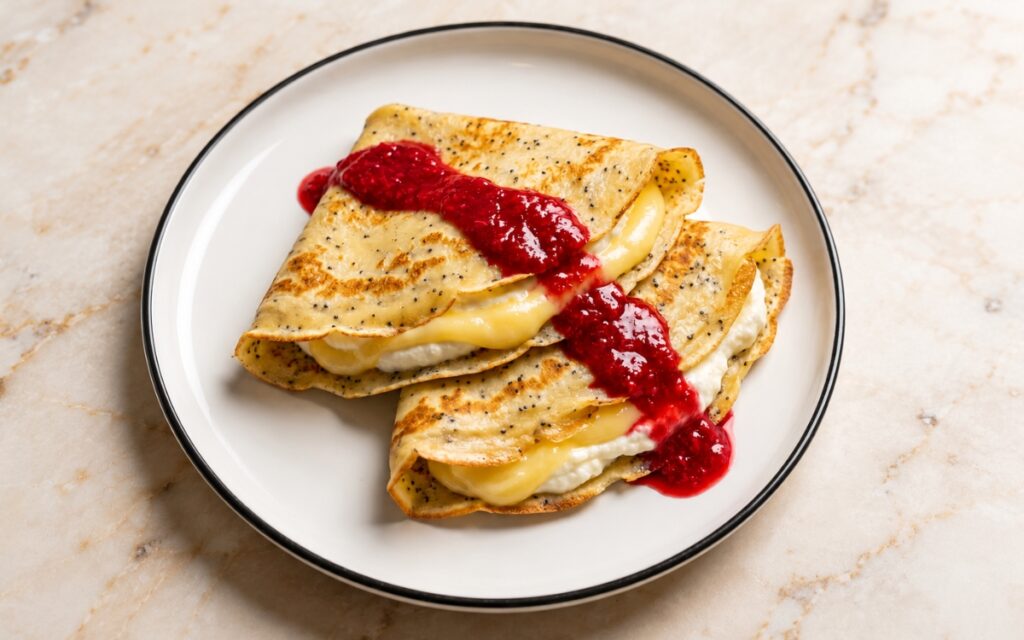
Lemon Poppyseed Crepes
Delicate lemon poppyseed crepes filled with silky lemon curd and whipped ricotta, finished with a vivid raspberry mash.


You might also like
You might also like
-
Chai White Chocolate Toffee Cookies
Thick chai-spiced cookies with glossy toffee bits and white chocolate chunks throughout.
-
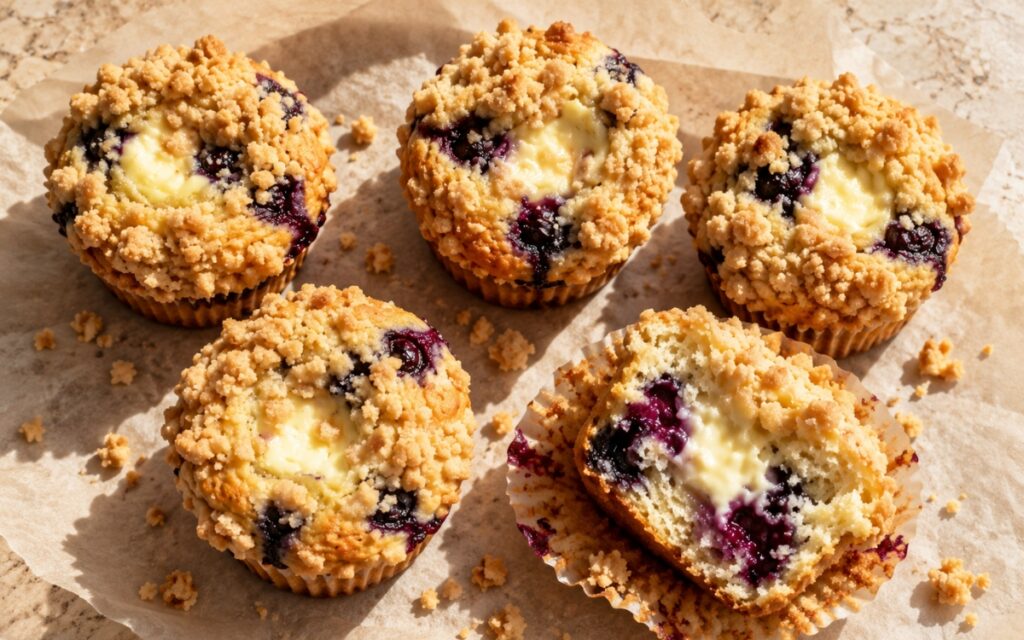
Blueberry Cheesecake Crumble Muffins
Bakery-style blueberry muffins with a creamy cheesecake center and crumble topping.
-
Brown Butter Pistachio Chocolate Chunk Cookies
Thick brown butter cookies with chopped pistachios and large melted dark chocolate chunks.

Lemon Poppy Seed Crinkle Cookies
Ingredients
Method
- Rub the granulated sugar and lemon zest together with your fingertips in a large bowl until the sugar feels slightly damp and smells strongly of lemon; this releases the lemon oils directly into the sugar for a more even citrus flavor. Add the softened butter and beat until smooth and creamy, 2 to 3 minutes, until pale and lightly fluffy without needing to be fully whipped. Beat in the egg and egg yolk until fully incorporated, scraping the bowl well, then add the lemon juice and vanilla and mix until smooth. The mixture may look slightly curdled at first; keep mixing and it comes together once the dry ingredients are added.
- Whisk together the flour, cornstarch, baking powder, baking soda, salt, and poppy seeds in a separate bowl. Add this to the wet mixture and mix on low speed or fold with a spatula just until no dry flour remains, without overmixing. The finished dough should be soft and sticky but thick enough to hold its shape.
- Cover and chill the dough for 1 hour. This lets the dough firm up enough to roll cleanly, helps the cookies spread evenly, and gives the crinkle tops a better chance to form in the oven. If the dough still feels very soft after an hour, chill it for another 15 to 20 minutes.
- Heat the oven to 175°C conventional or 160°C fan and line two baking trays with parchment. Scoop the dough into 24 equal portions, about 28 to 30 g each, and roll into balls. Roll each ball first in granulated sugar, then coat generously in powdered sugar, aiming for a thick, opaque layer for the best crackled finish. Arrange on the trays with space between them, about 6 to 8 per tray. If the dough warms up and turns sticky while rolling, refrigerate it briefly before continuing, since soft dough flattens too much and loses its definition.
- Bake one tray at a time for 10 to 12 minutes, until the tops are puffed and crackled, the edges are lightly golden, and the centers look just set but still soft. Don’t overbake; for soft crinkle cookies, the centers should still feel tender when they come out, since they continue setting on the tray. Dough that’s gone especially cold, or a cooler oven, may need up to 13 minutes.
- Let the cookies cool on the baking tray for 5 to 7 minutes before transferring to a wire rack. The cookies are delicate while hot, and this brief rest lets the bottoms set without drying out the centers.