
Honey Lemon Pepper Wings
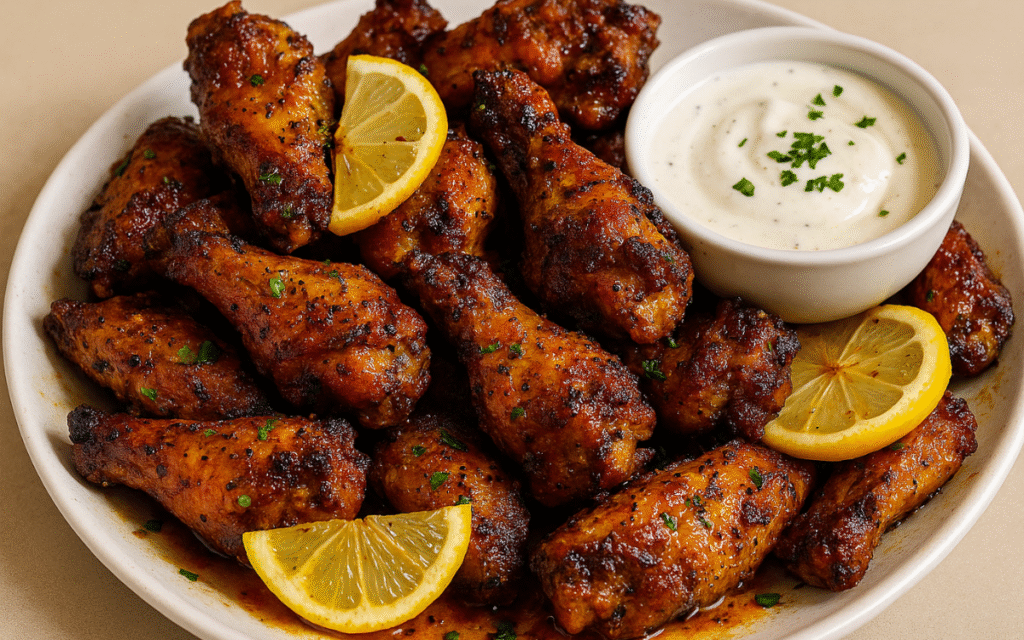
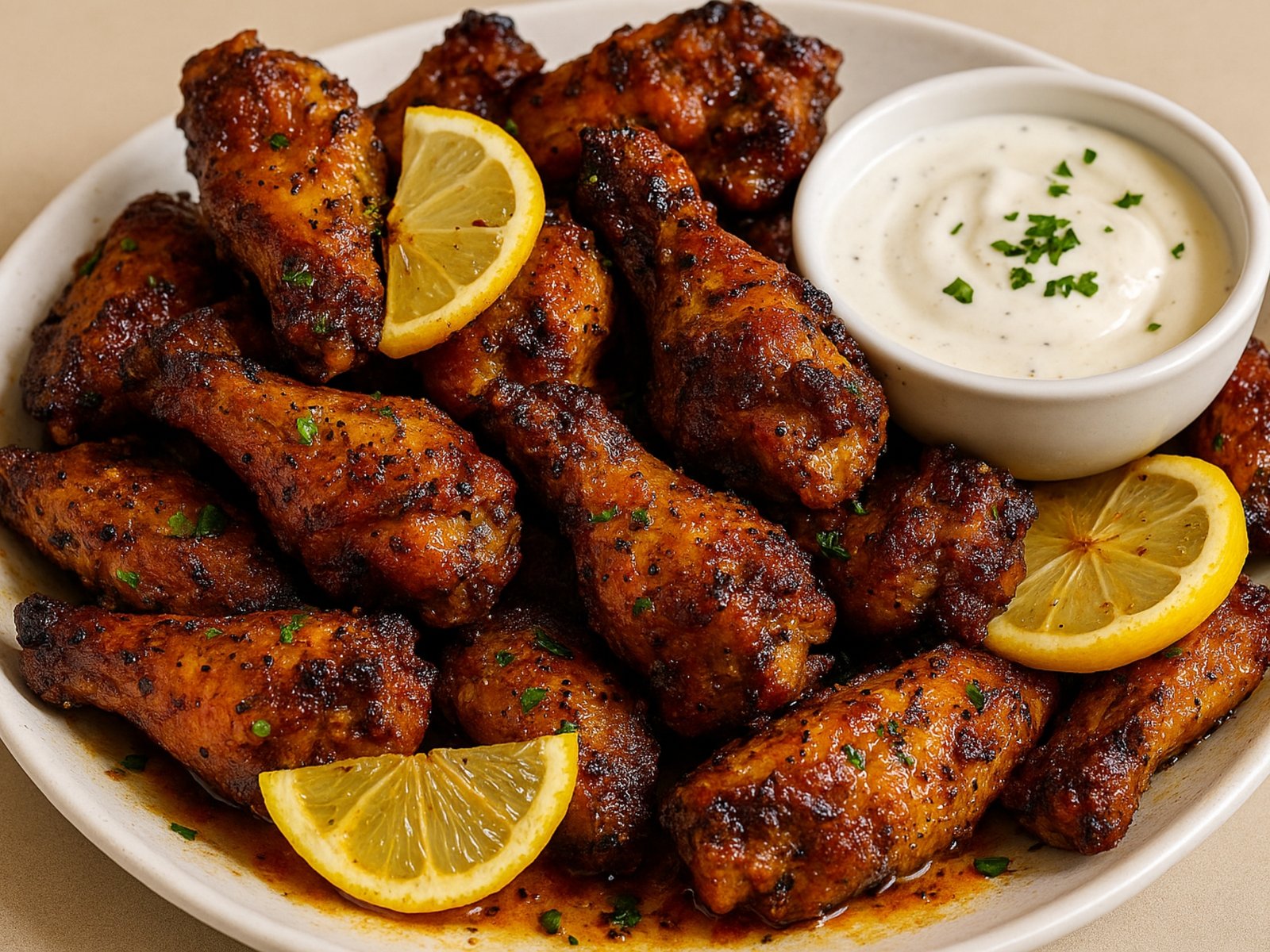
Crispy oven-baked wings tossed in a glossy honey–lemon pepper glaze, packed with citrus, heat, and buttery richness — served with ultra-creamy homemade ranch. A top-tier wing recipe that tastes like it came straight from a wings shop.
Prep Time : 15 min
Cook Time : 50 min
Servings : 4
15 min
50 min
4
Ingredients
Honey Lemon Pepper Wings
• 900 g chicken wings (drums & flats)
• 6 g lemon pepper seasoning — this one on Amazon
• 3 g paprika
• 3 g garlic powder
• 5 g fine salt
• 4 g freshly ground black pepper
• 4 g baking powder
• 15 g potato starch — this one on Amazon
Honey Lemon Glaze
• 40 g unsalted butter — this one on Amazon
• 35 g honey — this one on Amazon
• Zest + juice of 1 fresh lemon (about 30 ml juice)
• 4 g lemon pepper seasoning
• 1 g crushed chili flakes (optional)
Homemade Ranch Dressing
• 120 g mayonnaise
• 120 g Greek yogurt (2%–5%)
• 20 g Dijon mustard — this one on Amazon
• 120 ml buttermilk
• 15 g fresh chives, finely sliced
• 5 g fresh dill, finely chopped
• 3 cloves garlic (about 9 g), grated
• Salt & black pepper to taste
This post may contain affiliate links. As an Amazon Associate I earn from qualifying purchases, at no additional cost to you.
Directions
- Preheat the Oven
Heat the oven to 425°F (220°C). Line a baking sheet with foil and place an oven-safe wire rack on top. - Season the Wings
Pat the wings completely dry — moisture kills crisping. In a large bowl, toss the wings with lemon pepper seasoning, paprika, garlic powder, salt, black pepper, baking powder, and potato starch until evenly coated. - Arrange & Bake
Spread the wings in a single layer on the wire rack.
Bake for 40 minutes, flipping halfway through, until the skin is blistered and starting to crisp. - Make the Honey Lemon Glaze
In a small saucepan, melt the butter over medium heat. Whisk in honey, lemon juice, lemon zest, lemon pepper seasoning, and chili flakes. Simmer gently for 20–30 seconds until glossy. Remove from heat. - Glaze & Finish
Transfer the wings to a clean bowl and toss with half of the glaze. Return to the oven and bake for 10 more minutes, or until the internal temperature reaches 165°F (74°C) and the coating is set. - Final Toss
Remove from the oven, toss the wings in the remaining glaze, and let them rest 2 minutes for the coating to tighten. - Make the Ranch Dressing
In a medium bowl, whisk together the mayonnaise, crème fraîche, and Dijon mustard.
Slowly pour in the buttermilk while whisking until smooth and creamy.
Add chives, dill, and grated garlic, then season with salt and pepper to taste.
Refrigerate until serving — it thickens slightly and tastes even better after 30 minutes. - Serve
Plate the wings hot and crispy, and serve with a generous side of homemade ranch.
*Notes :
- The wings must be completely dry before seasoning. Any surface moisture will steam the skin instead of crisping it. For best results, pat thoroughly with paper towels and, if time allows, place the wings uncovered on a rack in the refrigerator for 2–4 hours. Air-drying dramatically improves blistering and reduces the need for excess starch.
- Baking powder raises the pH of the skin, improving browning and crispness in the oven. Too little will have minimal effect, while too much can leave a metallic aftertaste and chalky finish. The ratio used here (4 g per 900 g wings) enhances texture without affecting flavor.
- The wings should appear glossy and lightly lacquered — not wet or dripping. If excess glaze pools at the bottom of the bowl, too much was used. Over-saucing softens the crisp exterior and reduces structural contrast. A thin, even layer preserves both crunch and shine.
- After the final toss, allow the wings to rest for 2–3 minutes before serving. This short pause lets the glaze tighten and adhere to the skin. Serving immediately while the glaze is still fluid prevents proper coating adhesion and reduces the overall texture contrast.
- The dressing needs at least 30 minutes in the refrigerator to fully integrate. Fresh garlic and herbs mellow as they hydrate, and the texture thickens slightly. Serving immediately after mixing will taste sharper and less balanced than after a short resting period.
Why This Wing Recipe Works
This recipe balances texture and glaze control. Baking powder and potato starch create blistered, crackling skin without frying. The glaze is restrained — enough butter for richness, enough honey for shine, but not enough to overpower the citrus structure. The lighter ranch provides cooling contrast without weighing down the dish.
Ingredient Breakdown
Chicken Wings
Smaller wing volume reduces overall fat while still delivering crisp skin and high protein. Drying thoroughly is critical for texture.
Baking Powder + Potato Starch
Baking powder raises skin pH, improving browning. Potato starch absorbs surface moisture and enhances crispness without frying.
Honey Lemon Glaze
Honey creates gloss and adhesion. Lemon cuts through fat. Reduced butter maintains richness without excess calories.
Greek Yogurt Ranch
Replacing part of the mayonnaise with yogurt keeps creaminess but significantly lowers fat density while increasing protein.
Common Mistakes to Avoid
- Skipping drying — moisture blocks crisping.
- Using too much glaze — wings should be coated, not drenched.
- Over-reducing glaze — becomes sticky and heavy.
- Crowding the tray — prevents airflow.
- Serving immediately without resting — glaze won’t tighten.
Variations
Extra-Spicy Honey Lemon Wings
Increase chili flakes to 2 g or add 10 g hot honey to the glaze. Keep the butter amount unchanged to maintain balance.
Extra-Lemon Version
Add an additional 3–4 g fresh lemon zest to the glaze for a sharper citrus aroma. Avoid adding more juice, which can thin the glaze.
Garlic Lemon Pepper Style
Add 5 g freshly grated garlic to the glaze while melting the butter for a deeper savory profile.
Air Fryer Method
Cook wings at 200°C for 20–25 minutes, flipping halfway through, until crisp and internal temperature reaches 74°C. Glaze and return for 2–3 additional minutes to set.
Storage & Reheating
Cooked wings can be stored in an airtight container in the refrigerator for up to 3 days. For best texture, allow them to cool completely on a rack before storing — stacking them while hot traps steam and softens the skin.
To reheat and restore crispness, place the wings on a wire rack set over a baking sheet and bake at 200°C for 8–12 minutes, or until heated through and the skin re-crisps. Avoid covering them with foil — airflow is essential for restoring texture.
An air fryer also works well for reheating. Cook at 190–200°C for 5–7 minutes, shaking once halfway through, until the exterior is crisp again.
Do not microwave if texture matters. Microwaving heats the meat but destroys the crisp skin and loosens the glaze.
If you plan to make the wings ahead for a gathering, bake them fully but glaze only right before serving. Reheat the naked wings first, then toss in freshly warmed glaze for best results.
The ranch dressing can be stored refrigerated for up to 4–5 days. Stir before serving, as natural separation may occur.
Frequently Asked Questions
Why are my wings not crispy?
The most common causes are surface moisture, overcrowding the tray, or insufficient oven heat. Wings must be completely dry and spaced apart on a rack to allow air circulation.
Can I skip the baking powder?
Yes, but the skin will be less crisp and more chewy. Baking powder improves browning and texture without frying.
Can I use cornstarch instead of potato starch?
Yes. Cornstarch works similarly, though potato starch tends to produce slightly lighter crispness.
Can I make the glaze ahead of time?
Yes. Store refrigerated for up to 3 days. Reheat gently before tossing — do not boil, as excessive reduction thickens it too much.
Can I freeze cooked wings?
Yes, but texture will suffer slightly after reheating. Freeze unglazed for best results. Reheat directly from frozen at 200°C until hot and crisp, then glaze.
What internal temperature should wings reach?
Wings are safe at 74°C internal temperature. For slightly more tender meat, some cooks prefer 76–78°C, but avoid overcooking, which dries the meat.
Nutrition Facts
( per serving )
Calories
~500 kcal
Protein
34 g
Fat
32 g
Carbs
18 g
Calories
~500 kcal
Protein
34 g
Fat
32 g
Carbs
18 g
Related Recipes
Related Recipes

Chipotle Chicken Burrito Bowl
Smoky chipotle chicken layered with cilantro-lime rice, black beans, charred corn, and creamy sriracha heat.
Lasagne alla Bolognese
Slow-cooked Bolognese layered with tender pasta, creamy ricotta, and bubbling cheese delivers deep, comforting richness.
Korean BBQ Chicken Wings
Double-fried wings glazed in sticky gochujang barbecue deliver shattering crunch with sweet-heat intensity and garlic depth.
You might also like
You might also like
Korean BBQ Chicken Wings
Double-fried wings glazed in sticky gochujang barbecue deliver shattering crunch with sweet-heat intensity and garlic depth.
Thick-Cut Steak Fries
Thick, substantial steak fries with crispy golden exteriors and fluffy centers – hearty and satisfying.
Double Smash Burger
Ultra-crispy beef patties with molten cheese, buttery bun, and tangy sauce channel classic diner indulgence.
Honey Lemon Pepper Wings
Ingredients
Method
- Heat the oven to 425°F (220°C). Line a baking sheet with foil and place an oven-safe wire rack on top.
- Pat the wings completely dry — moisture kills crisping. In a large bowl, toss the wings with lemon pepper seasoning, paprika, garlic powder, salt, black pepper, baking powder, and potato starch until evenly coated.
- Spread the wings in a single layer on the wire rack. Bake for 40 minutes, flipping halfway through, until the skin is blistered and starting to crisp.
- In a small saucepan, melt the butter over medium heat. Whisk in honey, lemon juice, lemon zest, lemon pepper seasoning, and chili flakes. Simmer gently for 20–30 seconds until glossy. Remove from heat.
- Transfer the wings to a clean bowl and toss with half of the glaze. Return to the oven and bake for 10 more minutes, or until the internal temperature reaches 165°F (74°C) and the coating is set.
- Remove from the oven, toss the wings in the remaining glaze, and let them rest 2 minutes for the coating to tighten.
- In a medium bowl, whisk together the mayonnaise, crème fraîche, and Dijon mustard. Slowly pour in the buttermilk while whisking until smooth and creamy. Add chives, dill, and grated garlic, then season with salt and pepper to taste. Refrigerate until serving — it thickens slightly and tastes even better after 30 minutes.
- Plate the wings hot and crispy, and serve with a generous side of homemade ranch.
Notes
The wings must be completely dry before seasoning. Any surface moisture will steam the skin instead of crisping it. For best results, pat thoroughly with paper towels and, if time allows, place the wings uncovered on a rack in the refrigerator for 2–4 hours. Air-drying dramatically improves blistering and reduces the need for excess starch.
Baking powder raises the pH of the skin, improving browning and crispness in the oven. Too little will have minimal effect, while too much can leave a metallic aftertaste and chalky finish. The ratio used here (4 g per 900 g wings) enhances texture without affecting flavor.
The wings should appear glossy and lightly lacquered — not wet or dripping. If excess glaze pools at the bottom of the bowl, too much was used. Over-saucing softens the crisp exterior and reduces structural contrast. A thin, even layer preserves both crunch and shine.
After the final toss, allow the wings to rest for 2–3 minutes before serving. This short pause lets the glaze tighten and adhere to the skin. Serving immediately while the glaze is still fluid prevents proper coating adhesion and reduces the overall texture contrast.
The dressing needs at least 30 minutes in the refrigerator to fully integrate. Fresh garlic and herbs mellow as they hydrate, and the texture thickens slightly. Serving immediately after mixing will taste sharper and less balanced than after a short resting period.