
Crispy Homemade Mozzarella Sticks
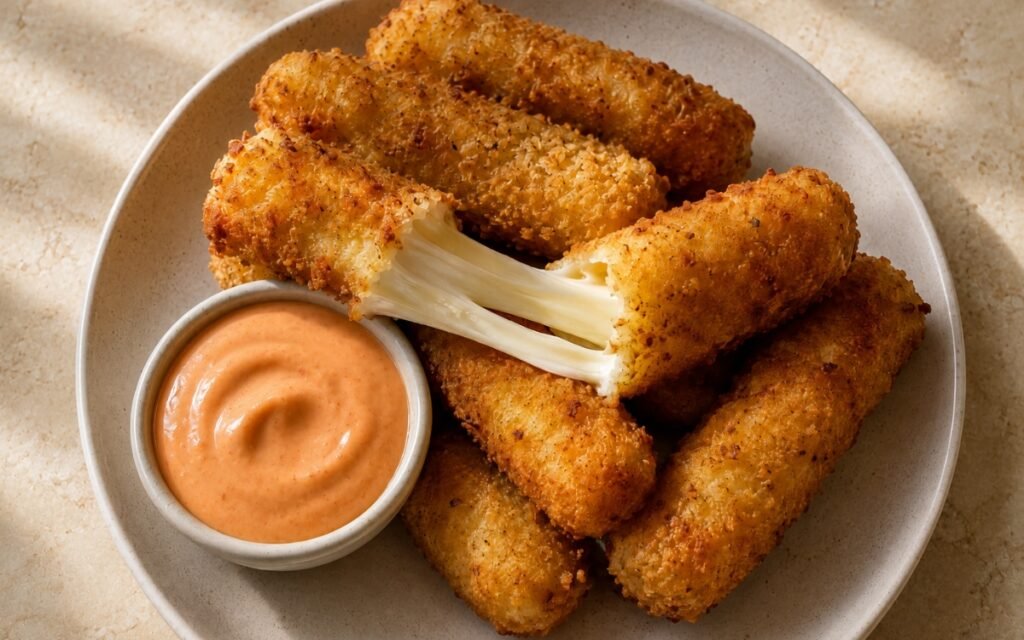
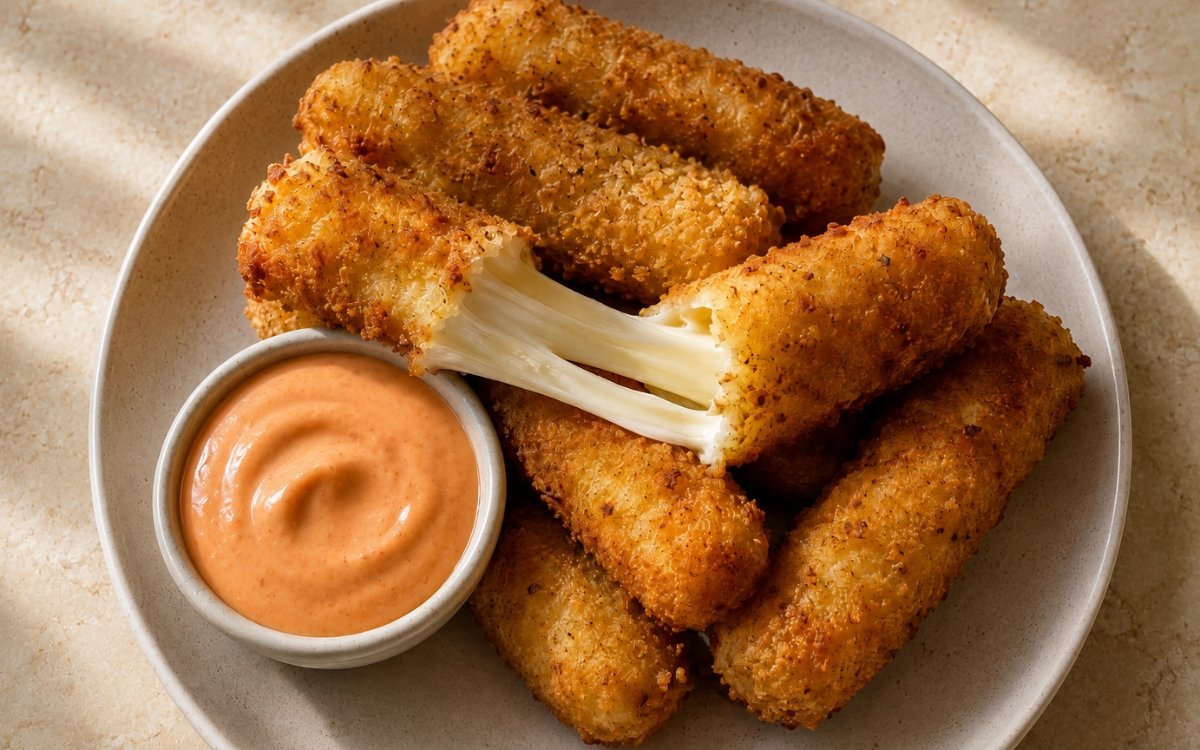
White bread dried in the oven until completely desiccated, pulsed to fine crumbs in a food processor with the Italian seasoning added on the final processing pass so the herbs distribute evenly through every crumb rather than sitting on top. Cold low-moisture mozzarella — cold specifically, because warm cheese leaks before the crust has time to set — cut into uniform batons and double-coated through the flour-egg-breadcrumb sequence twice. The double coat is the specific barrier between the molten cheese and the hot oil — a single coat produces leaking; a double coat produces the clean, intact stick with the fully molten centre. Fried in small batches so the oil temperature never drops below 175°C. The dipping sauce built from the same mushroom-powder-umami formula that makes the sauce here — as in the Homemade Onion Rings — specifically more compelling than a standard fry sauce. The mozzarella stick that delivers the full molten-centre-crunchy-exterior result every time.
Prep Time : 25 min
Cook Time : 10 min
Servings : 12
25 min
10 min
12
Ingredients
For the Mozzarella Sticks
• 680g cold low-moisture whole-milk mozzarella — approximately 3 blocks
• 12 slices white sandwich bread
• 8g kosher salt
• 4g dried basil
• 4g dried oregano
• 6g freshly ground black pepper
• 6g garlic powder
• 225g all-purpose flour
• 5 large eggs
• Approximately 3–4 litres vegetable oil, for deep-frying
For the Dipping Sauce
• 240g mayonnaise
• 120g ketchup
• 25g sriracha — this one on Amazon
• 10g Dijon mustard — this one on Amazon
• 3 garlic cloves, finely grated
• 6g oyster or porcini mushroom powder — approximately 2 tsp
• 8g Worcestershire sauce — approximately 2 tsp — this one on Amazon
This post may contain affiliate links. As an Amazon Associate I earn from qualifying purchases, at no additional cost to you.
Directions
- Make the Italian Breadcrumbs
Preheat the oven to 135°C. Spread the 12 slices of white bread in a single layer across one or two baking sheets. Bake for 15 minutes until the bread is completely dry and very lightly toasted — there should be no give or softness when pressed. The goal is complete moisture removal rather than browning; white bread baked to this internal dryness produces a finer, more neutral-flavoured crumb than bread that is browned, which would add bitterness to the coating. Remove and allow to cool completely. Partially cooled bread introduces steam into the food processor and produces a damp crumb rather than a dry, fine one. Once fully cool, break the dried slices into rough pieces and add to a food processor. Pulse in batches until reduced to fine, uniform crumbs. On the final processing batch, add the 8g of salt, 4g of dried basil, 4g of dried oregano, 6g of black pepper, and 6g of garlic powder to the processor before pulsing — adding the herbs at this stage distributes them through every crumb uniformly rather than stirring them into the finished crumb where they tend to settle unevenly. Process until fully combined. Transfer all breadcrumbs to a wide bowl. - Make the Dipping Sauce
In a medium bowl, whisk together the 240g of mayonnaise, 120g of ketchup, 25g of sriracha, 10g of Dijon mustard, 3 finely grated garlic cloves, 6g of mushroom powder, and 8g of Worcestershire sauce until completely smooth and uniform. The mushroom powder — oyster or porcini — is the invisible flavour amplifier that deepens the sauce’s savoury character significantly without any detectable mushroom flavour; its concentrated glutamate content amplifies the sriracha’s heat, the Worcestershire’s complexity, and the ketchup’s sweetness simultaneously. Cover and refrigerate. The sauce improves with 15–20 minutes of chilling as the flavours meld. - Cut the Mozzarella
Slice the 680g of cold low-moisture whole-milk mozzarella blocks into uniform batons approximately 12mm (½ inch) thick. Consistent sizing ensures every stick cooks at the same rate. Low-moisture whole-milk mozzarella is the non-negotiable specification for this recipe — fresh mozzarella’s high water content produces steam during frying that ruptures the crust regardless of how many times the stick is coated; low-moisture mozzarella’s reduced water content melts without steaming, and whole-milk produces the specific rich, creamy flavour and full stretch that part-skim cannot match. If the kitchen is warm, place the cut batons on a tray and freeze for 10–15 minutes before breading. Very cold mozzarella maintains its shape during the breading process and resists premature leaking when it first contacts the hot oil. - Set Up the Breading Station
Arrange three wide, shallow bowls in sequence: First bowl — the 225g of all-purpose flour. Second bowl — the 5 large eggs, beaten until completely uniform. Third bowl — the seasoned Italian breadcrumbs. - Double-Coat the Mozzarella
Work through the full three-stage sequence twice for each baton — this is the double coat that prevents leaking. First coat: Dip each cold mozzarella baton into the flour, turning to coat all surfaces, then shake off excess vigorously. Dip into the beaten egg, turning to coat, then allow excess to drip off. Press firmly into the seasoned breadcrumbs, coating all surfaces completely and pressing gently to compact the crumbs against the egg-coated surface. Second coat: Immediately dip the once-breaded baton back into the egg — the egg re-moistens the first breadcrumb layer and creates the adhesive surface for the second coat. Allow excess to drip off. Press firmly into the breadcrumbs again for a complete second layer. Place on a tray. A single coat leaves micro-gaps in the crust that allow the expanding, liquefying cheese to find and exit through; a double coat fills every gap and creates the sealed, continuous barrier that holds the molten centre contained. Once all sticks are double-coated, refrigerate the tray for 10 minutes — or freeze for 5 minutes — before frying. - Heat the Oil and Fry
Fill a large, heavy-bottomed pot with 3–4 litres of vegetable oil. Heat to 175°C — use a thermometer throughout; oil temperature cannot be reliably estimated visually and an incorrect temperature is the most common cause of either soggy coatings or cheese leakage. Maintain a cooling rack over a baking sheet alongside the pot. Fry in small batches — 3–4 sticks maximum per batch, depending on pot diameter. Overcrowding drops the oil temperature below the critical 170°C threshold where the coating begins absorbing oil rather than crisping immediately on contact. Lower each stick carefully into the oil. Fry for 2–3 minutes, turning occasionally, until the crust is a deep, even golden-brown across all surfaces. The correct frying window is narrow — undercooked means a pale, soft crust; overcooked means the crust has been at temperature long enough for the cheese to fully liquefy and seek a gap in the coating. Transfer immediately to the wire rack. Season each stick lightly with salt while still hot — the heat and residual surface oil hold the salt in place. Allow the oil to return to 175°C between each batch before adding the next. - Serve
Serve immediately with the chilled dipping sauce alongside. Mozzarella sticks are at their optimal state in the first 2–3 minutes after frying — the crust is at peak crispness and the cheese is at its maximum stretch. The longer they sit, the more the interior cheese cools and firms, reducing the dramatic molten pull.
*Notes :
- The homemade Italian breadcrumbs are the specific quality decision that makes these mozzarella sticks distinguishable from panko or store-bought breadcrumb versions. White bread baked to complete dryness and ground fine produces a crumb with a specific light, almost powdery texture that packs closely against the egg surface during pressing — creating a more uniformly sealed, more continuous crust than the irregular panko flake. The Italian herb seasoning ground into the final processing pass distributes evenly through every particle of crumb, so the herbs are present in every bite of crust rather than distributed unevenly through a hand-mixed batch.
- The double-coat is the structural requirement that makes consistently non-leaking mozzarella sticks achievable at home. The physics of the problem: mozzarella’s melting point is crossed within the first 30–40 seconds of frying, at which point the cheese begins expanding and liquefying. A single breadcrumb coat has micro-gaps — visible under magnification, but invisible to the naked eye — through which the expanding liquid cheese finds a path outward. The double coat doubles the coat’s density and effectively eliminates these micro-gaps, sealing the cheese inside for the full 2–3 minute fry time. The second egg dip between coats is the adhesive layer that bonds the two breadcrumb layers together into a unified, dense coating rather than two independent layers that could separate.
Why This Recipe Works
This recipe works because it addresses every point of failure in mozzarella stick preparation systematically. Cold mozzarella delays premature leaking during the early frying seconds. Homemade fine crumbs pack more densely against the egg layer than coarse crumbs. The double coat eliminates micro-gap leaking paths.
The correct oil temperature ensures immediate crisping rather than absorption. And the seasoning is ground into the crumb during processing rather than added afterwards, ensuring uniform herb distribution. Each decision solves a specific problem.
Ingredient Breakdown
Cold Low-Moisture Whole-Milk Mozzarella
The non-negotiable specification — low-moisture for controlled melting without steam-rupture; whole-milk for the richness, creaminess, and full stretch; cold for delayed leaking onset during frying.
Homemade Italian Breadcrumbs (Herbs Ground In
The crust quality decision — fine, dense, uniformly herb-seasoned crumbs that pack more completely against the cheese surface than store-bought or panko alternatives.
Double Coat (Two Full Flour-Egg-Crumb Sequences)
The structural barrier — eliminates the micro-gaps that single-coat mozzarella sticks leak through; the second egg dip bonds both crumb layers into a unified coating.
Oil at 175°C (Maintained Between Batches)
The frying requirement — immediate crisping on contact; below 170°C produces oil absorption instead.
Mushroom Powder in Dipping Sauce
The invisible umami amplifier — present as depth and flavour vividness without detectable mushroom character.
Flavor Structure Explained
This mozzarella sticks follow a layered balance model:
- Crispy savory crust (breadcrumbs, herbs, garlic)
- Chewy transition layer (fried batter seal)
- Molten creamy center (whole-milk mozzarella)
- Sweet-spicy creamy sauce (sriracha, ketchup, mayo)
- Multi-stage texture contrast (crisp, chewy, stretchy)
The breadcrumb crust defines the first sensation with sharp crunch, toasted savoriness, and herb-garlic aroma. Beneath it, the thin fried batter creates a softer transition that bridges the brittle crust and molten cheese. Mozzarella forms the rich center with creamy mildness and elastic stretch that make the entire structure satisfying. The dipping sauce balances sweetness, heat, richness, and savory depth, turning each bite from simple fried cheese into a fuller flavor experience. The dish succeeds because the textures unfold sequentially — crisp exterior, soft middle, molten core — while the sauce ties every layer together.
Common Mistakes to Avoid
- Single-Coating Rather Than Double-Coating – A single coat allows liquid cheese to find micro-gap leaking paths. Always complete two full flour-egg-crumb sequences per baton.
- Using Fresh Mozzarella – Fresh mozzarella’s water converts to steam during frying and ruptures the crust regardless of coating thickness. Low-moisture only.
- Not Keeping the Mozzarella Cold – Warm mozzarella begins softening before the crust has time to set in the first seconds of frying, increasing leaking risk. Always cold from the refrigerator — or briefly frozen.
- Frying at Incorrect Temperature – Below 170°C produces oil-absorbing, soft, greasy coatings. Above 185°C the exterior browns before the crust seals, creating visible cracks. Always 175°C maintained.
- Not Adding Herbs During Final Processing Pass – Herbs mixed into finished crumbs distribute unevenly and settle to the bowl’s bottom. Adding during the final processor pass ensures uniform distribution through every crumb particle.
- Not Allowing Oil to Return to Temperature Between Batches – Each batch of cold mozzarella drops the oil temperature. Always wait for 175°C to return before adding the next batch.
Variations
With Panko Added
Add 50g of panko to the seasoned breadcrumbs and combine — the panko’s irregular larger flakes within the fine homemade crumb base produce a more texturally varied, slightly more dramatically crunchy exterior.
With Provolone
Replace half the mozzarella with cold low-moisture provolone cut to the same baton size — provolone’s sharper, more savoury character within the neutral mozzarella produces a more complex cheese pull with a flavour that is more assertive than plain mozzarella alone.
Baked Version
Arrange the double-coated sticks on a generously oiled wire rack over a baking sheet. Spray thoroughly with cooking oil on all surfaces and bake at 220°C for 8–10 minutes until golden. The result is less crisp than deep-fried with a slightly drier crust, but significantly lighter and entirely acceptable for a lower-oil alternative.
With Smoked Mozzarella
Replace up to half the plain mozzarella with cold smoked mozzarella — the smoked variety’s depth adds a subtle background character to the molten interior that contrasts specifically interestingly against the plain crumb crust.
Storage & Make-Ahead
Breaded but unfried mozzarella sticks can be frozen directly on the tray until solid, then transferred to a sealed freezer bag for up to 1 month. They can be fried straight from frozen at 175°C for 3 to 4 minutes, with no thawing needed.
Fried mozzarella sticks are best eaten immediately. To restore most of the crust’s crispness later, reheat them on a wire rack in a 200°C oven for 4 to 5 minutes. An air fryer at 200°C for about 3 minutes works even better.
The dipping sauce can be refrigerated for up to 5 days. Stir it before serving.
Frequently Asked Questions
Why double-coat rather than single-coat?
Mozzarella at frying temperature becomes fully liquid within 30–40 seconds. A single breadcrumb coat has microscopic gaps through which the expanding liquid cheese finds a path out. Two complete flour-egg-crumb sequences double the coating density and eliminate these gaps — producing a sealed barrier that keeps the cheese contained for the full frying period.
Why low-moisture mozzarella specifically?
Fresh mozzarella’s water content (typically 45–60%) converts to steam at frying temperatures — the expanding steam ruptures the crust from inside, producing leakage regardless of coating thickness. Low-moisture mozzarella (typically 45–52% moisture, less free water) melts cleanly without steam formation and produces the full stretch of molten cheese without rupturing the crust.
Why make breadcrumbs from white bread rather than using panko or store-bought?
White bread baked to complete dryness and ground fine produces a crumb that is specifically more fine, more neutral in flavour, and more densely packable against the egg surface than the irregular flakes of panko or the often-coarser texture of store-bought Italian breadcrumbs. The homemade crumb fills every gap in the coating surface more completely. The seasoning ground into the final processing pass also distributes more uniformly than hand-mixing.
Why process the herbs into the crumbs during the final pass rather than mixing them in?
Herbs and spices mixed into finished crumbs tend to settle by density — lighter herbs rise to the top, heavier powders sink to the bottom. Processing them into the crumbs on the final pass coats every crumb particle uniformly, ensuring the seasoning is present in every bite rather than concentrated in sections of the coating.
How do I prevent the sticks from leaking in the fryer?
Cold mozzarella, correct oil temperature (175°C), small frying batches that maintain the temperature, and a complete double coat — these four factors together make leaking a non-issue.
Nutrition Facts
( per serving )
Calories
~480 kcal
Protein
22 g
Fat
31 g
Carbs
27 g
Calories
~480 kcal
Protein
22 g
Fat
31 g
Carbs
27 g
Related Recipes
Related Recipes

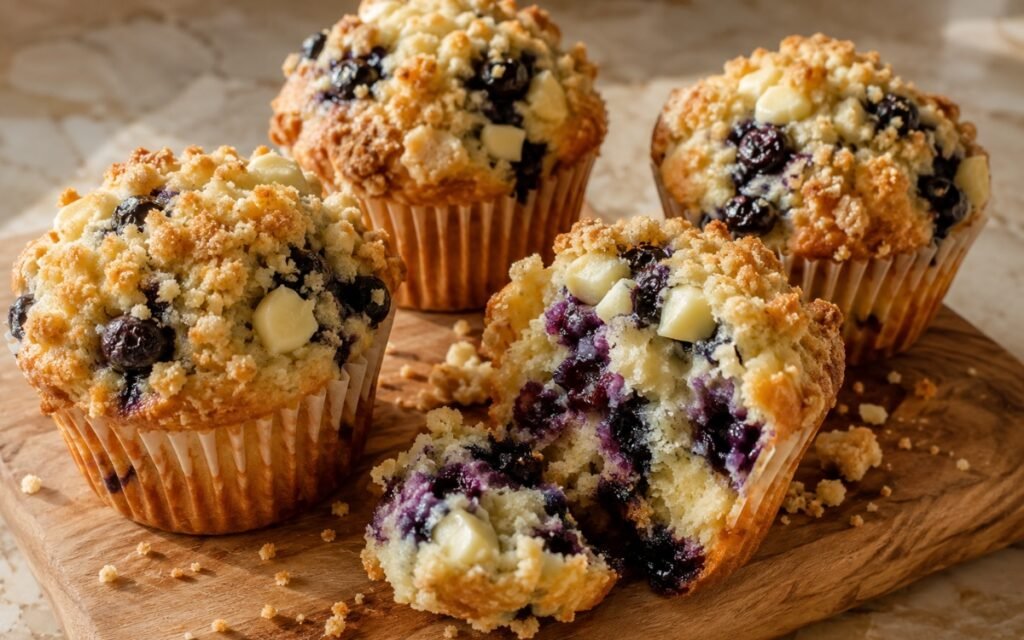
White Chocolate Blueberry Muffins
Tender, bakery-style crumb packed with juicy blueberries, creamy white chocolate, and a buttery, golden crunch on top.
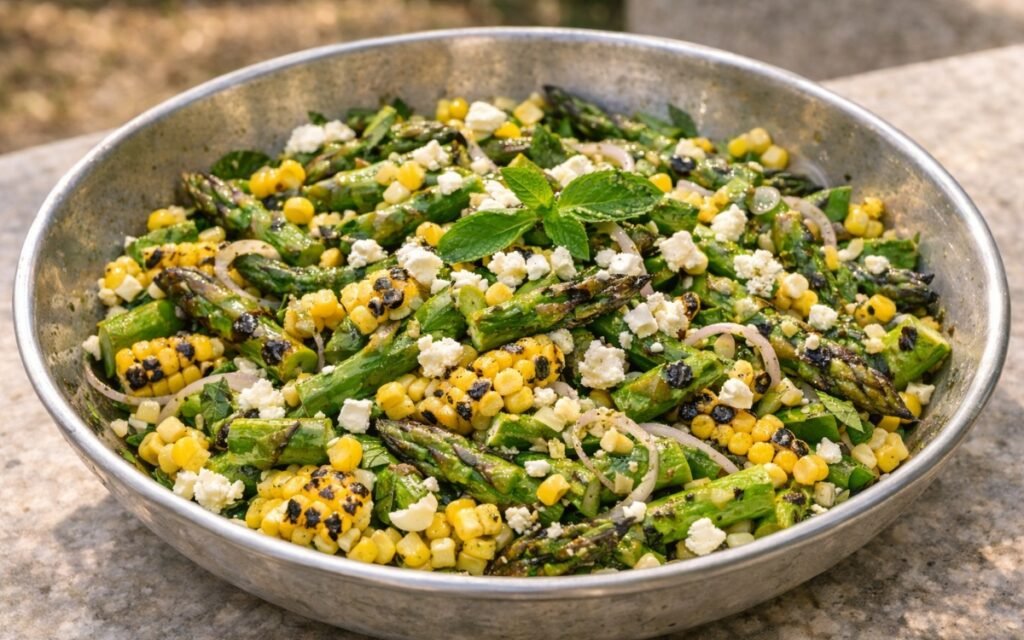
Grilled Asparagus & Corn Salad
Charred asparagus and caramelised corn with ice-water shallots, feta, and lemon vinaigrette — a smoky, bright summer salad ready in 35 minutes.
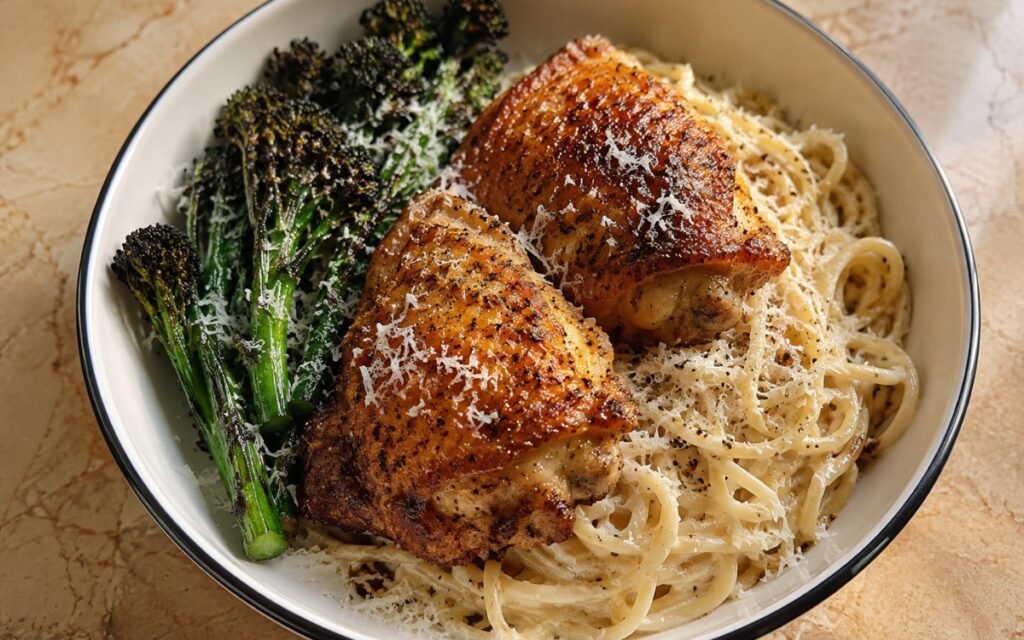
Baked Chicken Thighs with Cheesy Spaghetti
Smoked paprika crispy chicken thighs, cacio e pepe spaghetti with tempered cheese paste, and charred broccolini — one bowl, Parmesan over everything, 55 minutes.
You might also like
You might also like
Classic Burger Buns
Soft, neutral, sesame-seeded classic burger buns with a golden egg-washed finish — the structural bun for smash burgers and fried chicken sandwiches, made from scratch in 2.5 hours.
Colombian Empanadas
Crisp golden corn masa shells filled with savory potato-beef filling, served with bright ají picante and lime wedges.
Everything Bagels
Barley malt dough, overnight cold proof, boiling bath, and everything seasoning — authentic chewy bagels that make every other version seem like an approximation.

Crispy Homemade Mozzarella Sticks
Ingredients
Method
- Preheat the oven to 135°C. Spread the 12 slices of white bread in a single layer across one or two baking sheets. Bake for 15 minutes until the bread is completely dry and very lightly toasted — there should be no give or softness when pressed. The goal is complete moisture removal rather than browning; white bread baked to this internal dryness produces a finer, more neutral-flavoured crumb than bread that is browned, which would add bitterness to the coating. Remove and allow to cool completely. Partially cooled bread introduces steam into the food processor and produces a damp crumb rather than a dry, fine one. Once fully cool, break the dried slices into rough pieces and add to a food processor. Pulse in batches until reduced to fine, uniform crumbs. On the final processing batch, add the 8g of salt, 4g of dried basil, 4g of dried oregano, 6g of black pepper, and 6g of garlic powder to the processor before pulsing — adding the herbs at this stage distributes them through every crumb uniformly rather than stirring them into the finished crumb where they tend to settle unevenly. Process until fully combined. Transfer all breadcrumbs to a wide bowl.
- In a medium bowl, whisk together the 240g of mayonnaise, 120g of ketchup, 25g of sriracha, 10g of Dijon mustard, 3 finely grated garlic cloves, 6g of mushroom powder, and 8g of Worcestershire sauce until completely smooth and uniform. The mushroom powder — oyster or porcini — is the invisible flavour amplifier that deepens the sauce’s savoury character significantly without any detectable mushroom flavour; its concentrated glutamate content amplifies the sriracha’s heat, the Worcestershire’s complexity, and the ketchup’s sweetness simultaneously. Cover and refrigerate. The sauce improves with 15–20 minutes of chilling as the flavours meld.
- Slice the 680g of cold low-moisture whole-milk mozzarella blocks into uniform batons approximately 12mm (½ inch) thick. Consistent sizing ensures every stick cooks at the same rate. Low-moisture whole-milk mozzarella is the non-negotiable specification for this recipe — fresh mozzarella’s high water content produces steam during frying that ruptures the crust regardless of how many times the stick is coated; low-moisture mozzarella’s reduced water content melts without steaming, and whole-milk produces the specific rich, creamy flavour and full stretch that part-skim cannot match. If the kitchen is warm, place the cut batons on a tray and freeze for 10–15 minutes before breading. Very cold mozzarella maintains its shape during the breading process and resists premature leaking when it first contacts the hot oil.
- Arrange three wide, shallow bowls in sequence: First bowl — the 225g of all-purpose flour. Second bowl — the 5 large eggs, beaten until completely uniform. Third bowl — the seasoned Italian breadcrumbs.
- Work through the full three-stage sequence twice for each baton — this is the double coat that prevents leaking. First coat: Dip each cold mozzarella baton into the flour, turning to coat all surfaces, then shake off excess vigorously. Dip into the beaten egg, turning to coat, then allow excess to drip off. Press firmly into the seasoned breadcrumbs, coating all surfaces completely and pressing gently to compact the crumbs against the egg-coated surface. Second coat: Immediately dip the once-breaded baton back into the egg — the egg re-moistens the first breadcrumb layer and creates the adhesive surface for the second coat. Allow excess to drip off. Press firmly into the breadcrumbs again for a complete second layer. Place on a tray. A single coat leaves micro-gaps in the crust that allow the expanding, liquefying cheese to find and exit through; a double coat fills every gap and creates the sealed, continuous barrier that holds the molten centre contained. Once all sticks are double-coated, refrigerate the tray for 10 minutes — or freeze for 5 minutes — before frying.
- Fill a large, heavy-bottomed pot with 3–4 litres of vegetable oil. Heat to 175°C — use a thermometer throughout; oil temperature cannot be reliably estimated visually and an incorrect temperature is the most common cause of either soggy coatings or cheese leakage. Maintain a cooling rack over a baking sheet alongside the pot. Fry in small batches — 3–4 sticks maximum per batch, depending on pot diameter. Overcrowding drops the oil temperature below the critical 170°C threshold where the coating begins absorbing oil rather than crisping immediately on contact. Lower each stick carefully into the oil. Fry for 2–3 minutes, turning occasionally, until the crust is a deep, even golden-brown across all surfaces. The correct frying window is narrow — undercooked means a pale, soft crust; overcooked means the crust has been at temperature long enough for the cheese to fully liquefy and seek a gap in the coating. Transfer immediately to the wire rack. Season each stick lightly with salt while still hot — the heat and residual surface oil hold the salt in place. Allow the oil to return to 175°C between each batch before adding the next.
- Serve immediately with the chilled dipping sauce alongside. Mozzarella sticks are at their optimal state in the first 2–3 minutes after frying — the crust is at peak crispness and the cheese is at its maximum stretch. The longer they sit, the more the interior cheese cools and firms, reducing the dramatic molten pull.